The current (and ongoing) unpleasantness.

I generally liked Warren Ellis’s work. Okay, Ruins from Marvel I despised, and put me off reading his material for a while, but once I started picking up his work I found I enjoyed it. I mean, it was occasionally a little same-y, with many characters identically speaking in what I presume to be Ellis’s sardonic voice, but otherwise the stories were clever and well-constructed.

Do I think Ellis has more good comics writing in him? Well, sure. Would I like to see that work? Under normal circumstances, absolutely.

But.

About a year ago it came out that Ellis had been using his position as An Exalted Comic Creator to commit sexual coercion, emotional abuse, and grooming on young, vulnerable women, particularly fans and those who were in the industry. An alarming number of stories began to come out, and the website SoManyofUs.com was created to gather together testimonials on Ellis’s behavior. It’s harrowing and unpleasant reading, certainly revealing patterns of manipulation.

The creators of the website offered to Ellis a way…well, not “out,” but “through,” I guess, asking him to work with them to acknowledge his actions and find ways to improve himself and help to correct the cultural and industrial circumstances that allowed it. Which admittedly is a tall order, and who knows how much could actually be done, but doing something is better than doing nothing.

“Nothing,” however, is what’s been done, as far as anyone can tell. Maybe Ellis spent the year in private contemplation, working to better himself and identify ways he could work at preventing this behavior from perpetuating…you know, after sending a few more inappropriate messages to his victims after the news broke and he posted an apology (now gone from his official websites). According to SoManyofUs, he did send out a handful of personal apologies, that were apparently unconvincing.

The reason this is all coming up again is that an artist revealed he was working with Ellis on a revival of an old, abandoned comic project of theirs. And said artist got somewhat defensive about it, which you can see here.

It looked like the plan was to just kinda sneak back into the comics business, without so much as a “hey, how y’doin'” and hope enough people didn’t remember or care about the whole hoohar from last year to make the book profitable. Which, you know, kinda pissed everybody off, since Ellis’s half-baked apology at the time didn’t exactly strike anyone as useful (particularly taken to task was Ellis’s assertion that he was “unaware” of the position and power he held). And it’s been essentially radio silence since. Even Image, the publisher of this forthcoming Ellis book, basically responded to a direct question about the situation with “more details on that comic soon!”

However, the silence was just broken today, as Ellis finally, a year after the offer of opening dialogue was made, contacted the SoManyofUs.com site to see how he could work with them. I mean, that’s good an’ all, and maybe he needed that year to build up the courage or develop himself to the point of being receptive to change…or he saw the shitstorm his new comic announcement stirred up and rethought his career strategy.

Whatever the reason, this is at least some kind of step forward. I don’t know what will happen next, and I don’t know what kind of amends he can make…some testimonials emphasize the permanence of the emotional tolls and how forgiveness seems nearly impossible. But the opening is there, so we’ll see if any positive motion can happen in this whole ugly, disappointing, and disheartening situation.

This is not a fun thing to write about. I’m sure this is not a fun thing to live through, for all the people directly impacted by Ellis. I don’t know, when all is said and done, if any of us will be able to read Ellis comics with a clear conscience again. Maybe we can, if enough redemptive work is done, but honestly, “getting to read comics” is the least important thing about all this.

What is important is that this never happens again. That those not in power are not threatened or forced by those with power. …Again, like I said before, a tall order. But maybe we can get just a little closer to that ideal.

EDIT: Image Comics has released a statement.

EDIT 2: Warren Ellis has issued a statement addressing some of the concerns in my post. I mean, not directly in response to me, but you know what I mean.

P.S. If you’re thinking about being a drive-by dumbass in my comments, don’t bother…I’ll just delete whatever you expel.

The House of Lollipops.


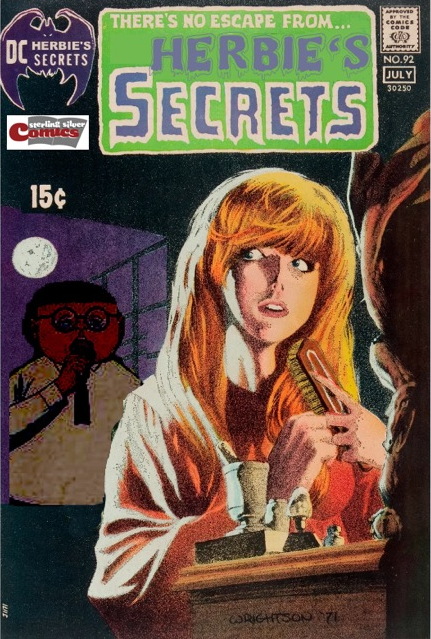
Thanks to reader/mad genius Paul for sending this mock-up of what could’ve been for a Sterling Silver Comics retailer exclusive variant!

Following up on my discussion about that very topic from Monday, I’d actually pulled up an email I received from A Comics Publisher in response to an inquiry I’d made along these lines. Without going into a whole lot of specific detail, let’s just say my buy-in, just for the minimum copy purchase of the exclusive variant, would have been in excess of $10,000. That doesn’t count other minimum orders for the regular cover or other variants of your retailer variant, or for paying for the actual artwork by the artist.

Basically, it’s a lotta scratch…not undoable, entirely, but certainly an investment that would require some first class hustling to make that cash back. Which could be a problem in case you got a cover that didn’t grab the attention of the sort of folks who look for exclusive variants like this. But, to be honest, the way the marketplace is right now, seems like anything that has any form of scarcity is automatically in demand.

Anyhoo, something to think about the next time the opportunity arises.

But speaking of “scarcity,” apparently the latest issue of Usagi Yojimbo, #20, is “in demand” due to it being a first appearance of a character whose name I bet most of the people looking for it couldn’t even tell you. My distributor decided, alas, that this would be one of the comics they’d be shorting from my order last week (there’s usually a few every shipment). I figured that would be that, given it’s temporary hotness and all spare copies eaten up by reorders, I’d have to wait for the second printings to come along so I can get copies for customers who actually want to read it. Somehow, though, miracle of miracles, my replacements showed up! I mean, sure, half my Fireflys are missing and several of my Marvel Voices: Pride shorted or damaged, so it’s always something.

As to the Marvel Voices: Pride comic, it surprised me a bit by including select pages from Alpha Flight #106 (1992). In case you forgot, that’s the comic where Northstar finally just straight up said, after years of subtle-ish hints, “yeah, I’m gay.” Which was, granted, a pretty big deal, and demand for the issue warranted a second printing. But this was also at the height of the whole “gotta be EXTREEEME” art thing, and…yeah, it certainly looks a bit jarring side-by-side with more current art styles. Hey, gotta start somewhere! (Also, did they ever bring back Major Mapleleaf from that story?) (Yes, I know that was a nickname of Alpha Flight’s Guardian at one point.)

I should also note that my comments sections here on Rogressive Pruin occasionally take on a life of their own. So, if you ever wanted to delve deep into the origin of the word/sound/expression “vootie,” well, your day has come.

The Department of Variants.

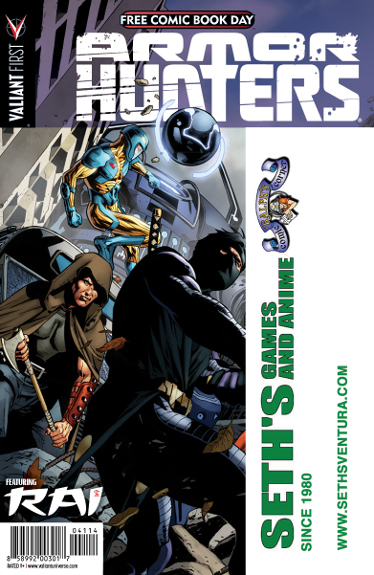
So back in 2014, when I was still at the previous place of employment, our prep for what would turn out to be the final Free Comic Book Day I worked at that store, we took advantage of a special deal Valiant Comics offered. If we ordered a minimum of 500 copies of that year’s FCBD offering from the publisher, Armor Hunters Special #1, we would be able to receive custom-printed copies with our logo on the cover. Now 500 copies at a quarter a pop our cost, for a total of $125, was just a drop in the bucket in the overall expenditures for our Free Comic Book Day event, so we went for it, resulting in this:


One, they actually ran two logos, one for Seth’s store and one for Ralph’s, though I suppose the restriction wasn’t “number of store logos” but rather “what will fit in that space, and hopefully isn’t straight-up pornography.” Two, you can probably tell which logo was actually by A Real Artist and which was by The Overworked Comic Shop Manager Who Knew How to Color In Letters in an Art Program. As to that URL, pretty sure I told ’em “just put it in there somewhere” and somewhere is indeed where they put it.

Anyway, aesthetics aside, one of the unintended but probably-should-have-expected-because-comics consequences was phone calls from collectors trying to obtain copies of our customized version of this freebie. Lots of calls. Valiant press-released a list of stores what went for these branded Armor Hunters, which sent folks our way. (Honestly, I’m surprised so few stores took part in this.) And I believe we did mail out quite a few, but true to the spirit of FCBD we didn’t charge for them (just asked for shipping costs…and waited to send ’em out after the event).

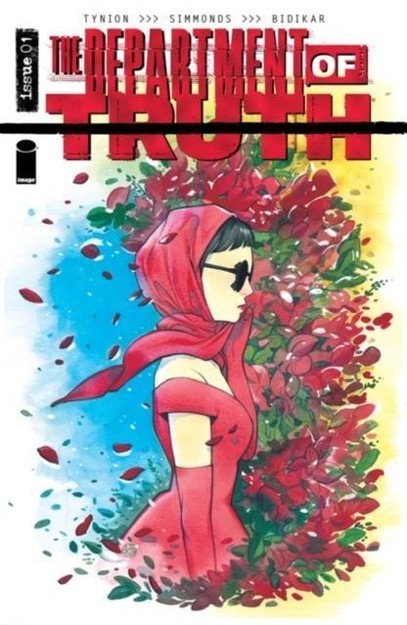
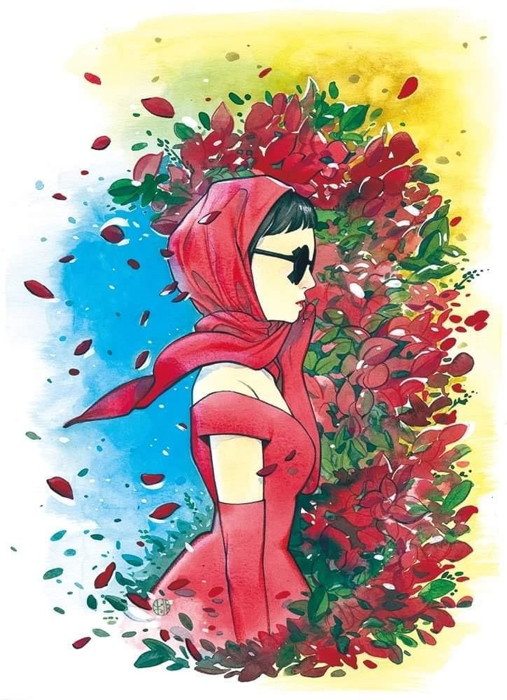
That was the one time I did the whole retailer-variant thing, which I’d been thinking about over the last couple of days in relation to a collection of comics I just took in. Specifically, I acquired a bunch of Department of Truth variants, several for each issue released so far. There were a handful of the regular variants available through Diamond, but the vast majority of them were covers specifically produced for retailers, like this cover for #1 by Peach Momoko:

Now, to get that Valiant variant, it was relatively easy…just hit that minimum and provide the artwork. For these kinds of variants, featuring specific artwork by actual professional artists, it’s a whole different scale of business there. I don’t know the specifics of what had to be done with these Department of Truth variants, but I do know with other retailer variants I’ve looked into, it required ordering a certain minimum number of the regular covers, then committing to a certain amount of the retailer variant, sometimes at a higher-than-normal wholesale cost. Regardless of the details, it costs a lot and you end up with a boatload of comic books. Huge numbers of books, more than my current rinky-dink operation can deal with.

Every time I crunched the numbers on these, it always looked like the end result would be me having to dump all those extra copies of the regular cover (above what I’d normally sell) for pennies on the dollar, or just plain recycle them, and hope sales on the retailer-variant cover the cost. But the larger stores with the more efficient (i.e. more than one dude running the shop) mail-order department probably is in a lot better position dealing with these. And that must be the case given the number of retailer variants that exist for comics. I mean, Department of Truth alone…

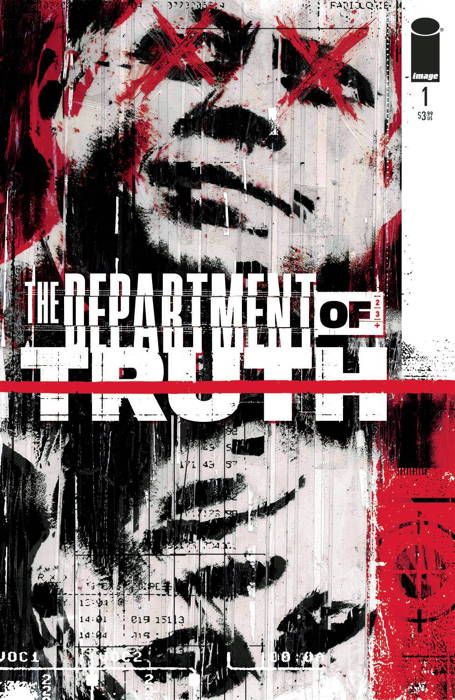
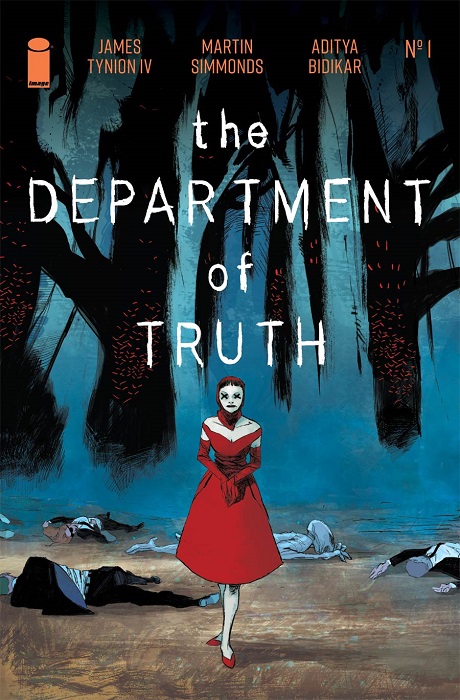
Anyway, speaking of that comic, I already knew there were a number of variants for issue #1, but I just wasn’t aware how many. The main cover of the first issue looked like this:


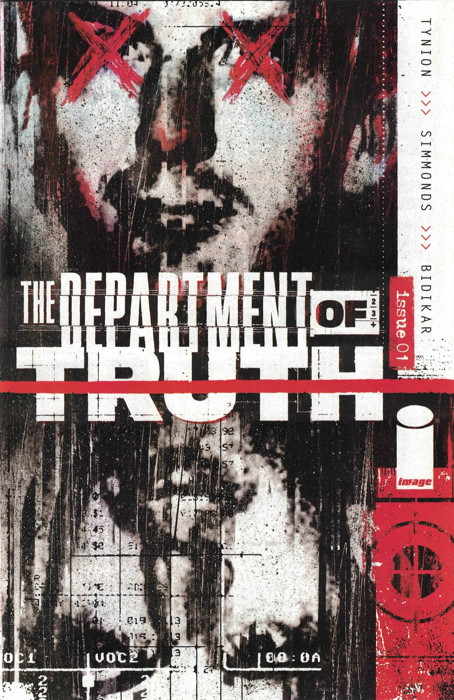
…but interspersed with this cover during its initial distribution was this cover (about 1 in every, what, 6 copies?) replacing Kennedy’s image with Lee Harvey Oswald:

And of course there were the usual “ratio” variants, where you could get 1 copy for every X copies of the regular you were ordering. These existed at the 1-in-10 and 1-in-50 levels (which you can refer to on this page, as I won’t be putting every cover up here). There was also a 1-in-100 variant, which I am putting up here:


…due to its “homage” to the writer’s other weirdly popular comic Something Is Killing the Children. It is noted as “Cover F” on the back cover…a letter designation is assigned to most, but not all, of these Department of Truth variants. (If you’re also wondering if this particular variant has staples, you know where to look.)

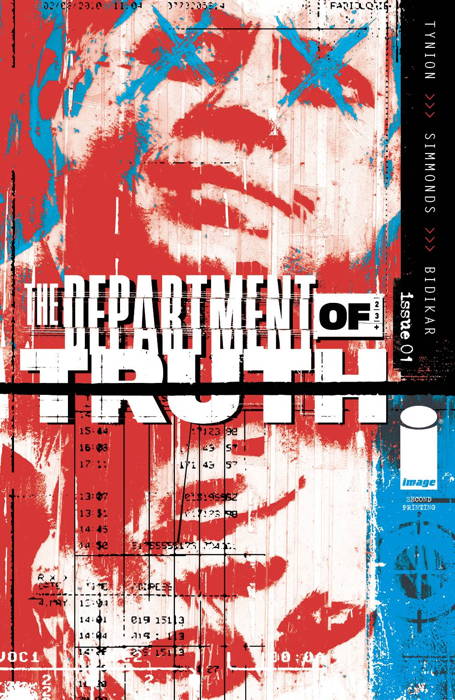
This series turned out to be in very high demand, and after the quick sellout of the first issue, reprints were quickly produced. Five printings of #1 as of this posting, with the 2nd print pictured here:

These reprints, at least on the first issue, were simply coloring variations on the initial release. But also wildly in high demand, often from collectors and investors looking toward resale. Like many reprints, which are seen by some as “rare” collectibles, their relative scarcity in comparison to the comic it’s reprinting, drive their demand to occasionally outrageous levels.

But nearly all the rest of the #1s are retailer comics, which you could buy at conventions, or, more likely since there weren’t conventions for a while, obtained via mail order. Often they had small print runs (like about 500 or so) and a quick scan of several of these retailers’ storefronts show them long out of stock. However, this version of that first Momoko cover I posted, but sans logo:

…was used for a foil variant that apparently was sold directly by the writer himself, if I understand correctly? This only had a print run of 100 copies, so the premium prices on the secondary market for this edition can run quite dear. (And yes, before you ask, I had one of those in this collection…it was one of the first to sell!)

As you scan down that catalog of variants, you see the process not slowing down much. A lot of the “altered color” reprints, along with a bunch of retailer exclusives, are listed for every issue. Issue 9 isn’t listed there yet, but I can assure you the same goes for that one as well.

As I go through this collection of Department of Truth variants, it has me thinking again about looking into getting a retailer variant of my own. Given the response we had far and wide from folks trying to get that Armor Hunters variant, I imagine I could probably move enough copies of my own store-exclusive edition of…something. Just a matter of me deciding to put my dime (well, lots of dimes) down on something that I’d want representing my shop. I don’t know if I can top this Archie Vs. Predator exclusive, but I’d love to have a House of Secrets #92 homage on some comic for my store to sell. Too bad Herbie is off the stands…an HOS92-type cover with a lollipop sitting in the foreground with a shadowed Herbie lurking behind, with a giant “Sterling Silver Comics” logo adorning the image. It’s too beautiful to imagine.

Okay, I don’t know how educational all that was, and it was a little off-model from the rest of my variant cover-age posts. I know I said I’d do the Marvel 35-cent variants this time ’round, but that was turning into more of a thing than I was really up for at the moment. There’s a lot to unpack there, along with varying distributor marks, and the larger direct sales vs. newsstand editions secondary marketplace…I’ll get to it all eventually.

Then again, he famously complained about everything.*

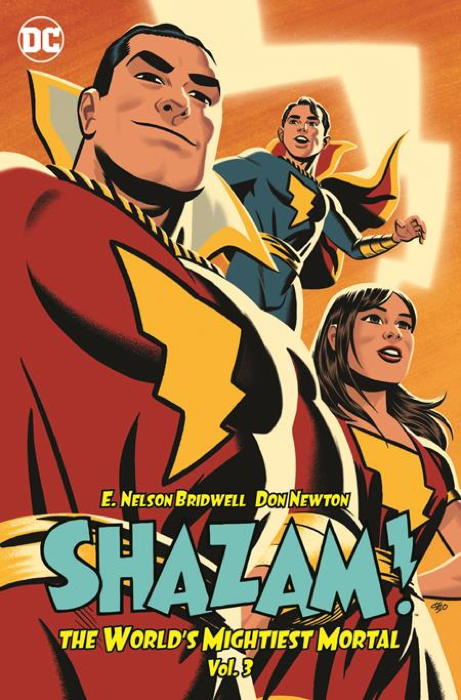
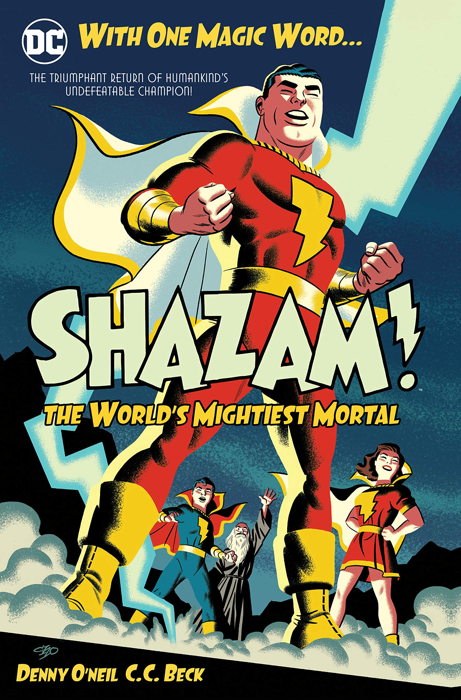
So the reprint book I’d been wanting for years has finally come out: Shazam! The World’s Mightiest Mortal volume 3:

…including stories from late 1970s/early 1980s issues of World’s Finest and two of the digest-sized issues of Adventure Comics. In fact, I think this is the first full-sized color reprinting of those Adventure stories, which is good since I could hardly read ’em at digest-size anymore.

Anyway, those World’s Finest issues features lots of artwork by Don Newton, who was one of my favorite artists, and sadly lost too soon. Such expressive and motion-filled illustration. And unlike the reprints of the Batman stories Newton illustrated, having these comics transferred over from the brown-ish paper with the dingy printing to nice white pages works out great.

The other bonus of this book is that, of course, everyone is called by their real names. “Captain Marvel.” “Captain Marvel Jr.” “Mary Marvel.” “Uncle Marvel.” None of this “oh yeah my name’s Shazam, like my magic word and also the guy who gave me the powers” horse-hockey. Sorry, yes, I know, that battle’s lost, I get why DC did it, but honestly “Captain Thunder” was right there. Or “Captain Shazam,” which I’ve championed before but have come to realize is almost as bad.

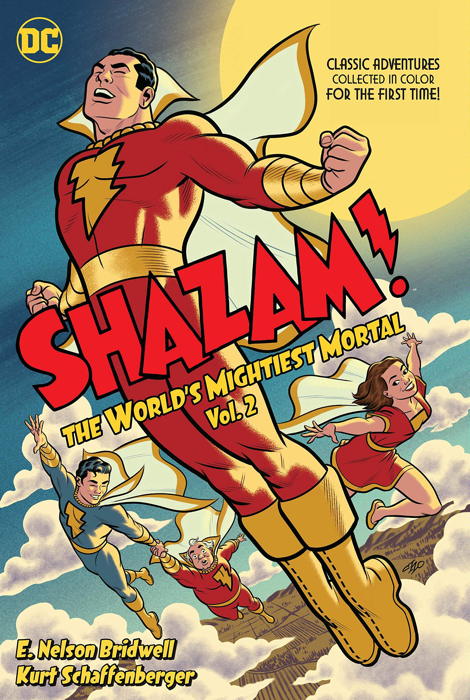
Now the problem with being a collector is, of course, not being happy with having “Part 3” of something when parts One and Two are readily available. So natch, I acquired Volumes 1 and 2 of the Mightiest Mortal reprint series as well:


And look, it’s not just out of a sense of “completeness” I got these. I used to have the majority of issues from the 1970s Shazam! run, but gave them all up to the store. I missed having them around, so this book collection will mostly suffice, though all the Golden Age reprints of classic Marvel Family stories that ran in the ’70s series are omitted. Some issues are only represented by their covers, as the entire comic had been reprints, with only a new cover drawn for them.

It should also be noted that Shazam! #25, featuring Isis, which was not reprinted in the black and white Showcase Presents Shazam! book, does appear here. Apparently whatever rights issues that prevented the character (who had her own TV show at the same time Cap did, and even guest-starred on occasion on his program) from appearing in that earlier reprint were resolved for this.

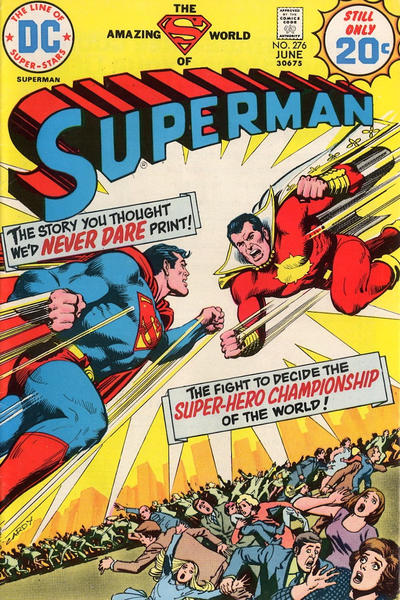
The second volume also contains the Superman Vs. Shazam! treasury edition, another comic I had and gave up to the shop. And again, missed having. Back in 2000, I referenced this treasury in my contribution to Jess Nevins’ Kingdom Come annotations for issue #4 (under “Page 16”).

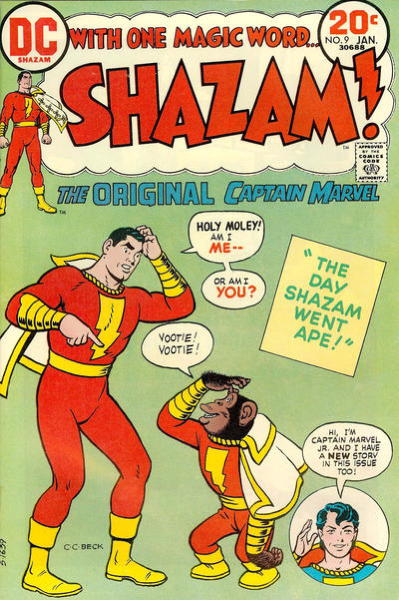
The first two volumes have a lot of wonderful art by Cap’s creator C.C. Beck (who famously complained about how he thought the new scripts were stupid, but you couldn’t tell from his drawings) and Kurt Schaffenberger, among others. The very first story starring the Big Red Cheese I’d ever read was issue #9, given to me in a big bundle of comics my grandmother picked up somewhere:


…which featured lots of new Beck work, on stories he probably hated but I loved. Look, one of them had a chimp who accidentally gets Cap’s powers, and the other story reintroduced Mr. Mind, the World’s Wickedest Worm, to the comics world, but introduced him for the first time to me. And man, I thought Mr. Mind was the coolest. It was like the extreme gap between Superman’s strength and Luthor’s brain, but made even more…well, extreme-er, I guess.

It’s nice to have all these comics together in these handsome collections. One hopes that a fourth collection can be managed, putting together Captain Marvel’s various appearances in DC Comics Presents (like this story, one of my all-time favorites), and…gee, what else? This weird mainline DC Universe tryout with the Captain Marvel-like Captain Thunder?


…as the actual Marvel Family characters were still sort of in their own “universe” and wouldn’t start meeting each other ’til issue #15 of Shazam! and that three-parter in Justice League of Ameria (the latter of which could also be reprinted in that theoretical fourth volume). Heck, I’d even allow some of those comics from the late ’80s Justice League revival, if we gotta round out the book somehow.


* …Except Axa. Cool Points to you if you get that reference.

I’ve had a long day.

So Tuesday took a lot out of me at the shop today, and ended up getting home pretty late. As such, let me just cover a couple things:

Readers added some good information to Monday’s post in regards to variant interiors and repackaged remainders. I added a big ol’ addendum to that entry to reflect these updates, instead of doing a brand new post about it, as I’d prefer to keep this series…self-sufficient, I guess? So you find all the info on a particular variant on just the one page, instead of having to read updates over the next three or four posts. Anyway, I wrote a bit there so check it out.

Next, I wanted to remind folks that there’s a lively discussion regarding the Legion of Super-Heroes and its scattered continuity/publishing going on in the comments to this post. In this case I’ll likely do an update post on the topic addressing some of your thoughts.

Finally, don’t forget, for your #1 Source in Comic Staples Information please visit Does This Comic Have Staples? and bask in the enlightenment.

There’s no “variant” in “team.”

So in the mid-to-late 1940s, and just barely into the 1950s, the comic publisher Fox would put out this big ol’ funnybooks, running well over 100 pages in length:
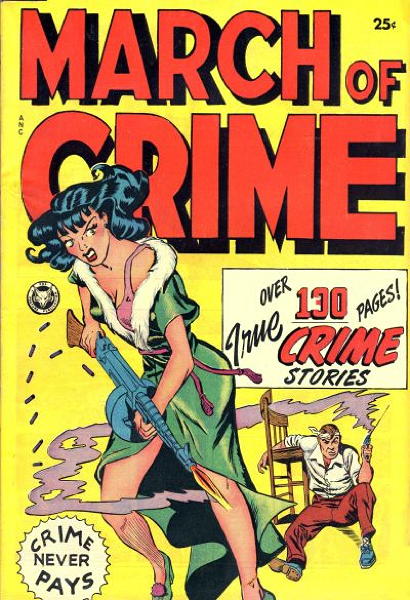

Back at the previous place of employment, we had a few of these come through, and they were impressively thick packages. And sometimes they had pretty great covers (like the one pictured above, which I’m pretty sure was one of the copies we had).

There were three or four dozen different Fox Giants released, with titles like Almanac of Crime, Romantic Thrills, Crimes Incorporated, and, yes, really, Throbbing Love, among other parent-pleasers. Each was comprised of four previously-published Fox comics, the covers stripped, and rebound under one cover. (Were the stapled together or glue-bound? I don’t recall, but watch this space!) As noted in Overstreet and in the various GCD entries, the first story in most Fox comics began on the inside from cover, which means, with the stripped covers, some of the stories would be incomplete.

And for the purposes of today’s discussion, the contents weren’t consistent. One copy of a Revealing Love Stories giant would not necessarily have the same issues bound within as another copy of that same giant. Overstreet also notes that if a giant were to have lucked into more desirable content (like a Phantom Lady story), that Fox Giant may be priced higher than the pricing given in the guide.

That, my friends, is Variant Interiors. I can’t say as to whether it was deliberately marketed that way at the time, to encourage kids to buy multiple copies of, say, All Real Confession Magazine so they can get lots of different stories while Fox unloads a bunch of remaindered/returned coverless comics that didn’t sell the first time.

A long time ago on this very online magazine weblog, I wrote about my copy of Adventures of Patoruzu, a weird book that featured the title character, a cartoonish Native American on the cover, while containing completely unrelated funny animal content inside. According to the GCD entry, copies of this comic have been found with contents other than what I discussed and what the GCD has indexed. They say that the covers were likely printed separately back in the ’40s, then repurposed in the ’50s for other coverless comics. Mostly, perhaps, a previously unpublished issue of Animal Comics, but a couple of others apparently got the Patoruzu treatment as well.

Now let’s jump to the ’90s, where instead of taking unsold stock and putting them into new packaging to clear them out, publishers were taking brand new comics and turning them into unsold stock! But I’m getting ahead of myself.
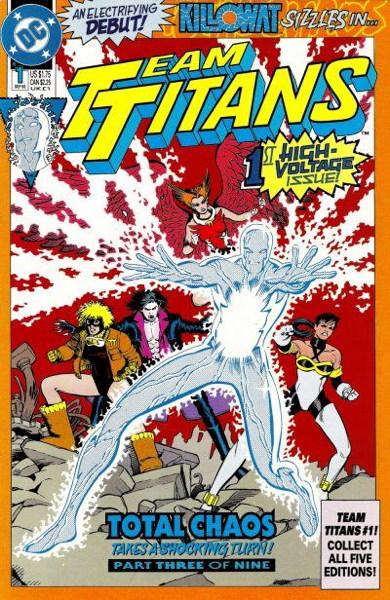
1992’s Team Titans was a spin-off series from the New (Teen) Titans, where Marv Wolfman was finding his second, or third…or whatever, he’d found a new wind that was creating excitement and buzz around the Titans that it hadn’t really had since George Perez left the book.
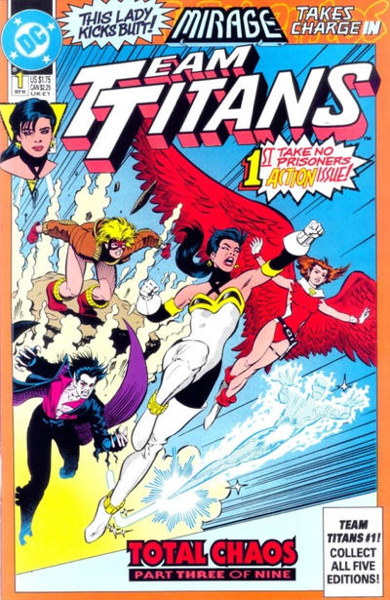
Between the exciting “Titans Hunt” storyline and the new and popular Deathstroke the Terminator ongoing series, there was seemingly plenty of demand for more Titans content. And in the true excessive style of ’90s comics, a wild gimmick was devised for the first issue.

There would be five different #1s each with a different cover…that’s pretty standard. But each variant cover would also contain a different story, five stories, each focused on one member of the team.
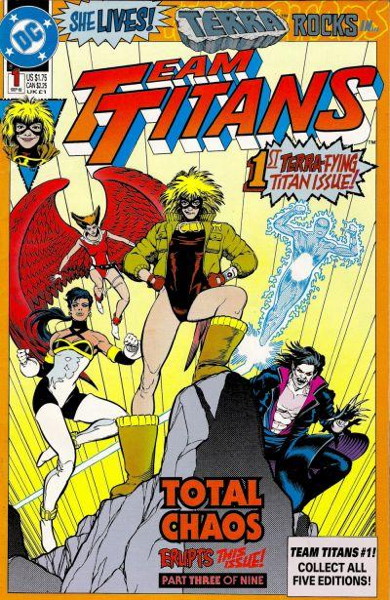
It has been a long time since I’ve actually looked at a copy of the first issue, beyond dumping ’em in the bargain bins. I do remember buying one (just one!) for myself at the time (I pretty sure I picked the Terra issue because I wanted to know what her deal was) but man, it’s been a while. Refreshing my memory at ye olde GCD yet again, I see that the “variant” story was the lead, running 18 pages, while the back-up story was the “main” story, part 3 of the “Total Chaos” crossover, the same across all three variants, and running 22 pages.
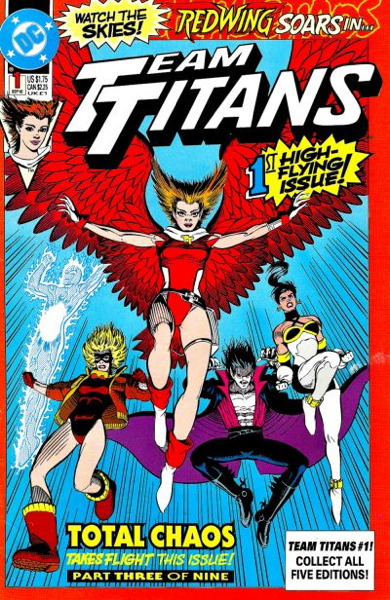
If all that sounds pretty wasteful and ridiculous…yeah, you’re right. I mean, I suppose it’s better than just a variant cover, in that you’re receiving actual new content, but…I don’t know, I’m trying to think of ways they could have done this without basically giving someone who bought all five half a book that’s the same? Maybe a five part Team Titans prologue series, half the size of the released #1s and at lower cost? One extra-sized issue with everything, including the “Total Chaos” “main” story?
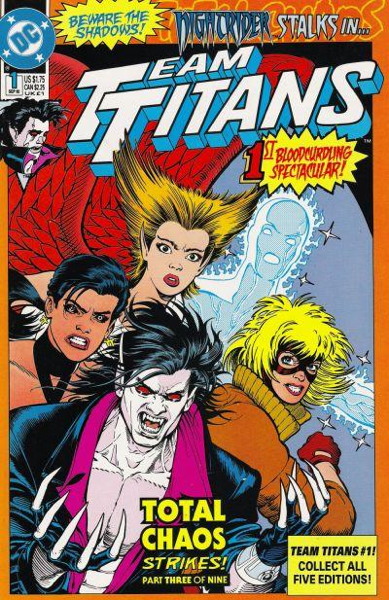
Those alternate stories were actually longer than I remembered, as I though the “Total Chaos” chapter was the first “main” story, and the different content was restricted to just a few pages. But given the significant length of the stories, this sort of variant is a little more…unfair, I guess, than just offering different covers. With variant covers, you can just pick up the copy with the image you like the most. Perhaps you like all the covers but can only pick up one…while you don’t get all the images, you are at least getting the entire story.

Whereas with Team Titans #1, if you want the whole story, you’re compelled to buy all the variants so you don’t miss anything. Granted, these are for all intents and porpoises five different comics with a shared back-up story. However, they were marketed as “the first issue” of Team Titans, it was presented as the debut of this new series, it was sold as “five different versions of #1, with alternate covers and interiors!” It says right on the cover “COLLECT ALL FIVE EDITIONS!” It was seen, psychologically, as the same comic.

Anyway, as it was the ’90s, we ordered high and it sold well-ish, though I recall having plenty left over afterwards. That was okay, we thought, as back issue sales were strong and we were sure to sell plenty of these as the years went on, presumably five at a time. But, as luck would have it, the push ‘n’ pull between what the creative team wanted to do and what DC wanted to do didn’t do the series any favors, and it came to a somewhat ignoble end just a couple of years later. Oh, and with the revelation that they were all just pawns of a bad guy anyway. You can read about the book’s travails here.

When it was new, we put together packages of the five number ones and sold them in a bundle for a small discount, though we needn’t had bothered. Most people weren’t weirdos like me and my one copy of the Terra issue and bought all five. As time went on and Team Titans went from “going concern” to “Teen Titans footnote,” back issue movement slowed down to nothing, thus beginning its migration from a slot in the bins under “T” to the purgatory of the quarter/50-cent/dollar boxes. And there they mostly remain, a forgotten artifact of that third or fourth time the New Teen Titans were red hot.

As I was putting together this post, I realized that if you’d asked me yesterday “who were the members of Team Titans,” there’s no way I would have gotten much past “Terra.” Maaaaaybe Redwing, if I dug deep. But, like, I couldn’t have come up with the hilariously-named Killowat if my life had depended on it. Even as I am typing this very sentence right now I can’t remember the names of the other two members, and I just looked a second ago to get “Killowat.”

Team Titans wasn’t the only modern comic to try the “variant interiors” thing, 1998’s Fathom did so, in its first issue:
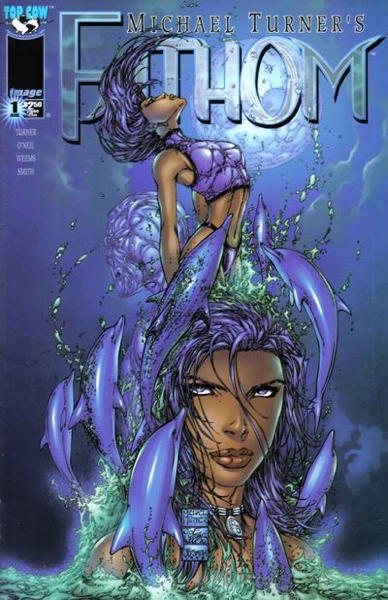

…which had three main variants available on the stands, not counting the “Wizard variant” or whatever. But each of the three variants had alternate story pages…not nearly to the extent of Team Titans, as I think it was only a couple at pages at most. I tried looking once, a long time ago, and alas Fathom makes zero impression on me, and whatever I was looking at just went in the eyes and out the ears and I retaining nothing of what I saw. Thus I’m just going on what I remember reading about it and hope that’s right.

Now these aren’t nearly all the “variant interior” comics that were marketed as such. There’s 1996’s Savage Dragon #31, where you can get a version with a dirty word in big letters on one page, and a version (with a variant cover featuring “God Is Good” printed in the Image logo) without said naughty word.

There was also Barry Blair’s Leather and Lace, which, at least for part of the series, was offered in “Adults Only” and “General Audiences” editions “for his younger fans” with all the Tab-A-Fitting-Into-Slot-B content removed. Frankly, the “General Audiences” edition wasn’t really fit for children anyway, as I recall.

All this leaves out the “printing error” variants, as those were accidents and not intentionally marketed as differing editions available to consumers. Like, I don’t imagine Marvel intentionally wanted a copy of Wolverine with an in-dialogue slur as an alternative version side by side with the one without on the shelf. But I will say I’m still looking for a copy of the All Star Batman and Robin the Boy Wonder #10 with the semi-visible dirty words that was recalled and reissued. Anyway, there are lots of examples of errors with corrected printings.

I’m sure I’m missing some other examples of intentional variant interiors. (And before anyone brings up 1990’s Exquisite Corpse, that’s a whole weird thing that’s sorta related to this, but not really. I’ll try to explain that eventually.) If you can think of any of the intentional variety that I didn’t mention, just drop ’em in the ol’ comments section.

Up next in the variant cover-age: maybe the 35-cent test market Marvel books? I’ll see what I can dig up on those. As always, thanks for reading, pals.

• • •

EDIT: Reader BobH has added some valuable information, including reminding me that the Team Titans first issues were all priced at a normal-sized comic’s price for the time. As he said, it still felt like a rip given the repeated content of the “main” story.

BobH also mentions Outsiders Alpha and Outsiders Omega from ’93, with separate mostly-different stories, with a handful of shared pages. I’d honestly forgotten about that. Reminds me a bit of this Fantastic Four Annual and the Avengers Annual from 1985 and their shared pages (though with different inkers).

Matthew also brings up Marvel’s Slingers, where there were four variants of the first issue, where part of the story would focus on a different one of the four main characters. Dating from 1998, clearly my long decades toiling in the comic field drove this from my memory. Not to mention the fact I can’t even remember the last time I handled a copy of Slingers.

As far as repurposed coverless comics rebound for newsstand sale, Andrew remembers this being fairly common in the UK during his childhood. And ArghSims notes that the old EC Annuals did the same thing.

A legion of reboots.

So remember my post from last week about how I kinda lost my involvement in, my connection with, Swamp Thing post the New 52 relaunch? You folks had a lot to say in the comments, mostly along the lines of “Mike, I feel your pain, but with the Legion of Super-Heroes.”

Hey, I hear ya. I wrote at length about this…egads, was it really five years ago? Well, here we are Five Years Later (wink wink, nudge nudge) with one more Legion reboot come and apparently gone, so things haven’t changed. I suppose this newest iteration of Legion can still pop up…given that Superman’s son Jon is a member, and is about to be the focus of the Super-books for a while (where the solicitations reference the team), I’d say there’s a good chance the Legion will show up there.

Now in that post I linked, I talked about how I finally stopped reading new Legion comics after years of enjoying them. That recent Legion reboot I did read, as writer Brian Michael Bendis had been doing a good job on the Superman books, I thought, and was interested to see what he’d do with our favorite 31st century super-teen team. I don’t know if DC has given up on this version, but the big relaunch for the book fizzling out after a year doesn’t inspire confidence. Frankly, at this point it just accelerates the countdown to the next attempt at getting the Legion to stick to the wall.

Anyway, I went into extensive detail on all this back then . And pal Andrew had my back with his own analysis of the Legion’s decline.

To reemphasize…there was a lot of Good Work being done in the comics, despite editorially-designated changes to the franchise. In fact, just earlier this year I was writing about how I enjoyed the Five Years Later era, which granted was more of a soft reboot. But in the 2016 post I wrote about how I enjoyed the Zero Hour reboot version as well. And the Legions that happened after that.

It’s just…having multiple mostly-contradictory takes on the Legion, a group where a large part of the appeal was its lengthy history and established personalities, was just too much. You want to invest in the characters, even if you have to follow them from series to series, but with each reboot essentially telling you “forget everything you knew!” that appeal is completely undermined.

On the Twitters, blogging colleague and noted Legion Lover Johanna Draper Carlson said to me in regards to Legion’s restarts

“I’m not sure the ever-more-complicated soap opera history was a successful path forward, either.”

…and she has a point. I feel like there should be a way to give folks a fresh start on a franchise like this, and tell new stories, without necessarily undoing or contradicting what had gone before. But it apparently required (or DC Editorial thought it required) a new #1 and a completely fresh slate every time the comic was attempted, in the hopes to get new readers on board. And like many of the reboots and new #1s that have flooded the stands over the last decade or so…sometimes it worked for a while. But just for a while.

As I’ve said again and again, there was a lot of work to be found in these reboots. Both in Legion and in the New 52-and-later Swamp Things. It’s just that the connection wasn’t there…too much was changed, sometimes downright arbitrarily, from What Had Gone Before. When the Byrne-reboot Superman came on the scene, folks reacted with “this isn’t the real Superman,” but eventually, through an at least halfway chain on continuity, and just fact few people reading Superman in ’86 are still reading now, that Superman is the “real” Superman. So much so that the New 52 one felt like a fake, and it was a relief when the “original” post-Byrne one came back to replace him.

That’s kind of how I feel about Swamp Thing and the Legion. Maybe I’ve been enjoying their stories of late, but that deep, dark part of my fanboy mind stills asks “when will the real ones come back?”

The harder the variant, the more glorious the triumph.

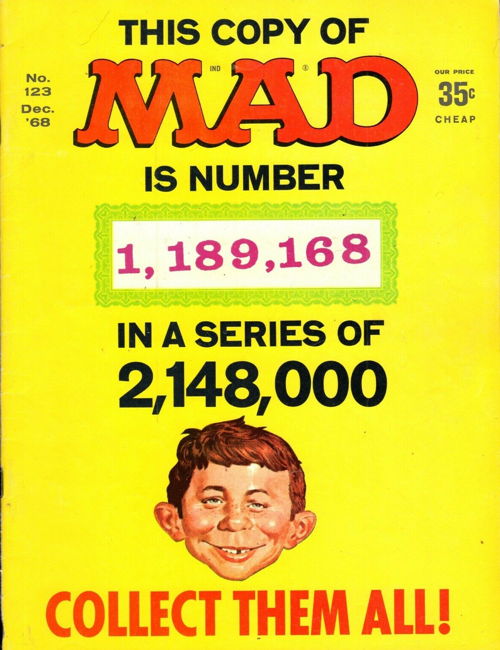
So back in 1968, Mad Magazine pulled this cover gag on issue #123:


…part of the joke being there were only (as far as anyone knows) four different serial numbers printed on the covers. In essence, that makes this one of the first “variant” covers in the modern sense (predating that darn Man of Steel #1).

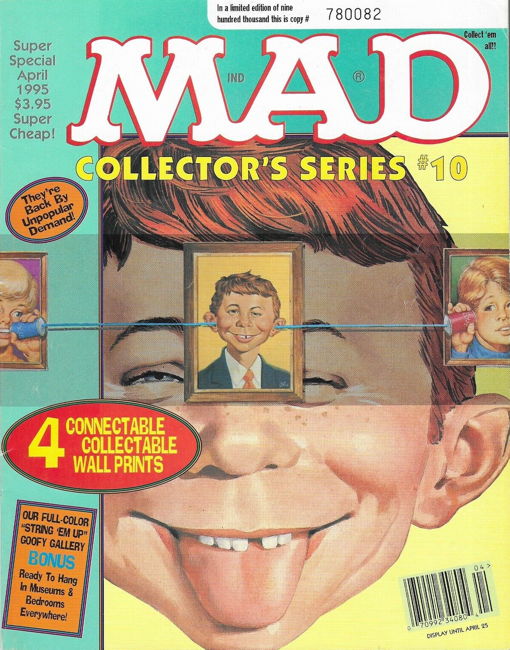
Now, I don’t think anyone expected fans to actually collect all four variants, despite what it says there on the cover. Clearly the multiple printed numbers were only there to add a bit of verisimilitude to the gag. Now of course Mad would eventually, actually, once the technology existed, put genuine serialized numbering on some covers, like this issue from 1995:


This reminds me of ack in ye olden tymes of the 1980s, I was, I don’t know, 12 or 13 or something like that, when I first saw a printed personlized message in one of the magazines to which I subscribed. (It was either Games or Omni — yes I know that’s a little weird.) Not just my address being printed directly onto the cover instead of being printed first on a mailing label that was glued to the mag. But an actual message to me, using my name, printed (and memory fails me here, as I haven’t thought about this in decades) on the cover, or inside the magazine itself. Look, I don’t know when this sort of thing became available, if it’d been happening elsewhere before it showed up in the mags I read, but all I know is that I thought that was pretty cool. My copy of the magazine was personalized to me, and totally different from everyone else’s copy, which technically was true before anyway just given the mailing label, but you know what I mean. But it was only a short leap from this to putting a sequence of “limited edition” serial numbers on a cover.

For the purposes of my ongoing discussion, this type of “variant” cover I’ve been discussing only just barely counts. Well, Mad #123 does, obviously, but the others…when we think of variant covers on comics, we’re likely thinking of comics marketed with two or more covers, often with differing art or enhancements or even just coloring.

Also, there’s intent…the typical variant covers are there to either get a customer to buy more than one cover, or to provide enough variations that a customer otherwise possibly not interested in the publication might spot a cover he likes and is enticed to buy.

Serial numbers printed on a comic’s cover are a sales enticement as well, but not in the same way. Different numbers on different copies do make them variants, when you get down to it, but, like no one’s literally “collecting them all.” Or, come to think of it, maybe someone’s trying…I’ve been in comics retail for nearly three and a half decades, I know what kind of stuff you weirdos get up to. That said, a serial number implies “limited edition” — “there’s only so many of these in existence!” — so that part of it does (or hopefully does) get a customer’s attention and with it, a purchase.

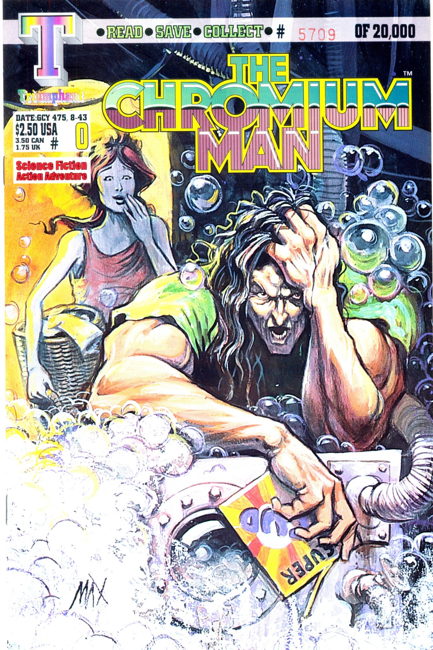
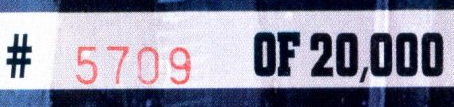
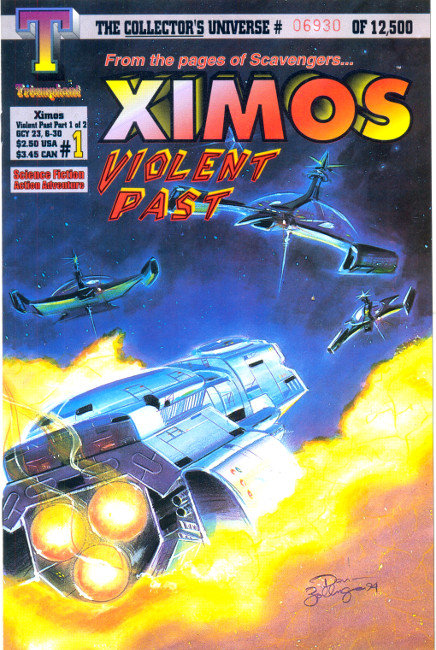
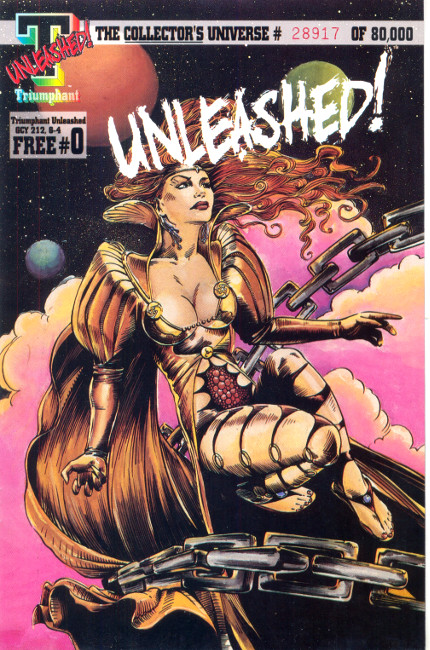
One publisher that took it to an extreme, and made serial numbering part of their trade dress, was Triumphant Comics:


A closer look:


I’m trying to remember how these specifically sold for us at the shop at the time, and alas that data was expunged from my brain at some point over the years. I do remember not having much, if any, back issue movement on them, either at the time or well after the fact, a combination of general market malaise in the 1990s crash times, along with the fact the company itself was only around a year or so.

The print runs probably looked impossibly small at the time, after the huge successes of X-Men #1 and X-Force #1 and all that nonsense moving millions of copies into shops, a portion of those then even selling to customers. Having a comic with a 12,500 print run and being serially numbered probably looked like a collectibility and-therefore-sales-slam-dunk:


Just kinda randomly picking through the comics, stated print runs of between about 15,000 to 30,000 were the most common. The outlier was this freebie comic which, being free, naturally had the largest number that I saw:

Not much else to say here really…their publishing strategy was to make their comics look more collectible, and, well, you can get copies for a buck a pop on eBay (one listing for a single issue for $5.99 including free shipping…which basically makes that a buck as well). Anyway, it was an interesting try at a gimmick building off a market with multiple price guides and an expanded emphasis on “limited editions” and “collectibles,” done in, it seems, by that market suddenly going away.

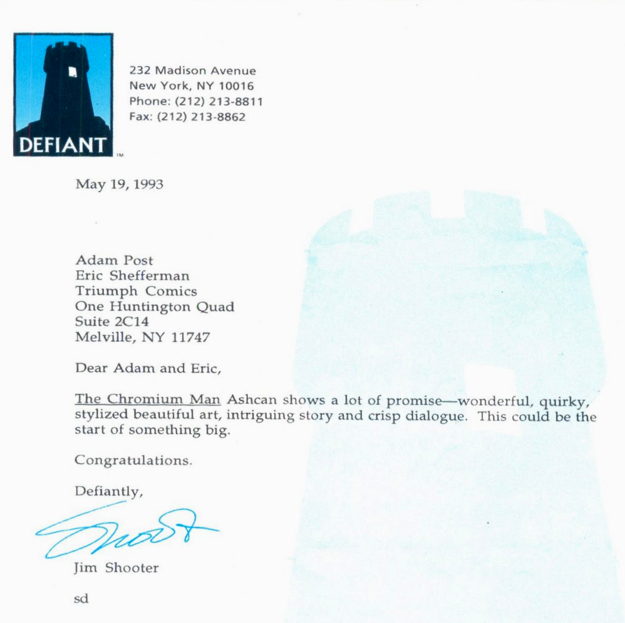
These is one more thing I’d like to point out, and that was this letter of encouragement from another comics personality of note that was printed on a back cover:


Which reminds me…I hope none of my comments here are taken as disparaging of the actual contents of these books. I’ve…never actually read a Triumphant comic. Big Jim liked what he saw, anyway. But this year’s worth of Triumphant books represented someone’s hard work and effort and dream to get their stories into print, and good for them. They had an interesting hook with the serial numbers to stand out on the shelves, but unfortunately things just didn’t work out. That’s just how it goes sometimes, and that’s especially how it went in comics during the mid-1990s.

Okay, next up in the variant cover-age…maybe some actual variant-ish type variant comics! Hey, did Defiant Comics have variants? I don’t remember.

Also, thanks to Customer Dave for lending me some of the Triumphant Comics from his collection for the production of this post. Hmmm, so long as I have ’em on hand, I’ll give one a read.

Don’t get me wrong, the fact that I could regularly read stories where Swamp Thing pals around with Detective Chimp is awesome.

So I realize I’m probably expected to do a little something about the Swamp Thing anniversary this year (having debuted in House of Secrets #92 50 years ago as of about April). It’s also Man-Thing’s 50th, debuting in 1971’s Savage Tales #1, so overall it’s a good year for swamp monsters.

I expect I’ll get around to something eventually…or maybe this will the only acknowledgement. I honestly don’t know. I can’t say with all honesty “it’s been a great 50 years, here’s to 50 more!” because frankly things have kinda sorta fallen apart in regards to the Swamp Thing comics over the last ten years. Lemme ‘splain.

Well, actually, there’s not much ‘splaining to do. The New 52 relaunch sort of “broke the chain” of continuity between the Swamp Thing we had before and the later Swamp Thing. Part of the character’s appeal to me was its history, the sense that all of the events that happened to the character in its past have remained so, and continue to inform its future. Okay, granted, one or two things have been sorta kicked under the bed and not brought up again, but by and large I could (to use a phrase I’ve probably overused on this site) draw a line from the character’s 1970s comics all the way through to the end of Brightest Day. It was with the Brighest Day follow-up The Search for Swamp Thing and the New 52 relaunch that stuff went astray.

I won’t go into excruciating detail (again) but character elements were changed, Alec and Abby’s backstory changed, Arcane was an almost entirely different kind of creep, etc. Then with the advent of both creator Len Wein’s 2016 mini-series (which seemingly nullifies a significant part of the Alan Moore arc), and the digital-first stories where full-on Plant Elemental Swamp Thing is going up against…General Sunderland!? Well, that undoes another fairly significant part of Moore’s run. It literally plays havoc with the circumstances surrounding Swamp Thing’s evolution into the kind of character he is now.

Look, all the New 52 and later era work is fine on its own. Well, okay, not all, but most of it is perfectly serviceable. But for someone who’s followed the character for as long I have…not since the very beginning, but close…there’s a level of detachment. What I know of the character is not fitting with what they’re telling me about the character now, and it’s distracting. There are a number of stories that don’t require dependence on past continuity, of course, but once you remind me “Matt Cable is alive and he was never possessed by Arcane,” that throws me just a little. I feel…detached from what’s happening to the character.

Some of it is on me…given the vision troubles I’ve had over the last few years, I’m way behind on my comic reading. And some of the comics I haven’t read yet are Swamp Thing-related, such as the Walmart Giant issues (collected in a book that I have in place of said Giants, which I never found in the wild). My enthusiasm for the character having waned, I never made it a priority to catch up on those particular stories. I’m sure they’re perfectly good, but with everything else happening to Swamp Thing, I was in no rush to read more stories set in the same post-New 52 milieu.

Plus, on top of all that, there was my decision to not acquire every single appearance of the character, spurred on by this nonsense. I also stopped pulling both covers of Justice League Dark for myself if each had Swamp Thing on it. Being as behind as I am, the last thing I needed was more comic books floatin’ around the house. And besides, who am I trying to impress with A Complete Swamp Thing Comic Book Collection? It’s not like God won’t let me through the Pearly Gates when I die if I don’t have one. (Unless of course Wein and Wrightson are at his side, waiting for me, their arms crossed and shaking their heads in disappointment.)

Like I said in this post, I, The Guy What’s Read Swamp Thing Comics for the Last Several Decades, was not the target audience for these rejiggered relaunches. This rethinking of ol’ Swampy was designed to get newer readers ensnared, who likely hadn’t read all that early stuff.

Not to say everything is terrible, of course: Swamp Thing’s appearances in Justice League Dark gave me the month-to-month adventures that didn’t dwell a whole lot on his new backstory and almost felt “normal,” you know, more or less, guest-starring with Detective Chimp and everything. And the new mini, bringing in a new person as Swamp Thing with the Alec Holland Swampy primarily there to pass the torch…this may be the solution to finally getting past the character’s shattered history, and it helps that the comic is really good, too.

But anyway, in short, Swamp Thing is still my favorite comic character despite everything. I get that expecting editorial consistency on a comic book character in a shared universe in stories created by Many Diverse Hands is a bit of an ask. I mean, the Superman we got with the John Byrne reboot in 1986 is technically the same Superman we have now, though many of the details have changed over the decades. But I kind of expect that from superhero comics. I felt like Swamp Thing was different, like maybe folks were putting a little more effort into internal consistency over the years. That’s why just changing things for the sake of change (an endemic problem to the New 52 as a whole) was so disappointing.

• • •

On a related note, just recently we had a spate of “give me your controversial take on [comic character]” tweets on the Twitters (here’s my favorite iteration and my response). So of course I jumped in with “give me your controversial takes on Swamp Thing”. Got some good response, and some jokey ones, too, but c’mon, we’re all comedians on Twitter. But I plan on responding to some of those “takes” here in the near future.

Thanks for reading, pals, and keep in mind, despite all that stuff I said…I ain’t giving up my Swamp Thing slippers.