So Sunday morning I was checking my email and noticed a message caught in the spam filter from someone asking about selling his stacks of 1960s comics. “NICE TRY, SPAM FILTER” I declare as I rescue the message and quickly respond with a “yes please, I would like to take a look at your ’60s comics.”
Now whenever someone says “I have old comics for sale” or “I have some original 1940s books I’m lookin’ to let go” a good portion of the time they turn up with, I don’t know, Marvel Team-Ups from 1983 or something. In general, I don’t hold my hopes up too high until I can actually see the comics in my hands. And even then I still don’t get my hopes up too high because there’s no telling if the seller “researched” prices online and decided that anything less than the $200 price some lunatic on Amazon put on this actually-valued-at-$4 comic would kill the deal.
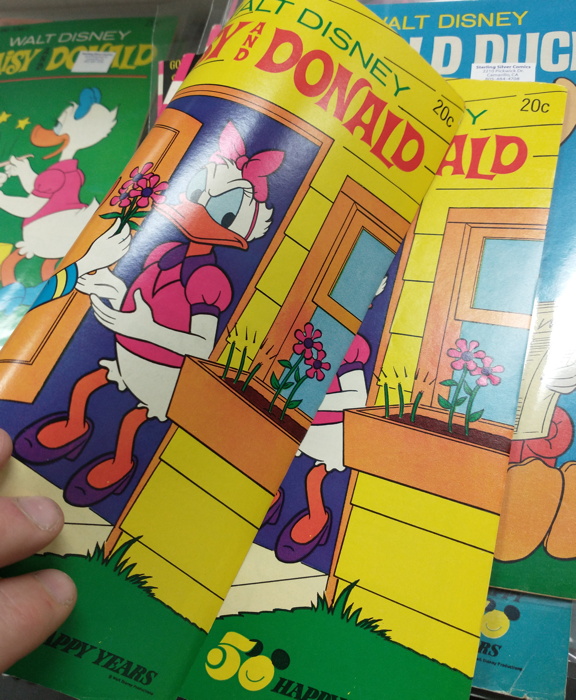
As it turned out, the fella did have actually honest-to-Granny-Goodness 1960s comics, which were all actually his and purchased off the stands during his youth. Apparently he was cleaning out his mother’s house and discovered that she’d kept all these boxed away in the garage. So, you know, good on Mom for not throwing these away.
And I was able to make an offer that he was agreeable to, so I wrote him a check, and he walked out happy and I now have a new batch of funnybooks into which to dive. I did a small Twitter thread about it if you’d like to see some photographs, eh, he asked you knowingly.
“What’s all this got to do with variant covers?” I hear you asking, somehow, from all the way over here while you’re standing over there. As it turned out, this gentleman’s collection contained a lot of Dell and Gold Key comics, as a collection from this period is wont to have. He noticed, as he was making a list of his books, that there were several titles that carried over from Dell to Gold Key, and he wondered what exactly the deal was between the two companies, if one bought the other out or something similar.
Now luckily for me I’d read Mark Evanier’s explanation of the relationship between the two companies/imprints. Granted it was a while back, so I double-checked this evening to make sure I was at least partially correct and I was close enough for horseshoes. (Very shortly, a company, Western Printing, generated content that Dell published and distributed, until eventually Dell and Western split and Western started publishing the content themselves under the name “Gold Key” — seriously, read Evanier’s article).
“Still not anything about variants,” you sez. While some Dell and Gold Key had variant covers (differing back covers, price variants, etc.) my focus here is going to be on Whitman.
“Oh, now what’s Whitman?” you ask, and frankly you’re asking too many questions. But here, Whitman was an imprint used by Western for, among other things, comics distributed, usually in three-packs, to toy stores, department stores, that sort of thing…in general, non-newsstand distribution. While the “Gold Key” log would appear on copies distributed as normal periodicals:
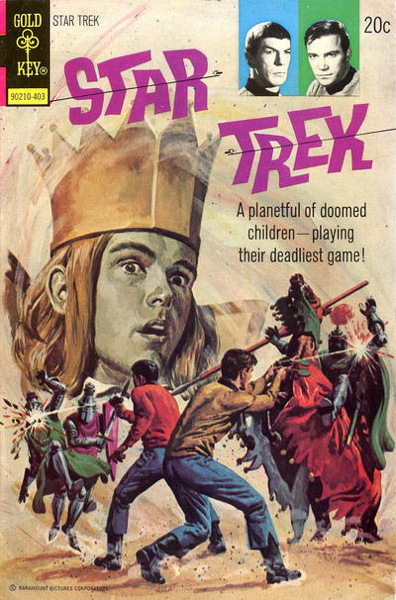
…the copies appearing in 3-packs would have the Whitman logo
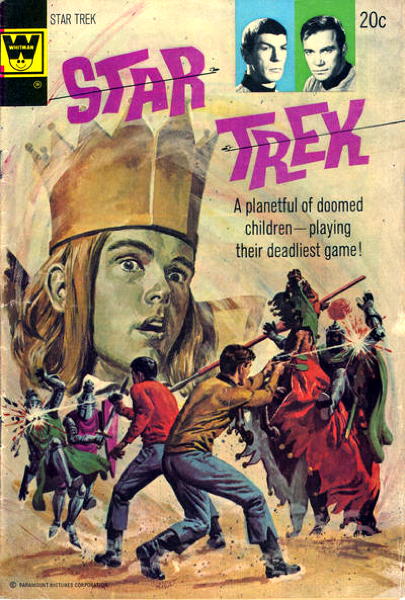
I presume at least one of the reasons was to prevent unscrupulous retailers attempting to get stripped cover returns using non-newsstand copies, though I’m not sure if the timeliness of the 3-pack releases would have allowed for getting copies back in the alloted return window for each issue anyway.
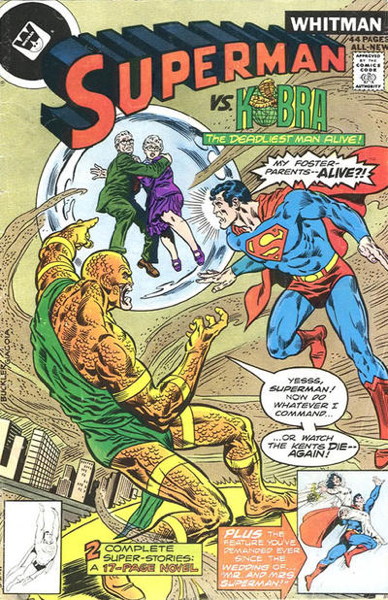
This dual-distribution resulted in several of Western’s releases having Whitman and Gold Key variants. And not just Western’s books…they also redistributed DC Comics into similar 3-packs, all with Whitman logo rebranding. For example, here’s a comic I remember having in a Whitman edition as a kid, Superman #327. Here’s the regular cover:
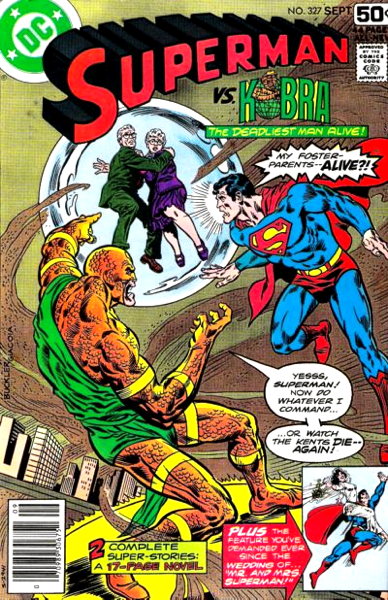
…and here’s the one with “Whitman” just slathered all over it:
And of course there were Marvel Whitman variants, such as the Star Wars issues distributed in 3-packs:
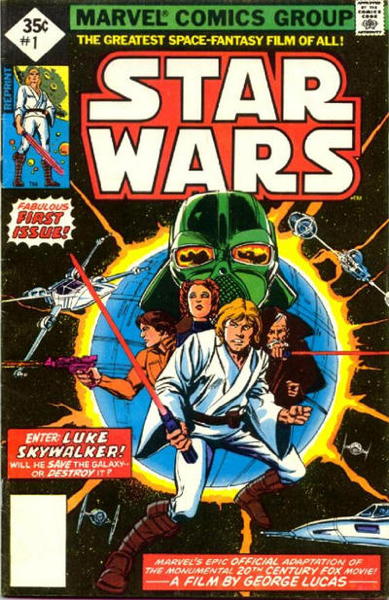
…but not with the Whitman logo. This was how I got the first six issues of Star Wars, via the 3-packs in Toys ‘R’ Us. (I think I got at least one pack of three later issues of the series from there as well.) Not sure why there was no Whitman logo on these.
Outside the 3-packs, there were Whitman variants of some of Marvel and DC’s oversized treasury editions, such as Marvel Special Edition #1:
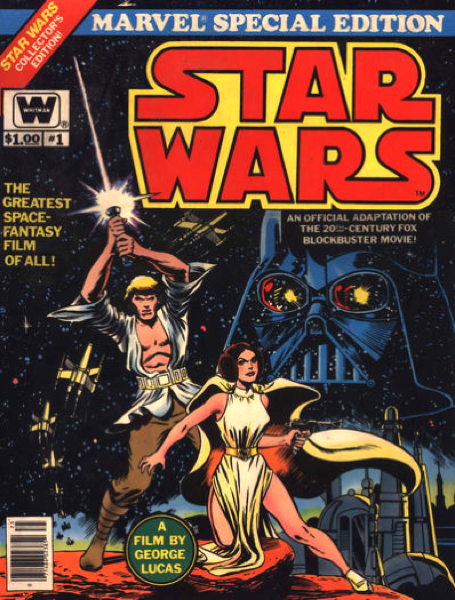
…and of course All-New Collectors’ Edition #C-56:
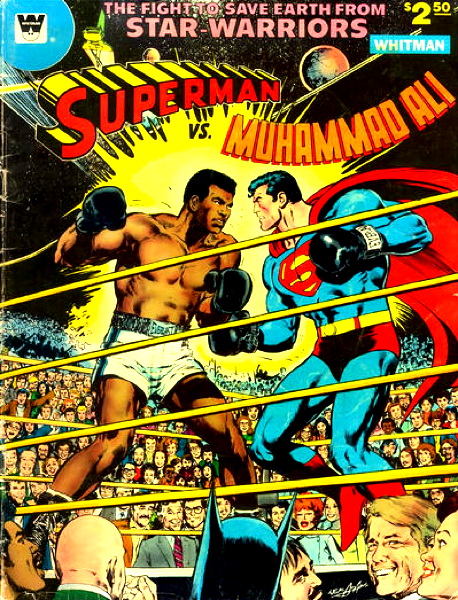
…presumably produced again for outside-newsstand distribution. (I can tell you my Whitman Superman Vs. Muhammad Ali copy came new distributed through direct-to-schools book sales.)
Now I may be a little fuzzy on the details regarding production and distribution of these books, but ultimately these variant editions do exist. And, for a long time I noticed during my early years in comics retail resistance to purchasing Whitman editions when there were regular editions of the comics to be had. (It should be noted that not every Whitman comic, especially with properties controlled by Western, had a “regular logo” cover, particularly in the late ’70s/early ’80s. And some issues were only distributed in 3-packs with Whitman logos.)
That resistance has gone away, unsurprisingly, but it predates the current panic over “nouveau hot” comics of late. Granted, the recent speculation market has only aggravated things (a search online for “Whitman variants” sure brings up a lot of people happy to tell you how rare and hot they are). However, I do have to admit they are much harder to find now, and they are alternate editions, so I must reluctantly accept that not everything in the comics market now is not absolutely 100% the same as it was when I started over three decades ago. [Insert clip of Garth from Wayne’s World declaring “we fear change” here.]
I am reminded of a two-or-three pack of Heavy Metal and a Warren mag or two that I bought when I was far too young to be buying it. Was this another Whitman repackaging, or some other company trying to unload excess copies? Perhaps an investigation for another time.