Titillating the Tumbleweedsmania since 1968.

So my internet pal Adam was going through some of his stuff the other day when he came across a particular set of vintage items. Seeing this, he thought “why, there’s only ONE MAN in the world surely brave enough to have these in his own collection,” and that’s how I ended up with the Tumbleweeds fan club kit from 1968.

Sent away for by his father when he himself was only 16, he received in the mail (and given to me in the original envelope!) the following items:

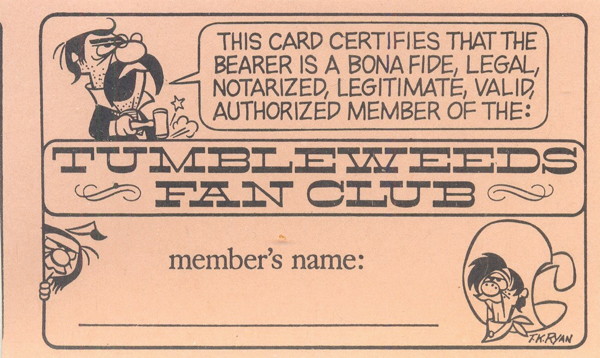
The membership card, natch:

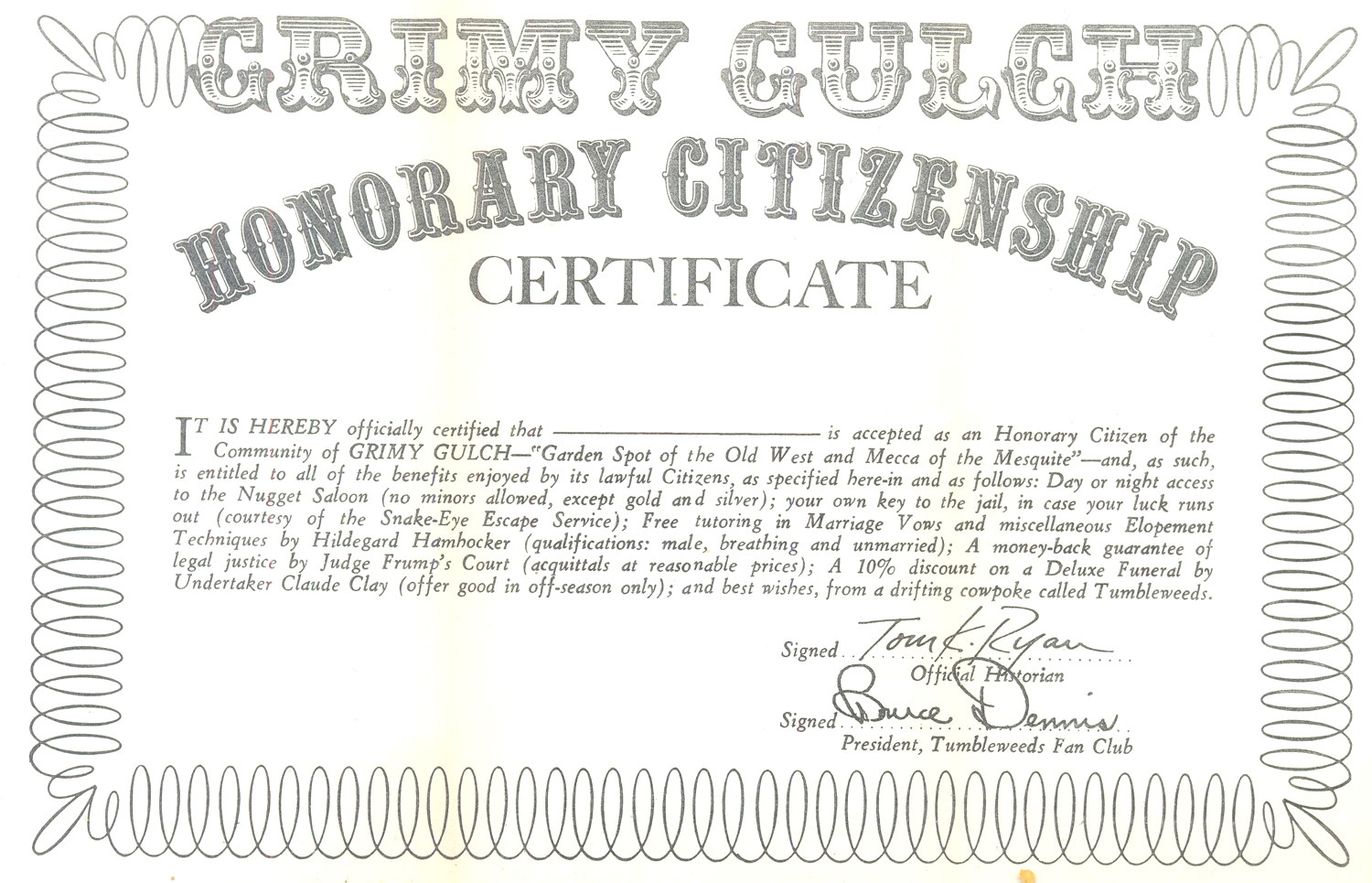
An official fan club certificate, suitable for framing and hanging up there next to your college diplomas and pictures of your family (click on image to eenlarge):


I like how cartoonist Tom K. Ryan is titled “Official Historian.”

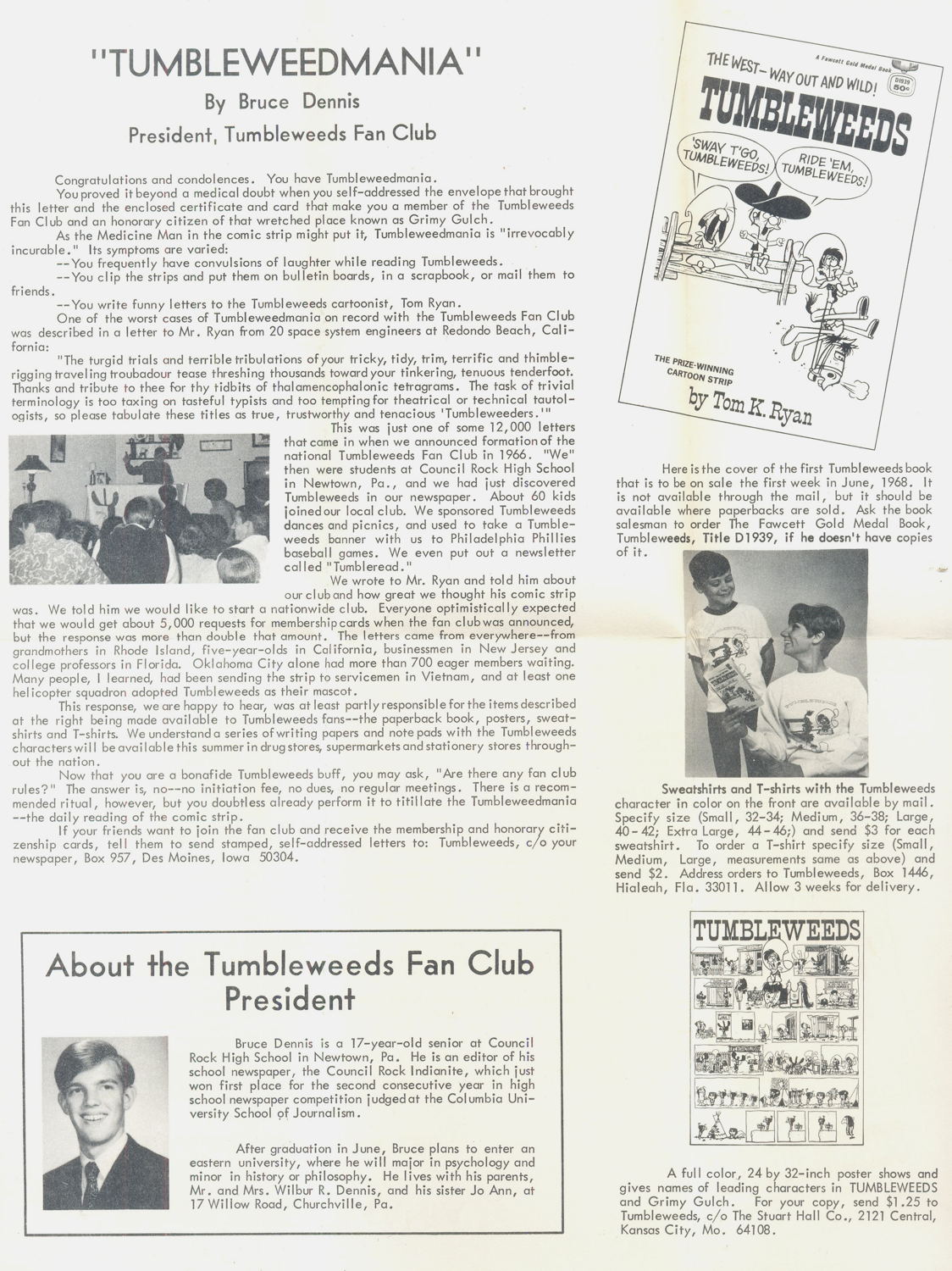
And a newsletter (also clickable for resizing), welcoming you to the club, hawking some wares…

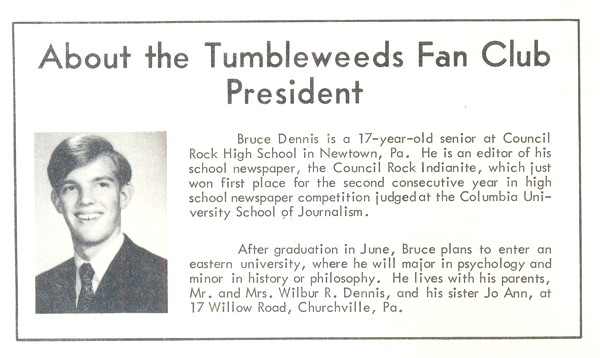
…and just generally making you feel inadequate when you find out the fella in charge here was only 17 years old:

All in all, a pretty neat find, and in shockingly good shape! Somehow Adam’s dad resisted scribbling his moniker into the spaces provided on these pieces of paper, and just left them folded in their delivery envelope, awaiting the day when some weirdo would scan ’em and put them on his site.

Yes, it’s my eye again.

Hi pals! My usual variant cover-age post for Monday is postponed due to more eyeball issues. As these things go, it only seems to be a minor bleeding problem in my left eye, the one with the stronger vision. Unfortunately, it happened just a couple of days before my next appointment where the preventative treatment would have stopped that from happening, but What Can You Do™?

Now, like I said, it’s only very minor…in fact, even as I type this, it’s barely noticeable, with only a minor haze in my vision, but it’s enough to keep me from reading fine print. However, sitting in front of my computer doing a long-form post that requires Research and lots of Looking at Stuff is probably not a good idea at the moment. I should recover quickly and I’ll be up and running again later in the week, with a new variant cover post for next Monday. In fact, a comment left on the last post gave me an idea for next time!

My doctor says that, after all the laser treatments and surgeries I’ve had, and with the continuing injections, the recurrence of bleeding in both my eyes should “burn itself out,” to quote him, but it might take two or three more years. Hopefully in the future we’ll have more luck getting ahead of these incidents rather than chasing after them. (By the way, I never closed my GoFundMe to help me deal with the costs of these treatments, so if you have a spare buck or three to throw my way, I certainly won’t say no! Or, if you want to give me a buck a month at my Patreon, you can do that instead. Or too! Or you can even buy comics from me at my store, I guess that’s also an option.)

Thanks for reading, pals, and I’ll be back Wednesday.

I have a question for you, again.

…Not like this question which kicked off a still-ongoing series of posts here, but something hopefully a little simpler:

How are the new comics displayed at your comic book store?

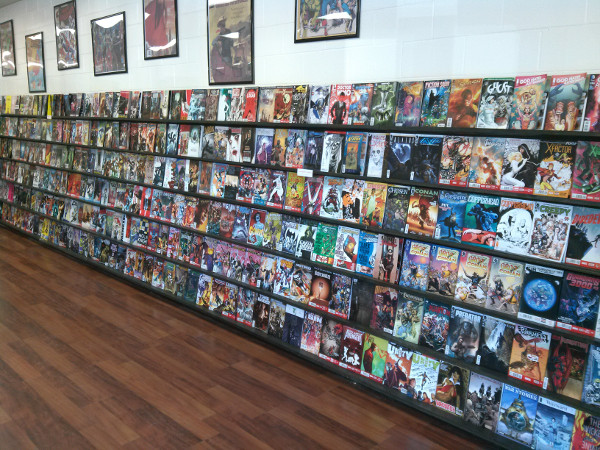
Now at my shop, I have a long, tall wooden rack with every cover full-face on display, side by side (pictured above).

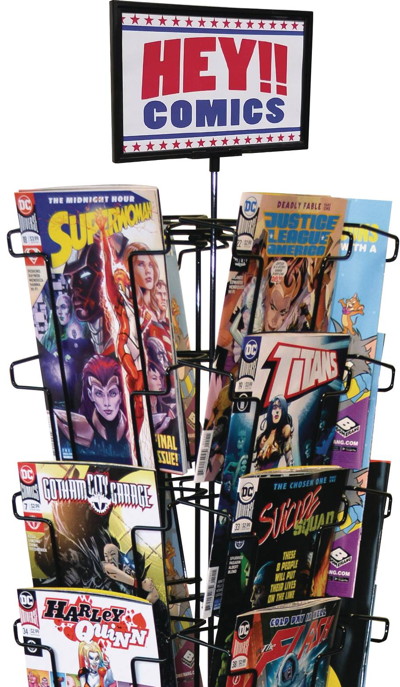
I also have a standard spinner rack that I use to display the more all-ages books right by the front door, in which the covers overlap so that only the top half is showing. Here’s a stock image from Diamond’s site to show what I’m talking about, in the off-chance you don’t know:

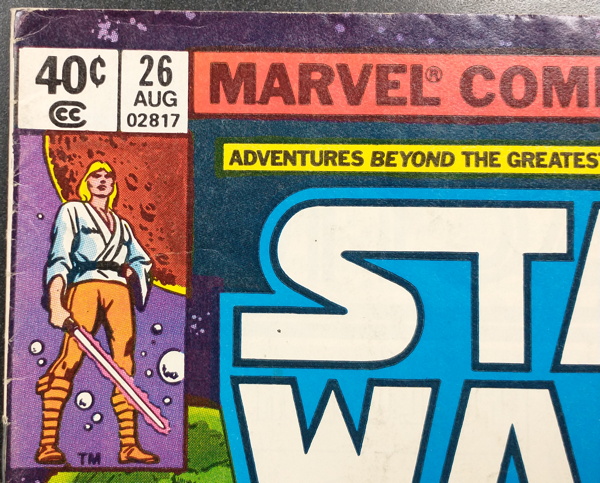
The reason I ask is that the other day I was sorta runnin’ off at the Twitter about corner boxes on comic books:


As I said there, the purpose of these was so that should the retail establishment in question rack the comics so that they’re side-by-side and overlapping, the corner box would still clearly identify the title even if the actual logo is obscured. I contended this was more common in newsstands and grocery stores and the like, whereas the direct market comic shops were more likely to display comics full-face (or at least on spinner or wall racks that would at least present the full logo). As such, there was not much call for the practical use of corner boxes, relegating them instead to a nostalgic symbol.

“Hold yer horses,” came the reply, however, from a Twitter pal what also sells funnybooks for a living. “Some comic shops, like ours, still do the overlap thing” (paraphrased slightly) and I’m forced to admit I occasionally do so as well even on my big ol’ rack. Ideally I don’t, as I prefer to face everything out ‘n’ unobscured, but there’s always a small percentage of them being overlapped. Thus, I am forced to admit, #notallcomicshops have entirely eschewed the overlapping strategy, for both space reasons and the simple fact there are a hell of a lot of comics coming out. I thought my giant rack would give me plenty of room, but every week I feel like I’m trying to squeeze more material on there.

So, after that long preamble, my question is this: how does your local shop display their new comics? I’m not so much concerned about the actual fixtures themselves (though I suppose it would be difficult to extract that info from the answer) but rather: are the comics primarily displayed with the full cover visible, only the top half visible (like in that spinner rack pic), or with just the sides visible (racked side by side but overlapping)? Or, God help you, are they just dumped into some short boxes for you to flip through and no covers are displayed?

I know there won’t be many either/or answers here. My store is mostly full-face display, with a single spinner rack that shows top halves, and sometimes I have to overlap things on the main shelf so only the left half of the book is showing. But, despite all that, the vast majority of the books are full-face displayed.

So what’s your local comics emporium like? Don’t need to name names (especially if their display is…well, awful) but I am curious as to what folks are doing.

And knowing is 37.5% of the battle.


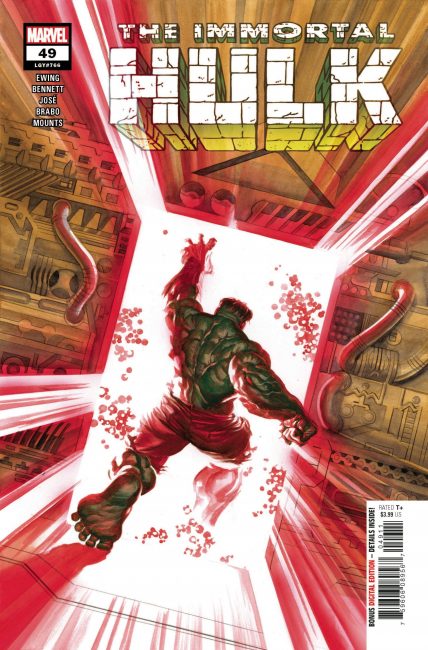
It’s a Special Album Issue, just like the good old days! Full-page illustrations combined with prose appearing in your otherwise regular Marvel funnybook…not a thing I’d like to see on a regular basis, but okay once in a while, especially if done well, like it is here, taking what could have been yet another Hulk-versus-heroes battle and applying some of the book’s usual levels of gravitas. One thing I liked is the opening (and continuing) comparisions between Bruce Banner and the Hulk with the Fantastic Four.

In an interesting confluence of events, Adam Warren, in his notes to Tuesday’s serialized page of Empowered, says

“…This does seem to represent a bit of a lost opportunity for superhero storytelling—that is, conveying how BLUDGEONING AND EARPIERCINGLY G-D LOUD that most cape-related conflict would be. Of course, the use of giant frickin’ sound FX and the like would burn up pagecount in a hurry, but this still seems like a narrative avenue worth exploring on occasion….”

And this issue of Immortal Hulk does just that, emphasizing the sounds of conflict, the drowned-out voices, et cetera…and given the illustrated text format of the issue, it manages to get around the sound effects problem that Warren posited. Thought that was a nice coincidence!

• • •

Joe mentions, like I probably should have in Monday’s post, that the double-covered #2s had been a prominent feature during the “Heroes Reborn” year-long experiment with the Image Comics artists. Not just on the Reborn books, but on new title launches like Thunderbolts (which I remembered) and he also mentions Deadpool, which I didn’t remember and can’t find that it had a second cover (beyond having a newsstand “variant” with the standard UPC…am I missing something? Wouldn’t surprise me! ). Anyway, I should have noted when the two covers for the second issue started, and thank you Joe for stepping in.

Matthew asks

“Years ago I remember reading that for some period of time the second issue of the GI Joe series that Marvel put out was actually more valuable than the first issue because there were so many fewer issues printed. Was that ever true? Is it still true?”

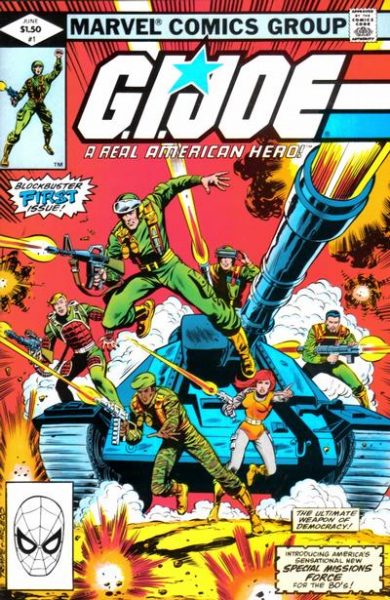
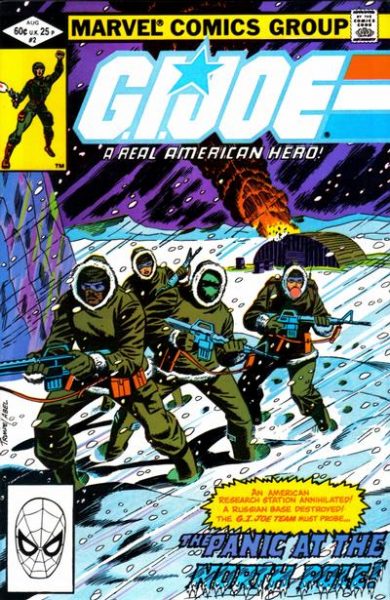
Other commenters provided their answers, but I thought I’d answer here, too. Yes, there was a time when the second issue of Marvel’s G.I. Joe: A Real American Hero was commanding higher prices than the first.

Now I’m just working off my memories instead of, you know, doing research, but I believe the common belief was, true or not, that the second issue had a smaller print run that the first. And given that G.I. Joe was a relatively popular commodity at the time, it wouldn’t surprise me to find out that the first issue was in higher demand than expected, and retailers lowering the order on the second issue (without yet knowing how #1 would be received) resulted in the higher demand and comparative scarcity.

Contributing to this disparity in cover prices. Issue #1 was extra-sized and printed on nicer paper, selling at $1.50:


…and then #2 was the standard format comic at 60 cents:


If I had to hazard a guess, backed up by literally no evidence whatsoever (though maybe I can peek through my fanzines from the period and see what sales on these were actually like) beyond my own proclivities as a comics retailer…I’d say that $1.50 price tag on a cartoon ‘n’ toy tie-in, two and half times the price of a standard comic, may have kept orders lower on the first issue. I mean, no matter how popular the property may have been at the time, there was no guarantee that would translate to comic sales of any note, and that high a price tag might have made the buying decision for anyone on the fence about it. And with that seeming barrier to entry, there was no reason to expect much repeat business for the second issue, even at the lower price.

Now please note that at no time am I saying the comic wouldn’t have had strong orders, or that it didn’t…just that the cover price may have kept them from being even stronger. And as it turned out, the first issue was very popular, enough so that there wasn’t enough of the second issue to go around, therefore low supply + high demand = $$$ for somebody. As a result, the price guide regularly had #2 listed at a higher price than #1.

But enough time has passed, with most early G.I. Joes being in less reliable availability at your local comics emporium, that the whole “lower print run” thing, if it ever actually was a thing, is of negligible importance in today’s market. #1 and #2 are both equally difficult to come across, and with the back issue market becoming increasingly focused on “number ones” and “key issues,” it’s not much of a surprise that prices for that first G.I. Joe have zipped on past those for the second.

It’s the loneliest variant since the number one.


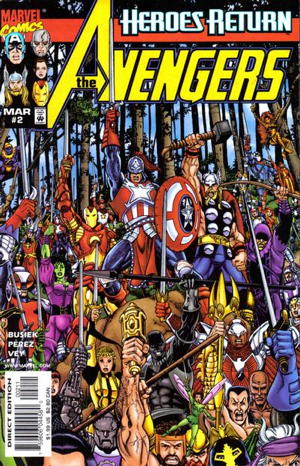
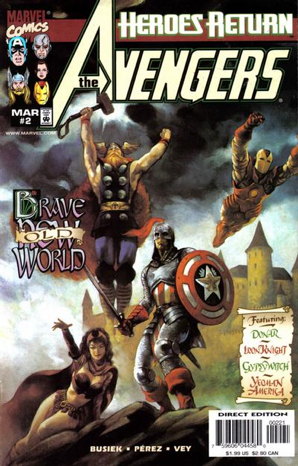
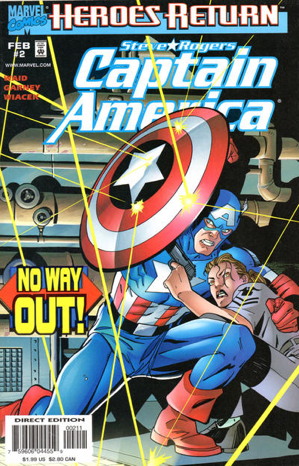
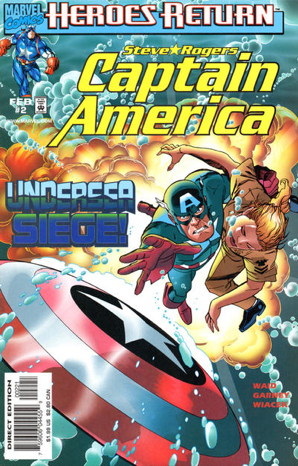
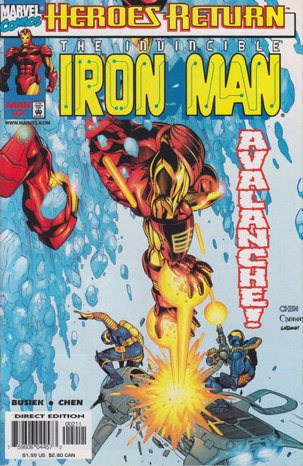
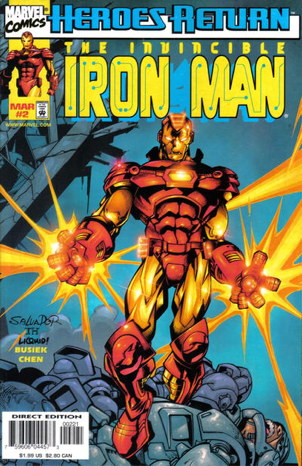
In the late 1990s, Marvel had a publishing strategy designed to counter the dip in orders new comic series usually had with the second issues of their runs. And that strategy was, as you’ve probably guessed if you’ve been reading the Monday posts on my site for the last few months, variant covers.

The deal was, retailers would order relatively high on a first issues, as that seemed like a relatively safe bet. Back in the days when you ordered a new series as if they were going to be ongoing series (and not for all intents and purposes a limited series), you placed numbers with the expectation that, should the series continue for a while…and there’s no reason why a comic featuring A-listers or even B+ listers wouldn’t…there would always be demand for that first issue. People like first issues. Kids want to own “Captain America #1.”


Of course, the market has changed, with new series now being launched, ended, and relaunched, flashing by like strobe lights and new #1s piling up for every title under the sun. That kid who wants to own Captain America #1 currently has a dozen or two to choose from.

Currently, the back issue sales window for a #1 issue is about as long as the new series lasts, then attention shifts to the back issues for whatever series featuring the same characters/concepts that succeeds it. But a couple of decades ago, retailers still pumped up those first issue orders.


And then, to play it safe, order numbers would be pulled back a bit for that second issue. It was usually pretty safe to say (at least then) that many people would give a first issue of a new series a try to see if it was to their liking, or would just buy the first issue because, hey, it’s a first issue at cover price on the stands in front of me right now, I’ll buy a first issue, sure. And of the folks who bought that issue, only a certain percentage would come back for #2. As such, those second issue orders would drop, with the assumption that they’re not going to sell nearly the number they did on the debut issue. Then, by the time orders for #3 go in, hopefully you have an idea of actual realized sales on the first issue and you can adjust your numbers accordingly.

Of course, there’s always the problem — well, “problem” — of “what if it’s a hit?” What if you ordered what you thought was a sufficient number of #1s, but sold out due to the wild demand for that comic, and then #2 comes along and you don’t have nearly enough to go around? Suddenly #2 is a scarce commodity, and while you can raise your orders on later issues, will the demand continue if potential readers missed that second installment? All thoughts that you have to consider as you make that ordering decision.


So, to help avoid that second issue dip, here comes Marvel with two covers for the #2s of all their newest ongoing series. “Why not just order what you were going to order anyway, but split the number between two covers?” As I talked about early on in this series of posts, the particular evil genius behind variant covers like this is the possibility of getting customers to double-dip. Some folks won’t be able to decide between the two covers offered, so “buy ’em both!” it is.

As I recall from my previous place of employment, we did order relatively high on the second issues, compared to what maybe we normally would have. And we did have some extra sales to folks seeking both covers. Persuing the Comichron sales charts for ’97-’98, it looks like there was still that dip on #2s, but perhaps it wasn’t as big a dip as it could have been. Comparing to other percentage drops from other titles around the same time, from other publishers, shows about an equal percentage of dropped orders…but orders on those first Marvel issues were perhaps unusually high, due to increased interest after the wrap-up then-recent “Image Comics creators back at Marvel” experiment with most of these properties.

Ultimately, it’s hard to say just exactly how well this strategy worked to keep plenty of second issues available for sale (and more importantly for the publisher, to get retailers to load up on ’em). As I recall, on most of the second issues, especially on titles like Captain America and Avengers, we nearly sold out on those #2s, so even with our slightly higher orders, perhaps the variant covers helped to bump up those sales.

Regardless of how much this variant cover scheme did or did not help, it’s pretty clear it’s Standard Operating Procedure on nearly everything Marvel and DC publish today. Though I don’t see nearly as many people double-dipping on the regular and the variant as I used to. At up to $6.99 for that stiff cover variant DC provides, or the boggling array of variants Marvel can release for any given comic for any reason…it’s not a surprise. Not that there aren’t folks out there trying to get all those variants…I’ve got a few at my shop! But that multiple cover strategy is more squarely focused on the retailer trying to juggle his numbers every month. At least, that’s what it feels like to me as I’m hunched over the order forms.

Still holding out hope for Groo Vs. Spawn.


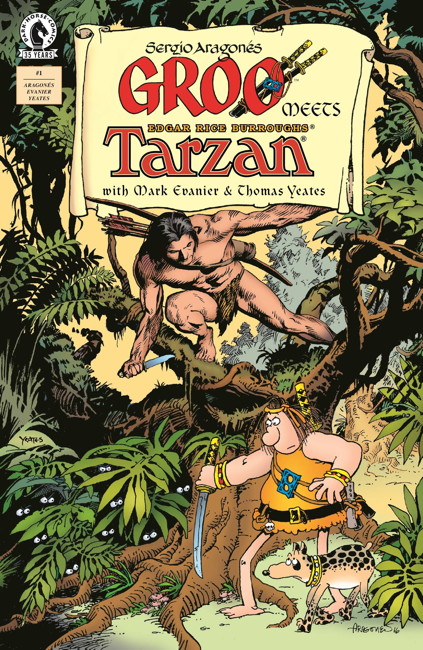
Groo Meets Tarzan is a “crossover” in the same way that Groo Versus Conan mini from a few years back was — a fourth-wall breaking story in which the creators of Groo are the framing device for the book’s events. It’s a strange gimmick in which the adventures are explicitly presented as fictional constructs…I mean, yes, obviously, we know they are, but having two different stories with essentially the same hook relatively close to each other in this decades-long progression of Groo stories is…

“Mike, it’s just a comic book, mellow out dude.”

Yeah, okay. I believe Mr. Evanier said on his site that this will likely be the last of these crossovers with the large-nosed wanderer, and that’s probably fine. The melding of two very different styles of characters is too…”world-breaking” for Groo’s milieu except when presented, as they have been in the Tarzan and Conan events, within the narrative itself as “What Ifs” or “Imaginary Stories” or whatever other copyrighted term I can borrow from Marvel or DC. Because, obviously, as Evanier has said in the past, anyone with whom Groo crosses over would obviously be dead in short order if it “really” happened, and I suspect the various licensees involved would not be too pleased.

It is nice to have Groo back after too long a hiatus, partially due to the COVID-related delays. And the comic is funny, including a nice two-page Mad Magazine-esque crowd scene taking place at the San Diego Comic Con (where Mark and Sergio are present to talk about their Groo Meets Conan comic, drawn as only Mr. Aragones can do it. Detail for days in that spread. Groo and Tarzan are on their own separate threads in this first issue, with Tarzan looking for slave runners in his story, and Groo inadvertently menacing a couple of villages in the other, and you keep waiting for the two to collide. Alas, how do you keep a Groo fan in suspense? We’ll tell you next issue!


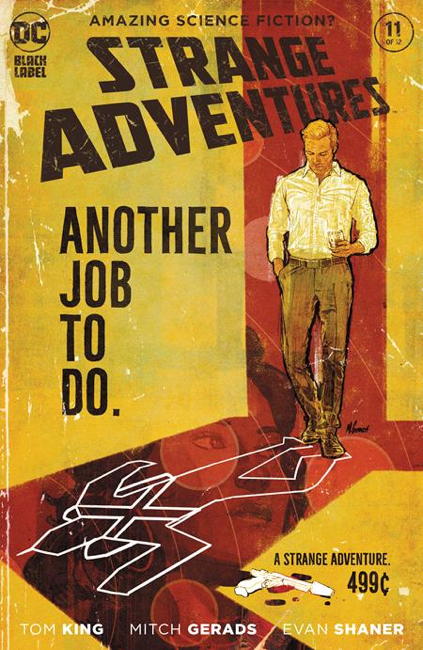
I get the feeling Strange Adventures will read better in collected form, or at least with all the issues in front of you to read in short order. I mean, the events of the plot itself are fairly straightforward, but many of the emotional ups and downs and the rationales of the characters involved can be hard to track issue to issue, particularly when they have a little extra time between releases. I mean, I’m not sure I like Adam Strange much in this story, which is certainly the intent. And some of Alanna’s reactions to Adam emphasize her “alien-ness” — I mean, yes, she’s basically human, but some of her comments about humans and Earth remind you that Adam totally married an extraterrestrial.

It’s a hard read, the fight between Adam and Alanna, but not hard in a bad way. It’s fascinating, it’s involving, and you keep waiting for a way out of this mess to show itself and hoo boy it does not. Only one issue to go, and while I’m usually of the opinion that drastic choices made with characters usually get undone or reduced so that other creators can play with the toys…I’m honestly wondering how this is going to end. And which comic creator’s quote will be on the last page…that’s been a fun bonus. May I suggest “It’s all just lines on paper, folks!” from a Mr. R. Crumb?


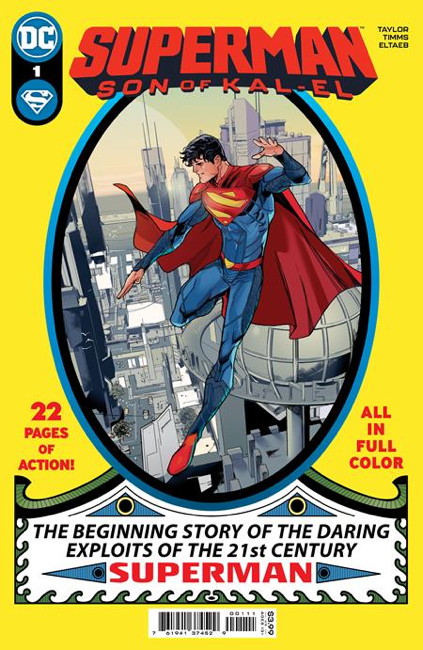
I honestly thought by this time DC’s usual rebootery/universe-rejiggering shenanigans would have done away with the biological sons of Batman and Superman, but here we are, years later, and they’re still hanging around as integral parts of their respective franchises. Damian Wayne feels like a more natural fit, a new somewhat adversarial Robin to his pops Batman. Jon, the son of Lois and Clark, seems a little less so, especially after the plot mechinations of one story aged Jon into his late teens.

But this new series seems to be heading in a good direction, giving Jon his own purpose as well as a couple of good scenes showing that he’d learned the right things from Pa El. Plus, I’m a sucker for the repurposing of the original cover for Superman #1. What a classic image that is.

I’m actually a lot angrier about this than it may seem in this post.

Just wrapped up an extremely long day at work, dealing with both the new comics shipment and the Free Comic Book Day shipment, which amounted to an enormous number of shipment boxes I had to bust open and sort out. On the plus side, unlike the last few weeks, this shipment was relatively light in shortages and damages…in that I only had a few compared to the nearly unbearable amount of errors that had been the norm of late. On the minus side I got about at about 11:30 Tuesday night with more set-up waiting for me in the morning before I open for new comics day sales. Let me tell you, my boss sure overworks me sometimes.

During my open hours, one of my regulars happened to comment that he saw some of the current batch of FCBD offerings up on the eBays at ridiculous prices, which I’m sad to say doesn’t surprise me. It’s always something, each and every year, but especially not a shock this year, with Peak Speculation running rampant in the market and everyone trying to exploit a character’s “first appearance” or whatever it is that’s got ’em all riled up this time around.

I didn’t get a chance to peek at eBay ’til a little later, and friends, I’ll admit it really cheesed my crackers this time. Usually I just look at it and think “oh well, That’s Our Industy!™” and go about my day, but every time, every time, someone’s gotta take an opportunity to do some community outreach, a chance to build customer goodwill, and just throw it in the trash in exchange for getting ten bucks for a comic you’re supposed to be giving away for free.

That’s typical for our business, continually finding ways to snatch defeat from the jaws of victory. I’m a huge advocate for Free Comic Book Day…I know I get the same questions every year about “how does this help?” and “do you get repeat business?” and so on and I really should just create an FAQ because boy am I tired of having to answer those every year.

Rest assured, yes, if you do it right, FCBD pays off. I make a big deal about how every FCBD I’ve participated in (and I’ve done it each year since it started), we ordered lots of comics, gave them away freely and without restriction, and we’ve never lost money on the event due to that day’s in=store sales. And all our customers went away happy. And yes, we’d have people come back and mention their FCBD experience as the reason for their return.

Even now, as a person running his own much smaller store than the ones I used to work at, I still manage to put out a generous spread. And not one of my customers walks about of a FCBD thinking “boy, that guy was sure stingy with the comics.” I give away as many as possible to as many people who want them. And (something else for the FAQ) with no limits in place, yes, some folks take one of each, but plenty of people only take one or two. It all balances out. And it really doesn’t take much to make it profitable…a storewide discount or two will encourage purchases.

But if you’re restricting distribution beyond reason (like, only offering a book or two per customer), or requiring a purchase to get the freebies, or selling the things on friggin’ eBay instead of handing them to someone who might actually read it…sorry, that’s doing it wrong. And I’m sure I’ll get some pushback on that, because I always do (sometimes even from comic creators, who should really know better). Seriously, though, the absolute bare minimum of Free Comic Book Day is “giving the comics away for free,” and if that’s too much for you, stop pretending to participate.

Return with us now to those thrilling variants of yesteryear.

So this installment in my ongoing variant cover-age is going to be slightly less involved than previous ones, because 1) hey, I could use a small break, and 2) I came across something neat while processing some comics and thought I’d discuss it here.

Last week, I told you about that sizable batch of 1960s comics I’d acquired. In said batch were a few Gold Key Lone Rangers and one really beat up early 1950s Dell Lone Ranger. As I was pricing these, I noticed something in the price guide that I don’t think I’d ever noticed before, given the relative scarcity of Dell Lone Rangers that have passed my way.

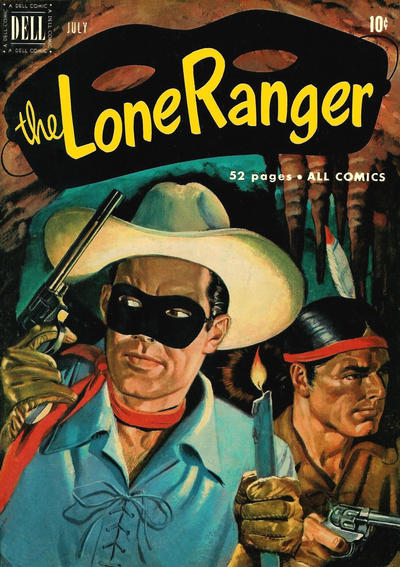
For issue #37 of the Dell run (alas, not the one I got in this collection), there was a note stating that not only was this the last issue to contain the newspaper reprints that comprised the previous issues, but this was also the issue where the Lone Ranger gets some newly-colored togs. Instead of the red shirt in which he was normally clad, he was to have a blue shirt in its stead. “New outfit” reads the Overstreet entry, and that very outfit can be seen in all its glory in the wondefully painted cover for that issue:


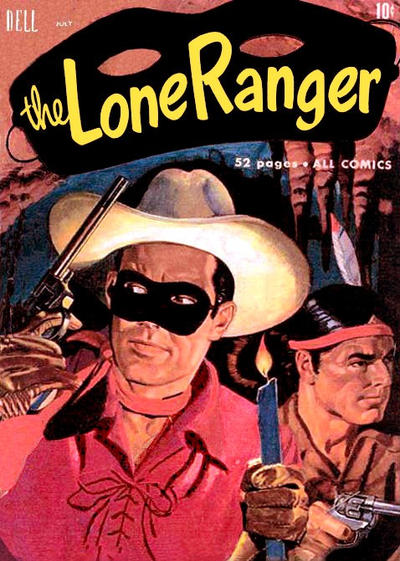
But wait! According to the guide, a few copies got printed with the red outfit, both on the cover and inside, as apparently somewhere along the line word didn’t get to the right people that Mr. Ranger was to have a fashion change.

The cover for that version (liberated, as was the previous image, from the invaluable Grand Comics Database) looks a little something like this:


Now, I have no idea how many were printed (Overstreet calls it “rare”) or if they were just mixed in with the regular stock and distributed to newsstands, or just kept in the office and maybe handed out to employees.

The GCD’s specific entry for the red shirt variant has this to say:

“The SCOOP website reports ‘Noted collector Harry Thomas of Sweetwater, TN, however, has pointed out that there are still a precious few issues of The Lone Ranger #37 that may’ve gotten printed in the transition still feature him in a red shirt.'”

…which makes it sound like nobody’s quite sure if red-shirt variants made it out into the wild by whatever method.

I can’t seem to find any for sale, and I can’t log into the CGC “Census” portal to see if anyone’s put one into one of those plastic slabs. (If any of you have a membership there and can check, I’d appreciate it and update this post accordingly.) Any other sites with pictures of the red shirt cover appear to be using the same pic as the GCD entry (which (cough) me too).

It’s got me wondering if this version of the comic actually exists in the wild. Like, the story about the misprinting got out there, but somehow not the comics themselves. Now, the Overstreet Price Guide does have price listings for it, which theoretically should come from retailer sales reports of an actual item. And GCD does have that pic, which I suppose someone could’ve have Photoshopped from the original to make an approximation of the variant, to which I almost asked “but why would they?” until I remembered “why does anyone do anything on the Internet?” Anyway, that red shirt cover does have an overall…reddish/pinkish tinge, which makes me wonder.

But I don’t think that’s what happened. It could just be genuinely rare…it’s out there, somewhere, hiding in someone’s cardboard box out in the garage. And someone snapped our one and only oddly-colored picture of it and that’s all we got.

If you have more info on this variant, either by finding it for sale on some website I missed, or actually getting into the CGC database, please don’t be shy! Let me know and as I said, I’ll pass that info onto you!

EDIT 6/5/26: there’s an update, as a copy of the red-shirt variant has been found! Check out this post for details!

Welcome to the house of sketches.

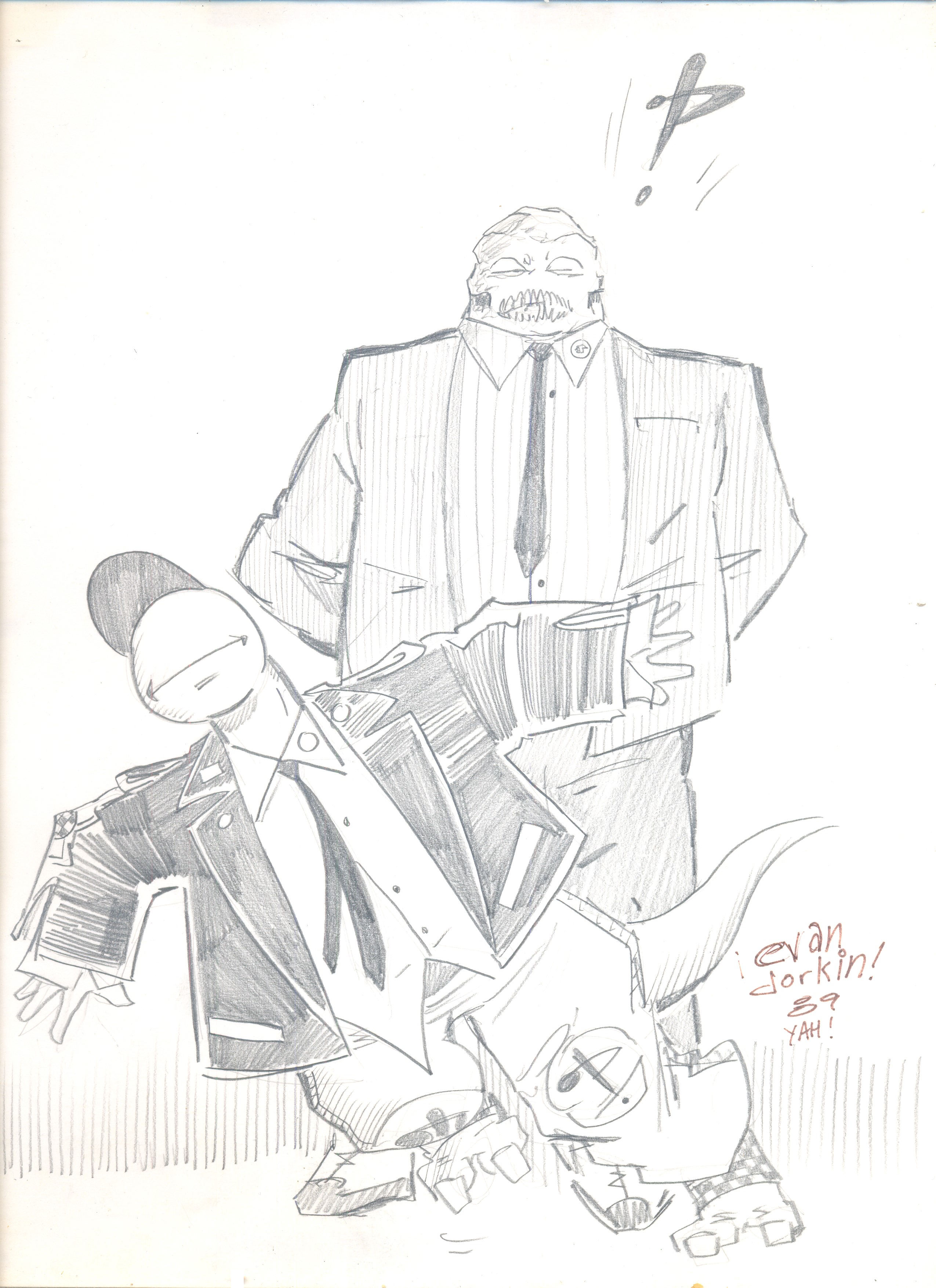
So Wednesday I mentioned I obtained a Pirate Corp$ sketch by Evan Dorkin about thirty years ago from…still can’t remember the guy’s name! Tad? Scott? Chickie? Chasley? No idea.

But I still have the sketch, and I realized it wasn’t fair to tell you about the sketch without showing it to you. As such, let me rectify the situation by presenting it now:


Nice pic of Blue and Charlie, I think! I adjusted the scan shown above to make the lines more visible. However, if you click on the pic you’ll get a very large image of the original unadjusted scan.

Pirate Corp$ (and later, Hectic Planet) was a fun comedy/adventure comic that well demonstrated Evan Dorkin’s penchant for being able to mix actual emotional drama with wild comedy. It’s another indie of yesteryear that I miss…unlikely to ever return, but at least I still have all the original issues to continue enjoying. And, of course, that wonderful original drawing.

It cost me two dollars in American loot (two-sixty Canadian).

At some point in the early 1990s, someone decided to hold a comic convention in our area, specifically in a large building at the Ventura Fairgrounds. It was also the same day as the usual giant swap meet that generally occupied the entire venue, so there were enormous crowds not there for the comic show that we had to navigate in order to set up our shop’s presence there.

Thirty years on I can’t recall much about the event beyond the inconvenience of trying to get in an’ out of there (especially during the middle of the day when one of us had to run back to the shop for something we needed). I do however recall three specific things (and one “maybe” thing):

1. Ol’ Forrest J. Ackerman speaking to a small but rapt group of fans, all of whom (Forry included) sitting on a bunch of folding chairs just kinda in the middle of the floor of the show, no separate room, nothin’ roped off. Just everyone kinda sittin’ there. They seemed to be enjoying themselves, especially Mr. Ackerman, a person I understand totally enjoying talking about stuff.

2. I bought a copy of volume one of the Action Comics Archive Edition for ten bucks in an auction.

3. The “maybe” thing: I believe it was at this show I picked up a group sketch by Evan Dorkin of the Pirate Corp$ cast for another ten bucks, from a fella who’d been active in the local comics retail scene at the time and was just trying to unload a bunch of his stock. Boy, I haven’t seen him in decades…I can’t even remember his name at this point. (Was it “Greg?” I can’t recall.) But I still have the sketch, framed and on display in the house! Anyway, if it wasn’t at this specific show, it was certainly around this time.

Remind me to scan and post that Pirate Corp$ sketch at some point.

And for 4) we’re back to a specific memory of this show, where cartoonist Mike Kazaleh was a guest, signing comics and drawing sketches for the folks who came to his table. Now, Mr. Kazaleh had then just started drawing for the Teenage Mutant Ninja Turtles comics published by Archie, and that was the big selling point for his appearance at the show. As such, it appeared to be all TMNT all the time for him as he interacted with guests, drawing pics of Michelangelo and the other not-as-good Turtles, signing TMNT comics, and so on.

Now I was (and still am!) a fan of Kazaleh’s work, particularly of his creator-owned sci-fi anthropomorphic comic book series Adventures of Captain Jack. So, between waves of children hitting his table, I made my way over there, told him I was a fan, and asked if I could buy a sketch of Captain Jack.

Well, clearly he was surprised that there was actually someone there asking about something that wasn’t teenage or mutated or reptilian. He drew a quick but nice drawing in his sketchbook, ripped out the page, and handed it to me.

I said “Great! How much do I owe you?”

He replied “oh man, I’m just happy someone asked me about Jack. You can have it for free.”

Me: “Ah geez, I gotta pay you something.”

MK: “…Okay, how ’bout a dollar?”

Me: “Only a dollar? That’s not enough! …Look, I’ve got two dollars.”

MK: “Okay, sure!”

We had a pretty good laugh, and though I don’t remember the details of the other conversation we had, I do recall that I enjoyed talking to him. And yes, I should have at least given him $10, since that seemed to be the amount I was handing out at that show. If Mr. Kazaleh would like the additional eight dollars, I’ll happily send it his way.

Over the years, the sketch got stored away between some move or two over the last decade or so, where it stayed until I recently started digging through some boxes and pulling out some of my own old artwork. Now I have it out, and I need to find a frame for it.

And of course I’ve also finally scanned scanned it so I can show it off to you folks. I had to do a little brightness/contrast adjusting to maximize its visibility, as the art’s lines are pretty light. The actual paper is white, not this dingy color, I promise:
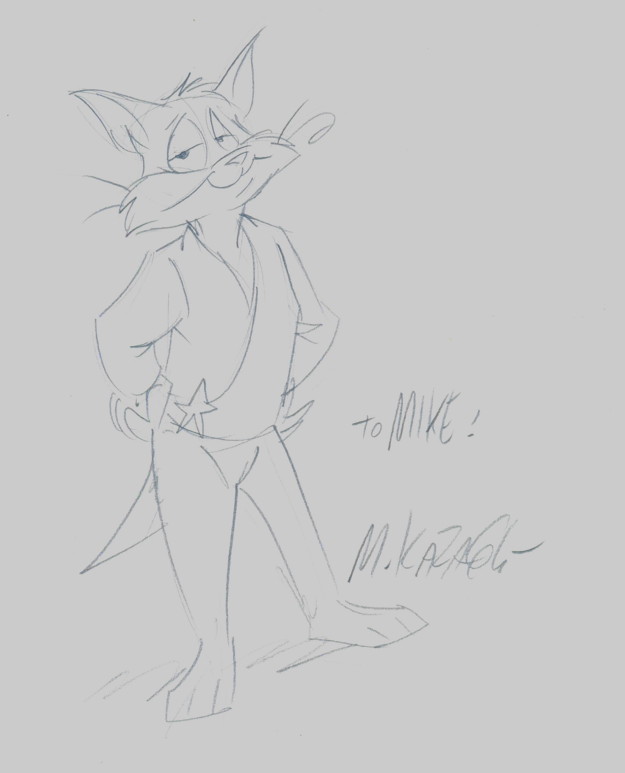

Isn’t that nice? I miss Captain Jack comics. I miss a lot of those ’80s/early ’90s indies.