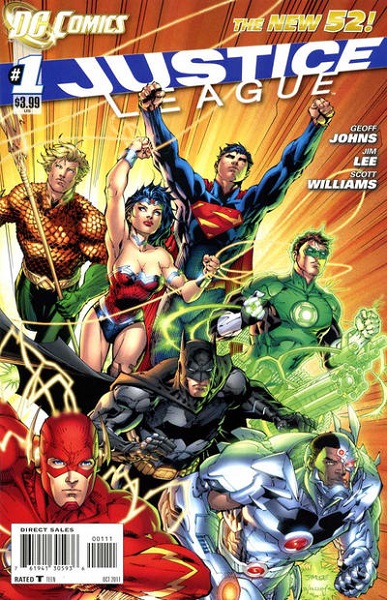
I realize it’s a bit early to be commemorating the 10th anniversary of the launching of DC’s “The New 52” publishing strategy (which began with Justice League #1 in August 2011). However, with today being my 52nd birthday, it seemed, at least to me, like an opportune time to briefly gaze back upon this event and its eventual ignoble end.
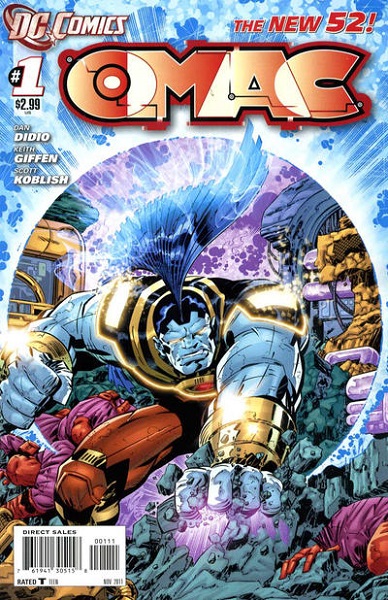
Aside from the online news sources and whatever we were getting in Comic Shop News, I think the main source of into on this particular initiative to which our customers were exposed was that little preview comic DC released listing all the new first issues planned for release in late 2011. It was quite the tantalizing assortment, actually, with the old standbys relaunching with #1s (shockingly including Action Comics and Detective Comics, DC’s two longest-running, highest-numbered books, as well as Batman, also way up there in consecutive numbering) and a variety of other titles attempting to expand the line outside the Supes/Bats/Wondy-related franchises (like O.M.A.C. and Blackhawks).
As I recall, there was some grumbling about knocking Action etc. back to 1, but otherwise people seemed pretty excited about all this. I mean, it was fairly unprecedented (though reminiscent of what Marv Wolfman wanted to do after the conclusion of Crisis on Infinite Earths)…taking an entire existing superhero universe and starting it all from scratch with all-new series.
Not that we had a lot of extant or well-established/defined superhero universes with which to do this. Realistically, the only alternative one is Marvel, which followed suit seemingly with relaunching their titles with new #1s at the drop of a hat, after seeing how well DC with with this whole New 52 hoohar.
And well DC did..as I reported shortly after the launch of Justice League, the premiere New 52 release, response from our customers was very enthusiastic, and we sold out of that comic in short order. A restock of first printings for that #1, which we placed but didn’t expect to be filled, was indeed filled and we blew through those as well.
Now whether it was hot because fans were excited about how DC was going to rebuild their universe, or whether they thought it “would be worth something someday” — well, speculation wasn’t quite as rampant then as now, but it wasn’t nonexistent and I’m certain more than a few folks were intrigued by the idea of getting their hands on something in relatively short supply and high demand.
So yes, sales were strong at first, but quickly settled down once the novelty of what DC was doing began to fade. I think of all the titles that passed through this New 52 gauntlet, it was Batman that may have benefited the most, maintaining good numbers throughout the New 52’s run and continuing on through Rebirth and beyond, mostly due to a mix of excellent creative work on the stories combined with the occasional misleading promotion and reasons to get the investors salivating. And plus just the fact that it’s Batman.
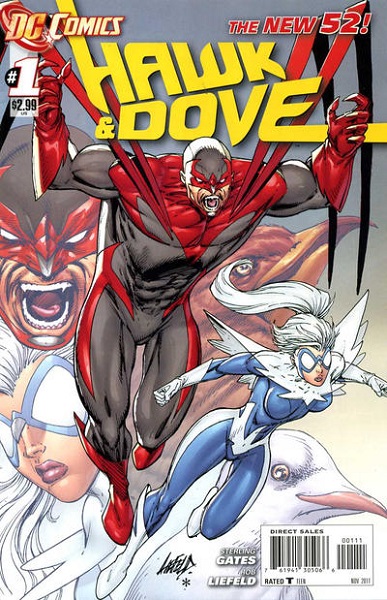
So anyway, the New 52 promised a fresh start, kinda sorta, with their entire line. Some books essentially restarted from the beginning (like the Superman books), others just kinda kept on keeping on (like Green Lantern) barely acknowledging that there even was a reboot. DC’s shared universe, which had hit a 20-year timespan for its “modern age” of superheroes, as of around Identity Crisis, had now been knocked back down to about five years. Older veteran heroes were now younger rookies, or at least closer to their beginnings than they had been.
And it quickly became apparent that the New 52 had been rushed into existence. I expressed some reservations early on about how the conclusion of Brightest Day (the event just before the New 52-introcuing Flashpoint) offered up some epilogues setting up future events…which were all mostly discarded once the DCU was rebooted. Combined with George Perez’s comments about how no one was quite sure was Superman’s deal was in the New 52 (something he needed to know since he was writing the book), and that edits had to be made to Teen Titans stories because their exact history hadn’t been nailed down either. It all smelled of a top-down instruction to DC from the parent company of Warner Bros. to “hurry up and make these funnybooks sell” — reinforced by Perez’s mention that he had to meet demands of folks higher up the food chain than DC’s editor-in-chief Dan DiDio.
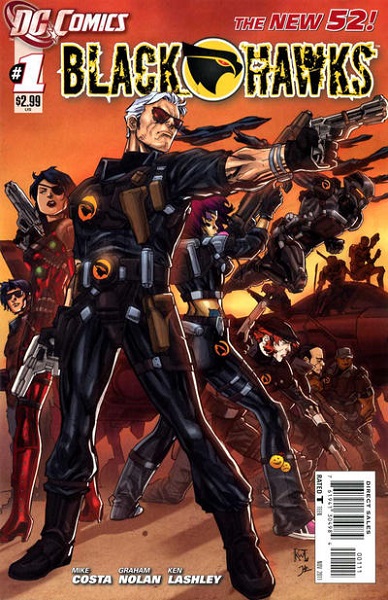
While I was certain at the time this was DC’s “last chance” at making the comics thing work before it all got handed over to the toy companies or whatever, once the bloom faded off the New 52 sales, and bumps from various gimmicks and events became less effective, and there was once again a linewide refurbishing of all DC’s titles in 2016. Which put lie to my “last chance for DC” thought from earlier.
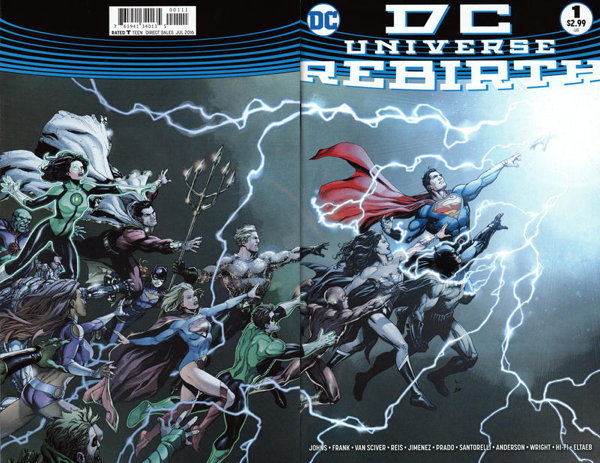
Dubbed “Rebirth,” it seemed to learn from The New 52’s mistakes, in that it all felt a little more…planned, this time around, that it wasn’t just DC immediately asking “how high?” when Warner Bros. told it to jump back in 2011. There seemed to be an effort at fixing what didn’t work with various properties during New 52. In particular, with the Superman books, which went through an extensive, and a little complicated, retooling to discard the New 52 version of Superman, bring back the post-Crisis/pre-Flashpoint. Superman.
And through all of “Rebirth” was a thread, introduced in the final pages of that DC Universe Rebirth one-shot that kicked it all off, that somehow the previously-verboten-from-playing-with-others Watchmen was somehow tied to whatever continuity shenanigans were occurring.
Were fans excited? Oh, sure. Sales on “Rebirth” titles never really reached the overall highs of the New 52, but it certainly got people interested and involved. They were certainly curious about the Watchmen involvement, as DC was finally desperate enough to acknowledge that Alan Moore hated their collective guts and that it wasn’t like they were going to piss him off more, so why not use Watchmen in this fashion?
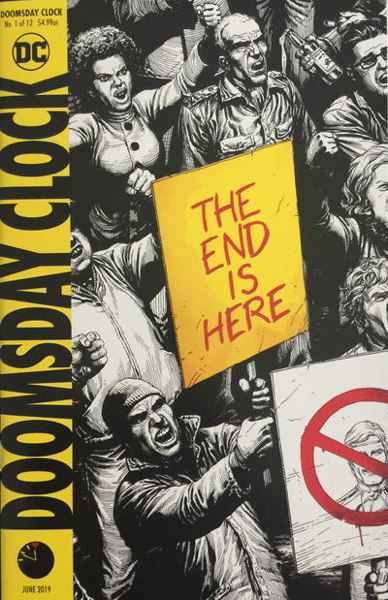
And as it turns out (SPOILERS) we find out in Doomsday Clock that, basically, the New 52 relaunch was due to Dr. Manhattan’s meddling. In essence, that five years of the DC Universe sorta flailing about trying to see what sticks? It was the result of an attack on said DCU by a “bad guy” from outside it. I’ve said in the past that it’s a somewhat clever (and meta) way to deal with the ramifications of a more-or-less defunct publishing initiative, while still being a curious, if not potentially-if-inadvertently insulting, way of recontextualizing the hard work of many creators and editorial staff put in what was almost surely a difficult position.
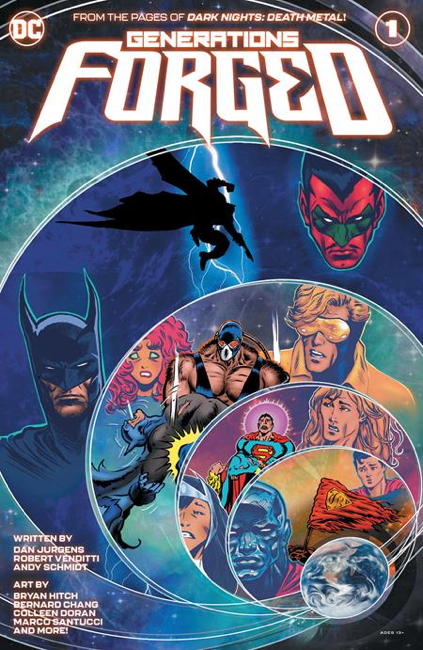
The New 52, ultimately, was yet another iteration of DC’s attempts at fixing what the decades-old Crisis on Infinite Earths had wrought, where supposedly simplifying and codifying the DC Universe only resulted in more complications and problems. Much of DC’s output and events, like Generations and the Dark Nights: Metal and Death Metal, and the earlier Zero Hour and The Kingdom (with its introduction of “Hypertime”), are tries at reexpanding a fictional world that had been forcibly contracted to meet a demand for consistency that didn’t really need to be met.
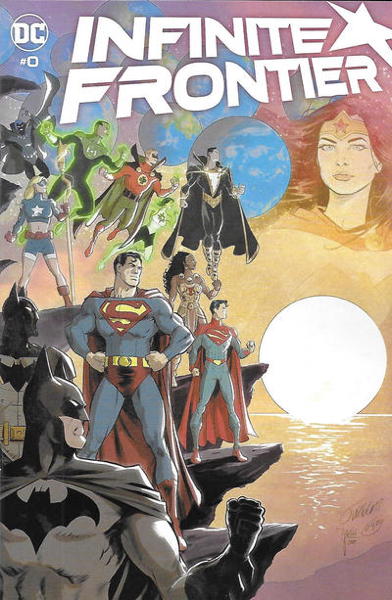
DC’s “Infinite Frontier” is the ultimate refutation of Crisis, in which, spinning off from Death Metal, the DC Universe is now again part of an endless multiverse. How long this will last, and whether this solves whatever DC’s been trying to solve for all these years, remains to be seen. I definitely hope I live long enough to see the company find the balance it’s been seeking, as the other possibility, that I outlive DC Comics, is not one I’d want to experience.

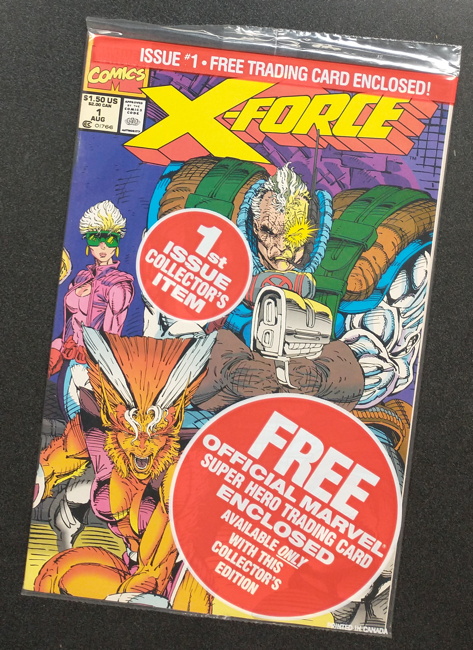
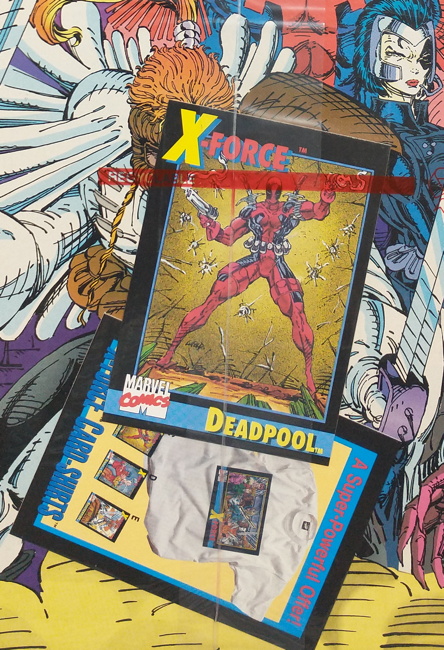
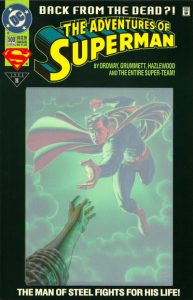 There is a grey area, of course, with the “opened bag” — the Death of Superman issue still sells with an opened bag and most, if not all, of its contents. Not for the full premium, of course, but not bargain basement prices, and there’s still demand for it. Compare to X-Force #1, where the main driving force for collectors right now is whether or not the Deadpool card is included, and whether that card is in “mint,” so sealed copies are preferred.)