If you want to talk more about it, do it in the comments because I’m not doing a fourth installment.

Unlike the new edit of the Justice League movie, I wanted to try to keep this, the third installment of “Zack Snyder: Friend or Foe?” (parts the first and second) reasonably short, instead of throwing my usual Wall o’Text at you. But, um, doesn’t look like that’s happening, so let’s get into it, shall we?

First, I already responded to valued commenter Turan in the comments there, but I wanted to take issue with the idea that “Superman as Christ figure” should be left alone as it would be offensive to his Jewish creators, Jerry Siegel and Joe Shuster. Honestly, I don’t know if that would be offensive to them, but the simple matter of fact is that once art is out in the world, it’s open to interpretation beyond (and possibly even against) the creator’s intent. It’s just a thing, you know? Stan Lee and Jack Kirby may have been Jewish themselves, but that didn’t stop their creation the Silver Surfer from being hailed as Christ-like (though some may argue the point). I mean, Lee made the dude’s arch-nemesis the Devil, c’mon. And I’m sure Lee had no problem playing that up in Surfer’s solo series for the college kids he thought were taking this all seriously.

Anyway, in conclusion I think they should drop the “Superman as Christ” angle at least for a while, because they’ve been hitting it kind of heavily and not making any new points with it. Give me “Superman as Job” for a while. I mean, his life starts with his planet blowing up, he’s gotta feel kind of put upon just from that.

Anyhoo, that all in a way ties back in to an argument in support of Snyder’s interpretation of DC’s characters, but I don’t imagine I need to explicate that further. Besides, I think my initial point, more or less, was less “should ol’ Zack have done what he did” and more “why Marvel’s movies had more popular cultural traction.”

Daniel then wants to know “if someone could provide a quote from Snyder that expresses his support for [Ayn] Rand.” And I did look, mostly coming up with repeated reporting on how much Snyder’s admires The Fountainhead and what it says to him about the creative process. Depending on what one thinks about The Fountainhead, that likely should answer the question.

Getting back to my initial “Marvel movies vs. DC movies” thesis, Cassandra notes, in short, how the general tone of the Snyder films is antiethical to Superman’s nature…maybe not a bad movie, but not a good Superman film, in short, whereas the Marvel movies hew a tad more closely to the source material (with allowances, as always) and strike more of a chord with the public. That is essentially the same point I’ve been attempting to make, though I think I appreciate Snyder’s interpretation (there’s the word again!) of Superman and his story more than she does. I get where she’s coming from, same as I see Daniel’s point (of viewing this as a more mature and “realistic” paean on the nature of heroism). Yes, I’m planting my wishy-washy feet on both sides of the line…I lean towards Daniel’s thoughts on the matter, while nodding toward Cassandra’s thoughts on the film’s appeal.

Told you this wouldn’t be short.

Thom H. brings up that the grim ‘n’ gritty serious tone gets in the way of connecting with the characters, and in a way I believe that’s true. My initial comments on this topic on Twitter were about how I feel no real emotional connection to any of the characters in Snyder’s films…it’s all watching plot points progress, which for me was fine, but if he expected me to feel anything about Superman’s death at the end of Batman V Superman, well, sorry, dude. (Daniel, on the other hand, did find much to emotionally connect to, so clearly this isn’t the case for everyone.)

I think what connects audiences more to the Marvel characters is, of course, the humor. It draws us in, makes us relate to characters that are otherwise unrealistic, and strengthens that willing suspension of disbelief superhero movies need to keep audiences focused and in the story. Granted, anyone going to a movie called Iron Man is probably on board wtih a guy in a flying suit of armor to begin with, but having the man inside the suit be charming and witty goes a long way to caring about what happens to the guy once he’s face to face with a giant purple fella who can kill off half the universe by snapping the fingers inside his magical glove.

I honestly can’t think of a single funny, warmly humanizing moment in Man of Steel. Look, before anyone yells at me, I know there must have been…okay, I’m kind of remembering the shot of a Young Clark standing hands-on-hips, cape billowing behind him. There’s that. But I don’t feel like you’re ever really drawn into the character. He does heroic stuff, you see him struggle, you see him sacrifice, but that is, as I said, more intellectual exercise and following the story’s arc. Marvel did a better job making us feel for a CGI space raccoon’s loneliness hidden beneath his bluster.

Again, that’s just me. And possibly a lot of you. But not everyone. The emotional progression in the Snyder films I’m willing to be argued (and Daniel did strongly argue) into realizing it’s all a lot less on-the-sleeve…it’s all there, just not in the more cartoony Marvel manner.

It bears repeating that I like the Snyder films just fine. They’re just different animals from the Marvel movies. I know, “duh.”

Okay, just a couple more short points here and I’ll unlock the doors so you can all escape. If I’m skipping your specific comments, it’s just because I’ve either already discussed similar material or because I’m going to call you at 3 AM and talk your ear off about it. So, Robcat notes that he liked Ben Affleck as Batman. Hey, so did I! I thought he made a great, older, kinda done with it Batman. It’s a shame he won’t be back (beyond a possible cameo?) in future flicks, but I thought he did a good job. And I’m still okay with the “Martha” bit, don’t @ me.

Finally, JohnJ reminds me of a “groaning reaction” superhero story that I’ve related on this site before, but it was probably well over a decade ago, so here it is again.

So in 2004 or thereabouts, I was in a movie theater, maybe waiting to watch my 9th consecutive viewing of Napoleon Dynamite, when the trailers came on. And this one trailer started, it had a lot of dramatic goings-on and action and suspense and whatever, and the audience was paying close, quiet attention…

…until, like, a drawer was opened or a bag unzipped or something in the trailer, and the Batman cowl was exposed, and I swear to you, that one was hell of a loud shared groan from the audience that followed.

Now the Batman and Robin movie was about seven years prior to this, but apparently cast a long shadow and surely this is what prompted the response. “Not more Batman,” they essentially announced, not realizing the Batman will continue until Bat-morale improves.

Okay, let’s leave it at that…as I said in this post’s title, you want to talk about this further, let’s do it in the comments here. I did want to thank you all for your thoughtful and polite participation, and that I value your opinions whether I happen to agree with them or not. Even yours, Daniel, you nutty Snyder-lover, you!
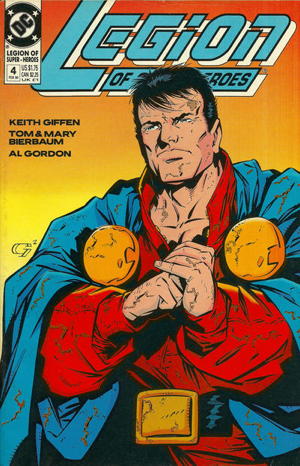
Looks like it’s gonna be “Snyder Movies Week” here on the ol’ blog.

So folks had a lot (a lot) to say in response to my post about the forthcoming New And Maybe? Improved Zack Snyder’s Justice League, coming soon to a some device or ‘nother near you, which to be fair I suspected there was a chance that I’d be opening a can of worms here. A little can of worms, not more than a couple of ounces, but, y’know, enough. And frankly I’m not sure where to even start here.

But first, I’m grateful I had thoughtful, reasoned responses from regulars, and not drive-by one-shot comments from the ZS Superfans who would skim my post long enough to decide (wrongly) that I hate Snyder’s movies and drop some misspelled leavings protesting my very existence. So, you know, thank goodness for that.

Now the comments that were left seemed to be mostly negative regarding Snyder, with one person firmly in the positive column, and if I were to include myself, one person in the “okay with Snyder, with caveats” not-quite-middle-ground I often find myself in. That…probably reflects the overall online response to his films.

And I already said this to Daniel on the Twitters, but let me repeat it here…I know from feeling like The One Guy fighting that uphill battle supporting that project that everyone else seems to be determined to tear down, i.e. All-Star Batman and Robin the Boy Wonder and Frank Miller’s The Spirit. And I absolutely support and condone Daniel’s thought-out defense and championing of the Snyder-verse.

I also wanted to make sure Daniel knew that my opinions on his work, and its comparison to Marvel’s film success, weren’t intended to be the be-all, end-all Final Word on the topic, and that other opinions of course existed. But just the style (or “style”) I was writing in, the tack I was taking, was presenting a specific view of the situation that I believed generally represented the public consensus. If folks didn’t like it, or disagreed with it…well, my comments are open for a reason, and Daniel did the right thing leaving his rebuttals there, which I appreciate.

To that point that I like the Marvel movies more than the DC movies…well, I think there’s no disputing that Marvel was more successful in marketing, in making each movie an event that you had to see, in building a shared cinematic universe that reflects in its way the evolution of the print Marvel Universe. Also, doing it in such a way that the audience is (mostly) entirely on board with it. They spent years doing it, using the second-and-third string characters they had left over after selling off the rights to their heavy hitters to other studios. Making Iron Man the heart of a multi-billion dollar film franchise would have seemed unthinkable a couple of decades ago, but here we are. Making a movie based on a version of Guardians of the Galaxy (and that there would be two of them, and they would be huge, would have had anyone espousing that idea locked up for their own good.)

Yes, I think the Marvel movies, overall, are more of a good time, more of the upbeat fun I want from watching a superhero film. As commenters noted…yes, there is bit of a sameness in the look ‘n’ feel to that franchise. Having the same guy in charge of all of them, having them all fit “the house style,” isn’t necessarily surprising, really. Not to mention a lot of the movies are origin stories, so just in terms of structure those are all going to feel the same. But I feel like there’s just enough variety to them so that they don’t seem exactly the same. I mean, no one’s going to confuse Guardians with Thor: The Dark World (especially since one is good and the other…well). But enough of the Marvel movies have “Hero Vs. More Powerful But Evil Version of Hero,” but that’s just a long-standing action trope anyway.

In comparison, the DC movies, and in particular the Snyder films, are…certainly heaped with the gravitas that most of the Marvel movies lack. I’ve said in the past that the first Avengers movie is fun but absolutely as deep as a sidewalk puddle after a brief summer drizzle. Not to say Marvel’s films didn’t occasionally touch on weighty topics (like Iron Man’s PTSD). I don’t have a problem with the darker tone of the films, which I think is an entirely valid interpretation. I don’t agree with every creative choice made, and I think some of the choices made are unfairly derided (the whole “Martha” thing I thought was a good shorthand for Superman finally being “humanized” in Batman’s eyes).

I think my primary objection is that this is the film version of Superman we’re getting right now, a darker and more dour rendition of the character that mostly belies his primary nature. Now Daniel laid out the case why the Superman etc. films are optimistic, and I’m fine with that…not trying to argue that. But I feel like I would like to see a more balanced/more overtly traditionally heroic version. Not denying the right of the Snyder films to exist, just that maybe I’d like to see a different movie.

As I’ve said, I thought the Justice League movie was drifting in the right direction, with a somewhat lighter tone. A Man of Steel 2 or a Justice League 2 would have been interesting to see where exactly they would have gone, but that’s sort of a moot point now. And the other DC films are moving toward more more Marvel-like model (less so Wonder Wooman, absolutely Shazam, and I think we can guess how the new Suicide Squad will go). When I noted that the expanded Justice League may be the most Zack Snyder-est of Zack Snyder films, I’m not joking…one last hurrah for Snyder in this movie universe, throwing in everything in his bag of tricks for this four hour brouhaha. (I like the comment left that it was specifically made four hours long to avoid getting Rifftraxed.) Still looking forward to it…perhaps I give the nod to the success of the Marvel films, but at heart I’m a DC kid and those are the movies I really want to see.

Okay, I’ll try to respond to more comments Friday. I thank everyone for their thoughtful and polite contributions, and I hope they remain that way! Thanks for reading and I’ll see you in a couple of days.

I may have paraphrased a quote from Tom Lehrer somewhere in here.

So I was talking with a customer the other day about the repeated success of the Marvel movies versus the seeming uphill battle for DC’s films, and I noted that one of the major differences is “likability.” In that the characters in Marvel movies are all likeable and understandable, whereas, as least in the Superman films, where it’s perhaps the most unforgivable, we get a Superman that isn’t, really.

Nor Batman, for that matter, but we’re kind of used to a Batman who’s all grumbly and dour and that’s just Batman’s thing. But putting a grumpy Superman in an already downbeat movie with a grumpy Batman doesn’t really help matters really. Meanwhile, here’s Marvel with a bunch of quippy, funny, upbeat-even-when-they’re downbeat heroes who just seem like generally normal, relatable guys ‘n’ gals, even the space raccoon and the fella what turns into a big green behemoth.

And thus there goes Marvel, spending years introducing us to all these folks and getting us to like them, building with each successive film a shared universe in a way that the general non-comic reading audience would get, until finally we get The Avengers, a film with essentially, what, a half-dozen prologues that got everyone hyped to see Iron Man fight Thor or whathaveyou.

Then Warner Brothers sees how many literal billions of dollars these Marvel movies are making and decides they need to get their own billions-of-dollars shared superhero universe franchise going. Only, you know, without the long lead-up Marvel had. You got a court-ordered Superman movie, a sequel that also squeezed in Batman and Wonder Woman, and then BOOM, Justice League, which introduced a few new-to-cinema superheroes and set up plot lines for future films. Plot lines that have since been ignored because the Justice League film underperformed, the Batman and Superman actors departed their roles, and follow-up DC films seem to have eschewed the overt “shared universe” concept. (More on that in a moment, save those angry emails.)

Now just as a reminder, I generally like Man of Steel, Batman V. Superman, and Justice League. Unlike the general response from most folks I respect, I think these films do have some positive qualities, which, admittedly, “a cheerful demeanor” is not among them. And while I do mostly appreciate these movies, I can also appreciate that many did not, that the tone was too dark, too “off” from what we were looking for in a superhero movie. Particularly a superhero movie starring Superman.

I have said that Justice League seemed closer to what people wanted from a DC movie. I mean, it was still a Zack Snyder film, like MoS and BvS before it, but…things were a little peppier somehow, lighter and funnier, at least in part…more crazy action and adventure, some snappier dialogue. How much of this was courtesy fill-in director Joss Whedon (I know, I know, back to him in a minute) who stepped in when Snyder had to leave the project, I’m not sure. But I did think at the time it was an enjoyable, if certainly not perfect, film that maybe suffered from the reputation of its predecessors. And sure, suffered from its own flaws, I ain’t arguing.

And while it still feels like DC playing catch up with Marvel, perhaps introducing those new characters in one film and spinning them off into their own projects wasn’t a bad idea. Plus, the new characters were fun to see, and brought some energy to the film…particularly Jason Momoa’s boisterous Aquaman, owing more than a little to the animated version from the Batman: Brave and the Bold TV show. Ezra Miller’s Flash, despite his major showpiece in the film being preceded, and outshone, by Quicksilver in the X-Men movies, was a good addition, and Ray Fisher’s Cyborg was…well, it’s hard to really talk about his role in the film given what we know now.

In fact, the major problems I now have with Justice League stem from issues outside the film’s story itself. When I see Cyborg, I think about the reported mistreatment that actor underwent. When I see the Flash, I remember this unpleasant story. And then there’s Joss Whedon himself, the focus of Fisher’s complaints and undergoing some of his own reckoning at the moment. I realize everyone’s innocent ’til proven guilty, but it seems like there’s quite a bit of fire beneath that smoke.

Ultimately, this makes the original release version of Justice League difficult to revisit, which maybe this new, expanded version by Snyder, debuting soon on HBO Max, can rectify. Look, there’s more important stuff at stake here beyond “being able to watch a movie with a clear conscience” but it would be nice to have a cut of the film that hopefully expunges most of Whedon’s influence. I realize this maybe removes whatever lightness may have existed in the story, and that from all appearances this may be the most Zack Snyder-est of Zack Snyder superhero movies…but at least it’ll be all, or at least mostly, his.

That doesn’t solve Miller’s issues, or repair Fisher’s mistreatment, I understand.

With any luck this Justice League 2.0 will get all that moodiness ‘n’ such out of the DC Movies’ system. Going back to the main stream of tonight’s symposium, I’m hoping for more movies with “likeable” characters from DC. Not that there can’t be any drama or tragedy, but at least let there be some balance, some reminder of why these heroes are heroes. Other DC movies outside Snyder’s vision seem to approach that. The first Wonder Woman is a joy, retaining a light heart even amongst the setting of one of the worst military conflicts. Shazam is relentlessly happy, despite getting his name wrong*, and Aquaman, despite being one of the most by-the-numbers films I’ve ever seen, is entirely carried by Momoa’s exuberant charm. Even the oddly divisive Wonder Woman 1984 is inarguably an upbeat film, when all is said and done. Birds of Prey turned out to be a good showcase for Harley Quinn, one of the two characters (other than Deadshot) to really shine in the otherwise half-baked Suicide Squad.

Harder to say what’s going on with the new movies coming, like the seemingly forever-in-production Flash film. Supposedly it’ll be exploring DC’s Multiverse, so again it’ll be following in Marvel’s footsteps of Into the Spider-Verse, or at least tied with Marvel, depending on when the equally multiversal Dr. Strange sequel comes out. But it’s going to have Michael Keaton returning at Batman, and look, that’s gotta be worth some points there.

Well, I guess it’s not so hard to see where Robert Pattison’s The Batman, which looks like it’ll be as much of a laugh riot as the Caped Crusader’s recent cinematic appearances. Looks like it might be good, but…yeah. Hey, remember back in the ’80s when everyone was panicked that the next Batman movie would be funny and then the comic book industry would be ruined forever and all fans would have to wear hairshirts and flagellate themselves with their leather floggers? Wasn’t that something?

Oh, and the next Suicide Squad, under the guidance of Guardians of the Galaxy‘s James Gunn…well, that has to be a delight, don’t you think?

And maybe someday we’ll get a new Superman movie. With a happy Superman that acknowledges the tragic beginnings of his existence but in a story that finds a balance between these two sides. I wonder how audiences would respond to that. Oh wait, we do kind of know.

Again, I like the Snyder superhero films. Honestly. And I am curious as to what this revised Justice League will be like. But…I can use a change of pace.


* I’m going to die on this stupid “Captain Marvel” hill. I can’t help it. We’re all fanboys about something.

Honestly, it’s harder to type “5YL” than it is just to type out “Five Years Later.”

So anyway, I’d meant to have a post up Wednesday, and then tried to have it up for Thursday, and in fact I actually had most of it written on Wednesday, but I was just too tired to put finishing touches on it and I wasn’t able to tell through my sleepiness if it all made sense or not. Thus, a rare moment of “quality control” on this site. No need to thank me.

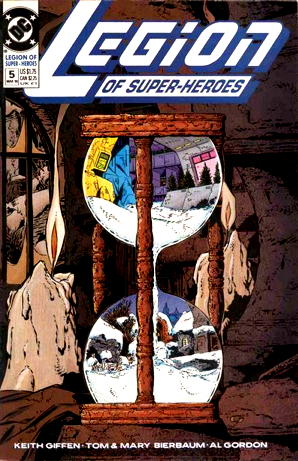
I’ll probably revise and post what was completed at some point so all that “hard” “work” doesn’t go to waste. But in the meantime, let’s talk about Five Years Later Legion of Super-Heroes.

Longtime reader Wayne brought it up in his comment (responding to my post where I mentioned I was going through that latest volume of Legion reprints), and y’all continued the discussion on the pros and cons of that revision to our favorite 30th century heroes.

Wayne asks of the Five Year Later (or 5YL, as I think it was popularly known by) storyline “anyone else remember that run?” and boy howdy sure I do. I…probably implied a reference to it here in this overall post about the Legion of Super-Heroes Vs. Rebootery, in that it was one of many attempts at revitalizing/restarting the Legion in order to expand the audience beyond the readers who would buy Legion comics regardless. 5YL was not a reboot as such, but a rejiggering of the concept designed to shake things up, re-engage readers, and also try to clean up a continuity glitch or three, while technically maintaining a continuity of character and plot developments started so many decades ago in the Legion’s first appearance in Adventure #247.

If you’re not familiar, and in case you haven’t guessed from me repeatedly using “5YL,” with the new first issue in 1989, the Legion storyline jumps ahead five years to a universe where the Legion is scattered, everything’s in turmoil, all the characters call each other by their first names instead of their codenames, and there are mysteries within intrigues within conspiracies, all told in a deliberately obfuscatory manner.

But, y’know, is it any good?

It feels silly to write out anything about this stretch of Legion when pal Andrew knocked it out of the moopsball ring with this analysis. Just kinda picture me nodding my head next to pretty much every sentence in that essay. In short, this phase of the Legion devoted a lot of time to tearing up the scripts and smashing the scenery of What Had Come Before, a propcess that eventually brought us to the point of, as Andrew says, requiring the start-from-scratch afforded by a reboot.

“Yes, yes, Mike, but is it good?”

I started reading the Legion in the early ’80s, so I came to it a little later than the “Long Live the Legion”/APA-type fans who arose out of ’60s and ’70s fandom who opined on Legion goings-on in fanzines and whatnot. Legion was noted for its loyal fanbase, surely inspired (in part if not in whole) by the soap opera aspects borne by the large and varied cast. But I jumped in with both feet, followed the title, then the two titles once the “hardcover/softcover” publishing plan (in short: DC published a version of Legion for comic shops, reprinted a year later for newsstands, but before the reprints started the newsstand version also contained new stories).

Plus I read stories in DC’s digest reprints, and picked up back issues, and that sort of thing, so I was reasonably well versed in the franchise by the time that first “direct-sales-only” comic shop series came to its end.

“Mike….”

Okay, okay, I happened to really like the “Five Year Later” relaunch. It felt…it felt almost like a superhero version of Howard Chaykin’s American Flagg!…I mean, not in the sexy-naughty-times sort of way, but in that the comic was, as I said before, deliberately obfuscatory. It wasn’t bad storytelling, leaving out important plot points or taking unnecessary short cuts or leaving the reader in the dark for no good reason. The information was there, sometimes between the lines, making it a challenging read, but challenging in a good way. You’d reread each issue a time or three making sure you got what you were supposed to get. It felt…adult, again not in the dirty-filthy sense but in the “we expect you to bring some interpretative abilities to this, it ain’t no kid’s book.” And look, I was, what, 20 when this was coming out? It was rewarding to read a book that made you feel smart for getting it.

Not to say some of the criticisms some of you related in my comments section weren’t valid. Yes, calling everyone by their real first names could be confusing unless you were already fully immersed in all this nonsense prior to the launch of this series. I could read stuff in the comics written in the Interlac alphabet without referring back to the key they published in the early 300s, keeping Reep, Jo, Brin and Imra straight wasn’t going to be a problem.

And sometimes the artistic choices didn’t help either. Lots of characters in shadow, the occasional super close-up of whoever the heck it’s supposed to be…it added a layer of confusion to a series that was already not open to casual reading.

The storytelling gradually switched back over to a more traditional form as the series wore on, though the focus continued on breaking the milieu in ways that couldn’t be rolled back (refer back to Andrew’s post for a cataloging of some of these events). And, you know, it was fine reading it at the time…it was suitably dramatic, and surprisingly permanent, because back then you didn’t realize “shutting it all down and starting anew” was an option on the table. The series had survived Crisis on Infinite Earths, riding out the changes wrought by that series directly affecting Legion’s underpinnings. (One of which, the removal of Superboy, was one of the continuity fixes installed in those early 5YL issues.) If it could make it through that linewide event, nothing could stop the Legion!

Well, except sales, and a back-pedaling on the whole “5YL” concept, by introducing what appeared to be the younger, more innocent version of the Legion, coexisting with the older, wiser, and occasionally embittered post-5YL team. Let’s be clear…it was still entertaining, I thought, and something of a compelling mystery…where did these younger Legionnaires come from? But it was still a splintering of the concept, asking you to maintain your loyalties and devotion to the ongoing character developments with two versions of the same characters. It was one of those bendings of the concept that was interesting at the time, but didn’t realize what it had broken.
Eventually things came to a head and, as I talked about before, DC used their Zero Hour event as an opportunity to wipe that slate clean and start again. And I already went into detail in that post why that was a bad idea, so I won’t repeat it all here.

But yes, I liked “Five Years Later.” We can look at it from a publishing standpoint and say “ooh, maybe DC shouldn’t have done that” (see also Crisis on Infinite Earths), but as a story just in and of itself, I enjoyed it quite a bit. Not knowing what to expect in each issue, knowing nothing was necessarily sacred, was the kind of excitement one didn’t often get in long-running comic book franchises. But maybe there’s a reason we don’t get that in long-running comic franchises, given the Legion’s difficulty in maintaining a significant presence in the decades since.

Basically I just say I’m behind on my reading but here’s a couple of things I do like reading.

One thing I haven’t heard at the shop in a while is “wow, what a great job, you get to read comics all day!” Which is good, because that did get a little tiring to hear, and to explain (when I bothered to do so) that the one thing I really don’t have time for at the shop is reading comics. Particularly now, that I’ve opened my own shop, where the only hand on deck is me and spending the time to read a comic means less time pricing old comics or whathaveyou.

Does that mean I’ve never read comics in the shop? No, of course not…it’s just not something I’m normally inclined to do. The one time I can remember doing so at the new store was an issue of Doomsday Clock, I think. And, at the old store, back when DC and Marvel used to send out preview packs of full issues coming the following week, I’d make time to read Preacher whenever it showed up. However, beyond occasionally flipping through an issue to check for damage while grading or maybe briefly browse through one to find something for Instagram, and yes sometimes just to admire a page or two of art…I tend to leave the actual reading at home.

The big problem, of course, has been my eyeballs. At first, I just thought my vision was getting blurrier due to my encroaching decrepitude, causing my reading to slow down considerably (even with the assistance of progressively stronger dollar store reading glasses. And then once the actual problem was determined (“Oh hey the interiors of your eyeballs are bleeding.” “Wait, what”) and problems began to accelerate, clouding my vision or blacking it out entirely…well, “reading” became an activity that was off the table.

End result: huge backlog of reading. For nearly three years my reading habits have been impaired by my ongoing eyeball issues. For the first year, it was just “no reading,” as my eyes switched off being cloudy or dark or too blurry and so on. Then once my eyes stabilized a bit (with only occasional bouts of hampered vision)…I found I had fallen out of the habit of reading comics. Sure, I read one or two here and there (at least once using a giant glass lens as a magnifying glass) but mostly I just watched television.

Television, as it turned out, was a lot easier to enjoy with my sometimes not-clear vision, particularly with my TV’s large screen and the somewhat close proximity in which I sat. The bright colors tended to cut through whatever was in the way, and while things were still sorta blurry, at least I could make sense of what was happening. Ended up rewatching all of Babylon 5 during this period…it was all bright and colorful and those early CGI effects were crisp and clear and easy for me to see. (I do remember early on watching A Quiet Place on Amazon Prime, with one eye blacked out entirely, and the other essentially with rivulets of blood obscuring its vision…it was like looking through prison window bars.)

It wasn’t until relatively recently that I started making an effort at trying to keep up on the comics I like to read, to try to cut down some of the backlog. And I’ve made some headway…I’m still caught up on Immortal Hulk and the Superman books, for example. But it’s still slowish going, even with somewhat stable eyesight and real glasses. My vision isn’t what it was (my left eye being the strongest one, and my right eye, where all the problems began, being partially impaired and not able to easily read anything below a certain size), coupled with the fact that the backlog is…a little imposing, is still kind of putting me off a bit.

Plus, I’ve gotten into the habit of just watching TV instead, which is easier.

I’m working on it, though. I’m probably making it sound like I just have giant piles of comics teetering over me at home that I gingerly remove a single copy of Edgar Allan Poe’s Snifter of Blood from the top to peruse. I don’t actually pull aside a whole lot of comics for myself, but week after week after week of not reading them means to the “to-do” pile adds up faster than you’d expect.

THUS, THE CULLING BEGAN. I started going through the stuff I did pull for myself and deciding just what I can pass up for now. The big loser here, unfortunately, was Marvel’s many Star Wars titles. Not to say I didn’t enjoy them…I did, they were a lot of fun, but it’s just too much and with Marvel’s crazy publishing schedules, it just stacks up too quickly.
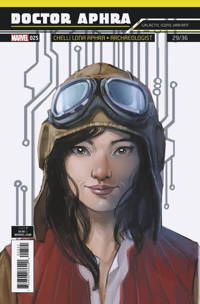
I am keeping one title around, however, even though I’m desperately behind on this title as well, is Doctor Aphra (which you may have been tipped off to by the inset pic here). I think of the new Star Wars series Marvel’s been cranking out, this is the one I’ve enjoyed the most. I believe I wrote on Twitter about the appeal of the character as filling the “morally ambiguous” role that Han Solo can no longer occupy after his turn in the original movie trilogy. It’s an exploration of this universe via a fresh yet cynical perspective, told with humor and the right amount of pathos. While there is some sort of redemption arc to her story, it’s a meandering one which means we get to see her be a space asshole, which is quite entertaining.

As I said, I’m way behind, so some of my above comments may no longer apply. The last issue I read was #26, which could mean I’m two years behind or six months behind, given Marvel’s aforementioned publishing schedules. But I’ve got ’em all stacked up here and ready to read, and all her previous appearances (in her own title and elsewhere) set aside for future reference. And all other Star Wars funnybooks…back to the shop with ’em. Hate to see you go, but what else can I do, really.

I plan on cutting other titles out of the backlog as well, though I haven’t quite decided what’s next. There are things I’ll always read, stuff I’ve followed for decades: any Hulk series, for example, or the main Superman books, or any Groo or Love and Rockets and related. But there’s the other stuff, the series maybe I just started, or comics I’ve been putting off reading for so long it’s pretty clear I’m not that interested in them. Or books I dipped back into reading, like Batman or Flash, decided “yeah, read enough of those” and stopped. Again, no critique implied of the books…they’re perfectly fine, I just don’t have time for everything anymore.

That said, I did pick up this book last week:


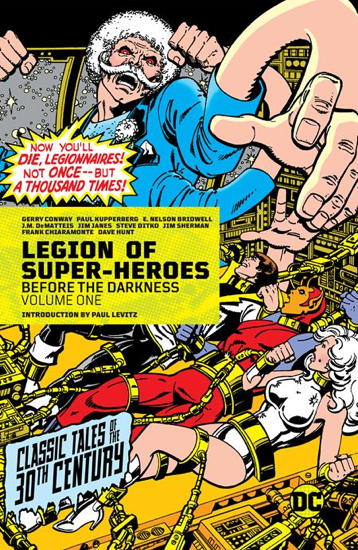
…continuing the complete reprinting of the Legion of Super-Heroes that began in the Legion Archives hardcovers and living on in these differently formatted, cheaper to produce hardcovers which picked up where the Archives left off.

This volume brings us up to Legion of Super-Heroes #271, plus the Secrets of the Legion of Super-Heroes mini-series. That means we’re in the very early ’80s, and just about to the point where I started picking LSH off the stands. I was bit of a late starter, sort of, to the Legion, but I was instantly a fan and kept reading the book ’til about the New 52 era, which was just one reboot too many for the comic that had pretty much become known for its incessant reboots and the hope the New, Improved Legion would get traction this time.

Anyway, I like these books, and I suspect I’ll likely continue picking them up even as they start to overlap with the Legion comics I do have. You know, just to get the Great Darkness Saga on paper that isn’t terrible. I may stop once they hit that initial “direct sales only” series, which already exists on nice paper!

Did want to note that Paul Levitz, one time DC president/publisher and writer of the Legion, provides the introduction. He says that the contents within may feel a little…disjointed, due to various creative team pressures and deadline issues and stuff, but honestly when has a Legion story not felt somewhat like some of the pipes are rattling a bit? But Levitz does make some space to say some nice stuff about longtime DC editor/writer E. Nelson Bridwell, a fella that, from some things I’ve heard, may not have been afforded much respect from other folks in the field. Well, Mr. Bridwell’s writing, whether for a comic story or his explanatory editorial pages, were eagerly enjoyed by a young me, so he’s got my respect for certain.

Also wanted to note the artists in this volume…Joe Staton (always great), Jimmy Janes and Jim Sherman (both wonderful draftsmen…Sherman’s got a great splash with Light Lass that’s a knockout), and, of course, Steve Ditko. I’ve read that Ditko story before (hence the link to the previous post) and it’s pretty well out there.

You know, for someone who’s been having a hard time reading, I sure wrote a lot for other people to read. There’s some form of base irony there somewhere. But thank you for putting up with my typing, and we’ll chat again shortly.

Bringing out notably entertaining retired series.

So Twitter pal OneWordLong spends a few more words than that asking

“Q: I’ve always harbored a low key ambition to collect/read all the Malibu-verse books. I remember liking the printing and art as I flipped thru them in the day. But would they scratch that ‘lets read a Comics Universe’ itch?
I appreciate your thoughts. thank you.”

I was thinking about this since the question was posed, and was all ready to go with a discussion with what little I could recall of the Ultraverse, Malibu’s superhero universe imprint that launched in 1993. But then I remembered “oh yeah they had a superhero universe type thing that preceded that.” (I mean, aside from their brief stint publishing Image Comics, of course.)

Now I gotta be honest…my exposure to the initial Malibu-verse line was fairly limited, beyond, you know, racking and selling the things at the shop I worked at. Nothing against them in the slightest, or against the people making them (disclosure: I know Dave Olbrich, co-founder and former publisher of Malibu, and have had friendly dealings with other co-founder Tom Mason), but the 1990s were a pretty wild time for comics publishing and I could only pick and choose so much to read.

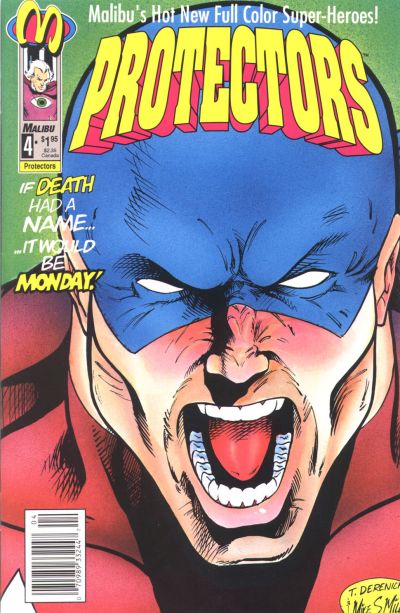
I will tell you one that, somehow, I just learned now (or had learned before and forgotten in the ensuing decades) by looking things up on the Wikipedias is that the initial “Malibu-Verse,” as represented by The Protectors (pictured) and its handful of spinoffs, were in fact revivals of now public-domain superheroes originally published by Centaur Publications in the 1940s. You know, had I realized that at the time, I may have been more inclined to stick my nose between the covers of some of those books.
Eventually Malibu ran a crossover storyline called “Genesis” (not to be confused with) that roped in some other of their titles into an attempt at a shared universe thingie (including Dinosaurs for Hire by the aforementioned Mr. Mason, a rudely funny comic), and despite this attempt at broadening the line (plus promotional POGs!) the line was effectively supplanted by Malibu’s launch of the Ultraverse in 1993.

As to scratching that “superhero univesre” itch, OneWordLong, you’ve probably gleaned already that I can’t speak too much to that. I mean, it all looks fine, and given its relatively short existence, it probably wouldn’t be too much of a burden to find them all. I liked Dinosaurs for Hire, but that’s a later added-value insert into the Malibu-Verse, and probably not what you were thinking about. But at the very least, get your mitts on the one with the die-cut hole through the entirety of the book (kinda the more precise version of this cover enhancement).

Now Ultraverse…honestly, I thought this was what you were referring to, OneWordLong, and given the breadth and depth of the line compared to its predecessor, surely you can understand why one would stick in one’s memory over the other. This was a much more ambitious project than the Malibu-Verse, with Big Creators and hologram covers and all sorts of those 1990s comics publishing shenanigans. It was a lot closer in style, I think, to the Marvel and DC comics that readers were more accustomed to, so even just beyond the number of releases it was bound to gain a little more traction in the marketplace.
Like Malibu-Verse, I didn’t sample a lot of it, but I did read a couple of series. There was Prime, a take on the Captain Marvel/Shazam dynamic where a boy is able to turn into an adult superhero (which had some nice art by Norm Breyfogle) but in retrospect perhaps reads a little differently now that we know of the extracurricular activities of one of the writers. It actually was a pretty good book, I thought at the time, about childhood conceptions of adulthood and heroism, but…yeah, it’s hard to revisit now. There were later issues not involving that writer, however.

I also enjoyed Sludge, of course, given it was another take on the Swamp Thing/Man-Thing type of character, with the bonus that my favorite Man-Thing scripter Steve Gerber was the writer. Again, been a while since I’ve read these (but they’re still there in the collection, waiting for that far-off day when I’ll have free time), but I remember enjoying them. One quirk about the character that I remember is that, due to his injured mental state, he’d mix up words in his head…like thinking “I gotta smash that doily” instead of “I gotta smash that door” — you know, like that, only better written because I’m no Steve Gerber.

Oh, and then there was Rune, featuring one of the Big Bads of the Ultraverse. The series primarily grabbed attention due to the work of Barry Windsor-Smith, but interest wore thin once he was off the book (which is a terrible thing to say given that the follow-up team did fine work, but the people wanted BWS, who’s a tough act to follow).

There was a lot of interesting stuff under this imprint, and if you’re looking for a weird short-run superhero universe to get into, OneWordLong, this might be a little more what you’re wanting versus the previous Malibu-Verse. Unfortunately, with Marvel’s buyout of Malibu, the end of the Ultraverse gets tangled up in the Marvel Universe, which likely causes the thread to be lost, or at least diluted in relation to whatever shared universe the U-books were putting together. (And given that current owners, Marvel, seem unlikely to bring any of the Ultraverse properties back*, there’s at least a definite end to its existence.)

Some of the titles had followings, at least for a while, after the imprint’s demise. Still had people looking for Mantra (about an ancient male warrior trapped in a modern woman’s body…given our modern increased sensitivity toward transgender issues, not sure if that’s aged well or if it even relates), Firearm (written by James Robinson), and Lord Pumpkin (a more horror-edged comic). Exiles was interesting, a team book that had been solicited for further issues, but surprisingly killed off in issue #4 to, I guess, show how new and unpredictable the Ultraverse was (a publishing trick that was equally annoying many years later when The Walking Dead pulled that same nonsense).

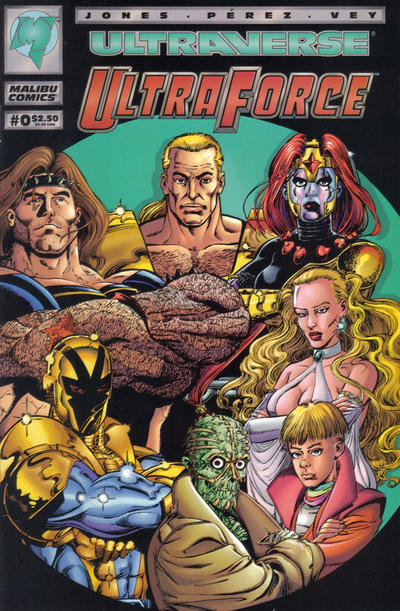
Oh, and there was the team book Ultraforce, where (good news) early issues had George Perez art, but (bad news) were written by that writer I didn’t name who also worked on Prime. So, you know, up to you if you want to deal with that.

And there you are, OneWordLong, simultaneously more and less information than what you were looking for. I don’t know which briefly-existing superhero universe you would prefer, but you can either pick the one with the cover die-cut into the shape of the hero’s head, or you can pick the one where a version of the #0 of one of their titles came with a VHS copy of an original movie based on the series. I ENVY YOU NOT THE CHOICE, MY FRIEND.


* Unless Disney finds out about them, of course.

I’ll lay off the boner jokes this time.


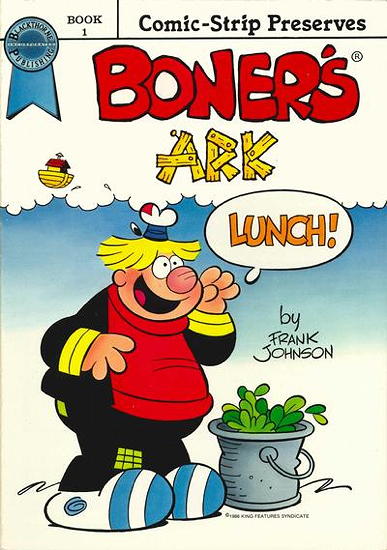
So reader Paul reminded me of this: the Blackthorne Publishing edition of Boner’s Ark, published in 1986. Boner’s Ark was a newspaper comic strip created by Beetle Bailey‘s Mort Walker in 1968, and it ran, I was surprised to learn, until 2000. At my previous place of employment, we had one copy of this book floating around that I tried, for a very long time, to unload on eBay…in fact, at this point, I can’t even remember if it ever sold or it’s still languishing in a box in the back room over there.

At any rate, we had that item around for a good, long time (and if my former boss Ralph ordered it when it was new, then he had it in his stock three years prior to my even working there). But in all the time I was trying to get this book to sell, I don’t believe even once I thought about the naughtiness implicit in the name.

Now, much like the deal with Bill Finger the “Joker’s Boners” story he wrote, we can’t say for sure that Walker intended any kind of dirty meaning in title. I’m inclined to think not, that he liked it just because it’s a silly name and it signals that Captain Boner is bit of a goof-up (and let’s face it, Captain Boner is a genuinely amazing name). But we also know from some of the naked Ms. Buxley pics you’ve maybe seen (and some of the more adult-ish gags in Beetle Bailey*) that Mr. Walker was bit of a dirty bird and surely he knew of the alternate meaning of the word. (Plus, as Turan tells us of Scott Shaw!’s experience, if there’s a question of whether or not a cartoonist meant something to sound dirty, the answer was usually “yes they did.”)

Now, last time I suggested that, given the date of story (1951) and the seeming lack of evidence that the term “boner” was in wide use, if at all, I concluded with the assumption that Finger was likely not aware of the double-meaning at the time. But…thinking about it, Bill Finger was a writer. Maybe he wasn’t a young teen hep to the new jive, but as a professional writer he would have been more likely than the average person to have had an ear out for interesting turns of phrase, be they passé or Today’s Newest Thing.

Of course, we’re about 47 years too late to ask Mr. Finger if he’d meant the story to be a string of endless double entendres, or just purely as a synonym for “mistake.” Much like Jane Austen’s use of the word “nice” in correspondence, there remains some ambiguity. Though to be fair, Austen did include a passage expressing some feelings about “nice” in Northanger Abbey, and far as I know Mr. Finger never did the same with “boner.”

So ultimately the question is “did ‘boner’ mean, well, you know, ‘boner’ back in the 1950s?” Reader CP Bananas peeled away an excerpt from the OED featuring their information about the word and sent it my way, for which I thank this person for the contribution. It includes an attribution for the meaning with which we’re concerned from 1936:

“In his dream he had a feeling he was ‘pulling a boner.'”

…and the OED notes that while this usage is meant to refer to the then-popular sense of the term of “making a mistake,” the context made clear it was specifically the sexual definition. So at least there was an explicit, so to speak, antecedent for that usage in that form prior to 1951.

Other comments to Wednesday’s post brought up several usages of “boner” in seemingly innocent fashion, across many decades past that Batman story I keep going on about. In my very unscientific survey, that would seem to tell me, even as the naughty definition became increasingly attached to the term, the primary meaning of “mistake” remained the dominant one. Also mentioned was the supporting character from the Growing Pains sitcom, nicknamed “Boner” after his last name of “Stabone” — probably intended to get laughs just based on the fact it sounded dirty, because 1980s sitcom, but I’m sure no exact reference was made to that meaning otherwise the FCC would’ve had some words. And maybe they did, I don’t know.

I don’t know where this leaves us, exactly. I feel like, given the existence of the base term “bone” meaning essentially the same thing as the vulger version of “boner,” I would say that it did exist, at least for some people, as an active naughty word. As such, chances are good someone read this story at the time and got a solid dirty laugh out of it. But as to whether or not Bill Finger his own self loaded up the “boners” on purpose for Big Laffs…I don’t know. I still tend to think not, but it’s not impossible he did.

Or, as my experience with the Boner’s Ark book, maybe it’s just all in context. “Boner” wasn’t meant to carry its sexual definition in the Batman story,” so nobody thought about it that way and it wasn’t inteded to be read that way. Or it’s a secret dirty joke from across time left for us by Mr. Finger and his accomplices

Okay, if you have more to add, you know where the comments section is. I didn’t mean to change the main blog into “Mike Sterling’s Progressive Boner” an’ all, but I was doing it…FOR SCIENCE.


* Look, you’ve read the strips, General Halftrack might as well have been named “General Boner.”

This is kind of hard to figure out.


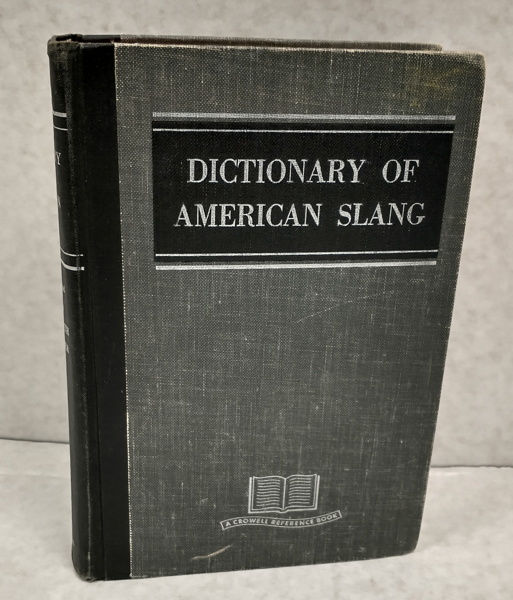
So a few decades back, my maternal grandmother (whom we called “Nana,” as “Grandma” “sounded old”) gave me the above book, found in one of her visits to a second-hand store. It is, as it says, the Dictionary of American Slang, and it is a first edition from 1960. It was, and still is, the source of much education and enjoyment, beyond immediately looking up all the dirty words I could find, of course, but even doing that was turned out to be more informative than prurient. It was a great gift, and one I still treasure to this day, though I know it has since been revised and updated, and there are any number of competing volumes on the same topic.

So why do I bring this up here, other than to show off something neat from ye olde Mikester bookshelves? Well, it came to mind while listening to pals Matt ‘n’ Chris on the latest “Every Story Ever” special from their War Rocket Ajax comics podcast. In said special, where they rank comic stories submitted by listeners, with Identity Crisis at the bottom and a comic that isn’t an issue of Swamp Thing at the top, a listener sent in Batman #66 (1951) for their consideration.

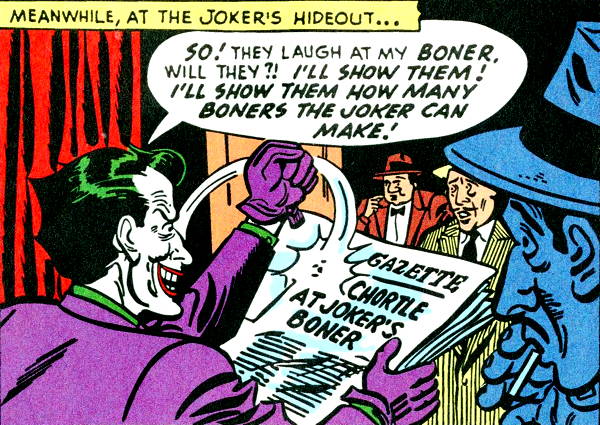
Oh, which comic is Batman #66 (1951), you’re asking? “Why, we’re not familiar with that particular issue!” you add. To which I respond, “oh, you know this comic.” In fact, there was a time on the internets where you couldn’t avoid the continuing mirth this comic inspired, with its panels scanned and uploaded and shared and hotlinked to the point of everyone everywhere getting an eyeful of Joker’s boner:


Yup, it’s that story, officially titled “The Joker’s Comedy of Errors!” and, according to the Grand Comics Database, credited to writer Bill Finger and artists Lew Sayre Schwartz, Charles Paris, and, surprisingly, Bob Kane, who apparently did draw the figures of Batman and Robin themselves, probably under duress.

Anyway, you’ve seen the panels, there are lots of talk about “boners” (in the meaning of “mistakes”) and reading those panels in our hip, modern, ironic age, where “boner” can mean something else entirely…well, you can see how the story comes across quite a bit differently now. The entire story is “boner” this and “boner that” – “how can he force you into a boner?” “They laugh at my boner, will they?” “More boner crimes to come!” And so on.

Now, the Bits Boys on War Rocket Ajax contend, as many do, that at the time of the comic’s publication in the early 1950s, “boner” did not have the more vulgar meaning associated with it today. In contrast, I posted on the Twitters that the writer of the book knew exactly what he was doing, entertaining himself with a story-long dirty joke that he got past his editor.

Which got me to thinking. I once heard that pretty much any filthy word you know now, people knew back then, and whatever scatological or sexual term you may utter ain’t any different from what your great-grandpa would say. You don’t need to tell me that’s overstating it a bit, as I’m aware. But it would seem that “boner” in its vulgar sense wouldn’t necessarily be a recent innovation, would it?

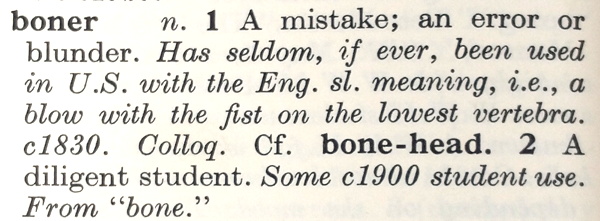
Thus, to the slang dictionary, where the definition of “boner,” as it stands (heh) in 1960, according to this book’s editors:


That’s that then, I guess, right? Well, not necessarily, in that 1) this is the first edition of this work, and perhaps future revisions have expanded the entry and provided more dating citations, and 2) I’m sure some slang didn’t make it in, either from limited use or just not being picked up during the research phase.

And then there’s this…the definition for “bone” just a couple of entries earlier. Didn’t take a pic, as it’s a long (heh) entry, but definition #5 is “[taboo] The penis, esp. the erect penis.” So at least by 1960 the base (heh – okay, I’ll stop) of “boner” is present and notable. It feels like it isn’t that far of a jump from “bone” to “boner,” particularly since the term “boner” already exists in a more socially acceptable form and thus was a recognizable variant of the word.

I did some further online research, which of course required typing the word “boner” into website after website — hello, NSA! — and didn’t find very many helpful citations. One that did seem to support the idea that ol’ Bill Finger was pulling a fast one in his funnybookin’ was this entry from Entomology Online, which notes

“Meaning ‘erect penis’ is 1950s, from earlier bone-on (1940s), probably a variation (with connecting notion of ‘hardness’) of hard-on (1893).”

I checked for “bone-on” in my Dictionary of American Slang and found nothing, which again could just mean it was missed in the initial surveys.

This other online source, Green’s Dictionary of Slang, has as its earliest citation for the meaning we’re seeking as 1966. And Merriam-Webster cites a date of 1896 as the earliest use of the word “boner,” admittedly not in its naughty sense. But the construction “boner” existed in the world, and again, I contend it’s not that big a leap from “bone” meaning an erect penis to “boner” meaning the same thing.

Whether it was in common usage by the early 1950s is another question. I think it’s possible Bill Finger would have known the other meaning of the term…we would have only been about 37 at the time, still young enough to have been at least vaguely aware of the New Hip Slang all the kids were using, but, to be honest, probably old enough not to want to screw up a paying gig by trying to get a dirty joke into print in a children’s comic book.

As such, my assumption is…while “boner” (or at least close variations of it) may have been in use with its sexual definition at the time, Finger most likely used it innocently in this story. Howver, I’m guessing a non-zero percentage of readers in 1951 probably found this as funny as a bunch of bloggers did circa 2006, for the exact same reason.

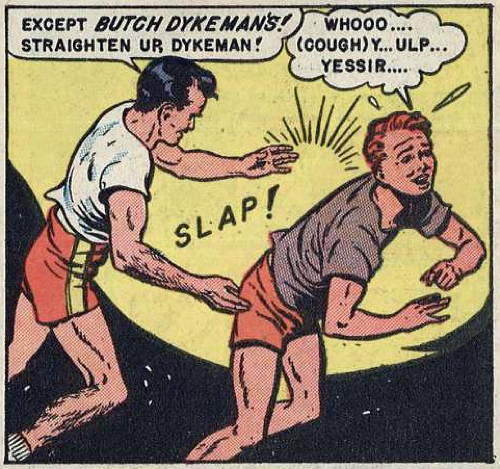
Now this whole Toni Gay/Butch Dykeman thing that pal Andrew reminded me about:


…I mean, there’s no reason to expect that was anything but innocent comic booking, surely.


Note: I know about the Nicholas Cage dirty word documentary series on Netflix.

Also, if you have additional information/links regarding the history of “boner” — yes, please leave that in the comments. We’ll get a grip on these boners yet!

Eye’m doing okay.

Hi pals…just checking in to let you know that my vision is recovering and with any luck, I’ll be back to at least almost normal over the weekend. Thanks for your comments, tweets, and emails of support (including a surprise one amended to a receipt includeed in a package from an eBay purchase I made!). It’s nice to know that even with all the TikTokking and YouTubing and such such throwing content around, this old-timey comics weblogger can still garner some welcome support. It’s much appreciated.

See (heh) you on Monday.

Site on hold for a few days.

Been a while since I’ve had to give the ol’ “eyeball is bleeding, can’t see” excuse, but…feh. Sorry about that…with luck I’ll be able to function reasonably normally by the end of the week. Thanks for your patience.