So to add to my Superman: Birthright discussion on Monday, the writer of said book, Mark Waid himself, dropped on by to clarify/correct some of my assumptions. Primarily, that Birthright was indeed intended to be the new “official” Superman origin, but was eventually decided that yet another version, the Geoff Johns/Gary Frank Secret Origin mini, would be the new official origin instead. Least ’til, you know, they changed it again.
Anyway, here’s a period article with an interview with Mr. Waid about Birthright being the “official” origin, which was declared so late in the run due to the Super-books being “still somewhat in flux” when the series began. While I was correct in that the state of Superman’s history at that point was a bit mushy and open to revision, as I said in my last post, my assumption that Birthright was a planned out-of-continuity story that eventually ended up in continuity despite itself was incorrect.
So, when you reread that last post of mine, disregard my poor use of Birthright as an example for my thesis. I think my overall entry there is correct, in that if you leave any ambiguity to the canonicity of a story involving DC or Marvel characters in what appears to be their familiar milieus, the default position of a certain subset of fandom regarding that story is that it’s part of official continuity. And that the emphasis, especially by DC, on continually trying to establish what is their official continuity only encourages the behavior.
Not all fans do this, of course, but like I said, I’m still getting customers asking me if Three Jokers is, you know, Real Joker History and, well, what can you do. “It is if you want it to be!” I’ve answered more than once, and I don’t know if that helps, really.
Okay, let me say something about a couple of comics that came out this week:
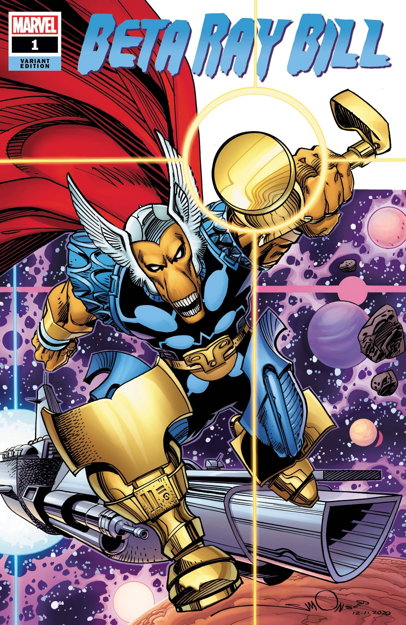
I didn’t keep the cover pictured above…this is one of those “retailer incentive variants” that I have to order a certain number of the regular covers in order to receive. But you think I’m gonna pass up posting a kickass Beta Ray Bill pic by his creator, Walt Simonson, on my site? Heck no.
Anyway, the entirety of my Thor reading is as follows: the Walt Simonson run from #337 to #382 (plus the couple of fill-in issues in that run, which were also great), whatever stories were in the Origins of Marvel Comics books, and the Lee/Kirby “Search for Galactus” issues that pal Cully let me borrow once. Nothing against Thor, and I know some later runs of Thor are very highly regarded, but my brain decided “That’s All The Thor I Need” and that was that, I guess.
When I opened my own shop a few years ago, I gave up my Thors (not Cully’s Thors, I returned ’em, honest) to the back issue bins, which was a good idea because boy did they sell well. As they should, because they’re beautiful and perfect, but “Fanboy Mike” is a tad annoyed at “Retailer Mike” as I kind of miss having those. But hey, I figured at the time I could always pick ’em up in reprints one way or another.
So basically I haven’t been involved in Thor comics for a while. Then why pick up Beta Ray Bill #1? Well, the work of Daniel Warren Johnson for one, who is writing and drawing this book and it looks fantastic. I’m not one for two-page spreads in comics nowaways, but Mr. Johnson throws in a couple of them in this issue and I know I really like a comic when that doesn’t bug me in the slightest. It all feels like a natural extension of Simonson’s rendition of the character without being an imitation of his style, in a way that previous efforts with the Beta Ray Bill have not.
As someone who, as I just told you, hasn’t been immersed in recent Thor comic shenanigans, there wasn’t a steep learning curve for getting caught up to speed on recent Asgardian events. Johnson does a good job naturally slipping in the necessary exposition to establish the world of the book and the premise for the series.
Yes, it is, nominally, a tie-in to the “King in Black” event currently happened at Marvel, but it barely counts, a “Red Skies” type of crossover where a Surprise Guest Monster shows up to wreak havoc in Asgard and oh, he’s all King in BLack-ized or whatever they call it. Could easily just have been Special Surprise Guest Monster all on his lonesome and the effect on the plot wouldn’t have been any different, really. But if it gets more eyeballs on the comic, then we shall let this pious fraud pass.
What I’m saying is that Beta Ray Bill is just as good as I’d hoped it would be, since seeing preview pages a while back. As someone actively not looking to pick up new series right now due to my immense funnybook backlog caused by eyeball issues, I snatched this one up with no regrets.
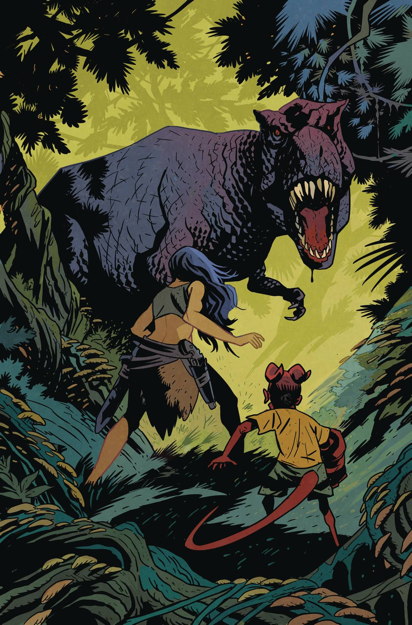
Young Hellboy is a fun, cute series, the second issue of which is out this week. Young Hellboy runs into a Golden Age-style jungle girl on a mysterious island, and seeing HB as an overly talkative, hyperactive child is always entertaining. With the forward motion on the “current” Hellboy timeline effectively ended with, um, the end of the world, it’s nice that we’re still getting “flashback” Hellboy stories. “Hellboy may be dead but his cash flow lives on,” as the Dead Milkmen said (slightly paraphrased). Even knowing the eventual end point for the Hellboy Universe, the sense of impending doom doesn’t weigh too heavily upon these stories…I mean, not that particular doom, anyway.
It’s a nice reminder of what Hellboy was, back before the plot overtook the premise and everything was pointing to The End, versus just the big red guy smacking monsters around and shooting (badly) at demonic foes. Or, as in this series, swinging on a vine and shouting with glee. As I said, fun and cute.
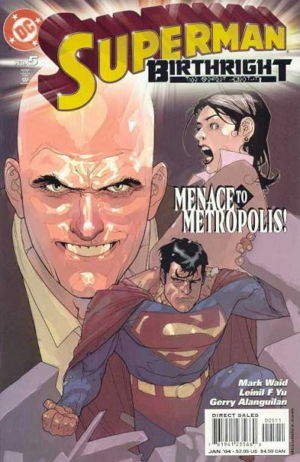 Nearly, urgh, 20 years ago, the mini-series Superman: Birthright by Mark Waid, Leinil Yu and Gerry Alanguilan was released, retelling the early years of Superman’s life. It wasn’t intended to be part of regular continuity; rather, just a fresh interpretation of Superman’s origin by a talented creative team, unburdened by the need to be tied to anything else DC was doing with the character.
 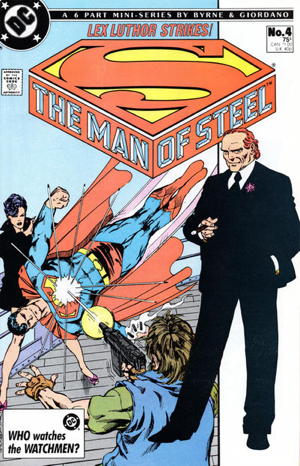 Part of the problem is that DC’s constant obsession with “fixing the universe” in most of their Big Events reemphasizes the idea that Continuity Matters, that all the pieces need to fit and be consistent. So when stuff like Birthright and Three Jokers come along, which (at least in the former, can’t say for sure about the latter) aren’t intended to be part of regular continuity but aren’t immediately identifiable as being separate from it, the readers can get it into their heads that they’re supposed to consider these stories are part of the Official Big Picture. I mean, if Batman’s not, like, a pirate in the story, or Superman’s rocket didn’t land in Norway, which is what DC has essentially trained its readership to look for when considering if a story is, biggest quotation marks ever, “real” or not.

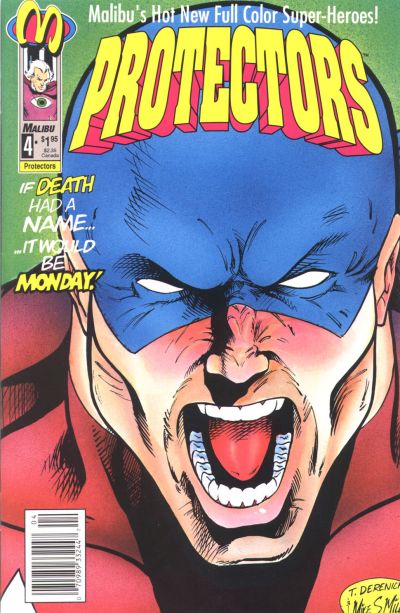 I will tell you one that, somehow, I just learned now (or had learned before and forgotten in the ensuing decades) by looking things up
 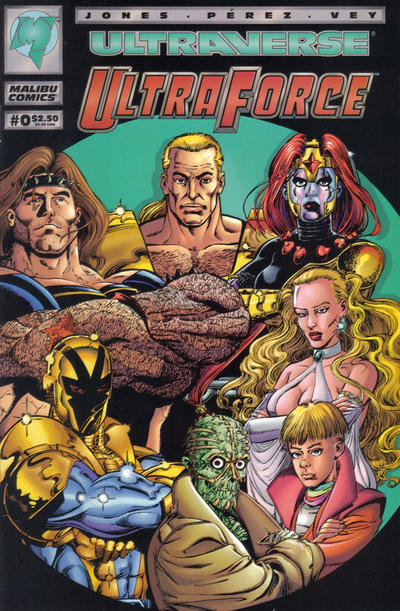 Now Ultraverse…honestly, I thought this was what you were referring to, OneWordLong, and given the breadth and depth of the line compared to its predecessor, surely you can understand why one would stick in one’s memory over the other. This was a much more ambitious project than the Malibu-Verse, with Big Creators and hologram covers and all sorts of those 1990s comics publishing shenanigans. It was a lot closer in style, I think, to the Marvel and DC comics that readers were more accustomed to, so even just beyond the number of releases it was bound to gain a little more traction in the marketplace.