Swamp Thing-a-Thon #2, Swamp Thing #1 (October/November 1972).

Originally published as a Patreon-exclusive entry…ahem, quite some time ago, here is entry #2 in my ongoing attempt to do an overview of every Swamp Thing comic book. My House of Secrets #92 coverage can be read for free here, and issues #2 through #7 are currently behind that Patreon paywall. And as I’ve noted before, I’m doing some audio bits on there as well (just an intro piece and a five-minute thing on comics shipping so far) and a new entry in the Swamp-Thing-a-Thon is also coming soon.

Thanks, pals, and we’ll see you Monday.
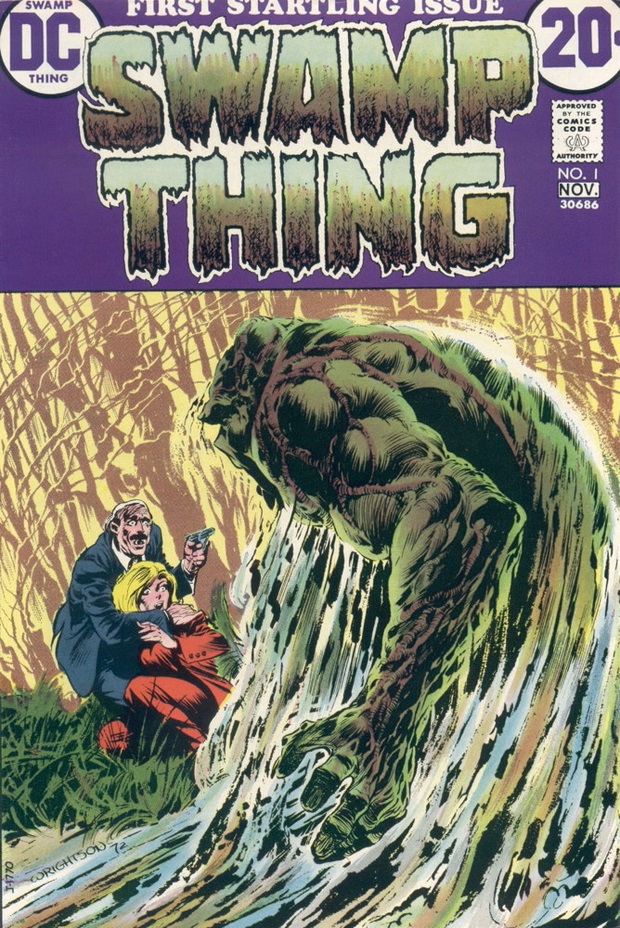
ISSUE: Swamp Thing #1 (October/November 1972)

TITLE AND CREDITS: “Dark Genesis!” written by Len Wein, illustrated and colored by Berni Wrightson, lettered by Gaspar Saladino. Cover art by Berni Wrightson.

IN BRIEF: Scientists Alec and Linda Holland are threatened to reveal the secrets of their bio-restorative formula…and Alec is seemingly killed when a bomb destroys their lab in retaliation for their refusal. However, Alec rises from the surrounding bog, changed by the explosion and the formula into the muck-encrusted mockery of a man that can only be called…SWAMP THING. He then exacts his vengeance on the same men who “killed” him after they kill his wife Linda, then disappears into the night as government agent Matt Cable swears to discover the connection between this strange swamp monster and the deaths of the Hollands.

MIKE SEZ: And awaaaaay we go, with the simple perfection of that standalone short story from House of Secrets #92 retooled and revamped into a similar premise designed to support an ongoing regular title, complete with subplots and cliffhangers and all that other fun stuff required for a adventure strip. As I noted in our last Swamp Thing-a-Thon installment, our hero, the Swamp Thing himself, has been redesigned from a sad, indistinct shadowy mass into a more muscular-seeming dynamic type who kicks ass and takes names and demolishes a car, even. Swamp Thing’s been around for so long, it’s easy to forget what a masterpiece of design the character is…a body that is recognizably humanoid, but covered with twisted roots and vines and topped with that amazing, distorted face. Not so hideous that he repels us, but hideous enough to sell the idea, for story purposes, that This Is A Monster, terrifying to all who see him.

Like the original short, the story begins in media res, with Swamp Thing already Swamp Thing, flashing back to previous events. Interestingly, and something I don’t think I’ve given much thought to before, is that while the flashbacks begin specifically with Alec’s own memories of coming to the lab, the encounter with the men demanding the secret formula, the explosion, his transformation, and so on…the flashbacks also include scenes that Alec could not know, that he himself did not witness. For example, there’s the seemingly stray mutt that Alec does remember being convinced by Linda to “adopt,” as it were…only for the narrative to cut elsewhere, to a person listening in on the transmitter planted on the dog and gloating the whole while. There’s no way Alec could have known that, and probably would have saved him some trouble over the next few issues if he did know he was being surreptitiously monitored. Obviously, since I never really considered it before writing about this issue right now, this apparent switch from a personal flashback to a more omniscient overview of prior events isn’t that big of a deal. Just in retrospect, upon closer reading, this stands out as a minor glitch in the process.

But going back to that fella on dog-transmitter duty…this is one of those subplots I told you about, moving us from a one-off horror comic to serialized action strip. This guy is working for a man who apparently runs “The Conclave,” who also appears (in shadows, natch) and gives a good ol’ villain speech about having to destroy the Hollands if they don’t give up the stuff. And we’ll be seeing more of that hidden transmitter and “The Conclave” in future issues, providing the plot points the stories will occasionally touch upon, reminding us that we all should really come back for the next issue to find out who’s really responsible for what happened to Alec. Gone are the quiet melancholy and soft tones of the original short…we’re in full-blown melodrama mode now. That’s not a bad thing, of course. That’s the kind of comic this is: horror/adventure, taking the EC-style short stories and making them a continuing saga. It’s an anthology series, where we get mostly new situations and a fresh set of supporting characters in each series, but with the repeated involvement of Swamp Thing and his regular hangers-on.

And the premise for future issues is set up, more or less, here. Agent Matt Cable, convinced Swamp Thing was involved in the murder of the Hollands, pursues the creature, while Alec stays one step ahead. Notably the idea that Alec must elude capture as his transformed body contains the bio-restorative formula and it must not fall into the wrong hands is not here. In fact, I don’t recall when that come into play, but I suppose I’ll find out as I reread each issue for this project. At any rate, the story ends with Swamp Thing shambling back into the bog, rejecting humanity, rejecting the idea of going with Matt Cable to explain what has happened, and essentially declaring that Alec Holland is dead…”and in his place stands only a…SWAMP THING!” Eventually this nihilistic despair from the loss of his wife is replaced with new motivations, such as the aforementioned formula, or finding a way to become human again…more hooks thrown in there to facilitate an ongoing series.

Wrightson’s art is, of course, outstanding, featuring several iconic moments such as the much-revisited scene where Holland awakes in his lab, only to discover the bombs beneath a table moments before the explosion. “Gotta try to defuse it before…!” The full page splashes are used to great effect as well…the close-up of Swamp Thing’s face after his rebirth, and of course the amazing “STOP!” image of Swamp Thing bringing a car to a crushing halt.

As first issues go, this one does the job it needs to. Introduces the characters, gives us the origin of our hero, and sets up the relationships that’ll drive the series for the next few issues. As I said, it doesn’t quite nail down some of his specific motivations that will become more familiar as the series and character progress, but pretty much it’s the quintessential Swamp Thing story. It’s the ultimate Statement of Purpose for the character, at least until Alan Moore gets his hands on him a decade or so later.

SWAMPY SEZ: For my amusement, I’m going to keep track of Swamp Thing’s actual spoken dialogue in each issue (at least until we get to the Alan Moore run, where ol’ Swampy is a bit more loquacious). Unlike his predecessor in the House of Secrets story, All-New, All-Different Swamp Thing is able to vocalize with great difficulty, restricting his speech to a word or two here and there.

And, in Swamp Thing #1, we get a total of five words (well, four and an exclamatory noise): “AARGH!” “NOOOO!” “LINDA!” “STOP!!” and “HUH?”

THE WRAP-UP: A successful conversion of the original short story into a new ongoing series, effectively combining Wrightson’s complex and moody art with a serialized adventure.
my.
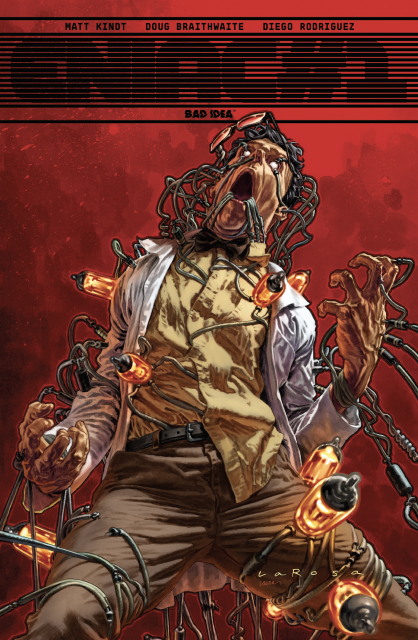
It’s an Eniac, Eniac on the floor / And it’s selling like it’s never sold before.


So anyway, here we are, in this post Bad Idea Comics release-of-Eniac-#1 world. You’re probably been hearing about it on the comic news sites or on your TickingTocks or whatever, or you may even have read about the company and my participation in it on my very site about a year ago. But in short: comic publisher produces new comics, available only at a select number of stores around the world.

But Eniac #1 is out now, like I said…when they announced they were going to use Diamond Comics to distribute their books, I was sweating it a bit, given the number of boners they’ve pulled of late regarding books just straight up not showing up and not having the stock to replace them. With initial orders on Eniac being only partially filled with first printing due to orders being much higher than anticipated, and the balance with the black-logoed “Not First Printings,” if my order of first printings didn’t show up I suspect there’s no way I’d be able to get replacements. Especially with my shipment arriving a day later than normal this week, which would mean being the last in line calling in my shortages.

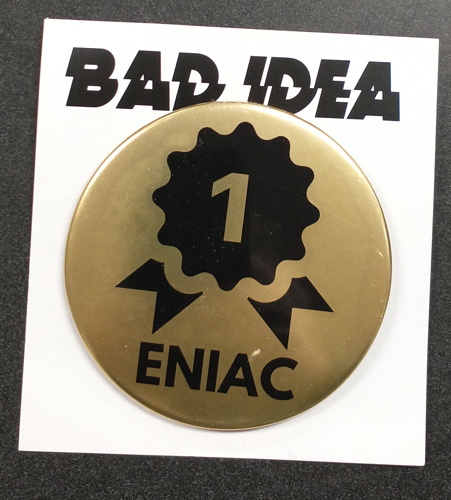
All that worry was for naught (at least for Eniac, no so much for that order of Oingo Boingo comics I was highly anticipating which didn’t manage to make it into my shipment) and a Bad Idea time was had by all at the shop. Bad Idea provided a special button, pictured here:

…to be given to the first person to actually purchase an issue of Eniac in the shop. And that person was Jessica, pictured here on the store’s Instagram.

And there was this personalized video provided by the publisher, where Eniac writer Matt Kindt his own self extols the viewer to go to Sterling Silver Comics for your copy:

I had a lot of mail order customers for this comic, which probably shouldn’t come as a surprise given the relative scarcity of retailers carrying it. Walked over to the post office Thursday morning with a cart full of packages, in fact, and it’s a good thing I restocked my cardboard comic mailers for this very purpose. So all in all…with lots of folks excited about the book, with plenty of new faces coming into the store looking for it, and plenty of copies sent across the country, I’d say Eniac #1 was a success for me.

Of course, the question remains if this demand will continue for future issues of the series, or for other titles from the publisher. I did have at least a couple of mail order people who requested #1 tell me they weren’t interested in #2, which is a shame and I hope they change their mind if they read it (and that’s a big “IF” which I’ll talk about in a moment). However, far more customers asked for all issues of Eniac, if not “all Bad Idea,” so that’s a good sign at least for continuing sales.

…So you know how over the last week or so I’ve been talking about speculation in comics, and how new collectibles are almost being forced into having value given that actual rare and valuable comics are in even shorter supply than normal.

Well, guess what happens when something that may actually be (at least regionally) scarce enters the market? Folks lose their minds. When I poked in on eBay early today I was copies of the white-logoed first print listed at hundreds of dollars. Just checking now the black-logoed second prints are at $30 or more. The freebie promo comics ballyhooing the Bad Idea line, the very ones I’m still giving away for free at my front counter, are getting listed at $10 a pop on average.I even saw one of the buttons listed with a Buy-It-Now of $470 (with “free shipping,” gee how generous). And yes, I checked, there have been sales on these at around there prices. Well, maybe not the button. Yet.

The official sales agreement retailers entered into with Bad Idea specifies that they can’t sell the comic for more than cover prices for the next thirty days, so presumably most of these eBay sellers are individual buyers trying to make a fast buck on the New Hot Thing (I know I had more than a couple come buy their copy today.) What’s interesting is that another stipulation is that retailers could only sell one copy per person, which has me wondering about the seller I just saw with the 2nd print listed at $29.95 and 28 sold already:


Either this seller is a comics retailer, or friends with a comics retailer and selling them on his behalf, or a fella who walked into his local shop 28+ times with a large variety of disguises and questionable accents.

I know Bad Idea frowns on this behavior…this announcement on Twitter (which I also received via email) telling everyone they bounced a seller from the program permanently for violating these rules was a clear warning to other stores. But of course that’s not going to stop individuals from doing whatever they want with their copies.

…Following that tweet from Bad Idea is some spirited discussion as to whether or not that enforced cover price is a good idea, or if retailers should be allowed to take advantage of the current secondary market, and some grumbling about the “one-per-customer” rule. I didn’t have any complaints regarding the latter…a few customers tried to buy more than one, but were completly understanding when I told them they couldn’t. Thank goodness, I didn’t feel like getting screamed at in the middle of my store.

To be honest, I had my questions about the pricing thing, as I thought the “Manufacturer’s Suggested Retail Price” wasn’t an enforceable fixed price, but one that could be freely adjusted as the situation warrants. Hence, you know, back issues pricing. But I took a look at the FTC website” and found this bit of business:

“If a manufacturer, on its own, adopts a policy regarding a desired level of prices, the law allows the manufacturer to deal only with retailers who agree to that policy. A manufacturer also may stop dealing with a retailer that does not follow its resale price policy. That is, a manufacturer can implement a dealer policy on a ‘take it or leave it’ basis.”

…which I feel like probably covers Bad Idea’s situation, allowing them to set a price. However, please note I am no Legalese Expert, so maybe someone can help clarify.

I realize after all this I haven’t said anything about the comic itself, which is mostly because my comic readin’ time at home has been curtailed a bit, combined with my slower reading nowadays because of my eyeball troubles. But it’s a striking book with that deep red cover and thick cover…it grabs your attention, certainly. It’s on the read list for tonight…I’m looking forward to it. Here’s hoping future releases generate equal excitement. The industry sure could use some…even if the shadow of speculation is in tow.

• • •

Over on the Patreon, I’ve added another short audio bit, this time discussing the delivery of new comic shipments. It’s fun doing these, and it’s even fun to go through with the editing program and cut out the “uhs,” the swallows, and that notification noise my phone made while recording.

I’m glad to be able to start providing some new content over there again (only $1 a month to get it all!). I’ll also be restarting Swamp Thing-a-Thon again soon, and I should have another sample entry, my coverage of issue #1 from the 1970s, up here on this site this weekend.

Thanks for reading, and I’ll see you soon.

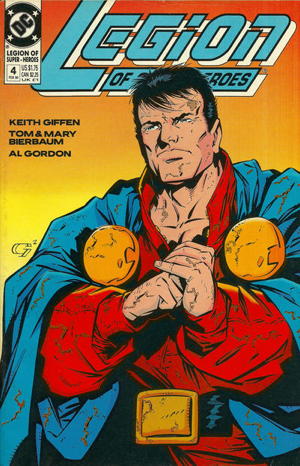
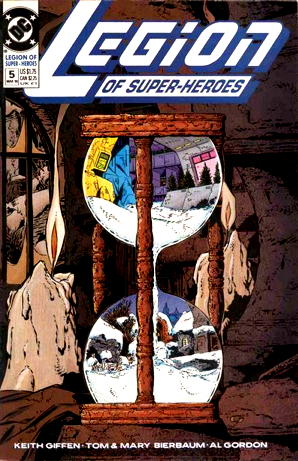
I know that issue of Legion of Super-Heroes didn’t have a digital code, just roll with it.

JohnJ has this to say

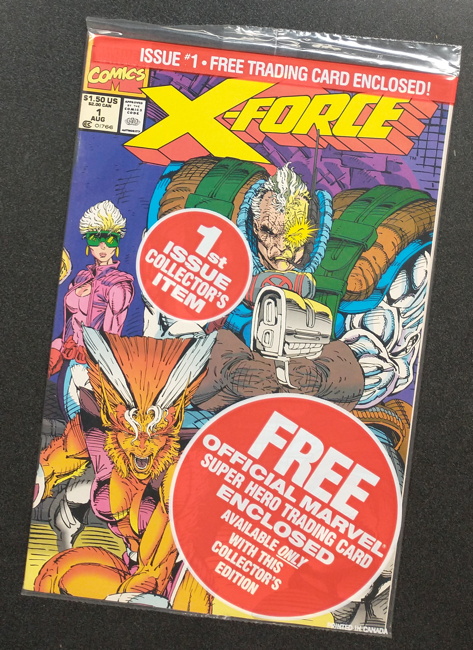
“There must also be some basic pricing difference between copies still bagged and those removed from bags, just as there would have been with Superman #75 or Spider-Man #1. Is an X-Force #1 even possible to be considered ‘mint’ if it’s out of the bag and card-less? No matter how pristine the book itself might be, would the ‘slabbers’ turn up their noses at it?”

When I price comics, I do indeed take into account opened/missing bags, removed inserts (like trading cards) and stuff like that. There are also those comics with the Mark’s Jewelers ads where even in the price guide their presence, or lack thereof, is factored into pricing. I mean, I guess technically having those inserts removed would be similar to an old comic having “ad page removed, story not affected” dragging down the price, so I can see the logic there. Either the comic is complete as published, or it isn’t. Whether that “completeness” impacts the price, and by how much, is the matter than can be debated.

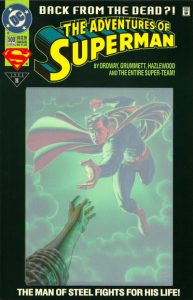
For something like X-Force #1, where sealed copies are still relatively plentiful, unbagged copies can go for next to nothing. Same for Adventures of Superman which is hard enough to sell complete and presumably mint at anywhere close to its barely-above-cover-price guide listing (or even at a dollar a pop, like I’ve been trying to), much less naked, exposed, trading card-less. In both cases I usually just toss ’em in the bargain bin when I come across them, though sometimes I’ll put a bagless X-Force #1 in the regular bins in case anyone just wants a reader copy for cheap and don’t want to hunt through the random cheapo boxes.

There is a grey area, of course, with the “opened bag” — the Death of Superman issue still sells with an opened bag and most, if not all, of its contents. Not for the full premium, of course, but not bargain basement prices, and there’s still demand for it. Compare to X-Force #1, where the main driving force for collectors right now is whether or not the Deadpool card is included, and whether that card is in “mint,” so sealed copies are preferred.)
Now as I recall (haven’t checked of late, because I think this was dumb), the price guide’s stance was that so long as the bag was opened neatly and all contents were intact, it should essentially be priced the same as a sealed copy. Which of course is bananas, as in actual real life customers will pay more for a sealed copy, and less, or nothing at all, for an unsealed one.

And then there’s 1990’s Spider-Man #1, where you could get the green cover, the black ‘n’ silver cover, or either of those covers sealed in a special polybag. The polybag editions were just polybagged…no inserts included. The polybag was the gimmick, and a gimmick so dumb that my former boss swore he’d never stock that particular version as a back issue in his shop. So anyway, having the bag in this case damaged or removed made those variants sort of pointless, and why would you want to open them anyway? To read this comic? Have you read it? C’mon.

I mean, in the old days, unbagged copies of the bagged Spider-Man would have been pointless, except now, as the need for collectible comics intensifies in the face of declining supply, they are now selling for higher prices. Specifically as “unpriced variants,” since these bagged editions had their retail prices printed on the bags themselves, and left off the actual covers. A speedy search of the eBays turned up a “no price” black variant at $16.99.

I figured “McFarlane’s Spider-Man is a hot comic, so I guess demand is up for any copies of this” but in fairness I looked up Adventures of Superman #500, which earlier I asserted debagged copies of the white-bag variant are essentially worthless. Well, I still think they are, but that’s not stopping folks from selling slabbed, graded copies for $100 plus. And “raw” copies, too, for the usual $1 to $3. Amazing.

Online pricing doesn’t necessarily reflect real world pricing on collectibles, of course. I’ve sold stuff online for premium prices that would get me laughed out of town if I tried them in the store. And I’ve tried to move things online for any price that ended up selling more quickly, and more dearly, in the ol’ brick and mortar. So [throws price guide up in the air] who knows, man.

On a related note, I wrote (egads, nearly nine years ago) about Marvel Comics and their digital code stickers, and how their removal would or would not affect pricing. Oddly, it hasn’t really come up too often, aside from one collection of books I took in a couple of years ago. My rule of thumb, as stated above, remains “is this book as it was originally published?” If it’s missing the sticker covering the code, then no, it’s incomplete. A very nit-picking incomplete, but nonetheless, by technical definition, it is as such. Now it doesn’t affect pricing that much for these mostly recent books, but what if in a few decades, whatever today’s equivalent of Incredible Hulk #181 (almost certainly that first evergreen-hot appearance of the Gold Lantern) is missing a sticker? Will its going market price of 2000 Space-Credits drop down to a measly 1200 Space-Credits? How’s someone supposed to send their clone-child to Ceti Alpha V Academy on that little amount of money? Or will it be taken in stride, like the Guide’s instance that arrival dates on covers for comics of a certain age shouldn’t affect the grade? I guess time will tell. Time travelers, come back and let me know.

• • •

In other news, after a long hiatus, mostly enforced by ongoing eyeball issues, I am attempting to return to doing my coverage of Swamp Thing issue-by-issue as Patreon-exclusive content. Probably at a less-frequent pace than I was attempting, but I plan on filling the gaps with brief audio content (the very brief first installment of which has already been posted, not really saying much more than what’s already said here). So, if you want to hear my warbly voice barely make it through a sentence without stumbling, now’s your chance! (This may be practice for a full-fledged actual podcast at some point in the near-ish future.)

When I first started the Swamp-Thing-a-Thon, my intention was to post it exclusively for Patreonites, then release it here on ProgRuin several months later. Well, I never did that last part, so I’ll try to get another one posted this weekend. In the meantime, here’s the very first installment I posted about House of Secrets #92.

Thanks for reading, pals, and I’ll catch you on Friday.

“Sobered up” = nice way of saying “crashed like the Hindenburg.”

So last week, when I was a’typin’ about the weirdo Marvel trading card boom allegedly going on right now, Matthew noted (in reference to X-Force (1991) #1’s involvement:

“You’ve mentioned the ‘Shazam! effect’ before in relation to the 1970s Shazam comic and I think there’s an element of that happening here too. I mean, X-Force #1 came out 30 years ago, that’s the same gap between Fantastic Four #1 and X-Force #1. Plus people who were young when it first came out our (potentially) old enough to have money and nostalgia for that thing they used to have?”

I did sort of refer to the Shazam Effect obliquely in that post in the following passage:

“…While millions of X-Force #1 were printed, that doesn’t necessarily follow that millions are out there in readily available circulation. And the ones that do turn up aren’t necessarily going to be in that minty-mint collectable condition.”

…and if someone out there doesn’t remember what that is…in short, the ’70s Shazam! #1 was ordered in huge quantities, with large amounts going unsold. It remained a cheap back issue for decades, often finding its way into quarter boxes and the like…until one day the market realized that actual nice copies were getting harder to come by. Partially due to age, but almost certainly a lot to do with available stock being dumped into said bargain boxes and basically being mishandled and poorly stored and such. And thusly, high grade Shazam! #1s go for a premium.

Now that’s my theory, built upon decades of observation and just how I know early on at the previous place of employment, we’ve just pour the buckets of Shazam! comics into the blow-out boxes and hoped someone would take them away.

This does apply to X-Force #1 (and other early ’90s blockbuster hit comics) a bit, I think. But first, I believe there were a lot more copies of X-Force #1 and its contemporaries printed than of Shazam! #1.

…And that while X-Force #1, in contrast to, say, the ’90s X-Men #1 and Spider-Man #1, did suffer in general reputation and consideration after the market sobered up a bit later in a decade, I don’t think quite the same percentage of them ended up in the bargain bin dregs to be misused and abused. Not saying no copies ended up there, but I believe it wasn’t enough to create a paucity of near mint copies in general circulation. If anything, like I said in my original post, actually being purchased by consumers who didn’t store their comics properly seems to be, just from my general experience, the more likely culprit in this matter.

There’s also the inverse relationship of product versus outlets to consider. Shazam #1 was released as the direct market was beginning, with more and more comic-specific retail stores opening up and presenting more opportunities for Shazam #1 to be sold. Even if, you know, it was just in quarter boxes. X-Force #1 was published just prior to the direct market’s near fatal contraction, with piles of unsold copies of that comic disappearing along with the stores that ordered too many of them. Assuming former store owners didn’t dump their stock on other surviving shops (or, uh, had them shredded), and also assuming proper and not contemptuous storage, there may be masses of mint-ish X-Force #1s still lurking, hidden, waiting to make their move.

Not saying every copy of those unsold Shazam!s got circulated, and that millions of X-Forces aren’t in circulation. But I do think there are potentially enough of those X-Force #1s out there in what would be considered “collectible” shape that all it really takes is one big warehouse/storage unit find for the supposed scarcity of that comic to dissipate. (If I recall correctly, something similar happened to Wally Wood’s Heroes Inc.) As garages and storage areas open up and get cleaned out by their owners, or progressively more often, surviving family members or third-party purchasers, they’re only going to become more common.

And going back to my original assertion, if there is an apparently scarcity to X-Force #1 at all, it comes from newer stores who weren’t around when it came out, and thus didn’t acquire an enormous backlog of unsold copies to dole out over the decades. Newer stores would have to acquire them in collections…and they do pop up there, time and again.

I hope none of this sounds like I’m trying to argue with commenter Matthew…just taking his response as a launching pad for considering the differences in situations here. Which isn’t to say his idea that “nostalgia + relatively shortness in supply” isn’t a fact. Sure it is. And that increased demand for a once moribund back issue is going to cause the prices to rise. But that Deadpool promo card going for hundreds of dollars…that’s almost certainly the result of folks trying to “force” a collectible, to find something relatively common in a market where genuinely scare items are becoming harder to come by, and declaring something “rare” and “hot.” Just by the natural order of things, I think any really high prices on these things is outside the normal causes of supply and demand.

Anyway, there you are. Over-rambly and self-contradictory, in the Mighty Mike Style, but there you go. If I were to sum up…while some price increases can be expected in even over-printed items like X-Force #1 due to a relative dearth of supply at current outlets, it’s still likely not rare enough to cause such extremely high pricing based on ordinary market forces. But none of that matters if it’s decided this is the new normal and that’s what these items go for now, regardless of abundance.

This is all conjecture and opinion based on what I’ve seen over my nearly 33 years in the industry. I could be (gasp) wrong, but this is my general sense of things. You know where to argue with me!

Thanks to Matthew for his response.

Look, Starfire’s hair is long, but let’s be serious here.

[SPOILERS ahead, mostly for Generations: Forged]


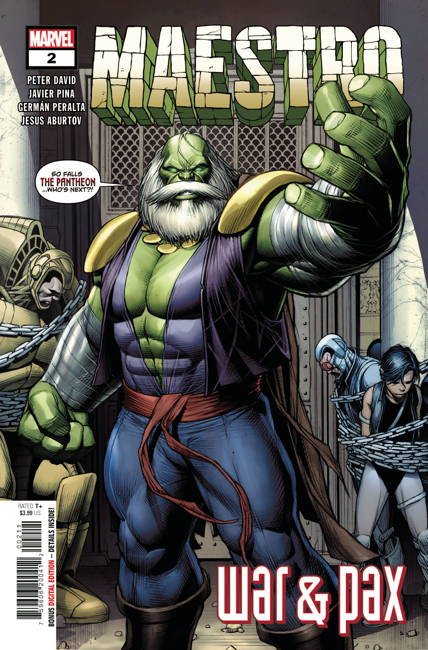
So this story (detailing the rise to power of the Hulk as “The Maestro,” ruler of a future post-apocalyptic Earth as detailed in the Future Imperfect mini-series) involves The Pantheon, a superpowered team allied with ol’ Jade Jaws back around the early ’90s. That Future Imperfect comic I mentioned paranthetically also dates to the early 1990s. Now, I bought those comics new, so I certainly remember the stories and the characters, despite being (urgh) nearly 30 years ago, but it surprises me just a little that a follow-up being published now is doing as well as it is.

Now I say only a “little” surprised if only because 30-year-old comic stories aren’t necessarily as hard to get your hands on as they used to be. Marvel’s trade/hardcover program, even as haphazard as it is, has managed to keep writer Peter David’s work on the Hulk relatively available, including the issues involving both the Pantheon and most of the Maestro stuff. And that now thrice-noted Future Imperfect series has been reprinted plenty of times, including a relatively cheap one-shot released around the time the first Maestro mini was released last year. Oh, did I not mention that the Maestro pictured above is in fact the second issue of the second Maestro series, since the first one did so well?

In addition to physical reprints, I’m reasonably sure (even though I don’t personally have the service) that the relevant issues are all available on Marvel’s digital comics subscription service. So, you know, fans can catch up there too if they missed all that stuff the first time, because “I wasn’t born yet” or whatever lame excuse these young punks have.

The Maestro himself has popped up now and again in Marvel’s books, including a revisit by David to the character in later issues of Incredible Hulk, there was a tie-in mini to Secret Wars in 2015, I’m pretty sure the character’s popped up in a video game or two…basically, he’s been part of the landscape.

Now the Pantheon, those folks have been missing from comics for a while, so I wonder how many folks had to scramble to the Wikipedia page to find out who they are? Or how many readers just took it in stride, getting enough backstory they needed from these new comics by themselves, and were fine? I’m always curious about that sort of thing. I’ll read new comics and think “I’ve been reading comics for over 45 years, I know what’s going on, but can new readers catch on?” Seems like jumping in and hanging on to the latest issue of a funnybook was easier to do back in ye olden tymes of my youth. But also in my youth I didn’t have the variety of resources to inform me as to what I missed as people do now.

Anyway, just thought that was interesting enough to blab about it on my site for a few hundred words. …Oh, was the comic any good? Yeah, sure, David does a good job fitting it all in with his other Hulk work, and it all feels of a piece. Makes one sorry he ever had to leave the book in the first place (and second place, when he came back for a year), as he clearly had more stuff to say about the character. But then, we wouldn’t have had the other nice work occasionally done on the character since then, so I guess it all works out.


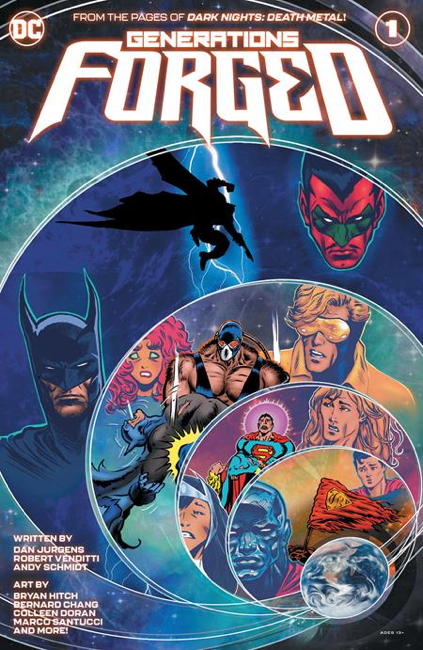
So, Generations: Forged. [REMINDER: spoilers.]

First, so the ultimate goal of Generations was to do the same thing to Batman that the mostly forgotten Doomsday Clock attempted to do with Superman…establish that the character has existed for decades in this universe, and that he continually gets updated/rebooted/refurbished/whatever as the universe undoes its regular restarts. Or, you know, something like that. I guess having Superman be established as essentially the center of the universe wasn’t enough, they had to make sure Batman was along for the ride…when Superman and the universe are rebooted, so is Bats, and I guess presumably everyone else they’re in contact with. I think I’m understanding that ending properly.

Second, if, as the recent Death Metal mini established (and Generations ballyhoos itself as being “from the pages of…” that series, the connection’s there) that all the characters remember all their histories across the reboots, then I presume Batman can draw a straight line from being that guy with the cockeyed Bat-ears in the 1930s to fighting Clownhunter today. And also teaming up with Scooby Doo, I refuse to disallow that from continuity.

Third, for being the “big event” we were promised for a long time back when Dan DiDio was still at DC, it seemed…like not enough, really. I know plans were curtailed somewhat, but I swore there was going to be more after this second installment and it looks like just a hardcover collecting the two issues (and the one story from Detective #1027) is all that’s coming.

Fourth, the idea that when Starfire flies, that’s literally a giant stream of hair flowing behind her, and not artistic license to show how fast she’s flying or anything, is bonkers. Did you look at New Teen Titans and think “boy that’s a lot of hair trailing behind her, like hundreds of feet worth” or did you figure George Perez was just using the imagery to dynamically and symbolically present her flying power. Because seriously, that it’s her hair is a plot point in this comic. Like, there’s a chunk of that long stream of hair left behind for other people to find. Anyway, that was my stupid reaction to the comic.

I did like the comic, in case you were wondering. As I said last time, this was the most Dan Jurgens-est of comics, which isn’t a bad thing. It’s comfortably familiar super-heroing, somehow evoking the crossover events of old while still incorporating the “universe redefining” aspects of the new events. And in retrospect, two extreeee-sized issues of this was probably enough.

• • •

I do plan on returning to the trading card pricing topic of this post from Monday…that was going to require more time than I had for blogging this week (hence only the two posts) but I’m not done with it yet.

Thanks for reading, pals, and see you Monday.

What’s this horses**t?

Okay, so apparently this is a thing that’s been happening. X-Force #1 from 1991…you know, the comic that sold, what, five million copies…which could be had for under ten bucks, usually closer to about a buck…is suddenly selling for premium prices.


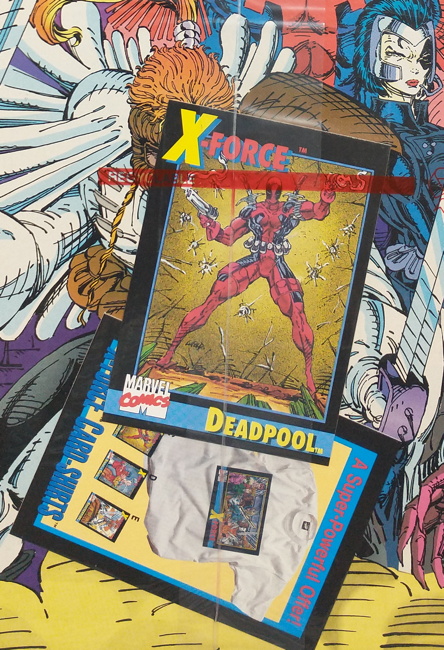
…but specifically the variation that was packaged with a Deadpool trading card (approximately one-fifth of the run, as there were five different cards):


The price that I’ve seen bandied about is “$100” which apparently it did sell for on eBay, but a quick look reveals prices to be more in the $20-$40 range, which is still a lot.

And this is goaded on by the fact that this very Deadpool card, just by itself, is apparently selling for even more premium prices, with this optimistic seller offering up a graded ‘n’ slabbed one for $2600. (“Or best offer,” to be fair.)

It wasn’t that long ago…well, okay, it was 2013 when I talked about how folks didn’t seem to care much about early Deadpool appearances that weren’t New Mutants #98. And then just a couple of years back I noted my surprise at how the Deadpool-carded X-Force #1 was now (well, then) priced in the guide at $18 (which isn’t too far off from where most eBay sales are at the moment). BONUS: you can see that lovely pic of me in the second link wielding a full set of those X-Force #1s, with each card in the set represented.

There are a preponderance of these Deadpool cards listed online as “rookie cards,” which…I don’t know, is kind of weird. I mean, I guess, technically, that card is his second appearance, I think, if you want to refer to tie-in merchandise as “appearances” of characters (which leads to madness like calling an issue of Marvel Age the “first appearance” of Spider-Man’s black suit). But calling it a “rookie” card feels…well, feels like forcing the invention of collectability in a market where genuinely collectible items are becoming harder to come by.

I’ve written before (on Twitter, I think) about how this seems to be driving the current speculator market for current issues, where any first appearance, any deviation from the norm is branded “hot” and because of the very nature of current close-to-the-bone comics ordering by retailers, an already scare item becomes that much more scarce. Who needs to chase after an Amazing Fantasy #15 when you can artificially inflate demand for the first appearance of Gold Lantern, a character everyone’s already forgotten about?

Also tying into things I’ve written about before…while millions of X-Force #1 were printed, that doesn’t necessarily follow that millions are out there in readily available circulation. And the ones that do turn up aren’t necessarily going to be in that minty-mint collectable condition. I assure you, no matter how many bags or boards or Mylars or what was it, “Comic Stor” 3-ring binder sleeves were sold, I am betting, just on personal observation of having been in comics retail for nearly 33 years, that most of the copies that ended up in the hands of consumers at that time have been damaged or destroyed over the decades.

And the large amounts of unsold copies that stores still had after that initial sales window closed back in 1991? Probably vanished along with many of the stores that shut down as soon as that comics boom went bust…probably because they were stuck with too many copies of, oh, say, X-Force #1 and comics like that. So it’s possible a lot of that stock is just sitting in storage units or former retailers’ garages, with no where to go, and no access to potential buyers. Which isn’t to say a comic like X-Force #1 is “rare” by any means…just that you have have a longer search ahead of you finding copies, as not many stores open now were open then to have wholesaled them.

(NOTE: I know I’ve discussed this before, in relation to Valiant’s Turok #1. Longtime readers, I beg your patience as Old Man Mike repeats his stories.)

So anyway, does this have anything to do with X-Force #1 avec une carte à collectionner Deadpool suddenly creeping up in price? It probably doesn’t hurt, but it also appears to be tied to the current secondary market for Marvel trading cards also booming beyond belief.

For literally decades any inquiry about Marvel trading cards was always, always, without exception, even more italicized words, from people trying to sell their sets. Never looking to buy. Just trying to turn over their old card sets, and then realizing they’d get next to nothing for them because, well, nobody was buying and stores would be crazy to put any kind of premium price on these.

Well, guess what, from what I can tell looking on the eBays, about a month or so ago it was decided Marvel trading cards were hot and collectible again.

Look, I just did a quick survey, maybe this had been coming for a while, and prices had been creeping up. But in January a complete set of just the base 1990 card set, no holograms, could be had for $60, and now it goes for hundreds. A set with holograms apparently sold for over $600. And I’m sure there’s more I’m missing.

In short, when no one was looking, Marvel’s trading cards suddenly shot up in price. Even that $60 for a base set was five times the going market price on these for years. And most tellingly, within the last few days I’ve started to get actual inquiries from people looking to buy them. Granted, they’d likely want them for the traditional low prices than the new hot market prices, but that this online trend is trickling down into the real world is somewhat telling.

I suppose again it’s the idea of relative scarcity, especially after these sets were ignored and untraded in shops during the trading card lull in the comics market. Like all those hot 1990s comics, sets were probably disused into noncollectability or just lost, and retail stores that may have had inventory on these at the time are long gone. Again, more product that still isn’t reate, but now not as easy to find as it once was.

So it that what’s happening here? Marvel cards are suddenly getting hot, and now “promo” cards like that Deadpool one are being driven up in price as well along with them? If I had to guess, I’d say X-Force #1s are likely easier to track down than full sets of Marvel Universe cards…so are those Deadpool “rookies” being boosted as collectables to capitalize on the newly-resurging card market? Those Deadpool cards seem to be selling, on average, for more than the comic with said card. Should I open up the X-Force #1 I have in the store and just sell the card by itself?

Some of the eBay listings I’ve looked at don’t even mention that the card was originally a comic book insert. Do some buyers even realize that it was an insert? Do some sellers even know? It has been 30 years…a non-zero percentage of the people involved in these transactions were almost certainly not even born yet.

It all seems so amazing to me that these comics and cards after years of being mostly moribund are suddenly The Hot Tickets. But then, there was a time at the old shop when we were selling New Mutants #98 with Deadpool’s first appearance at $10 a pop and thinking this had to be some sort of crime selling them for so much. So as the market changes, I guess I gotta roll with it.

I’ve leaving that Deadpool card intact inside that X-Force #1 I had at the shop, however. Popping it open just to sell the card is a bridge too far.

If you want to talk more about it, do it in the comments because I’m not doing a fourth installment.

Unlike the new edit of the Justice League movie, I wanted to try to keep this, the third installment of “Zack Snyder: Friend or Foe?” (parts the first and second) reasonably short, instead of throwing my usual Wall o’Text at you. But, um, doesn’t look like that’s happening, so let’s get into it, shall we?

First, I already responded to valued commenter Turan in the comments there, but I wanted to take issue with the idea that “Superman as Christ figure” should be left alone as it would be offensive to his Jewish creators, Jerry Siegel and Joe Shuster. Honestly, I don’t know if that would be offensive to them, but the simple matter of fact is that once art is out in the world, it’s open to interpretation beyond (and possibly even against) the creator’s intent. It’s just a thing, you know? Stan Lee and Jack Kirby may have been Jewish themselves, but that didn’t stop their creation the Silver Surfer from being hailed as Christ-like (though some may argue the point). I mean, Lee made the dude’s arch-nemesis the Devil, c’mon. And I’m sure Lee had no problem playing that up in Surfer’s solo series for the college kids he thought were taking this all seriously.

Anyway, in conclusion I think they should drop the “Superman as Christ” angle at least for a while, because they’ve been hitting it kind of heavily and not making any new points with it. Give me “Superman as Job” for a while. I mean, his life starts with his planet blowing up, he’s gotta feel kind of put upon just from that.

Anyhoo, that all in a way ties back in to an argument in support of Snyder’s interpretation of DC’s characters, but I don’t imagine I need to explicate that further. Besides, I think my initial point, more or less, was less “should ol’ Zack have done what he did” and more “why Marvel’s movies had more popular cultural traction.”

Daniel then wants to know “if someone could provide a quote from Snyder that expresses his support for [Ayn] Rand.” And I did look, mostly coming up with repeated reporting on how much Snyder’s admires The Fountainhead and what it says to him about the creative process. Depending on what one thinks about The Fountainhead, that likely should answer the question.

Getting back to my initial “Marvel movies vs. DC movies” thesis, Cassandra notes, in short, how the general tone of the Snyder films is antiethical to Superman’s nature…maybe not a bad movie, but not a good Superman film, in short, whereas the Marvel movies hew a tad more closely to the source material (with allowances, as always) and strike more of a chord with the public. That is essentially the same point I’ve been attempting to make, though I think I appreciate Snyder’s interpretation (there’s the word again!) of Superman and his story more than she does. I get where she’s coming from, same as I see Daniel’s point (of viewing this as a more mature and “realistic” paean on the nature of heroism). Yes, I’m planting my wishy-washy feet on both sides of the line…I lean towards Daniel’s thoughts on the matter, while nodding toward Cassandra’s thoughts on the film’s appeal.

Told you this wouldn’t be short.

Thom H. brings up that the grim ‘n’ gritty serious tone gets in the way of connecting with the characters, and in a way I believe that’s true. My initial comments on this topic on Twitter were about how I feel no real emotional connection to any of the characters in Snyder’s films…it’s all watching plot points progress, which for me was fine, but if he expected me to feel anything about Superman’s death at the end of Batman V Superman, well, sorry, dude. (Daniel, on the other hand, did find much to emotionally connect to, so clearly this isn’t the case for everyone.)

I think what connects audiences more to the Marvel characters is, of course, the humor. It draws us in, makes us relate to characters that are otherwise unrealistic, and strengthens that willing suspension of disbelief superhero movies need to keep audiences focused and in the story. Granted, anyone going to a movie called Iron Man is probably on board wtih a guy in a flying suit of armor to begin with, but having the man inside the suit be charming and witty goes a long way to caring about what happens to the guy once he’s face to face with a giant purple fella who can kill off half the universe by snapping the fingers inside his magical glove.

I honestly can’t think of a single funny, warmly humanizing moment in Man of Steel. Look, before anyone yells at me, I know there must have been…okay, I’m kind of remembering the shot of a Young Clark standing hands-on-hips, cape billowing behind him. There’s that. But I don’t feel like you’re ever really drawn into the character. He does heroic stuff, you see him struggle, you see him sacrifice, but that is, as I said, more intellectual exercise and following the story’s arc. Marvel did a better job making us feel for a CGI space raccoon’s loneliness hidden beneath his bluster.

Again, that’s just me. And possibly a lot of you. But not everyone. The emotional progression in the Snyder films I’m willing to be argued (and Daniel did strongly argue) into realizing it’s all a lot less on-the-sleeve…it’s all there, just not in the more cartoony Marvel manner.

It bears repeating that I like the Snyder films just fine. They’re just different animals from the Marvel movies. I know, “duh.”

Okay, just a couple more short points here and I’ll unlock the doors so you can all escape. If I’m skipping your specific comments, it’s just because I’ve either already discussed similar material or because I’m going to call you at 3 AM and talk your ear off about it. So, Robcat notes that he liked Ben Affleck as Batman. Hey, so did I! I thought he made a great, older, kinda done with it Batman. It’s a shame he won’t be back (beyond a possible cameo?) in future flicks, but I thought he did a good job. And I’m still okay with the “Martha” bit, don’t @ me.

Finally, JohnJ reminds me of a “groaning reaction” superhero story that I’ve related on this site before, but it was probably well over a decade ago, so here it is again.

So in 2004 or thereabouts, I was in a movie theater, maybe waiting to watch my 9th consecutive viewing of Napoleon Dynamite, when the trailers came on. And this one trailer started, it had a lot of dramatic goings-on and action and suspense and whatever, and the audience was paying close, quiet attention…

…until, like, a drawer was opened or a bag unzipped or something in the trailer, and the Batman cowl was exposed, and I swear to you, that one was hell of a loud shared groan from the audience that followed.

Now the Batman and Robin movie was about seven years prior to this, but apparently cast a long shadow and surely this is what prompted the response. “Not more Batman,” they essentially announced, not realizing the Batman will continue until Bat-morale improves.

Okay, let’s leave it at that…as I said in this post’s title, you want to talk about this further, let’s do it in the comments here. I did want to thank you all for your thoughtful and polite participation, and that I value your opinions whether I happen to agree with them or not. Even yours, Daniel, you nutty Snyder-lover, you!

Looks like it’s gonna be “Snyder Movies Week” here on the ol’ blog.

So folks had a lot (a lot) to say in response to my post about the forthcoming New And Maybe? Improved Zack Snyder’s Justice League, coming soon to a some device or ‘nother near you, which to be fair I suspected there was a chance that I’d be opening a can of worms here. A little can of worms, not more than a couple of ounces, but, y’know, enough. And frankly I’m not sure where to even start here.

But first, I’m grateful I had thoughtful, reasoned responses from regulars, and not drive-by one-shot comments from the ZS Superfans who would skim my post long enough to decide (wrongly) that I hate Snyder’s movies and drop some misspelled leavings protesting my very existence. So, you know, thank goodness for that.

Now the comments that were left seemed to be mostly negative regarding Snyder, with one person firmly in the positive column, and if I were to include myself, one person in the “okay with Snyder, with caveats” not-quite-middle-ground I often find myself in. That…probably reflects the overall online response to his films.

And I already said this to Daniel on the Twitters, but let me repeat it here…I know from feeling like The One Guy fighting that uphill battle supporting that project that everyone else seems to be determined to tear down, i.e. All-Star Batman and Robin the Boy Wonder and Frank Miller’s The Spirit. And I absolutely support and condone Daniel’s thought-out defense and championing of the Snyder-verse.

I also wanted to make sure Daniel knew that my opinions on his work, and its comparison to Marvel’s film success, weren’t intended to be the be-all, end-all Final Word on the topic, and that other opinions of course existed. But just the style (or “style”) I was writing in, the tack I was taking, was presenting a specific view of the situation that I believed generally represented the public consensus. If folks didn’t like it, or disagreed with it…well, my comments are open for a reason, and Daniel did the right thing leaving his rebuttals there, which I appreciate.

To that point that I like the Marvel movies more than the DC movies…well, I think there’s no disputing that Marvel was more successful in marketing, in making each movie an event that you had to see, in building a shared cinematic universe that reflects in its way the evolution of the print Marvel Universe. Also, doing it in such a way that the audience is (mostly) entirely on board with it. They spent years doing it, using the second-and-third string characters they had left over after selling off the rights to their heavy hitters to other studios. Making Iron Man the heart of a multi-billion dollar film franchise would have seemed unthinkable a couple of decades ago, but here we are. Making a movie based on a version of Guardians of the Galaxy (and that there would be two of them, and they would be huge, would have had anyone espousing that idea locked up for their own good.)

Yes, I think the Marvel movies, overall, are more of a good time, more of the upbeat fun I want from watching a superhero film. As commenters noted…yes, there is bit of a sameness in the look ‘n’ feel to that franchise. Having the same guy in charge of all of them, having them all fit “the house style,” isn’t necessarily surprising, really. Not to mention a lot of the movies are origin stories, so just in terms of structure those are all going to feel the same. But I feel like there’s just enough variety to them so that they don’t seem exactly the same. I mean, no one’s going to confuse Guardians with Thor: The Dark World (especially since one is good and the other…well). But enough of the Marvel movies have “Hero Vs. More Powerful But Evil Version of Hero,” but that’s just a long-standing action trope anyway.

In comparison, the DC movies, and in particular the Snyder films, are…certainly heaped with the gravitas that most of the Marvel movies lack. I’ve said in the past that the first Avengers movie is fun but absolutely as deep as a sidewalk puddle after a brief summer drizzle. Not to say Marvel’s films didn’t occasionally touch on weighty topics (like Iron Man’s PTSD). I don’t have a problem with the darker tone of the films, which I think is an entirely valid interpretation. I don’t agree with every creative choice made, and I think some of the choices made are unfairly derided (the whole “Martha” thing I thought was a good shorthand for Superman finally being “humanized” in Batman’s eyes).

I think my primary objection is that this is the film version of Superman we’re getting right now, a darker and more dour rendition of the character that mostly belies his primary nature. Now Daniel laid out the case why the Superman etc. films are optimistic, and I’m fine with that…not trying to argue that. But I feel like I would like to see a more balanced/more overtly traditionally heroic version. Not denying the right of the Snyder films to exist, just that maybe I’d like to see a different movie.

As I’ve said, I thought the Justice League movie was drifting in the right direction, with a somewhat lighter tone. A Man of Steel 2 or a Justice League 2 would have been interesting to see where exactly they would have gone, but that’s sort of a moot point now. And the other DC films are moving toward more more Marvel-like model (less so Wonder Wooman, absolutely Shazam, and I think we can guess how the new Suicide Squad will go). When I noted that the expanded Justice League may be the most Zack Snyder-est of Zack Snyder films, I’m not joking…one last hurrah for Snyder in this movie universe, throwing in everything in his bag of tricks for this four hour brouhaha. (I like the comment left that it was specifically made four hours long to avoid getting Rifftraxed.) Still looking forward to it…perhaps I give the nod to the success of the Marvel films, but at heart I’m a DC kid and those are the movies I really want to see.

Okay, I’ll try to respond to more comments Friday. I thank everyone for their thoughtful and polite contributions, and I hope they remain that way! Thanks for reading and I’ll see you in a couple of days.

I may have paraphrased a quote from Tom Lehrer somewhere in here.

So I was talking with a customer the other day about the repeated success of the Marvel movies versus the seeming uphill battle for DC’s films, and I noted that one of the major differences is “likability.” In that the characters in Marvel movies are all likeable and understandable, whereas, as least in the Superman films, where it’s perhaps the most unforgivable, we get a Superman that isn’t, really.

Nor Batman, for that matter, but we’re kind of used to a Batman who’s all grumbly and dour and that’s just Batman’s thing. But putting a grumpy Superman in an already downbeat movie with a grumpy Batman doesn’t really help matters really. Meanwhile, here’s Marvel with a bunch of quippy, funny, upbeat-even-when-they’re downbeat heroes who just seem like generally normal, relatable guys ‘n’ gals, even the space raccoon and the fella what turns into a big green behemoth.

And thus there goes Marvel, spending years introducing us to all these folks and getting us to like them, building with each successive film a shared universe in a way that the general non-comic reading audience would get, until finally we get The Avengers, a film with essentially, what, a half-dozen prologues that got everyone hyped to see Iron Man fight Thor or whathaveyou.

Then Warner Brothers sees how many literal billions of dollars these Marvel movies are making and decides they need to get their own billions-of-dollars shared superhero universe franchise going. Only, you know, without the long lead-up Marvel had. You got a court-ordered Superman movie, a sequel that also squeezed in Batman and Wonder Woman, and then BOOM, Justice League, which introduced a few new-to-cinema superheroes and set up plot lines for future films. Plot lines that have since been ignored because the Justice League film underperformed, the Batman and Superman actors departed their roles, and follow-up DC films seem to have eschewed the overt “shared universe” concept. (More on that in a moment, save those angry emails.)

Now just as a reminder, I generally like Man of Steel, Batman V. Superman, and Justice League. Unlike the general response from most folks I respect, I think these films do have some positive qualities, which, admittedly, “a cheerful demeanor” is not among them. And while I do mostly appreciate these movies, I can also appreciate that many did not, that the tone was too dark, too “off” from what we were looking for in a superhero movie. Particularly a superhero movie starring Superman.

I have said that Justice League seemed closer to what people wanted from a DC movie. I mean, it was still a Zack Snyder film, like MoS and BvS before it, but…things were a little peppier somehow, lighter and funnier, at least in part…more crazy action and adventure, some snappier dialogue. How much of this was courtesy fill-in director Joss Whedon (I know, I know, back to him in a minute) who stepped in when Snyder had to leave the project, I’m not sure. But I did think at the time it was an enjoyable, if certainly not perfect, film that maybe suffered from the reputation of its predecessors. And sure, suffered from its own flaws, I ain’t arguing.

And while it still feels like DC playing catch up with Marvel, perhaps introducing those new characters in one film and spinning them off into their own projects wasn’t a bad idea. Plus, the new characters were fun to see, and brought some energy to the film…particularly Jason Momoa’s boisterous Aquaman, owing more than a little to the animated version from the Batman: Brave and the Bold TV show. Ezra Miller’s Flash, despite his major showpiece in the film being preceded, and outshone, by Quicksilver in the X-Men movies, was a good addition, and Ray Fisher’s Cyborg was…well, it’s hard to really talk about his role in the film given what we know now.

In fact, the major problems I now have with Justice League stem from issues outside the film’s story itself. When I see Cyborg, I think about the reported mistreatment that actor underwent. When I see the Flash, I remember this unpleasant story. And then there’s Joss Whedon himself, the focus of Fisher’s complaints and undergoing some of his own reckoning at the moment. I realize everyone’s innocent ’til proven guilty, but it seems like there’s quite a bit of fire beneath that smoke.

Ultimately, this makes the original release version of Justice League difficult to revisit, which maybe this new, expanded version by Snyder, debuting soon on HBO Max, can rectify. Look, there’s more important stuff at stake here beyond “being able to watch a movie with a clear conscience” but it would be nice to have a cut of the film that hopefully expunges most of Whedon’s influence. I realize this maybe removes whatever lightness may have existed in the story, and that from all appearances this may be the most Zack Snyder-est of Zack Snyder superhero movies…but at least it’ll be all, or at least mostly, his.

That doesn’t solve Miller’s issues, or repair Fisher’s mistreatment, I understand.

With any luck this Justice League 2.0 will get all that moodiness ‘n’ such out of the DC Movies’ system. Going back to the main stream of tonight’s symposium, I’m hoping for more movies with “likeable” characters from DC. Not that there can’t be any drama or tragedy, but at least let there be some balance, some reminder of why these heroes are heroes. Other DC movies outside Snyder’s vision seem to approach that. The first Wonder Woman is a joy, retaining a light heart even amongst the setting of one of the worst military conflicts. Shazam is relentlessly happy, despite getting his name wrong*, and Aquaman, despite being one of the most by-the-numbers films I’ve ever seen, is entirely carried by Momoa’s exuberant charm. Even the oddly divisive Wonder Woman 1984 is inarguably an upbeat film, when all is said and done. Birds of Prey turned out to be a good showcase for Harley Quinn, one of the two characters (other than Deadshot) to really shine in the otherwise half-baked Suicide Squad.

Harder to say what’s going on with the new movies coming, like the seemingly forever-in-production Flash film. Supposedly it’ll be exploring DC’s Multiverse, so again it’ll be following in Marvel’s footsteps of Into the Spider-Verse, or at least tied with Marvel, depending on when the equally multiversal Dr. Strange sequel comes out. But it’s going to have Michael Keaton returning at Batman, and look, that’s gotta be worth some points there.

Well, I guess it’s not so hard to see where Robert Pattison’s The Batman, which looks like it’ll be as much of a laugh riot as the Caped Crusader’s recent cinematic appearances. Looks like it might be good, but…yeah. Hey, remember back in the ’80s when everyone was panicked that the next Batman movie would be funny and then the comic book industry would be ruined forever and all fans would have to wear hairshirts and flagellate themselves with their leather floggers? Wasn’t that something?

Oh, and the next Suicide Squad, under the guidance of Guardians of the Galaxy‘s James Gunn…well, that has to be a delight, don’t you think?

And maybe someday we’ll get a new Superman movie. With a happy Superman that acknowledges the tragic beginnings of his existence but in a story that finds a balance between these two sides. I wonder how audiences would respond to that. Oh wait, we do kind of know.

Again, I like the Snyder superhero films. Honestly. And I am curious as to what this revised Justice League will be like. But…I can use a change of pace.


* I’m going to die on this stupid “Captain Marvel” hill. I can’t help it. We’re all fanboys about something.

Honestly, it’s harder to type “5YL” than it is just to type out “Five Years Later.”

So anyway, I’d meant to have a post up Wednesday, and then tried to have it up for Thursday, and in fact I actually had most of it written on Wednesday, but I was just too tired to put finishing touches on it and I wasn’t able to tell through my sleepiness if it all made sense or not. Thus, a rare moment of “quality control” on this site. No need to thank me.

I’ll probably revise and post what was completed at some point so all that “hard” “work” doesn’t go to waste. But in the meantime, let’s talk about Five Years Later Legion of Super-Heroes.

Longtime reader Wayne brought it up in his comment (responding to my post where I mentioned I was going through that latest volume of Legion reprints), and y’all continued the discussion on the pros and cons of that revision to our favorite 30th century heroes.

Wayne asks of the Five Year Later (or 5YL, as I think it was popularly known by) storyline “anyone else remember that run?” and boy howdy sure I do. I…probably implied a reference to it here in this overall post about the Legion of Super-Heroes Vs. Rebootery, in that it was one of many attempts at revitalizing/restarting the Legion in order to expand the audience beyond the readers who would buy Legion comics regardless. 5YL was not a reboot as such, but a rejiggering of the concept designed to shake things up, re-engage readers, and also try to clean up a continuity glitch or three, while technically maintaining a continuity of character and plot developments started so many decades ago in the Legion’s first appearance in Adventure #247.

If you’re not familiar, and in case you haven’t guessed from me repeatedly using “5YL,” with the new first issue in 1989, the Legion storyline jumps ahead five years to a universe where the Legion is scattered, everything’s in turmoil, all the characters call each other by their first names instead of their codenames, and there are mysteries within intrigues within conspiracies, all told in a deliberately obfuscatory manner.

But, y’know, is it any good?

It feels silly to write out anything about this stretch of Legion when pal Andrew knocked it out of the moopsball ring with this analysis. Just kinda picture me nodding my head next to pretty much every sentence in that essay. In short, this phase of the Legion devoted a lot of time to tearing up the scripts and smashing the scenery of What Had Come Before, a propcess that eventually brought us to the point of, as Andrew says, requiring the start-from-scratch afforded by a reboot.

“Yes, yes, Mike, but is it good?”

I started reading the Legion in the early ’80s, so I came to it a little later than the “Long Live the Legion”/APA-type fans who arose out of ’60s and ’70s fandom who opined on Legion goings-on in fanzines and whatnot. Legion was noted for its loyal fanbase, surely inspired (in part if not in whole) by the soap opera aspects borne by the large and varied cast. But I jumped in with both feet, followed the title, then the two titles once the “hardcover/softcover” publishing plan (in short: DC published a version of Legion for comic shops, reprinted a year later for newsstands, but before the reprints started the newsstand version also contained new stories).

Plus I read stories in DC’s digest reprints, and picked up back issues, and that sort of thing, so I was reasonably well versed in the franchise by the time that first “direct-sales-only” comic shop series came to its end.

“Mike….”

Okay, okay, I happened to really like the “Five Year Later” relaunch. It felt…it felt almost like a superhero version of Howard Chaykin’s American Flagg!…I mean, not in the sexy-naughty-times sort of way, but in that the comic was, as I said before, deliberately obfuscatory. It wasn’t bad storytelling, leaving out important plot points or taking unnecessary short cuts or leaving the reader in the dark for no good reason. The information was there, sometimes between the lines, making it a challenging read, but challenging in a good way. You’d reread each issue a time or three making sure you got what you were supposed to get. It felt…adult, again not in the dirty-filthy sense but in the “we expect you to bring some interpretative abilities to this, it ain’t no kid’s book.” And look, I was, what, 20 when this was coming out? It was rewarding to read a book that made you feel smart for getting it.

Not to say some of the criticisms some of you related in my comments section weren’t valid. Yes, calling everyone by their real first names could be confusing unless you were already fully immersed in all this nonsense prior to the launch of this series. I could read stuff in the comics written in the Interlac alphabet without referring back to the key they published in the early 300s, keeping Reep, Jo, Brin and Imra straight wasn’t going to be a problem.

And sometimes the artistic choices didn’t help either. Lots of characters in shadow, the occasional super close-up of whoever the heck it’s supposed to be…it added a layer of confusion to a series that was already not open to casual reading.

The storytelling gradually switched back over to a more traditional form as the series wore on, though the focus continued on breaking the milieu in ways that couldn’t be rolled back (refer back to Andrew’s post for a cataloging of some of these events). And, you know, it was fine reading it at the time…it was suitably dramatic, and surprisingly permanent, because back then you didn’t realize “shutting it all down and starting anew” was an option on the table. The series had survived Crisis on Infinite Earths, riding out the changes wrought by that series directly affecting Legion’s underpinnings. (One of which, the removal of Superboy, was one of the continuity fixes installed in those early 5YL issues.) If it could make it through that linewide event, nothing could stop the Legion!

Well, except sales, and a back-pedaling on the whole “5YL” concept, by introducing what appeared to be the younger, more innocent version of the Legion, coexisting with the older, wiser, and occasionally embittered post-5YL team. Let’s be clear…it was still entertaining, I thought, and something of a compelling mystery…where did these younger Legionnaires come from? But it was still a splintering of the concept, asking you to maintain your loyalties and devotion to the ongoing character developments with two versions of the same characters. It was one of those bendings of the concept that was interesting at the time, but didn’t realize what it had broken.

Eventually things came to a head and, as I talked about before, DC used their Zero Hour event as an opportunity to wipe that slate clean and start again. And I already went into detail in that post why that was a bad idea, so I won’t repeat it all here.

But yes, I liked “Five Years Later.” We can look at it from a publishing standpoint and say “ooh, maybe DC shouldn’t have done that” (see also Crisis on Infinite Earths), but as a story just in and of itself, I enjoyed it quite a bit. Not knowing what to expect in each issue, knowing nothing was necessarily sacred, was the kind of excitement one didn’t often get in long-running comic book franchises. But maybe there’s a reason we don’t get that in long-running comic franchises, given the Legion’s difficulty in maintaining a significant presence in the decades since.