Something old, something new, something rebooted, something blu.


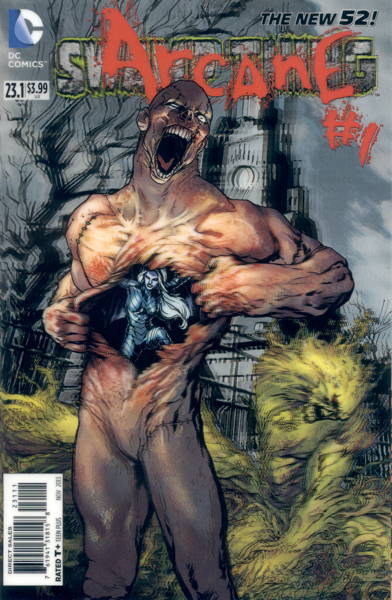
So the first two caption boxes of this comic are “Anton Arcane” and “He is in hell.” If you’re a longtime Swamp Thing reader and fan, and of course you are, you probably can’t help but think of all those older Swamp Thing comics by Moore and Veitch and those other guys ‘n’ gals where, well, Arcane is in captial-H Hell with demons and all that. And that the title of the story is “The Patchwork History,” evoking memories of early Swamp Thing adversary (and Arcane’s brother/early victim) the Patchwork Man (a gender-switched form of whom plays into this newer tale), the reminders of older Swampy-continuity flow freely.

I have been enjoying this New 52 series as a whole (even though the Rotworld storyline ran a decade or two too long), but the reminders of what has been feed into the constant struggle — well, “struggle” is too strong a word, it’s more like an itch at which I keep scratching — to reconcile my deeply-ingrained-by-multiple-rereadings memories of his old comics of how Swamp Thing’s world should be, with the new events and histories being presented to me. There’s the little fanboy voice in the back of my head that calls out “hey, that’s not right” whenever I read some new revelation about Arcane’s backstory, even though I understand it’s all part of the retooling of the Swamp Thing franchise, moving Arcane away from his mad scientist origins and positioning him more explicitly as an antithesis to our hero.

In a way, “rebooting” Swamp Thing’s character the way they did, replacing the Swamp Thing with Alec Holland’s memories with the actual Alec Holland, while not ignoring that the previous Swamp Thing in fact existed, was pretty clever, I thought. It gives a fresh start to the character, unburdened by the decades of history, while still being true to the character’s basics. But the occasional reference to the newly-defined pasts of Holland and Abby and Arcane still jar a bit. I mean, it’s my particular problem. They’re not trying to write to me, the guy who’s read Swamp Thing comics forever and will continue to do so. It’s new people they’re trying to get, and not trying to scare off with a character with loads of backstory and continuity by presenting something a little more manageable. Sort of a Reader’s Digest condensed version of Swampy, maybe.

However, if I’m reading between the lines of the solicitations of upcoming issues correctly, we may be seeing some version of the pre-New 52 version of Swamp Thing in the book shortly, so I’m curious how that plays out, if in fact that’s happening.

Shorter version of the above: MIKE LIKE NEW SWAMPY BUT IT MAKE MIKE’S THINKER HURT
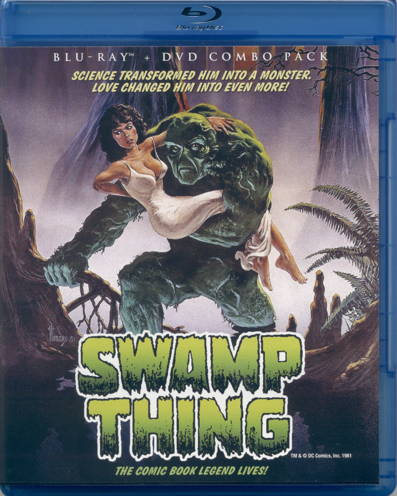

And then there’s the Swamp Thing Blu-Ray/DVD combo pack, released about a month ago and delivered by Diamond Comics to our shop last week. I finally sat down and watched the special features, fun interviews with star Adrienne Barbeau, co-star Reggie Batts (Jude, the kid who befriends Cable and Swampy) and ST cocreator Len Wein, wearing a Swamp Thing t-shirt that immediately made me think “hey, I have that shirt!” which, man, I don’t know what that says about me. Wein does note in his interview that he likes the fact that Swamp Thing is back in the regular DC universe interacting with Batman and Superman and those other folks in tights and capes. Hey, so do I, Len!

Haven’t really watched the movie proper yet, aside from some of the clips inserted into the interviews themselves. That costume, the source of much derision, isn’t as bad as I recall, but keep in mind I’m still just seeing bits and pieces of it in clips. Sometimes it looks like a green wetsuit, sometimes it looks like poor Dick Durock is wearing a saggy diaper that leaks (or just filled with sweat, since I’m sure he was melting in that outfit), but sometimes, just sometimes, it looks just enough like Swamp Thing. That Durock is (as I recall) doing his best to act his heart out in that get-up, giving it some level of gravitas despite everything, certainly helps.

There are two commentary tracks on the disc (one from director Wes Craven, the other from make-up artist William Munns) which I’ll make time to listen to when I can. Maybe those will inspire me to record my own commentary for the film. “This scene totally contradicts established New 52 continuity!”
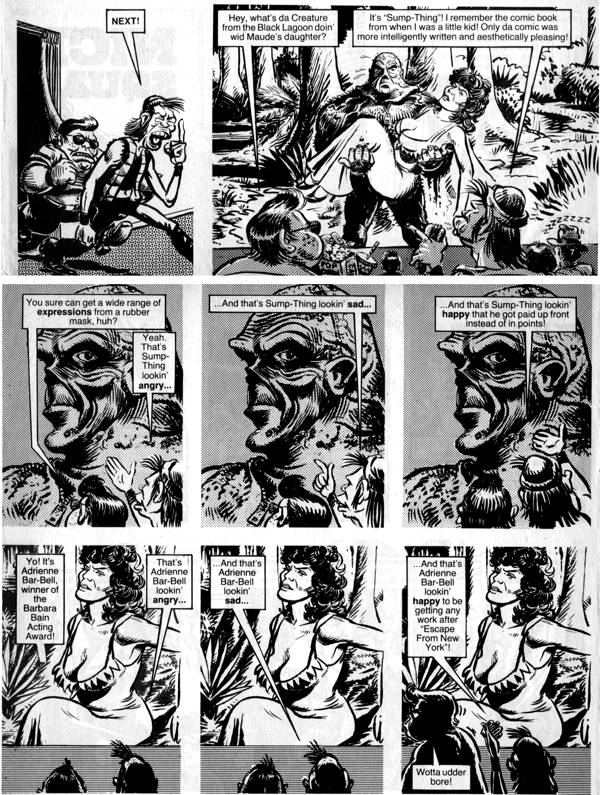
“Hey, what’s da Creature from the Black Lagoon doin’ wid Maude’s daughter?”

Courtesy PTOR, friend of this site and maintainer of the famed Sanctum Sanctorum weblog: a page from Crazy Super Special #88 (July 1982) by Larry Hama and Bob Camp, featuring…well, you’ll see:


I don’t recall Mad or any of the Mad-a-likes ever doing a full-length parody of the Swamp Thing film at the time, since I’m sure the film wasn’t prominent enough to warrant the attempt. So, this may be as close as we ever got, unless someone out there can tell me something different.

Bob Camp’s Swamp Thing caricature is pretty great, but man, just imagine an actual Mad parody of the Swamp Thing movie drawn by Mort Drucker. Almost brings a tear to one’s eye.

Or a parody drawn by Don Martin! “A bomb! Got to defuse it before….” “BAAAROOOSHOOOMOOOMOOOM” “AGGG! AAAAAH! GARGH!” “KERSPLOOOOSH”

I apologize in advance for using the word “pamphlets” to describe comic books.

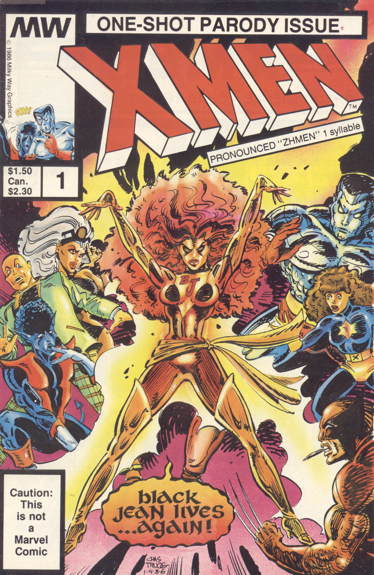
So I recently acquired a comic that’s been haunting the back of my mind for nearly thirty years:


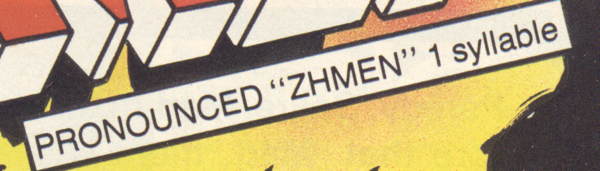
I glanced through this comic in the shop back when it was released in 1986, and two parts of the book have lingered with me all this time. One, the pronunciation guide on the cover (and repeated several times inside as a running gag):


I have been sort of privately pronouncing the name “X-Men” this way in my head for years. I usually don’t say it out loud, unlike “Defective Comics,” which I say every time I pull down the Detective Comics box because I think I’m hilarious.

And two:


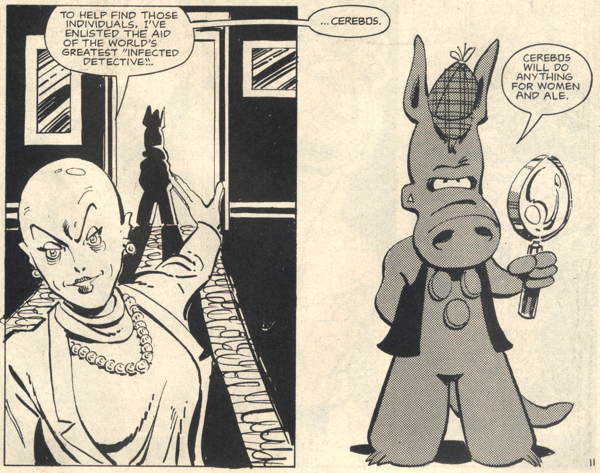
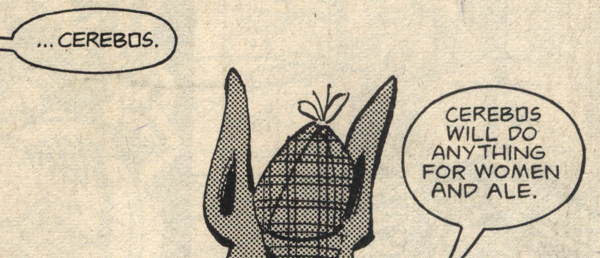
…the shocking Cerebus cameo has stuck with me, because, you see, in the regular X-Men books, Professor X uses Cerebro, a big ol’ computer thingie, to enhance his mutant psychic abilities to find mutants. However, in Xmen (pronounced ZHMEN, one syllable) it is, of course, Cerebus who tracks mutants for Professor X, because “Cerebus” sounds sorta like “Cerebro.” Or, excuse me, “Cerebos,” as the clearly-edited-after-the-fact Us in these word balloons would have it:


I’m not even really sure why I kept this comic, which showed up in a collection recently. It’s not as if I haven’t had opportunities to pick it up in the past, since copies turned up at the shop from time to time. The comic itself as a parody doesn’t really do anything for me. There’s the funny names for the characters, the poking at X-Men tropes, the satirizing of then-current X-Men plot twists and character quirks, and so on, which might play a little better for someone more invested in the X-universe. The comic does feature some nice early work by Charles Troug, who would go on to illustrate Grant Morrison’s run on Animal Man, so there’s that.

I suppose I mostly kept this comic to finally have a physical representation of those two wires this comic crossed in my head so long ago, a print version of the memories still echoing from that brief exposure.

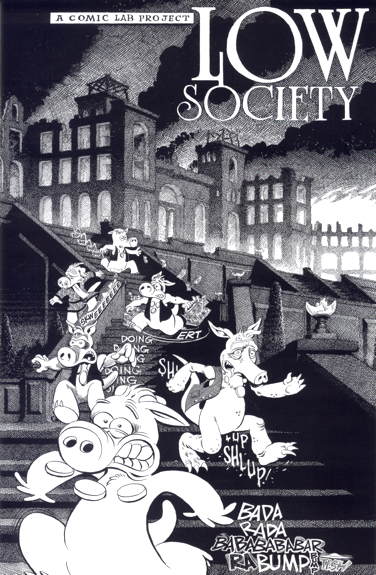
Speaking of Cerebus, this comic came out last week:


…an anthology of parody/tribute stories by cartoonist Cerebus fans, using the Cerebus character as per creator Dave Sim’s decision to allow other folks to use it in new creative works. For the cover alone this probably deserves a place in your Cerebus collection, and you can read about its creation here (and buy a color print here!). The contents are amusing as well, with even the…less polished entries still having an undeniable and entertaining enthusiasm. Like the Xmen book above, it’s probably best appreciated by those folks still in the bag for the property being parodied, and a little too much “reading someone else’s mail” for the uninitiated. But, I’m still game for new Cerebus spin-off stuff, making me the target audience, I guess.

Almost universal reaction from customers at the shop (and even an employee or two) to seeing Low Society on the stands has been “a Cerebus parody comic…now?” which, well, fair enough. It has been nearly ten years since the series ended, but I do have to note that I’m seeing a small uptick in sales on Cerebus trade paperback collections lately, so someone out there is still discovering and reading it. Or, at the very least, upgrading their collections from the pamphlets to the phonebooks. At any rate, I did fear that once it was over, Cerebus would fade into memory, but there appears to be a little life sticking to it yet. It’s a complex, multilayered, and (especially in the latter half) divisive, problematic and controversial work, and still contains a wealth of material to be mined, discussed, criticized, and, yes, parodied.

Anyway, Cerebus: I still need to reread that someday.

Seriously, chimps are terrifying.

So in the comments to my last post both Robert in New Orleans and GregNGray mention stores bagging, boarding and / or otherwise preventing the handling of the new comics on display, in one case even requiring folks to go to the counter and request which new comics they wanted to buy after looking at the sealed-off selection. Now, I have to admit, I’ve been sorely tempted by those options after yet another person trying to park on the floor and read all the new comics without buying, or after discovering yet another comic that’s been thrashed beyond the ability to sell when we were somehow not looking. I think it was even pal Dorian who half-jokingly suggested having a store where people would go to the window, tell the trained roller-skating chimpanzee there what comics they’d want, and the chimp would zip off to the rack, grab the comics, and bring ’em back to the window. Why a chimp? Hey, people love chimps. They’re cute, when they’re not doing something horrifically violent. But perhaps I’m getting off-message.

Anyway, it seems like restricting access to the new books by sealing them off, somehow, would do more harm than good. People have got to be able to at least browse a bit, otherwise how are they going to be able to decide if they want to start reading a seventh new Avengers title? Or, you know, anything else new or odd or interesting that may catch their eyes? And I mean “browsing,” not “sitting on the floor mooching free reads of entire books,” which will get you a well-deserved, mostly-metaphorical boot in the ass. Again, I’m certainly sympathetic to the responses of those retailers, but (and I’m saying this without knowing what exact circumstances caused those decisions to be made) a little more employee supervision and attention to the racks may be better in the long run than cutting off access.

Besides, I can’t imagine spending the time bagging ‘n’ boarding all the new comics for the rack each week. Who’s got that kind of time? I’m too busy teaching spoken English to roller-skating chimpanzees.

• • •

GregNGray also notes that he likes signage in his stores, and I agree. I try to put up signs everywhere, particularly identifying which graphic novels are where (from genre distinctions to featured topics and characters — “HELLBOY” or “WALKING DEAD” and the like), to clearly marking the all-ages sections (bookshelves and the new comics rack by the register), big signs on the back issue islands on the floor telling you which letter of the alphabet is where, and so on. I don’t really have a big sign saying “HERE ARE THE NEW COMICS ON THIS WALL,” but it’s a giant wall of new comics, it’s reasonably self-evident, though the new comics for the week do all have “new this week” tags on them. Our back issue bins behind the counters have tags on the front that (ahem) usually have the correct contents marked on them, though I’m shifting and moving comics so often sometimes I get a little behind in updating those. It’s still a work in progress, even after all these years, but I’m trying to get more signs up where needed.

• • •

Luke and the previously-mentioned Robert who is presumably still in New Orleans asked what sticky labels I use to seal comic bags, as using tape on comic bags is a punishment I believe that casts you into the outer ring of the Seventh Circle of Dante’s Hell. In general, we use Avery removable labels, usually the 3/4″ round ones or some of the rectangular ones that you can find perusing these pages. Some stores have their own brand of removable labels, and those should work as well, so long as you see the word “removable” on the package somewhere. I prefer using the white ones, as the colored ones seem to curl a bit more with use, and maybe this is just me, but they seem to be less…sticky, at least for the purposes of sealing and resealing a comic book bag. Anyway, the white ones also allow for a little more clarity when we write notes on them for in-store use (such as the comic’s condition, year of publication, etc.). And, best of all, there’s more of a chance that it’ll come off very cleanly should the sticker accidentally get stuck to a cover, which would be a total disaster with a piece of tape, particularly on older comics.

Now, at home, I also use removable labels, but a while back I scored a cheap deal on some 1 by 3 inch removable labels, which may seem a bit excessive in size, but I cut each label into thin strips which I then use to seal my bags. Since I’m not using those stickers for condition notes, like at store, it doesn’t matter if I don’t leave room for any writing (except for issue numbers, if necessary)…just so long as they’re wide enough for the seal to hold. I suspect I’ll be working on these boxes of labels for years. Unless I can get a comic-bagging chimpanzee to take care of them for me.

“This is our Swamp Thing rack, and everything else is just kinda shoved into that old box on the back shelf there.”

More questions, more hopefully-informative answers:

  • Adam asks

    “Mike, do you ever see any kind of temporary downturn for a brand when stuff like DC’s recent foibles (RE Batwoman and the Harley Quinn contest) come to light and make internet waves?”

    In general, no, because most comic fans, the ones that actually go into shops every week and buy things, don’t seem to be impacted or even terribly interested in online shenaniganery much beyond general news announcements and reports of, say, shortages of 3D comic covers and such. The Internet comics world seems to be its own insular thing, with not a whole lot of overlap with the real world; otherwise, Thor: The Mighty Avenger would still be published, and Dan DiDio would have been run out of town by villagers with rakes and torches.

    “Also, did people really like Spider Island?”

    Yeah, they liked it well enough. The actual Spider-Man comics that tied into the storyline seemed to experience a bump in sales, while some of the other tie-ins didn’t really go anywhere. I haven’t seen much back issue movement on them, however, since once it was over it became just another Marvel crossover event like Fear Itself and Civil War that was forgotten as soon as the next event came along.

  • Blogging brother Tim wants to know

    “Serious question, why is 29 issues of AMAZING SPIDER-MAN that much worse than the situation in the 90s, when you had 50+ issues a year of AMAZING, SPECTACULAR, WEB OF, the adjective-less series, as well as a monthly VENOM and who knows what else? Was it that many people only bought the flagship book, so that the tertiary titles were less of an obligation?”

    Offering four or so different monthly series, each usually featuring their own storylines and subplot threads and so on, is a different animal (and problem) than offering one series with an unpredictable number of installments per year. With different series with a fixed number of issues per year, the decision on how much money to invest in how many series is still up to the reader. If you’re only interested in one series, you bought just the one series, and you generally knew how much you were going to spend to keep up with it. In the case of Spider-Man, most people didn’t buy every series, but some readers didn’t seem to mind buying the occasional issue from a series they usually didn’t follow if it was part of a cross-series event.

    Now, with a single series rushing out issues onto the stands as quickly as they’re able to produce them, that’s forcing you to spend more money to keep up with one particular set of storylines that you’ve already decided to follow, making you a captive audience of sorts, and that money has to come from somewhere. I wonder if people would have found more money in their budgets to buy the withering-on-the-vine Superior Foes and Superior Spider-Man Team-Up books if they weren’t already buying two issues of the main Superior Spider-Man title each month?

    As an aside, I have to agree with your later comment on the J.M. DeMatteis Spectacular Spider-Man run. That was some good, weird, and occasionally dark, stuff.

  • GregNGray wonders

    “Would it be comic shop suicide to place indie comics front and center and big-two comics on secondary or side racks using the (undocumented and totally lacking in evidence) theory that:
    a) big-two readers are far more likely to know exactly what is out each week and will have no problem finding what they want and,
    b) they are less likely to make spur of the moment purchases?
    Thanks.”

    Oh, I wouldn’t think so. Racking any comics in an easily-accessible manner is never a bad thing. Well, okay, maybe putting Faust next to Fantastic Four could be a problem, but you know what I mean. Ideally, though, all comics would be racked together alphabetically (barring age-appropriateness considerations), or by genre, if you want to get all fancy-pants about it. At the very least, if you have a Marvel/DC rack and an Everything Else rack, keep ’em close together. The fewer barriers you put between a customer and the books he or she wants to buy, the better.

    We have kind of an oddball set-up, mostly based on rack types and available spacing: one larger wall rack that has enough room to accommodate new Marvel/DC/Dark Horse/Image books, and smaller wall racks of another type that have the room to accommodate all the new indies. The two are right next to each other, and I haven’t had any problem displaying and selling the indie titles. I would prefer to have the entire new comics area be one uniform series of shelving, and all the comics be mixed together, but this set-up seems to work okay for now until I can make that dream come true. One advantage is that a number of the indies tend to skew a little higher in recommended reading ages, making it a little easier to direct parents to the rack with the superhero books on it. Not that a lot of the superhero books are appropriate for Little Billy, but kids want the guys they saw on the TV and in the movies, so there you go. (And yes, we help ’em find comics that won’t turn their kids into juvenile delinquents.)

    We also have another rack of kids comics (Archie stuff, My Little Pony, etc.) right at the front of the store, along with shelves of kid-friendly trades, so I guess in a way we do have a shelf of indie books front ‘n’ center.

Mostly I’m just bitter there aren’t four or five ongoing Swamp Thing titles on the stands right now.

So I had a couple of questions and comments to this post from last Friday that I wanted to respond to:

  • LFC notes, regarding my comment on having 17 issues of Superior Spider-Man in eight months:

    “2012 saw 29 issues of Amazing Spider-Man (including point ones, Ends of the Earth one shot and anything by Slott), 2011 saw 29 issues as well, 2010 saw 33 issues and so on. Luckily it’s a very good book.”

    The quality of the book almost doesn’t matter. It’s just too much. Comic fans only have so much to budget for their books, and every dollar that goes towards maintaining their run of Amazing or whatever at two or three copies a month are dollars not going toward maybe trying out something that isn’t a Spider-Man comic that month. It’s rack crowding and market flooding, and I don’t like it when Marvel is cranking out two or three issues per title per month, and I don’t like it when both Marvel and DC are cranking out a half-dozen titles or more for each of their franchises. We don’t need this many Batman books, or this many X-Men or Green Lantern or Avengers or Superman books, except we now have a marketplace that depends on devotion to the big franchises and doesn’t leave room in anyone’s budgets to try out or support something different.

    And before anyone says anything, this isn’t absolutely 100% across the board for all fans everywhere, that everyone is just buying this stuff and not buying that stuff. But there is a trend toward this kind of marketplace, where the only comics that sell well are Batman or Avengers books because if you throw a dart randomly at a comics rack that’s what you’re gonna hit, well, there you go. “We keep putting out Avengers books because those are the comics that sell” is the self-fulfilling prophecy of the comics market.

  • Sean writes:

    “haven’t been paying much attention to Marvel’s books for the last couple of years, so I got a good laugh out of the three-digit issue number (017) on the front of Superior Spider-Man. Is there anyone out there who genuinely thinks any of Marvel’s books are going to get to 100 before being rebooted with new issue #1′s?”

    It’s a design element not just to accommodate the eventual possibility that any of the comics will make it to the triple digits, but also because it creates a uniformity of design with those few remaining comics Marvel is currently publishing that are in the triple digits. (Or is X-Factor the last?) Also, I think having the three digits seems a little more aesthetically pleasing than just having the two digits. Anyway, I’d be surprised if the current cover layouts are around for more than a couple more years at most, so the problem will likely be moot.

  • ~P~ has a comment or three for me:

    “I’m not sure if you’ve mentioned it yet, but how does the Marvel ‘NOW!’ trend of placing issue numbers on the BOTTOM of the cover affect your display and sales?”

    Most of our comics are racked with the full cover face out, so the issue number isn’t obscured. We have some wall racks that overlap the books, and if any of the comics have non-traditional logo and number placing, I’ll make a small sign to rack with the comic to indicate any of the relevant information. A minor annoyance, but racking thing properly is what they pay me the Big Bucks. (NOTE: Bucks may not be as big as may be implied.)

    “I just spent some time this past week filing away about a year’s worth of adopted comics into their drawerbox longbox forever-homes, and having logos placed wherever the heck the artist thought was aesthetically pleasing was bad enough, but issue number placement at the bottom is murder!”

    Honestly, this doesn’t bother me at home, when I actually do get around to sorting my own comics into boxes. The only thing that bothers me is when no issue number is on the cover (like on many Gold Key or Dell comics, or, in the case of Hellboy or B.P.R.D. comics, when the overall series number for the various minis isn’t on the cover (as I described in annoying detail way back when). In those cases, I note the issue number on the white resealable sticker I use to seal the comic bag (because only savages and the deranged would use tape to seal their comics, I mean honestly).

    “But then, what will happen when any unsold comics go into back-issue boxes?
    Kids (sure, kids. Why not?) rifling thru boxes to see if you have a specific issue will have to pull the comic most of the way out of the box, and will inevitably BEND the comic backwards a bit to see the numbers.”

    Well, regardless of issue number placement, anyone of any age going through back issues without prior instruction or the proper encouragement from the Knuckle-Rapping Yardstick of Enforcement is likely to mishandle the back issues, so I’m keepin’ my eye on all of you. Yes, you, you comic spine-breaking vandals. Anyway, the way we try to handle issue numbers that are in less than obvious positions on the cover, or not on the cover at all, is to write them onto our price stickers which are generally placed in the upper right hand corner on the front of the comic bag.

Thanks for leaving your comments, everyone. I know the big thing on the Internet is “don’t read the comments!” and while I, ahem, may have a somewhat neglected side-project devoted to how terrible commenting can be, I do appreciate and enjoy the comments you folks leave here. A big part of my enjoyment in doing this site is the interaction from you that I receive, and I thank you for it.

Saturday Morning Swampy.

Some of you may remember my previous mentions of an early show on the Nickelodeon cable channel entitled Video Comics, in which various DC Comics stories starring the Flash, Green Lantern, Sugar and Spike, etc. would be presented panel by panel with narration. You may also remember my noting this show as one of the methods by which I was introduced to Swamp Thing, another character featured on the program.

Thanks to reader Patrick, who emailed me yesterday to let me know that an episode of Video Comics finally popped up on YouTube, starring guess who:


This episode lacks the intro Video Comics usually had (I think, probably, just for the more superhero-y installments) of the kids riding their bikes to the local market to ransack the comic racks, while Wagner’s “Ride of the Valkyries” played. Though, I suppose if you have to have at least the music:


Anyway, thanks again to Patrick for letting me know that Video Comics finally showed up on the Internet somewhere. This hit the ol’ nostalgia button!

Now’s probably the time to put those Robin III comics back on the shelves.


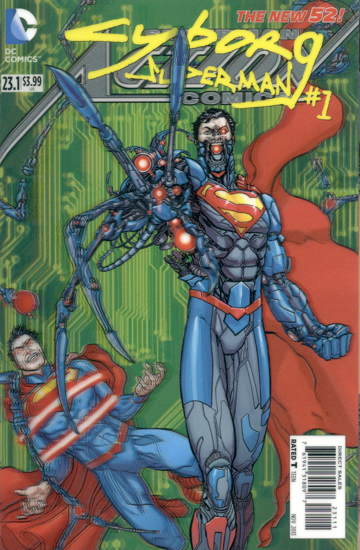
Well, here they are, the DC Comics with the 3D covers, in quantities sometimes approximating the orders retailers placed months ago. And to be fair, the covers are pretty neat, adding to the tragedy that there’s not nearly enough around to meet demand. Saw several new faces over the last day or two, folks driving from out of town trying to track down the covers their local stores ran out of so quickly. Not that we were much better, with the increased demand meaning faster departures off the shelves, and once people have seen what the 3D covers looked like, the 2D covers DC offered to supplement the allocated orders were, for some, unsatisfactory replacements.

Not for everyone, though! I actually had some people with in-store pull lists request they not get the 3D covers, and believe you me, I thanked them for that, given the allocations have left me with barely enough to cover the regulars, much less the extra demand. And employee Timmy was a step head of me, looking up the 3D covers on the eBay and, sure enough, the panic buying has set in, resulting in relatively crazy prices for books that have barely been out for 48 hours. That makes the one-per-customer signs I put on some of the 3D books seem like an even better idea now, though Timmy reported to me that some folks were buying one 3D cover and the 2D version. (I can’t really say anything, since I plan on doing the same for the Swamp Thing issue that’s coming later this month. Sad when it happens to someone you know, isn’t it?)

As for the comics themselves, I did like the ones I bought well enough, though that’s bit of a self-fulfilling prophecy in that I restricted myself to buying the Villains Month issues from the series I was already reading. The Green Lantern one, Relic, was probably my favorite, giving us the backstory for this new villain, as well as finally providing full context for the story being presented on the 1:25 ratio black-and-white sketch variant covers being offered for the GL family of books over the last couple of months.


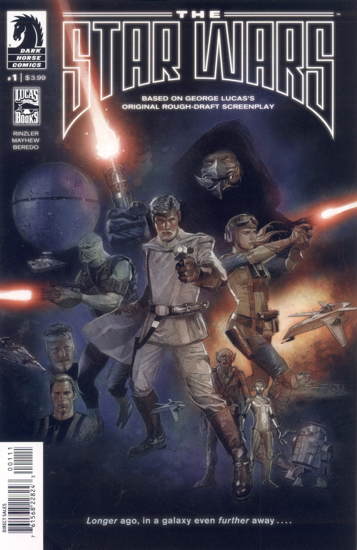
“Based on George Lucas’s original rough-draft screenplay” says the blurb on the cover, both a warning and an enticement to the remaining Star Wars fans still devoted to the minutia of the property despite it all. That would include me, apparently, since I bought this comic, more out of a deep-seated need of the Young Mikester still within me to draw a narrative thread through all the memories of the preproduction images I absorbed back in my Starlog-and-such days. I’m not the only one, it seems, since I saw more than a few new customers around my age showing up just for this comic, thanks likely to its presence in the real-world news media.

The comic itself is, well, what it is. It certainly gives the impression, whether or not this is what actually happened, that there was once a time someone could tell Lucas “no,” resulting in his beating this rough draft into the lean, mean fighting machine that is the original Star Wars movie from 1977. The emphasis in The Star Wars #1 on political intrigue, the lack of a central sympathetic “point of view” character (at least one as strong as Luke Skywalker)…you can see where the prequels came from. That said, it’s still an interesting comic, with familiar names and concepts not quite in their final form. We’ll see if that novelty carries us through eight issues.


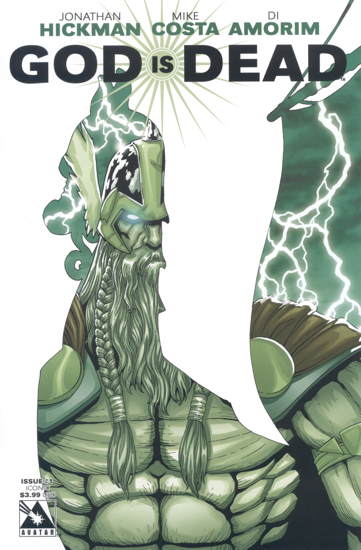
A combination of the writing of Jonathan Hickman with the premise of the book (the return of the gods of assorted pantheons to Earth) is what got me to pick this up. That title is certainly something else, though I haven’t really noticed anyone at the shop giving it the stinkeye, so the no-such-thing-as-bad-publicity strategy hasn’t really come into play here yet. Nor is there too much of the usual bit of the old ultraviolence that you usually get in your typical serving of Avatar comics. I mean, there’s some, and I bet there’ll be more in the future, so hang in there, guys!

Seriously, though, I like the set-up here, and am hoping it pays off and isn’t just an excuse for over-the-top gore. But, you know, c’mon. I mean, I might still read it, but I’ll cast a socially-responsible upturned eyebrow upon the proceedings, see if I won’t.


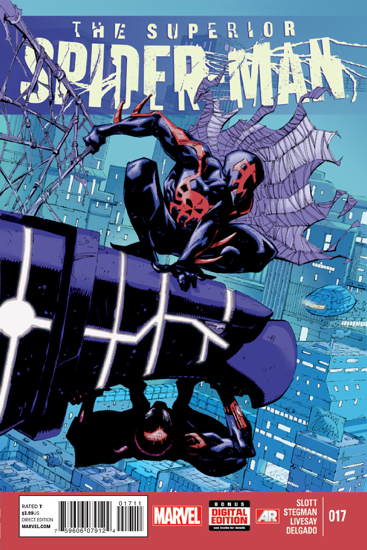
The first issue of this series came out in the first week of January of this year. It is now the first week of September. There have been seventeen issues of this comic in eight months, and that’s not counting the recently launched companion series, or the Age of Ultron one-shot tie-in. But that’s okay, since you’re all rich, right?


A little context for the post’s subject line.