
So occasionally my pals Chris ‘n’ Matt will put out the call for questions for them to answer on their War Rocket Ajax podcast, and this time, instead of breaking their wills with my usual Frank Miller’s The Spirit-related inquiry, I asked them:
“What are your thoughts on the vast proliferation of comic book variant covers?”
…and you can hear their response in this very episode (just under the wire at the one hour twenty-five minute mark).
You can hear what they said there, and I don’t disagree with any of their positions…and there are a few positions one can take on the whole “variant cover” thing. Yes, it’s good to offer customers a choice…if one cover doesn’t catch his/her eye, maybe another will. And it gives artists more opportunities for work, in an industry that’s often short on opportunities and, well, money.
But as Matt says, it’s probably not good to build a business model that depends on the sale of multiple covers to the same person, but in a way, that’s what I’m doing when I’m ordering them for the shop. Multiple covers are a way to push those numbers up…maybe not by much, maybe I’ll order 5 each of Unicycle Tragedy #18 if two covers are offered, instead of just 8 copies if only one cover were available, because yes, there is a percentage of customers who’ll buy one of each. Or if an incentive cover is avaiable…if there’s a variant that’s availble to purchase if you order 25 copies of the regular cover, and my order is at 23…well, maybe I’ll justify the extra expense.
So we’re not talking about big adjustments in ordering on a case by case basis, usually. But an extra copy here, an extra two copies there…it begins to add up, both in my expenses and in the publishers’ income. Every little bit helps them, and may actually help certain titles reach their bottom lines.
One clever use of variant covers was in the ’90s, when Marvel started to offer two different covers for the second issues of new series (of which they had several starting up at around that time). Traditionally, when a new series started, retailers would order larger numbers on the first issue, then cut orders on the second with expectations of a drop-off in sales. Marvel’s issue #2 variants countered this a tad, by offering different covers, which would encourage retailers to up their orders a bit in anticipation of, again, some folks wanting to own both versions.
Of course, that was back around the beginning of the end of retailers wanting to have lots of copies of the eary issues of new series around for future back issue sales. Now there still may be a drop-off with issue #2, but #1s are being ordered so close to the bone (given that there’ll be a new #1 for the same series sooner rather than later, killing back issue demand for the previous series) that just doing variants on everything is pretty much the only way to encourage any upward bumps in numbers.
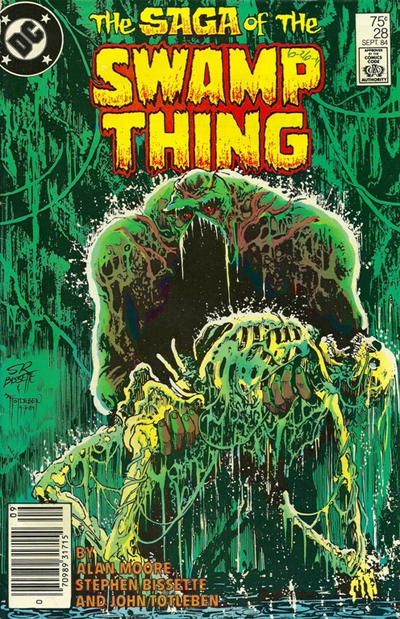
Chris brings up that he would prefer that the covers actually reflect the contents of the book, and, yup, I’d have to agree. Though to be fair, that’s been a problem even without variant covers. How many Amazing Spider-Man covers during J. Michael Straczynski’s run were just “generic Spider-Man action pose #4” or whatever? Yes, I mean, sure, Spider-Man’s inside the comic, so at least the cover is that accurate, and they weren’t bad drawing by any means, but they revealed nothing about the story inside. Nothing telling the reader “hey, dig this crazy story that’s in this issue…can you believe what’s going on here on the cover? Better buy the issue and find out what’s up!” They weren’t all like that, of course, but enough of them were.
But the variants can be a problem, too, like the covers featuring characters that aren’t in the actual comic, but just on there to promote a coming event or movie or whatnot (like the current Carnage variants) or the covers featuing concepts people actually showed interest in buying ’til they saw the contents didn’t refect the image on the front (I’m looking at you, DC Lego variants).
And don’t get me started on when a specific variant beomes “The Hot One” for no real good reason whatsoever and people start calling the day before release for it. Which, of course, is usually too late to order more.
I mean, yeas, sure, many of the variant covers are nice looking, and folks put a lot of work into them. It can just be frustrating ordering these, and also adds an unnecessary level of consumer confusion to a product that’s already facing an uphill battle in obtaining and maintaining a customer base.
Thanks to Matt ‘n’ Chris for responding to my question.
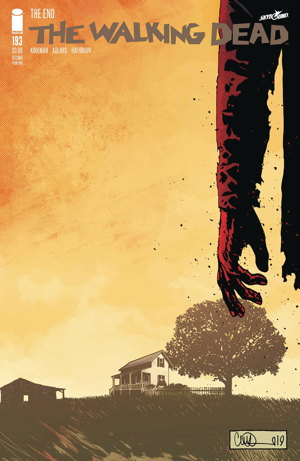 So I’d raised my orders a bit on The Walking Dead #193, after being blindsided like everyone else by the events of #192, in which the main character, the focus of the series, the guy who’s been in the story since that first issue, was killed off. When word on #192 got around, folks started popping by the store, calling, emailing, all asking for that #192, sold out immediately because most folks probably just ordered what they were going to order and that was that. No reason to bump up orders, but with #200 approaching I’m sure retailers had in the back of their minds the forthcoming necessity to puzzle out the vast array of variant covers that were sure to be offered.
 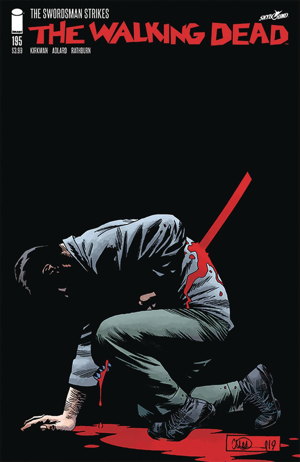 Now I suppose that retailers were informed that our orders on #193 would be returnable was a vague hint that something special was happing, but my assumption was that the issue would be a follow-up on the main character’s death, and Image wanted folks to bump up sales to take advantage of the sudden increased interest in the title. No clue this was going to be the end of the series, especially given issues past #193 were solicited in the order catalog (a trick I didn’t like with
 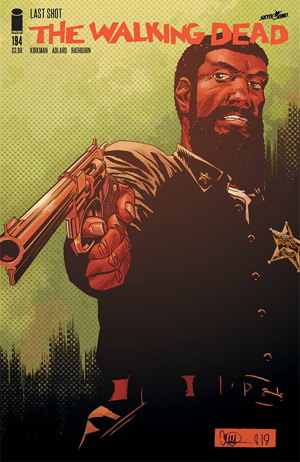 Oh well, What Can You Do? Again, I’ve no problem with the decision to end the series…I have half a notion that of all the things that have “THE WALKING DEAD™” slapped on it, the monthly comic book series probably made the least money with the most effort, so if that were the case quitting that to focus on other product lines may be the best move. (Then again, the