Floors sticky with X-Men comics.

So in answering Alan’s question about what the comic industry might have been like with the success of superhero (read: Marvel) movies, I completely missed the forest for all them cut-down-to-print-Unstoppable Wasp trees. Chris V points out

“I’m pretty sure that if the superhero movie craze was a flop, Disney would have never bought Marvel and Marvel Comics may be on the verge of bankruptcy by 2020, if not already bankrupt before 2020.”

Er, yeah. Marvel was pretty much selling office furniture to keep the lights on in the mid-1990s. There was a very good chance they would have been dead and gone without income from films, and as has been said, “as goes Marvel, so goes the comics industry.” The comics market as we know it might have survived, but almost certainly it would have changed drastically. Well, drastic for people like me working in direct market retail, not so much for all the manga being sold through regular bookstores I’d imagine. At the very least, I wouldn’t have that giant cardboard Groot standup in my store’s front window.

There was also a lot of talk in Wednesday’s comments about what Disney could and should do in regards to helping direct people going to their Avengers movies into stores to find Avengers comics.

There are a couple of things to note about that. First, there’s the thing I said in Wednesday’s post, and that I’ve said plenty of times before: reading serialized comics is pretty much a lifestyle choice. It requires coming to a shop on a regular basis to pick up each new installment. (Or, heaven forfend, if you’re getting them digitally, it requires accessing them on your tablet/phone/whatever and keeping up with them.) That’s not necessarily a habit that comes naturally to people who aren’t already in a comic book reading mindset.

The other issue is another I’ve pointed out from time to time, that for most folks, all the superheroin’ they need is about one movie every few months. They don’t need a regular print diet of of Thor when a Thor movie every few years does ’em fine. They might enjoy paging through a single comic as a novelty, but they’re not going to set up a pull list or anything.

THAT SAID

…there is a non-zero percentage of folks introduced to comics via the movies who do become comic fans. I know. I sell comics to some. We’re not going to get an influx of millions into comic shops because people liked Ant-Man, but we’ll get a few people. And a few is better than none. Maybe some fraction of those will become weekly regular funnybook fans. Maybe some will just pop in to try out a graphic novel or two on occasion (or maybe even once). Or maybe they’ll just become aware there is such a thing as comic book stores, and they’ll know where to go when they need comic-related stuff (for gifts or whatnot).

Disney itself doing anything to directly help comic shops beyond not shuttering Marvel’s publishing division entirely and giving the IP to the merchandising department is, well, unlikely. Like I said in a comment in Wednesday’s post, they’d be more likely to open their own Marvel-exclusive comic stores. And by “more likely” I mean “when pigs fly above a frozen-over Hell.” Any cross promotion between theaters showing superhero movies and comic shops will have to be done on their own. I’m sure some folks have had success giving away comics at theaters, but I’m just imagining that much more stuff for those poor theater employees to clean up off the floors between showings.

A couple things Marvel tried to do to get some of that Marvel movie audience to pay attention to the comics: one was a short X-Men comic in the July 2000 issue of TV Guide:

…and I gotta be honest, I don’t recall that working very well, mostly just being derided a bit. And though I know I read it, I don’t remember anything about the comic itself beyond thinking “this probably isn’t a good introduction to the X-Men.” Ah, well.

The other thing Marvel did was create the “Ultimate” line of books, basically giving fresh starts (and the occasional goatee) to their mainline characters for anyone new to the medium.
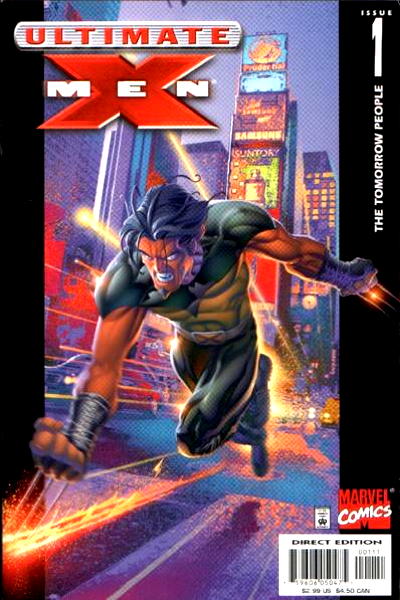
I don’t know how many new-to-comics readers they acquired, or if they just gave already-committed Marvel fans more books to read per month.

This all sounds sorta bitter and negative, and…well, okay, maybe I am being so. But all this isn’t to say outreach via movies and such does no good…just probably not as much good as you think it would.
Not to mention we never would have had Frank Miller’s The Spirit movie.

Okay, let’s take another question, this time from the ever eternal Alan David Doane:

“Hey Mike!”

Hey!

“How would you assess the effect on comic sales and/or the general direction of the industry in the wake of 20 years now of spectacularly popular superhero movies? Would comics retailing look any different in a world where the Sony and Fox Marvel movies and the MCU had no more impact than David Hasselhoff’s SHIELD TV movie?”

Y’know, I never did ever see that Hasselhoff Nick Fury show. Most I ever saw was a promo still with the Hoff in an eyepatch. I’m sure I missed a vital cultural artifact.

Anyway, Alan, I’d been thinking about your question ever since I saw it posted. It’s a tough one.

My initial kneejerk response would be “barely any effect at all.” It’s not like everyone who saw, say, Iron Man suddenly ran into shops to start reading Iron Man comics, pushing its print run into the 20 millions and making it the most successful American comic book of all time. Heading to the shop once a week to pick up your new funnybooks is, as I’ve said many times before, a lifestyle choice, a commitment to following the serialized adventures of the characters you like, plus associated spin-offs, etc. For most people, for whom one Marvel movie every few months is all the superheroin’ they need, that level of involvement is a pretty big ask.

That said…it’s not as if the movies or TV shows have had no effect. People have come in looking for comics…not in that they became regular customers with pull lists or anything, but sometimes they’ll have seen some superhero media and want to see a little more in its original stapled-paper context. The most popular trend of late is folks looking for anything Wandavision-related, so of course all those trades are out of print. Luckily I had plenty of back issues featuring Vision and/or the Scarlet Witch to satisfy those cravings.

Another phenomenon I’ve noticed is old comic readers returning to the fold after decades out of the hobby, specifically citing the prevalence of superhero media for their comeback. Not being able to swing a dead Uncle Ben around without hitting something broadcasting a Marvel movie at you can’t help but remind some folks of the comics they thought they’d left behind. I’ve had more than one customer who’d once collected in the ’90s (including a few to whom I used to sell) tell me the Marvel movies got them poking through their old comics out in the garage or wherever, and the next thing they knew they were back haunting Ye Olde Comick Shoppe every week.

And plus, there’s just general increased awareness of comic books and their characters out there in the “real” world now. I didn’t expect to live in a time where grandmas knew who Rocket Raccoon was, but here we are. But that awareness means more people seeing comic books as an entertainment option…maybe not a regular every Wednesday thing, like I said above, but I’m certainly more likely to see a parent pop in with a kid looking for a Black Panther comic than I ever was in the previous decades I’ve been in this business.

So my initial kneejerk, and somewhat cynical, reaction of “nah, made no difference” is wrong, in that the business did see benefit from the films and TV shows…just not in the way that we comic book lifers are used to interacting with the medium. Also, personally I keep judging things by how the 1989 Batman film really shoved people into comic shops in droves, which is a mistake. That was a faddish influx caused the film’s novelty which went away almost as fast as it came. The slow and steady influx of new readers and returning fans is, I would think, a healthier reaction. A gradual build of interest and goodwill is better for the industry as a whole.

How would comics retailing look in a world without these successful Marvel movies? Well, I imagine a lot of the effects I just noted would not have come into play. Certainly no one would recognize my giant cardboard Groot cut-out in the window…in fact, that cardboard Groot wouldn’t even exist!

As far as other effects for retailing…hard to say, really. Fewer shops due to less demand/awareness of comics? Fewer comics published for the sole purpose of tying into the movies, even just barely? Less tail wagging the dog, with characters avoiding arbitrary change to more closely resemble their multimedia counterparts?

This is something that’ll require a little more pondering, I believe. Maybe look for a part two of an answer down the line.

Thanks, Alan…and if you want to submit a question, just drop it here in the comments and I will get to it!

Just lay back and think of variants.

I’ve been trying, for the most part, to focus on variant covers that were available simultaneously to the same market, forcing customers to chose to buy one or the other (or the other or the other or the other, if it’s a Marvel book). Or, preferably, to buy every offered cover, and hope the excess of choice doesn’t turn in a no-sale.

For today’s variant cover-age discussion, I just wanted to point a virtual index finger at U.S. comics printed in distant lands with cover prices in their currencies. Which bums me out just a tad as I had a number of UK editions of Silver Age Marvel books show up in a collection a while back.

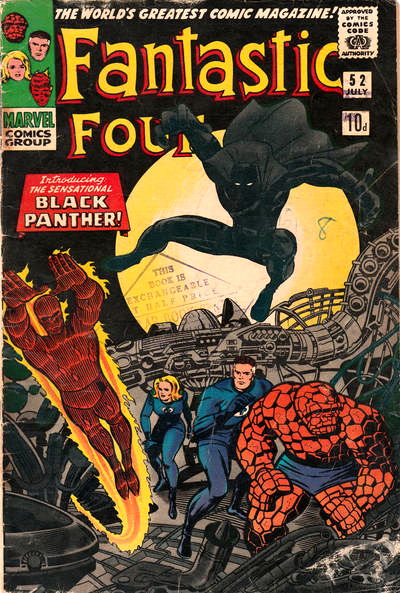
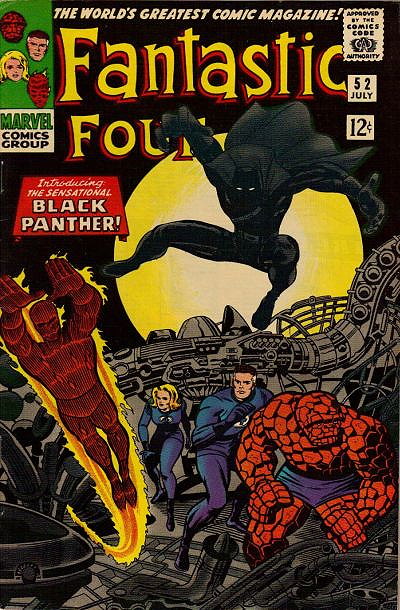
Said collection came from a lady had been a child in England during the 1960s, and had bought her fair share of funnybooks off the stands there at the time. When she came to the U.S., the comics made the move with her, and she held onto them for all the time before deciding to bring them to me for sale. Lots of Marvels (Avengers and Fantastic Four, mostly, including the first appearance in FF of the Black Panther), all preprinted with the pence price, like so:

And for comparison, the U.S. edition:

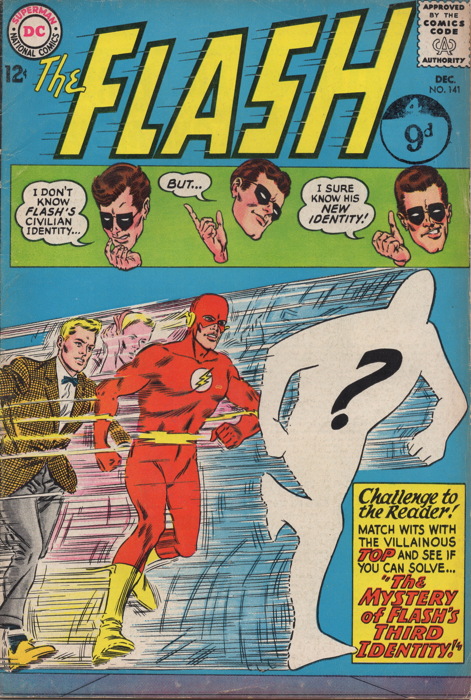
The collection also contains a number of DCs, mostly Flash and Green Lantern, that, instead of already having the proper price in the local currency printed thereon, were ink-stamped instead:


A few of the Marvels in the collection were stamped like this, but mostly they were printed with the alternative coinage.

Anyway, the reason I said my having these “bums me out” is because the Marvels in that collection, like pretty much any Silver Age Marvel that I acquire, sold almost immediately. I don’t have them in my hands for direct inspection, requiring me to once again mooch off the Grand Comic Database for a couple of the above images. (The Flash, I still had floatin’ around.) If memory serves, the comics were identical to their U.S. counterparts save for the pricing. The indicia, the block of text inside with all the copyright and printing information, I think was the same, but I’m not 100% on that.

To the best of my iknowledge, the two versions were printed and released at the same time, so technically I suppose any jetsetting kid could have the quandary of either buying the one with the American price or waiting for the trip overseas to buy the British version. But by and large, the comic marketing twain did not meet.

The main point I wanted to make about these comics printed with the UK prices is the change in perception towards them that we’ve seen over the years. For the longest time, a UK edition, identical in every other way, was deemed “inferior” to the U.S. edition in the collector’s market. It wasn’t the “real” version, or simply a “reprint” and thus commanded less demand and lower prices, generally speaking.

Well, as we’ve seen in recent years, especially in the last year and a half, the demand for anything that can be deemed “hot” and “collectible” has absolutely skyrocketed. Just the other day I was looking at one online marketplace, shocked at the prices for old Comic Reader fanzines…things I used to buy in bulk at a dozen for ten bucks, now being offered at $80 to $150 each. Whether they’re realizing those prices with actual sales, I don’t know, but it’s definitely part of how things are trending of late.

When that collection of UK books came in, my research (along with some consultation with former boss Ralph) revealed that most UK editions are now pricing at least equal with their U.S. counterparts, if not more. And a quick look at eBay and elsewhere can see them being hyped as “RARE!” “VARIANTS!” to attract eyeballs. Quite the change from the vague disdain (at worst) to mild amused novelty that the UK editions used to receive. I mean, I guess they’re in a bit shorter supply than the U.S. comics, since fewer copies were required for the UK newsstands. And they are harder to find in the States, since they were never distributed here. It’s still strange to see them ballyhooed like this.

Which of course had me wondering if the versions printed with U.S. prices are the oddity in the UK. My guess is probably “not as such,” giving the larger print runs of the American editions and the likely flow of books from here in the UK market via collectors. But I bet someone out there can set me straight.

So there you go…yet another type of variant you need to worry about. Didn’t have much to say about it, aside from the nearly 800 words above, but I found the shift in collecting perception interesting. And it wasn’t just the current rush for collectibles we’re seeing that did it, as I acquired, and blew out the door, all these UK Marvels before the madness really set in.

Not sure what’s next in the ol’ variant cover-age, aside from continuing to make the phrase “variant cover-age” a thing, but I appreciate you reading all these and I hope I can cook up more next week!

Usually titles just come to me, but I’m stuck on this one for some reason.

So a bit of a follow-up on Wednesday’s post:

First, if you read it first thing Wednesday morning, and wondered why it felt like a chunk of it was missing, that’s because a chunk of it was missing. A small HTML error wiped out a paragraph or two, which is now fixed. So please, go back and read my now-unexpurgated words of unsurpassed wisdom and be enlightened.

Second, in regards to the shipping woes faced by retailers during Penguin Random House’s first week of handling Marvel’s comics: as I noted, I only had four comics damaged enough to where I didn’t feel comfortable selling them. I reported them to the distributor Monday, and received replacements on Thursday. Via Next Day Air UPS. In a box that was wrapped with bubblewrap and placed inside another box.

Needless to say, I was amazed. I’m certainly not used to receiving replacements that quickly. And I think the only reason they took as long as they did to get to me is that PRH was apparently slammed with complaints and it took them time to get everything sorted out.

The distributor also sent out an email, essentially apologizing for dropping the ball with their insufficient packaging and they they were taking steps to improve the quality of their shipments. Which is good to hear…I’m willing to give them the benefit of a doubt as they at least acknowledged this is a problem and it needs to be fixed, which is more than I get from some distributors.

(Speaking of which…said distributor shorted me my entire order of Star Wars: High Republic Adventures and about 1/6th of my order of the Bad Idea comic Pyrate Queen, in case you’re wondering how they’re putting their best foot forward the same week they lost a massive chunk of their business.)

Also, I saw that my initial tweets on the week’s shipment had been “favorited” by a certain comics columnist, which told me what I wrote there was eventually going to end up filling some column inches on another site. And yes, I predicted correctly, so if you happen to see the article while perusing the site for some reason, you don’t need to tell me you saw my name there. I already know where it is.

Lastly, nothing to do with Wednesday’s post, but I wanted to remind you I’m still taking your questions! Chime in and let me know your one question about comics! I promise to give you as good an answer as I can…or maybe just make a cheap joke. WE’LL FIND OUT!

We are the walking distributor.


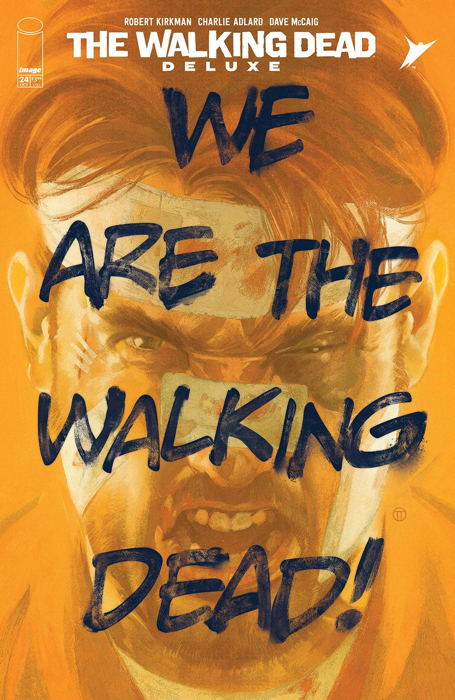
What’s great about this newest issue of Walking Dead‘s color reprints is how they just lean into the somewhat notorious “we ARE the Walking Dead!” declaration Rick makes in the issue. All but one of the variant covers features the phrase itself or a paraphrasing thereof, giving a hearty “take that, haters” to everyone who razzed the…on-the-noseness of it all.

I don’t know how the actual regular readers of The Walking Dead responded to the issue at the time. The color reprints also include the original letter columns, so I suppose I’ll find out myself in a month or two. My guess is that the fans invested in the book found it profound, while the comicsblogosphere of late 2005 probably happily snarked away at it out of its regular context. And while I don’t think I commented on it then, I would occasionally reference it for a gag, such as this recent tweet.

I’m pretty sure I’ve noted before that I am now reading The Walking Dead in its color reprint form, as I missed out on the series the first time. I mean, sure, not like there wasn’t plenty of ways to catch up on the book, what with all the trade paperback/hardcover/omnibus options, but I never seemed to get around to it. And now that it’s coming out in single issue form again every fortnight or so, it’s easy for me to just grab ‘n’ read them as they arrive.

Aaaaaaand…even in context, after having read issues #1 through #23, the “WE ARE THE WALKING DEAD!” exclamation at the end of #24 still comes across as perhaps just a tad overwrought. Too much Cochrane in First Contact saying “you’re all astronauts on some kind of star trek?” level of forced, dragging what should be subtext into just straight up text. On the other hand, if I wanted subtlety, I suppose I wouldn’t be reading a comic book called “The Walking Dead.”

All that said, it does come at the end of an effective extended speech from Rick, marking a turning point for our characters in this series. It’s essentially Rick emphasizing over and over that the old world, the old ways of doing things, are over, that everything you were used to is gone, and that they were going to have to get accustomed to doing things that were previously unthinkable in order to stay alive…not that “living” really means much of anything anymore. It’s bleak, it’s hopeless, and yet you still kinda want to see where things go from here, which was probably a hard trick to pull off.

Then there’s the two-page spread of Rick capping everything off with…well, you know, and I guess if you’re determined to get the title of the comic into the actual story somewhere, this is as good a way as any. Like I said, still a bit hokey, but, you know, what the hell, worse things happen at sea.

Also, if you’re wondering, of the many variants, the one pictured above is what I picked for myself, because it made me laugh.

• • •

A brief retailing update: I received my first order of Marvel periodicals from Penguin Random House this week. For me, anyway, it was a fairly auspicious debut, as everything I was expecting was actually in the boxes, which was a nice change of pace. There were damages, with four comics having some pretty badly dinged corners, but I couldn’t tell if it happened in transit, during the packing process, or maybe they just came that way from the printers, who knew?

Now, I think I may have been lucky, as the boxes used to ship the comics didn’t seem to be as sturdy, or as sizable, as they needed to be to safely transport comics. The boxes were small, just barely large enough to surround the comics, and honestly one big bump along the way on a conveyor belt in the sorting plant, or being bounced aaround on the delivery truck, could have easily damaged whatever was inside. However, each box was packed with instructions on how to report any shortages or damages, and also had an actual packing slip with the name of the person who did that packing — certainly not anything I was used to.

By contrast, the regular distributor’s shipment…shorted me entirely on a Star Wars comic, shorted me about 1/6th my order of one of the new Bad Idea comics, and had a few plainly avoidable damages. You’d think having fewer books to sort and pack would cut down on that sort of thing, but, well, habits die hard I guess.

The shipment from my DC Comics distributor was exemplary as usual, though I keep hearing tales of other stores having immense problems with them. Maybe I’ve just been lucky so far. Once I had all my copies of one title not get packed, and there’s been the very rare single copy damage or shortage, but 99% of the time, the shipment is flawless. It’s nice to not have to worry about at least one distributor…I mean, not yet.

The Legend of Bagged Variants.

So back in this post I made note about publishers polybagging for safe display comics containing adult material. Specifically I was talking about Barry Blair’s Leather and Lace from 1989, but I also made note of Howard Chaykin’s very adults only Black Kiss from the previous year.

Now I don’t recall if Black Kiss was the first modern(-ish) comic book to be bagged for content reason. I’m reasonably certain there had been comics pre-bagged before (were there 3-D comics that were bagged with glasses? there must have been) but I feel like the polybag covering of Black Kiss was enough of a novelty to drive attention to it. I mean, even more attention above and beyond “dirty comic by Howard Chaykin.” (And of course the factory-bagging continued some non-adult issues of note later on.)

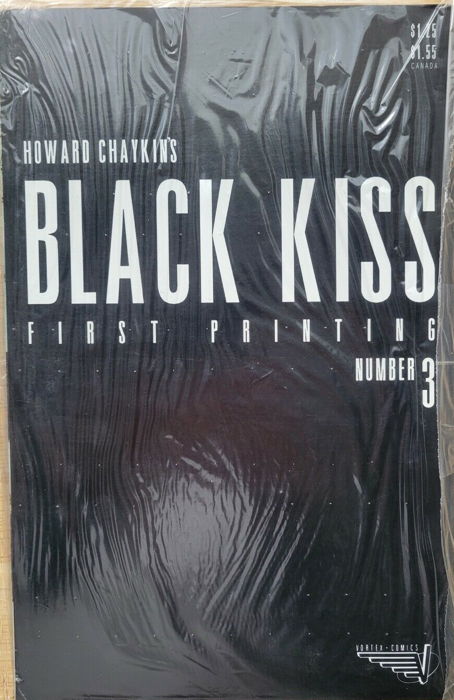
Now Black Kiss didn’t have any variants as such for its individual issues, which may have you wonder why it’s in this variant cover-age post. Gettin’ to that, honest, but it does have to do with what eventually happened with some of the Black Kiss covers. A couple of issues in, the covers on the title started to get a tad too racy for general display in a store, so rather than see them relegated to that curtained area in the back of the shop behind the shelves of Rolemaster games and Ral Partha miniatures, an opaque overlay was inserted into the bag with the comic to cover its shame:

(Image liberated from an eBay auction, not because I couldn’t scan it if I had a sealed one, but because I don’t have a sealed one…all my copies of this are opened, though I still retain those card inserts because I’m a weirdo.)

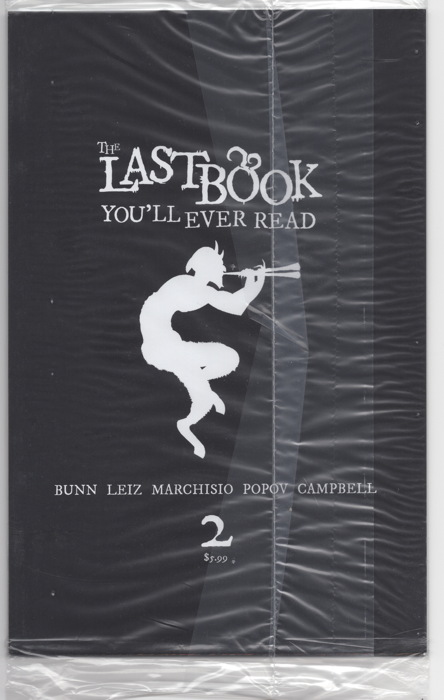
Now the reason I mentioned all that is this style of protective covering was an inspiration later on for current marketing gimmicks in relation to, yes, variant covers. Take, for example, the currently-in-release series The Last Book You’ll Ever Read from Vault Comics. Each issue so far has had multiple variant covers…a couple of which are laid bare to public viewing, acceptable for all ages, and one filthy dirty filthy variant sealed for America’s protection in a polybag and opaque cardboard covering:


This of course isn’t the only comic to use this strategy of “what you see is what you got, what you don’t see might be hot!”* to entice readers into picking it up and ripping open the package to see what’s been hidden from them. Preferably after they pay for it, naturally. The most famous recent example is the uncomfortably-titled Sex Criminals:


…which went all out on their bags to get you to drop the extra 70 cents to buy this version instead of the plain ol’ ordinary covers recommended by schools and churches.

And other comics are doing this, too…the slightly less uncomforatbly-named Money Shot from Oni Press started with the bagged and boarded naughty cover variants relatively recently. And the Bettie Page comics from Dynamite are eschewing the board altogether and issuing “black bag” variants, where, as the name implies, the bag itself is opaque and you can’t see Bettie…I don’t know, gardening on that particular variant. I bet that’s it, she’s probably gardening.

There have been the occasional packaging issues with these variants in the past. I think there was a Sex Criminals where the bag was insufficiently opaque or manufactured in some way that inadvertently revealed the cover. Plus, there was at least one comic recently where the covering board was inserted on the wrong side of the bag, leaving the sexy side unveiled for all. (I honestly can’t remember which comic that was now…was it Money Shot? “Here, let me type ‘money shot’ into Google….” “MIKE, NO”)

It’s a little amusing that a protective packaging strategy from an era where comics where under fire from folks “concerned” for their content (but mostly just trying to get their names in papers by hitching themselves to something popular) continues today as part of a marketing gimmick to sell alternative versions of comics for higher pricetags. Not that it wasn’t a gimmick in the first place, but it certainly saved us a bit of time at the shop having to bag ’em up ourselves. Having an open Black Kiss, or Faust, or something similar, just sitting on the shelf within the grasp of kids would have been a bit much. It became enough of an issue that “privacy bags” (black with a small window at the top for logos) began to be marketed for retail use.

Now, does the “bagged adult variant” thing work, saleswise? …I’d think “yes,” more or less. For the most part, when people have titles that have these variants on their pull lists at my shop, they specify the bagged editions. When I have the Bettie Page black bag variants available, they sail off the racks, I’m guessing to gardening fans. By and large, they do what they’re supposed to do, and that’s grab attention. But not too much attention from the wrong (i.e. too young) eyes, which seem to just pass right over them in favor of more dynamic covers on Amazing Spider-Man or whatever.

And that’s another variant style down, after nearly six months of talking about ’em (almost) every Monday! I’m not done yet, so tune in next Monday to see what else I’m cooking up. If you have anything to add to today’s discussion, or have a request, be sure to let me know!


* Attributed to Jamie Farr, from an episode of The Gong Show, according to my old pal Rob. Never heard it for my own self, but surely it must be true as it’s too good not to be.

Not mentioned in the post: the Christmas-themed Tank Girl window painting we had in 1991.

Hey, I’m bugging you, the folks what still read the blogs, for your comic industry/medium/hobby related questions…put ’em in the comments for this post and I’ll get to them! Well, eventually!

For example, that accursed will richards (as Dr. Doom would call him) says

“Hi Mike, hope the peepers aren’t giving you too much gip.”

Holdin’ together so far!

“I just wondered if you’d had much interest in British Comics (other than 2000ad/Dredd) in the shops you’ve worked in? Thanks”

The 2000AD family of publications and characters do cast a long shadow over the American comic business. If you ask your average comic reader to name a British comic, yeah, chances are they’d say “Dredd.” Possibly Britain’s most mainstreamed comic book character in the U.S. is a British satire/parody of the U.S., which is somehow fitting.

Once the “British invasion” of the 1980s happened in the comics industry, it felt like your general comic reader perhaps got a little more interested in where all these English folk came from, and you started seeing folks trying to track down, say, Alan Moore’s work before he turned up on Swamp Thing. (Not at all pulling from personal experience for this by the way, says the fellow with the full set of Maxwell the Magic Cat.)

There was some increased interest in the UK comics magazine Warrior, for example, the source of Marvelman AKA Miracleman comics that Eclipse started reprinting in the 1980s to huge success. Warrior would feed other U.S. reprint series, like Laser Eraser and Pressbutton, which had a slight following at our shop as well.

Should note now, better late than never, that this isn’t going to be a comprehensive cataloging of every comic with British content that turned up around this time. Just trying to focus on the big ones, and boy howdy Miracleman was one of the biggest ones.

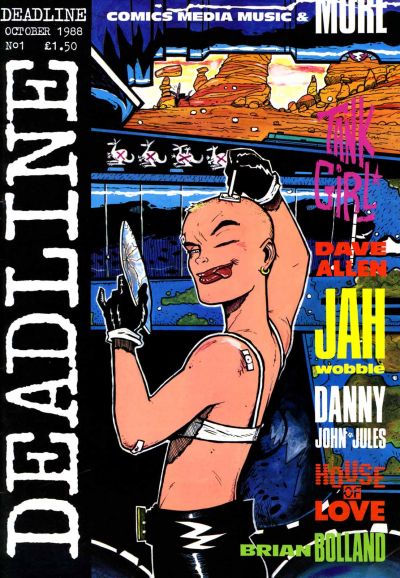
A little bit later at our shop, we stumbled onto a British magazine that a mix of comics and prose articles about music and other pop culture. Several of the strips inside tickled our respective fancies, making us fans of artists like Philip Bond and Jamie Hewlett. In particular, we became big proponents of one of the mag’s stars, the character of Tank Girl:


That’s the first issue from ’88 pictured there…unfortunately, we didn’t get in on the ground floor there. Deadline had been around a year or two before we realized what a goldmine of cartooning it was. I eventually made the drive down to this one store in Los Angeles and made a deal with the folks there for many back issues of the series, going back to that first issue. Just through word of mouth we turned a number of our customers onto the mag (and especially Tank Girl) and we now had quite the demand for this material.

I feel like those are the two Big Ones when it comes to customer interest in British comics. Not to say there weren’t other British comics and graphic novels and such that had a following at our shop (I personally was a huge follower of Eddie Campbell’s Bacchus and related comics) but outside of the 2000AD family, Miracleman and Deadline were the main attractions. I mean, we did try The Beano for a bit, but I don’t think our clientele was ready for anything quite that British!

Oyling the mind with questions.


It’s been almost exactly a year since I’ve thrown open the floor to questions from the audience, so I suppose it’s time to do it again! Plus, I had one of those days at the shop the have left me not wanting to think too much about funnybooks during my free time today, so I figured I’d just ask you folks for content ideas when I’m more in a mood to talk about comics.

If you (yes, you) have a question or general topic of discussion for me, preferably in reference to the comics industry, throw it into the comments here and I’ll get to it…in relatively short order, maybe.

The most important rule:

ONE QUESTION PER PERSON, PLEASE

I’m old and weak and can only take so much strain, so no giant lists of questions, please!

Thanks, pals, and as always I look forward to whatever responses you have!

Isn’t platinum a little more whitish in color than that?

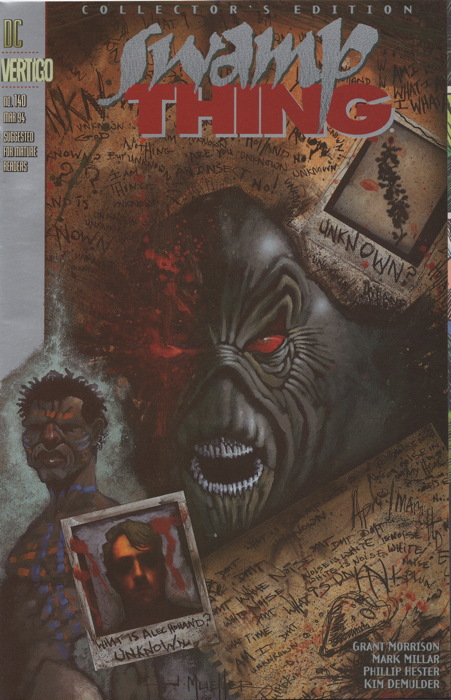
The only platinum edition comic I personally own is, as should come as no surprise, this “Collector’s Edition” (no, really, it is, it says right at the top) of Swamp Thing #140 (March 1994):


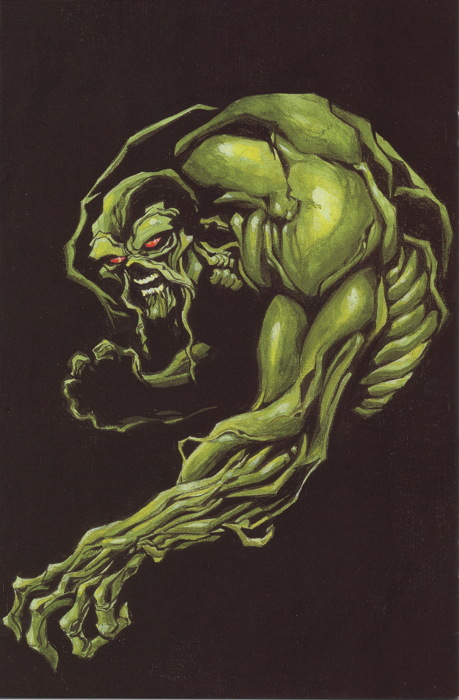
In addition to having the silvery-ink sidebar, logo, and other cover highlights, this edition replaced the ad normally on the back cover with this Swampy image by Phil Hester:


You’ll have to forgive me, it’s been (urgh) about 27 years since I got my mitts on this particular variant, so I forget the exact details surrounding its release. I thought maybe it was a Vertigo anniversary thing, or commemorating some soft relaunch of the imprint, or something along those lines. But no, a little digging showed DC doing a number of platinum editions around this time, just signifying some new notable title launch or storyline or whatnot.

Generally distributed one per store, these platinum variants carried some secondary market value as I vaguely recall, though a look at eBay nowadays shows plenty of copies of most platinum editions available for sale, and mostly not very expensive at that. Someone’s got a Books of Magic #1 (May 1994) platinum edition up for a Buy It Now of five bucks, as I type this.

To be fair, there were a lot of platinum editions in the Vertigo line. I’d remembered that Books of Magic issue, and, oddly enough, the platinum edition for the slightly more obscure Extremist #1 (September 1993). But I forgot about this particularly nice-looking platinum Black Orchid #1 (September 1993).

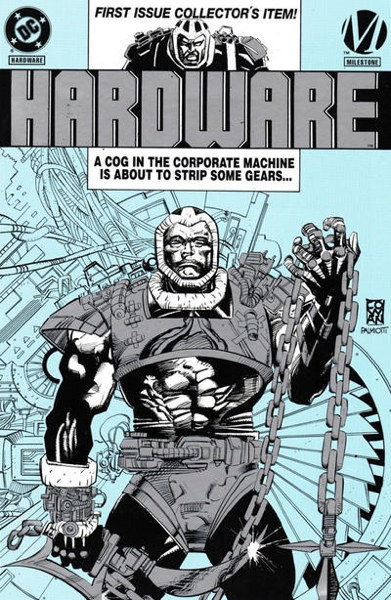
Of course it wasn’t just the Vertigo titles that got this treatment, however. Check out this platinum cover for Milestone Media’s Hardware #1 (April 1993) that I don’t think ever knew existed:


And there was a platinum edition of Static #1 (June 1993) as well.

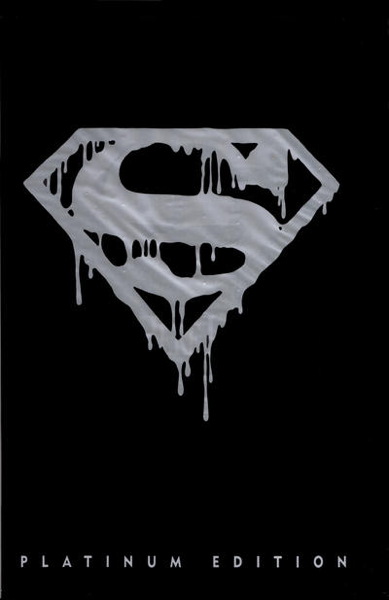
Most famously, though, and I don’t know why I didn’t put the Vertigo “platinum” trend at DC together with this in my head, were the Death of Superman-related “collector’s editions.” There was of course the actual Death of Superman issue, Superman #75 (January 1993), in a black bag that replaced the bloody “S” logo with a silvery one, and slapped the words “PLATINUM EDITION” along the bottom:

A search of copies on eBay showed plenty of graded ‘n’ slabbed copies out of the polybag*, and the front of the comic itself looks no different from the platinum one. However, the back covers feature a big white space and a serial number:


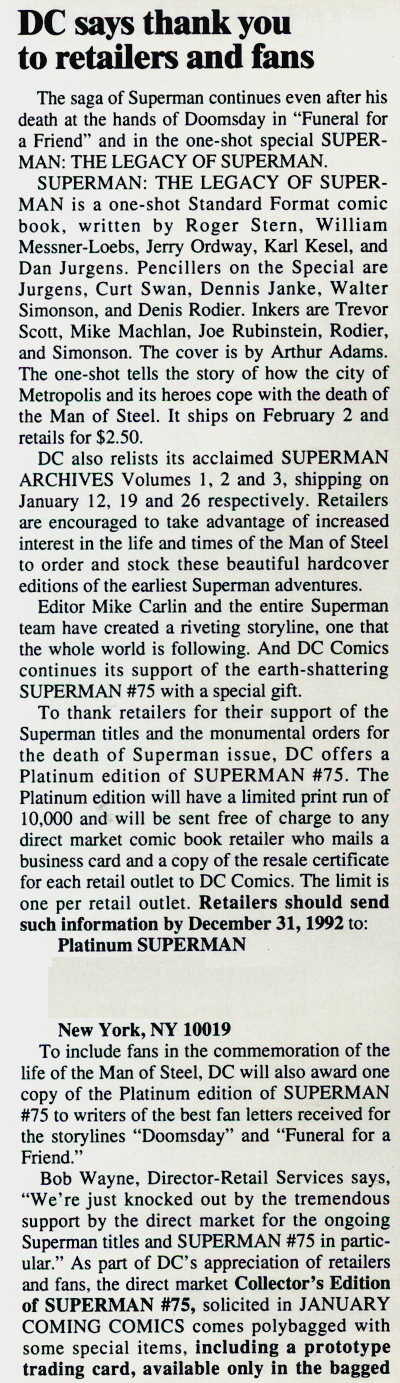
The Grand Comic Database entry states these were possibly numbered between 1,000 and 11,000, though there’s been no official confirmation from DC. This excerpt from a retailer letter I posted a couple of years back definitively states that it was a limited edition of 10,000. Also, you had to send in your business card and a copy of your resale certificate. Here, I’ll save you a click and just post the scan again:


Back in the old days, you had to work for your special platinum variants, they weren’t just handed out to stores willy-nilly!

DC later released a platinum edition of the white-bagged Adventures of Superman #500 (June 1993), which as you may remember kicked off the whole “Return of Superman” hoohar.

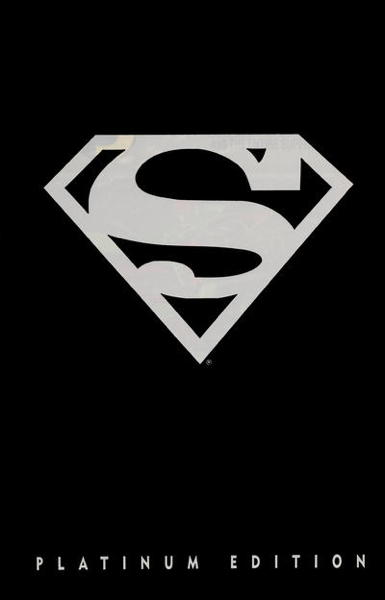
Black-bagged instead of white, silver non-bloody “S” logo on the front, “PLATINUM EDITION” along the bottom…don’t get it mixed up with the #75 above!

Unlike the actual cover of #75, which isn’t immediately apparent that it’s any different from the regular edition unitl you turn it over and see the serial number, ADV500 is instantly identifiable with its…whatever that color is cover instead of black:


I mean, is that “light mint?” What would you call that? Or is that just white in weird lighting? I honestly can’t tell, and it could just be my eyes. And it’s been so long since I’ve seen one in person I can’t tell you from memory.

Anyway, don’t think this one was serially numbered, at least as far as I can tell. And I think this was just sent out to folks who carried the comic, as perhaps DC didn’t want to further aggravate retailers already stuck with copies by making them jump through hoops to get…yet another copy.

I’m sure I missed mentioning a few…I wasn’t trying to be absolutely comprehensive here, but perhaps I can append a list later of all of DC’s platinum editions if necessary. But man, considering I didn’t even know about a couple of them is going to make it tricky to track down. And I didn’t even touch on platinum editions for other publishers. But it felt like such a weirdly DC thing I decided to just focus on them.

Plus, I got to show off my Swamp Thing comic.

* And yes, there’s perhaps some minor debate over the value of bagged comics and their opening or not opening thereof. I know the price guide allows for a bagged comic to be neatly opened and all contents retained to keep that high price and grade, but in the wild…man, sealed copies always sell for more than even the most neatly-opened copies. What can I tell you.

Sorry…

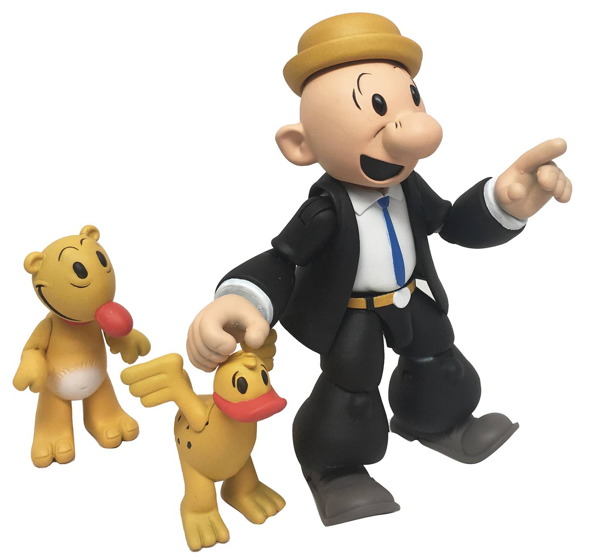
…but it’s been a long day and I’m Too Pooped to Post™. So let me leave you with this image of the forthcoming Castor Oyl action figure:

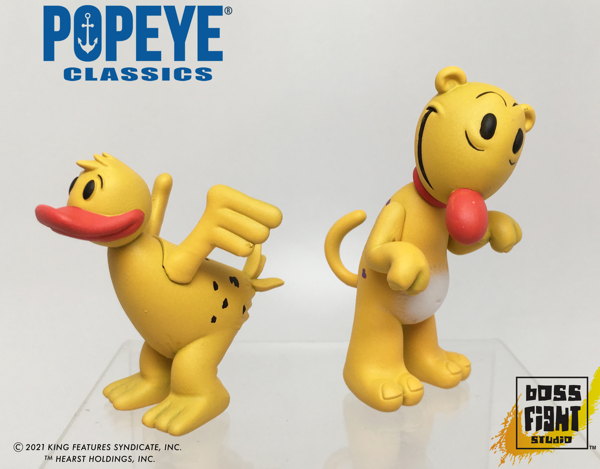
…which I almost passed on ordering along with the Popeye, Bluto, and Olive Oyl figures I was getting for myself from the latest Previews, until I saw that Castor had “Eugene the Jeep and Bernice the Whiffle Hen” included in his package:

Look, I know I’m weak. Also, did you know the Whiffle Hen predates Popeye his own self in the funny pages? IT’S TWOO, IT’S TWOO

Okay, definitely time for beddy-bye. See you pals on Monday.