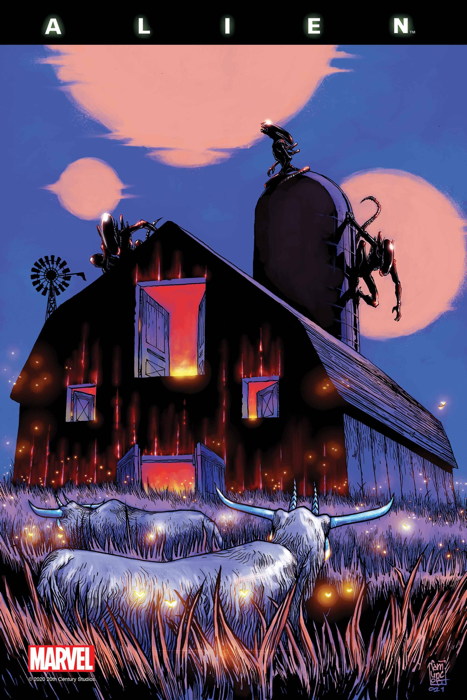
Look, I’m calling them “Aliens,” you can call them “Xenomorphs” if you want.


First, let me say I really have been enjoying this new Marvel era of the Alien comics, after not having read a whole lot of comics based on this franchise for the better part of…what, twenty years now? Has it really been that long? That’s not a judgement on the quality of the Alien comics that had come before…I’d simply had my fill and gave decided to give it a rest.

It seems like there are only two types of Alien story: people gotta get their hands on Aliens and things go badly, or Aliens suddenly show up where people don’t want them and things go badly. Oh, and the third type, “fighting Predators/Batman/Superman/etc.” And maybe a fourth type, “weird-ass story written by Jim Woodring.” And several stories, including the very first movie, are mixes of the two. In general, though, tales tend to lean one way or the other between those first two possibilities.

The first story arc was more “people want to get Aliens,” and with issue #7 and its new story arc, we’ve swung over to the other side and we’re getting “Aliens show up and distress ensues.” Which is perfectly fine, given we’re invested in the characters involved and the circumstances in the Aliens find themselves. The trick of course is making these things just as, if not more, interesting than the Aliens themselves.

I realize that’s very much a “your mileage may vary” sort of situation, in that perhaps not everyone finds the Aliens as interesting as I do…I mean, I could read a comic that’s just, like “A Day in the Life of the Aliens” that show ’em building nests, carrying eggs around, salivating, that sort of thing. But, you know, this is an Alien comic, and if you’re picking it up I’m presuming Aliens have at least some appeal to you, and you’re not just reading it for, I don’t know, romance between the lead human characters or anything.

This new story arc is off to a good start, with an infested ship crashing into a colony that’s just on the verge of independence from Earth, with a lead human character who’s put off having her terminal illness treated to ensure the colony’s survival. By which I mean contractual survival, not survival of an Alien attack, but I imagine we’ll be seeing more of that next issue. Anyway, she’s introduced as a strong and relatively deep personality, which will make for a good POV for the Alien fun to follow.
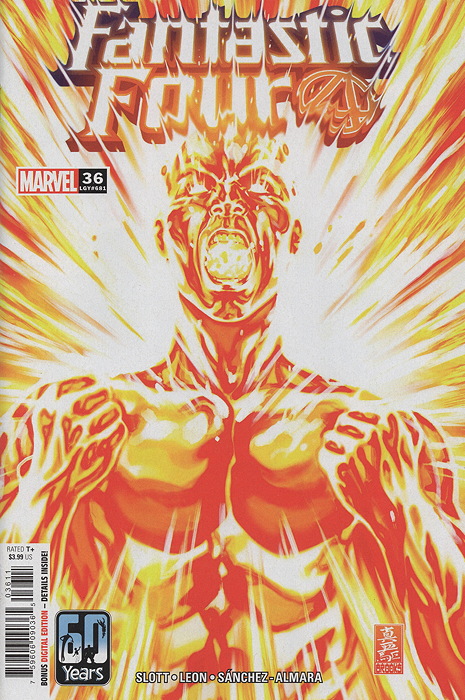

It’s only been a week since the last issue, which is a littly annoying from a retailing point of view, but from a comic-reading fanboy POV, it’s good timing as I’m really enjoying this “Johnny stuck flamed-on all the time” storyline. What I’m enjoying is how much story is put into each issue…still not a patch on how much Lee & Kirby would cram into their pages way back when. But still it feels like a lot of stuff is happening, and we’re getting plenty of new and weird situations, which is what I want from an FF book.
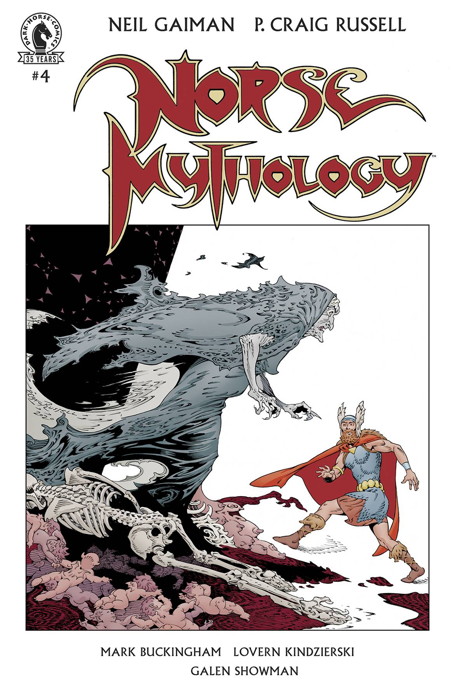

A long time ago, when I was but a wee Mikester, I had a book that contained a whole lot of Norse myths. One of the stories that stuck with me into adulthood was where Thor ‘n’ pals encounter the Giants and then are tasked with multiple challenges that they should be able to take on easily but are handed humiliating defeats. The secret behind how the Giants won these victories has amused me for decades, and how here it is in illustrated form. Not much to say here except “glad to finally see it.”
Don’t take any wooden variants.

So I’ve written about publishers test-marketing variations on their comics before, specifically when DC tried out more kid-friendly covers on a couple of their titles. I experienced those (well, at least one of those) in the wild, in real time as it happened, so I have a little more direct understanding of what was happening there (even if I had some initial confusion over “whoa, Firestorm looks different this month).

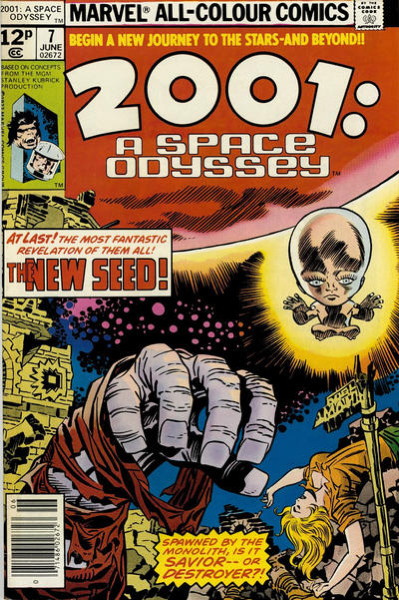
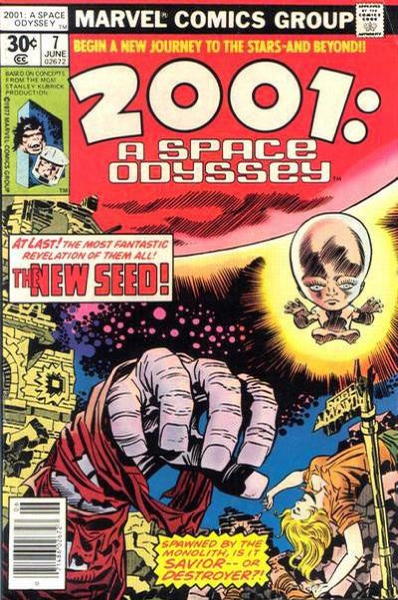
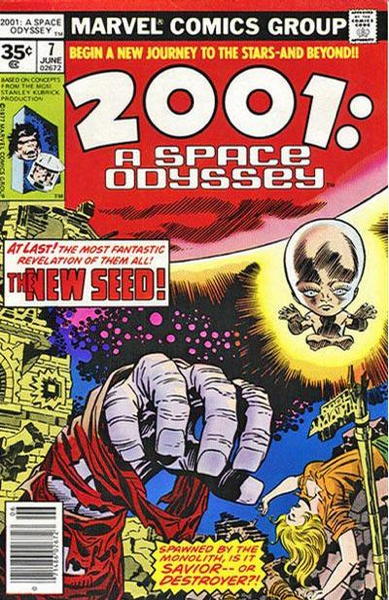
Some of the 1970s test-marketing, however, I only really experienced in the secondary market, during my extensive tenure at the previous place of employment. At some point, we began to realize that there was an increase in demand for some price variations of certain 1970s Marvel books. In particular, the 35-cent covers on comics that were at the time normally 30 cents. As an example (using scans borrowed from the immensely useful resource, the Grand Comics Database), this issue of 2001: A Space Odyssey #7, cover-dated June 1977.

First off, the widely available 30 cent cover, as acquired by the hoi polloi:

And the 35-cent variant, obtained off the newsstands by a few select elite for whom we must all show reverence:

And apparently there’s a British price variation, too, but I’ll get to those some other day if I have anything to say about them aside from a “look at that weird space money they’re charging on those covers” take:


I was trying to pin down exactly when we realized “hold on, people are spending crazy money on these,” thus spurring us on to scour the many, many “end-of-Raiders-of-the-Lost-Ark-esque” boxes in our backroom looking for them. I want to say it coincided with our late-1990s move to eBay, where it was easier to see as it was happening countrywide, and worldwide, trends in comic collecting demand. And I feel like there was also an uptick in customers dropping by and specifically asking for those 35-centers as well.

I did a little research (okay, I Googled) and as it turns out, an Overstreet adviser was catching on and starting spreading the word about these variations. This would jibe with my memory of when we started experiencing increased demand for them. Now I’m sure folks running comic shops and tabling at conventions must have noticed when they had copies of an issue of something-or-other and each had two different prices, but it took this enterprising person to catalog just how widespread this was. And once word got out and it made it into Overstreet, well, that was that.

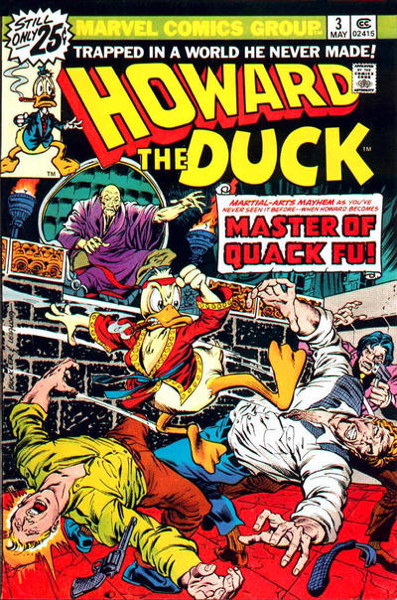
Now this test-marketing went on for a few months in 1977 (and including Star Wars #1, which is almost an entire variant cover-age article in its own right). The previous year, however, also saw some test-marketing from Marvel on price points, by trying out 30-cent prices on their 25-cent comic line. Behold Howard the Duck #3 (May 1976), first in its 25 cent configuration:

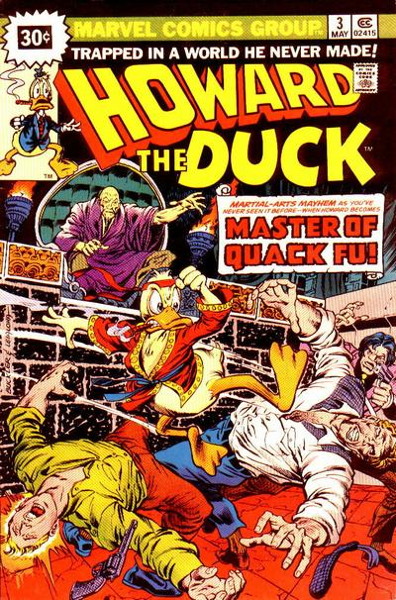
…and then in its shocking 30 cent glory:

(A hint to any readers from decades ago seeing my site with their future-scopes: once a comic starts saying “Still Only” in front of their prices, get ready for that price to go up.)

Now this website actually identifies the six areas where these higher priced books were distributed (c’mon, Boston, you can afford that extra nickel!). One of those spots was San Jose, CA, which is relatively close-ish, so I’m sure at the old job we must have at least some of these variations come through. I don’t remember anyone making a particularly big deal out of those at any point, not like with the 35 cent comics, but the latter certainly had a lot more publicity at the time.

It’s weird to think of a period of time where comic book companies would go through that much effort to discover how much kids would balk at dropping a few extra cents on their funnybooks. (And as my former boss Ralph reminded me the other day, Dell Comics did it too, and I’m sure they weren’t the only ones.) Of course, comics had much larger readerships then, and wider distribution in general marketplaces, rather than being restricted to a small-ish number of specialty shops today that only cover a portion of the sales areas comics used to reach. Now it feels like the test-marketing of prices is just done to everyone at once, with Marvel and DC seeing how many $4.99 and $5.99 and $9.99 books their print audiences will tolerate.

Fifteen years ago I would have had my rake and torch out.

I almost don’t even want to talk about this now, after tweeting about it the other day and then doing an audio post about it on my Patreon. But someone’s seemingly silly assertion that “men only read Swamp Thing to feel smart by getting the literary references” is…quite the reach, to be honest.

I’ve never heard that particular observation before. I’ve never encountered that sort of behavior in regards to Swamp Thing comics in the wild. And I’m pretty sure the “literary references” were not the main focus of the comics and not what the readers glommed onto. For all I know, this person (who is also a comics writer) was just deliberately trolling Twitter users.

My initial fear — given the phrasing of “why do men…” — was that some unsavory comics “fan” online collective latched onto Swamp Thing and began singing its praises, tainting the character and comics for other, somewhat more socialized, folks.

But no, it was just a tossed-off question, with a boatload of responses coming to the defense of Swamp Thing comics. I did my own small defense in my Twitter thread linked above, and…well, honestly, it’s not something I really need to get all worked up about, says the guy writing a blog post about it. And who knows…I’ve never encountered anything like this, but maybe that person who wrote the tweet encountered some folks being all hoity-toity about Swamp Thing and caused that particular reaction?

I used to get really bent out of shape when it came to “someone is wrong on the internet!” type stuff, and in more recent years I’m trying to take it a little easier in regards to that sort of thing. Even this response is more out of “well, I’m a Swamp Thing fan, better say something about it” than “LET SWING THE FLAMING SWORD OF VENGEANCE” or anything like that. I just thought it was a weird comment for someone to say. But, eh, not like I haven’t spent nearly 18 years making weird comments on my own site here.

Anyway, I’m really just glad it wasn’t because internet weirdos decided Swamp Thing was “theirs” and ruined it for everybody. Look, I’m the internet weirdo in charge of Swamp Thing around here, and I’ll brook no challengers.

Honestly, I think he’s a grown-up Herbie Popnecker (and that he’s teamed up with Herbie does nothing to dissuade me).


This issue of Marel Two-in-One was the first Fantastic Four-related comic I remember reading. Sometime after that I remember looking at some random issue of Fantastic Four my cousin had, which one I can’t remember, but I do know it was in the middle of some ongoing story and it was weird and strangely fascinating to someone mostly used to DCs and the occasional Charlton.

It wasn’t until the early ’80s that I began my full-on dive in Marvel Comics readin’, and my gateway was…an issue of The Thing, which brought me to John Byrne’s run on Fantastic Four (starting with the then-current issue and picking up the previous ones as I could) and then on to just about everything else Marvel-ish.

Fantastic Four, though, was one of the main two I stuck with (the other being Incredible Hulk and all its later permutations). I would occasionally not follow the title (there’s a big chunk of ’90s FF I skipped) but I have all those Byrne issues, the Waid run, the Millar run (which I still think is actually pretty good), Fraction and Hickman, Simonson, and now Slott…all readable, enjoyable and imaginative. I’ve also since read all the original Lee/Kirby stuff, with all its primal energy, laying the foundation for a fictional universe that is essentially dominating all popular culture today (even if its mostly been without the FF’s direct interaction, though not for lack of trying a couple of times).

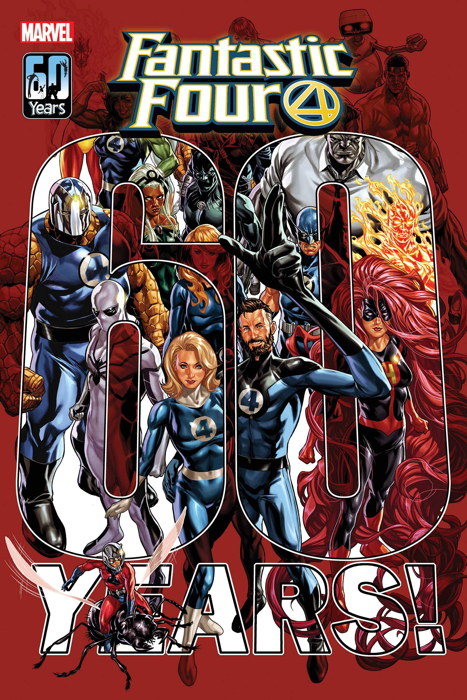
None of this really says anything about the comic, so let me just say it’s a fun tribute to the team’s long history, with cute “chapter break” images that really drive home the time the team has spanned. You will not be surprised at all by one of the story’s “twists,” but really, it’s a wild trip though the FF’s history and that’s entertainment enough. It’s mostly a standalone book (though one major subplot does carry through from the previous issues, but the exposition train pulls into the station long enough to catch you up) so if you haven’t read FF in a while, it’s a good sampler of the title’s current status, and worth checking out.

• • •

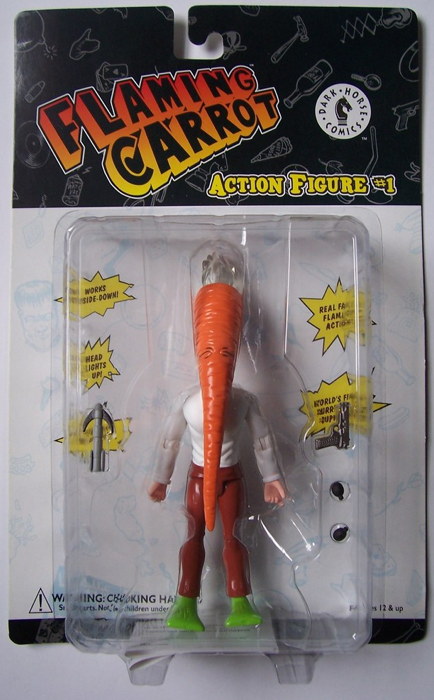
On a copmpletely different topic, I was looking at my old Flaming Carrot action figure the other day. It has a feature where if you twist the little plastic plume of “flame” that sticks out of the top of his head, it will light up. Or would light up if the battery wasn’t long dead, I thought as I twisted the doodad, but lo and behold:


…LET THERE BE CARROT LIGHT. I wondered just how old this figure was, as I couldn’t recall exactly when I picked it up from the previous place of employment. A peek into Diamond’s database revealed 1) it was still listed in said database, and 2) it came out in December of 1998. Nearly 23 years later, that little light is still working. Amazing. Now if we can only fnd out what the Carrot’s actual secret identity really is, and where that speaker in his chest came from.

The official Dark Horse Comics site still has a page devoted to the figure (which gives a release day of November ’98). A closer look is in this pic I “borrowed” from an online source:

All that does is make me wish I hadn’t discarded the packaging for my figure.

It’s more fun to play the variants way.

John asked

“What about Superman The Man of Steel #30, the vinyl cling/’colorform[®]’ cover. Would that make it the ultimate variant cover? Apologies if this has already been mentioned. I’ve been following the site and haven’t seen it. Keep up the great work!”

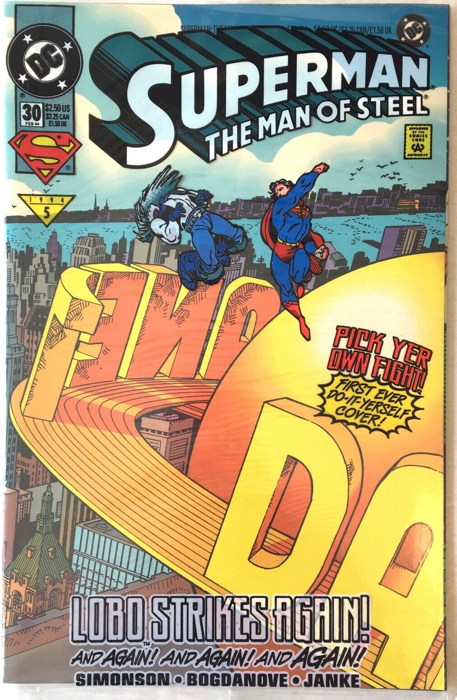
Ah, yes, what about Superman: The Man of Steel #30 indeed? Let us take a gander at this comic, cover dated February 1994, released December 1993:

Here is the front of the “collector’s edition,” sealed in a polybag:

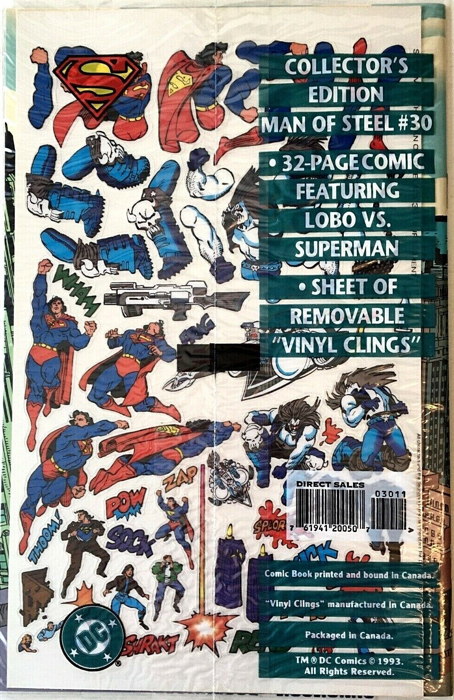
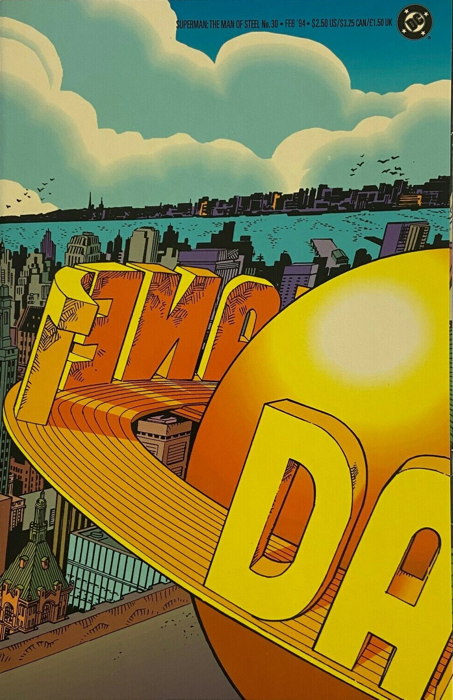
The back cover, showing the Colorforms® er, “vinyl clings” that John mentioned:

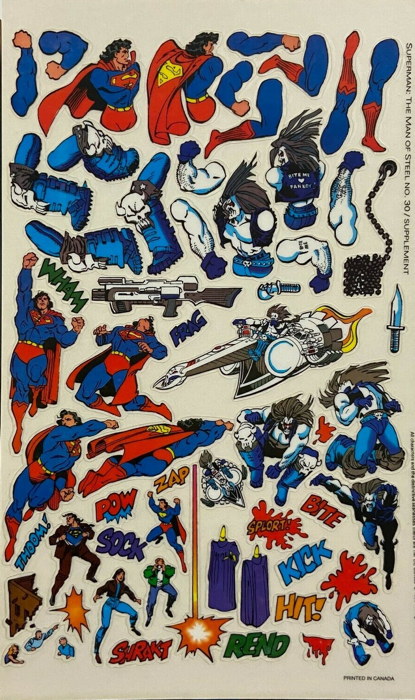
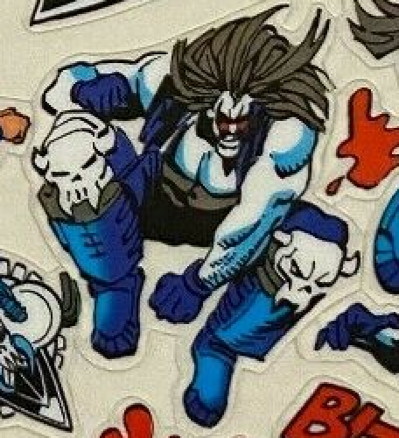
Here’s a better look at them, without the printing on the polybag:

And here’s what the cover looks like out of the polybag, front:

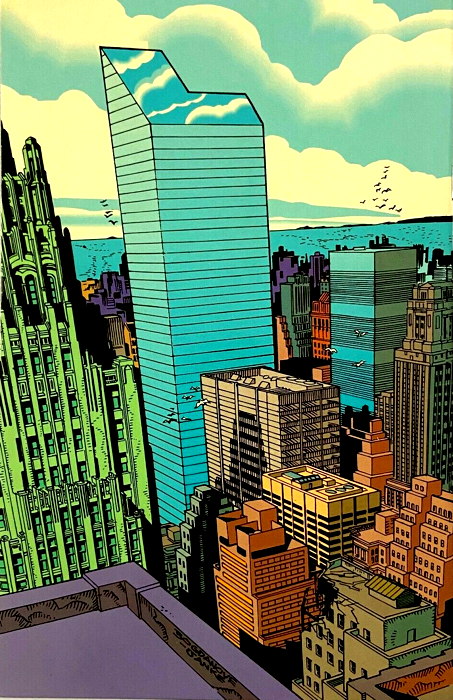
And back:

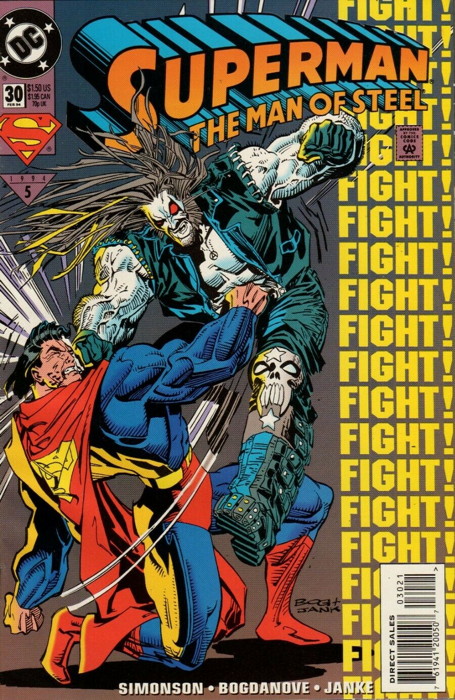
And for comparison, here is the “regular” edition of the issue, AKA the “newsstand” edition (though pictured is the one sold through comic shops, as per the “direct sales” tag in the UPC):

Now I just totally stole all these images from the eBays, because 1) my own copy of the collector’s edition, still with the polybag (neatly trimmed open along the top so I could pull it out and read it) and clings, is currently inaccessible due to some current house rearranging-type stuff, and 2) I don’t currently have a working scanner at home and haven’t quite made the time, or loosened up the cash, to get a new one, so, hence, the liberating of scans from elsewhere.

And as John noted…the Collector’s Edition sort of is the Ultimate Variant Cover, as you make whatever design you want affixing your clings however you’d like, removing them and moving them around. If you’re not familiar with Colorforms® and similar toys, these aren’t stickers as such, but rather, as we keep saying, “vinyl clings” (hey, don’t blame me, the quotation marks are on the packaging) that are reusable and can stick to the slick, thick cover of the comic, then peel ’em off and move ’em around as you see fit. And when you lay the comic flat and opened, you get that nice shot of Metropolis on that wraparound cover by Jon Bogdanove and Dennis Janke, which makes for a nice playfield for your clings.

It’s a very clever gimmick…and yes, we’re straddling the line between “gimmick cover” and “variant cover” here, but the gimmick is a “Do-It-Yerself” cover as noted on the polybag, so I think we’re…er, covered. Now, I was going to say this was a unique gimmick, as I couldn’t recall anyone attempting such a weird thing again, However, a quick Googling reveals that writin’-about-funnybooks pal Brian Cronin just talked about this very comic only a few months ago, so, um, oops, sorry Brian, hope I’m not stepping on any virtual toes here. But he noted that DC itself repeated the gimmick for the Worlds Collide Milestone/DC crossover event which I didn’t remember (I mean, I remembered the crossover, not the clings). Anyway, read Brian’s article as he goes deeper into the history of Colorforms® and the reasons why gimmick covers such as this were so prevalent in the ’90s.

I remember this selling pretty well for us at the time…Superman sales were still pretty strong post-Death of, even in those ’90s crash days. But this particular edition with the clings was just odd enough to attract extra attention, and it continued to be a good back issue seller for years afterwards. Even now, when I get a copy in, it tends to go out again in relatively short order. I’m not even sure if I have one in stock right now.

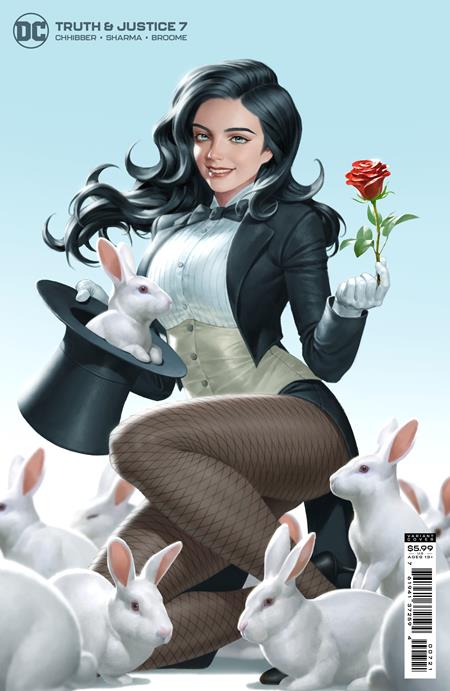
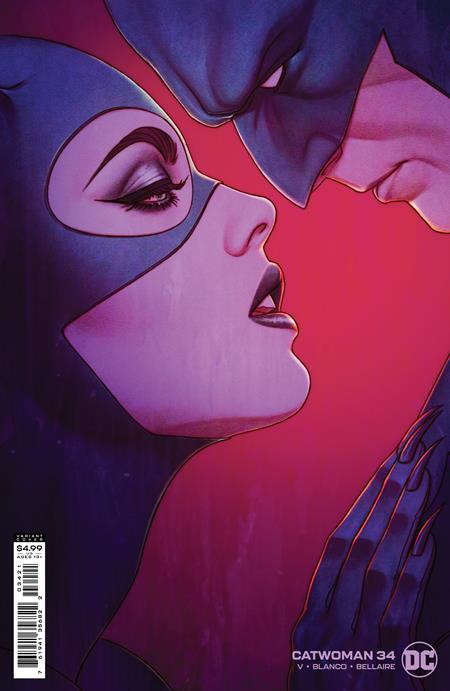
What’s great is that, as I recall, the slick cover stock used for Man of Steel #30 is identical, or close enough, to the “cardstock variants” DC is currently burdening offering on nearly all of their current releases. Thus, imagine having this Lobo cling:

…just leaping in on, oh, say, this cover:

Or God help us, this:

being used on this:

The possibilities are endless. Everything (or at least everything with the proper paper type as a cover) is a variant now. I HOPE YOU’RE HAPPY, JOHN.

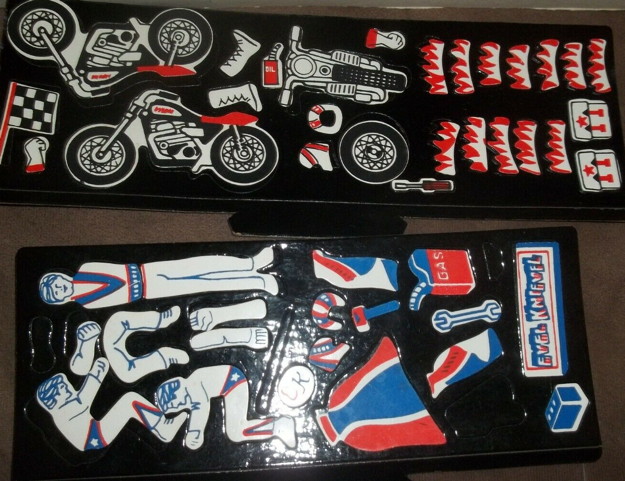
Now, my secret shame: I never played with the clings on my own copy of Man of Steel #30. Not sure why…not like I’m planning on reselling any of my Superman comics, no reason to worry if everything’s in “mint” or not. And I’ve played with this sort of toy as a kid…I was the proud owner of the 1974 Evel Knievel Colorforms® set, after all:

…and I do still have my Swamp Thing Presto Magix Totally Not Colorforms® set. Hey, that’s an idea…Evel and Lobo racing their respective cycles while Superman goes toe to toe with Arcane and his Un-Men, all over the streets of Metropolis! Okay, now I have good reason to regain access to my Superman boxes and dig out that issue! GREATEST SUPERHERO BATTLE EVER, HERE WE COME.

Yes, and introduce the modern Suicide Squad, too.

[SPOILERS AHOY]


What this reminded me of, when all was said and done, was the Legends series DC published back in the mid-1980s, where the ultimate result of the series was to introduce the new Justice League (to some measure of success), or even DC’s Millennium, published a little later that decade, where the endgame was to introduce the New Guardians (to slightly lesser success).

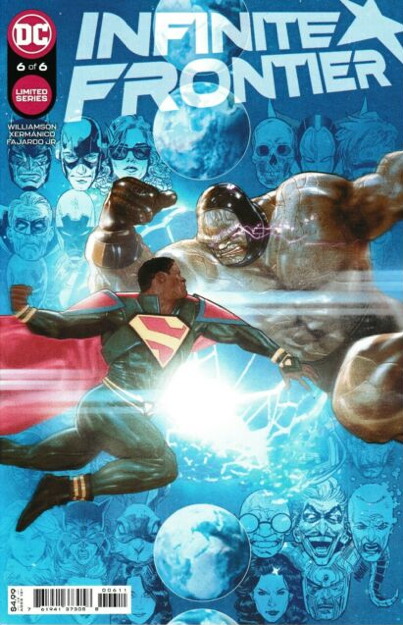
Which, you know, is fine. That’s the goal of every comic book crossover…to get you to buy more comic books. They do it either by trying to turn you on to characters you didn’t normally read but were exposed to in the event, or they spin off new titles from the event that they hope you’ll be intrigued enough to sample. In this case it’s Justice League Incarnate, a team comprised of superheroes from across the multiverse, attempting to prevent Darkseid from breaking into the Omniverse and bothering Mark Gruenwald, presumably. And a handy footnote in Infinite Frontier directs you to said series, Coming Soon to a Newsdealer Near You.

Again, this is all fine. It’s just how comics are. And I like the idea of Justice League Incarnate and think the idea of jumping around the multiverse sounds like fun. But…DC’s spent the better part of three decades trying to roll back Crisis on Infinite Earths after realizing that maybe putting a whole bunch of restrictions on a world of imaginative fantasy was perhaps not a great publishing strategy. I enjoyed at the time the weird frisson of Crisis, where for perhaps the one time in superhero comics history you really did have the feeling that perhaps nothing and nobody was safe. But the price we paid was DC putting out an event series every once in a while that tried to get those worms all back in the tin, or at least get those worms to line up neatly and consistently so they could say “this is how things work now, for sure this time.”

The result is a pastiche of a memory of a time that the creators responsible are likely not even old enough to have experienced firsthand. All the terms and ideas are there, the Earths with numerial designations, all that jazz, but it doesn’t feel quite the same. This is a Me Problem, not perhaps a Those of You Who Are Younger Than Me Problem, as I did experience the old DC Multiverse firsthand in the funnybooks I got off the newsstands and I compare my memories of what was to whatever attempts are going on now to recreate it, and…I’m just gonna have to tear down that nostalgia wall in my brain and get used to what’s happening now, because unless Marv Wolfman steps in and knocks the entirely of DC continuity back to the 1980s, “nothing will ever be the same,” to borrow a phrase.

Anyway, Infinite Frontier #6 also promises the return of an old friend in 2022, so okay, they got me on the hook with that. Jerks.


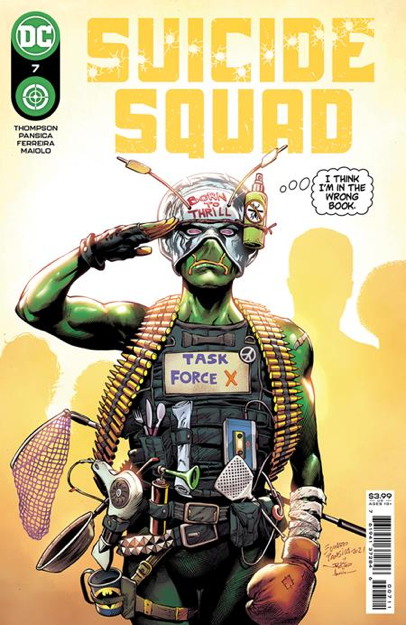
The return of Ambush Bug to whatever passes as mainline DC continuity, in what I presume is a small attempt at Deadpool-izing him by having a fourth-wall aware hero interacting with what would generally be considered a straightforward superhero adventure book. Of course, my awareness of Deadpool comes mostly from the movies and his appearances in one of the Marvel Lego video games, having only read one actual Deadpool comic in my lifetime, so I could be misunderstanding something here. Also, I though Harley Quinn and DC’s Deadpool, a character not necessarily bound by whatever demands are put upon stories by current continuity.

Anyway, Ambush Bug beat ’em all to the punch, being set aside from the regular DCU to do his own metacommentary thing (despite being introduced in regular continuity as, well, a murderer, and making the occasional appearance there, like this oddball thing). He retains his awareness that he’s a comic book character for Suicide Squad, which is treated by the other characters as being a sign that his bean is off-kilter…except he repeatedly demonstrates (at least for the reader) that he is correctly aware of his comic book existence. We’re in late 1980s Animal Man territory here, my friends…maybe he can team up with Grant Morrison.

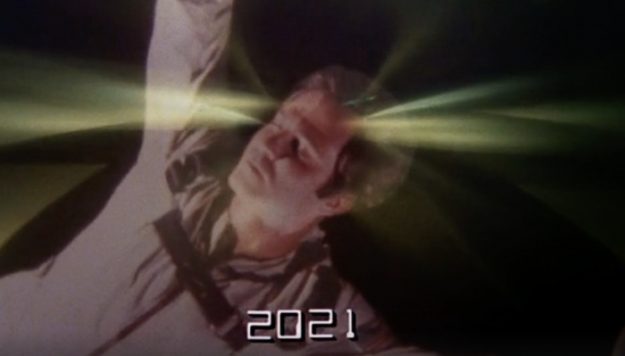
Where Buck Rogers is now.


Sorry for the extended interruption…one of the downsides of being at the shop all week, if that’s not a downside in its own right, is that many other chores and miscellaneous life stuff have to be done around that particular responsibility, which, depending on the activity, means “at night, after work.” Usually I can balance my free blogging time with whatever other responsibilities I have, but this time we had a lot of stuff that needed to be done in a short time frame, so my nights have been otherwise occupied.

Now I think the current state of emergency is over, though some follow-up is possible. But, in the meantime, I think the site will be back on whatever passes for its regular schedule. Thanks for sticking around, pals.

So what exactly have I been doing relaxation and fun over the last couple of weeks, when I wasn’t doing the work I’d been doing? Why, watching the classic 1979-81 TV sci-fi adventure Buck Rogers in the 25th Century starring Gil Gerard, Erin Gray, and Mel Blanc, of course.

I happened to be flipping through the selections on the free streaming app Tubi and spotted both that show and the original Battlestar Galactica amongst its programming. I watched a little of BG, but I feel like I’ve seen plenty of BG in reruns and such over the decades. However, BR existed in my head mostly as vague memories from childhood, save for the opening narration and theme music which I’ve always quite liked:


(NOTE: that’s the second season opener, with a different narrator. Music’s still good, though.)

It’s perfectly affable fun, which I’d been tweeting about lately. Buck as a “man-out-of-time” is mostly restricted to his using modern informal English and idioms that 25th century people don’t grok. But there are lots of fun guest-stars (Frank Gorshin! Markie Post! Peter Graves! Buster Crabbe! Cesar Romero! HENRY FREAKIN’ SILVA!) and completely misleading lurid titles (“Planet of the Slave Girls,” starring Jack Palance) and all the gals are squeezed into unforgiving spandex (and at least one gal in an outfit so revealing I caught an extra checking her out briefly)…it’s all so much of its time, but still a lot of fun to watch. Lots of shots set in modern factories and at least one parking garage, it looked like, but you know, that’s all fine.

And look, I haven’t even watched the episodes with Gary Coleman yet. How can those not be great?

I know many special effects, sound effects, and even props were shared between this show and Battlestar Galactica (hello, same control stick in Galactica‘s Vipers showing up in the Buck Rogers ships) which, again, whatever. But I’ll tell you, the control stick thing bothered me back then, and it still bothers me now. Unless they were leading up to the eventual Buck Rogers/Battlestar Galactica crossover, in which case all is forgiven.

So I’m only partway into the first season, and I know Hawk is awaiting me in Season 2 (I actually remember the Starlog cover he was on far more clearly than anything in the show itself). Thus, no spoilers, please.

In which I use a couple hundred words to tell you I’m not posting.

Blogging is still (mostly) on hold for just a bit longer, while my evening blogging time is occupied by other responsibilities. I should be up and running again later this week, so thank you for your patience!

In the meantime, in talking with former boss Ralph, while specifically discussing my variant cover-age series, he mentioned a couple of other comics that I didn’t realize had variant covers, so I’ll be looking into those for a future post or two.

Also, I asked Ralph about his orders on Deadworld, as in my post discussing that title I presumed we probably ordered more of the “gory” cover versus the “tame” cover. It’s Ralph’s recollection that while he ordered fairly heavily on the earlier issues, farther down the line he was only ordering a very few for the rack, and he’s pretty sure he was getting equal numbers of each version. Now overall, I still guess the printrun was maybe a little larger on the gross cover versus the not-so-gross cover, but at my previous place of employment, at least in the latter days of that title, that may not have been the case.

Okay, that’s it for now, I should be back in action by Friday…or maybe even Wednesday, if things work out. Thanks for reading, pals, and I’ll be yapping at you again soon.

Covert Variant Teams.

So I picked up a collection the other day, where the fella selling prefaced his offering with “they’re all from the early ’90s.” I replied “well, don’t get your hopes up, I probably won’t need much,” and then I proceeded to purchase everything he had as I indeed did “need much.” Nothing super-spectacular, just lots of X-Men and Spider-Man stuff, other Marvels of the period I could use…lots of books that aren’t jumping out of those “key collecting” apps everyone’s got their noses stuck to, but remain consistent sellers.

Many of the comics in this collection were “newsstand” editions, with the standard UPC codes. As noted before, there seems to be increased collector interest in newsstand editions, as they’re seen as “rare variants” and the like, in a market newly desperate for readily available “collectibles.”

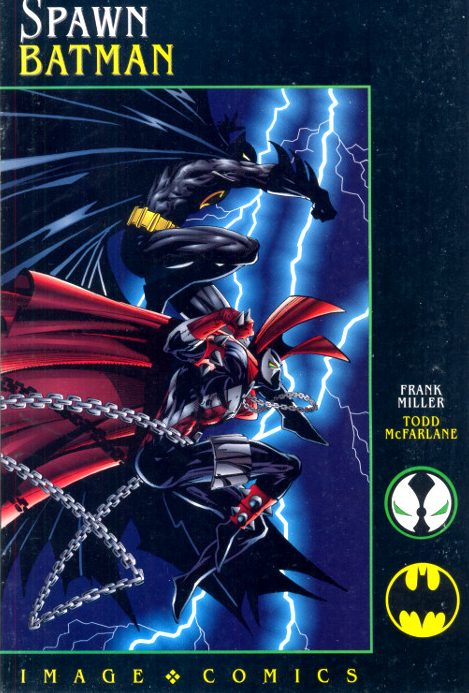
And thus, yes, I’m bumping up prices on some of the newsstand books I acquired…hey, baby needs formula, don’t look at me like that. But of particular note in this collection was a comic I’d never actually seen before in its newsstand form, 1994’s Spawn-Batman:

Aside from the UPC code on the back, the primary difference is that instead of the stiff covers of the direct market version, it has floppy paper covers, as seen in this Instagram video I made. (And if you think I’m being too rough on it in that clip…it ain’t high grade, it can take a little manhandling.)

Pricing the book was a bit of a bear…I don’t believe it’s in the current price guide (at least, it’s not in the two-year-old guide I have at home), and online prices are all over the map. Some eBay sellers had it in the $5 to $10 range, which seemed too cheap, and on mail order house had a midrange copy for hundreds of dollars, which seemed miles too high. I ultimately skewed lower-end, assuming a mint copy to be ~$20 and working it out from there. Sometimes…you just gotta make stuff up.

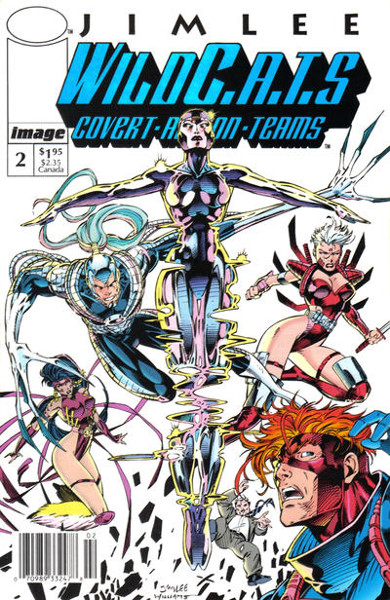
Also in the collection was a newsstand edition of an Image book I did know about…in fact, I’d seen it racked in a downtown newsstand back when it was new: WildC.A.T.s #2:


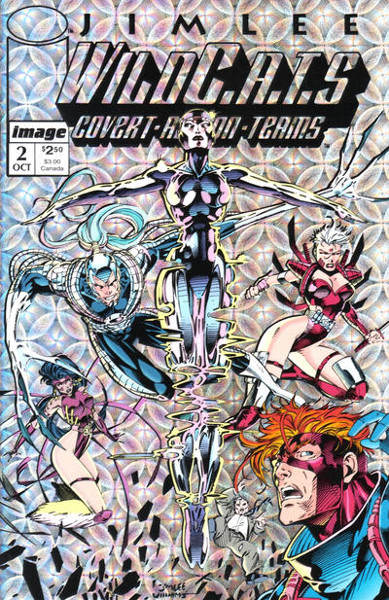
The all-white background on regular paper made it stand out, given that the direct sales edition I was used to was the stiff-covered, foil-enhanced version:


There were two copies of this one in the collection, in beautiful NM shape, both of which ended up selling to the same fella for $15 a pop. Again, a price I researched and ultimately had to work out on my own.

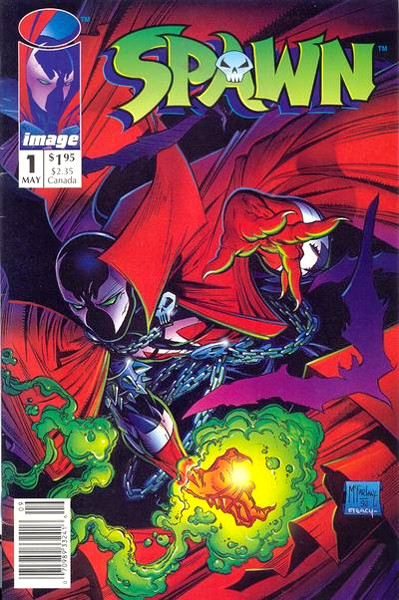
There were also lots of just plain ol’ Spawn in the UPC-burdened newsstand flavor:


…not the #1 pictured here, alas, but scattered issues running from about 2 to 27. I seem to recall seeing a few Spawns on newsstand racks at the time, too.

Now I don’t know how long this newsstand push of Image’s lasted. On the Grand Comic Database, the latest newsstand Spawn they had was #134 from 2004. That’s far later than I expected, though after about #52 GCD only shows a handful of newsstand Spawns here and there. I presume those editions do exist, as it seems like a lot of trouble to only sporadically distribute your issues through certain venues.

Another Image title, Savage Dragon, had newsstand editions listed up through 26 in 1996. No idea if there are more after that…didn’t spot any in an eBay search, though I did spot lots of other Image books I didn’t suspect would have had newsstand distribution: Savage Dragon Vs. Savage Megaton Man anybody? Plus, I imagine recent issues of Savage Dragon would be quite the trick to rack in a convenience store, given the uptick in “special hugging” the book’s seen of late.

These are…interesting novelties, I think, and, especially in Spawn‘s case, published for much longer than I realized. I figured for sure the newsstand distribution was an early artifact of Image’s launch, but nope, there’s that 2004 newsstand issue of Spawn. And yes, I bumped up the prices on these Spawns I picked up in the collection, too..a little extra percentage over the guide. Yeah, I know, what can I tell you…I’m part of the problem.

Low content mode for a wee bit.

Sorry pals, I am going to have little to no blogging time over the next week or so. Not going away, just got some Real Life Stuff to do. I’ll try to be back for another Variant Cover-Age post next Monday, but that may be it for the week.

Thanks for sticking around, pals, and I’ll see you next time.