I wonder how many alternative names they went through before deciding on “Miracleman” (and how disappointed they were to find “Mighty Man” was taken).

Just a couple o’quick responses to comments on Wednesday’s post:

Daniel T sez

“I really hope MM doesn’t actually interact with the Marvel Universe. He so, so, SO doesn’t fit in there.”

My assumption (and I haven’t read any of the recent news stories about the character’s apparent involvement with the Marvel Universe) is that the version we’ll get there will be different from the “Miracleman” that was in the Alan Moore/Neil Gaiman story. The latter is like “its own thing,” with a presumed narrative and planned ending. I suspect the Marvel Universe version will be named Marvelman and be more along the lines of the pre-Moore era.

Here’s a page which goes into detail on the character’s previous interaction with the Marvel Universe, mostly in that one Captain Britain story where we see MM’s grave. (The pic there says “Miracleman” but I’m pretty sure it said “Marvelman” in its original printing.)

That said, there’s a little aside in the original Moore issues, during the battle with Kid Miracleman, where various apocryphal events are described that may or may not have occurred in this event. I believe one of them involved MM traveling in time to encounter himself in the past? Something like that, don’t have the issues in front of me. Anyway, this version could make a side trip to the Marvel Universe as part of one of these weird happenings during that big conflict with KM. Kid Miracleman somehow gets loose on Earth-616, Miracleman chases after him, the rest of this Earth’s superheroes get involved, it’s a Whole Big Thing ’til they’re both returned back to Eclipse’s issue #15.

I mean, I have no idea. We’ll all find out eventually. It still smacks of DC surprising us with that Watchmen tie-in at the end of the DC Rebirth special way back when.

• • •

Thom H also sez

“It really is weird to see MM interacting with Marvel characters.”

Whenever Marvel has, like, a Superman-level character in the books (like maybe Sentry, or Gladiator, or, you know, even Superman his own self) it feels like it’s almost…milieu-breaking. Like, a Character Like This shouldn’t exist in the Marvel Universe, which is basically New York and other outlying environs, just with superheroes with more limited powersets. It’s like if, I don’t know, Jeannie from I Dream of Jeannie showed up on Babylon 5. Does that fanfic exist? If not, © © © ™ ™ ™ me.

That’s probably not exactly what you meant…I guess you mean more it’s a mismatch in general tone, a character used to examine and break superhero tropes suddenly hanging out with characters who traffic in said tropes. Yes, it’s weird, but I am looking forward to see how the Miracleman Universe mixed with the Marvel Universe works out. Could be fun, could be a car crash, I look foward to it either way.

• • •

And one last bit of business…Joseph has a lot to add about Watchmen Heroclix, so I’m just gonna point you to what he wrote. I will say the folks who sent me the Watchmen ‘clix set for review also promised to send along one of those Giant Dr. Manhattan Heroclix statue thingies, but alas, none ever arrived. I’M STILL OWED A GIANT HEROCLIX THINGIE.

No jokes about “GIANT THINGIE” and Dr. Manhattan, please.
If the property holders would allow it, Marvel could give us a Star Wars/Miracleman/Aliens/Predator/Planet of the Apes comic.

So as I may have mentioned once or twice in the past on this here weblog thingie that I enjoy Watchmen ephemera and other inappropriate tie-ins. Not that I think they’re important additions to the Watchmen story, but rather I enjoy observing how people who aren’t Alan Moore or Dave Gibbons and their Watchmen creative pals handle characters and situations that were never really intended for usage outside their original context. Sometimes it’s an ill-advised crossover comic, sometimes it’s a big ol’ box of Heroclix game figurines, sometimes it’s a poster featuring even more merchandise. But whatever it is, I’m invariably interested in it.

Similarly, I have an interest in Marvelman/Miracleman and whatever weird tie-ins exist beyond the original comics themselves. There’s not nearly as much as there is for Watchmen (I mean, there’s the button, and this wacky series) which makes things a little easier on me trying to track down all this nonsense.

One that nearly got past me was Marvel’s one-shot Timeless, which hints at a coming meeting between the Marvel Universe and Miracle/Marvelman. By the time I found out about it, all my copies were sold out, which actually worked out since they eventually released a reprint with a nice Miracleman cover by its current-if-decades-interrupted artist Mark Buckingham.

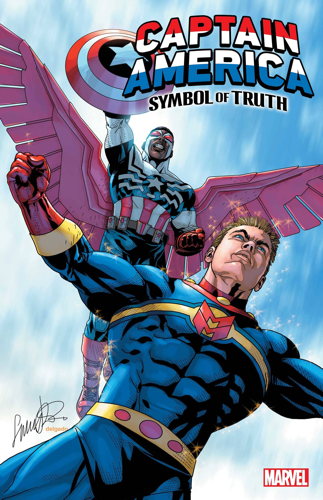
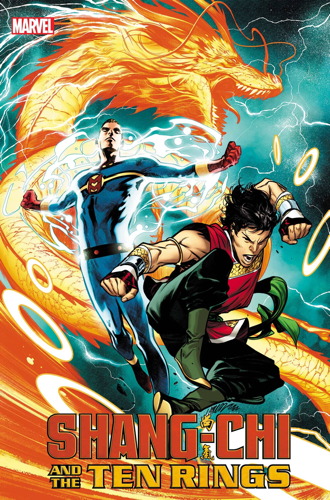
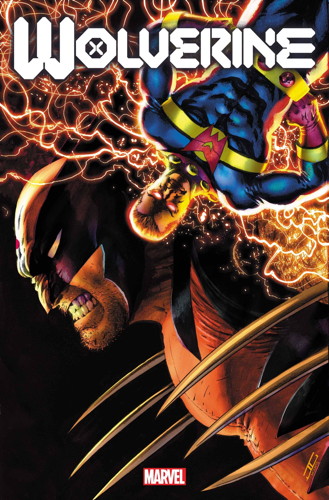
Which leads me to why I called you all here today. In honor of the 40th anniversary of the initial Moore/Garry Leach revival of the character, pairing ol’ MM with a variety of superheroes on variant covers of their titles. I know, I know, I’ve said in the past that I hate these misleading cover images featuring (sometimes) the stars of the book with other folks who don’t appear inside. But I am weak, and have decided that I need one of each of these. “But Mike,” you ask, “why not just download the images from Marvel or wherever instead of taking home even more comics,” and my reasoned response to you is “SHUT UP, JUST SHUT UP.”

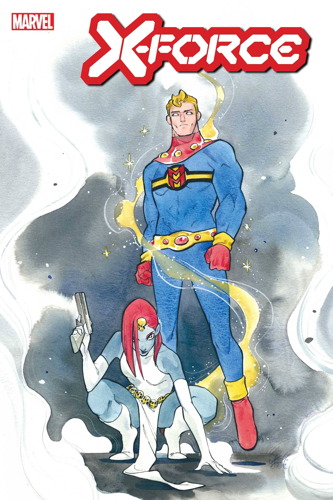
Anyway, here are a few of those images…I’m quite taken the X-Force one:

And this Captain America one is nice and cheery:

This one is quite busy:

And…I don’t know, your guess is as good as mine:

These are just a few of the many MM variants that are heading our way, and at least a couple make me wish we’re getting actual team-up stories inside (“Miracleman and Sam Wilson go out for a nice flight around the city.” “Wolverine finds himself with a tiny Miracleman lodged in the side of his head.”) but I guess that’ll have to wait ’til we get whatever was teased with that Timeless comic.

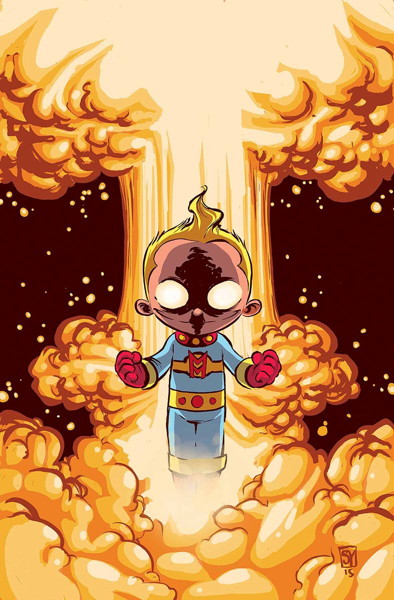
While finding these images, I did spot an old solicitation for the Miracleman: The Silver Age #3 from early 2016, which was going to feature at long last the new Neil Gaiman/Buckingham chapters of the story they’d started way back when at Eclipse Comics. Well, apparently at the end of the year we’re finally getting those long-promised stories, no, honest, we mean it this time. Back in 2016, one of the covers promised for that #3 was a “Hip Hop variant,” which alas had no art available with the solicit, but there was this Skottie Young cover that I hope gets offered again:


Once Gaiman/Buckingam finish their run, give Young the book. Or if the Miracleman story has come to its conclusion, have Young redraw the entire series. I’d read it, though the redone childbirth issue would be something else.

Also that “Yogurt Churn” panel makes me feel nauseated.

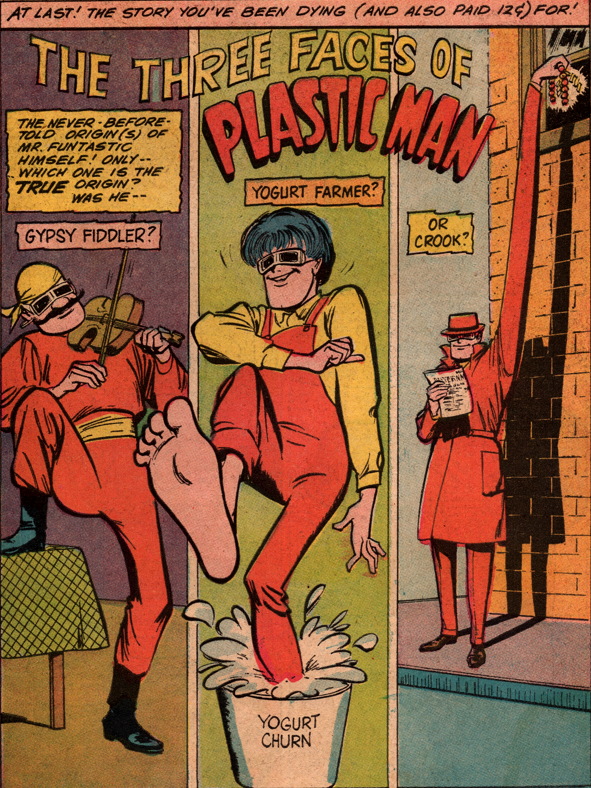
So I was just paging through this copy of Plastic Man #2 (1967) I picked up in a collection recently, and was struck a bit by this splash page:


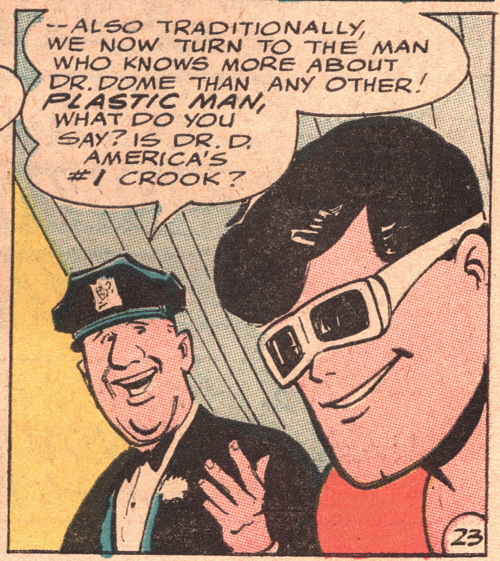
..and while the first thing I noticed was that I’m not a particular fan of this design for Plas’s face:


…there’s also the use of the term “Gypsy” about which we’re a little more sensitive in its usage nowadays. So, you know, it’s bit jarring to just come across its casual use here, a relic from a past time. Yes, I mean, they just didn’t know, but it’s still weird to modern eyes.

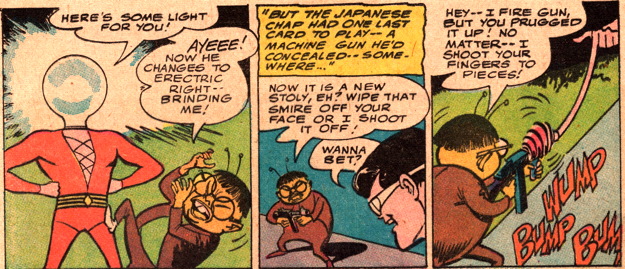
But hoo boy the folks doing this book should’ve known better than this:


Of course Asian stereotypes like this were still just fine and dandy in media for…well, way too long. This particular example is some real “Mickey Rooney in Breakfast at Tiffany’s” shit…you’re just sitting here, reading this so-so revival of Plastic Man in its overdone “wacky everything goes, look we’re hip too like Marvel, read us college students” style and suddenly, bonus racism. Sheesh.

And have I mentioned I don’t like how Plastic Man’s face looks?


No sir, I do not.


from Plastic Man #2 (January-February 1967) by Arnold Drake and Win Mortimer

It’s a lot to read, but at least click on the “Pariah” link for an old classic ProgRuin post from back when the site was good.

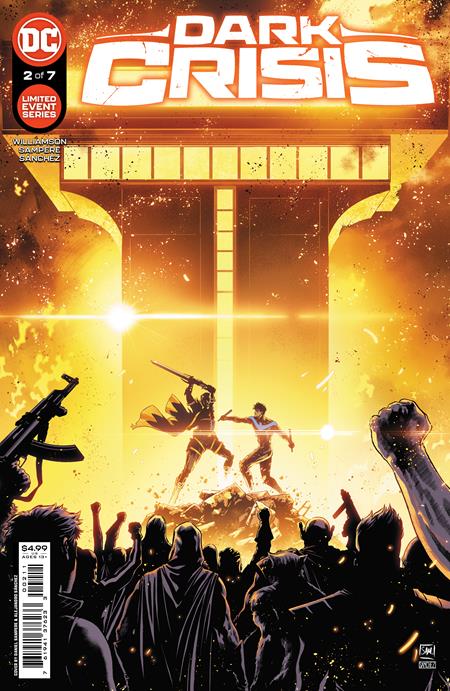
[SPOILERS for Dark Crisis]


I suppose I’ll have a more comprehensive post on this series when it’s over, if I have anything to say about it in the context of DC’s ongoing Crisiseseses. (I should note that I asked the Bits Boys over on this episode of the War Rocket Ajax podcast about whether or not DC should retire the word “Crisis” from their events…a hint as to my suggested replacement is in the episode’s title.)

Like many of DC’s events, we’re dipping back into that Crisis on Infinite Earths well, where the character of Pariah, introduced in that 30-year-old series, is back as the apparent antagonist of this current story. How this will eventually play out in the inevitable “make Crisis on Infinite Earths never not-was” conclusion, I don’t know yet, but maybe this will get it out of the publisher’s system and we can finally go back to crossover events where heroes are, I don’t know, saving the world or something and not just puppets in the latest metatextual rejiggerings of their fictional milieu.

But as someone who read said Crisis on Infinite Earths way back when, who experienced it as it should have been experienced, in real time, anticipating building for each monthly issue to see what new, irrevocable changes have been made to the DC Universe. Anyone coming to it after the fact misses that primary ingredient of the event, the expectation that what we’re seeing really is big, permanent change, and the combination of uneasiness and excitement at what was coming. The story of COIE itself is a sloppy mess, though beautifully drawn by George Perez, but the story is almost beside the point. The point is Big Events, Worlds Living, Worlds Dying, Things Never Being The Same, and the plot just drives you from one happening to the next one.

Ever since, I’ve had an ongoing interest in all these regular multiversal shenanigans. Sometimes it’s genuine interest in the story, too often it’s the rubbernecking at a car wreck, and overall it’s the continuing observation of figuring out new and even more convoluted ways to either undo COIE or route around its damage. So far I haven’t quite gleaned how that’s going to happen in Dark Crisis yet, though hints have been dropped. We’ll get to it when we get to it, I suppose.

The secondary purpose of the series is to establish the importance of the “next generation” of heroes in the DC Universe, following the “death” of the Justice League. Look, we all know the JLA ain’t dead, at least not all permanent-like, and that the “new generation” will never take over for the regular heroes. Superman will always be Clark Kent, Batman will always be Bruce Wayne, etc., barring a huge industry-wide shift away from superheroes like what happened in the late ’40s/early ’50s, providing a natural break to introduce new versions of old characters (though Supes, Bats, and Wonder Woman didn’t change over even then). At best Dark Crisis may support the ongoing viability of DC’s various new mostly-legacy characters, introducing them to the new readers via this crossover event. A primary goal of team-up books is to expose readers to other characters, and this latest event is no different.

As to the actual contents of the comic itself…it’s fine as these things go. Nicely drawn, an interesting subplot of the new Superman, Jon Kent, trying and not succeeding at forming a new Justice League, a knock-down, drag-out fight between Nightwing and Deathstroke, a good fake-out with Beast Boy. Oh, and Black Adam is featured in this series, too, because he’s Coming Soon to a Theater Near You, so why not. Actually, I sort of like Adam’s new status as Adversarial Sometimes-Ally, which is more interesting than yet another Pure Evil Guy, which we’ve been getting for a while. And two members of the Justice League who did not “die,” Green Lantern and the Flash, have important roles to play as well (particularly with GL in #2), so by and large I’ve liked these first couple of issues. There’s a lot happening, it’s got that COIE tie-in that I’m both tired of and compelled by, and it looks nice. Pretty much what I want from a dopey superhero comic.

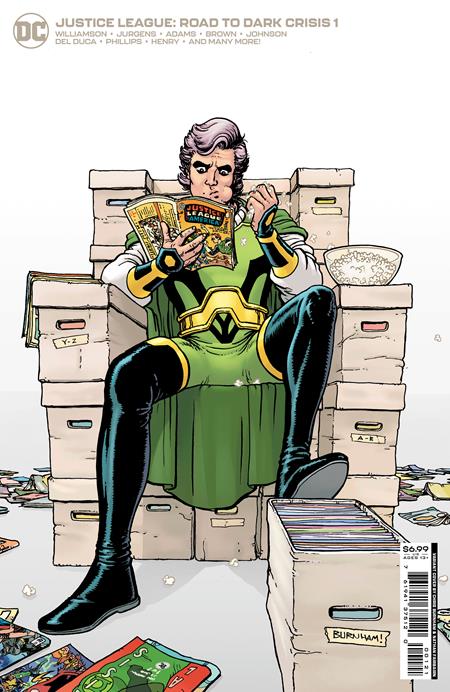
Also I wanted to note that I really liked this variant cover for Justice League: Road to Dark Crisis #1:

I think DC just dropped a hint at the secret identity of Flaming Carrot.

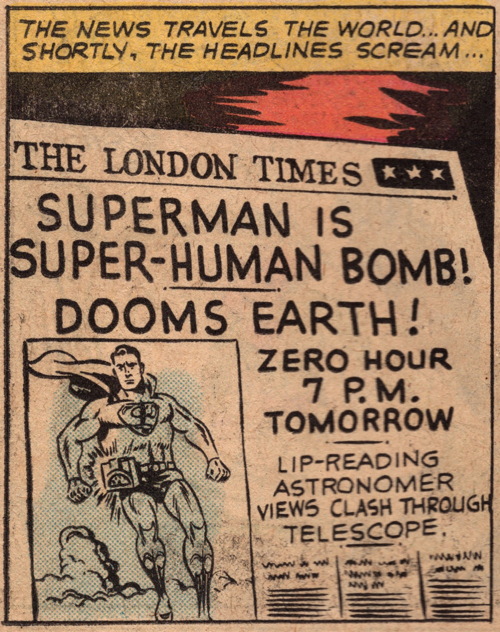
New career option just dropped.

LIP-READING ASTRONOMER


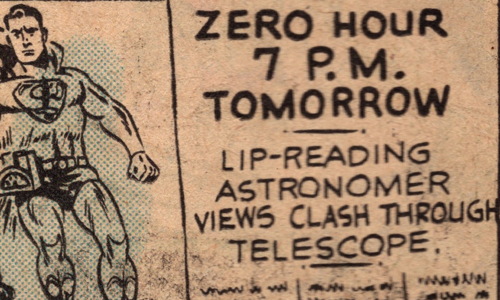
LIP-READING ASTRONOMER


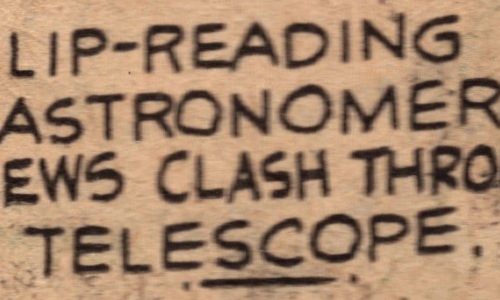
LIP-READING ASTRONOMER


from DC Special #17 (October-November 1975), reprinting Action Comics #342 (October 1966) by Jim Shooter and Wayne Boring

This is a terrible Fourth of July post.

So I was looking at one of those “here are the hot comics!” apps that some collectors are using in place of t heir own want lists, because I’m trying to keep on top of when some comic is dubbed by the investment gods as The New Thing and I can gird myself for the onslaught of phone calls and emails from folks all asking for the same item.

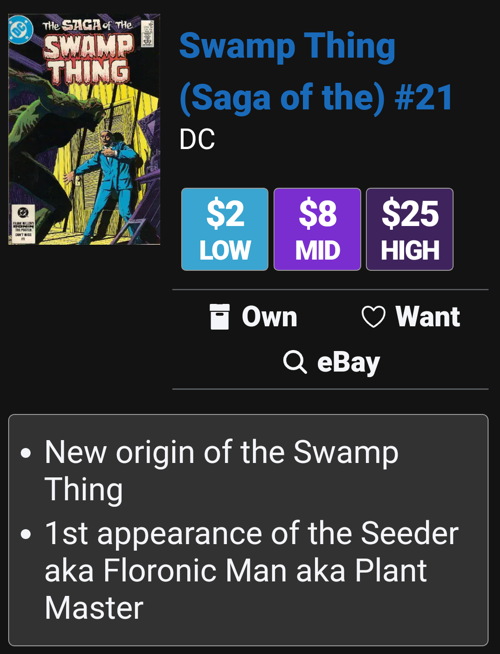
At any rate, on a whim, I looked at the various Swamp Thing entries, as I seemed to recall some discrepancy or ‘nother the last time I looked. And yup, here it is, in the listing for Saga of the Swamp Thing #21 (1984):


The “new origin” bit is correct, but the first appearance notation is way off. (And gotta be honest, totally forgot about the New 52 “Seeder” incarnation of the character, which is fine because I bet he won’t be called that the next we see him, if ever.)

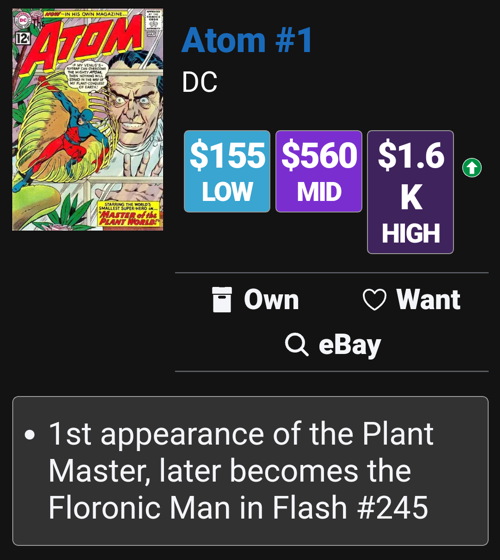
Anyhoo, Jason Woodrue, the Plant Master, first popped up as an Atom villain in the first issue of the diminutive hero’s own series in 1962. There he is on the cover in the selfsame hot comics app that listed Saga of the Swamp Thing #21 as his debut:


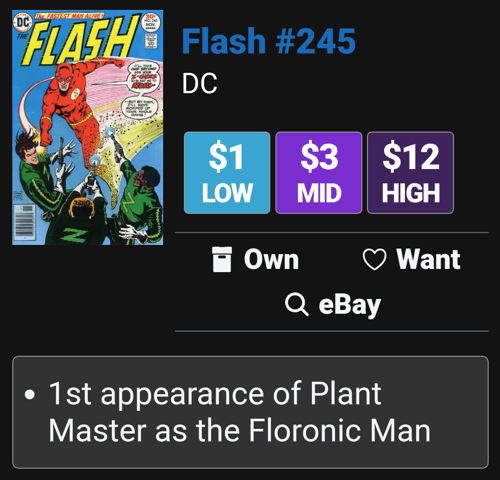
And then I thought “oh, well, maybe they mean the first time he was referred to as the Floronic Man, or the first time he looked all planty.” And nope, I knew neither of those were the case. I mean, it says right there in the Atom #1 listing…he transformed from the normal human appearance into his plant form in Flash #245 (1976). Here’s the app’s entry for that comic:


…which is the form in which I first encountered the character, in Justice League of America #195 (1981):


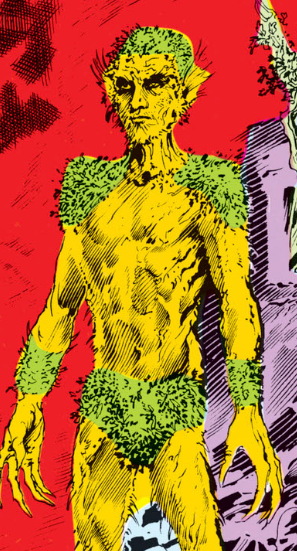
And then there was the Steve Bissette/John Totleben redesign of the character, first appearing in that Saga of the Swamp Thing #21, and as pictured here from #24:


Unless that’s what they meant by “first appearance,” the first time this particular design of the character appeared, I’m gonna say that app’s entry for Saga of That There Swamp Thang #21 is “human error” and needs to be corrected. Though I wonder if someone out there heavily dependent on the app has their copy of #21 marked with a big “FIRST APPEARANCE OF THE FLORONIC MAN!” tag.

Actually, don’t need to wonder…hello “Top Rated Plus” eBay seller with this listing:


The desperate quest to establish “first appearances” for maximum collectability can be a weird and wild one, leading to contradictory and erroneous information getting out there. Thus, the moral of the story is…TRUST NO ONE. Except me, your pal Mike.

Oh, and I saw this, too, in the entry for Saga of the Swamp Thing #25:


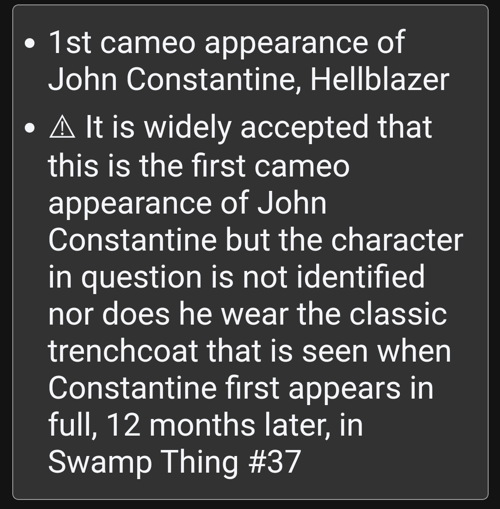
Augh, don’t get me started (because I already did start back in 2004 in this link-rotted post). And even the app in the entry for #37 says


Hoo boy.

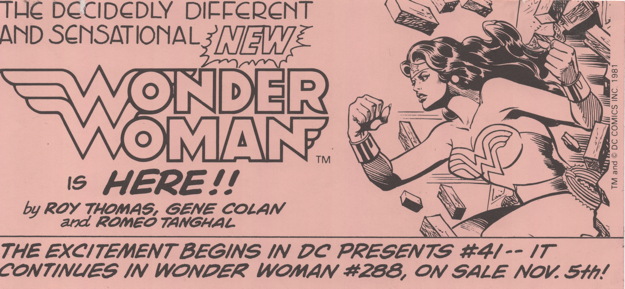
“Decidedly Different.”

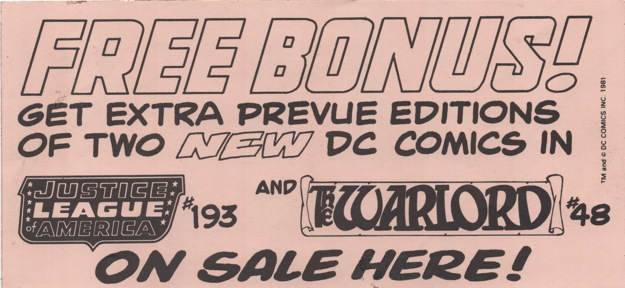
A couple of DC comic promotional stickers, sent out for retail use in 1981:

Seemed awfully…well, permanent if used as intended, particularly given the small timeframe the items advertised had. Once Justice League of America #194 was on the stands, the poor retailer had to scrape this sticker off whatever surface she’d pasted it to. Unless a new sticker was just placed over the old, or the sticker was taped up and the adhesive back was eshewed entirely.

Anyway, these made it unused and unstickered, for forty years. Let us applaud their endurance.

And also carry stacks and stacks of All-Star Batman and Robin the Boy Wonder.

Twitter pal jd asks the following not-easy-to-answer question:

“…Why do some comic shops succeed and some fail? What are the major factors that go into longevity?”

Egads. Where do I start? Where do I end? Where do I go in-between?

The barest minimum answer I can give to “why some succeed and some fail” is “the businesses that make enough money to pay expenses and provide a living for the owner/employees succeed, and the ones that don’t fail” which, of course, applies to pretty much any retail business you can think of. But what is it specific to comics that feeds the rise and/or falls of those stores?

In slightly less general terms, I think a long-standing store should have

1. Knowledgeable, friendly employees

2. A wide and relatively deep range of stock

3. Some measure of cleanliness

…which again isn’t exactly comic-specific, but I think these are the positive qualities for a comic store to be around more than a year or two.

Those are just the things within the control of the store itself. That doesn’t take into account things like your potential customer base, the quality and proximity of competition, the overall health of the comics business, etc.

This is immensely simplified. Factors such as “expanding too much just as the market downturns” can take out a shop. “Being in a bad location,” or “being a good store but being outcompeted,” or “having the building you’re in get bought by a new owner who promptly prices you out by raising the rent too high,” “the partners who own the store got into a fistfight and now that store’s shut down,” “owner dropped dead” — could be anything, really.

I know during the ’90s boom a lot of shops opened up and I’m sure many of the proprietors smelled some easy funnybook money and dealt heavily in “hot” books. Once the fad died and the market crashed, all those “hot” comic customers dried up and without any longterm committed clientele, many of those shops vanished.

And this isn’t even touching really on distributors suddenly going under, taking retailer money and product with them, leaving stores in the lurch. Which is what has me wondering if we’ll see a return of that particular problem in this new no-longer-beholden-to-Diamond-Comics direct market world.

Ultimately, all I can do is control my store and do what I can to keep it vital. I’m not the biggest store around, or the fanciest, or the most monied, but it’s operating at a level I’m comfortable with, one that pays the bills and affords me a living and the occasional eye injection, and is (usually) stress-free, despite my distributors’ best efforts. But I try to be helpful and friendly, try to stock what I can (and am willing to reorder what I don’t have), and have fair pricing on my back issues.

Now if someone were to open a big ol’ comics emporium right across the street from me, I might take a hit, but I’d like to think I’d engendered enough loyalty to keep at least some of my customer base. I mean, I’ve been doing comics retail for three and a half decades now…it’s too late to go find a real job.

Oh oh oh, I forgot one…a store should have some kind of internet presence. Without going into too much detail, there was a shop I knew about that, when I went to look ’em up online, the only thing I found was a mention of their shop on someone else’s Instagram. Anyway, that shop wasn’t around too long.

• • •

As long as I’m taking Twitter queries, here’s one from a couple of weeks back from Joseph Z:

“What is the most reprinted comics story of all time? Story, not issue. My guess would be Spidey’s first appearance from [Amazing Fantasy] #15.”

That’s certainly a contender, and I’m presuming we’re not talking print runs but rather “most individual reprints of the same story in different comics or trade paperbacks.” I feel like the first Batman from Detective Comics #27 may be a small contender, though the look of the story hasn’t aged well and likely wouldn’t appeal to most modern audiences.

Now a while back I listed off the various House of Secrets #92s I had. I admittedly had too many and have more on the way. Thus, that was 8 reprints of the original Swamp Thing story…with more acquired since this, and more about to arrive. So…a dozen or so now, 15 maybe?

I’m hard pressed to think of an individual story that comes close (and also it’s super past my bedtime right now)..if you’ve got an idea, throw it into the comments and we can do a little digging. It’s probably going to end up being something at Disney or Dell, isn’t it.

Have to admit the “Trivial Pursuit” emblem threw me.


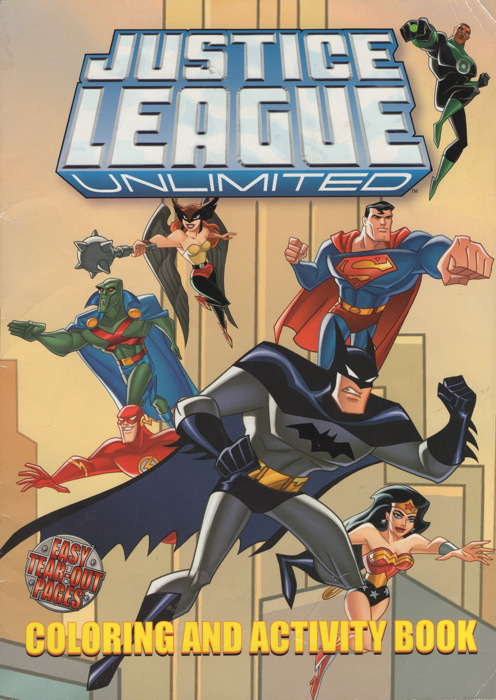
So one of these ended up in my hands recently, a Justice League Unlimited Coloring and Activity Book with “Easy Tear Out Pages,” dating from 2008. The pages had not been colored, activitied in, or easily torn out, so I had a complete item here, though the cover had some moderate surface wear. The pages inside were just like new.

But the puzzles and such. Hoo boy. Now I realize I am (ahem) a few decades past the recommended age groups for this book, so going through each puzzle and proclaiming “HAH! You call this challenging?” is desperately missing the point. That’s not going to stop me from saying that about a couple of the entries in this volume, however, so let me push aside these crying pencil-wielding children begging to be entertaining by Justice League-themed puzzles and let me get started.

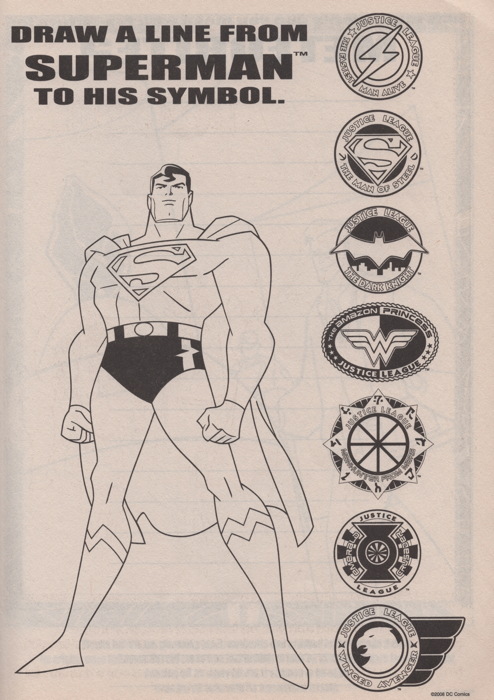
The puzzles themselves range in difficulty, sometimes even really simple activities like “draw a line from Superman to his symbol” here:


…which looks incredibly easy on the surface (Superman’s wearing his symbol right there, making it a cinch to spot in the column of choices) but this could very well be the first time a kid encountered the word “symbol.” If s/he doesn’t know it, they should pick it up from context I’d imagine, and plus you get a good look at other character’s symbols as well. Even if those overly-fancy designs I don’t think I’ve seen elsewhere.

(EDIT: I originally used “emblem” instead of “symbol” in the previous lines…I have no idea how that happened.)

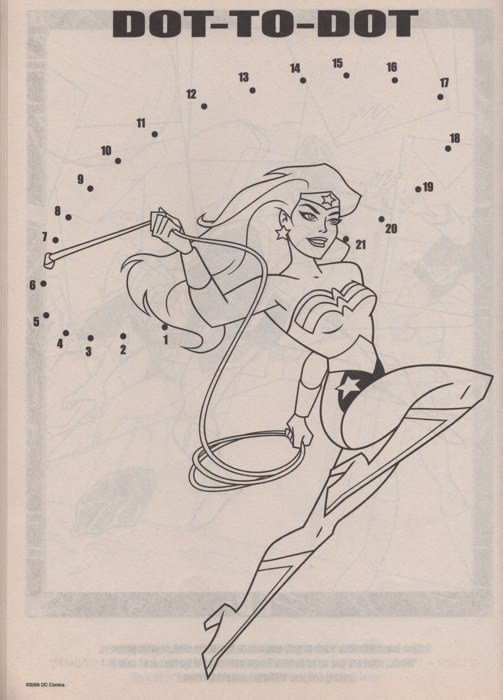
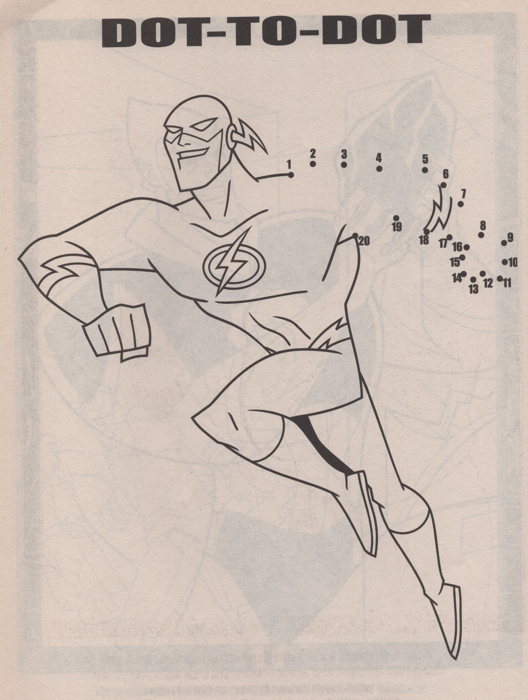
Honestly, though, this connect the dots page:


I mean, sure, it’s remedial, it’s for really young kids just learning about things like “connect the dots,” and how to draw a line from numbered point to numbered point in order. But c’mon. You first saw that and you went “what, seriously?” I’m not expecting them to throw in a puzzle where you connect all the dots and end up with Michelangelo’s “The Last Judgement,” but maybe a little complication beyond “draw an oval” might have been nice.

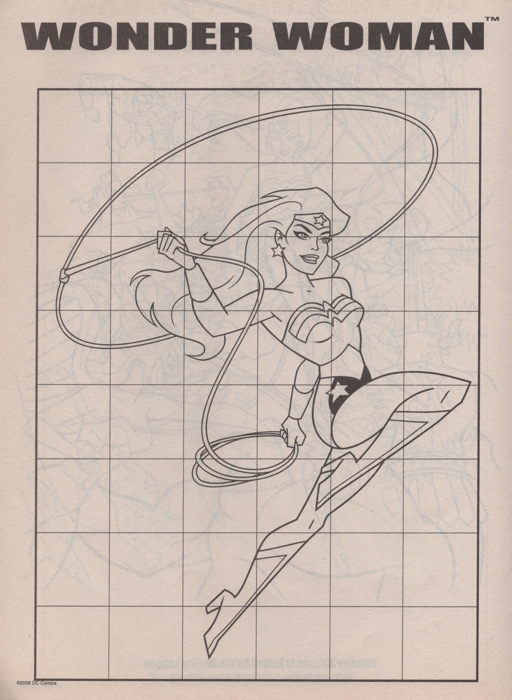
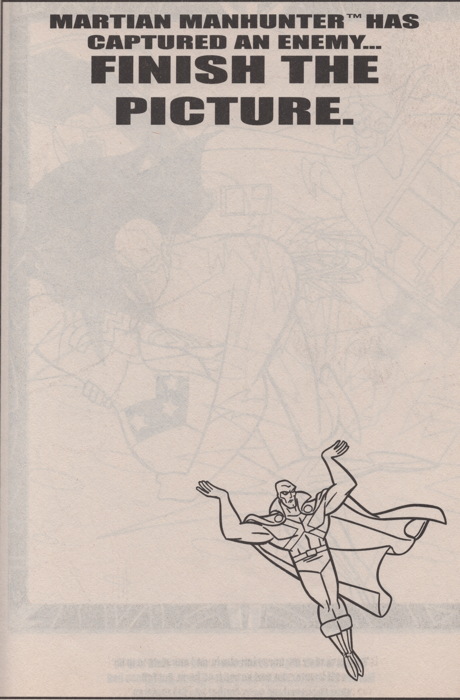
Just a few pages earlier, they put in a spoiler for the later dots puzzle:


This is one of those “copy this stock image into the blank boxes on the opposite page” thingies, and those I remember liking as a young Mikester. Copying over the contents of each box into the corresponding box until you ended up with a vague approximation of the original picture was always kind of neat, and certainly more fun than that “draw a circle” business.

The Flash connect-the-dots is kind of funny as well:


“I wonder what this arm-shaped series of dots and numbers in place of the Flash’s arm is going to be?” [LATER] “Wait, it’s his arm? Frankly, I’m amazed.”

My favorite pages in here are the “draw in your own pictures” pages, where they give you a small prompt (pic on Wonder Woman in the corner (a different pic from the previous ones, surprisingly), with the caption asking “What is Wonder Woman trying to lasso?” And then you, the kid reading this and armed with pen, ink, crayons, whathaveyou, took at a stab at it.

Evocative, no? Well, I gave it a go:


Yes, it is beautiful, thank you for noticing.

Please don’t leave a comment under the name “Big Poopypants.”

A couple of questions from last Friday’s posting:

Ray Cornwall comes in from the sea to ask

“How many issues of Cerebus from 1-25 do you have? I was heavy into Cerebus for a long time. I’ve kind of walked away from Sim a bit, although I do have the Alex Raymond book here to read at some point…”

Yeah, I have that same book, too, on the ol’ “to read” pile. Hey, did I ever tell you guys about getting a phone call from Dave Sim? He was calling comic shops to plan in-person visits to drum up interest in that very book (The Strange Death of Alex Raymond, it’s called)…he started to introduce himself and what he’s done, and I was like “I’ve read all of Cerebus, don’t worry, I familiar with you!” which amused him. When he started describing the book to me, I asked “is this including any of the material from glamourpuss (which featured strips about cartoonists including Raymond), so I also surprised him with the fact that I’d read all of that series, too.

Anyway, we set a date for him to drop by, and then COVID happened and alas, it never came to pass. Which is too bad, because I probably would have asked him to sign the issue of the Howard the Duck magazine he’d worked on. Ah, well. I still ordered copies of the book, and yes, I sold a copy or two.

But back to your question. A couple of years back, I decided that, despite having the first 25 issues of Cerebus reprinted in the Swords of Cerebus trade paperbacks (now themselves supplanted by the first Cerebus “phone book,” containing all those stories*), I wanted to see if I could track down the individual issues. My posts leading me into looking at eBay and picking up some of those comics can be found here and here.

I’ve probably bought about…8 or 9 issues of those pre-#26 Cerebuses so far, though I haven’t picked any up in a while. I also have issues #1 and #2 in deluxe Kickstartered reprints, which I think are probably going to have to do unless genuine copies slip through the front door of my shop someday. (I write about that #1 here.)

I really need to get my comics at home in some kind of order before I start going on the back issue trail, fillin’ them holes. I’ve said that before and I never seem to find the time to do it. Dealing with comics all day at work usually means not wanting to deal with them at home, so there you go, I guess. But I would like to have a complete Cerebus run in comic format (even with a couple of reprint ringers) someday. The aesthetics of the covers just tickle something in my brain.

• • •

Daniel asks some very good questions, for which I don’t have very good answers

“RE: Tim Sale, did you ever get a sense of what your customers thought of his work? His art was so wonky and esoteric that it always struck me odd that he became so popular with the mainstream. He was never a natural draftsman, but he had such an exceptional design sense that he was able to more than compensate for whatever he lacked as a traditional figurative artist. A real talent. He’ll be missed.

“I guess that’s a broader question: When accounting for the era in which each was at his/her creative peak, are stylized, design-centric cartoonists (Sale, Simonson, Kirby, Mignola) more popular with mainstream customers than traditional, naturalistic draftsmen like Neal Adams, George Perez, John Byrne or any of their imitators? Or are consumers more conservative and literal in their tastes (not that that’s a good thing or a bad thing)?”

Like I said, good questions, and unfortunately I don’t have any real good answers for you. To respond in very, very general terms, if I received customer pushback it would be against comics that looked “weird,” and if I received specific customer approval for comics art, it would be for those drawn in a more typical, representative manner. (Talkin’ superhero comics here, in case that needs to be made explicit.)

This always varied by customer, of course. Most customers seemed to enjoy Sale’s work…unusual it may have been by typcial Marvel/DC standards, but being the artist on a very popular Batman storyline (“The Long Halloween,” natch) helped “sell” him and his style to those members of the comic-buying public who may have been on the fence about that work. But there were also customers who rejected the art as being “too cartoony” (you know the drill, he’s not the only one).

If I had to hazard a guess, there’s more tolerance for the wide variety of styles available on superhero books than one would expect. And for every comic art style out there, there’s always someone who’s gonna love it and someone who’s gonna hate it. And what I consider “good” won’t be someone else’s taste…had a customer once come in and say “I’m looking for comics with really great art, like [x]” where [x] was, in my mind, a pretty terrible artist. Like, “blind people can tell the art is bad” terrible. But I choked down my bile and proceeded to find comics illustrated in a similar vein.

For the general non-usually-reading-comics public, I maybe have a slight sense that comics that don’t look like what they think comics normally look like may appeal slightly more? The Long Halloween and Superman: For All Seasons didn’t look like normal superhero comics. In fact, a person new to comics might look at it and say “ooh, this is pretty” in a way they wouldn’t if they looked at, I don’t know, a comic filled with fights and cramped panels and whatnot.

But on the other hand some newbies looking for comics want a comic book that looks like what they think it should look like, and the more Spider-Man punching the Rhino in this issue, the better.

So Daniel, I may need to think about this some more. This isn’t much of an answer, but I hope it gets across the ambiguity and difficulty of really trying to answer it.

But it does get me to thinking…who’s the one superhero comic book artist everyone can agree on. I mean, agree is good. I’m guessing George Perez, or Jose Luis Garcia-Lopez. Who doesn’t love George or Jose? Big poopypants, that’s who.


* I don’t believe the phone book contains the new “bonus” material that was included in the Swords volumes.