That unofficial Aquaman/Sub-Mariner crossover probably is left out too.

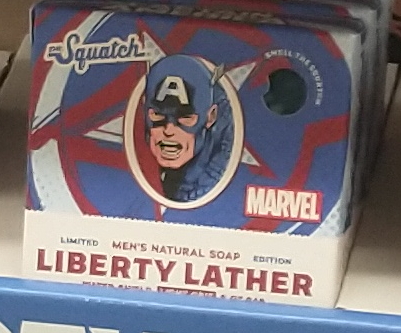
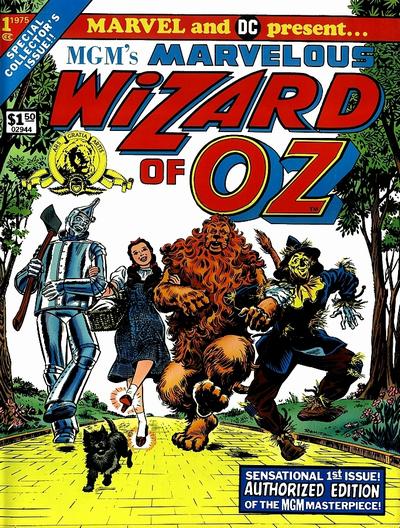
Big news is that Marvel and DC are bringing their intercompany crossovers back into print…well, most of them, anyway, as the one pictured above obviously is out, and JLA/Avengers I suspect will come along eventually. Probably too soon after the last reprinting, maybe, but I suspect the demand for that book goosed Marvel and DC into finally realizing “oh hey we’re leaving money on the table.”

Everything else is being reprinted in two of the Omnibus editions, those large, thick, relatively ungainly hardcovers. One will have all the standalone crossovers, including the O.G. (am I using that right?) Superman/Spider-Man team-ups, Batman/Hulk, and X-Men/Teen Titans, along with all the one-shots that popped up in the 1990s. The second volume will include the Marvel Vs. DC mini-series, the Amalgam one-shots (featuring “merged” versions of Marvel and DC characters, like Wolverine and Batman being combined into “Dark Claw”) and the two Access mini-series (starring the character who can cross between the Marvel and DC universes).

On one hand, from a personal perspective, I wouldn’t mind having these for myself, simply because I gave up nearly all of these to the shop when I opened up lo these many years ago. And having them in this larger format would certainly be easier on the eyes…I do still have my copy of the original trade paperback reprinting the 1970s/1980s crossovers, and having those treasury edition-sized comics squeezed down to regular comic dimensions is not so easy on the peepers any more.

On the other hand, this is a terrible way to rerelease everything. Will the small number of sales at the much higher omnibus price point equal out to selling more copies at a cheaper price point in a more standard comic book format? I could probably sell tons of most of these crossover comics as, say, individual $7.99 facsimile editions. Or even $9.99 ones, versus the tiny handful of omnibus editions that, by the way, generally only sell at discounted prices. Even a series of trade paperbacks gathering all these together would be preferable.

On the third hand, I suppose this is easier on the publishers, not worrying about some trades selling better because they had the choice team-ups, and letting other trades fall out of print right away. Or having to go through the trouble of soliciting for individual reprints. The omnibus lets ’em say “here’s everything in two books, you want that Steve Rude Hulk/Superman, you gotta take that Punisher/Azrael-Batman crossover too.”

I am sort of curious about how they’re going to arrange the comics in the volume with Marvel Vs. DC and Amalgam. The first wave of those Amalgam comics take place, and were released, between a couple of issues of the Marvel Vs. DC mini. I wonder if they’ll keep ’em that way in the book.

Anyway, if you want these, order ’em now. Like the ROM and Micronauts omnibuses, they’ll likely not be in print for very long. Again, they’ll almost certainly be discounted upon release, but once they’re out of print and “collectible” — urgh.

As someone who likes Ralph Snart, I would have appreciated that.

I’ve written before about my nostalgic perusal of the magazine racks whilst shopping at the grocery store. I still do it, every Sunday evening (my usual hunting-and-gathering time) though the selection doesn’t change a whole lot between visits, and usually it’s only publications like this:


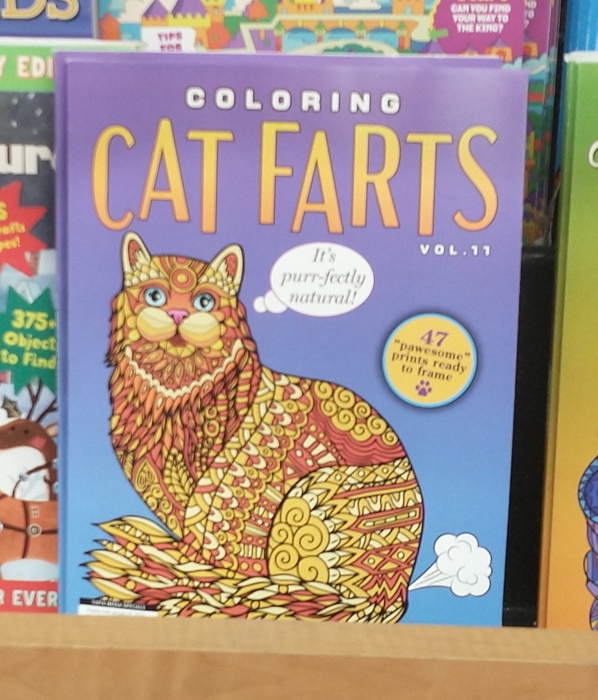
I mean, no offense to anyone out there into coloring cat farts, ready to frame, and I know there must be a few of you since this is Volume Freakin’ Eleven, but I just don’t swing that way, friends.

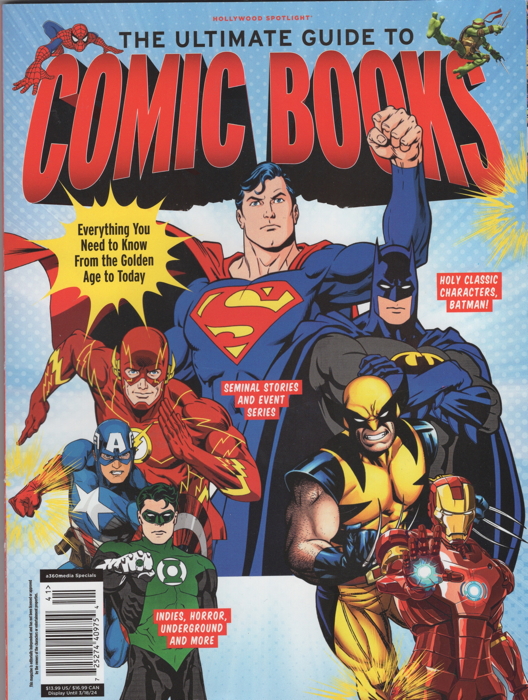
But every once in a while I spot something that at least gets me to pick it up and flip through it as I decide whether or not to take it home, like some Lord of the Rings mag that’s been on the rack there for a while. But this past Sunday I spotted this (one of the two copies left, so I’m presuming it must have sold at least a few copies) and had to get it:


At last, I have the Ultimate Guide. Sorry Scott McCloud, this is what will finally help me understand comics.

Okay, I make fun, but I honestly haven’t done much more than skim through it so far and it looks…you know, at least surface level sufficient in covering comic book history. It’s certainly not going to be so granular as to explain why Bob Kane sucks or how come the whole “Quack-Fu” thing in the Howard the Duck comic was a multi-layered parody/social commentary versus just another duck pun in the film, but for someone just dipping their toes in, it may whet their appetite.

The tiny heading at the top of the cover reads “Hollywood Spotlight,” a brand name that’s also brought you similar mags about the Transformers and the A-Team and various Marvel movies, so that’s the impetus for this publication. It’s for the reader who’s seen the superhero films and maybe wants to learn more about the source material, which, you know, isn’t a bad thing. The timing maybe is a little bad, given the superhero movie market is, if not dying, then at least stumbling around a bit coughing blood spittle into its hands (I mean, we’ll see how Deadpool & Wolverine does), but there’s always someone discovering these characters via the films that do exist and this mag might make a good primer.

That said, like I noted above I haven’t read it yet. The Golden Age and the Silver Age of comics each get about three or four pages apiece, I see an article about horror comics and Wertham’s Seduction of the Innocent and the Comics Code, a thing about event comics like Crisis on Infinite Earths and Secret Wars, and so on. The focus is of course on Marvel and DC (with a handful of movie stills to remind us of the final evolved form of comic books, natch), though there a feature on indie comics, a sidebar about Maus, and, well, back to DC with Watchmen and Dark Knight. Can’t wait to read what they say about Alan Moore.

Hey, here’s a bit about Gail Simone and “Women in Refrigerators” which is not something I expected in here. And of particular interest to me is this article about the ’90s market crash, ooh yeah feed that into my eyeballs. “Origin of Image Comics” is in here too, which I always said was “Marvel artists leave Marvel to create their own Marvel,” but it looks like this article goes a little deeper into that.

It all wraps up with “How Comics Took Over Hollywood,” likely without the addendum that, um, not so much anymore, but overall it looks like a very general overall approach to comics history. I don’t know what they’ve got wrong yet, and they’re covering a lot of ground for a ~100 page magazine, so certainly Your Favorite Topics undoubtedly got short shrift (“no 10-page examination of Ralph Snart, c’mon“). But it appears to do what it’s meant to do, give someone who knows all these “Holy Classic Characters, Batman!” from their media adaptations at least somewhat of an idea of where it all came from. Hopefully that’ll be enough to get them to at least look deeper into the parts that only get passing mentions.

Oh, and I’m afraid to say one of the first full page images in the mag is of Bob Kane posing with a Batman painting I’m sure he claimed he painted. SPOILER: he didn’t.

The one with the gannet.


Well, this is certainly something.

I know, I’m a little late to this polybag party, but boy howdy what a weirdly pandering idea that’s only going to contribute to the idea that kids aren’t welcome to modern superhero comics. Which is okay, I guess, because kids got their own stuff goin’ on, and aren’t likely to be interested in Marvels outside of Miles Morales and Deadpool anyway.

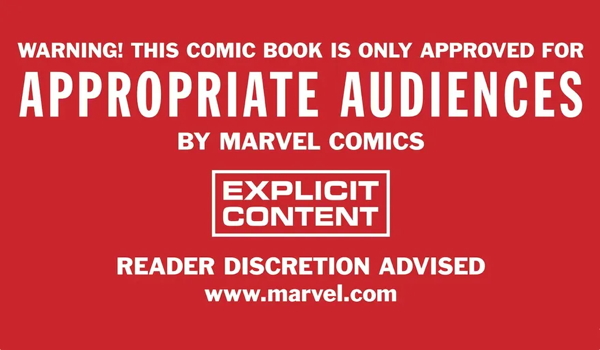
Basically, Marvel has announced that they’ll be releasing a comic, Blood Hunt #1, where apparently you won’t have to hunt far for that blood as a “Mature Readers” version of the title with all the gore and violence you crave will be presented in an unexpurgated fashion. Meanwhile, they’ll also produce a censored “general audiences” version of the same book that won’t sell. The naughty version, naturally selling for a buck more than its bowdlerized counterpart, will be sealed in a polybag for that extra attention from parents who already think superhero comics are all too violent for their kids anyway.

Perhaps I sound a little annoyed at this.

Now chances are pretty good this series will go over like a thing that doesn’t go over very well, and the whole “pay that extra buck, see what the butler saw” gimmick will drop off the face of the direct market. Or everyone will decide “I don’t want the stupid version made for babies, gimme that explicit content” and it’ll sell like gangbusters and suddenly every Marvel comic has a polybag. (Then Marvel can push the “pure and innocent” unbagged variants and charge more for those.)

I was put in mind of Marvel’s publishing…let’s say “strategy” in regards to their initial attempt at doing Miracleman. In this post (and please excuse my optimism that new stories were “close”), I noted that they were polybagging Miracleman issues despite the content usually not warranting it. My assumption was that 1) it was a mature readers book under the Marvel logo, and thus should be hidden from theoretically innocent eyes, and 2) by polybagging every issue, when they got to the “birth” issue it wouldn’t stand out as the only polybagged one.

And also there’s 3) the hoped-for sales boost by providing the lure of the forbidden by sealing the contents away, which didn’t work and sales continued to plummet because nobody cared.

There is a chance this may not be the case with Marvel books, though, particularly ones set in the mainstream Marvel universe, under the Marvel banner, in a standard comic book format, and not shoved under some distancing mature-reader label like “MAX” or “Epic” or “Star.” (Yes, Star, that Heathcliff was a freak.)

As I said above, the main problem with this is the perception from parents in my shop that all superhero comics are “violent” and “gory.” I always try to tell them “there are plenty of kid-friendly superhero books.” But seeing this on the stands…well, okay, it’s just the one so far, but it’ll be more of a problem once Marvel starts cranking out more of them. Or, to be honest, folks tend to home right in on the very thing you’d prefer they didn’t notice, trust me on this. But this isn’t going to help dissuade the notion that superhero comics are scary and gross. (I mean, sure, some are, but not all of them!)

Also I’m being reminded of another time publishers tried this sort of thing, when Aircel offered “adults only” and “general audiences” versions of Barry Blair’s Leather and Lace. As I said there, given the overall look ‘n’ feel of even the supposed general audiences version, there was no way in hell I was going to sell that to kids. I’m hoping history doesn’t repeat itself with this newest iteration of the gimmick.

Not a sponsor, but could be.


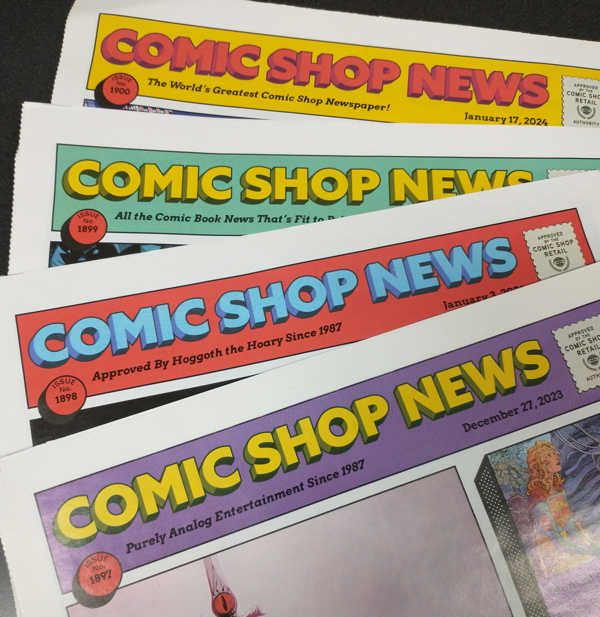
So I got a couple of promotional emails for Comic Shop News, the freebie newspaper that’s been running for decades and given away in comic shops. The emails’ focus was on pushing a multi-part preview for a forthcoming comic and making sure we all had enough on hand…

…but the surprising part was the information that Comic Shop News (CSN here on) was only carried in 10% of comic shops. Or “top 10% of comic shops” as they put it, thank you, I’ll take the compliment.

That number honestly shocks me. I mean, I know personally of shops that don’t carry it, but that always felt to me like the exception, not the apparent rule. I’ve always carried it at my shop (except for the occasional time when Diamond forgets to pack it into my boxes, or somehow manage to send me a single copy of CSN instead of the bundle of 90 or 100, bafflingly). And my previous place of employment always carried it as well, from the very beginning. Somewhere in the home archives, I have a #1…and at that same, you can see the pic of #0(!) which was sent to retailers to sell ads.

Having a print newsletter like this may seem archaic in this modern age of beepity-booping and looking everything up online, and may be part of the reason why so many stores stopped carrying it, or never carried it at all. This reticence seems a little strange, particularly since these shops’ clientele should be predisposed toward consuming print media anyway, so why would they resist a free newsletter?

But the fact of the matter is…not everyone is living online constantly. And if they are online, they aren’t necessarily looking at comic news sites (such as they are). There are some customers for whom “walking into the shop and looking at the rack” is their primary comics news source. Having a free newsletter they can pick up, take home and read seems to be appreciated by all my customers, regardless of how online they may be.

It’s a good sales tool, in that I have a number of folks who’ll walk in with a copy of the paper, folded and marked up with notes, or maybe clippings of specific ads/articles, asking after ordering the items therein. Plus it’s just a good customer relations tool…people like free things. Even those who are just wandering through the store trying to figure out what all this stuff is will ask if they can take a copy, and, you know, sure! Maybe they’ll look through it and, even if they don’t find something they want to buy, they’ll at least get an idea that this is a real business with a whole world of activity that they’d not been exposed to before.

What I enjoy is the occasion person who asks if I print up these CSNs myself. Geez louise, the very thought of putting together one of these every week on top of running the shop just makes me exhausted.

Anyway, I feel like carrying CSN has more positive aspects than negative ones. I can understand if some shops don’t carry it because their budgets are just too tight and need to trim where they can (“do I spend the money on comics to sell, or one a giveaway telling customers what to buy?”). Or maybe they’re just carrying comics as a side thing. But a full-service shop should carry Comic Shop News as well, in my opinion.

• • •

Writer Nancy A. Collins (novelist and former Swamp Thing scribe) is facing some big medical bills, and could use a hand. If you can drop a few bucks in her GoFundMe, I’m sure she’d appreciate it.

The Final ’80s Countdown, Part Twenty-Six.

Here we are, at the next-to-last entry in the Final ’80s Countdown, as voted by YOU! And me, but the one I voted for will be the next and final entry in this series. However, I would have voted for many of the comics I’ve covered here, and this one was really, really close….

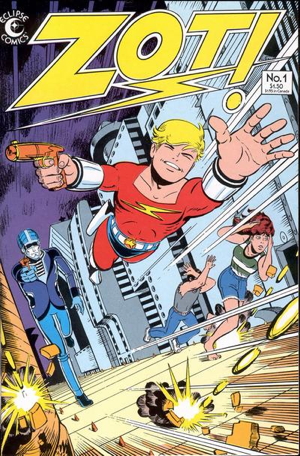
Zot! (Eclipse Comics 1984-1991)

Well, this will be a tricky entry since I spent a couple or three posts talking about Scott McCloud’s Zot! about a year ago. (Note: the third post mentioned that a fourth post was coming, regarding something I found in a Zot! letters page…and then I got distracted and didn’t cover that topic back then, and I can’t remember now what I found! So I’ll have to peruse my Zot!s and see if I can’t remind myself for yet another future post!)

Anyway, there’s probably going to be some minor duplication of information here, but I’ll see what I can do. For the uninitiated, Zot! is about a young lady in our world named Jenny, who is surprised by a teen gentleman in gravity boots who flies through a portal from his world. His world, by the way, is Earth of the far-flung future of 1965 (Jenny’s, our, Earth being in 1984 at the time). Zachary T. Paleozogt, AKA Zot, is a young hero of his near-utopian Buck Rogers-esque Earth, with its advanced science and space travel and other technological marvels…not to mention the occasional villain!

Jenny of course prefers Zot’s magical world to her own “real” imperfect world of crime and misery an’ such, and spends a lot of time there with Zot and his friends and family through most of the first half of the run (which had a year-and-a-half gap between issues 10 and 11). For the latter part of the series, Zot! has it’s run of “Earth Stories,” in which Zot is trapped on Jenny’s Earth and finds his optimistic point of view contrasted against the real world at large. This run of stories also focus on the various personalities and issues of Jenny’s friends, dealing sensitively with teen romance and homosexuality.

Notably, that aforementioned publishing gap resulted in a shift in presentation and tone for the series. The first ten issues were a generally light-hearted sci-fi adventure (though not without its serious emotional moments), all in color. Starting after the gap, with issue #11, the series goes entirely black and white, and the storytelling becomes more somber and introspective as well. Not that there isn’t still humor and adventure, but there’s a larger emphasis on the emotional worlds these characters inhabit, versus the two literal worlds that are the settings for these stories. Though as I cover in this post, some questions are raised (and never answered) about the actual nature of Zot’s Earth.

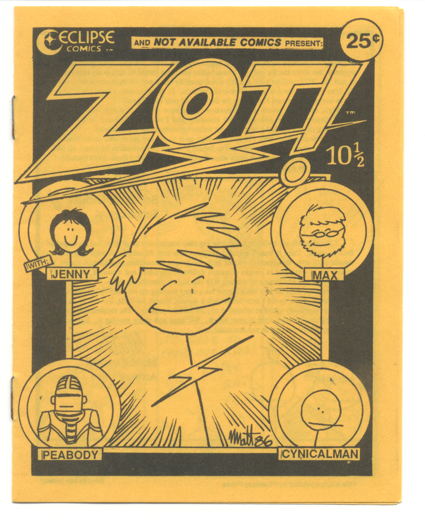
It should also be noted that there are a couple of special related issues published along the way, but not by McCloud! Between issue #10 and #11 was the nigh-infamous Zot! #10 1/2 by mini-comics genius Matt Feazell, as seen here scanned from my very own personal copy:


I’ve probably said here before (and told Mr. McCloud his own self) that this was the very first Zot! comic I’d ever read, and went back and bought the previous 10 before #11 came out.

In addition, there’s a Matt Feazell-created Adventures of Zot! #10 1/2 issue #14 1/2. And Feazell provides “10 1/2” Zot adventures as back-ups starting in #11.

The series eventually came to an end with #36, with the only follow-up being a webcomic McCloud created and serialized originally on a comic news/reviews site, and is now hosted at his own webpage. And that’s it for Zot!, a mostly self-contained story aside from those previously mentioned unanswered questions. It’s a wonderful piece of work, with beautiful cartooning supporting a story that mixes adventure, silliness, and real emotion in just the right proportions.

I covered in this post about the various reprints available for the series. You can check there (things haven’t changed since I wrote that), but in short: the black and white issues are mostly reprinted in a book called The Complete Black and White Collection which is currently available. Issues #19 and #20 are only represented by McCloud’s layouts, as the stories had been drawn by another artist.

The first ten color issues have appeared in an out-of-print single volume from the now-defunct Kitchen Sink, and may go for premium pricing. Feazell’s 10 1/2 mini-comic and issue #14 1/2 remain unreprinted to the best of my knowledge. It should be noted that single issues of the series are relatively inexpensive though it may take some tracking down. The Feazell issues may be a little harder to spot.

I feel like a Zot! omnibus collecting everything together would make for a handsome, if mildly cumbersome, package. At the very least, it would be nice to have the first 10 issues back in print as a necessary, I think, contrast to the back half of the series.

Zot! stands as one of the classic indies of the period, and well worth seeking out if you haven’t read it. McCloud may be more famous now for his Understanding Comics series of books, but I’ll always have a soft spot for Zot, Jenny, Butch, Dekko, 9-Jack-9, Woody, Terry, Uncle Max, and so many more.

You know what?

I need a small break, so I’m going to let today’s post slide and I’ll be back on Monday with some real content. Perhaps the penultimate entry in the Favorite ’80s Indie Title series? We shall see!

Be good out there, and I’ll see you in a couple of days.

How much sin must a man commit in a single lifetime to end up with two Return of Swamp Thing enamel pins?

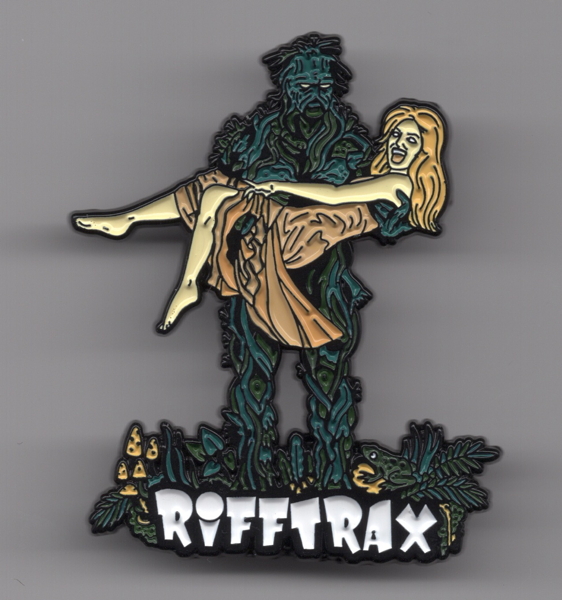
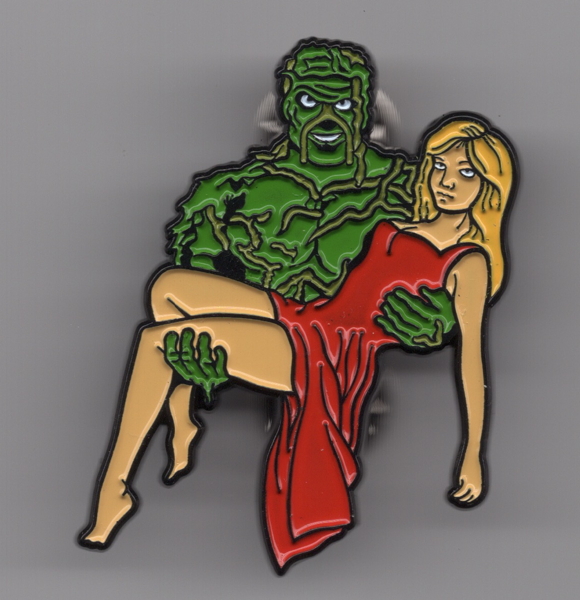
So a while back, I was a Kickstarter backer for the Rifftrax-ed version of the 1989 cinematic classic The Return of Swamp Thing, now currently available here. As part of my Kickstartering package, I received the following enamel pin:

A couple of weeks ago, my friend Brook (the same one who turned me on to this piece of Nancy art I bought, as well as this “Nobody Loves the Hulk” record) came back from a trip to Georgia, where he visited the Graveface Museum. While there, he picked up for me…a Return of Swamp Thing enamel pin:

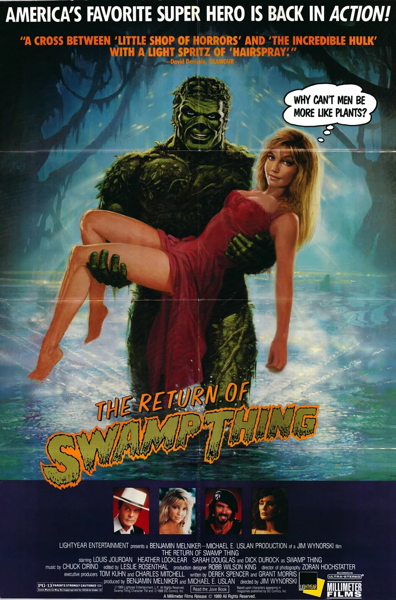
Both clearly inspired by the film’s classy and sedate movie posters:


…of which that’s one, and you can see others here (where you can see which posters provided inspiration for which pin). Do I have a Return of Swamp Thing poster? You bet! Do I have the one that has the words “Sheer Nightgowns!” in a balloon burst? I’m afraid so.

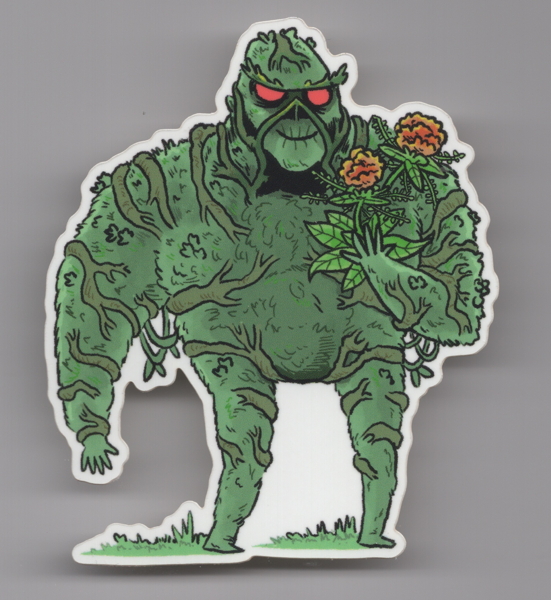
And is that all the new Swamp Thing stuff your pal Mike has in his hands? Why no, of course not, thanks to my little envelope-stuffing bull pal, Bully, who mailed me this sticker designed by comics superstar Kyle Starks:


The real mystery here, of course, is how did Bully hold the pen with his little hooves when addressing the letter? Anyway, a big thanks to Bully for this surprise gift!

AND WAIT, THERE’S MORE! Longtime pals Matt and Chris have reached episode #666 of their longrunning podcast War Rocket Ajax! To celebrate this most diabolically evil of achievements, the Bits Boys called for contributions to their regular “Thursday Night Raw” segment revolving around Hell, demons, and all sorts of other deviltry. For those unfamiliar, this segment seeks to find and rank the “rawest” moments in comics.

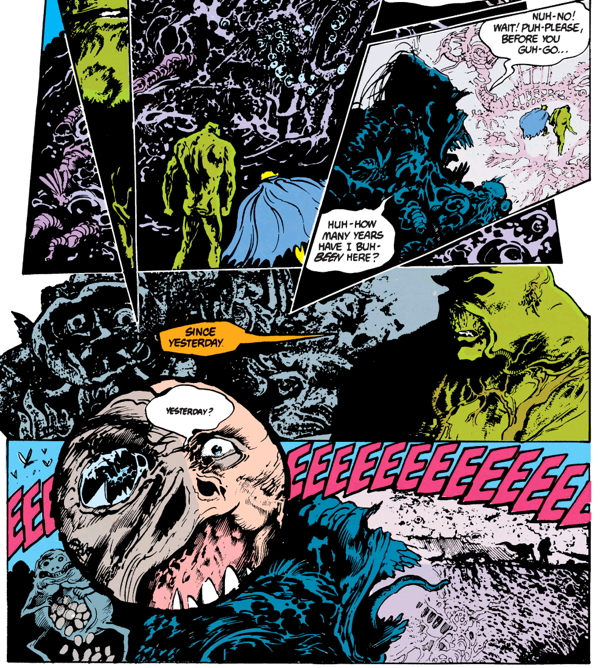
I had an entry ready to submit for a while now, but never got around to it…but this seemed like the opportune time given the theme. My entry, of course, being from Swamp Thing Annual #2 (1985) by Alan Moore, Steve Bissette and John Totleben, in which Swamp Thing, having journeyed to Hell to rescue Abby, encounters his old nemesis Arcane:


Perhaps…too raw? What do Matt & Chris think of my submission? Other than probably being glad I didn’t make another Frank Miller’s The Spirit joke? You’ll have to listen to find out!

(Also, for the benefit of the boys who appear to have forgotten…I have been a sponsor of the show! Granted, it’s been five years…probably about time to do so again!)

Miracleman: The Marvel Age.

Okay, the prediction posts are done, time to talk about something Current and New…which of course means the long-awaited revival of Miracleman.

Regular reader Thom H. noted in the comments here that he wasn’t sure if he was onboard with the final issue of the current volume of Miracleman, “The Silver Age.” At around the same time, I spotted a post on Bluesky from a user by the name of “ElNarez, Herald of Dorkness” (I approve) who had this to say on the topic:

“the comics industry is not beating the ‘wildly unable to deal with any work of substance’ the way Marvel has been fumbling Miracleman; you have an essential post-Watchmen text and it’s treated as this little curio for freaks”

I’ve been dwelling on this for a bit, more so than I usually dwell on Miracleman just as a matter of course. The assertion of the industry being “unable to deal with any work of substance” can be true, mileage varying per publisher, but regardless of commitment the various houses are constrained by resources and potential audiences. I’m sure everyone would love to have a full set of every Little Lulu comic in print in handsome color volumes, available at all times. But those books cost a lot to produce, would cost a lot to warehouse the entire catalog, and probably wouldn’t attract enough sales to justify the costs.

Or to use Marvel as an example, their Marvel Masterworks hardcovers are representing significant material from its publishing history…but they generally have limited print runs, and they cost a lot of money. The recent paperback editions collecting the same material are a good alternative, but several of those are already out of print.

And there are the omnibus editions from Marvel and DC (awkwardly heavy and expensive) and other reprint volumes from both companies (mostly focusing on more recent comics, with some older stories occasionally released), the “facsimile” editions of old comics released piecemeal, and so on. And that’s just The Big Two publishers…smaller publishers have even fewer resources to maintain a backlist of books.

This is just a general overview, and hardly covering every problem faced by publishers (nor does it address digital alternatives, which can have their own issues), but in short: I’m sure every publisher would love to devote the time and money to keeping top material in print in the best formats at affordable prices. The marketplace, however, can’t support it.

Now this wasn’t the complete gist of ElNarez’s comment, I realize, but I wanted at least to mention those topics. More to his point, it was Marvel’s marketing of the material that was botched. But I’d argue it’s not necessarily entirely their fault, but like I’ve said in the past, the publisher sure as hell didn’t help.

Not Marvel’s fault was its inability to promote the material using the name of Alan Moore, who is one of the most famous writers in comics. He asked that his name be removed, and Marvel dutifully removed it from the comics, calling him instead “The Original Writer” (which received some mild mockery).

Definitely Marvel’s fault was the formatting of the comics themselves, in which they reprinted all the previously released stories as a lead-up to the (eventual) new stories. I wrote about this problem way back in 2013 in two posts (pre and post-release), in which the small amount of the comics you’d actually want to read were backed up by editorial material and straight reprints of the original Marvelman comics of the ’50s and ’60s that nobody really asked for, at $5.99 a pop during a time when $5.99 wasn’t a regular price you’d find on Marvel comics.

That basically strangled the baby in the crib, as it were, and even discounting the first issue as I did, sales were not great. Another blow came with a significant printing error cropping up in a later issue, and a promised corrected edition was never issued. That further turned people off, as they realized if Marvel wasn’t going to stand behind this prestige project to any real degree, why should they buy and read it?

That is the kind of fumbling I believe ElNarez is speaking of, a lack of care in curating and presenting the material, which undermines any enthusiasm that may have existed for a comic that 1) features the writing of both Moore and Neil Gaiman, and 2) was a formative work for the deconstructive storytelling that dominated the more prestige superhero books of the period. That’s a long sentence, even for me…I apologize. Anyway, it’s all reprinted in various formats now, and they appear to be all currently available, which is unusual for Marvel.

But again, it may not be entirely Marvel’s fault. There’s the whole “you can lead a horse to water” thing. Sure, you can publish it, and maybe it’s the best comic in the world, but customers aren’t necessarily going to pick it up. To be clear, it’s great comics. I really enjoy Miracleman. I’m the target audience for this, the Guy Who Waited 30 Years for Someone to Pick It Up after Eclipse Comics Went Under. And that may be part of the problem.

In discussing this on Bluesky, esteemed fellow comics commentator Johanna Draper Carlson said (in a post I can’t locate now because Bluesky’s search function stinks…if I got this wrong, Johanna, let me know!) (EDIT: here it is…thanks, Johanna!) that Miracleman may not be getting the attention folks like me thinks it deserves because it’s, well, old. Time may have passed it by. Its innovations may have been copied, its influences bled too far into the art form, for it to really stand out. Who needed to see that John Carter movie when its source material had already been played out in Star Wars and its ilk? Why should we read this new version of an old thing when there are new new things to read?

Which leads me to think that the main audience for this comic is people like me…folks who were reading Miracleman in the early ’90s, who managed to wait this whole time for it to come back without 1) dying or 2) otherwise leaving comics. And even some of them may have dropped away after Marvel’s initial reprinting of Miracleman ended and the promised new stories by Gaiman and artist Mike Buckingham wouldn’t come out for another six years. (Again, not necessarily Marvel’s fault, in that Gaiman had a lot of what I presume to be much better paying work to attend to first, but maybe Marvel could’ve planned things out a bit better to avoid such a gap).

So yes, we’re getting new Miracleman stories at last. And the “Silver Age” chapter of the story concluded just this month, with the new chapter, “The Dark Age” coming eventually. (And to get back to Thom H. — yes, I think the ending of this section is fairly portentous, and can’t wait, but likely will, for the next part.)

And again, yes, this whole hoohar is written by Moore and Gaiman, absolute giants in the field. But it feels like Miracleman’s time in the sun is pretty much done. It was huge when that first Eclipse Comics issue was released in 1985, when Alan Moore had just become a red hot commodity in American comics. And it continued to sell very well as the series continued to push the boundaries of just what a superhero comic was, through Moore’s 16 issues and Gaiman’s following work.

But that 30 year gap. That ain’t nuthin’. I can’t say for sure why this isn’t grabbing the attention it once did. Moore may not be held in as high esteem by current comic fans as he once was. Gaiman’s appeal in comics may be heavily tied to Sandman and not much beyond. Miracleman may just be this thing old people like, a “curio for freaks.” I appreciate that it’s coming out again and that maybe we’ll see an actual conclusion to this story. However, I feel the comics-gnoscenti at large will only begin to really care once the promise of that Timeless one-shot is fulfilled and Miracleman (or more likely, Marvelman, to keep things distinct) enters the Marvel Universe.
Your 2023 Prediction, Epilogue: Flies and Spiders.

So in retrospect, for the “titles” I had for my 2023 prediction review posts, I should have gone with the chapter titles from Bored of the Rings instead of using them from The Hobbit. Ah well, maybe next time.

Speaking of which, here are all seven parts looking back at your guesses for the year – 1 2 3 4 5 6 7 – and some of you had comments and questions, which I’m going to try to address today.

First, I was trying to think of a particular comic that featured A.I. artwork, and Michael Grabowski reminded me it was Abolition of Man, which did get mentioned in a later post. I did have this at the shop, but couldn’t tell you a thing about it. I’m sure the link there will give you all the deets you need. And I don’t use the term “deets” lightly.

Michael Wayne is the fella who reminded me that the newest iteration of the Legion of Super-Heroes made an appearance last year in Green Arrow. I’ve made mention of this a couple of times in this series of posts since, but he’s the reason why I remember now. I even specifically had a customer ask for those issues because of the Legion, I just…uh, forgot.

It was Joe Gualtieri who clued me in to the fact that the new Batman: Brave and the Bold series was an anthology, not a team-up book like its eponymous predecessors. I mean, to be fair, I knew it was an anthology, but for some reason I was under the impression that there were some team-up stories in it, which was my mistake. Thanks for the clarification.

Joe Littrell asks in response for my want of a Scribbly collection, featuring the semi-autobiographical comics of Sheldon Mayer:

“Would a Scribbly omnibus include the story from Sgt. Rock #408?”

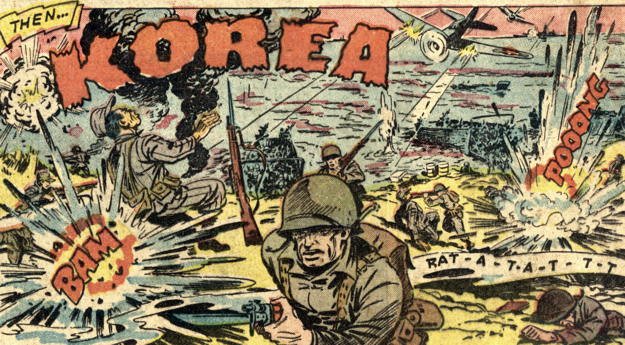
I suppose it should, for completeness’s sake. But it’s a crazily dark story, so it’d be a huge shock to the system hitting that after a bunch of lighthearted teen gag comics. Look, it’s been a long time since I read that issue of Sgt. Rock, and when I did, new off the stands, I didn’t really know who or what the original “Scribbly” was. I couldn’t tell you if they dropped any clues in the Rock story implying this Scribbly was the same as Mayer’s character. At any rate, including that story with the rest would be a real “THEN…KOREA” moment:


Can you believe it’s been 12 years since my “THEN…KOREA” post? Geez louise.

Dave Carter steps up with some sales numbers on the latest Asterix album. Apparently a million copies in France in its first month, and a total of five million (so far!) across all its international editions. And without depending on variant covers, even!

Sean Mageean and Joe Gualtieri both make mention of some sort of tussle regarding ownership of the Marvel character Machine Man, reported here at a site I don’t normally link to but will since every other place talking about this links to it anyway. Long story short, DC’s parent company Warner Bros. owns, 2001: A Space Odyssey, and Machine Man first appeared in Jack Kirby’s comic book series based on that film that was published by Marvel in the 1970s. That certainly sounds like bit of a mess, but maybe we can get DC to put out a nice facsimile edition of the 2001 treasury Kirby did.

JohnJ asks if I’d seen the Werewolf by Night special on Disney+ and its version of Man-Thing. Why yes, I have…not the more recent color version, but the original black and white. It’s not quite the Man-Thing of the comics, but a completely mindless creature may be a hardsell on TV, reality shows notwithstanding.

In response to my comments that Superman comic sales have been on bit of an upswing, both JD and Allan Hoffman point out the recent change in direction (and apparent sudden wrap-up of the previous storyline) in Action Comics. And…fair enough. I don’t know how Action had been doing over the past year overall, but at least in my store sales were slowly going up. But if it ain’t broke, it don’t get fixed, and Action got fixed with a rotating team of “Superman Superstars” creators. There might have been other reasons, but a big change like this does indeed likely mean a change was needed.

Daniel T wants to know why I had to yell at people in my shop. If I blow my stack at anyone, it’s because that person is (or people are) acting like dumbasses and causing problems. The most recent time was telling a bunch of baseball player kids, unsupervised, in my shop and running around and treating it like a playground. Trust me, I was far more patient than I needed to be. As pal Dorian has said, “if you get Mike mad, then you’ve really screwed up.”

• • •

Other topics came up as well, such as Thom H. asking after Miracleman, and a whole lotta discussion about how to revive the Legion of Super-Heroes in a way that people will actually want to read, but those are all big posts on their own. I plan on addressing Miracleman in short order, inspired by a post on Bluesky that got me thinking. As far as Legion goes…I’ve tackled that topic before, just check my Legion of Super-Heroes category, and, honestly, I don’t know if anything can work at this point. There’s always a chance someone will finally get the right formula and make the Legion Great Again, but I think we’re destined for occasional guest appearance for the near future.

So that’s that for the 2023 Comic Industry Predictions! Thanks again to everybody who participated, commented, and/or read all my typing. Any future discussion on this topic I’m just going to keep contained to this post’s comment section.

Here’s one last reminder to get in your 2024 predictions, and…that’s it! I’ll see you all on Monday!