Bring on the bad guys.

I’m going to jump ahead and address a comment from Monday’s post — DK’s, to be specific, in which he talks about the relative lack of motivation for DC’s various villains.

It’s funny, this topic had sort of crossed my mind the other day, but along the lines of “what makes a villain an arch-nemesis.” Superman is easy, as it’s Lex Luthor: world’s strongest man versus the world’s smartest man. Batman, it’s the Joker: a man trying to impose order on a chaotic world versus a man who creates chaos. Wonder Woman is a little more difficult, as while thematically it’s Ares (a woman representing peace versus the God of War), I don’t know that this pairing showed up a whole lot until the latter half of Princess Diana’s existence.

I mentioned the word “thematically,” and that’s what these match-ups are, battles of opposites. It doesn’t say much in terms of characterization so much as plot considerations. Why (aside from the hair thing) does Luthor hate Superman? What compels the Joker to spread chaos? …Wonder Woman and Ares I’m willing to give a pass on possible internal motivations, as, well, Ares is the God of War, there’s no real subtlety here.

I tried to spread this out to Marvel characters, like Spider-Man, but that’s harder to nail down. Like, why would it be the Green Goblin? Is an octopus the natural enemy of a spider? And so on. I came to the conclusion the Spider-Man’s arch-nemesis is the irresponsible use of power, especially that gained through scientific mishap. Yes, the ol’ “intangible quality” trick. But I think it fits…Peter Parker got his powers from science gone awry. and used them for good. Green Goblin, Doctor Octopus, the Lizard gained theirs the same way and used them for eeeeeevil. Granted, not sure Venom fits into this entirely neatly, but I was just pondering, not laying down law here.

But again, like I said, this doesn’t dive into specific character motivations as opposed to the thematic/plot-oriented purposes to which these characters are utilized.

That said, let’s go through DK’s list:

“Luthor: He’s basically Trump, but actually rich.”

I am not even sure what Luthor’s exact deal is right now. Post-Crisis, he’s a power-hungry dude pissed that there’s someone more powerful around, who has also continually got the better of him. As time wore on, he became more of a mix of the Silver Age Luthor and the Byrne/Wolfman-era Luthor, a rich businessman who just freely uses advanced science to do…I don’t know, whatever. Join the Justice League, that sort of thing.

His modern motivation is still his hatred of Superman’s apparent superiority, but he couches it (as he does in this week’s Action, in fact) in his desire to remove “alien influence” on Earth. And that it would get rid of the guy who always makes him look bad, well, that’s just a happy coincidence.

“Joker: Murder clown, haven’t even given him a real name for 75+ years.”

I sort of go into it above…the Joker doesn’t really need a specific motivation beyond wanted to wreak a little havoc, and it just so happens it’s usually Batman there to stop him. As to a specific motivation as to why he would do that…well, I guess The Killing Joke is now just straight-up officially the origin of the Joker, all that built-in ambiguity in the original story just jettisoned for the purposes of current comic-booking.

As such, I suppose the Joker’s motivation is…well, basically what I said above, causing chaos And with Killing Joke now canon, the death of his wife, among other things, is what drove him to this point, lashing out at a world that destroyed his life.

Oh, and I did write a bit about DC finally, weirdly, giving the Joker an official real name, but frankly I won’t believe it ’til I see it in black and white in whatever the next iteration of Who’s Who in the DC Universe will be.

“Sinestro: Power corrupts (just this one dude, not the 10,000 others with rings)”

I mean, that’s good enough I think. Sinestro fell out with the Guardians like (here we go) Lucifer rebelling against God and being cast out of Heaven. Sinestro hates his former bosses and their Green Lantern force, and especially the face of that authority, their arguably greatest member after Ch’p, Hal Jordan. I know that (I think) Gerard Jones added emphasis to the whole “Sinestro is obsessed with maintaining order” element, which I think is still a part of the character’s drive.

“Reverse Flash: Admit it, lazy AF concept. Can’t even be bothered to give him a real supervillain name.”

Ah yes, the “bigger, badder version of the hero” trope we all know so well from most of the Marvel movies. But to be fair, his full moniker was “Professor Zoom, the Reverse-Flash,” which, c’mon, that’s pretty cool. Now I’m just talkin’ the original dude here, don’t get me started on all these other Reverse-Flashes that turned up.

What I do like about Reverse-Flash is that his deal was that he was a dude in the future who thought the 20th century Flash was awesome, replicated the accident that gave the Flash his powers, and then discovered he was going to come the Flash’s enemy, which drove him mad, turning him into the Flash’s enemy. It’s this weird, sci-fi time loop thing that I happen to like.

During Waid’s run on the Flash comic, he altered the origin slightly by having RF (sorry, tired of typing that out), still a big fan, go back in time and discover that not only was he going to be a villain, but that the Flash would kill him. Anyway, that’s a whole thing that I won’t get into here, but I think this provides a nice, unusual motivation for the character. Yes, it’s “he hates him because he hates him,” but the background is interesting enough to support it.

“Gorilla Grodd: Kill All Humans, as I am not a human and I am better than them.”

Look, evil telepathic superpowered intelligent gorilla has got to be motivation enough, right? I’m going entirely from memory here, but Grodd was trying to take over Gorilla City from its leader, Solovar, and Flash interfered, and now the Flash is also on Grodd’s shit list? I’m pretty sure that’s right. Anyway, c’mon, he’s a gorilla villain, let’s cut him some slack.

“Deathstroke: I get paid to be Evil. I have no idea why Bruce Wayne doesn’t just pay me to be good.”

I mean, assassin-for-hire who goes after superheroes, that’s good, I think. Admittedly he’s not very successful against them, which makes me wonder how he makes any money (“okay, sure, you haven’t killed any of the Titans yet, but maybe the 20th time’s the charm, do you take personal checks?”). I suppose in the Teen Titans’ case, it’s more “personal vendetta” as time went on, but I think being a hired gun who keeps getting hired despite being almost entirely ineffectual by necessity kinda works.

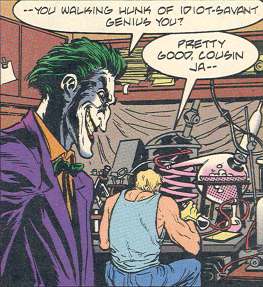
“Per Degaton: This secret dies with Roy Thomas.”

Ah, Per Degaton. The would-be dictator who used his boss’s time machine to rampage through history, screwing around with time, and also bother the Justice Society of America, all in his attempts to become, as I said, a dictator.

When he was reintroduced into DC Comics in the 1980s, DC also reprinted his (I believe) first appearance from the Golden Age in one of their reprint digests, so anyone new to the character (like I was) could get his deal. And his deal is that whenever his plans get undone, he’s thrown back into the normal timeline as a lab assistant:
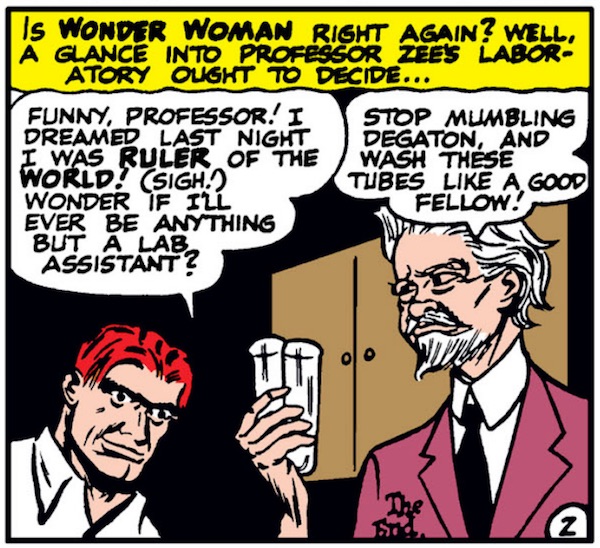

I love that this seems to be his eternal fate (with one or two exceptions over the years)…just sent back to where he was, frustrated by the memory of what was undone.

“Brainiac: I am the smartest being in the universe but I want City Funko Pops for some reason.”

He collects cities either to study, to preserve them, to put on his own planet so he could rule them…he had a few reasons for doing what he did. End result of any of these reasons: he came to your planet to grab a city and take off. Kinda like Galactus, only he just stole a city instead of eating a planet.

I do like the animated series origin, where he’s an embodiment of Krypton’s artificial intelligence network that survives the planet’s explosion, and he goes on collecting data (i.e. planets) which puts him in conflict with Krypton’s last son. Whatever version seems to come down to “Brainiac does evil science stuff and Superman tries to stop him.” Plus, it’s nice to have a regular (and powerful) alien nemesis for Supes, in contrast to his vast array of Earthbound bad guys.

Anyway, those were my thoughts on those particular DC villains. Again, just some off-the-top-of-my-head ideas, so I’m sure I got a fact wrong here and there. You know where to correct me!
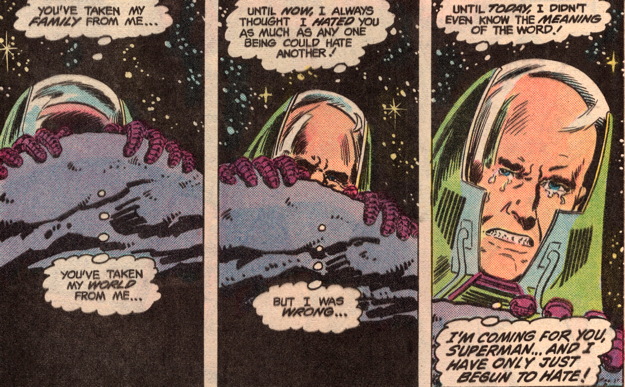
Hair today, gone tomorrow.

Yup, I’m still addressing comments left on this site from nearly two months ago. What can I tell you?

So Daniel sez

“Byrne’s first meeting of Superman and Luthor in Mos #4 was soooo much more interesting than the pre-Crisis Superboy-causes-Lex-to-lose-his-hair-in-a-lab-accident”

Now let me just step in here for just a sec and defend the “Superman makes Lex lose his hair” thing. I’m not going to say you’re wrong for your position, for reasons I’ll get into, but I think Superboy being at least partially responsible is good actually, and fits tonally with the kind of stories being told in Super-comics of the time.

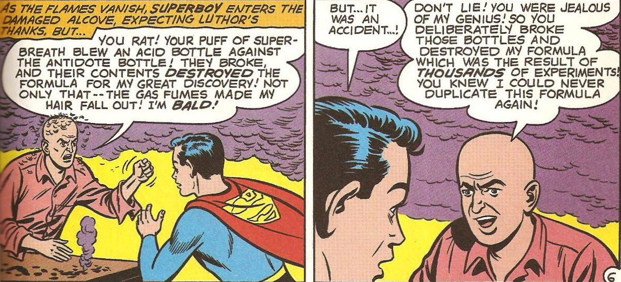
We’ve all probably seen this sequence, or something like it, from Adventure Comics #271 (1960) by Jerry Siegel and Al Plastino. Lex, the local boy genius who had been fast friends with Superboy, was working in his lab (built by Superboy, in fact) to create a cure for Kryptonite for his super-pal. Suddenly Science Goes Awry and the Boy of Steel blows out the flames and smoke in the exploded lab, only to discover:


This works in the Superman books of the day in that is fits the general low rent level of almost dreamlike myth-making in the stories. Motivations and broad and simplistic, intended to be easy for children to understand. (I’m put in the mind of an early ’60s Green Lantern story where the impetus for Sinestro’s actions was that he losing out in some popularity contest with another villain and he wanted to regain the top position.)

“You did something bad to me” (well, sort of) “and now I hate you forever!” is a plain enough explanation. Plus, it was probably a surprising twist for readers to discover that adult Luthor’s baldness was tied to the actions of a young Superman. It’s all very “closed-circle” kind of stuff. And this doesn’t get into the mythological/Samson-esque implications of a loss of hair equating a loss of strength and virility.

In other words, It Was Good Enough, at least for the time. As the actual stories of Lex vs. Supes played out, it was not so much about “my beautiful curls!” but just Luthor trying to find ways to commit crimes and outwit and/or destroy Superman. So the hair thing didn’t really play that much into the enmity between the two, aside from the occasional flashback. Now, had Luthor spent all his time trying to cause Superman to lose his hair, well, that’d be another story entirely. I think there were one or two stories like that, but it wasn’t, like, Lex’s thing.

When the Superman comics entered the ’80s, it was decided to change things up just a little bit. Not Crisis on Infinite Earths-levels of changing up, that would be a couple years hence, but for Superman’s 45th anniversary in 1983, here in Action Comics #544 by Cary Bates, Curt Swan and Murphy Anderson, Luthor was given all-new reasons to hate the Man of Steel.

Long story short, Lex was living on the planet Lexor, where everyone loved him, and he and Superman were fighting, Lex fired an energy beam at him with his fancy new armor, the beam bounced off Superman and hit a big doodad that was keeping Lexor’s core stable, and everything went kablooie. Lex of course blames Superman entirely, resulting in:


A more brutal origin for an age when comics were, just very slightly, beginning to get a little edgier with their storytelling…not that Superman was going to suddenly become, I don’t know, Frank Miller’s Daredevil or anything. But we were getting to the point where the more fantasy-ish “loss of hair” origin wasn’t enough in comics, where a little more grounding in reality (relatively speaking) was becoming more in vogue.

As it turned out, this New Unleashed More Dangerous Than Ever Luthor only popped up a handful of times before the aforementioned Crisis came along, and frankly things weren’t much different than before except for Luthor having his new space armor suit.

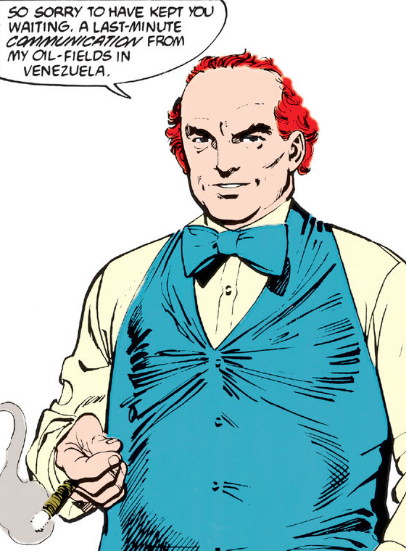
With Crisis and the accompanying sweeping 1986 reboot of the Superman line by John Byrne, all that previous Luthor stuff was cast aside, and a new relationship between the two was forged. “Introduced” in Man of Steel #4, our new Luthor is now a wealthy businessman whose successfully hides his shady side from the public (causing a lot of comparisons to Marvel’s Kingpin in the process):


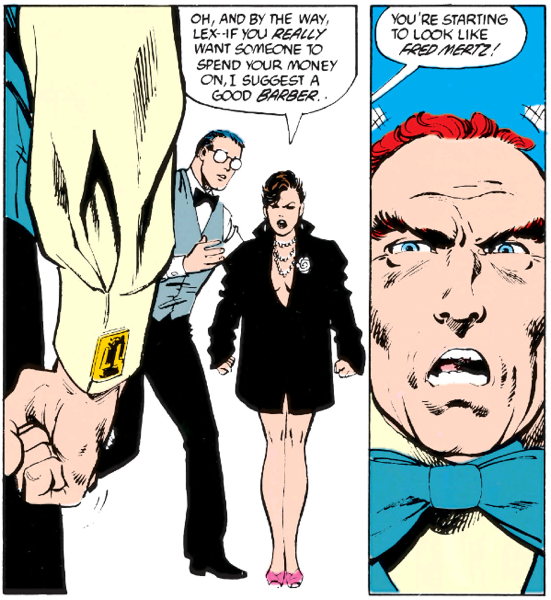
And yes, he has hair. At least until Lois slings this parting shot at him after an eventful evening:


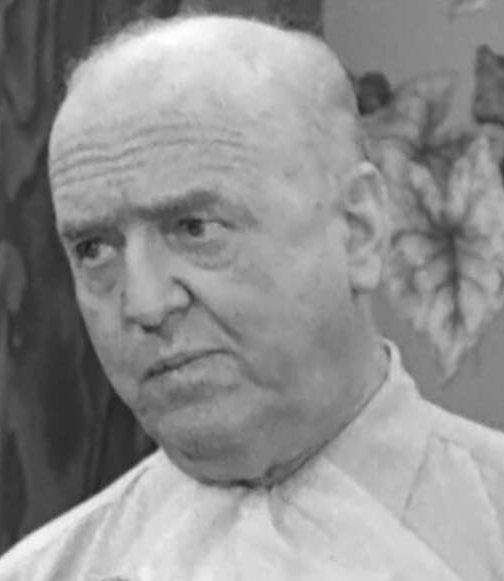
…which, hey, I don’t know, don’t be hairline-shaming my man William Frawley:


But this being the motivation for Lex to start shaving his head clean (as he appears sans hair in EDIT: his very next appearance Superman #1 – was reminded in the comments he didn’t go Full Yul ’til after the Man of Steel mini was over) is frankly just as silly as Superboy blowing Kid Lex’s hair away after a lab fire. BUT TO BE CLEAR I know this isn’t the argument at hand. Hair is removed as a motivation for Luthor’s behavior…now it’s just a small point being made about his vanity.

Luthor’s hatred of Superman comes from the Man of Tomorrow’s replacing Lex as the most powerful man in Metropolis. This is a more modern, a more…well, using the word “subtle” for anything Byrne works on is bit of a misnomer, but it is a more nuanced take on his hatred for Supes than “I lost my hair.” It rises out of the character’s personality, a change that comes from the increasing demand for the approximation of “realism” and storytelling sophistication in comics.

In a way, though, it still hearkens back to the childlike simplicity of comic character motivations of decades past: “I was the biggest guy, now someone else is bigger, and I hate him.” It probably just comes down to being more relatable…everyone’s been jealous of someone else, but very few people have experienced a friend causing their immediate and total hair loss. Unless, you know, their arch-nemesis is an evil barber or something.

As a small addendum, one of the elements of the Smallville TV show I appreciated is the fact that the meteor swarm that stuck the town, the one in which baby Kal-El’s rocket was enmeshed, was responsible for a young Lex’s baldness. Bringing back the “Superboy was kinda responsible for that” which had been missing from the other live-action adaptations…nicely played.

Please for the love of God do not show up in my comments to explain the different spellings.

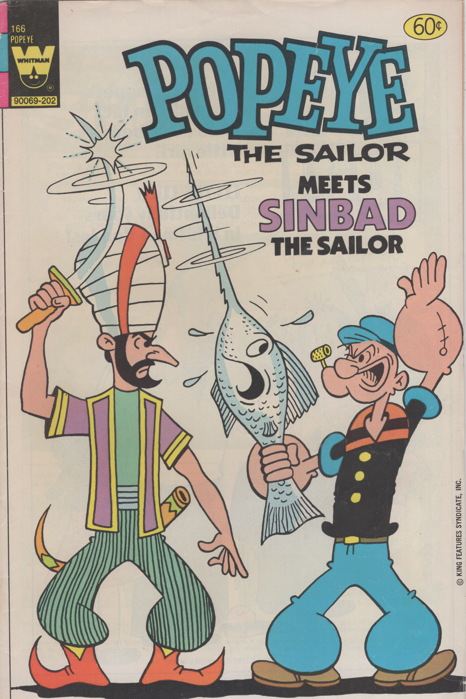
So a new post in the ongoing multiverse talk series just wasn’t coming together, and as such today I’ll instead post this Popeye comic I just acquired for the personal funnybook collection:


This is issue #166 from 1982, pretty late in its run (which would end in 1984). And since I’ve already been asked, no, it has nothing to do with the 1936 cartoon Popeye the Sailor Meets Sindbad the Sailor, in that the the Sindbad in the animated feature is spelled with two Ds.

My eventual goal is to get my ungainly mitts on every issue of this publisher-spanning Popeye run, though I think I’ll be satisfied with having all the early Dell numbers in their IDW reprints.

Also of note is that there is no #93, lost in the transition between Gold Key/Whitman/Western/whatever and Charlton in the late 1960s. Plus, ssues #160 and #161 were not published during the later Western run at the title. And just to make things difficult, two issues (158 and 159) were only sold in those 3-packs, so I’m probably looking at paying more of a premium for those (but not as much as what I’d be paying for the similarly-distributed Uncle $crooge #179 — sheesh).

You see what I’m up against. Ah well, I hope at least I can find that #158…I need to learn more about THE MOODUC:

“Horror we? How’s….”

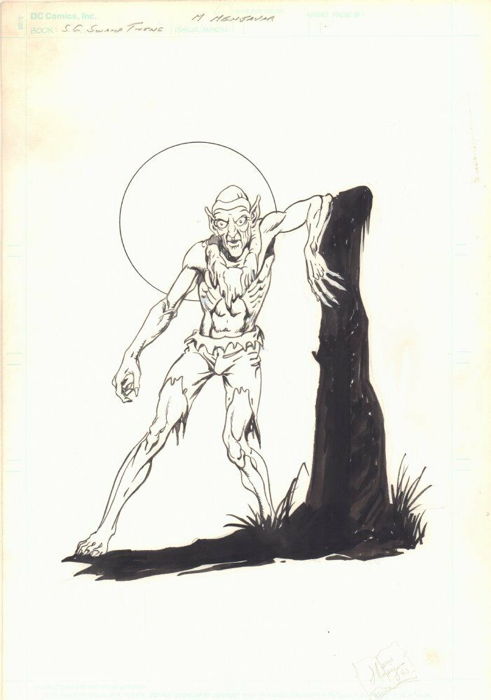
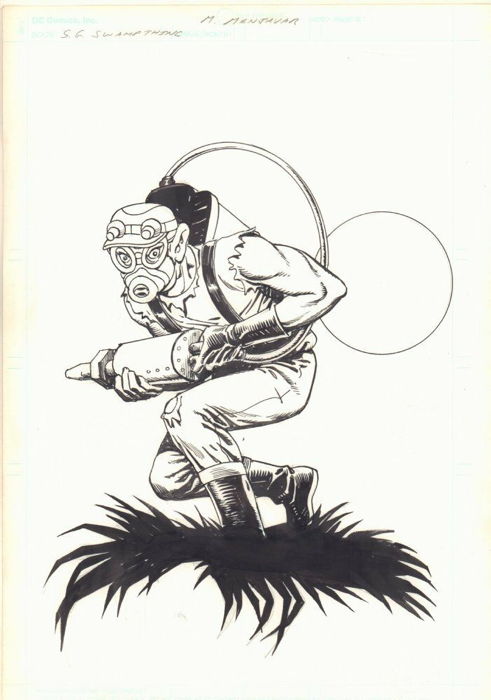
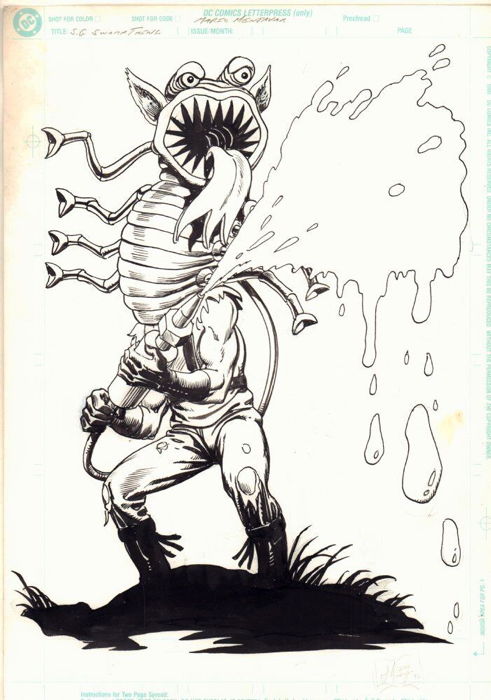
So if you remember this post about the Swamp Thing “Battle for the Bayou” board game (and why wouldn’t you, surely you’ve been reading this blog for 18 years), some of these drawings may appear familiar to you.

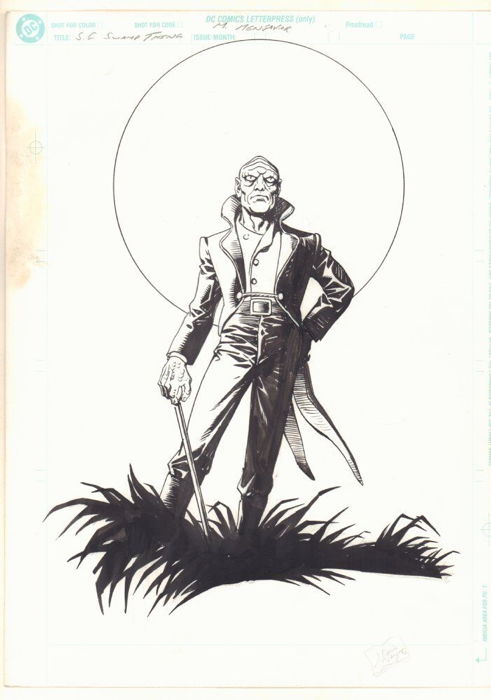
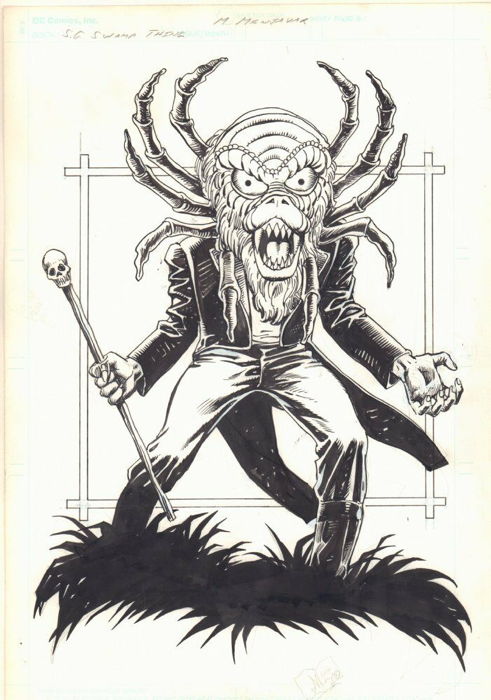
Occasionally I’ll troll through the eBay listings for Swamp Thing stuff, seeing if there’s anything new to catch my eye (despite the fact that after Swamp Thing Chalk it’s all downhill). But I did spot these pieces of production art, apparently by Mario Menjavar and Alfredo Alcala (according to the listings) for the board game and other merch being offered for sale. I was tempted, but I think I blew my original art-purchasing budget for the decade, so alas I shall have to be satisfied with these saved scans. All pics of bad guys from the cartoon and toy line, so enjoy, starting with Arcane pre- and post-monstrous transformation:


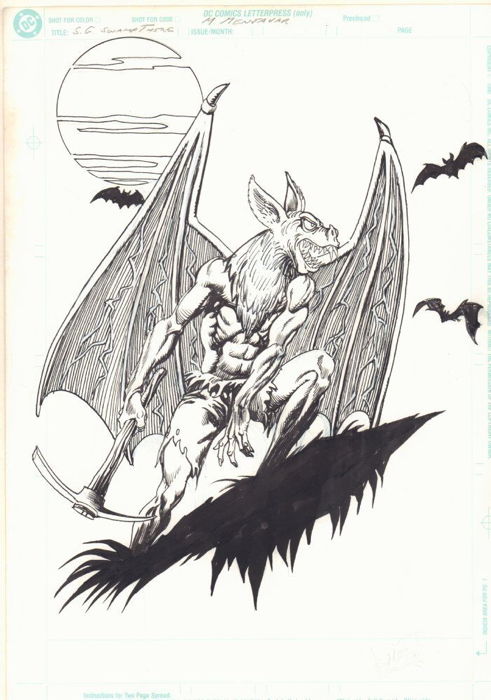
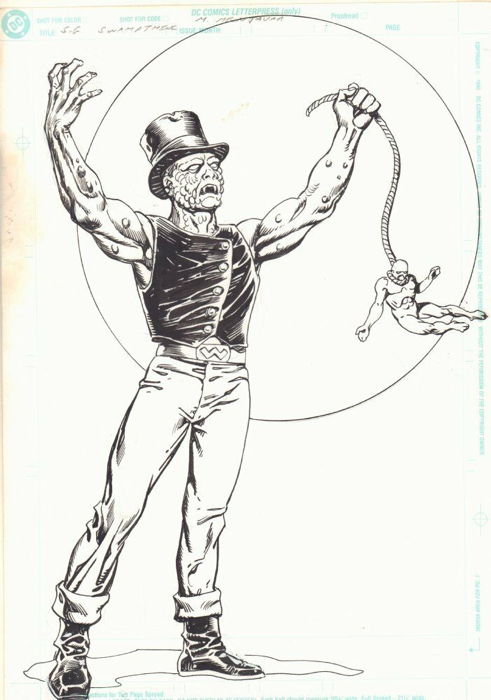
And here are a bunch of Arcane’s Un-Men (alas, no Cranius to be had):


Neat, right? What I wouldn’t give for that last guy to turn up in the comics.

Now if those actually are by Williams and Griffin, well, no wonder they remind me of them.

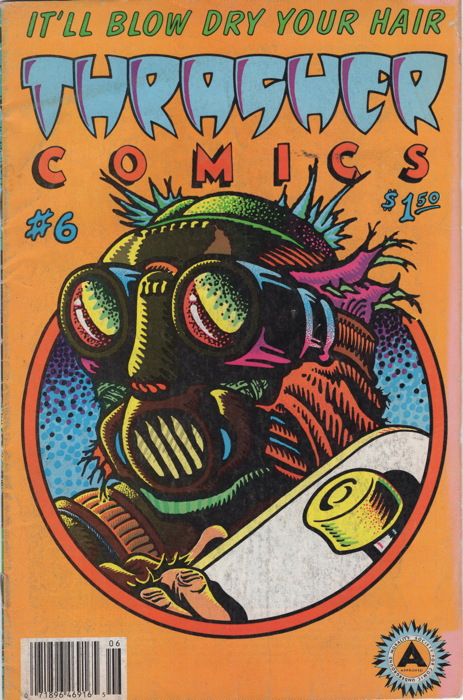
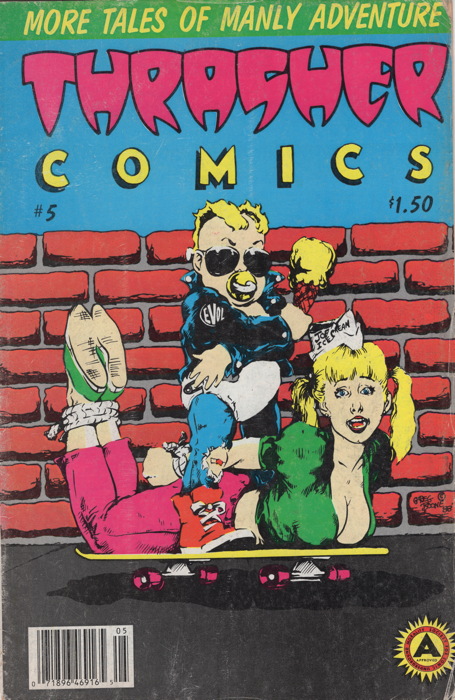
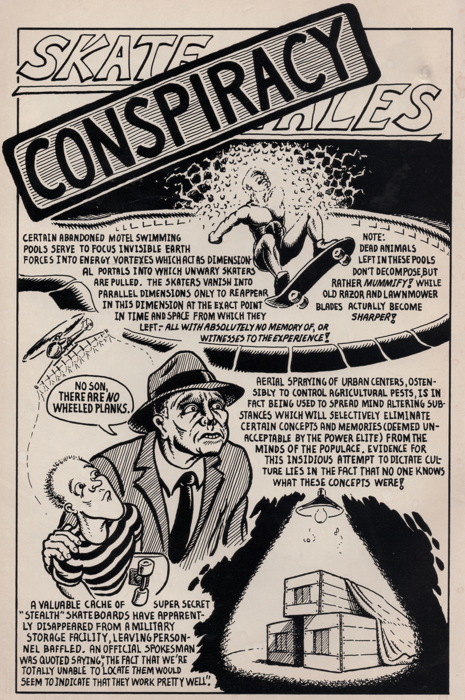
So some oddball things I picked up in a collection late last week: six issues of Thrasher Comics, a short-lived series that ran from 1988 through 1990 and publishing in conjunction with the still-extant skateboarding publication Thrasher Magazine:

It’s a black and white anthology with color covers, with mostly weird and “edgy” contents that never really cross over into “adult” material, though the cover to issue 5 is, um, something else:

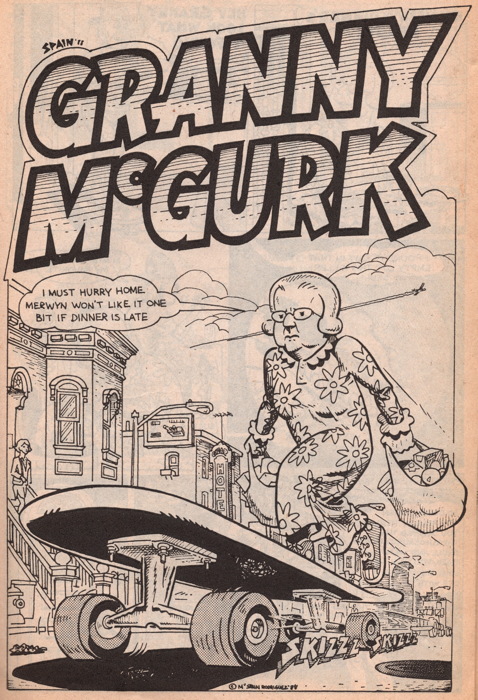
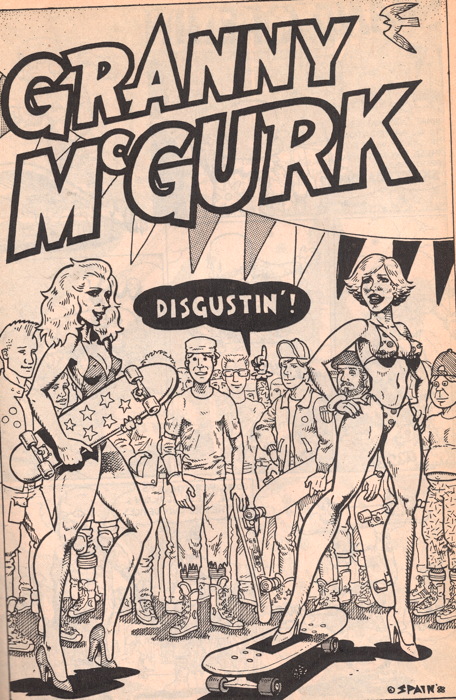
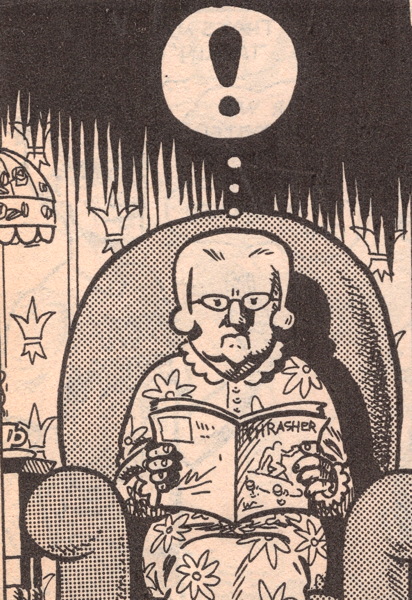
It has a real underground comix feel, like it should have been published sometime in the 1970s instead of, like, 19-freaking-90. Helping that feeling along is the fact that comix legend Spain Rodriguez was a regular contributor with the “Granny McGurk” feature:

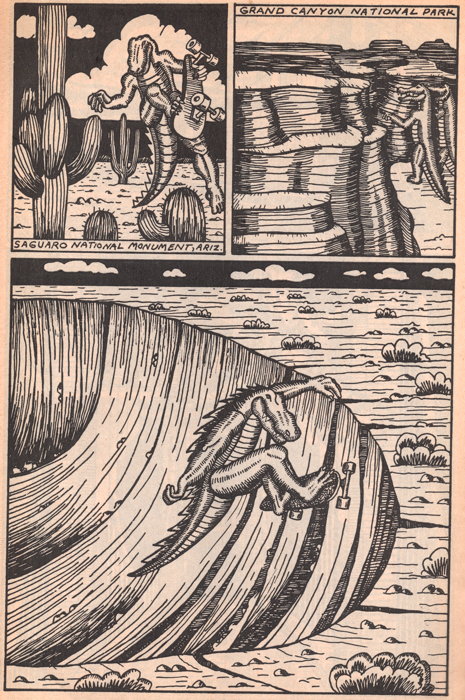
And while some of the contents were…amateurish, there’s certainly an energetic weirdness at work, such as this bit from L.E. Coleman’s “Alley Gator,” another recurring strip:

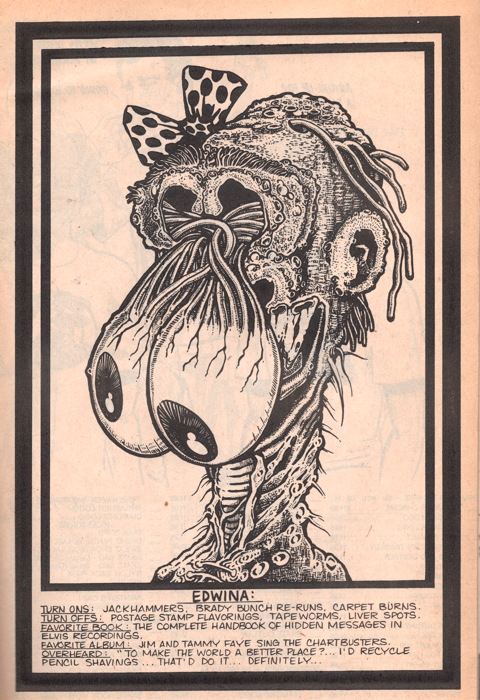
And I think there’s some disturbing joy to be had in this attempt to out-Wolverton Basil Wolverton, taken from “Betties from Hell” by Johnny Childish:

This uncredited piece, taken from the inside fron cover of issue #9, reminds me a smidgen of some of Robert Williams’ underground work:

I’m pretty sure that is in fact not Williams, but this page from #5 is the Spain-est drawing that’s ever been Spained:

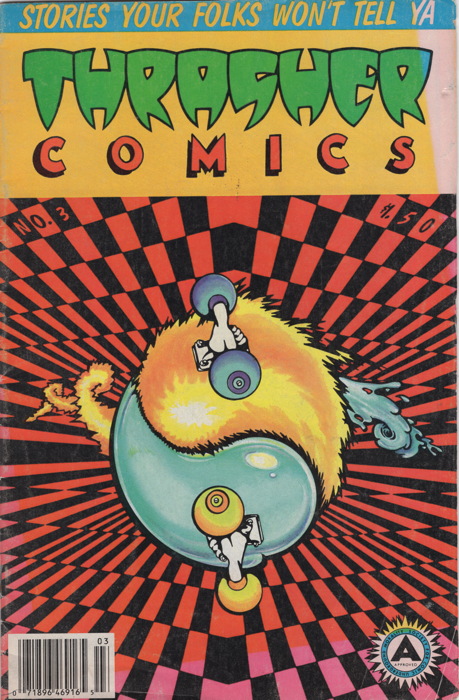
The covers are fun, especially with the Rick Griffin vibe I get off this one:

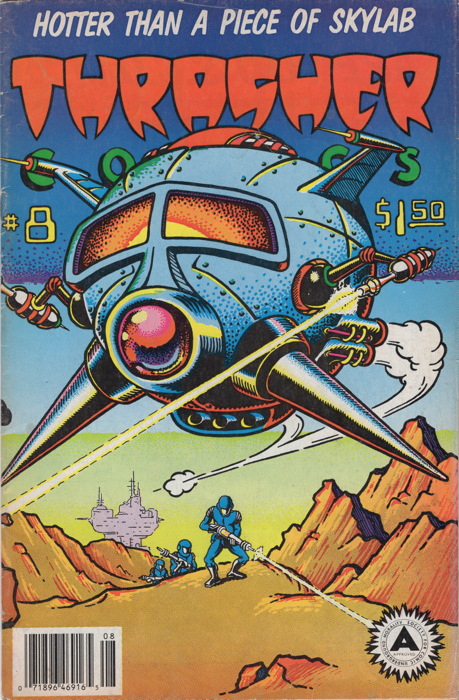
And dig the Heavy Metal-esque sci-fi cover for #8, which…doesn’t seem to have much to do with skating, does it?

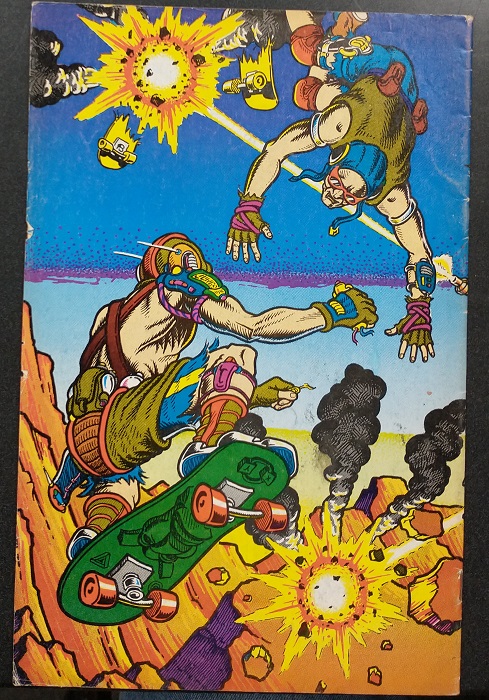
EDIT: um, actually, it’s a wraparound cover with sci-fi skaters on the back…look, no one said I was bright:

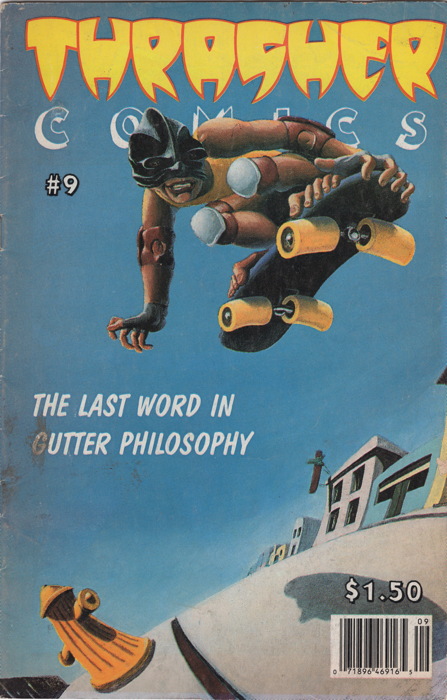
Anyway, the Thrasher comics experiment didn’t last long, with #9 and its slightly more straightforward cover being the end of the series:

This is one strange comic, and apparently in short supply, judging by some of the prices I’ve seen online for these. The copies I received were…well-loved, mostly in Fair to…well, Fair Plus condition. Quite the range. Had no trouble already finding a buyer for them, so save those emails asking to get these from me, as they’re already gone! Sorry!

However, if you like undergrounds, and wild artwork (sometimes more enthusiastic than professional, which is fine!) keep an eye out for these. Thrasher Comics is something of a forgotten…well, “classic” seems like too strong a word, but it’s certainly worth checking out.


“Three Spider-Men? In this economy?”

David Conner brings up

“I could see this [multiversal] stuff really confusing ’80s Hollywood people. OTOH, I think then as now, if Hollywood wanted to make a movie with both Doctor Fate and Shazam! characters, they’d just do it and ignore the ‘different Earth’ stuff.”

That is a point I never considered. I mean, you’re right, if they’re really on a tear about doing, I don’t know, a Johnny Thunder movie, they’re gonna do one regardless of how convoluted the character’s milieu may seem.

But I can see that parallel Earths business being an additional barrier to, well, in this case Hollywood folks, but in general to everyone else too. While it’s not too complicated a concept (often being explained in a single panel, or even a single caption box, when necessary), it’s possible someone looking for a property to exploit (or alternatively a reader just looking for something to read) might see this weird explanation about this character is from some Earth or ‘nother and think “nope, I’ll move onto something else less complicated.”

Now you know, and I know, and even pal Ian knows, the whole parallel Earth thing isn’t complicated. If I got it when I was, what, nine or ten years old, it couldn’t be that hard. But it could give off the appearance of complication, and even the smallest hurdle is enough to stop somebody. Even with “THE MULTIVERSE,” at least vis-à-vis comical books, being a thing in most everyone’s awareness and understanding now, not just with the funnybook-initiated, there’s still someone watching these Marvel movies and despairing aloud “what? Three Spider-Men? What’s going on? How did that happen? I don’t get it!”

• • •

Michael Grabowski slaloms in with

“I feel like this is a problem only comic book nerds have, as in the general public doesn’t particularly care. There are all the different movie & TV conceptions of Superman/Superboy and Batman of the last 50 years, and the people who watch those don’t seem to let continuity conflicts (or casting changes) get in the way of enjoying what they’re watching.”

Just imagine how many headaches could’ve been avoided if DC had started a new Hawkman series, and everyone had been all “how does this tie in with Hawkworld and Crisis and the Golden Age Hawkman and and” and DC’s response was “shut up, here’s a Hawkman comic, he fights gentlemanly ghosts and shadow crooks with a mace, DON’T MAKE IT MORE COMPLICATED.” But there’s always some measure of continuity shenanigans getting in the way (though the most recent Hawkman series leaned into it with good effect), not just with Hawkman but with DC’s incessant need to continually relitigate the original Crisis on Infinite Earths and explain the multiverse again. As the boy on a recent episode of War Rocket Ajax noted, it seems like DC’s multiverse has come back several times over the last few events.

It seems like the only way to break this cycle in comics is to…ignore it. Just tell the stories without wondering what Earth it’s taking place on. I know, I know, most do that anyway, but every time, DC has to go and remind everyone “oh hey remember parallel Earths? Let us explain them to you” However, the parallel universe thing is mostly restricted to these events, so it doesn’t interfere with the flow of the regular monthly books too much. Except when they tie in, of course.

The movies worked by simply not acknowledging the other films. “Here are four ‘Burtonverse’ Batman films” and “here are three Christopher Nolan Batman films” and never the twain shall meet, one does not refer to the other, and also the movies are several years apart so the idea of “hmmm, I thought Joker died, but here he is again, a lot skinnier and younger than last time” probably shouldn’t come up. (But, y’know, there’s always the one guy….)

Of course now the new superhero movies do all refer to each other, and like I referenced with those three Spider-Men earlier, now reference movies outside the world of the films. And we’ve got the multiverse thrown in for good measure. So far Marvel’s managed to keep everything more or less straight, with a minimum of confusion, and using the continual crossovers to drive audiences to the next installment, whatever it may be. Even after a decade or so, it hasn’t turned into a problem…yet.

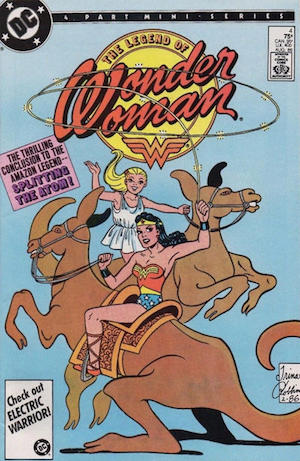
If I’m going to use a cover from this series, let it be the one with kangas.

Cassandra presents

“Mike, the main reason Wonder Woman survived into the 50s has to do with the terms of the original contract between AA/National and Marston. If there came a period where she didn’t appear in a comic published for a certain length of time (I’ve heard two months), the rights would revert to the Marston estate. So, Wonder Woman might be the first comic that continued to be published solely for a rights issue!”

If I recall correctly, it was Kurt Busiek who first unleashed this knowledge onto the world…some kind of deal where he mentioned “oh yeah that post-Crisis, pre-Perez series mini I wrote was done else DC lose the Wonder Woman rights” and the rest of the funnybook resident was all “…wait, run that by me again?”

Now that’s entirely paraphrasing, but it was something along those lines. The Legend of Wonder Woman, scripted by Busiek and illustrated by Trina Robbins, was released in the year-long interim between the cancellation of the original Wonder Woman series and the George Perez/Greg Potter relaunch. Apparently, without that mini being rushed into production and released, that publishing gap would indeed have been enough to trigger whatever contractual clause existed to revert all Wonder Woman rights to the Marston estate. Last month’s issue of Back Issue, the ’80s DC Mini-Series issue, features a good interview with Busiek and Robbins about the series.
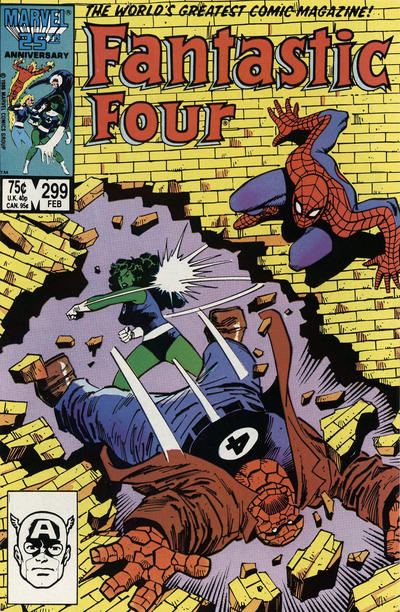
One of the details I believe I learned from that interview was that it had to be specifically a title starring Wonder Woman. Guest-appearances in other comics, or even just being a member of the Justice League, wasn’t enough to keep the shepherd’s crook at bay and yanking her offstage.

Now I’d assumed after that close call, as the series was rushed into production after someone realized that contractual issue, that DC/Warners went to the Marston estate, pulled out the checkbook, sighed and asked “…okay, how much?” I presume that was the situation when DC nailed down the Shazam!/Captain Marvel rights a couple/three decades back instead of just continuing to license the characters from Fawcett. Anyway, in that Back Issue interview Busiek said he wasn’t sure what the situation was regarding the Wonder Woman contract, and whether that clause was still in effect. If there’s been clarification on this since then, I’d like to know.

As I noted in the post upon which Cassandra was commenting, in that otherwise superhero-less gap between the Golden and Silver Ages, Batman, Superman and Wonder Woman continued to be published because they were still money-makers. In Wonder Woman’s case, yes, that title was still making money via all the toys and such DC was able to license, which certainly gave them incentive to keep the title going. Not just to encourage more licensing, but to keep their mitts on the property so they could continue making that toy-and-costume scratch.

Now as to whether or not any other titles continued on solely to retain the rights…well, technically, that’s the deal with pretty much any licensed property, but I know what you mean, Cassandra! There was that aforementioned licensing arrangement DC had with Fawcett over usage of the Shazam! family of characters, but I don’t believe that would’ve been a “use it or lose it” kind of deal. I don’t think there were too many long gaps with DC’s usage of Captain Marvel anyway, so I don’t believe that to be entirely analogous. But I can’t think of anything else that’s quite the same. Something to look into, perhaps!

Also, I should note that I’m filing this under the “Multiverse Talk” category not just to continue the conintuity of converssation, but also because the Legend of Wonder Woman mini includes a nicely appropriate send-off to the Earth-2 Wonder Woman!

Just a random Groo quote in the middle of this post about a Fantastic Four comic.

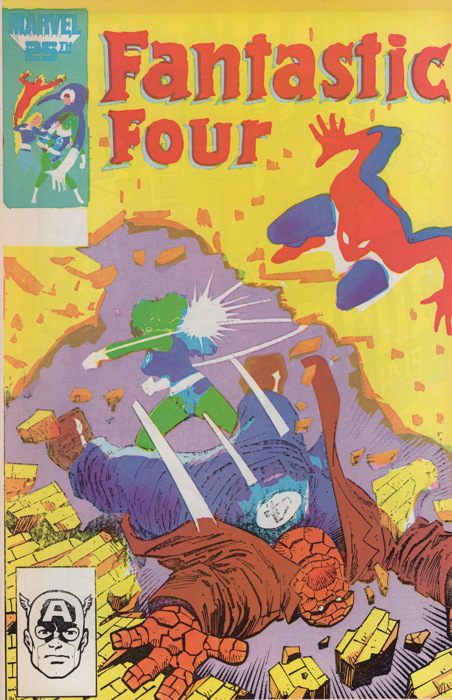
So as huge Fantastic Four fans, as I’m certain most of you are, you’re probably familiar with this cover for issue #299 from 1987, with cover art by John and Sal Bucsema:


Well, imagine my surprise when former boss Ralph turned up this copy from parts unknown:


And here’s the back cover:


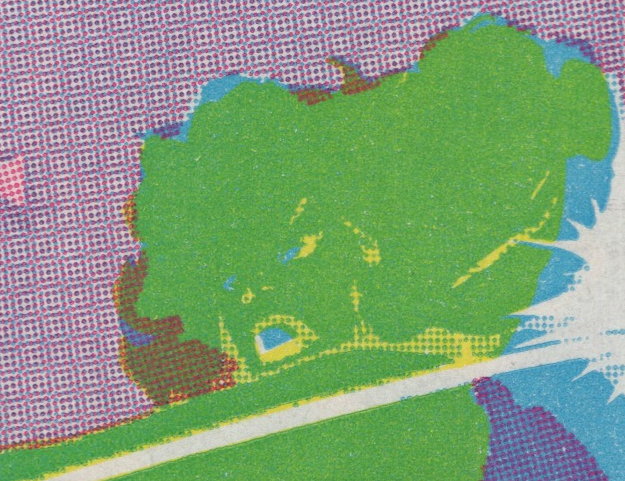
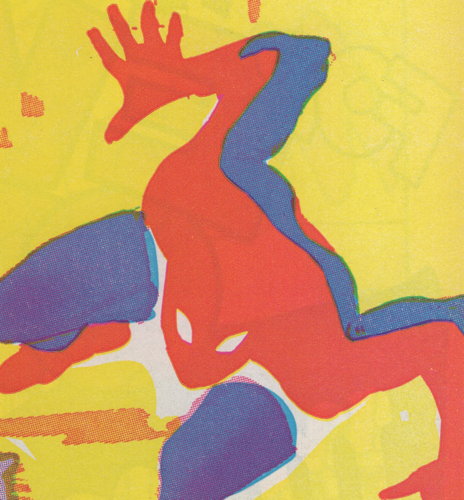
As any fool can plainly see (“I can plainly see that!”) at some point during the printing process whatever applies the black ink to the cover went awry, leaving this odd coloring on the covers (though some black ink did make it onto the bottom quarter of the front). I’ve never really looked into the actual printing process involves lots of big and heavy machinery, very fast-moving parts, and probably elves, so I’m not sure what exactly happened to cause this. I mean, “the black plate was jostled” is probably the best you’ll get out of me, and I don’t even know exactly what that means or even if I’m saying it right. Anyway, I need to look into that side of things a little more deeply, is what I’m saying.

Regardless of my printing ignorance, this is a weird example of this particular comic, one that neither Ralph nor I had seen before. I imagine it probably had to survive quality control at the printer, not being spotted as “defective” at the distribution level, somehow getting past the Direct Market retailer and not getting tagged as a damage to be reported, and actually selling to someone who didn’t care that the cover was misprinted. That’s assuming the retailer didn’t pull it out of the stack and mark it “RARE HOT VARIANT” and sell it at a premium from the get-go.

But here it is, existing in my shop (and already spoken for, so no offers please!), an apparently unique item. I’m sure it can’t be the only one who made it out of the printers/etc. alive…but there’s a chance it could be. Isn’t that neat?

I’ve added this entry to my “variants” category as part of the long-running (though recently resting) series of posts I’ve been calling “Variant Cover-Age” because I think I’m clever. And it is, technically, a variant, in that it differs in a significant visual fashion from the other copies of the same book. Sort of like these error variants of the first Venom mini-series. But it’s not a purposeful one, like Marvel sent someone to the printer and had him kick out the giant Black Ink tube at an opportune time.

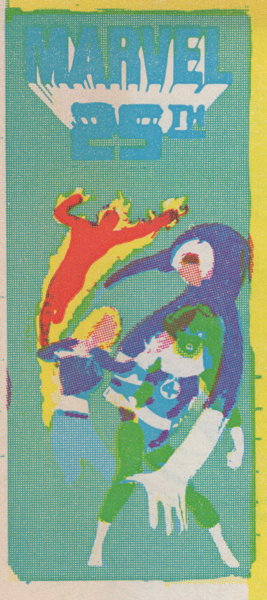
But it’s neat, I don’t think there’s any confusion on that point. Let’s take a look at some details from this cover, such as the corner box with the creepy Faceless Four:


I’m sure someone at some point did a She-Hulk image that looked like this on purpose…it’s pretty cool, actually:


And introducing Spidey’s new costume! Artists everywhere rejoice over not having to draw those damn webs:


Also, that’s totally a diaper.

So, my ProgRuin Army, if you spot another of these out the wild, or a similarly-afflicted comic, please let me know! I’m sort of interested as to how many just outright obviously-misprinted-like-this-FF comics are out there. …Oh, wait, I just thought of Superboy #0 from the 1990s. I’ll get into that hopefully soon!

Remember when Iron Man changing his armor was a big thing?

So now that I’m getting my primary comic book shipments from three different distributors, the days I can expect the new titles can vary from week to week. Well, I mean, Diamond’s boxes still turn up the Tuesday morning before the Wednesday on-sale day. The DC Comics boxes will show up at any time between the Wednesday before the next Tuesday’s on-sale date (rare) to, generally, the Monday prior the big Tuesday release. Marvel shipments usually come Monday or Tuesday for Wednesday release.

My DCs for this week arrived last Thursday, and having nothing else better to do at that moment, aside from everything else I have to do, I went ahead and busted opened the boxes and got everything sorted and counted. And did I maybe abuse my evil retailer powers and read a couple of this week’s books way ahead of time?

Sure, of course I did. The Big Event Books, as weirdly frustrating as they usually are, are always must reads for me. Not so much for the fictional in-world changes they make, though I’m interested in those too, but why and how those changes are made, if they can be inferred from the story itself. And a lot of it is also “how far away from the relative simplicity of the original DC Comics Multiverse are they going to get themselves this time?”

Which is a long way of saying “I read Dark Crisis on Infinite Earths #4 and Flashpoint Rebirth Beyond #5 last week, before purt’near everyone else.”

Now I’m not going to discuss that issue of Dark Crisis on Infinite Earths here today, except to say I’ve rarely seen so obvious an example of a comic book’s name made entirely from flopsweat.

But what I am here to discuss, as hinted at by my mostly blind-itemed tweets, is that new issue of Flashpoint Beyond. And those tweets were purposefully vague because 1) I didn’t want to spoil anything from a book that most folks out there couldn’t possibly have had a chance to look at yet, and 2) mmmmm, DC’s distributor frowns on anyone doing stuff like that. So I kept my mouth mostly shut, though I did do a search or two online to see if anyone else was talkin’ about this stuff ahead of time, as mentioned in my linked tweets.

Now that the book is out in the wild, I’m gonna talk about this thing, even though I’m fully aware many of you, while theoretically able to read this book now, have not yet, either because you haven’t been to your local shop yet, or perhaps more wisely you decided to give a pass on anything that was called Flashpoint Beyond. As such

SPOILERS AHEAD

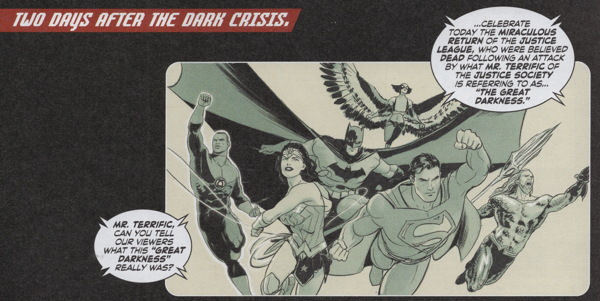
First off, it was kind of weird that DC would be doing two multiversal/self-referential/let’s talk about talking about parallel Earths again series at the same time, with Dark Crisis and Flashpoint sometimes, as with this week, releasing installments simultaneously. And in case you were wondering if everything in Dark Crisis, a series with a few issues to go, was going to turn out okay, don’t you worry kids because Flashpoint Beyond #5 has got you covered:


I realize realistically nobody thought the Justice League was really dead, nor did anyone have any doubt as to whether or not Dark Crisis would conclude with our heroes (presumably) victorious. But maybe some pretense at suspense through a little willing suspension of disbelief does go a long way in enjoying event stories like these, where you do want to wonder “how are our heroes gonna get out of this scrape?” without having it undermined by some other in-universe source telling you “yeah, it’s all fine, don’t sweat it, but enjoy the next, what, three issues of that series.”

Anyway, that’s kind of a minor annoyance, maybe sort of equivalent to the build-up to Iron Man’s new armor in issue #200 of his title, only whoops, here it is on the cover of an issue of Secret Wars II. But then Mr. Terrific, addressed in that panel there, does spend the next page or two describing the structure of DC’s multiverse and omniverse and how it gets messed with from time to time and that’s actually pretty interesting. Though, again, I think some of what he’s explaining is the result of the end of Dark Crisis, so, um.

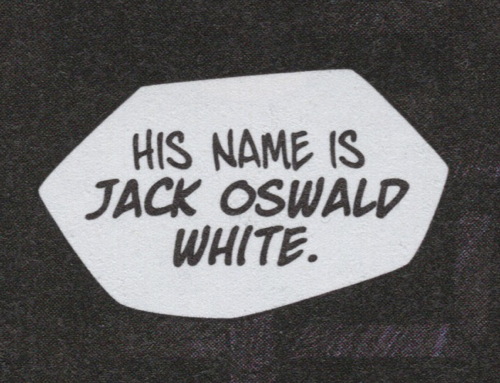
Here is the big thing I wanted to talk about, however. The one I really wanted to discuss soon as I saw it, but knew I couldn’t until the ol’ distribution/release date embargo was lifted. The phrase that really surprised me when reading this book, just casually tossed out there with barely a “how d’you do” or a “Bob’s your uncle” — and it’s just a name:


That’s what I’d been searching on Twitter and Google with no results last week, and finally got some results Tuesday afternoon as people were equally puzzled about what was going on here.

Oh, to be clear, apparently that’s the Joker’s real name.

On the plus side, “Jack” is the first name, which I think sounds right. And there’s a slight hint of that from Legends of the Dark Knight #50, where the Joker’s cousin starts to use his real name:


…only to have Joker interrupt him and say “nope, we don’t use that name any more.”

Curiously, he’s given the middle name of “Oswald,” which is not only already the name of another Batman villain, the Penguin, but a version of that character is a regular in this series, and only goes by the name. Not that people can’t have the same names, I realize, but it feels weird when it happens in a work of fiction…like, writers avoid that sort of thing to keep confusion to a minimum. And “White” — I saw reference to “Jack White” being one of the Joker’s many alias over the years, and I haven’t done the research on that bit yet, but it wouldn’t surprise me.

We see “Jack” with his family in this alternate “Flashpoint” timeline/Earth/wherever we are, reflecting 1) the backstory as given in The Killing Joke, and the retrofit survival of his wife and child in Three Jokers. And the way the name is just offhandedly presented, we have no real reason to doubt that would be his name…could be a trick, could be an unreliable narrator, but it doesn’t feel that way, despite the source proffering the info.

It also feels weird to just have the name tossed out there after years of teasing, and a relatively recent mini-series where the upshot was “oh sure Batman knows his name but he ain’t gonna say.”

Not that this name is going to stick around longer than any other “real name” for the Joker. The longest lasting is “Jack Napier,” from the first Tim Burton film, which carried over into the ’90s animated series (but later downgraded to “alias” rather than a true name) and currently being used in the ongoing series of alternate timeline White Knight books. He got a real name in that Joker movie, which I’ve already forgotten, he got a backstory and another name in the Gotham TV show, there was a story in Gotham Knights, I believe, where he was given yet another name. I think I said before “Jack Napier” was my favorite because 1) it sounds a little like “jackanapes,” and 2) the fella what played Alfred in the ’66 TV show had the last name “Napier.”

And also, like I said, this is an alternate timeline/parallel Earth thing, and thus not in the regular DC universe. It’s possible whatever changes the whole Flashpoint thing forced onto the timeline somehow altered the Joker’s real name, too, or put some other failed comedian into the Joker’s place with his family. I mean, who knows…seems unlikely we’ll ever see this name again outside of this context.

So that’s what I was going on about on the Twitters, if you made the mistake of following me there. An odd reveal, countering the purpose of another Joker series, seemingly factual in-(a)-universe but easily done away with. Strange, and we’ll see if it stands by the next, and final, issue.

And I didn’t even get into the whole Dr. Manhattan/Doomsday Clock thing.

Wayne sallies forth with this comment regarding the Justice Society’s continuing vitality into what should have been their 90s:

“Better than explanations like exposure to Dr. Fate’s magic kept them young. That excuse, or something close, was in some story or arc I can’t really remember. Possibly […] JLA: Year One. Hourman and Alan Scott are in a cage with Silver Age characters on the cover of the trade.”

I have to be honest, I don’t recall many wide-reaching explanations for the JSA still kickin’ around as long as they did pre-Crisis. Let’s say the youngest of them was, oh, 20 in 1941. By the time we hit the whole Flashpoint/New 52 thing in 2011, that theoretical 20-year-old JSAer (let’s face it, that would be Johnny Thunder) would be around 90. And again, going with my assumption in a previous post that the JSA essentially worked in “real time” (vs. modern superheroes, with their sliding 5/10/20 year-scales, depending on who you ask/where you jump in during rebootery), with heroes first becoming active in the late 1930s/early 1940s, at mostly college age or older, they’d all be well into their 90s or even pushing 100.

There were general excuses for characters still hangin’ on there, like maybe Jay “The Flash with the Hat” Garrick’s connection to the Speed Force, and didn’t Alan “Green Lantern” Scott get de-aged by the mystical energy of his lantern or somesuch (into “Starheart,” I believe). [EDIT: Sentinel, actually.] I mean, you could just say “their super powers kept them, and some of those around them, young” and not go into much more detail than that.

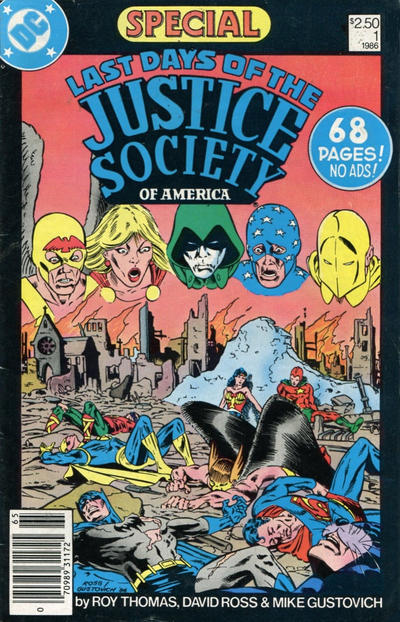
Another possible way their ages could’ve been their brief exodus from the DC Universe in Last Days of the Justice Society:


…in which they are pulled into another dimension and forced to fight an eternal battle until some years later when they were recovered in some event or ‘nother. This could have been the Steve Rogers/Captain America solution, where a WWII character is taken off the table and “preserved” for an indefinite amount of time, with his revival pushed farther and farther into the future as publishing of the character continues. When Captain America was first revived in the 1960s, he’d only been “gone” for 20 years. Now that we’re in the 2020s, that time he was frozen in the ice is now, what, 60 years? It’s attaching that modern hero “sliding scale” to Golden Age characters. (And my apologies…this sounds vaguely familiar, like this idea was brought up in my comments recently…I’m not plagiarizing you on purpose, honest.)

And also there’s just straight up immortality or extended lifespans because you’re a super-powered being from another planet (Superman) or an Amazon (y’know, Wonder Woman). I mean, yeah, sure, they aged, but c’mon.

Plus there’s also the possibility of simply unhooking them from the WWII era and making them just, I don’t know, older heroes who’d been around prior to the new generation. This is kind of he tack they’re taking on the Stargirl TV show, but it feels weird to not have them associated with that specific conflict. And moving them to another war would be…well, just postponing the problem, really, and honestly would you went them to be Vietnam War vets? Gulf War vets? That would be really strange, and as-is would be hard to retrofit the JSA into one of these more modern settings and have them retain the same sort of feel.

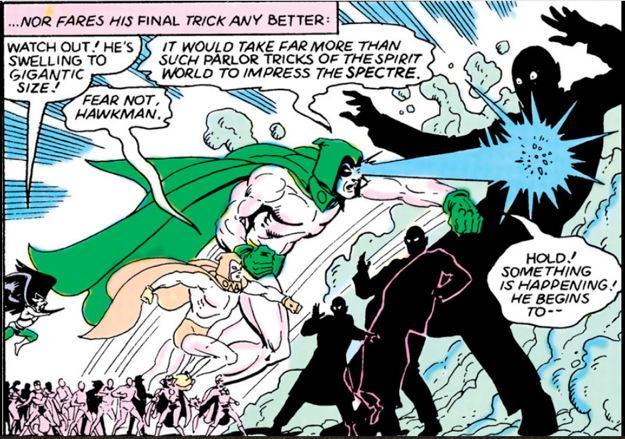
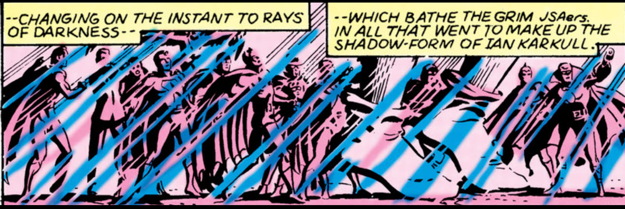
The one overall explanation I do recall is from the third All-Star Squadron annual from 1984 by Roy and Dann Thomas and a whole pile of artists. It’s a clever story, and set in the early 1940s, but I’m going to focus on the climax. Here, in the segment drawn by Rick Hoberg, the JSA is fighting the villain of the piece, Ian Karkull (you just can’t trust people named Ian), who’s been killing folks and absorbing “time energy” and that sort of nonsense:


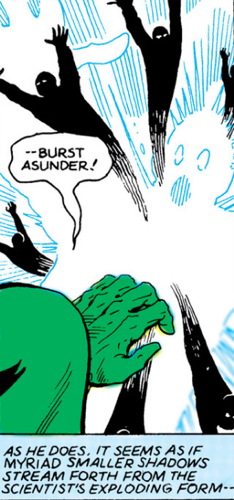
And like any decent bad guy at the end of the story, he explodes:


…and the JSA and some associated cast members get bathed in the resultant rain of energy:


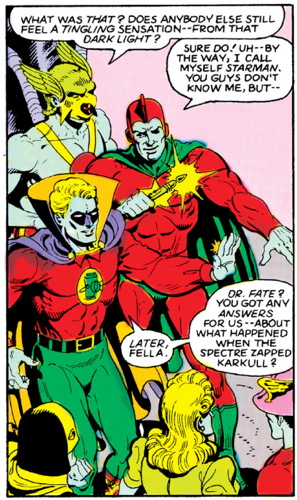
It makes our heroes feel weird, though it should be noted the greenish tint was not an in-story indicator that something peculiar has happened, but rather was an unusual printing issue in the original printed comic that left skin tones miscolored on several pages. I was hoping they’d fix this for the digital presentation I’m snagging these panels from, but alas:


Also, way to just dismiss Starman, GL, I mean seriously.

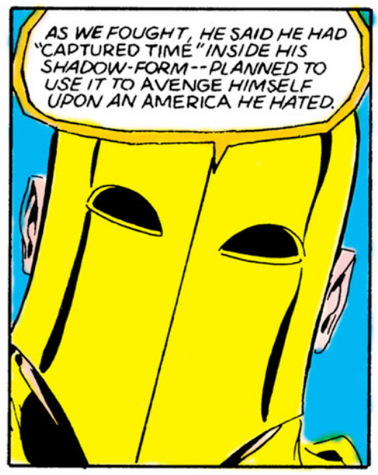
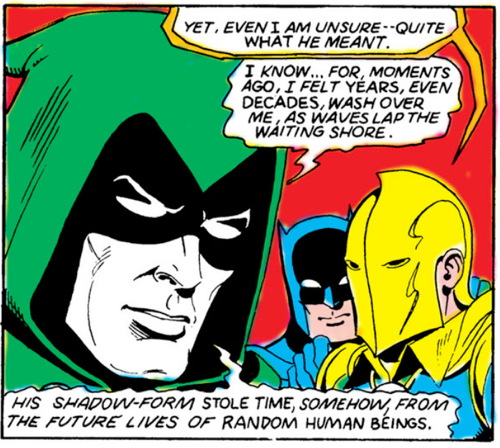
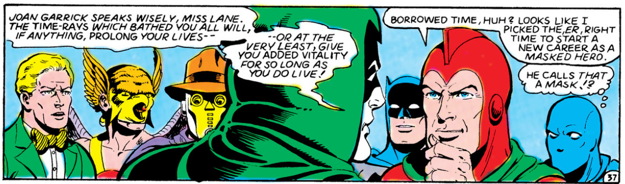
But here come Big Time Movie Star Dr. Fate and his ghostly pal the Spectre with some mystical explanations:


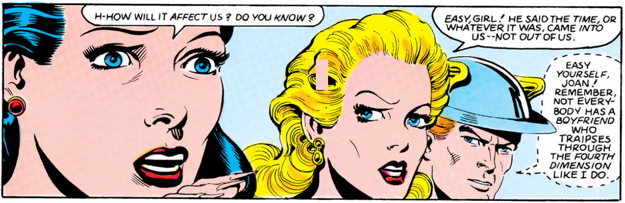
Lois Lane wonders how this energy would affect them, and Jay’s wife Joan just lays into her for no real good reason:


And then, the clincher: here’s why the JSA is still around in the 1980s, kids, well into their 60s!


Also, is this “Get on Starman’s Case” day here or what? Though in the conclusion of the annual, Hourman is like “yeah, I gotta take some time off” and Starman is all “I’LL TAKE HIS PLACE ON THE TEAM, C’MON GUYS” so maybe he had it coming. Plus, the Atom specifically saying that is pretty funny.

Anyhoo, that’s the explanation I grew up with reading the adventures of the Earth-2 then later Regular DC Earth Justice Society. If there were other reasons given (for the whole team, just a member here or there) please remind me. I’m sure I’ve read one or two others, but this was The Big One as far as that topic was concerned.