The Final ’80s Countdown, Part Eighteen.

Back to the fave ’80s titles survey, with the next three-vote getter:

Mage (The Hero Discovered) (Comico 1984-1986)
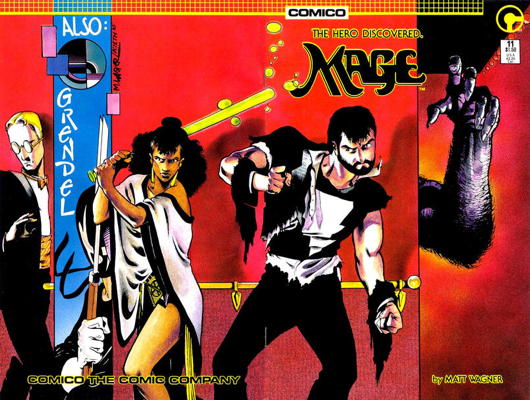

In 1983 we saw writer/artist Matt Wagner’s Grendel, which had its run cut short at three issues. The covers were quite striking, Wagner’s then-amateurish-but-charming art assisted by subdued coloring. The interiors were simplistic and, to a certain extent, crude, but clearly promise was there and the story (of our title character, a glamorous villain, pit against a not-so-pretty hero) remained compelling. But with the story half-completed in this format, we didn’t get a chance to see Wagner learn on the job, improving his artwork and storytelling skills as we watched.

Not so with Mage (subtitled “The Hero Discovered” on the cover), as we can clearly watch Wagner’s evolution as a comics creator over the course of this 15-issue series (helped in no small part by inker Sam Kieth, who comes on midway through the run). Looking at the first issue compared to the last…well, I’m not going to say it’s like looking at two different artists, because clearly you can see the line from one artistic state of being to the other, but there certainly is a notable refinement in form.

The story is…well, our hero, the surely-by-coincidence-looking-like-his-creator Kevin Matchstick is called upon by Mirth (the titular Mage) to protect the Fisher King from the Grackleflints, spawn of the evil Umbra Sprite, and whatever mystical menaces they unleash. In this Kevin is assisted by Sean (a ghost) and the streetwise Edsel.

…Yeah, that’s a bit, but it all works in context, I promise.

The story continues in Mage (The Hero Defined) published by Image from 1997 to 1999 (including a #0 issue you had to mail away for), and concludes in Mage: The Hero Denied from 2017 to 2019 (also from Image, also with a #0 issue that, this time, you could buy in stores). The second series deals with Kevin working alongside other mythical heroes, and the third series has him as a husband and father once again called into battle against mystical evils.

The best way to read this first series however, aside from collecting the original issues (which shouldn’t be too hard at this point) is to get the Donning reprint volumes released in 1987-8. These are oversized, printed on nice, slick paper, and even include the Mage back-ups from the second Grendel series. Comico also published a thing called Magebook that reprinted four issues in each of the (far as I can tell) two volumes released. I think these may have been rebound copies of the actual issues, I’m not sure. I also seem to recall they weren’t…terribly sturdy, but maybe someone can chime in and let me know.

There was an 8-issue series from Image reprinting “The Hero Discovered” in the late ’90s, but…mmm, I’d probably avoid that one. As I understand (and correct me if I’m wrong) due to Wagner no longer having the original art or the film shot from that art, current reprints of this story are sourced from actual printed copies of the original Comico comics. And for this series, the art was relettered and some digital effects applied to some of the artwork, and…it wasn’t great, as I recall. I believe there were several typos in the relettering, and the added effects were very much of the “because we can do them” variety. I don’t know, maybe those effects were covering up defects caused by the less-than-ideal method of obtaining the artwork, but they certainly didn’t appeal to my eye.

As of right now, more or less, all three series have been reprinted in a series of paperbacks, or three hardcovers, from Image (with the typos hopefully fixed in the first series, but the digital fiddling is likely still present). Checking with Diamond’s current stock even as I type this, they have the hardcovers for the first two series and one of the two books reprinting the last series. (EDIT: my mistake, a third hardcover reprinting Denied appears to have never been released.)

Again, ideally, just get the original comics if you can. It’s good stuff all the way through, you get the letters pages, and in that first series you get the Grendel back-ups (telling the full story that was never finished in that 1983 comic). Oh, and you have to get Grendel (2nd series) #16-#19 for the Mage “Interlude” back-ups.

However you get it, it’s a fun read, and it’s hard to believe, looking at the dates, that I read all of these series as they came out, and waited patiently over the literal decade between each one. It was weird, to age along with Mage. Well, Kevin, but that didn’t rhyme.

Anyway, as I’ve said half-jokingly before, I’m still awaiting the fourth series, “The Hero Disco-Dances.” C’MON, WAGNER

As an added bonus, here’s a post from about a year and a half ago with an old piece of Mage promotional material.
“Tongue-lashed” sounds dirtier than I meant it.

Sorry for skipping days here and there lately…just have a lot of stuff going on, on top of my aged body just being too tired to blog at the late hours that usually are the only time I have for such activity. So, let me get a few topics out of the way today and maybe sometime next week I can get back to the Final ’80s Countdown.

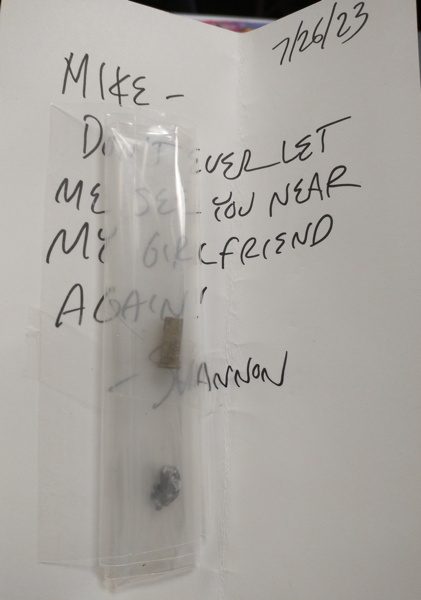
First off, it’s here, it’s here…or rather, they’re here, a sample of the very bullet and casing used to shoot them holes right through the much-discussed-on-this-site Jab #3.


And there they are, direct from Jab #3 contributor and “Too Much Coffee Man” creator Shannon Wheeler his own self. The accompanying note reads “Never let me see you near my girlfriend again!” and the temptation was to just hide this item somewhere in my collection, unexplained, and leave some serious questions behind for anyone eventually handling whatever passes for my estate. But no, here I am blabbing about it on my comic book weblog, which of course has immense worldwide reach so all my secrets are revealed. Ah well.

But big thanks to Mr. Wheeler for offering up this peculiar bit of comic book history (and also for kindly answering my questions about the whole Jab #3 project). Also, I need to add links to the older Jab posts so they get the whole story if they come upon my writings via Google or Ask Jeeves or whatever.

• • •

Next up, reader Cassandra asked if I could post a link to William Messner-Loebs’ GoFundMe, and yes I can! That poor guy and his wife have had a real time of it for years now, and I most sincerely hope they can get themselves into a comfortable, stable place.

What would be nice is if more of his comic book work were in print and providing him at least a little money. Like, was any of his Flash work collected? A recent DC Pride one-shot had that one story of his with the Pied Piper, but beyond that there wasn’t a lot of comprehensive reprinting of his run, far as I can tell. I don’t think even #50 was reprinted anywhere, and that was kind of a hot issue at the time.

A chunk of his Wonder Woman made it into a trade that could stand reprinting. And how ’bout a nice big archival hardcover of Journey? Or maybe a new printing of Epicurus the Sage? Or just giving him new work if he wants to do it?

Anyway, help him out, even if it’s just spreading the word.

• • •

Sean asked about Pee Wee Herman (RIP the great Paul Ruebens) in comics, and the first thing I thought of was this:


…which, if memory serves, was a kinda/sorta parody of Pee Wee, maybe…it’s been a while since I’ve read it, but it’s something like that. Anyway, there you go.

• • •

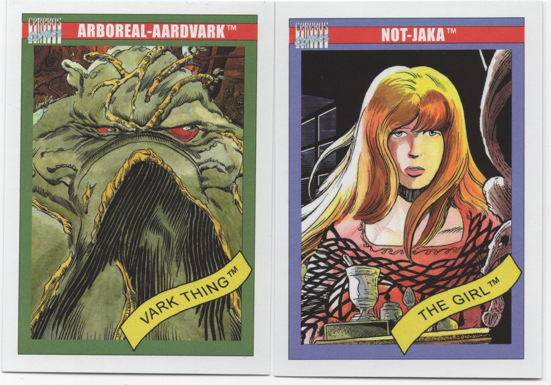
Longtime reader Michael G. came by the shop in person and admonished me, tongue-lashed me in the cruelest manner, for my lack of content this week. But to show me all is forgiven, he gifted me with some Dave Sim Cerebus trading cards, which are, of course, the Dave Simmest, but you’d be disappointed if they weren’t:


Yup, they’re Swamp Thing-ish…the other cards are nice too, but look, I’m too tired to keep this post going for too much longer, so let’s just throw out one more scan here and call it a night.

• • •

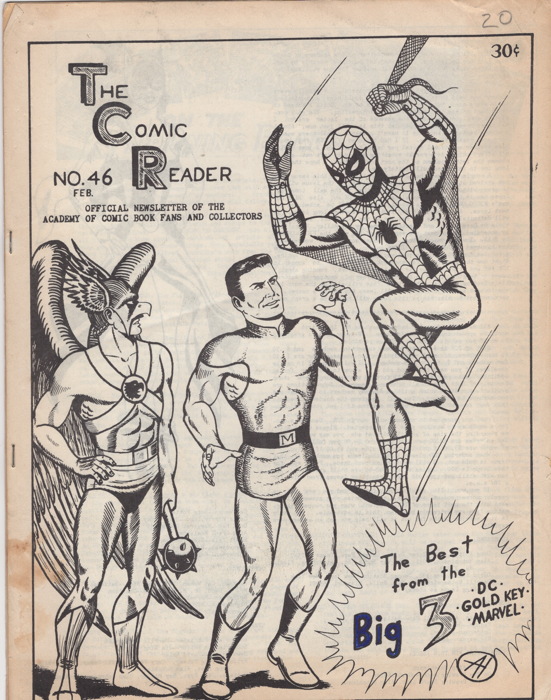
As promised, one more scan, this time from my fanzine collection:


This ‘zine is from 1965, which means Spider-Man had only been around about three years. Weird, huh?

Just trying to not make anyone mad here.

So a little while back I was at the local grocery store, doing my weekly hunting and gathering as my Paleolithic ancestors once did, when I paused at the magazine section.

I used to love the magazine section of grocery stores. While my dad shopped, I, as a young Mikester, would hang out near all the books and magazines trying to pick which one I’d be able to talk my way into including with the evening’s haul. I was generally successful, as both my parents, like me, were voracious readers and we’d usually come home with a book or magazine(s) or both for them as well.

And the magazine sections used to be huge, or at least they appeared to be so to me in the 1970s/early 1980s. So many choices, so many weird and wonderful mags, and this was the era when you could still find comic book publications. Not so much the comic books, though there was a limited selection at some shops, but, like, the Marvel magazines were a little more common. That’s where I first spotted Pizzazz, for example, eventually getting a subscription (only for it to be cancelled shortly thereafter, with Amazing Spider-Man replacing the rest of the sub).

One quick memory I had specifically of the Marvel mags at the grocery store was when I spotted the Hulk mag on the shelf. I must have declared out loud to myself “hey, it’s Hulk” or something to that effect as an adult walking by, a really old guy, probably at least in his 40s, replied to me by cheerfully growling “HULK!” and, like, lifting up his arms, fists clenched, and stomping by Lou Ferrigno-style.

Anyway, I loved me the magazine sections way back when. The exotic allure of them has declined somewhat in my later years, as my employment has generally revolved around managing shops that were essentially all magazine racks. But that didn’t stop me on my recent visit to the grocery store, as I gazed upon the one section over which I used to obsess.

Much smaller now, of course, not just because my size relative to the rack has increased, but it’s just plain physically smaller. Not so many paperbacks, not so many magazines, not as much wild varieties of publications (wither CB Citizens’ Band? Wither UFO Report?).

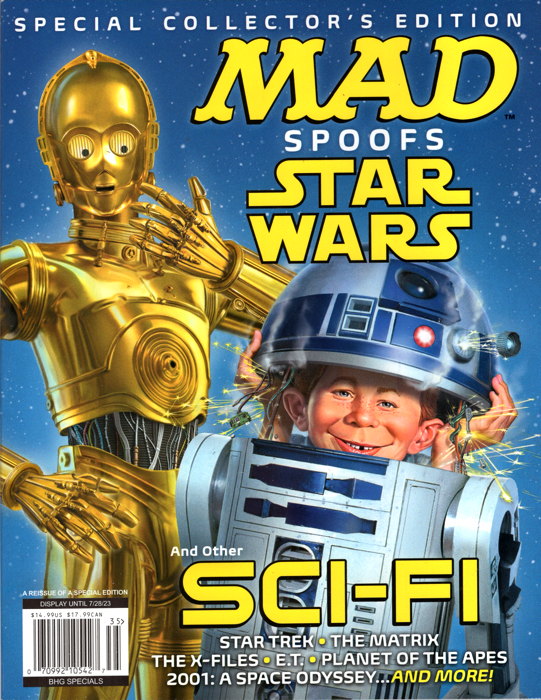
But still present, in some form, is Mad. As a kid, Mad was an easy sell to take home as my dad read it when he was a kid, and realized a true and proper education included exposure to The Usual Gang of Idiots. Of course, today, the actual Mad magazine exists only in comic shops (like my own), but special publications are still offered to more general outlets. Like, say, grocery stores, where I spotted this item on the shelf:


Magazine-sized, squarebound, a mix of color and black and white interiors, featuring mostly the direct spoofs of sci-fi movies (like Star Wars, natch, and 2001: A Space Odyssey) along with other articles making fun of same. Out of nostalgia (both for Mad and for “buying something from the grocery store magazine rack”) along with a desire to have some of these parodies available to me in a slightly more permanent format, I threw it into the cart. Because I’m an adult now and I can buy dumb things if I want to. Usually. If I have the money.

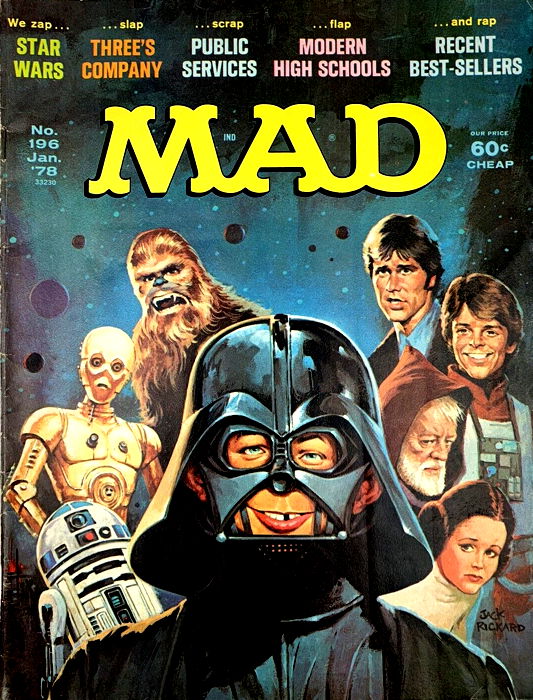
An interesting thing I noticed in this publication is something I hadn’t noticed in Mad before. Well, okay, it’s not like I’ve been keeping tabs on this or anything, but I noticed a little editorial rejiggering of one of the spoofs. A spoof I am very familiar with, having read it when it originally came out about a million times. Let us go back to the heady days of Cover Date January 1978 (probably more like around Fall ’77) and take a peek at Mad #196, parodying one of the biggest and most influential movies in Hollywood history:


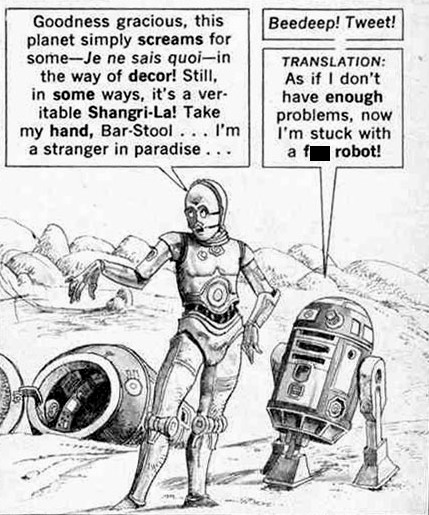
Oh yeah, that’s the stuff. And the parody itself is beautifully illustrated by Harry North, Esq. (and surprisingly not by the usual Mad movie parodist Mort Drucker), with some solid jokery by stalwarts Larry Siegel and Dick De Bartolo). However, one gag in the original…let’s say it didn’t age well:


Yes, I censored it slightly, don’t yell at me, people inclined to yell about this sort of thing. Anyway, the gag is playing off the public perception of some that Threepio’s…prissiness reads as “gay,” and this panel is leaning into and exaggerating that idea, complete with The Gay Stance. The derogatory use of that specific word was probably seen as okay because 1) it could be read as poking fun at that perception, and 2) as Bully‘s pal John mentioned to me when he helped me track down that original panel, the term had been used in All in the Family and was probably thought to be fair game.

Still, the joke can come across as homophobic (and while Artoo, from inference, may be a dick in the movies, I think we all prefer to assume he’s not that much of a dick), and that particular use of that term has, as we’ve hopefully grown more aware of and sensitive to the needs of others, become not acceptable.

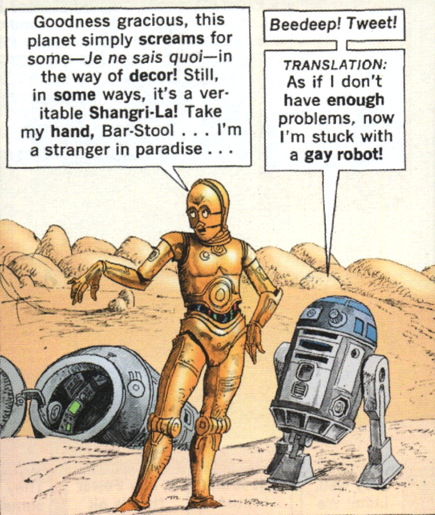
As such, here’s how the panel appears in the 2023 publication I’ve purchased:


Okay, the joke…hmmm, surface level, still not great. And we’re farther away from the “Threepio is obviously gay” idea that was once so widespread, piggybacking on the Star Wars phenomenon itself, and thus losing that context to inform the panel. And Artoo still comes across as a real jerk.

But That Word is gone, because in today’s culture just casually throwing it out there for a gag like this, is Not Cool, Dude. Not a great joke, particularly removed from the wider cultural context which, frankly, didn’t help it all that much in the first place, but at least now it won’t read as just straight-up offensive. It’ll just be normal levels of offensive.

Over the years, Mad hadn’t necessarily had the…greatest track record with jokes involving the LGBTQIA community early on, punching down more often than not. I believe, though, they’ve avoided reprinting much of that material. But the Star Wars parody is…well, it’s the original Star Wars parody from Mad, it can’t be easily buried. And sometimes things just don’t age well, so if they wanted to keep reprinting the Star Wars parody, well, someone made the decision to take out the slur.

Like I said, I don’t know if this was as widespread practice with Mad‘s reprints, or it they purposely avoided that content until they couldn’t.

About twenty years ago Mad put out a special that included all the Star Wars parodies at that point. I had a copy of that, but no longer, and I believe That Word was still intact. If anyone can confirm, or if they know of other examples of Mad fiddling with jokes from back then that don’t hold up now, please let me know.


thanks to Bully, the Little Shocked Bull, for production help. DON’T LOOK, BULLY

The Final ’80s Countdown, Part Seventeen.

At last, we’re up to the three-voters from my little ‘ol “Favorite 1980s Indies Comics” survey. Just for my own sanity/need for sleep, I may only do entries with one title at a time (like last time and today), but we’re in the home stretch so we’ll be done relatively soon!

And here we go:

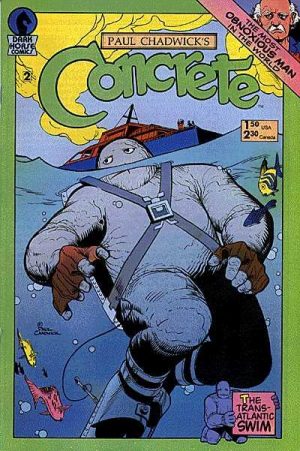
Concrete (Dark Horse 1987-1988)

Paul Chadwick’s large rocky fella has been missing from the stands for quite a while (though with the occasional promise of a new series coming down the pike), but the character retains a beloved following among the comics cognoscenti even today.
First appearing in Dark Horse Comics’ premier publication, Dark Horse Presents #1 in 1986, Concrete was primarily presented in short stories for the first year or so of his existence. The mostly down-to-Earth stories, told in a purposefully mundane and introspective style, presented the life of Concrete, a person in a huge rocky body trying to adjust to living in a world too small and fragile for him. At the same time, Concrete uses the advantages conferred upon him by his body to go on exploratory adventures around the planet.

In this early period no explanation is given for Concrete’s existence, until early in his brief ongoing monthly series (the one listed in the header above). It’s aliens, what took political speechwriter Ron Lithgow and a pal who were on a hiking trip and for reasons yet unknown transplated their brains into these large artificial bodies. Aside from this origin (and an expanded retelling in a later mini-series), we don’t get any more aliens or monsters or whatever in the strip, leaving Concrete as the one fantastical element.

[NOTE: in the original telling of the origin, Concrete escapes the alien’s craft as it departs, while his hiking buddy remains behind. Chadwick had said in the past that his idea of the last Concrete story beginning with Concrete’s pal showing back up on his doorstep. In the expanded origin, it appears that during the escape Concrete’s pal is killed, so either this was a fake-out or Chadwick’s changed his mind on the ending.]

That monthly series ended in ’88, and was followed by several mini-series and one-shots (in color and in black and white). The most recent mini (The Human Dilemma ended in 2006 (on one heck of a cliffhanger), and some short stories that appeared in the revived Dark Horse Presents anthology were reprinted in a one-shot in 2012.

The Concrete stories have been reprinted a number of times in a number of formats, but the most convenient method of reading everything (or at least most everything, but I’m pretty sure these are comprehensive) would be this set of 7 trade paperbacks. This has everything except the 2012 one-shot. The books don’t appear to be currently available from Diamond but they should be relatively easy and inexpensive to find.

A movie was in the planning stages but alas was never to be. I think…Bill Murray was one of the names floated to voice the character? I still believe the comic would lend itself well to some form of adaptation, be it live action or animated. I would fear, though, it would stray too far from its low key comic origins and just go straight to “Concrete Vs. Aliens.”

This is a great series, well worth checking out in those collections or even just sampled out of back issue bins. And I hope we see new stories with Concrete again someday.

Get yourself Jupitered.

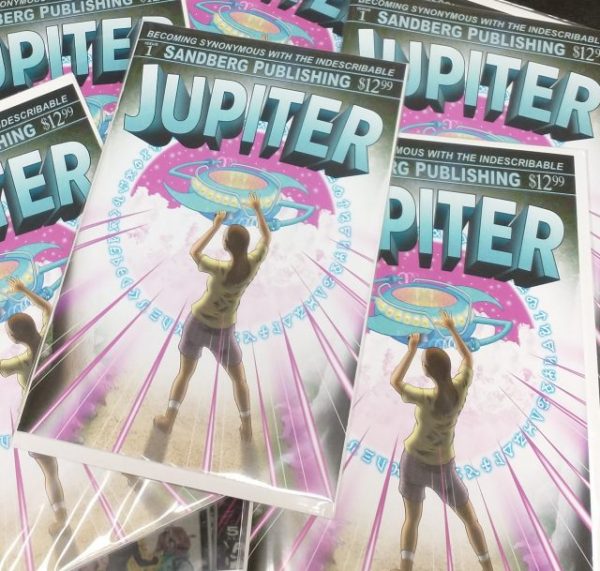
It’s here, it’s here, in my hot little hands direct from Jason Sandberg himself, as predicted by prophecy, the new Jupiter #1:


Jupiter was a black and white indie publisher too briefly in the 1990s, and I discussed that run here. Then in 2018 Jason put up a digital compilation of the best of Jupiter. And now, here we are, with a brand new color comic featuring his weird and wonderful cartooning.

Now, ever since I wrote that first blog post about Jupiter way back when, Jason and I have been online pals, chatting regularly, me hopefully being encouraging about his work, and he sending me the occasional goodie in the mail (like when he sent a stack of mini-comics he did for me to give away on Free Comic Book Day).

This time, he made sure I had plenty of the new Jupiter on hand, along with a few extra bits of business just for me.

First, he sent me a signed copy. That was nice!

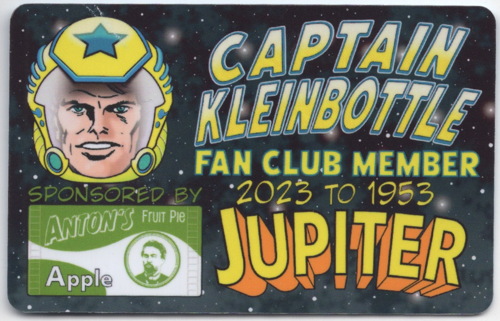
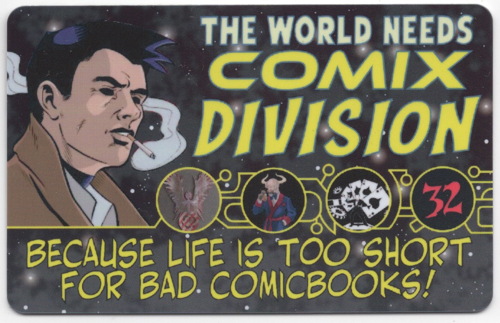
Then there were the membership/fan club cards:

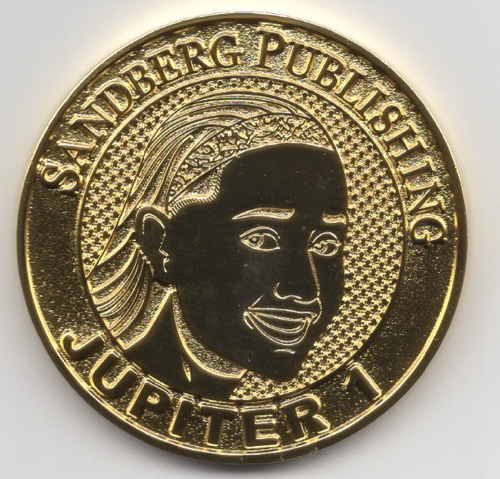
And of course, the official Jupiter coin:

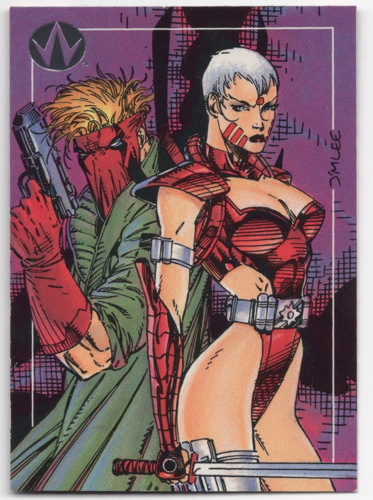
Then, inexplicably, or perhaps entirely explicably, this WildC.A.T.s promo trading card:

He also sent me a personal note, but that’s personal, like I said. MIND YOUR OWN BEESWAX

Last but not least, yours truly gets not one, but two mentions within this mind-shattering publication, including a plug for the very site you’re theoretically reading right now:

…as well as for the store I reportedly own:


“Drop?” “Drop in?” “DROP IT, PUNK?” “Dropout Boogie by Captain Beefheart?” You’ll have to buy the comic, or surreptitiously sneak a peek in the shop, to see the whole pulse-pounding prose Jason attached to mentions of ME ME ME.

Anyway, there it is. YEARS IN THE MAKING! I’m glad Jason’s funding campaigns were a success, and that hopefully more people will get exposed to his wonderful cartooning.

I think you can still order it from that Indiegogo link? I’m not sure. But while supplies last, you can order them from me! Tell me I sent you!

And you’re gonna get yet another post about this comic when that bullet arrives.

So I somehow ended up in a Twitter thread with Too Much Coffee Man‘s creator, the wonderful cartoonist Shannon Wheeler, and I took the opportunity to ask him a couple of questions about Jab #3. You know, the comic what had a bullet shot through its middle?

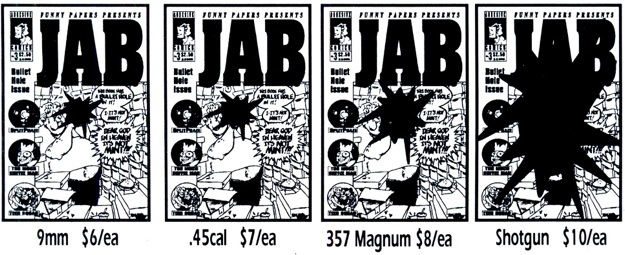
My questions both involved this ad that was inside the comic, for copies of the magazine shot with more powerful guns than the .22 caliber used on the “normal” books.

My first inquiry was “were the variants advertised a real thing?” to which Mr. Wheeler replied “Yep!” He stated they only did a few, and that they didn’t take any pictures of the process. That was a shame.

My next question was “did you sell any?” and his reply was that they “seemed like they sold a handful, but not many.” He did volunteer the added info that the shotgun variant “was the most fun (but scary)” which, as someone who’s fired a shotgun, I can probably attest to.

Best of all, he offered to send me a spent bullet and casing from the shoot, and boy oh boy I can’t wait to have that. What a great, hilarious addition that’ll be to What’s Left of the Vast Mikester Comic Archives.

A big thanks to Mr. Wheeler for letting me bother him a wee bit about this weird but wonderful piece of comics history.

• • •

Speaking of the Twitters, I don’t know if folks without an account can read tweets there again, but the Twitter widget I had in my sidebar seemed to be working when I just checked right now. And by “working” I mean “running dozens of my tweets down the side of my page instead of the usual five,” which is par for the course considering the new management there. For the meantime, I’ve removed that widget and replaced it with a simple text link.

Also here’s a reminder that I’m also on Bluesky (still invite-only, sorry) and Mastodon. And (yuck) Threads as (also yuck) “mikesterlingjr.”

Foreward into the past.

So thanks to Roel for pointing out my “forward/foreward” typo, which was dumb of me specifically because 1) I had the book right in front of me and it’s spelled out there, and 2) I had to correct myself when I typed the same word in an email, so I do know how to spell it. Ah, well, it wouldn’t be Progressive Ruin without any typoos.

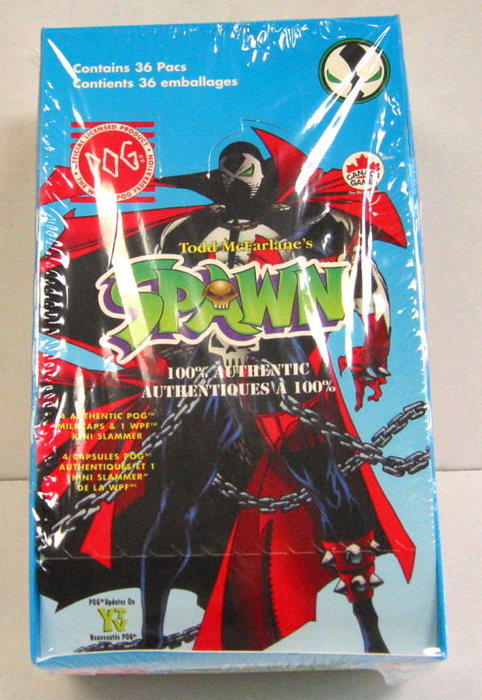
Anyway, I’ve been going through some old CD-Rs and DVD-Rs of old files, and finding some oddball stuff. Like, here, enjoy a full box of Spawn POGs (or SPOGs) that I had at some point for sale on the eBays:

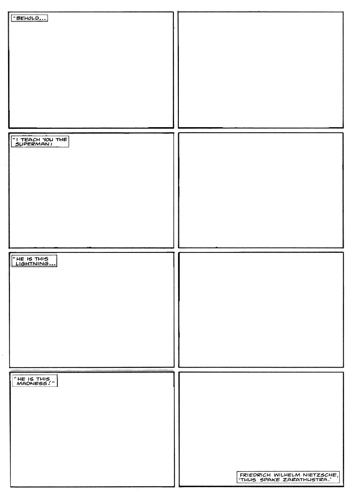
And here’s this thing, a blank template I created from the first Eclipse issue of Miracleman:

…that I eventually used to make this post.

If you want a full-size version of this template for your artistic shenanigans, just drop me a line and I can email it to you. (Sorry, it’ll get hotlinked to death otherwise.)

Oh, and another thing…I’ve recently been reading Bill Mantlo and Sal Buscema’s “Intelligent Hulk” storyline from the early to mid-1980s, leading up to the Hulk’s banishment to the Crossorads in #300. I started reading Incredible Hulk with #293, which is pretty much right at the final act of this story which more or less began around #270.

For about 2 1/2 years the status quo of the Hulk had changed from what everyone basically “knew” (either from the comic itself or from the TV show), which seemed like it was taking at least a slight risk. Even at the end, changing the Hulk back into an even more brutal, even cruel, version of the character was a little startling. It definitely laid the groundwork for following writer Peter David’s ten years of various versions of the Hulk, and pretty much the Hulk ’til today. (Not to leave out interim creator Al Milgrom, who was the fella what actually brought back the Grey Hulk before David got his hands on him.)

But what I thought was interesting, after Mantlo demonstrating repeatedly over the course of the storyline, that even with Banner’s mind controlling the Hulk’s body, he could still fall into a Hulk-ish rage if he wasn’t careful. This groundwork for Banner eventually losing control was put down sporadically, but not, like, overwhelmingly, and the danger of the old savage Hulk returning seemed…at least preventable.

Then Marvel Super Heroes Secret Wars came along, where a whole gaggle of Marvel’s heroes vanished at the end of one of their issues, returned at the beginning of their next issues, and we were all extolled to read the 12-issue Secret Wars series to find out what happened to them between those installments.

In Hulk’s case, he came back with a broken leg and a bad attitude, suddenly a lot more cranky and violent than he had been just a month ago. Obviously things went poorly for ol’ Jadejaws during his Secret Excursion, causing his further mental decline.

However, reading it now, as a whole, rather than just the final few issues as I had originally…the pacing is off. Having so much of the Hulk’s decline happen elsewhere felt like something of a cheat after following the story in his own book for so long. Yes, everyone reading Marvel was expected to read Secret Wars, but even if you were planning to, the nature of the series meant that by the time you got to Hulk’s problems there, the actual Incredible Hulk book would have moved on into its new direction. A part of the story’s development had been excised from the main book, put into another writer’s hands in another series, and then deal with those repercussions back in Hulk. Ah well, that’s the Marvel Universe for you.

To be fair, #300 was looming ahead, so a change to the status quo was going to come anyway. And realistically, how much more of “Banner is or is not losing control?” plot events did we need? It would have been nice if we’d got more of Mantlo’s Intelligent Hulk, but it’s enough that he basically changed what a Hulk story is for…well, all time.

The Final ’80s Countdown, Part Sixteen.

Today I am doing the last of the two-voter getters from my Fave ’80s Indies (plus Marvel/Epic Because Why Not) survey. It’s a long’un, so strap in:

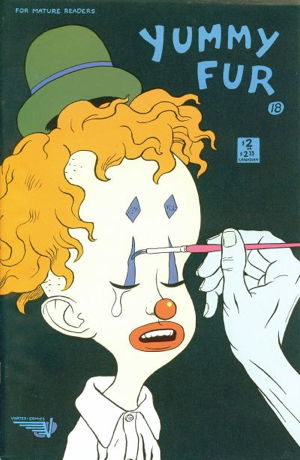
Yummy Fur (Vortex/Drawn & Quarterly 1986-1994)

Yummy Fur started as a mini-comic self-published by cartoonist Chester Brown, running seven issues from 1983 to 1985. It would be picked up by Vortex Comics, reprinting the contents of those minis in the first three standard-sized comic issues and continuing with new material afterwards.

While many of the very earliest strips were short stand-alone gags, the main thrust of the book was the adventures of Ed the Happy Clown, to whom horrible things would happen and continue to happen through the features’ tenure in the book. However, some of those short seemingly unrelated strips would eventually feed into the main Ed narrative, most notably “The Man Who Couldn’t Stop” (about a man sitting on a toilet who, well, it says right on the tin, really).

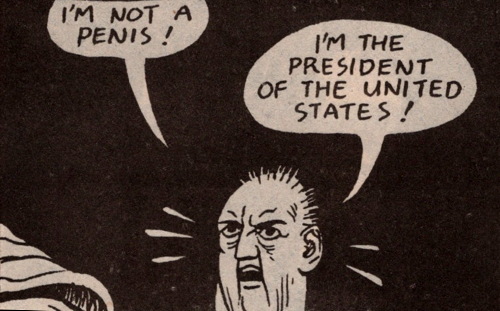
The Ed stories tended to be surrealistic, morbidly humorous, occasionally shockingly violent, grotesque, and often a little sad. There’s a lady vampire in there too, who becomes one of Ed’s few friends in his travails. The childlike Ed just suffers through nightmarish scenario after nightmarish scenario, the peak of which is, well, the minature head of an other-dimensional Ronald Reagan replacing part of his penis. Hence:

And on top of all this, most issues featured as back-up stories just straight adaptations of stories from The Bible, which also seemed to occasionally feed, at least thematically, into the lead feature. Was it a strange mix? Oh, certainly. But it was all done so…plainly and matter-of-factly that both the humor and the horror were unfettered by any sort of distance between the narrative and reader. It was right there, in your face but not overblown, presented in an almost mundane way.

After ending the Ed story in #18, Brown moved on to more down-to-earth autobiographical stories (but not without the occasional flight of fancy, such as in “The Little Man”) which ran through the rest of the series. The Bible back-ups continued as well. This was at the height of the autobiographical indie comic, and Brown was one of the most prominent in the genre.

There have been numerous reprints from this series, and it gets a little confusing particularly with the “Ed the Happy Clown” material. (One should also note that Brown did self-publish a collection of the first six minis in ’85.) I’m delving into the Wikipedia article to keep it all straight. However, I do own the initial trade paperback reprint from 1989, which contains the Ed-related stories from the first 12 issues and a foreward by Harvey Pekar.

The second Ed collection from 1992 also ends the reprints at issue #12 (with some material from a later issue), and includes a new ending.

In 2005-6, there was a nine-issue Ed the Happy Clown comic series from Drawn & Quarterly, re-presenting the Ed story as it appears in its definitive, “truncated” version from 1992, along with notes from Brown. This was collected into the 2012 Ed the Happy Clown hardcover, which is still available as I type this.

And the later autobiographical material has been collected into three volumes: The Little Man (various short strips), The PLayboy (about Brown’s fascination with said magazine), and I Never Liked You (the life and loves of Teenage Chester). Not reprinted is a big chunk of the latter “Ed” stories (from #13 – #18, though portions of #17 make it into the “definitive” edition), and I believe a few things from the “mini-comics” era also remain unreprinted. The Bible stories are also uncollected, far as I can tell, which honestly surprises me a little.

Long, long-time readers of this site know that I had some trouble tracking down a couple issues of Yummy Fur for the longest time. #6 and #9 eluded me for years, though I did eventually track them both down. Issue #9 was the last, getting a copy from, of all places, Scott McCloud’s collection back in 2013.

Now I knew one of the reasons some of those issues of Yummy Fur were so hard to find was that Diamond Comic Distributors decided to not carry the title for a while, presumably to make room for higher quality, better selling material. Eventually, after all the accolades Yummy Fur received, Diamond was shamed into carrying it again. According to the Wiki article, because of being dropped by Diamond, ordered bottomed out on #9, with a reported print run of under 1,700 copies. No wonder it was such a pain in the ass to find this stupid issue.

Anyway, Yummy Fur is pretty great. It’s a shame that so much of the Ed story was removed from the “definitive” edition, but those later issues should be sorta relatively easy to find. So, get the official story in the hardcover, and get the “deleted scenes” in issues #13-#18. The autobio stuff is entertaining, too…Chester doesn’t really pull any punches in depicting his life, so brace yourself for some cringey discomfort. Hope you like masturbation!

But if you want the Bible stories, you’re gonna have to buy the original issues. In fact, ideally, you should get a full run of the series for the unadulterated experience. I mean, good luck finding #9. No, you can’t have mine.

• • •

Okay, that’s it for the two-voters…on to see what series got three votes in my little ’80s indie overview thingie! Thanks for reading, pals!

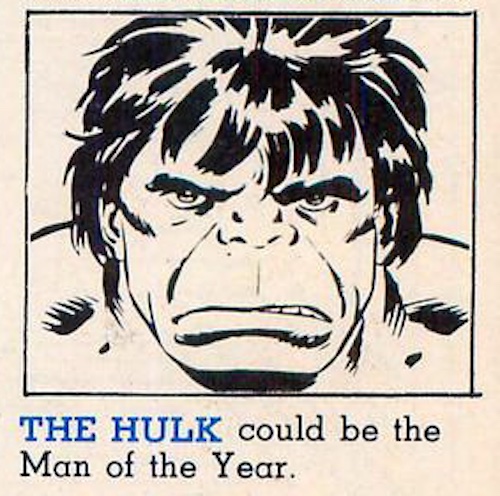
“Could be?” IS.

Was otherwise occupied Thursday evening, so all I have for you today is this excerpt from the “Pizzazz Poop” celebrity gossip column from Pizzazz #12 (September 1978):

The Final ’80s Countdown, Part Fifteen.

At long last, here is the next installment of our little ’80s indie overview here, as voted upon by YOU, the people what still read the blogs and also a few people I cajoled into voting on Twitter.

And speaking of the Twitter, a couple of you have wondered what happened to my Twitter feed that used to be in the sidebar on this site. Well, I mean, it’s still there, it’s just not working anymore aside from a link that won’t do you any good unless you’re on Twitter, too. For reasons too stupid to go into, Twitter’s new owner Elon Musk decided to no longer 1) feed out tweets through embedded widgets like the thingie I had in the sidebar, and 2) prevent anyone not logged into Twitter from being able to see anyone’s tweets.

So for those of you following my feed there, I’m sorry, it wasn’t my decision to cut you off. With luck Bluesky will open up to the public sometime soon and you can find me there (under mikester.bsky.social), and I’m also on Mastodon, and if you absolutely have to, I’m “mikesterlingjr” on Threads. I really don’t like Threads. Don’t forget you can usually find what I’m up to at mikesterling.com.

Enough of that nonsense, let’s talk some comical books:

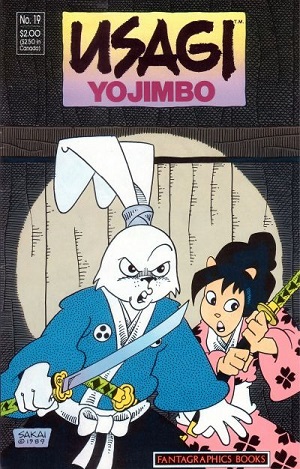
Usagi Yojimbo (Fantagraphics 1987-1993)

Hoo boy, where do I even start. Stan Sakai’s samurai rabbit has been going strong since debuting in Albedo Anthropomorphics #2 in 1984. After some appearances in that anthology, Usagi moved over to Fantagraphics, first in the anthology Critters, then a one-shot special, and then a 38-issue run of his own series (the one noted in the header above). From there the character moved to Mirage (the original publisher of Teenage Mutant Ninja Turtles) for a short run, then it was off to Dark Horse Comics for its longest numbered run from ’96 to 2018. Since then new Usagi has been coming from IDW, in both an ongoing series and various minis.
That’s just a barebones overview of its publishing history, not mentioning stuff like the Space Usagi mini-series (leaving the usual setting of Japan from centuries ago and presenting the adventures of Usagi’s descendant in a sci-fi future), or the various crossovers with the aforementioned Mutant Turtles (one series going on even as I type). There are literally thousands of pages of story produced over the last few decades, and nearly all of it has been reprinted; I direct you to this part of the Wikipedia entry to find what comics show up where.

“Yes yes, but is it any good, Mike?” The answer is “yes, it is excellent.” I missed out on buying it from the start (though I have on very rare occasions held that Albedo #2 in my hands), but I tend to drop in on the character from time to time, at one point several years ago sitting down and reading, like, sixty in-sequence issues that showed up in a collection. Sakai’s storytelling, from his scripts to his art to even his lettering (the last of which very familiar to Groo the Wanderer fans), is flawless. Sakai populates his book with a cast of anthropomorphized animals (including the lead: “Usagi” is Japanese for “rabbit”), and tells a straight, serious (but not without its moment of humor) tale of his lead’s relationships, adventures, and travails.

The character has appeared in various animated adaptions, perhaps most famously in the original 1980s Teenage Mutant Ninja Turtles cartoon, and then later in the 2012 TMNT series. Most recently a CGI cartoon has been appearing on Netflix, which, like Space Usagi, is set in the future. Haven’t seen it, but I feel like not putting it in the Japan of the past was a lost opportunity. I don’t know, like I said, I haven’t seen it, maybe someone can tell me if it’s any good.

But what is good is Usagi Yojimbo comics. Well worth your time. I know there’s a lot of material out there, but Sakai’s master storytelling will draw you right in and tell you everything you need to know to enjoy what you’re reading. Easily one of the best comic books ever produced.


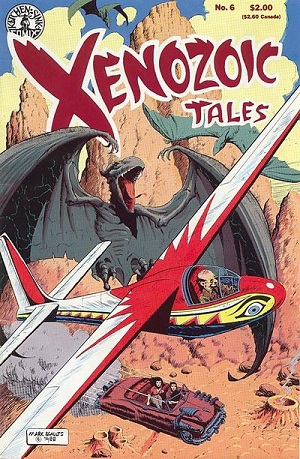
Xenozoic Tales (Kitchen Sink 1987-1996)

But Xenozoic Tales ain’t no slouch either. Mark Shultz’s very EC Comics-inspired series is set in a post-apocalyptic future where prehistoric beasts once again roam the Earth. The concept was introduced in a short story in the Kitchen Sink legacy underground title Death Rattle in ’86, before getting its own series in ’87. 14 issues were produced in a ten year span afterwards, taking a while due to the meticulous art, but probably also due…

…to the advent of Cadillacs and Dinosaurs, an animated adaptation of the comic that debuted in 1993 and ran for one season. I imagine the development of the show took up some of Mr. Schultz’s time.

The Cadillacs and Dinosaurs name had appeared previously, when Marvel acquired reprint rights and reprinted the first six issues in color. That title was used again on a handful of series published by Topps Comics in the mid-1990s, which were new stories written and drawn by hands other than Schultz.

There have been multiple reprints over the years, but none appear currently available from Diamond. Dark Horse had a two-volume series that reprints all of Schultz’s work from book. There has also been a hardcover edition from Flesk that puts everything under one cover. If you want to go for the original comics, they shouldn’t be expensive, but may be a little harder to find now. But it’s well worth the search…these are some beautiful-looking funnybooks.

• • •

Okay, I should wrap up the two-voters next time. Thanks for reading, folks and I’ll catch you on the flip-flop.