Do they even still buy physical textbooks in college, or is it all digital?

So I recently found out that the Roku Channel, which is a free streaming service available on, of all things, the Roku streaming device, features a series called Slugfest. It’s a number of short episodes devoted to the back-and-forth between DC and Marvel Comics over the last eight decades or so. (Yes, I know it wasn’t technically “Marvel Comics” early on, nor was DC technically “DC,” but you know what I mean.) Each episode is only a few minutes long, with a mix of vintage video/images and actor reenactments. (Most interesting is Brandon Routh playing a young Jack Kirby…I mean, he’s got the eyebrows, but he’s gotta be at least a foot taller than Kirby ever was; and Ray Wise as older Jack Kirby is about as perfect a casting as you can imagine.)

I bring it up because Episode 8 of the series, “World Without a Superman,” brings us back to our old friend, Superman #75:
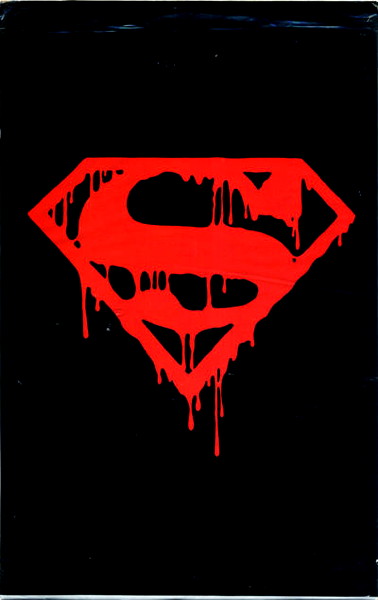
Yes, longtime readers of this site have heard me go on and on about this particular event, from my experiencing the madness from behind the counter at the comic shop I worked at back then, to the aftermarket life the book enjoyed (for varying values of “enjoyed”) in the decades since. Well, if you’re new around here, this here link will catch you up on all those ramblings.

And of course I have touched upon the Death of Superman madness in this very series of Variant Cover-age posts, mostly just talking about the “platinum editions.” But it occurs to me, I haven’t really talked much about the more common black-bagged version in this context. Not that I haven’t spoken about it at length in the past, but I feel like it should at least be brought up, especially in reference to that Slugfest episode.

To give you a little context, the Superman family of books (Action, Superman, Adventures of Superman, and Superman: The Man of Steel) were selling relatively well, at least for us, at the time. They effectively functioned as a weekly Superman comic, with each issue of each series coming out on separate weeks, storylines and subplots flowing from one to the other. It was very effective serialized storytelling. Also, keep in mind we were still riding the wave of the comics book of the late 1980s/early 1990s, so lots of comics were selling very well.

When it came time to order Superman #75, the actual Death of Superman issue, we ordered high. We’d already bumped up numbers on the preceding issues featuring the story leading up to the Big One, but on #75 itself, we ordered something like ten times what we’d normally order on the Superman comic. We were, we thought, taking something of a chance on this event book. It would do well, surely, but well enough to sell us out of 10x normal Superman orders? We’ll see.

Oh, and by the way, when I’m saying “we ordered” and “we thought,” I mean “Ralph ordered,” as my former boss was placing all the numbers, and I was but a lowly employee.

Anyway, as you all know, it came out, lines around the block, stores could’ve sold lots more than they ordered, et cetera et cetera so on and so forth. And the variant sealed in the black bag with all the goodies, the one we ordered the heaviest numbers, was the one in primary demand. Not to say the “standard” edition:
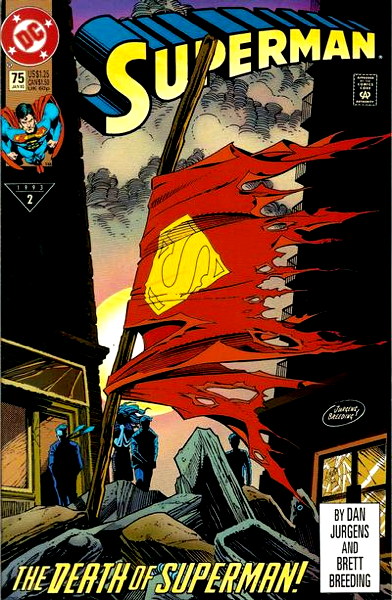
…didn’t also sell, because it sure did. And when the reprints hit, we sold lots of those, too. Needless to say, there were tons of copies of this sold. About 3 million copies altogether, according to the Slugfest episode.

And yes, here we come to the reason for this post. There’s a scene, a reenactment with actors portraying Superman writer Louise Simonson and a friend of hers, just hanging out at home. It had been noted that the Superman creative team were under a Non-Disclosure Agreement regarding the eventual resolution of the Death of Superman storyline (spoiler: he comes back). The scene, going entirely from my memory, was something like this:

FRIEND: “My son is buying lots of copies of this comic. When he gets more money, he’s going to buy more. These are going to put him through college someday.”

LOUISE SIMONSON: [coughs]

And the narrator (Kevin Smith, naturally) makes sure to tell us “the comic only goes for about five bucks now.”

Mmmmm…I beg to differ.

A while back I wrote about the fact that most people who bought the Death of Superman books were not comic collectors, were mostly folks from outside the hobby who picked up an issue out of curiosity or “investment,” who had literally no idea how to properly store or care for a comic book. The vast majority of comic collections I see from around this period, even from folks who bought the bags and boards and Mylar™ and such, are not in Near Mint, or even Fine or better, condition.

In the nearly 30 years since Superman #75 came out, I’d imagine most copies held by non-collectors were not stored well, or even just straight-up discarded once their passing interest in the comic faded. Plus, I suspect attempts to sell the book later to recoup on their investment resulted in some disappointing offers. “Wait, it’s not worth thousands?” It’s probably even worse for the folks who bought copies from opportunistic scalpers, selling them for a hundred dollars a pop the weekend after release (as I heard about locally, and probably wasn’t uncommon elsewhere).

End result: probably not as many minty-mint copies of any version of Superman #75 out there as you may think. It’s not uncommon, but it’s less likely now that you’ll walk into a store with a ready stack of them for sale.

I only ever see one or two at a time of the black-bagged version, and almost never see copies of the standard #75, or even its many reprints. And while I’ll buy the mint copies (or at least cleanly-opened copies with the extras perserved) from collections, I have seen plenty of copies that are just trashed and that I’ve passed on purchasing. As such, it is my belief that a nice copy can still fetch a premium price…and actually does, as I’ve sold more than a few in my shop. And by “premium” I definitely mean more than five bucks.

A quick look at the eBays shows copies of the black-bagged edition selling for, on average, between $10 and $30. Yes, to be fair, I did see a sealed copy sell for $5, but that seemed like an outlier. A couple of the standard editions did sell for about $6 to $8, so that’s a little closer to the show’s assertion. A check of currently-offered copies at Hipcomic don’t show much variation, though they do seem to have a lot more of the reprints than eBay did. (I’m not bringing up “professionally graded” sales, as that’s its own super-distorted marketplace.)

I also did a quick search of a couple of the larger online stores and didn’t even spot any (except for one store that had it for over $150, which is probably why they still have it). Hardly a scientifically thorough search, and for all I know they just had it and sold it before I looked.

The end result is…no, Superman #75, in either its black-bagged or standard edition, isn’t going to pay for anyone’s college. Even the platinum edition might only net you enough to pay for a couple of textbooks. But, I think the “five bucks” descriptor was bit of an underestimation. There’s still a market for these, just that the market value has normalized to meet actual demand, long after that initial rush and immediate scarcity drove some panic buying.

Now that white covered Adventures of Superman #500…if I got five bucks a pop on those, I’d be ecstatic.

Let me know if you’d seen any of those Superman #75s out for sale in your area. Are they going for premium pricing? Are stores stuck with a bunch and trying to unload them? (I’d rather you didn’t mention store names, in case they take offense to being held up as an example of “charging too much” or something.) I’d be interested to hear what’s going on with these across the marketplace now.
Nothing more than feelings.

Thelonious_Nick asked, in reference to Wednesday’s post

“How do you go about determining if these signature are authentic? Do you up the price for a signature? How much would you bump up Roy Thomas vs. Jack Kirby?”

Another reader, Chris V, gave his answer and I don’t think there’s anything there I’d disagree with. In this particular case, with this collection, my personal answer as to whether or not these autographs are real is “context.”

This was a largish collection, held by a private collector for many decades, kept in some pretty crummy plastic bags but were in consecutive order and very clearly part of an acquired run of books. It looked like a collection where someone bought each issue as it came out (or filled holes in their runs with back issue purchases), read ’em, bagged them up, then kept them in boxes. And that’s where they stayed until they were brought to me.

As such, finding the occasional issue with a signature inside very likely had that signature in it for many, many years. Could someone in the 1970s been going around forging signatures of comic book professionals? Sure, but it seemed like a pretty low-stakes crime for someone to have been pursuing. And nothing about these comics really seemed to make them stand out from the rest of the collection…they were just in there numerically with the other issues in whatever series from which the signed comic hailed. It just looks like a fan took a comic or two to a signing, had it signed, then dropped it back in the collection.

In short, it just feels like the signatures are authentic. Nothing about the collection or how the comics were kept make me suspect otherwise. I realize that when removed from this context, it may be harder to convince buyers of their authenticity, but I’m sure they’re exactly what they appear to be.

Like, I’m totally sure that’s Steve Ditko’s signature on this issue of Speedball. “Hang loose, and have a crazy summer!” it reads. Boy, if anything ever sounds like Ditko….

As for pricing them? Eh, maybe I’ll bump up the price half again, maybe twice. There’s no hard and fast rule on what to price these. Bigger the name, bigger the jump in cost, I guess? Just kinda winging it.

Okay, that’s it for 2021! Come back to my site in 2022 where I’ll ask the quesion “boy, remember how good we had it last year?” And speaking of next year, don’t forget to contribute to the 2022 comic industry predictions post! I’ll be starting to look back at the 2021 predictions in a week or so, so get ready for that!

Happy New Year, pals, and thanks for reading! Stay safe, and we’ll all meet back here on Monday!

G. Aman, the Bob Kane of grade school.

Still processing this collection, of course…it’s a lot, and I’ve got New Comics Day stuff to do on top of that, so it’ll be a minute before I finish.

What’s interesting is coming across some signatures in a few of these books here and there: notable was Gerry Conway’s John Hancocks in Amazing Spider-Man #121-2, the Death of [ANCIENT SPOILER DELETED] issues. Sold already, sorry!

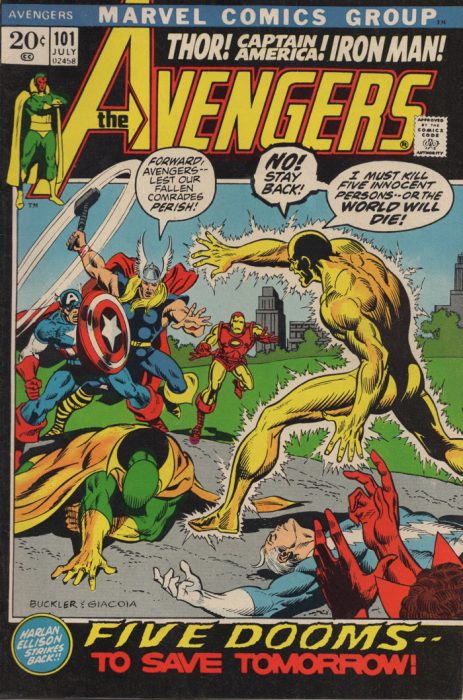
But in Avengers #101, featuring the work of noted futurist Harlan Ellison:

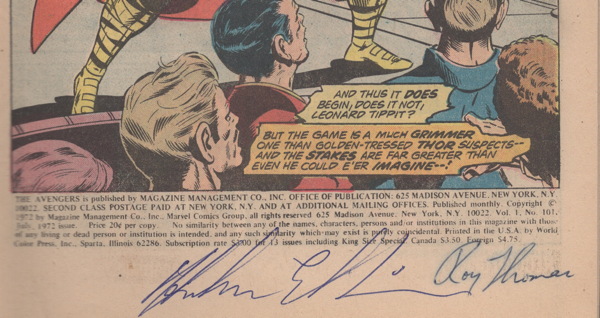
…the bottom of the first page had the signatures of Mr. Ellison as well as that of Marvel stalwart Roy Thomas:

So, sorry, Collectors Solely of Comics Signed by Both Harlan Ellison and Roy Thomas, this one’s stayin’ in my collection.

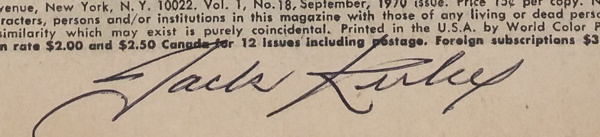
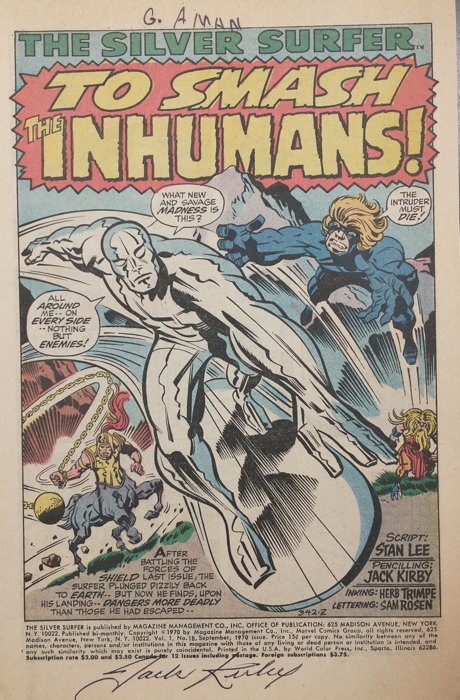
Which reminded me of this first page of Silver Surfer #18 (1970), also found in this collection, and featuring the signature of the King himself, Jack Kirby, as big and bold as you could hope for across the bottom of the page:

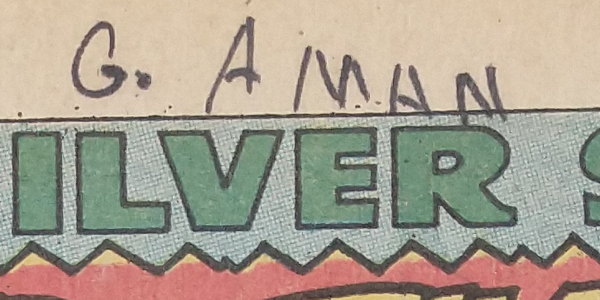
But not to be outdone, a previous owner of this book decided to make his/her claim on comics history by putting his (or “her”) autograph at the top of the same page.

Here’s to you, G., forever sharing a page with one of the most legendary of comics legends.

Wanted: more collections like this.

Okay, sorry, the Variant Cover-Age post you’ve come to expect purt’near every Monday ain’t happening today, as I was surprised Sunday afternoon at the shop with quite the sizeable collection of 1960s/1970s comics…heavy on the Marvels.

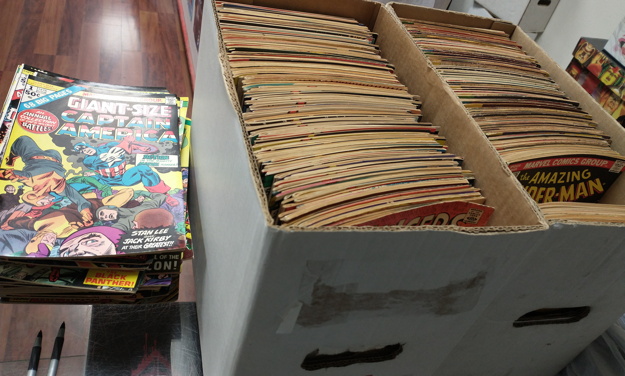
After shucking the yellowing plastic cling-wrap bags that surrounded each comic (terrible, but better than no bags) and getting them halfway organized, the collection looked a little something…like this:


Two and a half short boxes of comics may not seem like a lot of work to buy or process, but when they’re all older comics, and many of them are specifically premium comics with quite a bit of demand, well, the processing time increases a bit. More thorough checking of conditions, more researching prices beyond just using the price guide, etc.

Anyway, the need to get these processed relatively quickly had me actually bring the boxes home with me to start that particular job, even if it’s just to get comic bags and price stickers on everything. Which, okay, I mostly did but at least it’s a head start. And it definitely bit into my writing/research time for another variant cover post. Hence, what you’re reading now.

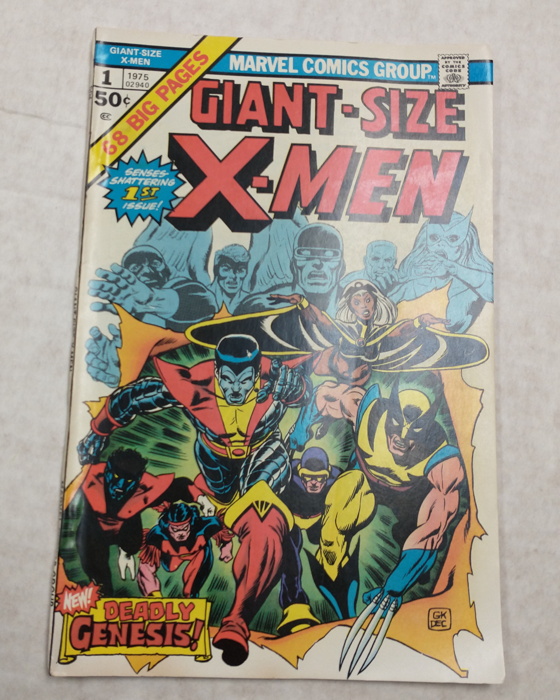
I did already sell a couple items, which I’ll show you here and will give you an idea of what I’ve working with. Like, for example, a Giant-Size X-Men #1:


…in a pic that’s a tad glare-y on purpose, as to show that long crease down the right hand side of the front cover. Thus continues my streak of not having a copy of this comic available for sale longer than about a few hours.

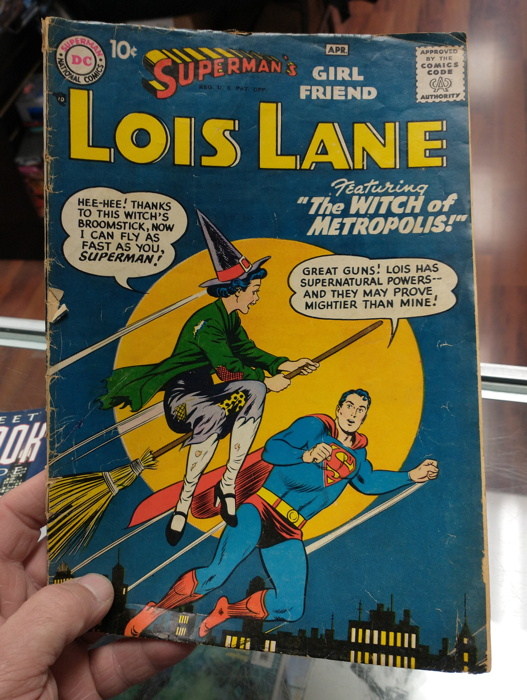
The other surprise was a beat-to-the-dickens copy of Superman’s Girlfriend Lois Lane #1:


…that still has an amazing cover image, despite the wear. And alas, the centerspread of the comic is missing, but I still managed to find a buyer for the comic anyway!

The dominant feature of the rest of the collection is the majority of Amazing Spider-Man issues from 10 to about 160 or around there. Missing issues around the 100 mark, but still has the first Punisher, the whole original Spider-Clone thing, first appearances of many of the Spider-Man rogues gallery (Green Goblin, Rhino, Kingpin, Scorpion, like that) and, of course, the first Spider-Mobile.

Other highlights of the collection include more ’60s X-Men, a bunch of late ’60s/early ’70s Avengers (including a #100 signed by Roy Thomas!), a bunch of ’70s Captain America (with what seems to be almost all the Cap/Falcon stories, including the first Falcon), about 2/3rds of the Silver Surfer run, and other scattered books (such as the Neal Adams Green Lantern/Green Arrow with the first John Stewart and, yes, that one).

I already have a buyer interested in most of this stuff, so we’ll see what’s left over. But I gotta get the darned things priced first. One thing I’ll say is that this is the most I’ve ever paid for a collection, and I was willing to pay that price because I knew nearly everything here would sell quickly. I mean, ’60s Spider-Man, duh. This was not a risky purchase.

I’ll try to get more pictures taken of what’s come in as I find the time, even if just for posterity and not, like, a “for sale” listing as the time could very well already be spoken for.

And here’s the thing: the fella that sold me the comics says he still needs to bring in the really good stuff. Egads. I’ll let you know if that happens.

In the meantime, don’t forget to give me your 2022 comic industry predictions! Thanks for reading, pals, and I’ll try to be back on schedule next week with another variant cover we can gaze upon.

Go for the gold.


Well, I had planned to attack more of your questions, but Thursday morning I went in for my COVID booster (and a flu shot to boot) and as I write this Thursday evening, I’m beginning to feel some of the side effects. Pretty much the same ones as before — fatigue, slight chills — and hopefully like the previous times they’ll go away overnight.

But in the meantime, I’m getting some extra shut-eye so I’ll be ready for the onslaught of last-second shoppers tomorrow. I hope everyone has a fun and safe Christmas Eve, where applicable, and I’ll see you on the other side. …Of the other side of Christmas, not, like in the afterlife. I’LL BE FINE, I SWEAR

P.S. Dont’ forget to give me your 2022 comic industry predictions!

We got some work to do now.

Trying to run through the rest of the latest batch of questions before the end of the year! But before I do that, don’t forget to leave your 2022 comic industry predictions!

Thom H. h.as this to say

“What’s the one book no one’s reading that everyone should be reading? Any hidden gems in the current marketplace?”

This is always a hard question to answer, because I don’t want to bum some poor creator out by saying “oh yeah, no one’s reading your book.” So let me alter the parameters slightly and give you this answer. I think a book more people should be reading but aren’t because they think it’s “just” a kid’s comic is The Batman Scooby Doo Mysteries, which is just about to wrap up. It actually sells reasonably well for me, and kids enjoy it, but I keep thinking one of the best kept secrets in comics is that DC has published multiple Scooby Doo comics over the years, and they’ve all been really good. Funny, clever, perfectly okay for young’uns (well, maybe not Scooby Apocalypse, also good but for the grown-ups) but enjoyable by older fans too. Even by someone like me, who is exactly as old as the Scooby Doo cartoons themselves.

• • •

James G drops this question

“Since you’ve been writing about variants for a bit now, something I’ve always wanted to know is: how does the way variant covers are distributed and sold to retailers affect your business? How have the ‘minimum orders to get a certain cover’ requirements changed the work you have to do for the store? How has it changed the bottom line?

“So that may be three questions, but I think it’s one question with refinement. :-)”

ALL RIGHT, MR. CHEATER-PANTS, I’ll let it slide this time.

I went fairly deep into the business end of ordering these variants a couple of years ago. Also, I was planning on another deep dive into the whole situation once I started wrapping up my variant cover-age and circled back to this first post and started addressing your feedback there.

To sum up: it affects my business in that I have to think long and hard about the numbers I’m going to place on these books. Is it worth it to get a few extra copies of something into order to reach the ratio variant plateau? What if then I don’t sell that comic for a premium in order to make up that extra cost and then some? Or those free-to-order variants…usually “lots of cover A and then just a few each of covers B and up” works okay, but for seemingly random reasons sometimes one of the variants becomes the in-demand item. It’s just a constant balance of ordering what you think you can sell, versus taking an occasional risk for extra profit.

When it comes to just pure numbers vis-à-vis profit and the bottom line, it’s not much different from taking a risk on a new first issue, or an otherwise “special” comic. You think about what you’re likely to sell, you place your orders, and either you sell enough to make back your money plus some extra, or you don’t make the money back. That happens regardless of variants or not. The tricky part mostly comes in trying to guess which variant will be the most popular, and trying not to get stuck with too many extra copies of any cover.

Also, refer back to previous installments of the variant cover-age to see specific ordering thought processes in regards to specific variants.

• • •

DavidG gives me the goods with

“Do you think that Diamond can survive losing the big 2, especially as you seem to think their service is pretty bad as well?”

I don’t think their service is perfect, no, but I do have to admit the vast majority of items I order show up with no problem. But every shipment seems to have some annoying and usually avoidable shortages and damages. For instance, this week was the third week in a row of not receiving any of my Dynamite “cosplay” covers. Maybe that doesn’t seem so bad, but those are the covers of their books in the highest demand.

As to surviving…I haven’t looked into it, or even heard, if Diamond has done any restructuring or scaling down of their company to reduce costs. I do still get quite a few books from them, even if my invoice costs aren’t nearly as large as they used to be.

On top of that…they haven’t necessarily lost Marvel as such. Retailers can still get Marvels from Diamond, just at a lesser discount than what they’d been used to. I imagine there are plenty of retailers who didn’t want to jump through the hoops to sign with Marvel’s new distributor Penguin Random House.

But a few smaller publishers have been slowly moving to other distributors. Again, for the most part you can still get them from Diamond, but I moved orders on those companies over elsewhere soon as I could. I feel like if Image ever decides to bail, that would probably be the catalyst for everyone else jumping ship, leaving Diamond as your exclusive Be@rbrick supplier.

• • •

Chris B be askin’

“Are you ever going to update your ‘The Chosen of God’ list? Most of those listed haven’t posted anything in years.”

In the blogging heyday, I used to go up and down the list of bloggers, checking in on their sites to make sure what I was planning on posting about wasn’t duplicating someone else’s content. Nowadays, of course, I just repeat stuff I already said over and over again and call it good.

And yeah, a lot of those bloggers ain’t bloggin’ any more, having wised up and found something better to do with their lives, leaving me to fend for myself. But you never know when someone might come back…or when one of the links will suddenly go to a squatter’s page or a site filled with text in an unfamiliar language. Or both!

Yes, I do someday have to perform a little maintenance on that sidebar (and the links page). Honestly, though, I hate the idea of deleting names and links…just perusing the list now brought back some memories of The Good Ol’ Days and I’d hate to lose those. Maybe some kind of In Memorium page, sorting the list of blogs into “Defunct but Still Online” versus “Now Selling V1aG4A.” Or possibly even “Actually Still Blogging,” but what are the chances of that?

Only the variant is good enough.


I’ve touched upon this topic before (not long after opening my own store, in fact), where putting a cover on a book that does not reflect the contents is misleading, and frustrating, to potential buyers.

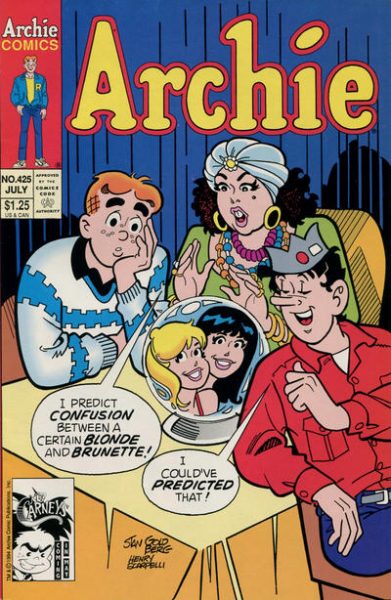
The regular comic fans have mostly caught on to the whole “don’t judge a comic book by its variant cover” thing, but I still get some consumer confusion when it comes to more casual buyers scanning the racks. “Oh look, Deadpool is teaming up with Miles Morales!” “Um, sorry, hate to tell you this….”

Most of the time it feels like it should be fairly apparent that the cover isn’t what’s inside, especially with gag covers like the MAD or Robot Chicken variants. But even those had more than one puzzled person perusing the rack, cracking the covers and wondering why the funny stuff on the outside wasn’t going on in the insides.


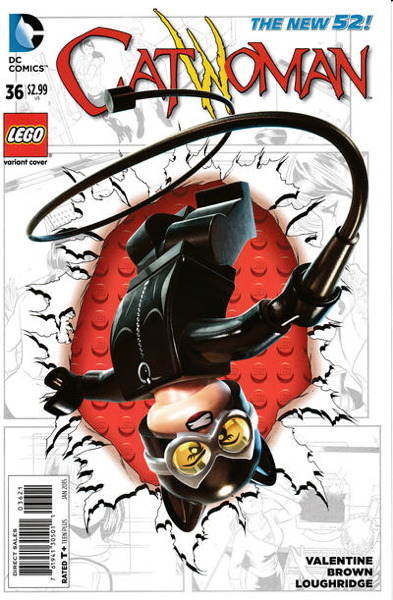
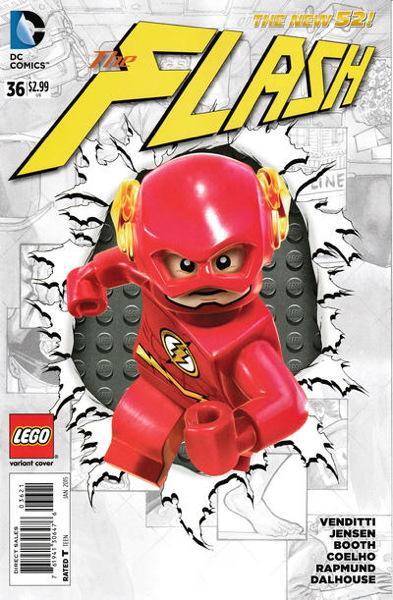
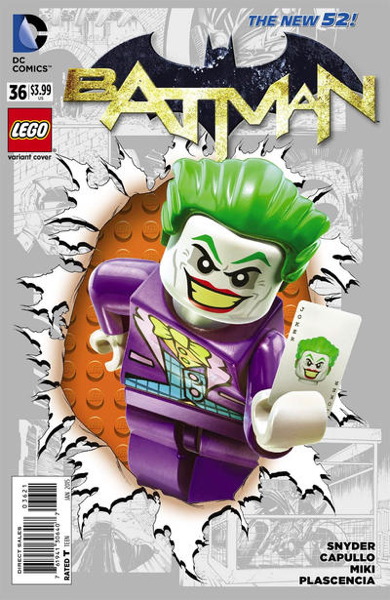
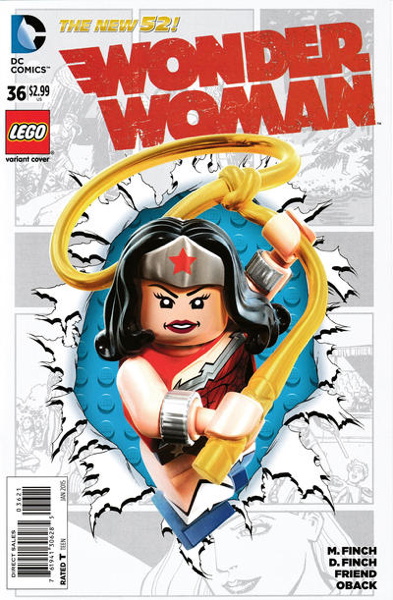
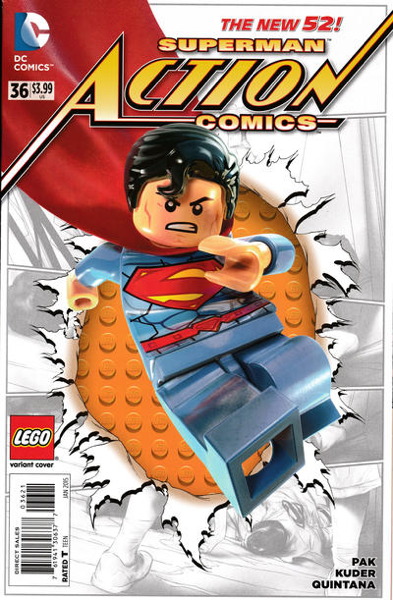
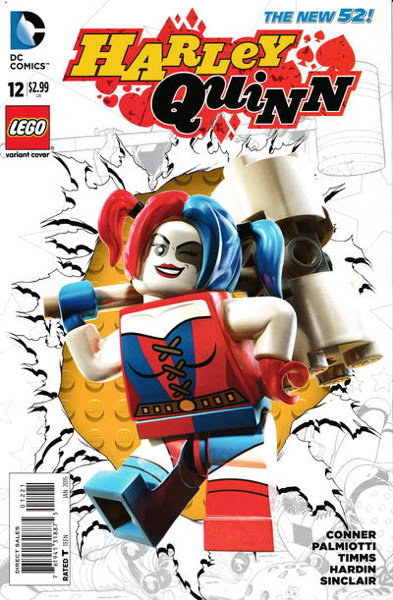
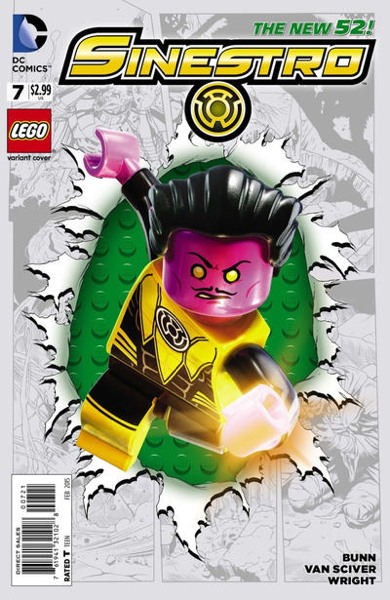
The LEGO covers were particularly egregious in this respect. Created as a crosspromotion with the then-releasing LEGO Batman 3 videogame, each cover featured actual models of playable characters from that game. It was as much a way to get players interested in the game to pick up the comics for the previews. Or, if they’re a big LEGO franchise fan (whether of the games or not), to grab all the covers for their collections.


But the ultimate result was lots of kids coming into the shop, seeing the LEGO covers, and grabbing the books thinking they were going to be LEGO-style comics inside. I had a lot of disappointed faces when I told them that wasn’t the case.


To date DC hasn’t released a straight-up DC Super Hero LEGO-style comic book, and neither has Marvel (which has their own extensive LEGO game history). There have certainly been several LEGO superhero squarebound books — activity books, guide books, very young reader books — and some of them even include comics in their content. I’ve had a little success selling some of those, but they’re often accepted as an “okay” second choice, when what the buyer really wanted was a traditional comic book in that style.


Given the seeming popularity of the LEGO super hero videogames and non-comic book published narratives, it seems like maybe actual comic books would be an unnecessary afterthought, a not as lucrative revenue stream as those other ventures. However, it would be nice to have them on the shelves, another vector via which new young readers can try out the medium. Not that the other formats aren’t fine, and it’s good that kids are reading anything, but I am still biased toward the plain ol’ comic book and encourage anything that would get people to continue reading them. Especially kids.

“Squid Games” is my favorite Ceforeignalopod album.

Back to the ol’ question mine for today’s post! But don’t forget to give me your predictions for 2022’s comic industry!

Dave Carter is an unstoppable question machine with

“Who is your favorite Legionnaire? (i.e. member of the Legion of Super-Heroes; not e.g. your favorite enlistee in the French Foreign Legion…) Explain your answer.”

Dangit Dave, I had Jean Genet all ready to go before you threw your little caveat in there. FINE.

Anyway, it’s a question that’s come up once or twice here on Pugressive Rune, and this post from, egads, four and a half years ago, answers and explains:

“I’d like to see a Brainiac 5-centered Legion relaunch. Brainy as the cool, rational, scientific center surrounded by the utter madness of ‘Bouncing Boy’ and ‘Matter-Eater Lad’ and so forth, just trying to do his job despite all the crazy nonsense in which he finds himself mired.”

Um, not quoted is my writer suggestion, which, shall we say, hasn’t aged well. But I think Brainiac 5 is just the right mix of seemingly normal but weird enough to be interesting. He has a long history behind the character tied to Superman and L.E.G.I.O.N., even given the various continuity shenanigans. His scientifically advanced inventions (and lest we forget, time travel) have a lot of story potential. I’ve just always liked him, what can I say. And I think one of the times I brought up that he’s my favorite Legionaire, I was hit with the response “he’s everyone‘s favorite Legionnaire!” So let’s get that Brainiac 5 solo series out, already.

• • •

ExistentialMan exists only to ask this question

“Here’s a quick, classic one: Flight or Invisibility?”

Flight, natch. Invisibility feels like would wear out its novelty after a while. Unless of course you use it for nefarious means, like, for example, sneaking into movie showings for free AND NO OTHER REASON, and who needs the temptation?

I mean, flight would be awesome. No more traffic jams! (Just fines for violating aviation rules!)

• • •

William Burns fires up the ol’ keyboard to ask

“Do you think Marvel will ever bring back those True Believers $1 reprints (or a similar cheap reprint format)? Those were fun.”

It’s be nice, but I don’t see ’em in any forthcoming orders. It could be that paper shortages/increased costs have made them not financially viable for the moment…I mean, less so than they already were. They were certainly popular with my customers, so hopefully they’ll return. I know there’s still the occasionally “facsimile” edition (like this week’s Conan the Barbarian #1) issued at full current cover pricing, but even those seem less frequent.

• • •

Chris Gumprich has Martin Landau ghost the following question for him

“I’m not up on the current comic zeitgeist anymore so this might seem a ‘duh’ question. In your experience, do buyers still follow characters above all or has the momentum shifted to creators? Is it more ‘I will buy everything Ed Brubaker writes’ or ‘I’m going to keep buying SWAMP THING even though I haven’t liked it in years?'”

To the best of my observation, it’s mostly readers following characters. Though, sometimes when there’s a creative team change with an accompanying premise change for a character, like with the recent transition from Immortal Hulk to the new Hulk series, some folks dropped off. Though that may be more about people jumping on to the highly regarded Immortal Hulk series, and leaving once that story was over.

But by and large, I haven’t had many customers zeroing in specifically on creative teams over the actual character(s). There are still a few, of course, looking for “all Ed brubaker” (to use your apt example). They’re far outnumbered from the people who want, like, all Green Lantern appearances. Or even weirdos who want all Swamp Thing appearances, what’s up with those crackpots.

• • •

Bob Stec goes this way with

“Are you watching Squid Game on Netflix?”

I’ve heard of it, of course, but I don’t think I’ve seen a single frame from it (unless I saw one on, say, Twitter, and didn’t realize what I was looking at). As far as I know, it’s about squid playing football. I’d totally watch that.

“With craziness, you can’t predict it. There’s very little defense you can have on craziness.” — Bryan Cranston.

Here we go again! It’s time for you — yes, you, don’t look at the person next to you, I’m talking to you — to give me your comic book industry predictions for the allegedly-approaching year of 2022! I do this every year (click on the “predictions” tag for proof) and always enjoy everyone’s contributions.

Just drop your submissions in the comments section for this post, and please adhere to the following rules:

1. Don’t read the other predictions before entering your own.

2. Don’t criticize other people’s predictions.

3. Don’t predict any real person’s death.

4. Limit of three predictions per person, please!

I had a lot of entries from you folks last year, so I’ll be spending a good chunk of next month going over the 2021 predictions and seeing how you did. Well, how we did, since I submitted my own last time (and posted a screenshot on Twitter so no one would accuse me of editing them after the fact).

But get your awesome auguries for 2022 in now, and we’ll take a look at those in (gulp) January 2023! Thanks for participating, pals, and good luck! Maybe this will be the year Miracleman starts coming out again!

The deluxe edition of this post will cost you a little more.

Nicholas inquired

“…Can you shed any light on the mid-90’s Marvel newsstand issues? I’m doing a deep dive on the JRJR run of Spider-Man (which had been renamed to “Peter Parker Spider-Man” at that point) and have come across two versions of many of them (they seem to be during the Clone Saga and the run of issues immediately following the end of that storyline). From what I can see, the newsstand versions were printed on newsprint, and cost $1.50, and the direct market versions were on glossy paper, but priced at $1.95? The weird thing is that at a certain point, it looks like the direct market versions stay at $1.95, and the newsstand versions jump to $1.99 BUT were still printed on newsprint? Then eventually, they all go to $1.99 and are printed on newsprint. I’m very confused, and can kind of remember this happening with some other series (specifically Generation X). It seems ridiculous, and I can’t find anything on the internet about it.”

So here’s what I recall about this particular publishing plan of Marvel’s, mostly in relation to their X-Men line at the time:

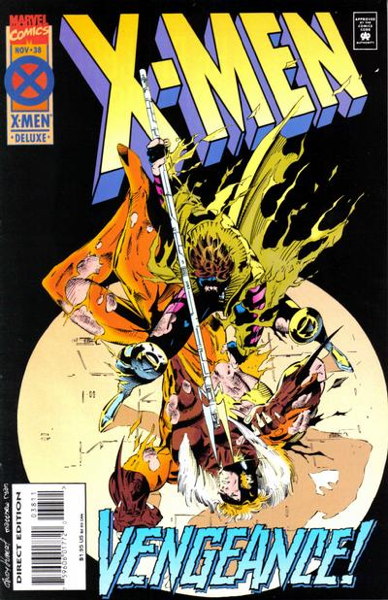
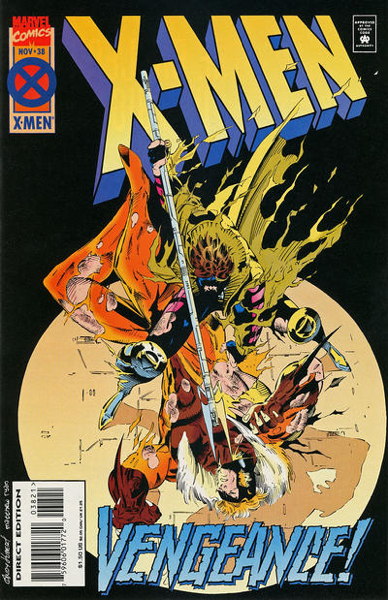
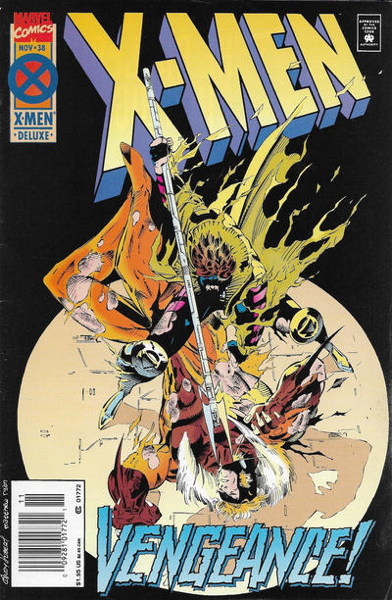
In the mid-’90s (in the example, I’m using here, cover date November 1994, so actually probably sometime in September), the adjeectiveless X-Men split into two (well, three) distinct versions. For comic shops, you had your choice of the “Deluxe Edition” on nicer paper, with a convenient “DELUXE” tag on the cover, for $1.95:

For readers who didn’t want to dish out an extra 45 cents, a $1.50 version printed on not-glossy paper was also offered to the direct market (note: no “DELUXE” tag on the cover):

And then for newsstands, the Deluxe Edition was offered, but with a standard UPC code (not sure about the paper stock):

Now here’s where we’re going to depend on my memories of these events, because I’m going to point out something and I don’t have a way of backing it up just yet. However, I recall having written about this in a comic forum I ran on a local BBS at the time, which is why it sticks with me.

My recollection is that Marvel sold this new Deluxe format to fans as a more upscale edition of the comic, for folks who wanted a, I don’t know, classier reading experience or something. If, like I said above, they didn’t want to dole out the extra dosh for smooth silky paper they could rub gently on their skin, fans could buy that $1.50 version, and Marvel would look at sales and see which the fans preferred.

ENTER: MY MEMORY I’M WONDERING ABOUT — the catch was, the $1.50 version would be released a couple of weeks later. I distinctly remember writing at the time on a local BBS “of course the $1.95 version is going to sell better, fans don’t want to wait an extra two weeks when they can get the story now.”

Again, I have no way to back that up. I have no solicitation material from the time (at least, that’s easily accessible), no access to any of my long-ago posts on that BBS…the web archive I once pulled from for this site is gone, and while I backed up a lot of material from the site, I inexplicably didn’t save my own section. Didn’t I know I’d need that for a blog post someday? I’m trying to track it down (I have friends who may still have an archive of all that stuff), and I have a bunch of invoices from the previous place of employment that may shed some light, so if any new information magically appears, I’ll add an update.

EDIT: Folks in the comments section are also recalling this shipping schedule for the Deluxe/Not Deluxe editions.

Anyway,whatever time frame in which those were released, the differently-priced editions seemed to go away after the Age of Apocalypse event (in which all the regular X-books were put on hiatus for a few months and replaced with mini-series all priced at $1.95). Issue #42 of X-Men, just prior to the event, was the last of that series to carry those specific $1.95/$1.50 price points.

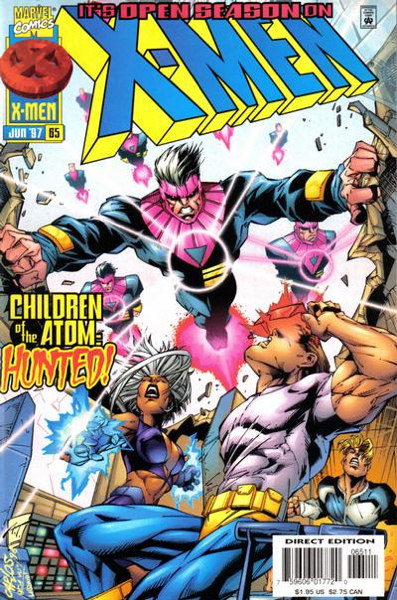
Now, Nicholas, you mentioned the weird thing where the direct market edition of some of these titles retained a $1.95 price point, whilst the newsstand editions went up to $1.99. I honestly didn’t remember that, but checking on this X-Men run…yep, sure enough. Starting with issue #57 and running through issue #65 (even including the “-1” special), direct issues were $1.95:

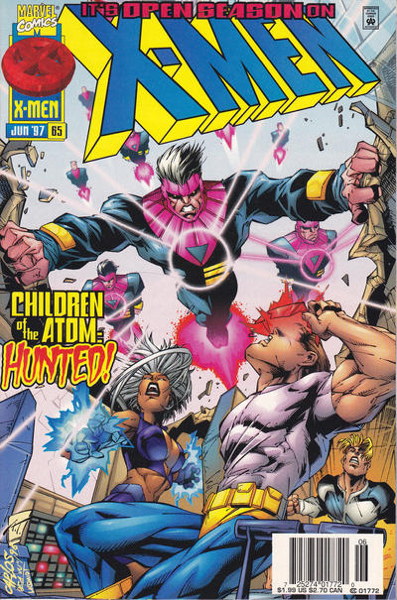
And newsstands were $1.99:

After that everything went up to $1.99 and comic prices never rose ever again.

As to the “why” of all this…well, like I said, initially it was offered as an “option” to fans as to whether or not they wanted to pay more for a fancier product or pay less for something a little more “no frills.” Regardless of the timing of releases of these competing editions, it seemed clearly designed to ease readers into a higher price point, possibly framing it as “it was the readers what wanted the higher cost version!”

Once everything moved to the $1.95/$1.99 price point, I think a possible explanation is this. Comics were at too low a price point for newsstands and bookstores and such to really want to bother with. Raising the price on the newsstand edition (even if only by a few cents) may have been just enough to keep newsstand sellers and distributors from cutting the product line entirely. Perhaps more a psychological move than anything else.

As for being printed on cheaper paper: that’s just Marvel keeping the expenses down. Newsstand distribution numbers weren’t nearly as high as they were in the direct market, and newsstands could return unsold product, so the lower the initial production cost, the more money could potentially be made, or at least the lower the losses would be.

It also could just be the competition versus other comic companies were stronger in the direct market, necessitating a higher quality product, believed unnecessary for the newsstands.

And when it comes to both direct and newsstand editions going to the cheaper paper: just line-wide cost cutting is all. Fancy paper costs too much, so it was either that or raise the price, which, as I said, they would never do ever again.

I don’t know the whole financial end of publisher vis-à-vis distributors, or any of the actual reasons behind some of these decisions, so if anyone wants to clear up the above assumptions, be my guest. But I honestly do believe the initial price differences was sold as a “let the reader decide” thing when, in fact, the decision was already made.

A personal memory from the old shop was when it came to restocking the issues of the various series that had the deluxe/regular price split. I honestly could never remember which comics marked “DELUXE” had an accompanying non-deluxe edition. I’d have to make intricate notes as to which versions I had to go looking for in the back room. Yes, I had to do all this restocking manually, this was before robots took over everything.

Nicholas, I hope this answers your questions, or at least gives you some options to consider in regards to these quarter-century old publishing puzzles. If I get new information, I’ll let you know right here on this very site!