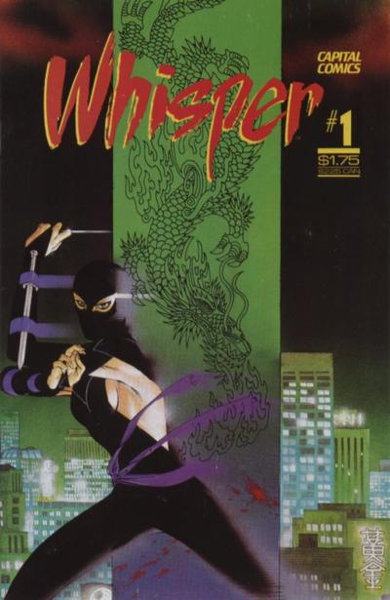
The Final ’80s Countdown, Part One.

Okay, the “votes” as such have been submitted, I tallied the results, and now I shall spend the next, oh, few months or years looking at what you folks had to say were your favorite 1980s comic book series!

Well, maybe not that long, but it’s not going to be “1980S COVERAGE ALL DAY EVERY DAY” here or anything, as I imagine I’ll break things up a bit. But I appreciate everyone participating, and I look forward to talking about the various titles you chose.

Which brings me to a couple of things. One, I’m not going to have a whole lot to say about some titles. It’ll probably be obvious when I come to them, particularly since the first comic I’ll be talking about will be one of those. I just haven’t read everything, nor have I formed any sort of concrete opinion on titles with which I may only be passingly familiar. So please forgive my ignorance in those cases, and chime in with your own remembrances if you’d like.

Two, this is hardly a scientific survey, but over a hundred respondents both here and on Twitter give me a good variety. I think my big mistake was not saying “pick your favorite without worrying about whether or not certain titles already got enough attention.” I should have added the request to not look at previous votes before adding your own, like I do with my prediction posts, but what’s done is done, I suppose. I’ve cut off the voting as of Sunday evening, but if you still want to point out your faves in these comments, feel free!

Still, we have a lot of titles to look at, which should be fun. Well, for me anyway, I don’t know about you guys.

Oh, one more thing…there were lots of votes for Elfquest and Cerebus (both beginning in the 1970s), and Flaming Carrot (technically first appearing in the 1970s) so I did exclude them from the process here. However, they certainly paved the way for what was to come, and to be honest Flaming Carrot was truly FLAMING CARROT in the 1980s, so let’s just call all those Honorary 1980s Indies and acknowledge their importance!

To start with, I’m going to tackle all the single-vote getters…none of which should be considered “lesser” in any way, but should instead be presented as examples of just how varied and interesting the 1980s comic market was. Just imagine (or remember back when!) you could walk into a store and see so many of these new on the shelves. What a time.

Oh, and which title did I vote for? We’ll have to wait and see!

And awaaaaay we go!

ONE VOTE

The Adventurers (Aircel, Adventure, Malibu 1986-1990)
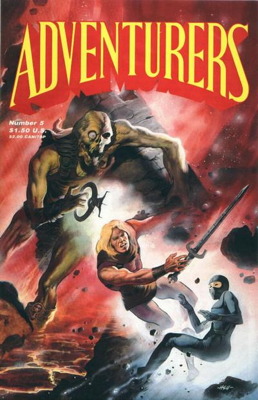
A straight-up fantasy book, from appearances (sorry, didn’t read it, so if I’m missing some nuances, please correct me!), in a time when the sword-and-sorcery thing was slowly on its way out (though Conan was hanging in there). Featuring covers, at least for a while, by Peter Hsu, who had previously worked on the slightly more naked Quadrant and, later, the fantasy title Elf Warrior.

Commenter James says the story and art were well done…despite my teasing about Quadrant, the covers were fine, certainly attention-grabbing. Interior art was by Kent Burles with scripts by Scott Behnke, though the creative team would change as the series went on. Burles would stick around for the most part, it seems.

There were three series over three imprints, with the initial two-issue run from Aircel. That series would pick up with #3 at Adventure Comics, an appropriate place for this title, I’d think. Adventure would reprint #1 of the Aircel run, but not #2, so anyone trying to complete that first series of Adventurers from Adventure and are pulling your hair out trying to find that second issue…well, there you go.

Malibu, the credited publisher on the third series, would issue trade paperbacks of the whole enchilada in 1990. Adventure, Malibu, and Aircel would all be connected somehow, businesswise, though I’m not sure if Aircel was part of Malibu at the time of publication for those first two comics.

Also as James notes, this was a somewhat in demand comic, commanding higher-than-normal prices in those still-in-the-black-and-white-boom days of the comics market. Not as much now, I suppose, so if you were looking to finish your run, now’s the time!


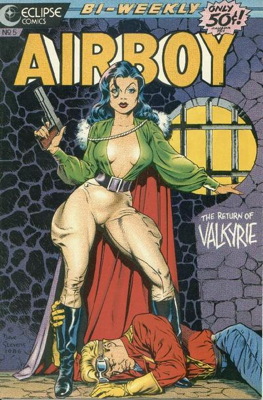
AIRBOY (Eclipse 1986-1989)
I have read one issue of Airboy, and that was the Airboy and Mr. Monster comic from 1987. I talk about it here, mostly in relation to the 2015 Airboy series (which I do praise a bit there, prior to it going a bit off the rails in later issues).

That crossover one-shot probably isn’t really representative of the series as a whole, kicked off in 1986 by Chuck Dixon, Tim Truman and Tom Yeates. It was part of Eclipse’s short-lived attempt (along with The New Wave) at having some really inexpensive color comics on the shelves. Well, it got people to pick it up, and they must have liked what they read since it ran a whole fifty issues (plus the occasional tie-in), which ain’t too shabby.

This was a revival of a Golden Age WWII character, but it was new stories so it still qualifies for “new 1980s comic” because I say so. (This is going to be a problem when we get to a later comic that was primarily reprints from previous decades.) It was popular, it had strong back issue demand for quite some time even after the title’s demise, and it’s still remembered fondly today. Not a bad legacy, I think. Nowadays the one issue people ask for most is #5 with the Dave Stevens cover (pictured) for likely obvious reasons.


Akira (Kodansha 1982-1990, republished in the US by Marvel/Epic 1988-1995)
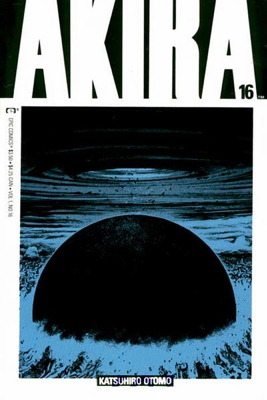
I know Akira primarily from the stunning and influential film based on Katsuhiro Otomo comics (originally serialized in Japan). I somehow was familiar enough with the comic to recognize that a character or two that popped up in the film for, like, a second, were actually fairly prominent in the comics themselves, but that’s what is to be expected when you try to compress a couple thousand pages of comics into a two hour movie.

It really is a comic I should read, because as amazing as the movie is, I’m certain the comic is even amazing-er, which amazes me that I didn’t pick this up and read it during that Marvel/Epic color reprinting. And I was wondering if that reprint actually included everything from the original manga, and a little calculation shows that the Marvel series totals out to well over 2,000 pages, so I’m guessing so.

I think the problem is that my initial experience with Akira as a comic was seeing it initially with its quite well done coloring. Not that I thumb my nose at black and white books, obviously, but the color is so much a part of how I imagine the story that seeing it in its original form feels…well, weird. Dark Horse later published Akira in six volumes more closely approximating the original work, with right-to-left pages and b&w interiors. Those are out of print now, though it appears Kodansha now has similar editions available for the U.S. market.

Of note are the last two issues of the Marvel/Epic run, which include new “tribute” stories/pin-ups by Western creators that I don’t think have been reprinted elsewhere, but please correct me if I’m wrong. Those Epic issues are still in enormous demand, as it remains the only full-color (and left-to-right reading) version of the story…I mostly blew through a recently-acquired run in short order.

And apropos of nothing, pal Cully (whom you see in my comments occasionally) told me long ago that his daughter, then just a little squirt, would refer to the animated Akira as the “help-me help-me movie,” which I believe is a fair summary.

• • •

If any of you have your own thoughts on these titles, please drop ’em in the comments. I’ll continue my overview of your favorite comics (more one-voters!) later in the week, and hopefully next time I can spend less time explaining what I’m doing here and more time covering more series! Thanks for chiming in, everyone, and I’ll see you all soon.
I’ve been talking about ’80s comics for so long a Member’s Only jacket magically appeared on me.

Okay, still taking your “Fave ’80s Title” picks, at least through the weekend. I’ll tally things up and start discussing stuff on Monday.

And I think I’ve caught up on responding to the comments for the last few posts. I’m down to this most recent one and re: the requests for favorite ’70s/2000s titles…oy, let me get through the ’80s stuff first. I am but a mortal man.

Also, the question was asked “why were Continuity Comics great-looking but not so greatly-written” and I think I wasn’t much of a fan of the coloring, either. Though I may be overlaying my memories of some of the, well, appalling recoloring of some of Neal Adams’ work at DC onto the Continuity output, so maybe I’m confusing the two. But as to “why the writing,” I don’t know. It’s like a whole company’s output was Batman: Odyssey. And, you know, some people really liked those comics…certainly sold plenty of them when they were coming out.

LouReedRichards asked if there was a good jumping-on point for Love and Rockets or just start at the beginning. Well, starting at the beginning is the ideal, but even just picking up the newest issue will give you plenty to enjoy. Maybe you won’t know all the characters and situations but it’s so well done you can enjoy it for what it is.

Alternatively, you can pick up any of the collections/graphic novels and just dive in. It’s Good Stuff all around. Probably not the most helpful response, but honestly sampling an issue will make you want to search back and find more, and that joy of discovery can be part of the fun of enjoying these comics.

Okay, I think that’s all I have to say today…except along the way Paul asked if I’m going to revive new content for my Patreon. And the answer is “I plan to” when I can find more time, which is the trick right now. I do appreciate the support folks give me there, so don’t think I’m taking that for granted. It all helps, believe me.

Thanks for reading, pals, and I’ll be back Monday for the Big 1980s Countdown, Part One of Apparently One Thousand.

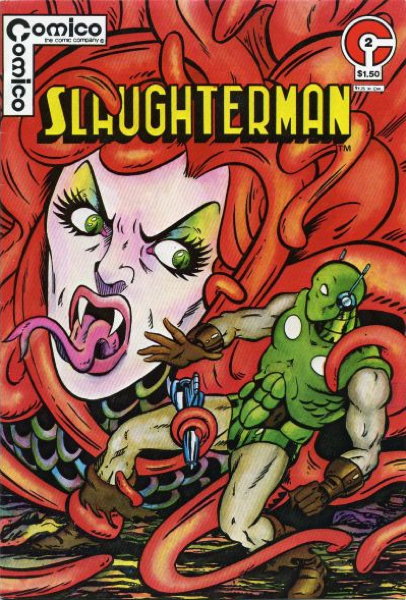
I was going to make a “hey kids, Slaughterman!” joke but then I remembered how often I have children asking for Carnage comics.

Hi pals! Still looking for your single, ONE, UNO favorite title from the 1980s! Drop in your choice…and even if your pick’s been mentioned, drop it in anyway…I’ll be tallying “votes” and seeing which book came out on top!

I’ll probably start covering those next week, but let me continue going through some of your older comments and questions:

Cassandra Miller mentioned

“God, those years in the 1980s sure were a time…I recently (last year) uncovered some old obscure parody comics from then, ‘ElfTrek’ and ‘Secret Doors,’ and just had a blast reading ’em. Some of the jokes are seriously dated/would be impossible for anyone under 48 or so to get, the art is a bit crude, but they were just plain fun. The absolute freedom in so many of those b&w boom comics was so incredible.”

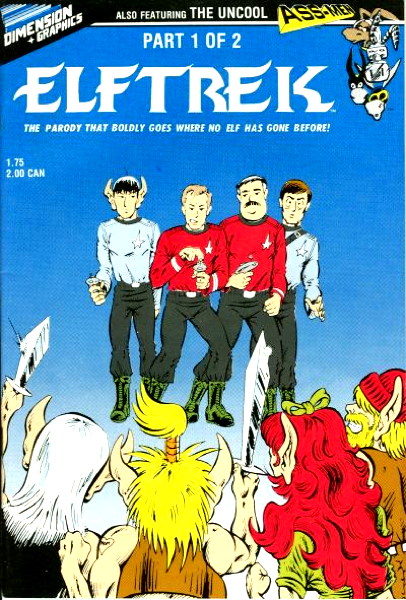
One thing I sort of miss from the old job is having access to the remnants of ’80s black and whites like, say, Elftrek:


…where these things just sat in the back issue bins, unsold and unsought-after, and we just rolled our eyes at being burdened with these books and did not appreciate the bounty that existed at our fingertips. I touched a bit on this in the post about Az, in which I noted that I missed that period of time where just about anything could get published and put on a rack right there next to X-Men and Batman. Granted, a lot of it was…not of interest to me, to be nice, but there was so much imaginative fun getting out there.

Elftrek is a comic I came across occasionally at the old job, but never actually looked inside far as I can remember. You’d think, in those early blogging days, I’d at least have pulled a panel or three from a copy to throw on this site for the amusement of all. Only two issues (collect ’em all!) so I may have to keep an eye out for those.

One thing about being a comics dealer is that the excited frisson of discovered some new weird book on the shelf is muted by more commercial and economic concerns. But remembering weirdo comics that I missed the first time around, or even getting my hands on them in my own store…a nostalgic twinge reminiscent of that feeling does occur, putting me just slightly in mind of scouring the shelves looking for that oddball book to round out my handful of regular buys.

• • •

Donald G speaks clearly into the microphone, saying

“William Messner-Loebs, who wrote Comico’s JONNY QUEST adaptation back in the eighties, pronounces the company name ‘koh-MEE-koh.’

“While a lot of YouTube video essayists have some idiosyncratic pronunciation quirks when it comes to common, everyday English words and proper names, ‘koh-MEE-koh’ is not a YouTube invention.”

I have literally said it no other way in my entire time sellin’ funnybooks for a living. I don’t know if I ever heard anyone say it “kah-mek-OH” back in those pre-World Wide Web days. I’m not sure how the “koh-MEE-koh” pronunciation was passed down to me, either via something in one of the comics or maybe the news/reviews mags or fan press, or if that’s just how my old boss pronounced it. But that’s the way I’ve always said it, that’s the say I say it now, and that’s how I correct people on the rare occasion I hear someone say it the wrong way now. Yes, I correct people on how to say “Comico,” THAT’S THE HILL I’M DYING ON.

• • •

For anyone interested in some contemporary reporting on a seminal comics publisher, Customer Sean dropped this 1982 article into the comments regarding Pacific Comics.

• • •

On to the next post, where pal Nat sez

“One thing it’s hard to realize now is that Pacific was using a wider color palette then the other comic publishers at the time, and this made their issues just scream at you from the rack showing colors that you never really seen in a comic book before.”

I mean, not much to add to that. The covers on Pacific books were quite nice and distinctive, important in catching that customer eye from amongst all the other books on the rack.


I’m reminded someone of how early Marvel books had covers colored in relatively muted, dark tones, versus the brightly-colored images of their cross-town rivals.

• • •

Moving on the aforementioned Az post, a few folks noted another early Comico release Slaughterman:


…And honestly, aside from the pretty name, I don’t remember really anything about the comic or the character. Customer Sean does bring up this good point about that period in Comico’s history:

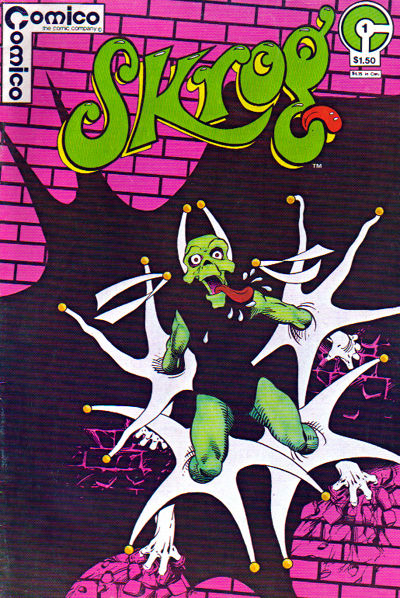
“I would say that the very early Comico comics have a quasi-underground comix art aesthetic going on, which makes its first wave of characters–Az, Skrog, and Slaughterman, very bizarre and outlaw looking for early ’80s comics.”

…and I’d say that’s pretty spot-on. Even if the contents of the books could be amateurish and a little crude, the cover designs (and slightly larger dimensions) were on-target and definitely stood out as something different. “These Aren’t Your Daddy’s 1980s Comics!” they almost seem to shout.

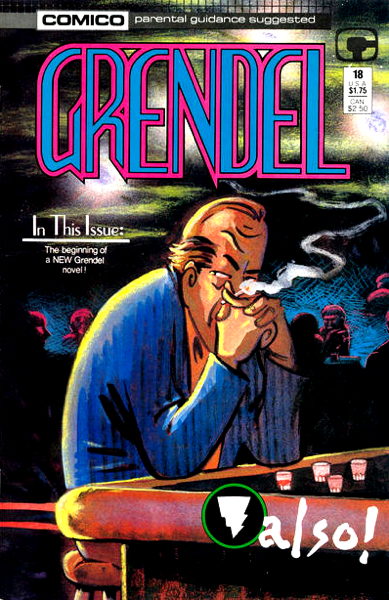
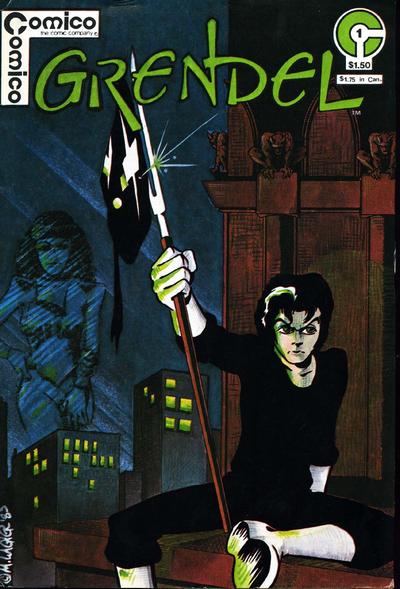
I did own the three original Grendel issues which just had the most beautiful covers, and boy howdy these books were red hot at one point. They still command a pretty penny now, but back then the demand was constant and just slightly desperate, almost. I wish I’d kept them…I gave them up for sale some time ago, and was satisfied with owning the Dark Horse hardcover that reprinted all that early material along with the covers. It’s a nice book, but not the same as having those three issues which were attractive bits of artistic objects in and of themselves.

• • •

Okay, back Friday for more ’80s talk! Thanks for reading, gang!

What does your pal Mike do when he’s short on posting time?

Why, he asks you a question, of course!

PICTURED: a 1980s comic


Given what we’ve been chatting about here lately, I’d like to know…what’s your favorite 1980s independent comic?

Some ground rules/definitions here:

  1. Has to have at least started in the 1980s and have released at least a portion of its run in that decade. Say, like, a year’s worth of books…I’m not asking about books that started in December 1989. You know what we’re talkin’ about here.
  2. …Which also means I’m not looking for one-shots. I mean actual series, at least three issues long.
  3. JUST ONE BOOK! I don’t want a list of, like, five books as a five-way tie or “here’s my second choice” or anything. Put your nickel down on a single title. Yes, I’m cruel and heartless, you should know that by now.
  4. For the sake of discussion, “independent” means anything not published by Marvel or DC. HOWEVER, I will allow comics from Marvel’s Epic Comics division since those are so quintessentially ’80s (and being creator-owned, often moved on to other publishers).
  5. Black and white boom titles can be included, so if your favorite 1980s series is Samurai Penguin, go right ahead and throw it in the ring. …What? I like Samurai Penguin.
  6. You don’t have to explain your choice…you can just post a title and go, that’s fine. But if you want to write a few lines talking about it, that’s okay, too. A few lines, Sean.
  7. Comic magazines are also okay. Anything that was a periodical is fine, so I’m going to leave graphic novel series out of this particular discussion.
  8. Did I say just pick ONE BOOK? ONE TITLE ONLY, don’t give me a list, or “here are my runners up” or “here’s the pool of titles from which I had to decide” or anything. C’mon, gimme a break.

Okay, that’s enough of my draconian laws. I look forward to your ONE TITLE ONLY and OPTIONAL BRIEF EXPLANATION being left in my comments!

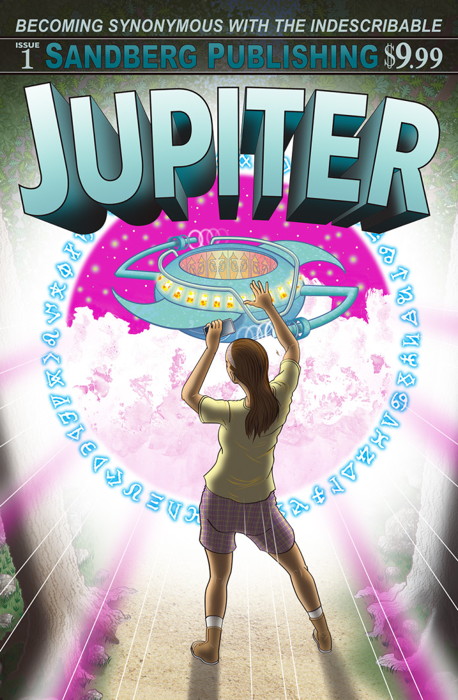
Don’t be a dupe, get Jupe…iter.


Gird whatever needs girding, as Jason Sandberg is bringing new Jupiter print comics to you via Indiegogo! The campaign is already fully funded, but you still have nearly a month to get in there and order some great funnybookin’ for your own home or office. Lots of swell add-ons to be had as well! I’ve been a longtime fan of Jupiter and pal of Jason, and this work gets my highest recommendation!

I’ve written about the original late-1990s print version of Jupiter here, though I don’t think the Pelasgus feature is continuing. Maybe if we all demand a Pelasgus graphic novel….

You can hear Jason talk about his comic and the Indiegogo campaign on the Longbox Heroes podcast with Todd and Joe. I know the interview isn’t noted in the description but it’s there, I promise! I’m listening to the interview in episode #651 again right now. And at one point the three of them start talking about my favorite topic — me! — so definitely worth a listen.

• • •

Okay, to continue the 1980s indies talk…yes, I’ll get back to some of your older comments, but let me react to a couple newer ones that aren’t…parody songs? Is there something in the water? What’s going on with you nuts.

Customer Sean asked about maybe including Marvel’s Epic imprint or Dark Horse into my indie comic rankings. Well, Epic might be okay, even though it’s not really an “indie” in the sense we mean it here, and Dark Horse is still an ongoing concern and I was trying to stick to companies that are defunct, or at least no longer the same operations they were back in the ’80s. I think both the Comico and the First Comics brands returned within the last few years, but I’m not sure of their current statuses.

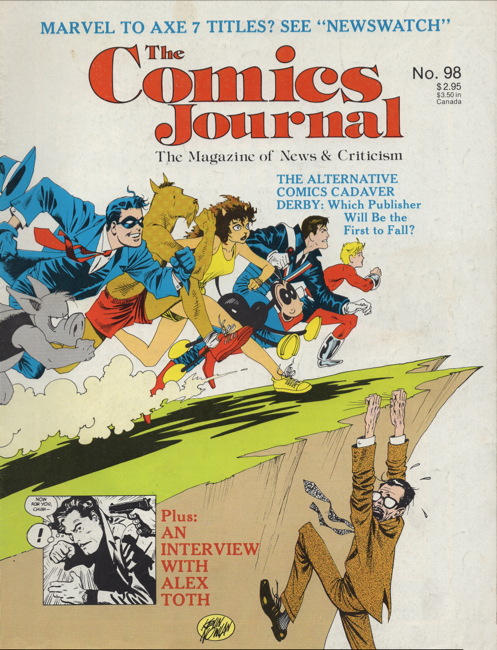
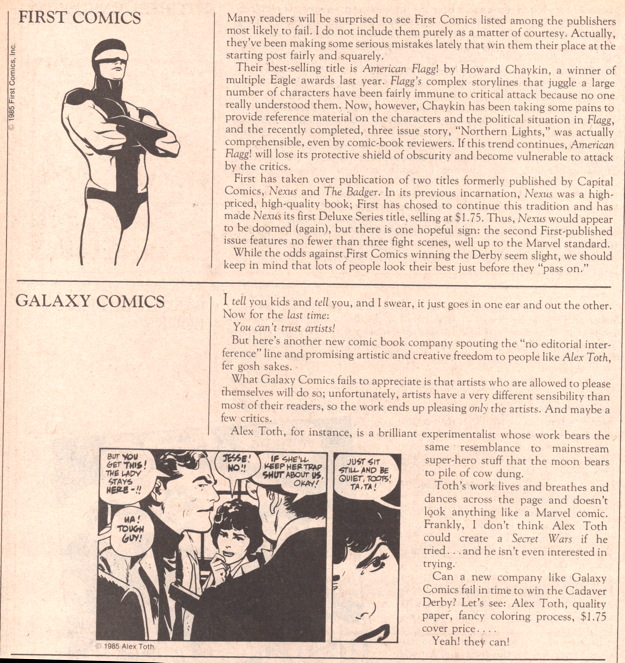
It’s funny…this puts me in mind of a long-ago article in The Comics Journal #98 (May 1985) by Jan Strnad, “The Alternative Comics Cadaver Derby.”

Following the demise of publishers Capital Comics and Pacific Comics, Strnad wondered who would be the next company/cpmpanies to fall, and thus lists several then-extant publishers and lays the odds on who would “win” by dying off first.

The general premise of the commentary is that the closer to being like Marvel Comics they were, the more likely they would “lose” the derby by surviving. And conversely, the higher quality of the material they publish, the more likely they were to “win.” A bit cynical, a bit smartass-y, a bit…well, right, kind of.


About three quarters of the companies listed are still around…including the Journal’s publisher Fantagraphics, which has managed to stick around despite publishing good comics.

Anyway, was reminded of that article, and wondered a bit what a modern version of that would be like — NOTE: NOT INVITING GUESSES AS TO WHAT CURRENT PUBLISHERS WILL GO OUT OF BUSINESS. I’m just curious what new factors would go into deciding who might live/who might die. Obviously the companies with the most variant covers and the highest ratio of CGC-slabbed investibility would be the big “losers” of that derby now.

Fine sarcasm is a lost art.

Sean also mentions looking back at the black and white boom, and I’ve said before I was only on the retail side of things for the tail end of that era. Mostly I was a wanderer through the wreckage, observing the boxes of unsold comics, the countless Teenage Mutant Ninja Turtles and Dark Knight Returns parodies that came and went unsold, the b&w publishers slowly petering out or pivoting to color, the poor bastard at that one convention who had a longbox full of nothing but Shadow of the Groundhog.

Thankfully, my former boss, who did ride out that era, avoided overordering and getting stuck with the terrible comics cranked out to take advantage of the boom. But I read a lot about it as it was happening, saw it on the shelves (not to as great extent at my soon-to-be place of employment, but certainly saw it elsewhere), so I imagine I could say something about it. I mean, I suppose I just did. I also wrote about Solson Comics last year, so I’ve at least served part of my sentence.

But that’s enough for now. See you all next week. And ease up on the song parodies in the comments, geez louise.

Wait, Comico published those Art Adams Gumby comics, that makes them #1.

So a discussion attempting to rank some of the recently-discussed-here comic book publishers broke out in the last post’s comments, so I thought I’d chime in with my own experiences and opinions and such. Since, you know, it’s my blog an’ all.

I’m just sticking to these four: Comico, First, Eclipse, and Pacific, since they’re all defunct (or at least the “classic” original 1970s-1990s versions of them are. I’m aware there have been newer revivals of sorts of a couple of these companies, but those aren’t being included here.

Anyway, #4 on the list is…


…Pacific Comics. I suppose now is as good time as any to say “I liked the output from all these companies,” so being #4 on the list isn’t a bad thing. It’s only here because, personally, my interaction with the publisher while it was extant was minimal. I told you recently that the first book I bought from them new off the stands was the first issue of Berni Wrightson: Master of the Macabre #1, and I bought one or two other comics new from them as well.

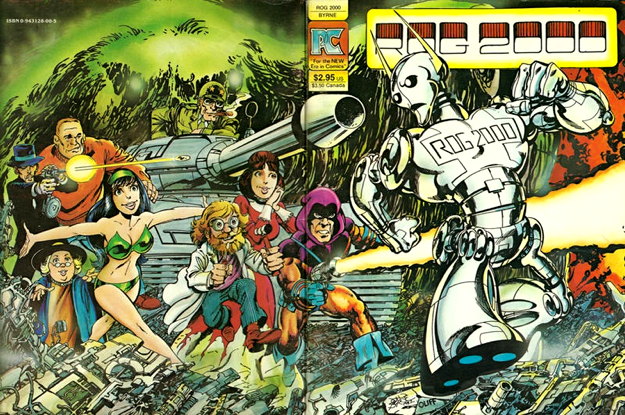
Aside from that, my interaction with their publications mostly happened after the fact, fishing various titles out of back issue bins. Rog 2000 (pictured above), a reprinting of some of John Byrne’s work, was an early get. I bought a single issue each of Alien Worlds and Twisted Tales new, and picked up the rest as back issues later. And as I said before, my first Groo was the Eclipse one-shot and I went back and picked up the Pacific Groos later.

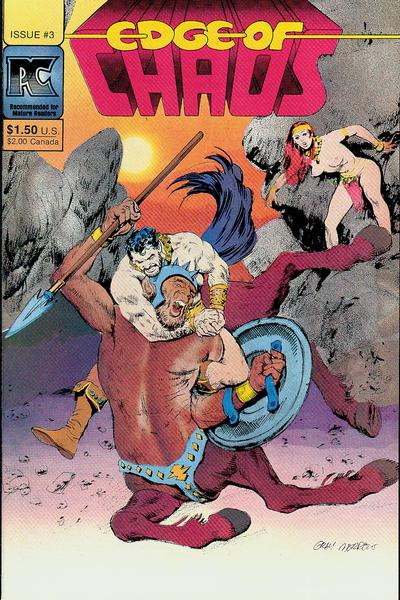
I will give Pacific this…I still have distinct memories of the newsstand I attended having, like, Captain Victory and other Pacific books on their spinner racks. Why this newsstand was getting direct-sales stuff, I don’t know (I also bought my Don Rosa’s Comics & Stories there, as well as the last few issue of Comic Reader), but that was one of the ways I began to realize “oh wait, there’s more than Marvel and DC out there.”

Onto #3, which is…


…Comico, where I bough stuff like Grendel, Mage, Jonny Quest and other old favorites new off the rack. I certainly enjoyed what I got from them, and they put out quality product, but the #3 ranking is mostly a numbers game, in that I bought more from the next two companies than I did from Comico.

Speaking of which, #2 is…


…Eclipse, where I picked up a lot of books, mostly new off the shelf, with the occasional after-the-fact-er (like that Stewart the Rat grapic novel I mail ordered from Eclipse honcho cat yronwode post the company’s fall.

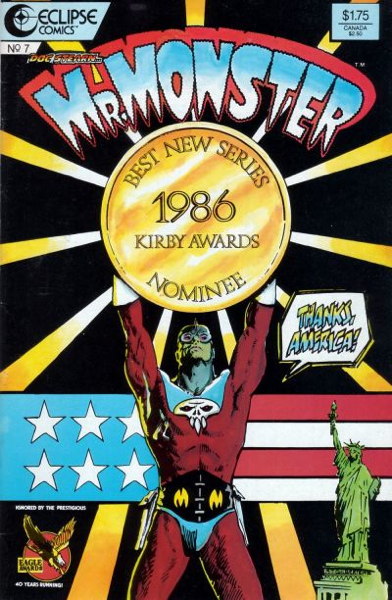
This is where Zot! lived. And Mr. Monster. And the early issues of Ms. Tree. And of course Miracleman, the initial U.S. release of Alan Moore’s Marvelman, came from here, too. They also continued some of the Pacific Comics titles that were interrupted mid-stream, like the aforementioned Berni Wrightson: Master of the Macabre. This company gave me so many wonderful, innovative, influential and memorable comics that I still love even today.

Which is why the #1 company of these four only made the top spot by the slimmest of margins…


…First Comics. Which is probably at he top for the same reason Pacific is at the “bottom” — just the sheer quantity of it all. Not necessarily saying “more is better,” but I felt like I was in there near the ground floor of the company’s start, and I picked up so much from them over the years that I enjoyed. First was such a consistent presence in my new comics purchases for so long, a dependable provider of entertainment, that (as I think someone said in my comments) may not have been the most groundbreaking work, but it was certainly fun work.

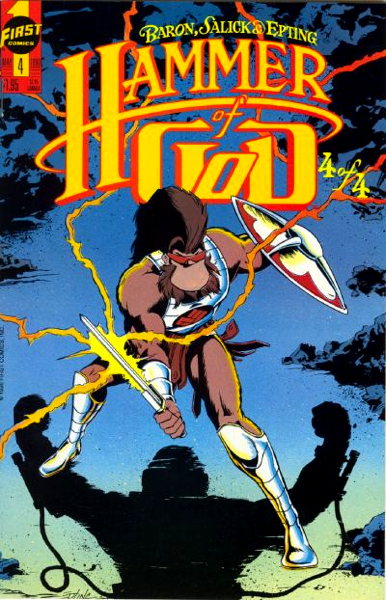
Nexus, Badger, Grimjack, Jon Sable Freelance, American Flagg!, Dreadstar, a bunch of their wonderful CLassics Illustrateds…they didn’t have quite the number of titles Eclipse did, but it was nice to have such long runs on these books to watch the characters and situations grow and develop.

Though I have to be honest…ask me on a different day and I may say Eclipse is #1 for the sheer variety of content they provided. I’m just more in a First Comics mood as I write this, I guess.

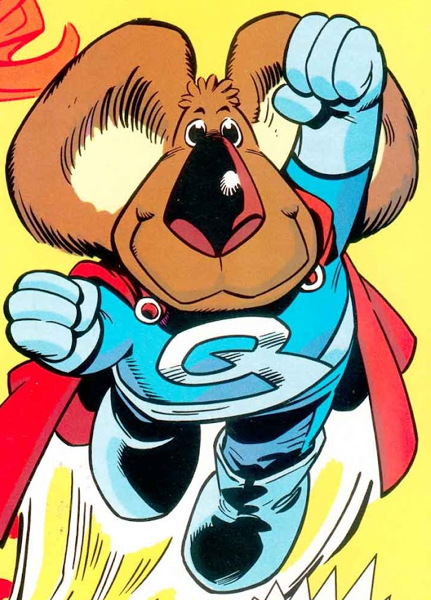
Besides, First Comics had Teddy Q as their mascot:

…and that’s hard to beat, you have to admit.

Az me a question, I”ll tell you no lies.

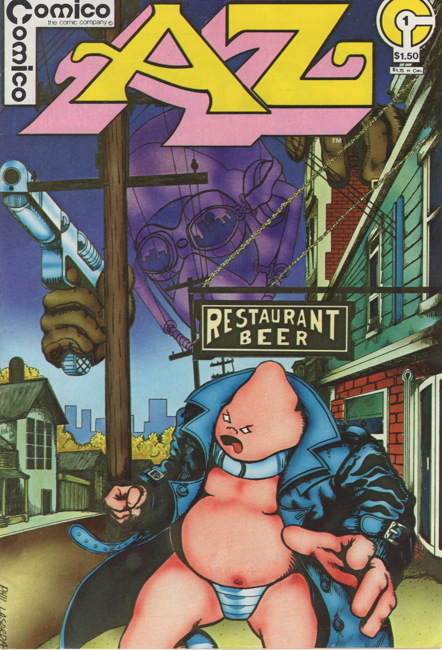
So as our 1980s comics symposium continues, I wanted to cast an eye over at the early Comico Comics release. I was inspired by a recent tweet I made in which I stated, truthfully, that the Comico release Az (by the late Phil Lasorda) would just occasionally come to mind. I’ve never read it, never owned a copy (aside from having them in the back issue bins at the shops), but its…weirdness just stuck in my head.

Here’s a better look at the comic:

And yes, at pal Cathy’s request for more information, I took it home and I read it for the very first time, 40 years after its release.

When I was a kid, I loved the idea of non-professionals putting together their own creative projects in whatever field they decided upon. In my case, I was most interested in seeing what other people my age were doing in fiction writing or comic book drawing, as those were the fields I had interest in as well. There was…some book at my local library (the library I ended up working at for a while) that collected together a bunch of short stories written by schoolkids that I enjoying reading over and over again, and there was a book published in the mid-1970s called Make Your Own CXomics for Fun and Profit that…well, don’t hold out high hopes for profits, friends. But there are lots of examples contained therein of kids doin’ it for themselves and I found it wonderfully inspiring, checking it out from the library over and over. I’ve since picked up a copy of my own, and they’re relatively inexpensive.

So basically I’ve had an interest in amateur work like what you see here in Az, a sort of unfettered approach to putting your imagination on paper and getting it out there for people to read, without the constraints that could be put upon the project by larger publishers. It’s rough around the edges, I’m not sure about the setting for the story (more on that in a sec), there’s a full page drawing with a waitress in the foreground whose nipples are very carefully delineated beneath her shirt which is — a choice…like I said, unfettered.

Aside from that last bit about the nipples, which, honestly, that was out of nowhere, this isn’t a terrible comic. It sets up the premise, introduces our hero, tells its story…not polished in the slightest, but retains a measure of charm anyway.

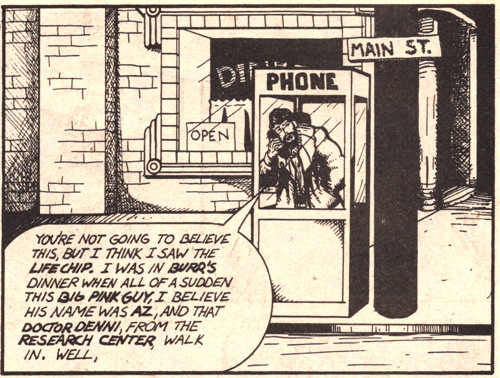
In brief, the comic takes place on another planet, which might as well be Earth, what with all the humans, newspapers and phone booths and a Main St.:

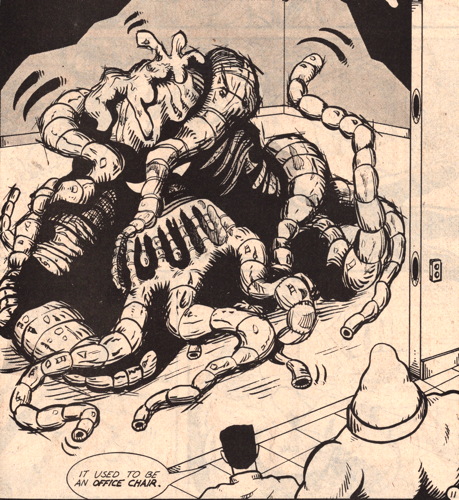
…and there are some bad guys (Skyriders, from the planet…well, Sky) who are after the Lifechip, a device that can impart life upon anything. Including this office chair Az’s scientist buddy shows him:


And speaking of Az, he’s the last(?) of his race, hanging out on this planet that is definitely not Earth and helping out the lab and occasionally knocking a bad guy’s head around, oh, and also is horny and trying to find another of his race so they can repopulate his home planet. Which presumably is why he tools around wearing a bikini bottom because once he gets his chance with a similarly-specied lady, we doesn’t want a whole lot of undressing to get in the way.

Now, to be fair, the planet’s setting may have been intended to been explained as “Earth humans colonizing another planet” which I think is a fair read of the situation. Unless it’s explaining in the second, and as it turned out, final issue of the series.

One of the main reasons that Az stuck in my mind was the whole aesthetics of it all. These very early Comico comics, much like I said about early Cerebus, I enjoy as just pure physical objects. The covers, the fact that they were at a slightly larger trim size than most comics (like early Tick comics)…they certainly stood out on a rack. Nothing else looked quite like them.

Never read Skrog, did read the three issues of Grendel from this time…a less technically proficient Matt Wagner was putting these out, but even then he had the chops to make an entertain and visually distinctive product. Both beautiful and weird, this particular format gave a unique look to these comics among the others on the rack, and something was lost when Comico shifted to more traditional-looking publications.

And it’s an additional shame Mr. Lasorda never got to complete his vision. Maybe the comic was a little rough and clunky, with the occasional (well, one, really) inappropriate moment, but seeing someone not get to finish his creative endeavor. Which, of course, is a common problem even today, in a marketplace that isn’t always necessarily friendly to anything awkward and strange.

Pacified.

Okay, first thing’s first…in my last post I referred to a comment left on the Dilbert post by a real dummy who turns up on occasion to impress us all with…well, with nothing, because he always just looks foolish. However, I made the mistake of not specifying which comment, as I figured it was likely self-evident. But I did hear from a few of my regulars, who feared perhaps I meant them, and I’m here to say…no, you’re all good. If you’re a semi-regular commentator, or even a new one, who participates in good faith, you’re fine. Just don’t be like this guy, who is the, ahem, scumdog in question.

My apologies to anyone for whom I may have caused undue anxiety!

• • •

Okay, I left off last time halfway through one of Customer Sean’s comments, so here’s the part I’m responding to today

“And what about the great–if short-lived–Pacific Comics? Cool and fun content by Jack Kirby, Neal Adams (except for the goofy Skateman), Mike Grell, Dave Stevens, Steve Ditko,Bruce Jones, Richard Corban, Michael T. Gilbert, Sergio Aragonés, and others. And the coloring on Pacific Comics–by Steve Oliff–always made those comics pop! I would say Pacific Comics and Eclipse Comics–who took over publishing some of the Pacific Comics titles after Pacific Comics folded–were my two favorite Independent publishers of the ’80s.”

Yeah, they’re okay.


Oh, okay, fine.

Pacific Comics was a mail order outfit, a series of retail stores, a distributor and a publisher that began operations in 1971, founded by the brothers Bill and Steve Schanes. According to the Wikipedia article, they were 13 and 17 years old respectively in ’71 when they started all this, which is pretty amazing.

Now, the Wikipedia article says Pacific “dipped its feet into publishing” with a 1979 John Buscema art portfolio, which seems to ignore this:


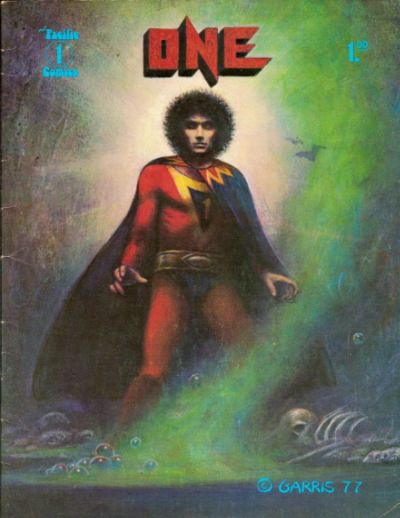
…One, which was a comics magazine published by Pacific in 1977. Steve was one of the credited character models for the lead story. I have to admit, I’ve never read One myself, but I’ve seen tons of copies of this over the years, even having had a few come through my own shop in its 8 1/2 year history. I might even have one in the back issue bins right now, I’d have to check.

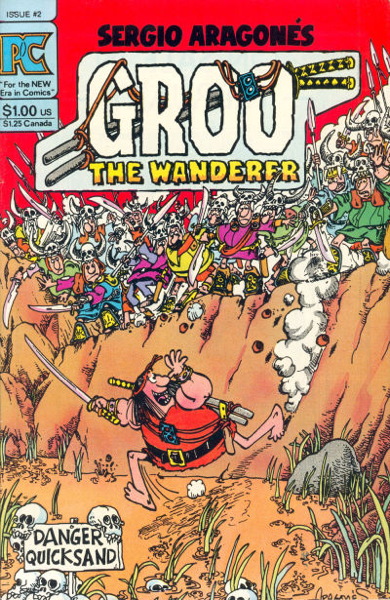
My earliest encounter with Pacific Comics releases was spotting them on the spinner racks at the newsstand I used to regularly visit in the early ’80s before switching over to an actual comic book store for my new books. I remember seeing Jack Kirby’s Captain Victory and Sergio Aragones’ Groo the Wanderer there


…and the only reason I can come up with for not buying them at the time was that my comic dollars were limited, and with this indie titles being a buck (or a buck fifty) a throw, versus the…I forget, 50 cents, 60 cents each thaqt DC and Marvel books were, I just didn’t seem to have the budget for them. It really baffles me that I didn’t at least buy Groo given my childhood of being a big Sergio fan. Ah well, What Can You Do?

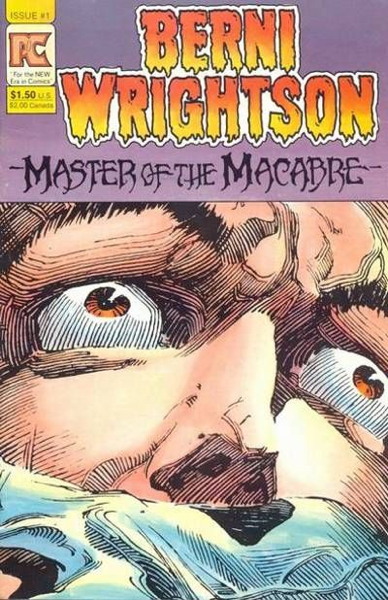
I think the first (and possibly one) Pacific Comics series I bought new off the rack was 1983’s Berni Wrightson Master of the Macabre


…purchased of course because this was the fella what drew Swamp Thing. Somehow this was the book that got me to splurge a whole $1.50 for a non-Marvel/DC, non-Extra Special-Sized Spectacular comic book. I seem to recall feeling as if some paradigm had shifted, now that I’ve moved into the slightly pricier realm of indie comics.

And a year later, after Pacific had gone under and Eclipse Comics picked up their titles, I’d apparently thrown comic budgets to the wind as I bought my first Groo, the previously-announced-by-Pacific-but-now-it’s-from-Eclipse Groo Special, new off the rack for the princely sum of $2. Which would lead me to paying back issue prices of all the previous Groo issues, which, thankfully at the time, were still pretty low. Not as low as buyin’ them new, but that’s what I get for being a cheapskate at the time. It did however instill the comic-buying lesson of “buy it new if you want it.”

I would also later go on to pick up as back issues the great EC Comics-informed anthology series Alien Worlds and Twisted Tales, mostly written by Bruce Jones. And of course I became familiar with their other releases simply by virtue of handling the books over my decades of comics retail. Familiar enough to understand that Pacific Comics was a high quality publisher of excellent comics that alas died out too soon, but helped establish a precedent for other indie publishers to follow.

And by “Deadbeats” I don’t mean the Claypool comic.

Smicha1 cashes in with

“Mike, how do you handle it as a retailer when you feel that a product just isn’t worth the money? Are you pretty candid with your customers? You seem like a pretty ethical guy so I imagine you must be occasionally kinda torn between maintaining the trust of your customers and making that scratch. Have you ever felt compelled to actively dissuade someone from buying something because you know they will be disappointed?”

It’s…not always easy. Yes, of course I want to make a buck, even quite a few bucks, at all times in order to maintain my lavish* lifestyle. But here and there I cut costs on things to 1) encourage sales, and 2) lessen the burden on customers, such as probably charging less on comic supplies like bags, boards and boxes than I should be. And a lot of my back issues are very cheap, he humblebragged, but that’s mostly a case of pricing accurately due to condition. I probably kept my Funko Pops at a lower price than I should have for too long, and now that I’ve raised the price a buck or so I actually seem to sell even more of them. And there are other things around the store, mostly more merchandise, where I price ’em out at a buck or two below retail.

I have been known to angle some customers away from some comics and towards other comics that may be more to their liking, based on either what they say they’re looking for, or based on my knowledge of their tastes if I happen to have that in the ol’ mental database. That’s just a function of salesmanship. I don’t just come right out and announce “boy that sucks, don’t buy that” to everyone in the shop, because my taste ain’t your taste, some person might like it.

This was a point of discussion in the old comicsweblogosphere a decade or so back, about some folks who just broadcast to their entire clientele via newsletter reviews telling them to either “buy” or “not buy” comics that, um, they were carrying, which seems self-defeating. One on one suggestions with individual customers is one thing, just telling everyone “don’t buy this comic, it’s the worst” is another. The distinction, sadly, was lost, as the internet is where nuance goes to die.

My favorite example of this is the fella what slagged some Big Two event book to all his customers, then wondered a few months later “huh, wonder why [said event] isn’t selling for me?” Boy, get Hercule Poroit on that case.

What I’m trying to say, in between dragging out old grudges, is that I do try to find ways to keep my customers happy, and to help them spend their dollars wisely. I try to focus more on the “you might want to check this out” versus the “I don’t know if that’s for you” tack, but in the latter case I try to offer something else they would like as an alternative.

• • •

An additional note on that post about the most recent Nexus graphic novel: I was looking at the Nexus Wikipedia entry, where it states that Mike Baron and Steve Rude have “parted ways,” and that Rude is doing his own graphic novel. I talked about the recent Baron Nexus story, and with a new story by Rude apparently coming…does that mean the ongoing Nexus saga is split into separate continuities, with each creator deciding independently on what to do with the character? That’s going to seem a little strange. But then again, Nexus has always been a little strange, that’s part of the appeal. We’ll see what happens, I suppose.

• • •

Okay, I’m going to skip over responses to the Dilbert post in order to keep with the current locally-centered zeitgeist of ’80/’90 indies. Anyway, y’all had good comments there, with the exception of a recurring dipshit who popped up to say something stupid, but I left his shame intact for future generations to gawk at.

So, onto the next post, where none of you deadbeats have bought my Zot!s yet…but you left lots of good comments, so I guess that’ll do.

Cassandra Miller asks

“Do you, by any chance, have the Matt Feazel issues? Because I’m missing those…”

Those Feazel issues seem to be the popular ones…the mini-comic #10 1/2 and the full-sized issue #14 1/2. I did have a 14 1/2 but that sold right away. Sorry about that.

As a consolation prize, please enjoy this early post on my site (from within the first month of its existence!) about my even earlier encounter via the mails with Mr. Feazell. WARNING: link rot ahoy!

• • •

Daniel T tees me up with

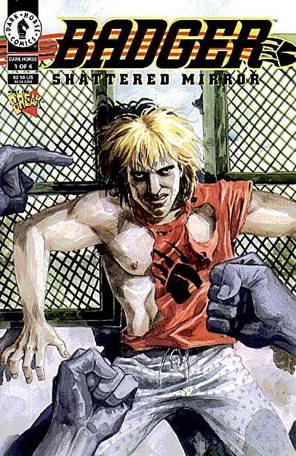
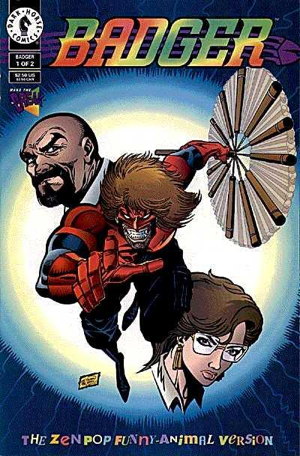
“Mike, did you like Badger: Shattered Mirror? That was the only post-First thing I read and I thought it was pretty good.”

What Daniel T is talking about here is one of the two mini-series published by Dark Horse Comics after the demise of First Comics, the previous publisher of the Badger.


Released in 1994, these two series presented essentially mutually-exclusive origins for the character, Shattered Mirror being the serious one, and Zen Pop etc. being the wacky one.

Now it’s been nearly 30 years since these came out, and thus probably nearly 30 years since I’ve read the darn things. I am sure I liked them well enough, though I can’t honestly remember a thing about them. Badger is on my upsettingly long list of things to reread while my mortal coil remains unshuffled-off, so maybe I’ll get around to them again someday. However, my current sense of the Badgers funnybook history as a whole is, as I may have mentioned before, that some subtle lifeforce that powered the appealing balance of serious/wackiness of the Badger’s tales had begun to peter out near the end of the First run, and was never quite acquired again. Maybe a solid reread of the series may alter that opinion, but that’s my overall memory of everything.

“…Do you have anything to say about the language changes made in the B&W collection?”

Daniel’s referring to the Zot! book reprinting that series black and white run of issues from 11-36. And I have to say…I didn’t know there were language changes! I presume “word choices,” and not that they’re all suddenly speaking Swahili or something. Scott himself says he “fine-tuned the source material” on his site, and I suppose that means more than just touching up the art for republication.

So I tried looking for examples online and didn’t have any luck, so if there are any out there I missed, or, Daniel, if you want to tell me specific citations, I’d love to see them. But to answer your question in general…if Scott thought the changes were necessary, then it’s his book, I’m perfectly fine with whatever he did. Unless he, like, hid new drawings of Sluggo or Swamp Thing throughout, in which case I’d be ecstatic.

• • •

And before I pack it in for the night, let’s see what Customer Sean has to say

“Mike, as long as you are talking about Capital Comics characters who went on to First Comics, what about Whisper?”


I gotta say, I didn’t pick up on Whisper at the time. Looked a little too ninja-y to me, and my eyes just kinda glazed over whenever “ninjas” were brought up in whatever comics I was reading (aside from the Teenage Mutant Turtles who were also you-know-whats, of course).

With the comics ninja craze long behind us, I’m probably a little more open to checking them out. If only I’d thought about it before my previous place of employment went the way of HBO Max programs, as I’m sure they had a full run of every iteration of the series. Plus, with my backlog already thoroughly logged, I’m not sure when I’d get to it anyway. As it stands now, I think the opening issue of First’s Crossroads series may be the one thing I’ve read featuring the character. Ah well, can’t read everything.

And Sean’s second question is about the late, lamented Pacific Comics, but I’ll get to that next time. Thanks for checking back in, pals.


* Sometimes I’ll splurge on buttered toast, rather than dry.

The spirit was willing…

…but my old body was weak, as I sat down last night to write an entry, and then I woke up three hours later, well after midnight, sitting in my computer chair. Sadly, elves did not come during the night to write my post, so I’m going to have to wait ’til Wednesday for a real entry here. Sorry about that, but I’ll see you then.