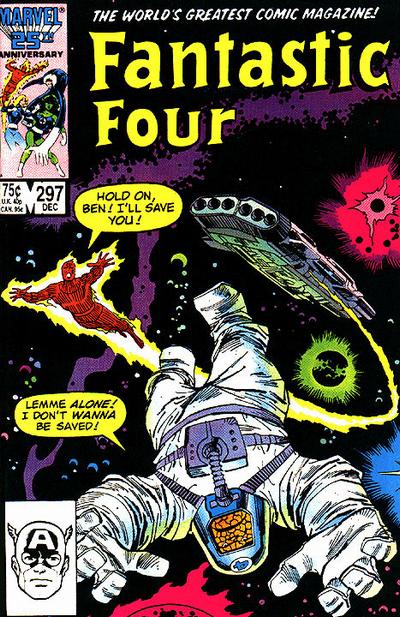
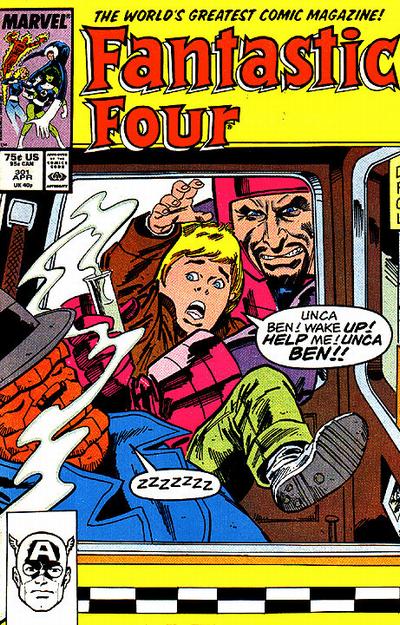
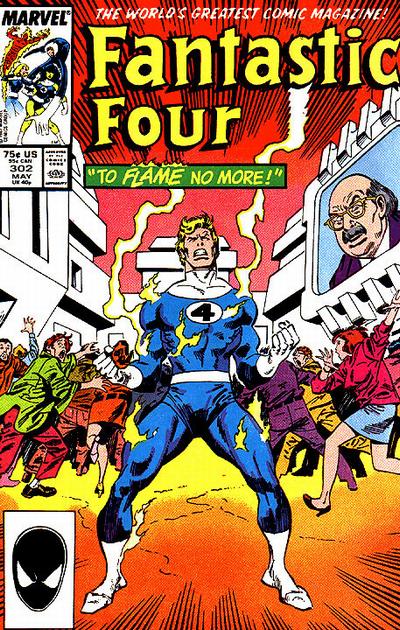
Sometimes you get 1,500 words about an Image comic, sometimes you get a picture of a paddle.


Found by my former boss amongst his belongings, this colorful wooden toy paddle once had a rubber band and a ball stapled to it for hitting-and-bouncing play. Alas, the ball is long gone, the rubber band was still attached but dried to brittleness, but that solitary staple remains.

At least I can still use it to swat people who put the comics in my shop out of order. “Hey, did you put that Miles Morales back in the Scarlet Witch section?” SMACK!

My thought process on this item was “huh, I bet this is pretty old…no wait, it’s only from 1987, it’s not that old…but ’87 was nearly 40 years ago, so it is old.” …In case you were wondering what it’s like to be my age.

“Weeds,” get it?


At long last, it’s here. Decades after Rick Veitch’s 1980s run on Swamp Thing was cut short by editorial disagreements, we’ve finally seen the intended ending, completed and in full.

I’m going to try to remain SPOILER free discussing this, though I may dance around specific bits. It may be best if you read your comic first.

Finished? Good.

I’ve noted before that, when this whole hoohar came to pass in the late ’80s and Veitch departed the book, he offered up brief synopses of the final four issues that were printed in the Comic Buyer’s Guide trade paper. I had owned a copy of this at one time, but discarded it long ago for reasons I can’t comprehend now (given the piles of ‘zines and mags I still have) but I did read that article at the time. As such, I have vague memories of how things were supposed to have played out, at least in the final issue.

Specifically, that Veitch had a specific name in mind for Swamp Thing and Abby’s child, but did not reveal it in that article. Also, that Swamp Thing’s encounter with Jesus would have given him an advantage in his final conflict with Arcane.

As such, it was…very weird to see things finally play out on a printed page, panel by panel, witnessing for myself what was meant by those brief descriptions I read so long ago. As I’m trying to remain spoiler-free here, I won’t detail specifically what I am possibly misremembering about that conflict with Arcane and how it plays out, which I may be conflating with Arcane’s treatment in the latter part of the Mark Millar run.

Also, as to the child…I’m so used to the character of Tefe being the Official Kid of Swampy and Abby, that it’s strange to get an entirely different character here. And Veitch did not disappoint with the name, giving us the perfect, and perfectly ambiguous, sobriquet.

Given how deep into the DC Universe weeds Veitch got with his stories, especially in this final run of issues, it’s not surprising that it all plays into the resolution of the series. It does leave me with more questions, that I’ll be bringing up in a later post about this mini-series that isn’t coming out the day of the last issue’s release. In particular, if this was the original intended ending of the story back in 1989, how exactly was any new creative team supposed to follow up on that? I mean, yes, on one hand Veitch was a polite host and left the toys intact for the next folks to play with. But on the other hand, the memory (at least for the reader, if not the characters in-universe) would always float over the new works.

But that’s all a moot point, I suppose, since DC Continuity went in one direction, and as a Black Label book, this Swamp Thing 1989 series is essentially one of Marvel’s What If stories, but with 100% less “and the Fantastic Four never came to be” within. To be fair, I’m not completely certain what Swamp Thing’s current backstory is in the DC Universe…revisions in the New 52 relaunch were confusing, to say the least, and I’m not sure if the “Rebirth” initiative forced everything back into place. Look, if we need a Swamp Thing: Year One story to straighten things out, I volunteer. Well, “volunteer” in a way that I get a paycheck.

In an odd way, the Veitch conclusion to the story could, if you squint here and apply some paint there, still allow for how things did play out in the Swamp Thing title after Veitch left. I suppose I coould try to explain how that would work, but I need to save something for my Swamp Thing: Year Eleven series, sure to come after the success of the first ten.

But overall…I’m glad this all saw the light of day, and that I was still around to read it. Veitch is a master Swamper, it goes without saying, and the art from the late Michael Zulli, Vince Locke, and Tom Mandrake was all beautiful and ideal for the project. Todd Klein’s spot-on mimicry of John Constanza’s lettering was vastly appreciated, as was the expert and appropriately-applied coloring of Trish Mulvihill. The backmatter from Veitch, Klein, and that real barnburner from Steve Bissette gave us wonderful insight into what this series was and what went into making it happen (and almost not happen). And of course, I can’t forget close personal friend Rich Handley, and his delightful text pieces inside each front cover, giving us the proper context for what we’re reading.

Seems like only yesterday we were wondering about these weird unknown comics showing up in a listing for an upcoming Swamp Thing trade paperback. Still wondering about New Titans #0‘s inclusion, though. Any answers for me there, Rich?

The Final ’90s Countdown, Part Twenty-Three.

Only one more single-vote receiver to go after today’s installment of the Final ’90s Countdown! And like I always say, getting only one vote isn’t a thing of shame, but rather a testament to all the beloved books that came out during this usually maligned decade! That said, here we go with

Supreme (Image Comics/Maximum/Awesome, 1992 – 2000)

So, where to start with this comic? It’s got bit of a convoluted history but we’ll get through it!

It all kicks off in Youngblood #3 (August 1992), where the character is introduced. A creation of Rob Liefeld and Brian Murray, Supreme, a somewhat more violent take on Superman, got his own series in November 1992, in a first issue inexplicably labeled as “Volume 2.” …I’ve seen explanations for that ranging from “someone messed up” to “it’s implying a long previous history” to “it’s setting up an eventual ‘Volume 1’ series that would go into the character’s past history.” (And we sort of get that last one, but more on that later.)

But whatever the reason, the actual premise of the series itself sounded interesting to me at the time, in which Supreme, active during World War II, leaves the Earth for decades and returns in our absolutely current and modern year of 1992. And then, let the kicking of asses and the taking of names ensue.

I have to admit, despite thinking the premise was neat, the execution on these early issues were…not to my taste. It was very much an Image Comics of the Early ’90s with “kewl” looks and crossovers with other Image heroes and so on. A brief glimpse at this Grand Comics Database gallery of covers for the first 35 issues shows a whole lot of jagged lines and gritted teeth and just did not seem to Be For Me.

…Um, I realize that I did have someone place a vote for this as their favorite ’90s title, so I really don’t mean to yuck your yum, as people on podcasts say. I’m just giving my surface-level personal response to these “before-times” Supreme comics and for all I know, they read great. I see Shawn McManus drew a couple of them…I like his work! And Keith Giffen is in here somewhere, too!

Anyway, all that said, I don’t recall a whole lot of memories about these earlier Supremes during their initial sales at the shop. There was some anticipation for the first issue, sure…Image Comics was still in its Age of Hotness, after all. And I remember it selling fairly well when it came out. I mean, it did have a pretty striking cover by Murray. I know I linked to the cover earlier, but I’ll go ahead and put it here because honestly, I do like it.


Note that’s the newsstand cover, as the cover comic shops got had an embossed foil logo that doesn’t really show up great in scans like this. But still, that’s a cover that made customers go “whoa, look at this” and pick it up…and then they’d ask what “Volume 2” meant, and friend, only Rob Liefeld’s hairdresser knows for sure. (I should note here that there is an origin series for Supreme, called The Legend of Supreme, masterminded by Keith Giffen and Robert Loren Fleming, that covers his origin. If you need a “Volume One” to counter that “Volume Two,” this is close enough, I think.)

So anyhoos, Supreme continued on Supreming, until something very weird happened to the title in 1996. Specifically, this happened:


Alan Moore…yes, that Alan Moore, not any of those other Alan Moores you may be thinking of, took over writing chores with issue #41 (art by oe Bennett and Marlo Alquiza). With its Superman #1 (1939) inspired cover by Jerry Ordway, clearly changes were afoot, especially when you compare that cover to the ones in the gallery I linked earlier. This isn’t the hyperkinetic, violent Supreme we’d been seeing. This is something more retro, more “Silver/Golden” age-y. (And here’s the second printing of that #41, if you’re interested.)

And that’s what we got! Before Moore launched the America’s Best Comics line in 1999, here he was doing fun, silly, Silver Age Superman-inspired stories, complete with his own Lex Luthor type, his own Jimmy Olsen type, his mild-mannered secret identity, his superpowered pet dog, and on and on. Every story was a tribute to that sort of storytelling, as told through modern eyes…not ironically, not parodic, just played straight but still with a sense of humor about itself. It was Moore’s own antidote to the grim ‘n’ gritty trend of the ’80s to which he inadvertently contributed.

(One of my favorite gags is the Jimmy Olsen stand-in character, Billy Friday, finding himself in an endless series of transmutations that continue from issue to issue, referencing the many transformations Jimmy Olsen himself would undergo in his comics.)

This style of Supreme comic continued on for quite some time, and transcended multiple publishers and decades. The original series of Supreme ended its run at Image Comics with #42 in 1996. It picks up with #43 under the name Supreme: The New Adventure, running ’til #48. Then it’s off to Awesome Comics, where we get issues #49 through #56 (including two #52s, a #52A and a #52B), running ’til 1998. We then jump ahead a year, remaining at Awesome, where we get Supreme: The Return. This starts the numbering over again with #1, running until #6 in 2000, essentially being issues #57 through #62.

And yes, that was Alan Moore on all those issues. Notable other artists on these books include Chris Sprouse and Rick Veitch, though to my recollection everyone who worked on the book did a swell job.

So, with #6/#62 from that last series, that was it forever, right? That was the end of this great Silver Age-y experiment, and Supreme was never seen again, correct?

My dates at the top there, of 1998 through 2000, basically reflect the inception of the Supreme title until its eventual end at Awesome. It more of less kept the same numbering throughout, except for that final batch of comics, but I’m still considering it all part of the same run, especially given what comes later.

And what comes later, you may ask? Why, Supreme #63, of course, in 2012 from Image Comics.


Turns out there was still one script left by Mr. Moore, and Erik Larsen illustrated it for this debut issue of a new run of the title. And then the subsequent issues, running through #68 in 2013, had Larsen scripting and drawing, building on Moore’s work on the title while edging it away from the retro look ‘n’ feel that had dominated so much of its run. I read these too, and to my memory they were still a lot of fun…it wasn’t what Moore was doing, exactly, but Larsen comics have an energetic energy all their own and it was applied nicely to the concept.

There was one further Supreme comic in 2015, unrelated (or…is it) to previous goings-on. Supreme: Blue Rose, by Warren Ellis and Tula Lotay, is an interesting take on the very nature of superhero comics themselves [SPOILERS, maybe] , in particular the idea of “reboots.” We find ourselves in a world where Supreme’s reality has been rebooted yet again, but the reboot was somehow incomplete/flawed. It’s one of the few stories to actually dive into what a reboot would actually mean for the fictional world being rebooted (Astro City #1/2 being another classic example) and it makes for fascinating reading for those of us mired in all this superhero universe silliness.

Now, as for reprints…only a few issues of the pre-Moore Supreme were reprinted, with issues #12 though #16 showing up in Supreme Madness from Image. All the Moore Supreme (through the end of The Return) was reprinted in two trade paperbacks from Checker Books, but sadly my memory of these was that the print quality wasn’t that great…everything looked a little fuzzy, like they were low quality scans or they were shot from the original printed pages. I mean, it’s not bad, just not ideal. If that’s all you can find, it’ll do in a pinch.

There we have it…Supreme. A comic with somewhat inauspicious beginnings, looking an awful lot like everything else on the stands at the time, that turned into an almost-forgotten classic. Alan Moore’s run reminded us all of the whimsy and wonder that comics used to give us, while it was surrounded by gritted teeth and sloppy crosshatching. At least he was able to put out as many issues as he did, even if it was under several imprints and with a decade-long gap before his final issue saw the light of day.

Before I wrap up here, I do have one memory from the old shop, shortly after Moore had been on the book for several issues. I had a customer talking to me about how much he loved the Supreme comics, how the character was cool and tough, how ever issue was action packed. “Not like whatever weird things are happening in the comic now,” he said.

As much as I thought Moore’s Supreme run was objectively good, it was a little bit of an eye-opener to encounter someone with the exact opposite opinion. I simply nodded in agreement, probably. I had to look at it from his side…here I am, reading this amazing comic about a super-powered guy who takes no guff from anyone, who’s badass and kicks ass…that suddenly becomes a title involving superpets and looks like it came from the ’60s. I’m sure it was quite the shock.

ADDENDUM: I know I didn’t get into all the spin-offs, like Lady Supreme and Kid Supreme an’ all that, but this post was long enough as is. Just wanted to acknowledge that, yes, I know such spin-offs existed.

Sorry, I’m skipping Monday again.

…Well, I was working on a new installment of the Final ’90s Countdown and I’m like a third of the way through the proposed entry and I just looked at the time. Eep!

So, I’ll finish it up Monday night and have it out for Tuesday. Sorry about that, pals. Apparently I had a surprising amount to say about this particular comic, and I didn’t want to rush through the entry just for the sake of getting it out “on time.”

Thanks for your patience, pals!

By which I mean, I utilized a chicken or two.

[SPOILERS for Concrete: The Human Dilemma and Concrete: Stars over Sand #1…and Insane #2, I suppose.]

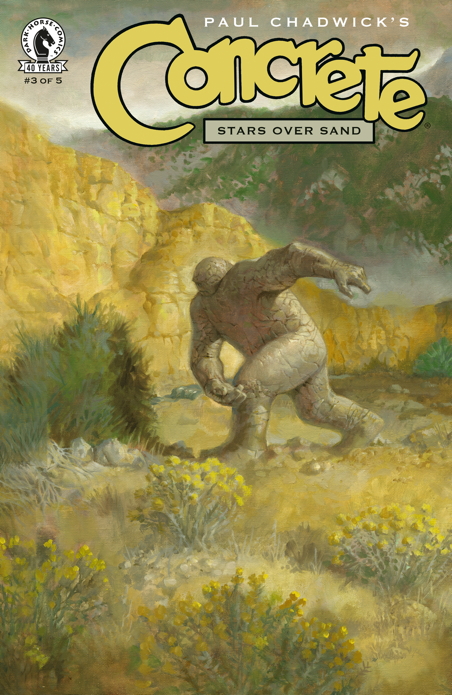
So over the last few weeks, inspired by the recent release of Concrete: Stars over Sand #1, Paul Chadwick’s newest Concrete thing is many a year, I’ve been rereadeding old Concrete comics. Read all the Dark Horse Presents shorts, several of the mini-series, stuff like that. I mentioned my doing this on Bluesky, getting a reply from a pal there of “okay, smart guy, what about this?” And that “this” being…


Insane #2, a late-1988 parody comic released by Concrete‘s publisher, Dark Horse Comics. As you can see on that cover there, a Jim Bradrick drawing of Cement, the comic’s take-off on you-know-who.

I did not own this. Therefore, via means both fair but mostly foul, and perhaps even fowl, I obtained my own copy of said classic comic, just to ensure my Concrete collection remained complete.

Now, the parody inside was…okay, I suppose. Bradrick did a reasonable job emulating the art style of the original comics, and the script by then-publisher, now former publisher Mike Richardson was…well, it got a bemused smile from me once in a while, but Not Brand Echh it ain’t. It was pleasant enough, I guess.

But there is something quite notable about it, at least in my mind.

Concrete first appeared in Dark Horse Presents #1 in the middle of 1986. Thus the character had only been around for a couple of years…well, let’s be fair, it had made a pretty good splash and gathered quite the following in short order. And on the last page of the “Cement” story were these concluding panels:


Yes, a good 18 years, more or less, before Chadwick introduced the idea of Concrete’s ability to reproduce, there were Richardson and Bradrick giving it their own spin, presenting a humorous twist on what would eventually be played straight in the original work:


Yes, I know it was perhaps just an obvious punchline to a gag strip, but it’s still amusing how one presaged the other.

Not quite through digesting yet.

[NOTE: due to medical stuff and other commitments, I’m on a Tuesday/Thursday schedule this week. I should be back to the regular routine next week.]

So funny that I was talking about digests last Friday, when on Saturday some came in and sold me the following collection:


And in that collection, a whole lotta digests:


Now, this collection wasn’t in the best condition. It was hauled in by the seller within a couple of pieces of wheeled luggage, piled kinda every which way, and not pictured in that first image are the two sizeable piles of comics with heavy water damage. Those were just kinda dumped on me along with the comics I actually wanted, so I’ll be figuring out what to do with those in (hopefully) short order.

But back to the digests. Boy, that’s a pretty good pile of them, including many that I remember buying myself. A brief perusal through a handful of them demonstrated to me that my aged peepers are no longer quite up to the challenge of their printed contents, but I can still admire these wonderful covers with (usually) new art on the front and back.

That said, I did keep one digest for myself, despite the fact I can feel my eyes throw up their hands and declare “I give up” when I look inside. It’s just I’m still in the process of finishing a run of Turok Son of Stone and I feel I need this, Golden Comics Digest #31 from 1973:


This reprints Turok’s first two appearances in Four Color Comics plus material from a couple of other issues…I have those comics, so I can read the stories if I want, but it’s nice to finally have the digest in my weary hands.

As for those other giants…you folks reminded me in Friday’s comments section about Adventure Comics, which changed format from a regular-sized comic book into a digest, starting with #492 in 1982:


This anthology title focused heavily on reprinting Legion of Super-Heroes stories from the 1960s, as well as re-presenting Aquaman stories, Plastic Man, the Challengers of the Unknown, and several others, rangings from the Golden Age even up into the very early 1980s. Alex Toth fans may want to know that there’s a Black Canary story he drew into that very issue I have pictured here.

This run of Adventure was of particular interest to me because, well, yes, those Legion reprints, I wanted those, but there was a new Captain Marvel/Shazam story by E. Nelson Bridwell and Don Newton in that first issue (wrapping up the run of their stories that had been in the regular-formatted comic). After that, there were several Golden Age reprints of Shazam! stories in later issues. With the DC Archives for the Legion, and the hardcover collections that continued that chronological reprinting, having those stories in those digests is largely redundant. Plus, those hardcovers are a lot easier to read. (And the new Shazam! stories by Bridwell/Newton were all reprinted in this series of books.)

I gave up my copies to the shop when I opened, and like with other items I put in the store to sell, I regret it just a little bit. It was a nice little 13-issue oddity to own (with DC ending this, one of their oldest titles, at #503 in September 1983), and I liked a lot of the new covers. I mean, on that #492, there’s Captain Marvel being chomped on by Satan, as depicted by Keith Giffen and Mike DeCarlo. Friends, I know art when I see it, ande we’re all lookin’ at it right there.

Aside from the digests, there was one other particular comic of note that showed up in this collection, and that comic is, of course, Superman #369, featuring my one and only letter of comment to a comic book:


If you want to read what Young Mike had to say, I put a scan of that letter in my very first anniversary post. Guess maybe that was the origin of my blog, that one letter I wrote when I was 12 years old.

Anyway, that copy of Superman #369 is for sale. Only $1,500, cheap! $2,000 if you want it autographed!

Digesting some thoughts.

Pictured above, Golden Comics Digest #45 from 1975, which I’m pretty sure I had back then.

Mark Evanier wrote an interesting article about the Gold Key Digests of the ’60s and ’70s. I don’t encounter these too often in the wild, unfortunately…I had a collection come in with some Boris Karloff digests, but it was so far back that I can’t remember if it was at my current store or at the shop at which I used to work.

Any, Mr. Evanier presents some surprising revelations about how these digests sold, depending on whether or not other regular-sized comics were available as well. I’m going to ask you to read his post first so I don’t spoil it — okay, have you read it?

Good. Basically, he says that Gold Key’s digests tended to sell poorly when the digests were available in the same retail space as regular-sized comics, or even if regular-sized comics happened to be in a nearby store. However, if the digests were the only comics game in town, they sold pretty well.

That surprises me a little, given that a money-conscious child should find that a relatively thick digest a better deal than a normal comic book…twice or three times the price for maybe four or five or more times the content?

Evanier believes that sales were poor in comparison to the typical comic book size as the digests looked “cheap and unimportant,” which could be possible. A problem with perceived value could have set in, with kids comparing the smaller, pricier format to the more familiar, less expensive, larger format and deciding “bigger is better,” I suppose. Even if the the digests were, page-to-penny, a better deal.

And perhaps there was the perceived nature of “newness” — the periodicals came in new every month or two. So did the digests (perhaps not as frequently) but they may have read as “books” and “non-periodicals” to a child’s eye, and did not seem as “fresh.”

Not that comic digests died with Gold Key/Western’s offerings. Archie had been selling digests for years, probably helped quite a bit by being grandfathered into those grocery store racks right near the registers in prime “impulse buy/kids begging their parents for one” spacing. I do wonder what their particular sell-throughs were on those, given that anything distributed through retail chains like that would be returnable. These sales numbers on Comichron can give you an idea of how Archies sold in general, and it includes the note that, eventually, the digests outsold the periodicals. (However, the digests are having their own issues at the moment.)

Personally, at my previous place of employment and my own store, the Archie digests sold…in bursts, actually. I’d order ’em, they’d sit on the shelf for a while, then someone would come in, exclaim “ARCHIE DIGESTS!” then buy an armload of them. So they weren’t consistent sellers so much as eventual ones.

One thing I did get reminded of with Mr. Evanier’s post was, of course, the DC Comics digest.


Starting in the late ’70s, not too long after the Gold Key digests took their final bow, these were primarily reprints of older comics, but the occasional new story would slip in here and there. You had Best of DC (which ran 71 issues from 1979 to 1986), and DC Special Blue Ribbon Digest (24 issues from 1980 to 1982) as the primary series, though the DC Special Series had a couple of digests in its run as well.

I have no idea if these suffered the same sales fate as what Mr. Evanier described for the Gold Key digests. Alas, I didn’t check with my former boss about how they sold for him at the time, so Watch This Space for updates once I ask him. But I’m guessing they didn’t…this was a slightly different target audience, and one (at least among your already-converted comic book fans) that may have had a stronger appeal. There’s a not-insignificant portion of that audience that wants reprints of material they might have missed.

I know I picked up just about every digest DC put out for a while…I was still relatively new to following the DC Universe, and these digests made for great catch-up tools. Origins were reprinted, interesting multi-issue storylines were gathered together (making for mini graphic novels, of sorts). Sometime some new editorial content was provided, like Bob Rozakis explaining how he scripted the heroes vs. villains baseball game in this “Strange Sports Stories” digest. Or sometimes there would be text pieces, usually by E. Nelson Bridwell, contextualizing the reprinted stories.

I would generally find these in locations like convenience stores tha talso carried your standard-sized periodical comics, so again, I’m guessing they didn’t take quite the same sales hit as the Gold Key digest line did. Regardless, by the mid-1980s, this format was essentially dead, replaced by the more costly, but probably more bookstore-friendly, trade paperbacks. (Marvel had its own short-lived line of digests in the mid-to-late 1980s, reprinting some of their licensed material like G.I. Joe, which may warrant its own post.)

The digest format is missed, I think, as it was a quick and easy and inexpensive way to catch people up on some classic comics. I always liked DC’s digests, particularly with some of the wild new covers some of them got. Unfortunately, my current eyeball status probably precludes enjoying the reprints therein, but for Young Mike, they were just the perfect size and format.

It’s not quite the same, but DC seems to be having some success with the current Compact format, which are essentially manga-sized paperbacks representing many of their classic books in a smaller format, at a flat $9.99 price point. At least, they sell well for me, and they keep making them, so DC must be making some money on them. Titles like Watchmen, New Frontier, Supergirl: World of Tomorrow…not quite the diverse and weird themes that would be collected in digests (like “here are all the weird secret identities Superman used!”) but it’s nice to have a lot of this work in more affordable formats.

Again, maybe just a little too small for easy readability by yours truly, but those of you with young, spritely peepers should be fine. However, I imagine even the sharpest of eyeballs will feel my pain once that Compact edition of Crisis on Infinite Earths comes out. Keep your magnifying glasses at the ready!

The only article you’ll see today mentioning both Lobo and The Scarlet Letter.

[This post contains SPOILERS for the endings of Supergirl: Woman of Tomorrow, the Supergirl movie, and also one chapter of The Ballad of Halo Jones.]

So one of my favorite incomplete works from Alan Moore is the science fiction strip The Ballad of Halo Jones, drawn by Ian Gibson, in which we follow the life and times of the titular character. Alas, a disagreement between Moore and the publisher truncated the comics’ run, and all we got is what we got.

I bring it up here because I wanted to point out this sequence (scanned from Quality Comics’ 1988 reprint of the story, in which the art was “stretched” to fit a standard comic book page). In this sequence, Halo Jones is a member of the military, and while on patrol on this planet, they shoot and kill an enemy sniper, to which the team has this response:


The obvious point here is that they can’t believe they just shot a child, and attempt to justify the incident by talking themselves into the idea that this wasn’t just a little girl, but an of-age adult. And as things progress, they talk themselves into thinking she’s progressively older and older until, as the caption says, “she’d practically died of old age.”

Now, it’s clear what’s going on here. The girl isn’t literally aging, it’s a psychological response by the squad to having killed a child and trying to rationalize it. The art shows what happened, the dialogue and captions tell a different story.

In a 1987 issue of The Comics Journal, in a review of an earlier reprint of Halo Jones from Titan Books, the otherwise insightful and informative article has this to say about that same sequence:


I mean, the person who wrote this article is a smart person, so I’m just chalking this up to a brain fart. “Whomst amongst us…” and all that. Who knows how he missed this? Was he reading just too many comics he had to write about, rushing through the volume and not allowing the implication to sink in? I don’t know. Regardless, what was written in that review is not what was happening in the comic.

Again, it happens. Look, even Roger Ebert didn’t quite get the “multiple choice origins” for the Joker in The Dark Knight, so none of us are infallible before God.

Which brings me to Supergirl: Woman of Tomorrow by Tom King and Bilquis Evely.

This 2021 comic book series was the primary inspiration for the new Supergirl movie, which heavily borrowed characters and plot elements from it, but not every detail. And the movie also included folks who did not appear in the comic, like, oh, say, Lobo. One of the frequent complaints I’ve seen about the translation of the comic to film is that the book’s ending had been altered, or drastically misinterpreted.

I hadn’t read the comic before I watched the movie, as I noted in my look at the film. However, I’ve since perused the source material, as well as did some searching online for more reactions.

And what I found was interesting: there is a portion of the comics’ readers who are confused by its ending. Which…I find puzzling.

Here is the last page of the book, more or less (I cropped the panels for increased legibility, where I could). At this point, the bad guy, Krem, has been released from the Phantom Zone, aged and repentant, begging Ruthye for forgiveness for what he’s done. Ruthye had been talked out of killing Krem as vengeance for her father’s death, and Supergirl stands by her here.

In panel one, we see Ruthye smack the kneeling Krem with her walking stick:


In panel two, we see Krem on the ground with his hands apparenly flailing in the air, as Ruthye walks away.


Then we see Supergirl and Krypto walk away in the opposite direction, as Krem reaches for his head.


And here, is Krem, alone, just remaining on the ground.


What Ruthye does to Krem here is slightly open to interpretation. Does she kill Krem, despite the point of entire book being about eschewing vengeance, giving the story a darkly ironic ending? Or does she simply bop him on the head, indicating that despite whatever personal growth he underwent while imprisoned, she still hates his guts?

Well, it’s the latter, Tom King his own self said so. Krem is still alive, just with a likely bleeding and sore crack on his noggin.

While there is admittedly some ambiguity there, there is no ambiguity about what’s going on in the captions. An additional note about what’s going on here: it’s been 300 years since the events earlier in the book. Ruthye is elderly. Supergirl and Krypto are, it seems, immortal. In that time that’s passed, Ruthye wrote a book about the events in this story, about which she’s said


Ruthye straight up tells Supergirl, and the reader, what she wrote is a whole lotta bullshit. As such, those excerpts, describing Supergirl’s dispatching of Krem with a sword, is a fictional rewriting of the actual end of the adventure. That book had been written as some point in the past, and since Krem is still alive now under the captions presenting those excerpts, clearly Supergirl ain’t killed nobody with no sword. (Apparently it was a ruse by Ruthye to keep Krem’s comrades from seeking their own vengeance on her.)

That all seeems pretty clear. And yet, when researching responses online, I found people confused by the ending. Okay, yes, I’ll give a pass to those who thought Old Ruthye killed Krem at the end. It’s contrary to the spirit of the book, and shouldn’t be interpreted as such, and c’mon Supergirl was standing right there, but you can’t put it past that wily Tom King to give such a dark punchline to a story that tried so hard to avoid it.

But there were folks confused by those captions. They were saying one thing, we were seeing something else in the artwork. Even though it should be understood that Supergirl hasn’t killed anyone, some readers were apparently still confused by what they were being told. It’s not what’s shown, the timing doesn’t work out (the book relating a death that happened in the past, though the person killed is still alive in the present), but the old Unreliable Narrator trick can still muddy the waters, it seems.

Interestingly, Ana Nogueira, the screenwriter for the Supergirl film, also didn’t quite grasp the book’s ending. She straight up says in this Variety article

“[Krem] essentially has changed, and she kills him anyway, because she still just has this anger, and you understand there’s this element of deserve, right?”

Now, again, I’m not going to fault someone entirely for not getting that, for all the reasons I stated previously, while also saying that same someone probably shouldn’t have thought that, also for previously-given reasons.

What that seemingly leads to, though, is that Krem’s death still has to happen in the film, and the responsibility is transferred to Supergirl.

“So, we wanted to craft a villain who would deserve this, but we also wanted Kara to really care about preserving Ruthye’s innocence, and to feel like she could take on [killing him], that she could be the one to bring justice to this man, and do it without burdening this child.”

This change to the story’s ending took on a more deliberate stategy, despite seemingly being based on a misunderstanding. In this article on Comic Book Resources, director Craig Gillespie related

“I met with James [Gunn, head of DC Studios], and we talked about it, and James was adamant about it. I think it’s an amazing thing. To lean into – knowing the kind of movie that we’re making, and where her character is heading, that she has to go through this emotional journey. There’s no other logical conclusion to what she would do.”

Realistically, I don’t know how this more brutal interpretation of Supergirl will play into future DC films, as frankly, how many more will feature the character? She’s on deck for the next Superman movie, but it certainly doesn’t seem likely we’re getting any more standalone Supergirl films. To whatever end this choice was made, to have Supergirl capable of taking a life, they probably just have the one shot for it to play out. Whatever arc they intended will likely never see a conclusion.

These are a couple of extreme examples of misinterpreting the text. One is a simple misunderstanding of a description of a mental state in an otherwise solid print article. The other dictated the course of a multi-million dollar franchise, for good or ill. (Possibly “ill,” given how the film’s doing.)

Does the change in the Supergirl ending ultimately matter? No, not really. Whatever story is there for the films to work out will either work out or it’ll just dry up into nothingness, awaiting the next attempt at getting DC superheroes onscreen. It’s probably disappointing to fans of the original comics, but hey, if they could fiddle with the ending of Watchmen, or even The Scarlet Letter, nothing is sacrosanct.

I still think Supergirl is a pretty good film. I also think Supergirl: Woman of Tomorrow is a pretty good comic. That one is different from the other is…nothing new, given the Hollywood of it all.

Of course, that hopefully still-upcoming Swamp Thing movie had better be 100% faithful to the comics or I’m writing letters. Letters, I tell you.

Diamond would also have traveling sales reps who’d come to your store…PICK UP THE SLACK, LUNAR.

So the other night, as I was working on my Final ’90s Countdown post about Strange Attractors, I did what I usually do when prepping these and tried to log into the old Diamond Comics retailer portal. While that version of Diamond was no longer an operative business, having since become “Diamond Select Brands,” a division of Enesco, the product database was still (mostly) functioning on the old site and I would use it for research.

When I tried to log in last night, and received an error message (503 Service Unvailable”), which I figured wasn’t a good sign. Then I checked the page on Wednesday afternoon, and I got this:


I don’t know how long the page has been this way — I think I logged in last week, but that’s a thing of the past now. All that information, shipping dates, cancellation notices, production descriptions, all gone. I’d hoped there would have been some kind of bulk download of this info, or a back-up on the Internet Archive, but no dice. But if anyone from Diamond is reading this and needs to offload a copy of that product database, you know how to get a hold of me.

I pointed this out here and there online, and “end of an era” has been a common refrain. Not a 100% good era, not a 100% bad era, but it was definitely an era, and it was very easy to see a possible path to its end bringing about the end of the comics retail business as we know it.

Thankfully, there were companies…um, optimistic enough to pick up comics distribution, though some small press items have been lost in the shuffle. And aside from some early glitches here and there, it’s been a relatively smooth transition and as things stand now, my ordering from these new companies has become a regular and trouble-free routine, at least for me. (I know other retailers’ mileage may vary.) I’ve even picked up a toy and merchandise distributor to cover that end of the market, and am currently in the process of signing up with another such company.

I’ve even ordered a couple of things from The New Diamond…actually, one item I got in was a carryover from an order placed with Old Diamond before it fell. However I’ve since ordered a couple of figures from this latest iteration, which is now primarily toys, statues, game items, and other related products.

It’s sad to see that old website go…I can still remember logging into the Diamond BBS (that’s “Bulletin Board System,” for the terminally young amongst you) to enter and upload orders. And of course, prior to that, stores had to fill out order sheets and mail ’em off. I’m not sure what the next version of “Comics Ordering” is going to be, if it’ll be like “please submit your numbers via TikTok video,” but whatever it is, I’m sure I’ll be doing that too.