The Final ’80s Countdown, Part Thirteen.

So here we go, the last of the single-vote getters from this informal survey way back when. That means the two-voters are next! Are you excited? Sure you are!

Tales from the Heart (Entropy Enterprises/Slave Labor Graphics (1987-1994)
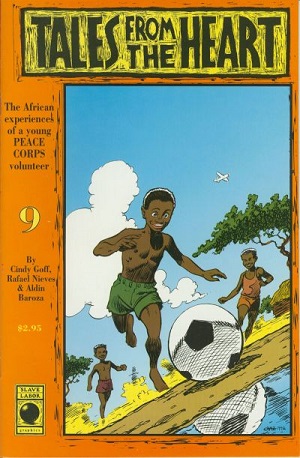
Hoo boy, okay, here’s the one when I first saw it mentioned I realized “I’ve got a lot of vamping up ahead given the number of comics in this list I haven’t read or even have stories about.” And I apologize…I do recall this comic, about a volunteer in the Peace Corps and her work in Africa, coming out and having a small but loyal following at the shop. Written by Cindy Goff and Rafael Nieves, and illustrated by Seitu Hayden, the series spanned three publishers: the eleven black and white issues from the companies noted above, and two one-shot color specials published under Marvel’s Epic imprint in the early 1990s.

That the series details the difficulties of trying to provide help is in contrast to the 1980s “raising money for Africa” trend that spread through pop culture, primarily though benefit concerts/songs and comic books. Which is of course a good thing, raising money for, and awareness of, those in need. But staying at home and donating cash is a more…removed experience from actually going there and doing the work. And there are criticisms all around, against what good the Peace Corp actually is doing, but look, I am but a humble comics blog simply Googling about, I don’t know the whole story. All I’m trying to say is that here’s somebody trying to relate what it’s like to be doing this sort of work and I think that’s an interesting standout for the period, especially in comics.


Teenage Mutant Ninja Turtles (Mirage Studios 1984-1993)
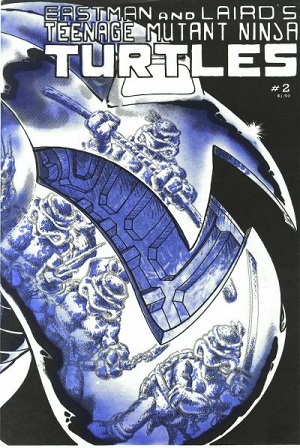
Where do I even start. Well, first, only one vote? Very surprising, even given the rather limited reach of my “poll.” Anyway, pictured there is issue #2 of the original series, the first to make it out to my local shop at the time (to be followed by a reprint of #1 a few weeks later). The first four issues were magazine-sized (apparently due to a misunderstanding between creators Kevin Eastman and Peter Laird and their printer), before finally going to a more standard comic size.

I’m sure you don’t need me to tell you what this comic’s about, and there is a boatload of lore, both in-universe and behind the scenes, that I’m not even going to scratch the surface of here. But this is the series that launched a thousand comic book spin-offs, cartoons, movies, video games, toys, live music concerts, whathaveyou, making lots of people very rich (including the creators, for once), and inspiring piles of rip-off comics that flooded the market in the hopes of Getting Rich Quick. Oh, the schemes I could share.

Anyway, the Turtles are immortal, and even though their first series ended in ’94, many relaunches followed, and I believe the current ongoing series from IDW is at around 150 issues. Reprints abound in multiple formats, a new “kid-friendly” (i.e. closer in style to the ’80s cartoon) launched recently, and Turtles stories will continue coming out long after all of us are dead. Pretty good for a comic parodying very specific comic characters, artists, and trends of the time.


Timespirits (Marvel/Epic 1984-1986)
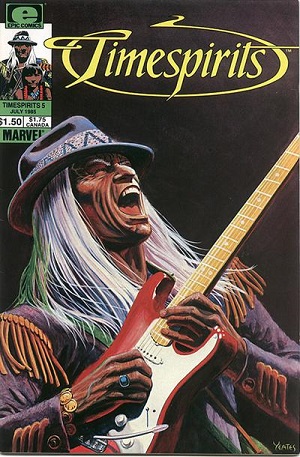
I didn’t read Timespirits, but I should have, given I’m a fan of artist Tom Yeates, who, with Steve Perry, produced all eight issues of this series.

I’m going to cheat a little and let this website do the talking for me, as this is a good overview not just of the series itself, but of the the problems that arose when Perry and Yeates began to disagree with the direction of the book. Lots of citations from Amazing Heroes and The Comics Journal, which saves me from digging through my own copies.

However, I do still want to search my Journals when I have a little more time, as I do seem to recall a article about Yeates secretly investigating some political gathering or ‘nother as research for a story. Assuming this event didn’t form solely in my brain from a strong bump on the head, this seemed like a pretty wild thing to do for, well, a comic book. But hey, you got a story to tell, a message to get out, you do what you have to do. Allegedly. Look, it may not even have been Timespirits he was doing that for, but that’s how it stuck with me. I’ll check into it, if only to ensure that I’m not crazy.

Also, in searching around I’ve seen a handful of accusations that James Cameron’s Avatar movie “borrowed” from this series. Trying to find an article that goes into detail, though it seems to focus mostly around a blue “native” character? Anyway, looks like the “hot” comic sites have picked up on it, so maybe good luck trying to complete a run of this.

EDIT: I’m not crazy! Well, at least not about this. I found the article about Yeates’ investigation. I’ll post about it on Wednesday.


Wordsmith (Renegade Press (1985-1988)
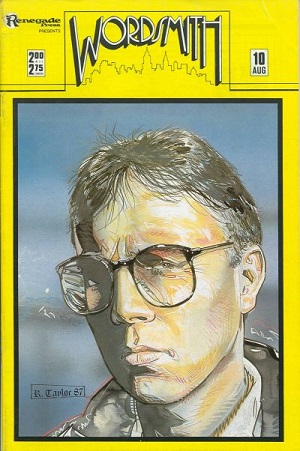
I could’ve sworn this series ran longer than it did, but on the other hand, the three or four year duration of the series was a lot longer than its twelve-issue run would suggest.

Written by Dave Darrigo, and illustrated by R.G. Taylor, the story concerned itself with Clay Washburn, a pulp writer active in the first half of the 20th century, contrasting his real world struggles with the heroes he’s scripting (whose adventures also occasionally pop up in the comic). It’s a neat concept for a series, and a shame it didn’t get more issues as I thought it did in my head. (See also Timespirits above for more of my possible delusions.)

There was also a one-shot spin-off in 1990, self-published by Darrigo, called Heroes from Wordsmith, focusing on the adventures of a couple of pulp characters from the main series. It’s hard to find info on this (even the Comics Database entry has nuthin’) but from what I gathered, this reprints material from the main series under a new Taylor cover, maybe? If anyone knows for certain, please inform me.

Also in 1990 Caliber Press would release two trade paperbacks, reprinting the whole series. Caliber would reprint the series again, a half-dozen years later, in a series of comics. Some of the issues of that series would be “flipbooks,” featuring other Caliber titles.

It feels like nearly anyone else would have taken this concept and given Washburn the ability to bring his pulp heroes “to life” and have them escape the printed page into his real world. Picturing this as a full-color superhero book from, I don’t know, Image, and running a long time and getting TV/movie deals and such. But good on this series for taking the more subtle and human route.

• • •

And that’s that for the one-voters! Thanks to everyone for reading and please come back when I start tackling those comics at least two people agreed on!
Giving you the kind of book you want.

At long last…Official Pal of the Site Rich Handley (of “In The Special Features on Planet of the Apes DVDs” fame) has finished his comprehensive overview of pre-Flashpoint Swamp Thing and will be coming to us in book form.

Born on the Bayou: A Pre-Flashpoint Chronology of Swamp Thing and Hellblazer (or BOTBAPFCOSTAH for short) will be shambling its way out of the marsh this September. Rich sent me an advance copy of the manuscript, and I can guarantee, if it’s not in this book, it’s not Swamp Thing or John Constantine-related. It has a foreword by famed Swamp Thing artist (and my Close Personal Friend) Steve Bissette! And I hear tell that I personally may be referenced more than a few times in the book itself! Just look in the index for “Swamp Thing, Best Friend of…” and there I’ll be.

But seriously, it’s a great book, a teeming repository of Swamp Thing knowledge you’ll lose yourself in. Check it out this fall, and tell them…well, don’t tell them Mike sent you, that’d be weird. Just tell ’em “gimme that swamp book, I gots to start readin’!”

Joshua Quagmire (1952-2023).


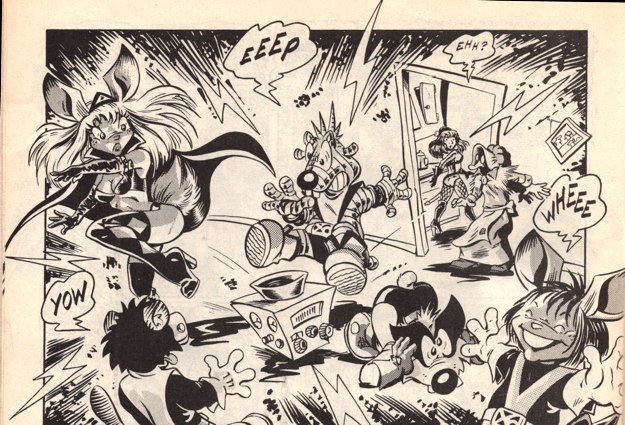
Was very surprised to learn via Mark Evanier’s website that Joshua Quagmire, creator of Cutey Bunny, had passed away.

Cutey Bunny was a favorite of mine, after picking up that initial run of comics in the mid-1980s. Every page was just crammed wall-to-wall with fun art and funny (and even better, corny) jokes. Quagmire’s personality just shone through wherever his pen touched paper and his work was a constant delight.

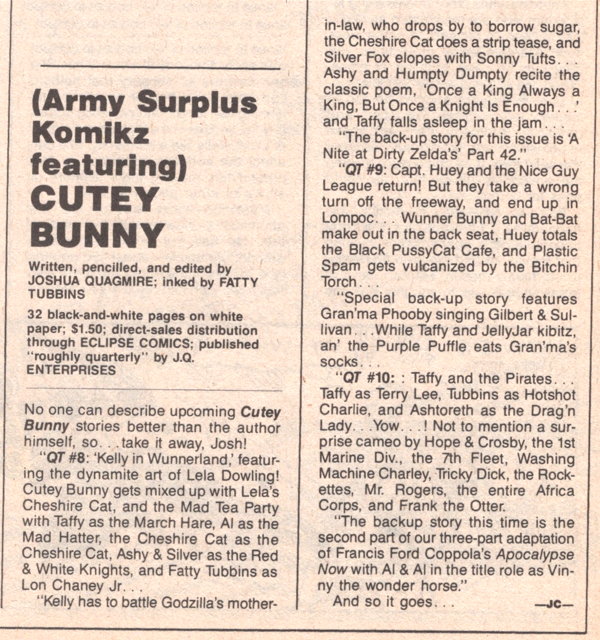
A silly running gag in a few of the Amazing Heroes Preview Specials was the entries for upcoming issues of Cutey Bunny (or rather Army Surplus Comikz Presents Cutey Bunny) that, well, weren’t actually going to happen far as I can tell. Here’s one from Preview Special #3 (Summer 1986):


He had a website with cartoons and writings ‘n’ such that I would check into once in a while, though he stopped updating it a couple of years back. Still lots of nice work on there (I think maybe a little bit of it NSFW), so check it out while you can.

I can’t remember the circumstances…it may have been me linking to his site before here, but I did have a brief, friendly exchange of emails with Mr. Quagmire several years ago. Struck me as a very nice guy, which fits with everything else I’ve heard about him. A unique talent that I’m going to miss…so long, Joshua.

• • •

Speaking of Mr. Evanier, I also just now saw on his site that the legendary artist John Romita Sr. has also passed away. Another huge loss to the comics industry. Yes, he drew lots of other stuff, but he was the man who redefined Spider-Man’s look after he took over art chores on Amazing when Steve Ditko left. His legacy is not only that wonderful work he’s left behind, but also that it carries on through his son, John Jr., still doing great art today on…Spider-Man, what else?

So long, John.

The Final ’80s Countdown, Part Twelve.

What’s this? Three more in the “one vote” pile from this post? Let’s see what we’ve got this time:

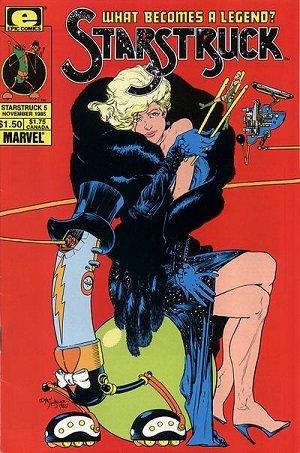
Starstruck (Marvel/Epic 1985-1986)

A reminder to folks new to these lists, that I was counting creator-owned books released under Marvel’s “Epic” imprint as part of the “indies” movement since they were mostly distinct from Marvel’s standard output. I mean, despite the fact Marvel’s editorial hand sometimes came down on them.
As to Starstruck itself, it began life at a stage play written by Elaine Lee, with costume and set design by William Kaluta and Charles Vess. It was a sci-fi comedy/adventure with a largely-female cast, set during a power struggle in a divided galaxy. Translating the project to comics, Lee and Kaluta serialized a prequel story in Heavy Metal, which were retooled into a graphic novel from Marvel. After that Lee and Kaluta produced a six issue comic book series through Epic.

After this it gets a little confusing, at least to me, the Guy Who Never Read This But Should Have. It appears the graphic novel was reprinted in altered/expanded form in a Dark Horse comic book mini-series in 1990-1. According to the Wikipedia entry, it also includes part of the first comic book issue from Epic.

In 2009-10 it appears the material was remastered and reprinted again, in a 13-issue series from IDW. This series was reprinted in its entirety in both hardcover and softcover, and this is like the Definite Edition of this story, if you ever decide to seek it out.

I remember the IDW reprints selling quite well for us at the previous place of employment. According to the Wiki more story is planned, so hopefully that’s something that will actually happen.


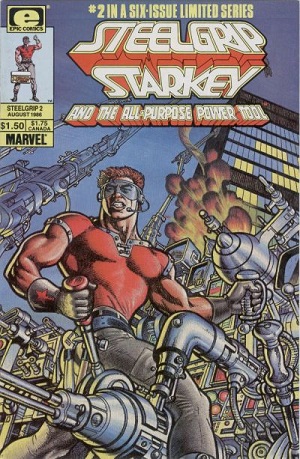
Steelgrip Starkey (Marvel/Epic 1986-1987)

Another one of those darned Epic titles, this one with the subtitle on the cover “…And The All-Purpose Power Tool.” Which I don’t know was officially part of the title or not, since I don’t have a copy here to check the indicia.
But this was a comic I had at least some mild interest in, as the main writer/artist of the book was Alan Weiss (inks by James Sherman), whose art in other comics I’ve read stuck out to be as being, well, different from your standard superhero fare. A little more detailed, more expressive, less “generic muscled body in spandex,” that sort of thing. For whatever reason, I never got around to picking it up, and look, I’m sorry this ’80s overview is turning into a parade of “Mike’s Missed Opportunities,” but what can I tell you, I can’t read everything.

Anyway, Val Mayerik pops in to share penciling duties for a couple of issues, and interestingly, in the section on the title in the Amazing Heroes 1985 Preview Special, Mike Kaluta (remember him?) was also namedropped as an artist on the series, though far as I can tell via the Comics Database, he doesn’t appear. (Also, Elaine Lee (remember her?) does some coloring here.)

Also “borrowing” from this preview entry is a description of the book, in that it’s a “modern American folk tale” in which Starkey, and his amazing tool only he can operate, find themselves in a series of adventures. Which, you know, okay, I’ll read that. I mean, I should have read it back in the ’80s when it was coming out, but look, I was still in high school, I wasn’t rolling in cash at the time. Though I suppose once I started working for a comic shop I could have snagged those, but I was trying to fill back numbers of Cerebus so that took priority. …Amazing all these things I could have had if only I’d taken more advantage of that store’s deep stock. Ah well.

Far as I can tell, the series has never been reprinted, making it another of those lost series awaiting rediscovery in a back issue bin or dollar box somewhere.


Strange Days (Eclipse 1984-1985)

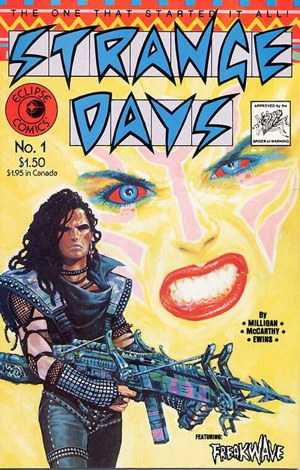
I’ll tell you what, though, when I saw that cover of Strange Days as a 15-year-old kid wandering around ye olde comic shoppe, that was a book I had to have. That weird face in the background, those obnoxious colors…it was a comic that dared you to buy it, and friends, I took that dare.
And the stories inside…”Paradax” by Peter Milligan and Brendan McCarthy, looked almost nominally like it should have been a superhero story, but it was just so peculiar, with splashy colorful art that made it look so unlike its flat-colored mainstream cousins. Maybe I wasn’t 100% sure what was going on, but oh goodness that art caught my eye. More so with “Freakwave” by the same fellas, where I feel like maybe I still need to give it another read and make sure I have it down.

And of course there was Johnny Nemo, the stylish sci-fi private detective by Milligan and Brett Ewins, plus other short features primarily with some combination of Milligan, McCarthy, and Ewins.

Much (all?) of the Millgan/McCarthy material gets reprinted in a 2013 hardcover Best of Milligan and McCarthy from Dark Horse. There is a two-issue Paradax series from Vortex that appears to be new material. There is a three issue series, also from Eclipse, of Johnny Nemo Magazine with new stories by Millgain and Erwin, and I feel like the character also appears somewhere else. If he does, then he’s reprinted in the 2014 Complete Johnny Nemo hardcover from Titan.

Okay, good series, worth taking a look, with visually stunning art and certainly peculiar stories.

• • •

Next installment…the last of the single vote entries? Maybe so! Things will only speed up after this (for you, it still takes me forever to type up this stuff) so we’ll get to the mysterious #1 vote-getter soon! And for whom did I vote? We’ll find out soon enough!

Void Indiupdate.

Okay, a brief follow-up on the morning’s Void Indigo post. As suggested in the comments, Steve Gerber did have on the old version of his site with a document outlining the stories for issues #3-6. You can also find an uncompleted bit of business for the Ultraverse title Sludge, as well as his unpublished Howard the Duck script. (Just go to his site via the Wayback Machine…you’ll find Howard and Sludge under “Scripts,” and for the Void Indigo outline (and a script for #2) you’ll find a link in the “Bibliography” section.)

The site was retooled after Gerber’s passing. It retains Gerber’s own postings, but I don’t know if the scripts and such are still available there.

Void Indigone.

Okay, you characters in the comments from Wednesday’s post got all Void Indigo on me, so I thought I’d look into that situation a bit further.

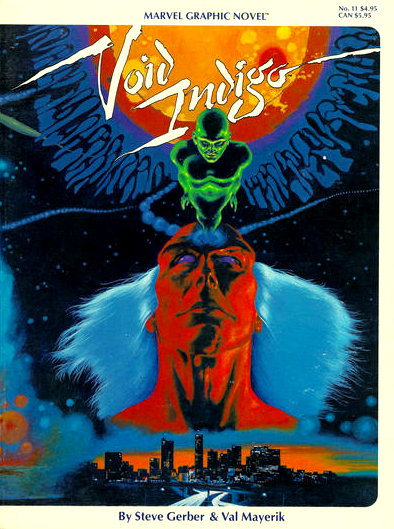
Void Indigo was a graphic novel and short-lived comic series by Steve Gerber and Val Mayerick, released in the mid-1980s under Marvel’s Epic imprint of mostly creator-owned material. Here’s what the cover to the initial installment, released in sequence in Marvel’s graphic novel line between Rick Veitch’s Heartburst and…Dazzler: The Movie?


It made…quite the stir when it was released, for its violent content, upon which I cannot report as Void Indigo remains a blind spot in my Gerber reading. And due to its truncated nature, I never sought it out, since I figured “it never finished, why bother?” But one shouldn’t be so cavalier about dismissing a Steve Gerber script, especially since we’re not getting any more, so someday I’ll get my hands on these and check them out myself.

My expectation is that, by modern standards, the “shocking” content will be less shocking to current eyes (as noted in one of the responses to Wednesday’s post), but I would like to see it myself.

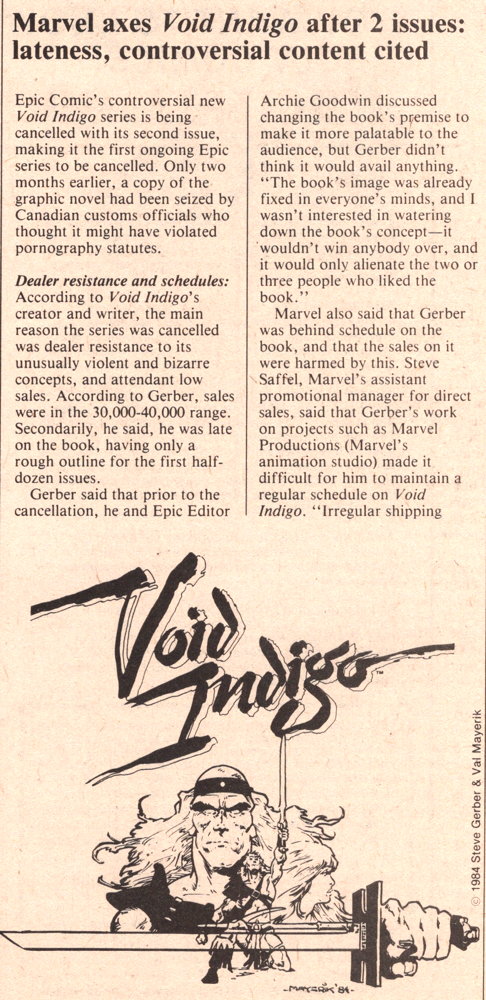
Since I had my 1980s Comics Journals out, I flipped through to see if I could find their article on the whole situation, and lo, there it was, in #95 (February 1995). Here I have a scan of the just the first part of the article, as it goes on for another half-page:


Apparently lateness was being pushed as much of a reason for cancellation as whatever horrible, soul-searing content within the comics themselves. Low sales at would-be-a-huge-hit-today numbers were also a problem. The article mentions later that the customs seizure basically amounted to nothing, as with the book’s cancellation the problem had solved itself.

There’s also a note in the article about Marvel not taking returns on the two issues of this aborted series, saying everyone was sufficiently warned about the book and thus shared the risk is carrying the thing. Which is absolutely bonkers, and I don’t know if they eventually relented or not. I’ll have to search further up in The Comics Journal‘s numbers to see if there’s a follow-up report.

On top of all that, there’s a retailer…actually, the owner of a comic store…actually actually, the “President” of the company, so I’m changing my title at my shop straight away…who expressed a “moral objection” to carrying Void Indigo. So, damn, I have to read this comic now. Just what is going on in this thing?

One additional note: I remember, at the previous place of employment, in a box of papers and other promo materials, there was a Void Indigo thing, apparently released by Gerber his own self, that was either a script for the unreleased #3, maybe outlines for future issues, something. But it was definitely a stack of stapled paper with otherwise unavailable Void Indigo content. What the provenance of this item was, and where it may be now, following the shut-down of that shop and the scattering to the winds (or to my former boss’s storage, or even to my own backroom) of much of that stuff. Wish I could tell you more about it, or that I even looked inside, which I didn’t since I hadn’t read the other entries in the series, so reading later installments wouldn’t have done me any good.

What makes me wonder, though, is that the article says Gerber was behind, so I don’t know that there was even a script for #3 ready. Unless, of course, he finished it later to try to sell the book elsewhere, but…I don’t know, seems very unlikely. I guess that mysterious stack of paper will remain mysterious ’til I track it down.

So, Void Indigo…I’m betting folks would hardly bat an eye at the content today, or at least it wouldn’t be any worse that Crossed or Faust or Eo…you ever see Eo? No, not the Michael Jackson thing, the Tim Vigil comic? Boy, if that retailer above had a moral objection to Void Indigo, he’d probably renounce all worldly possessions and join a monastery if Eo was shoved into his hands. Assuming he didn’t catch on fire.

I guess I’m now on a quest to find Void Indigo. This is terrible. My site is making me buy more comics. That’s not how it’s supposed to work, I’m supposed to be making you all buy more comics from me. This isn’t fair.

The things I find by absolute chance.

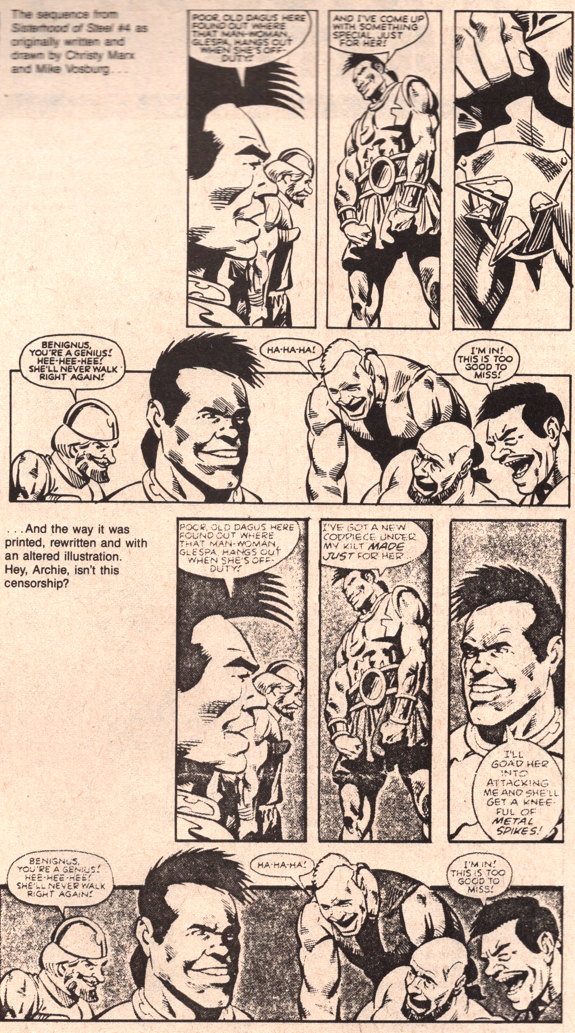
So I’d been poking through some of my run of The Comics Journal, just kinda lookin’ at stuff, when by complete chance I came across the following bit in regard to Sisterhood of Steel (discussed just this past Monday).

Despite my disclaimers last time that I didn’t know very much this title, I did know this about it, about the time the series was happening. In issue #101 of TCJ, Christy Marx, writer of Sisterhood of Steel, wrote in to talk about changes she was compelled to make to issue #4, pictured here:


…while wondering in the letter why it had to be done, if the Epic imprint was intended for mature audiences? (She also listed a number of euphemisms for breasts and testicles that she was not permitted to use, but “shit” apparently was okay.) Thought this was an interesting artifact of the period, in that early era of the Big Two testing the waters as to what they felt they could or could not do under the “for mature readers” label.

This is around the same time there was a big hoohar over comics ratings which, hoo boy, I’m not sure I’m ready to get into that whole thing. Will it help/hurt sales? Will it make it easier for The Usual Suspects to target certain books? This was also a period of fear that The Powers That Be were going to come down hard on comics content, wondering if a new Frederic Wertham was going to turn up. (Someone tried, if I recall correctly, but didn’t have quite the impact as Wertham did.)

Marvel itself was experiencing some distributor pushback against the for-mature-readers Moonshadow (as noted in Marx’s letter, and cited as a probable reason for the Sisterhood changes). And a few years prior there was some obscuring of a being’s naughty bits in the Dreadstar Annual‘s reprinting of Jim Starlin’s The Price graphic novel from Eclipse Comics.

Like I said, just thought this was interesting. Given what appears in even your standard issue Marvels and DCs, a lot of this concern over content may seem a little…quaint. But the journey from those early days of the Direct Market with DC and Marvel pushing at their respective envelopes, to superheroes facing off a naked blue man and his fully on-view wedding tackle in a Major Event Book, was a bumpy one. And still ongoing.

The “Archie” mentioned in the image was editor Archie Goodwin.

The Final ’80s Countdown, Part Eleven.

When I’m not busy annoying people way too into this Flash movie on Twitter, I’m writing about comics here…and that includes the next three titles on the “your favorite ’80s indies” list! Nearing the end of the one-voters here, after (good gravy) eleven installments of this, and I thank all of you for your kind indulgence.

A warning this week…two of the titles I know little or nothing about, and the third is one that probably shouldn’t have been included in the first place. How will your pal Mike overcome these, the worst hardships ever suffered by mortal man? Let’s find out together!

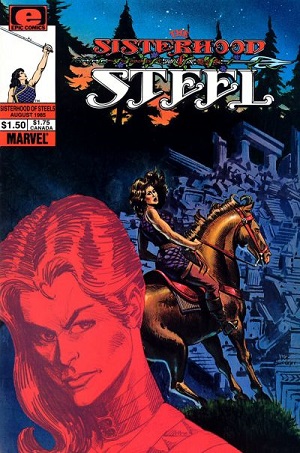
Sisterhood of Steel (Marvel/Epic 1984-1986)

This is one of those comics where the title is of course familiar to someone of my particular generation, growing up and discovering and reading and reading about comics in the 1980s. I knew it was part of Marvel’s Epic imprint of creator-owned comics. But aside from seeing ads for it in other Epic publications and in the comics press, I couldn’t have told yhou anything about it.
Well, other than it was about lady warriors, I suppose, as evident from the title. It took me doing research (i.e. looking at the Wikipedia entry) to learn that the central character of the book was a young warrior named Boronwë. The comic ran eight issues at Epic, and according to my “research,” a plan to continue the series in graphic novel format hit snags at that company, so the creators moved on to Eclipse Comics. There a single graphic novel (Baronwë: Daughter of Death) was published, and as far as I know that was that.

The creator of this comic was Christy Marx, with Mike Vosburg on art. The graphic novel was illustrated by the late Peter Ledger, who had been Marx’s first husband. So, strong talent all around, so I’m sure the comics read and looked wonderful. Unfortunately, I just never read them. And as far as I can tell, none of this material has been reprinted.

I think the original eight issue run, at least, is relatively easy to find. In fact, I spotted a few issues of it scattered throughout an enormous collection I just took in. I remember having stock of those at the previous place of employment, but I can only vaguely remember that graphic novel. Pretty sure we had it back then…I know my old boss would’ve ordered it…but I don’t think I’ve seen a copy in decades.

Seems like a shame this has been out of print for so long. Feels like something that might make a hardcover or something.


Space Ark (AC/Apple 1985-1987)

You got me, I’ve got nothin’ on this one. I knew the comic existed, but I can’t even say I sold any of these out the back issue bins while I was at the old shop. I certainly didn’t sell it new, as it wrapped up the year before I entered the business.
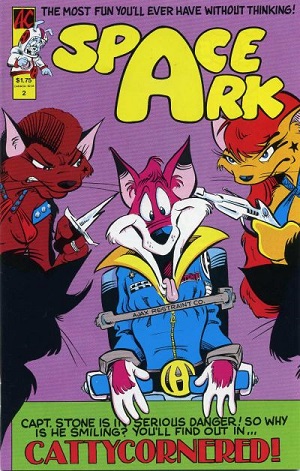
The comic is by Mark Cantrell and Ken Mitchroney…Cantrell’s name rings a bell, but a quick look on the Comics Database shows him mostly doing some things for AC Comics, a publisher I really haven’t read much from. Mitchroney’s name I do recognize for sure, most likely from his work on Marvel’s Ren and Stimpy series, though he also was the artist on Myth Conceptions, the follow-up to Myth Adventures (mostly illustrated by Phil Foglio, with Jim Valentino taking over the last couple of issues — am I padding this entry? Maybe).

The series ran five issues through two companies…the first two from AC, and the last three from Apple. (Should also note here the writer on issue #5 was author Steven R. Boyett.) A Space Ark short did appear as a back-up in Usagi Yojimbo #22, where the characters appear to cross over with that title’s lead. I don’t believe any of this material has been reprinted, save the Usagi story that apparently showed up in a German publication.

The comic was a humorous sci-fi adventure comic, featuring the anthropomorphic crew of the Space Ark, headed by Captain Stone (a fox…I mean, he was the animal the fox, not that he’s foxy, though, you know, maybe he is, again I didn’t read the comic). It seems like it’s in a similar mode as Adventures of Captain Jack, and I don’t know if I’m stepping on any toes by even mentioning that, and if so I apologize.

I mean…I know I like Mitchroney’s art, so I’m sure the book looks perfectly fine. I don’t know anything about the tone of the series, how comedic or “dramedic” or wacky or slapstick it might be. I promise, if a copy comes across my desk at my current shop, I’ll take a peek inside.

Special thanks to Wikifur for the additional research source.


The Spirit 1983 Series (Kitchen Sink 1983-1992)

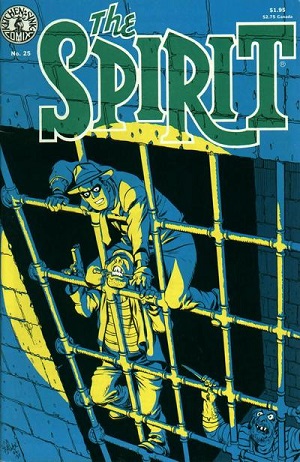
Okay, by all rights I should have disqualified this one. This isn’t really in the spirit (cough) of “Favorite ’80s Title” as I’d meant it. The series (running 87 issues over a decade) was, as far as I can tell, mostly reprints in chronological order the post-war Spirit stories by Will Eisner and others. The covers appear to be all new illustrations by Eisner, which are nice.

Now, in no way am I disparaging the material here, and I’m not saying it lacks artistic or historical value by saying it doesn’t really belong in this ’80s comics overview. But it’s not ’80s comics, it’s 1940s and 1950s comics. Yes, there are the new covers, but, well, you know what I’m getting at. I was aiming for books created in the ’80s, specifically.

But on the other hand, this series did run almost 90 issues, the 40-year-old comics competing side-by-side on the comics rack next to, I don’t know, Dazzler and Nth Man and Haywire, and outlasting many of its competitors. I’m not going to say the material is timeless (one specific element remains…controversial), but Eisner’s art and storytelling is otherwise impeccable. Many of the comics that shared the shelves with these reprints owed a great deal to Eisner’s work of the period.

In conclusion, when I eventually do this for ’90s books, don’t nominate series that are all reprints of comics from earlier decades. This one I’ll let slide because, well, it’s Eisner. And who’s gonna stop me? I’M MAD WITH POWER. And yes, I know this may complicate the Miracleman entry a bit when I get to it.

• • •

Okay, enough with that. Only a couple of entries away before we move on to the comics that got two votes! Exciting, no? Thanks, as always, for reading, and I’ll see you on Wednesday probably.

Mike’s Lunchtime Update 3014.

Just doing a quick early afternoon update since I was too dog-tired to write anything last night by the time I got home:

1. In response to several inquiries about doing something for ’90s comics like I’m currently doing for ’80s comics…well, maybe. Let me get through the ’80s comics first because, as a reminder, I’m on Part Ten and haven’t even finished the books that got single votes yet. This is going to take a while.

I was a little hesitant about doing it again at first, but, eh, why not. But not ’til after I’m done with the ’80s books, so don’t, like, start casting votes now or anything because I’m not going to count them.

2. CalvinPitt noted that when he and a buddy visited my store a while back, I had “talked [his] friend into buying Scooby Apocalypse,” which makes he think a little like maybe his friend thought I pulled one over on him. No, honest, I love Scooby Apocalypse, and I sincerely hold your friend liked it! Please, CalvinPitt, assuage my guilt!

3. Only had two songs in me today, sorry. See you back here on Monday!

Universal Variant Code.

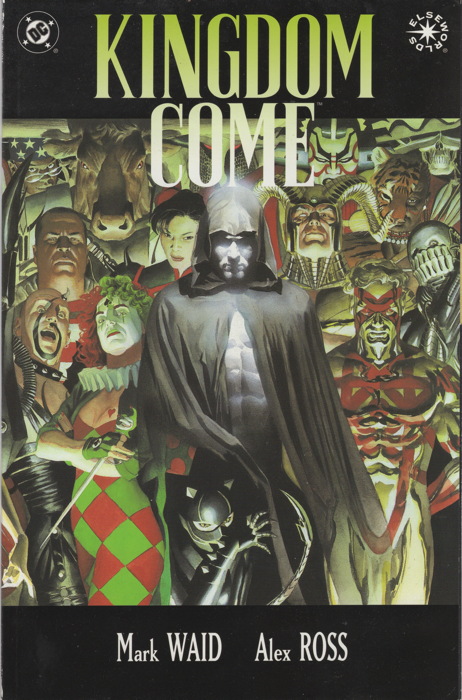
It’s the stunning return of Variant Cover-age, only because I found one this oddball thing that threw me off for a bit. Now, from the front this copy of the the first issue for 1996’s Kingdom Come looks like your typical first printing of this item:


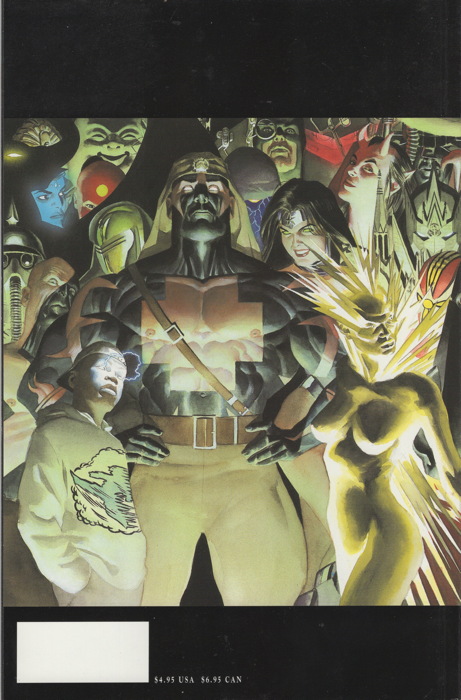
But when you flip it over to enjoy Alex Ross’s wraparound cover, you notice a strange ommission…no UPC code!


For comparison, here’s what supposed to be in that little white box at the bottom there:


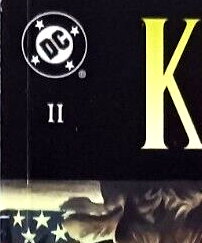
Kingdom Come #1 had a second printing, which this book in question isn’t, as there’s no indication of being as such in the indicia, plus it doesn’t have one of these Roman numeral doodads on the front:


And the second print does have the UPC code, too.

Soooooo…I didn’t know what the deal with this comic was. But I wasn’t the first to be puzzled by this variant, as seen in this message board thread. The thread starts with some business about UPC stickers being plastered on some copies of Kingdom Come, but eventually gets into the blank UPC box thing. One person there says he has the Kingdom Come Collector’s Set in which there was a #3 with no UPC.

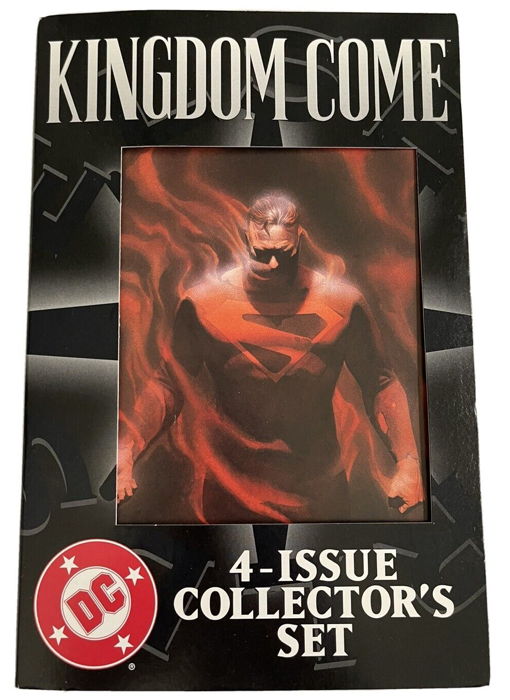
I found an eBay auction for the Collector’s Set, from which I liberated this image:


The auction was very thorough in its scanning, giving backs and fronts of all the covers of the included books. No UPC-codeless copies, but it did have two second prints like the message boarder reported with his set.

Thus, if we take the person on the message board at his word, then the collector set was perhaps at least one source for this particular variant. However, seemingly not a consistent one, based on that one eBay listing. (No other open copies seemed to be on eBay, either current or recently ended.) Were the blank UPC copies whipped up to help fill these collector’s sets, which also dipped into the 2nd printing stock? I don’t recall this variation being made available otherwise.

If you’ve seen this version of the Kingdom Come comics, or if you have one of the Collector’s Sets your own self, please report in and let me know. I’d like more data points to nail down the origin of this book.