But what if I were stuck on an Alex Désert island?

So Bob dares to asks

“What are your Top 5 ‘desert island’ books/storylines? (or alternatively ‘dessert island’)”

Well, that’s certainly a doozy, especially since my opinions can change from moment to moment. And I’ll leave out the obvious ones…you know, your Dark Knight Returns, or your Watchmens, or your All-Star Batman and Robin the Boy Wonders, and try to stick to more unusual, personal ones. And I’ll try to stick to particular storylines or very specific “eras” of books, instead of just saying, like, “every issue of Firestorm the Nuclear Man.” Which I totally could say.

Okay, first up, to the surprise of no one:

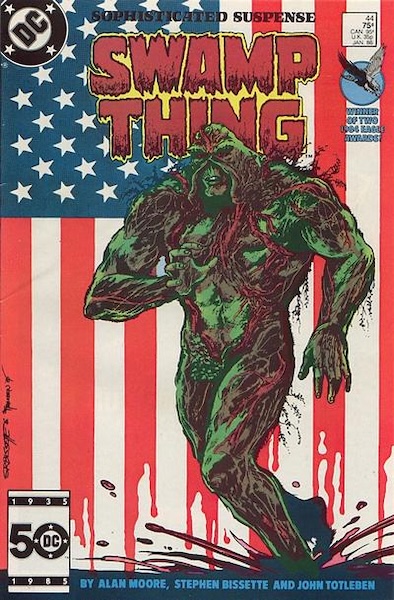
…the “American Gothic” Swamp Thing storyline that began in the 1980s and ran through issue #50. Written by Alan Moore, art by Steve Bissette, John Totleben, and several others, Swamp Thing traveled from location to location being pushed along by John Constantine to confront various pockets of supernatural horror, all to count the machinations of a secret society trying to bring about the End of the World, as they do.

It’s a great series of issues, and a nice reprise of what Len Wein and Bernie Wrightson were doing in the original Swamp Thing series, by having our mossy gentleman encountering traditional horror archetypes and giving them unusual twists. This storyline contains a lot of what I love about Swamp Thing, and thus must join me in my solitude on this theoretic deserted island.

Next up:

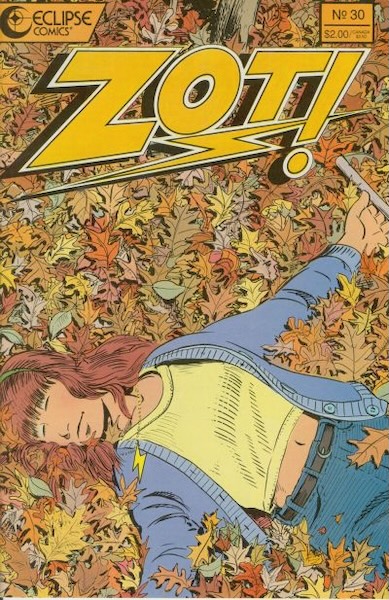
…the black and white era of Zot! by Scott McCloud, published in the 1980s. I was going to say just the “Earth Stories” (the storyline where Zot is trapped on his friend Jenny’s “normal” Earth and unable to return to his “futuristic” Earth), but so much of the b&w era contains the same emotional depth. Having the adventures in Zot’s world contrast with his life in Jenny’s world help inform Zot’s behavior in the latter circumstance. Plus, all the black and white work is beautiful.

Number three:

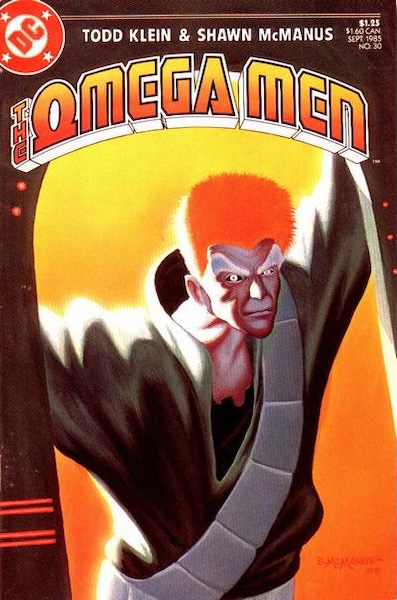
…yes, the Omega Men. Specifically, the wild shit after Todd Klein and Shawn McManus took over in #26 (1985) and continued to the end of the series in #38. Honestly, for what was DC’s then-newest attempt at Superheroes in Space, just absolute piles of imagination was shoveled into this comic, which is probably the least appealing way I could have put that. Odd aliens, strange mysteries, even stranger revelations…it was a real roller coaster of a ride and too beautiful for this world, cancelled so early as it was.

Number four:

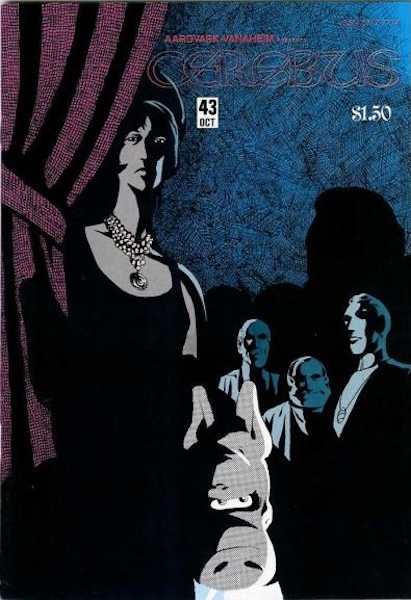
…I’ve talked a lot about where things kinda ended up with this series and its creator, and I realize this may be hard to believe for some of you out there…but the “High Society storyline in Cerebus is Peak Comics. It is absolutely a masterclass in How to Tell Your Story in a Comic Book, and it’s a flabbergasting achievement. It’s a story about Cerebus becoming Prime Minister of the city of Iest, and if you know anything about Cerebus the character, you realize that can’t possibly go well. It’s both dramatic and hilarious and a fascinating read.

And for number five:


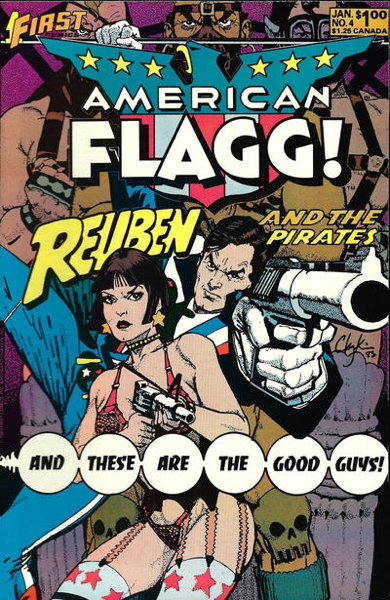
…the first twelve issues of American Flagg! by Howard Chaykin. Dense, experimental storytelling that remains rewarding with each reread, something that I’d imagine would be quite valuable being stuck on a deserted island as I am in this scenario. In a recent discussion about this comic on the Blueskies, I referred to these first dozen issues as being “as good as it ever got,” and in retrospect that sounds a little diminishing, but these are actually excellent comics.

• • •

Now that’s just off the top of my head right now. I realize I didn’t include any Love and Rockets because by golly how do I narrow that down to just a single storyline? (Or two storylines, one for each brother?) Or Groo the Wanderer, where I’d just as soon take every copy with me. Anyway, I’ll save further answers along those lines for the “which comic book series would you take in their entirety to a deserted island?” question.

Oh, and if I were to go to a dessert island, I would have fudge cake topped with chocolate syrup, served with rocky road ice cream. That would wreak havoc with my blood sugar levels, absolutely, but what a way to go!

Or ideally, he’d do a series involving every character that appeared in the original Showcase.

Back to more of your questions, and here’s Wayne with

“If Element Woman and Ultra the Multi-Alien had a child, well, what’s it going to look like, past an electric leg. That was a silly question, I know.”

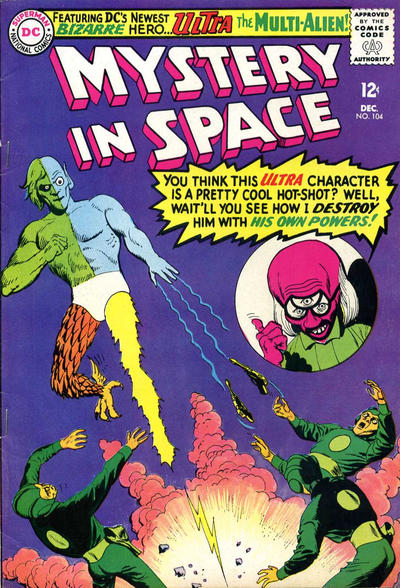
Okay, here we have the Element Girl, or Woman, on this classic 1960s cover:


And here we have that poor bastard, Ultra, the Multi-Alien, his body sectioned off into four alien body types after being zapped by ray guns held by those four particular races…am I remembering that right?

Anyway, presuming Ultra can still father kids with his Four Corners Monument private area, I’m going to presume any resultant children are going to look like the Autons from Doctor Who:

And wait? What’s this? A second question? Here in the streets of Gotham?

Well, okay, I’ll let it slide this time.

“I’ve really enjoyed many of the Black Label books by Tom King. I doubt we’ll see Ultra….”

I can see some kind of body horror thing coming out of the Ultra concept, each segment of Ultra’s body fighting for control against the original human mind to whom this body belonged. (Or perhaps Ultra can come across other aliens from these species, one of which has a regular human leg on his electric body, etc. — even though I think a version of this was done in the old “Claw the Unconquered” back-ups from Warlord). I don’t know if this kind of story is in Tom King’s wheelhouse, particularly, but I can see something like this happening.

“As long as it isn’t the main heroes, this could be for anyone. some WildStorm books like The Authority or Gen13.Dial H, Heroes in Love? Better or worse, King can do something with obscurity, for anyone who liked Danger Street. And one of my favorite books ever is THE HUMAN TARGET?”

Of those examples, it feels like Gen 13 may be the most likely prospect for a Tom Kingenning. Authority I feel like is hovering around a full relaunch sometime soon, depending on whether or not it makes it into the DCU Gunniverse (current “not” at the moment, I believe). Dial H was already the subject of a recent-ish and well-regarded relaunch, even if it’s kind of forgotten now, and a Young Heroes in Love that isn’t by the original creators would face some resistance.

Gen 13 is one of those titles that went through a few hands post its creators’ involvement, and has been kind of a defunct property for a while now, though individual characters have popped up here and there. Again, this depends on DC’s intentions with the property…if they think they can still relaunch Gen 13 as a viable ongoing, that’s one thing. If they think it’s a moribund property and they might as well hand it to Tom King to do his thing to it, then there we go. I feel like DC may feel like there’s life in this old property yet, so they’d probably hold off sending it into the woodchipper, as it were.

DC itself has no shortage of abandoned or forgotten properties that might get a wild new reworking from King…I mean, I just mentioned Claw the Unconquered. Or The Wanderers, or even like Young All-Stars, which would probably give Roy Thomas conniptions admittedly.

Granted, King did do Mister Miracle, which didn’t destroy Scott Free for all time, and…well, I think the jury’s still out on Adam Strange. But if you want something like Danger Street, then there’s enough in DC library to keep this sort of thing going, assuming King wants to do that.

Three whole posts on this topic and I forgot to even bring up ALF.

Okay, one more brief post on Alistair’s question regarding licensed comics and the relationship between “official-ness” and fan acceptance. (Here’s post #1 and post #2.)

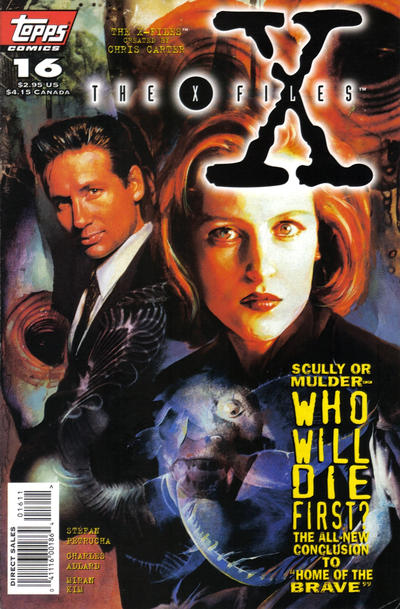
First off, Chris V has some several points to make about the various iterations of the X-Files comic, and I can’t really argue with any of it, so I’m just going to direct you there.

I’d written about the X-Files comics before (here and here…and look, there’s Chris V again in that second link!) As I recall, at the old shop we drastically underestimated the popularity of the first X-Files comic from Topps, so we were caught flat-footed by the demand for it…hence the proliferation of reprints and the then-soaring prices, long since dissipated, in the collectors’ market.

Also in that second link, the one with the ubiquitous Chris V, I touch upon the topic currently at hand, whether a licensed comic performs better if it’s explicitly part of official continuity. That post sorta supports Chris V’s comment from my Wednesday entry, in which he suggests that the X-Files comics were better off when they didn’t tie into the shows themselves. Of course, the example I’m using is the actual adaptations of episodes Topps produced, and Chris V also provides all the extenuating circumstances as to why sales where how they are.

Now, onto the stuff I wanted to mention today, which I’ll keep brief: licensed comic books based on animated cartoons/movies. For these, it would seem that fidelity of the tie-in to the original, at least visually, would be paramount. Or, at least close enough given the stylistic flourishes of the artists involved.

For example, I mentioned the other day that early in the production of Simpsons comics, there was one where the artwork was just…askew a little bit, and off-putting. Someone was attempting the house style, got close, but not close enough, and it made the book hard to look at.

Now, eventually we would see some artistic variety in the Simpsons comics, particularly in the Treehouse of Horror anthologies (where just about anything goes) or with Sergio Aragaones’ various contributions. Those, of course, aren’t off-putting…those are artists just drawing the Simpsons characters in their own way, adapting the house style to their own. So…drawn perfectly: Yes. drawn just shy of perfectly: No. Drawn in a completely different art style by a talented artist but still recognizably Simpsons? Yes again.

But otherwise…the art is the (relaively speaking) easy part. Either it looks like what it’s adapting or it’s not. But the stories….

To be fair, I’m sure in most cases, for all licensed comics, someone representing the owner of the license is keeping an eye out, making sure Finn doesn’t behead the Ice King or something. So it’s really up to the reader…”does this comic book based on an animated presentation rightfully represent the original work?”

There are lots of changes from screen to page at times. Like, the Road Runner and Wile E. Coyote are suddenly very talkative in the comics, and Mr. Runner, who speaks in rhyme, apparently has three…sons? Nephews? Something like that. But it all still feels like the Road Runner somehow.

Tom and Jerry, that cat ‘n’ mouse duo, also find their voices in the comics…and it didn’t seem to bother anyone there since the comic ran for nearly 350 issues over several decades.

Let’s not forget the Disney comics, taking characters primarily known for comedic short films and putting them into lengthy adventure stories. (Maybe I’m forgetting a cartoon where, I don’t know, Goofy climbs the forbidden mountains and finds the Old Gods, but I think you get what I mean.)

And there are plenty of comics over the years where they seem to jibe with the source just fine. Adventure Time, Teen Titans Go, Ren and Stimpy Show more or less, I particularly liked that last one, least until the whole thing was tainted by the creator’s issues.

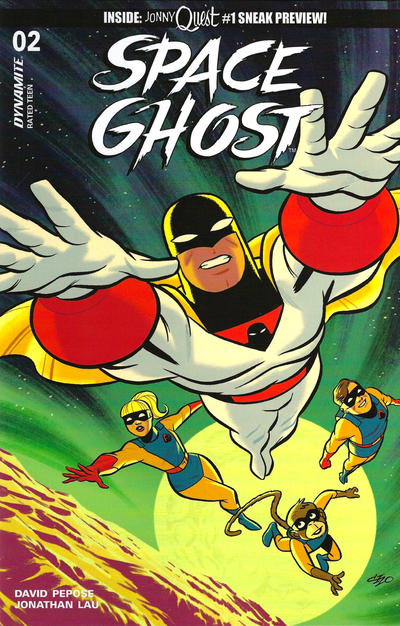
There’s also that new breed of licensed children comics, the Serious Adventure Take, which…well, okay, for a nominally sci-fi adventure like Thundercats, sure, but Your Mileage May Vary when the same is done to Space Ghost. (Which, I should mention, is very popular at my shop, and getting good notice, and I’m not trying to disparage it…just commenting on the distance between the mild camp of the cartoons and the current interpretation.)

End result is that things are a little less cut ‘n’ dried when it comes to the licensed animation comics. Completely faithful versions and new updated versions (Mark Russell’s Flintstones, anyone?) rise and fall on their own merits, regardless of fidelity to the property.

This was a quick overview, for which I apologize…got a late start Thursday evening. However, you’re welcome to contribute in the comments sections, as always, and maybe I can do a follow-up post in the near future. Thanks for reading, pals, and thanks to Alistair for the great questions!

I didn’t even mention Peter David wrote some of those DC Trek comics.

I may have done my answer to Alistair last time a slight disservice. But first, let me get out of the way that my light joshing of the length of Alistair’s question was not intended as a critique, but more a way of poking a little fun at my own predilection for excessive typing — a gag that perhaps may have fallen flat. But I think anyone who’s read my site for any length of time knows that there was no danger of me not outstripping the word count of Alistair’s query.

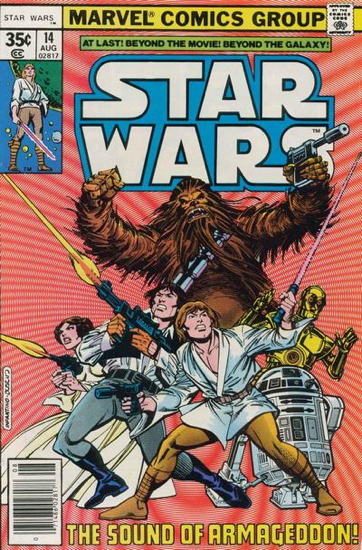
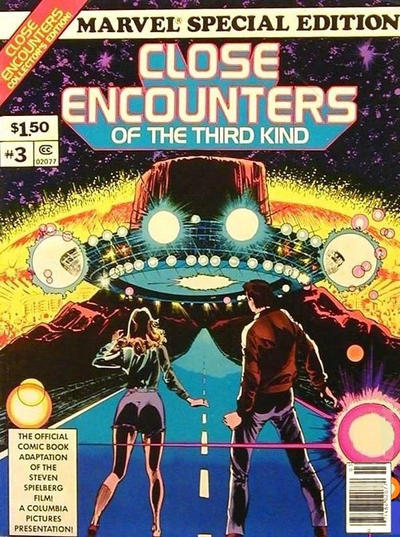
But at any rate, Alistair had asked about comic books based on licensed properties, and my favorites thereof, and my answers at the end were mostly adaptations of specific films (like Close Encounters of the Third Kind) rather than ongoing series with continuing adventures based on various licenses (like Marvel’s initial Star Wars, which I’d mentioned).

Now I know I’m splitting hairs here that maybe only I can see, but given that Alistair’s initial question was about the faithfulness of (inferred) ongoing series based on said properties, I think I should have focused more on those ongoing series versus the direct film/TV show adaptations. Faithfulness in a specific translation of a film/episode to a comic should be slightly more expected, but the real trick is when the creators of the comics go off on their own taking inspiration from the licenses.

As such, let me note a couple of comic book series based on licensed properties that I enjoyed.

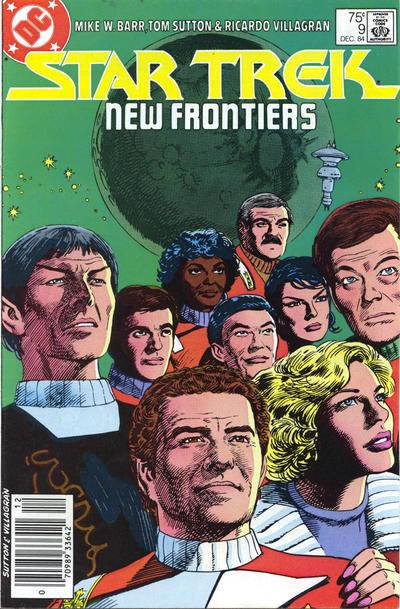
DC’s Star Trek, right from where they first got the rights in the ’80s, and up almost through the end in the ’90s. I got a little burnt out on these comics as their conclusion loomed, and while I did like the Next Generation comics too, I can happily skip over the introductory mini for it.

But likenesses were generally good, stories where very much in line with what you could potentially see in Trek live action (if said TV/movie Trek had an unlimited budget). About ten years ago I did write a bit about DC’s first Star Trek series about a decade ago, talking about how the comic cleverly dealt with Spock’s status quo between films III and IV.

Now there were plenty of Trek comics before and since…I never read much of the original Marvel run, or any of the Marvel books when they got the license back post-DC, and the original Gold Key comics I have read here and there, and it can be a real mixed bag. Every once in a while I’ll dip into IDW’s current Trek line if a story sounds interested, but the only one I read consistently is Lower Decks, which is of course great.

But those DC Treks…those are still some of my favorites. They absolutely felt like part of the same universe (most of the time, there’s a clunker or two). If you haven’t read them, they’re well worth tracking down.

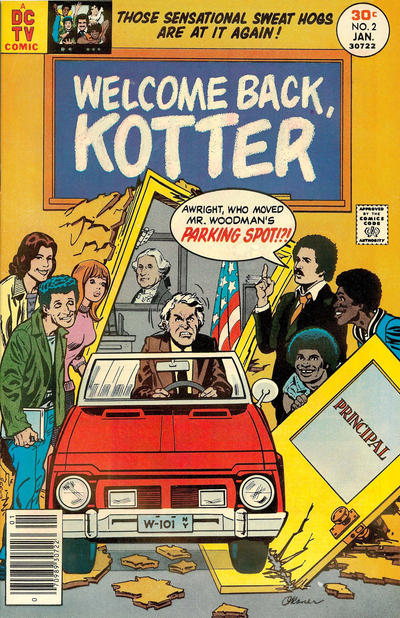
DC’s Welcome Back, Kotter series had solid, easily-identifiable caricatures of the cast, stories that…well, were maybe a little outside the range of what you’d see on the show (I mean, there’s an elephant in this story), but Mark Evanier, who also worked on the show, was a contributing writer here as well. And hey, putting the characters in situations you wouldn’t necessarily see the actual actors do onscreen could have been a good selling point!

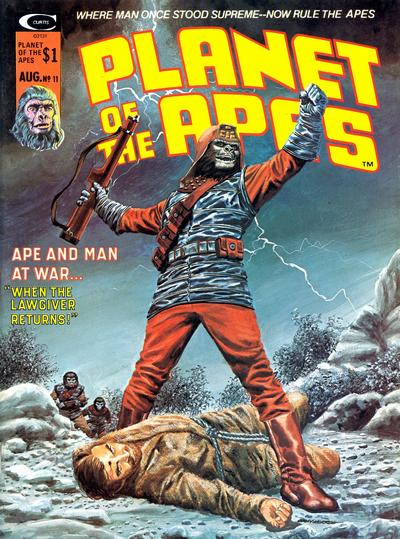
I’m cheating with this one a little, but I’ve unfortunately only read a very few of these Marvel mags, long ago, so I can’t say as to how well the human characters from the films translated to the page, if any did at all. But by golly, and the apes, chimpanzees, and orangutans looked the way they should, and that was good enough for me.

Oh, wait, I forgot I talked about Marvel’s color Apes comic, which reprinted from these magazines. It may have been short on exact likenesses, but it was definitely long on butts.

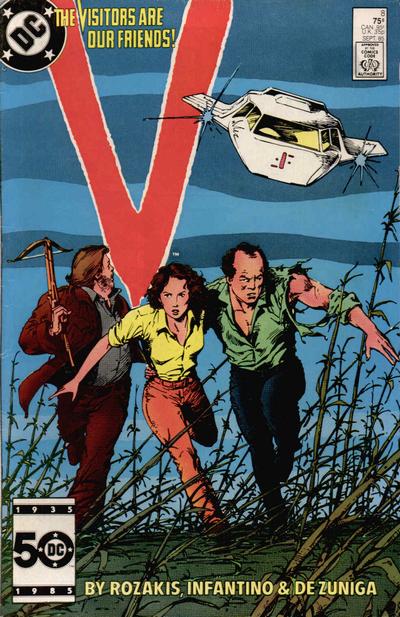
Now I haven’t cracked a cover on one of these since the comic ended, but I read ’em all so I must have liked them. Carmine Infantino (of Star Wars and probably some other comics fame) drew these, and as such everyone looked like Infantino characters…which isn’t a bad thing, don’t get me wrong! You knew who everyone was supposed to be, like I said about his work on Star Wars last time, and therefore he worked out fine.

I do not remember the timing of the comics vis-à-vis the mini-series or the TV series, so I don’t know how closely they tied in to events in those shows. None of these comics were direct adaptations of any of the live-action releases that I recall. I do want to direct you to the Comics Database so you can see how DC handled having a giant “V” on the front cover of each issue. Actually looks pretty striking.

• • •

Now my list here just covered comics based on live-action properties. I didn’t cover the translations-to-page of toys, cartoons, that sort of thing. The matter of “faithfulness” applies here as well, though one wonders if you can really just how closely the Team America or ROM Space Knight comics hew to their origins, and if any points of departure actually matter.

Plus, I do recall one early comic in the Simpsons line that was just barely on the wrong side of having a professional art job, and being just that little bit off was enough to make the whole thing unreadable. So, you know, there’s probably room for discussion here too.

But not in this entry…perhaps more on Friday? See, Alistair, by comparison to my answers, your question isn’t long at all!

“Long in the tooth,” get it.

Alistair asks a question that may be longer than my potential answer…let’s see how I do!

“In your experience as a retailer, do you think the success of licensed comics which aren’t aimed at very young kids tends to depend on how closely they connect to their source material? For example, did the Dark Horse Buffy comics become more popular when they started doing an official continuation from the show with contributions by Whedon and the other television writers, versus the ones that came out while the show was ongoing which Whedon had kept at arms length?”

Some sort of close kinship with the source material is usually preferred when it comes to licensed properties. You didn’t mention the art specifically, Alistair, but one of the things that would turn people off from adaptations of movies or television shows is artwork where the drawn characters don’t look at least within reasonable spitting distance of the actors. On the other hand, a comic that looked like it was all traced from photo reference would be a turn-off as well, a weird sort of “uncanny valley” for comics.

That sounds like a…fine line to walk, but in practice there’s more room to breathe for artists on these adaptations, so long as they’re, as I said, reasonably accurate, and consistent, it’s all good. I was reading one particular series based on a sci-fi property, and had to drop it because eventually I couldn’t recognize many of the characters. Not “the comic’s plot changed everybody around,” but “these characters in the comics are supposed to be those characters from the TV show/movies, but unless they’re referred to by name in the dialogue, they’re unrecognizable.”

I get that it’s probably a difficult job to do, making these caricatures of real people “act” on a page while keeping them identifiable as those performers. But that has to be the minimum level of what is acceptable for comics like this.

Okay, that was a lengthy aside to Alistair’s question. What’s being asked here is “does a comic get a boost from being promoted as an “official” continuation of the source material?” And the answer is…not always, but it doesn’t hurt.

In the case of Buffy the Vampire Slayer, the Buffy comics had been going on a bit, and were getting to be a little long in the tooth. Sales had been relatively strong at first, but the novelty had worn off as time went on. The “Season 8” series was in effect a relaunch of the comics property, with the added value of show creator’s Joss Whedon’s involvement. Heavily promoted as the actual, real continuation of the TV series, backed up with Whedon’s presence, the Buffy comics got a real shot in the arm that lasted for years ’til the franchise sort of petered out again.

So, in a way, in this case at least, being the “official continuation of the show” did attract a lot of attention. The promotion, the creator’s involvement, the timing of reinvigorating the license right when it needed it…all came together to make a successful relaunch.

Other “Season [n]” comics were released in the wake of Buffy Season 8’s success, including Smallville Season 11 and X-Files Season 10 (and evenually, 11). Didn’t make quite the big splashes the Buffy seasons did, but they had their fans.

“I wonder if that’s why one hears so much more about, say, Star Wars comics versus Star Trek comics: it’s always been the case that the former are an ‘official’ part of Star Wars, part of the ‘official’ what-happened-next stories (along with all the games, novels etc.) whereas with Star Trek comics it’s a lot more nebulous.”

Yeah, early on as the Star Wars Expanded Universe was in its infancy, someone decided “all these tie-ins are going to be consistent with each other,” and for the most part, they were. That first novel of this new era, Heir to the Empire, contained references to events in Dark Horse’s first mini Star Wars: Dark Empire, and given the book probably had an audience many times the size of the comic, there are probably fans who still don’t know what the deal was with all that. (Unless they looked it all up on Wookiepedia or whatever.)

And Star Trek, by contrast, was just kinda all over the place, not adhering to any particular thread of continuity. Nobody in a Star Trek: Discovery comic book is referencing events from, I don’t know, the 1982 Adobe of Life Trek novel by G. Harry Stine writing as “Lee Correy.” (One exception: Lower Decks would absolutely refer to a 40-year-old Trek book.) There were tie-ins to movies and TV that were “official” parts of those stories, like Star Trek: Countdown (a prequel to the 2009 film), and a Picard comic that tied into the series, which received a little bit of attention, anyway.

I don’t know how much being part of “official” continuity is helping the Star Wars comics. The initial burst of sales on those coincided with Marvel’s reacquiring of the license and their sales push for the new launch. That they’re consistent with other Star Wars media may be a plus, but at this point that level of consistency may be expected from the franchise, or may simply be taken for granted and not singled out at all as part of the appeal of the comics.

But here’s the thing: being part of “official continuity” ultimately doesn’t make any difference. I believe it was the Star Wars folks who came up with the levels of “canon” to the material they were releasing. The movies were the immutable, absolute story of the Star Wars universe. The books and comics and such, while kept consistent with the films, the films were not beholden to anything in them (despite occasionally borrowing names and characters). And then there’s the stuff like the Holiday Special which goes to the Star Wars canon-level where only the amazing stuff happens.

Now, I don’t know if those rankings are still in play, but I think it’s still safe to assume that the movies (and presumably, the live-action TV shows) are under no obligation to maintain continuity with the books and comics, but the books and comics are absolutely required to be in continuity with the movies and TV shows. (And there’s stuff like the Clone Wars cartoon, which I presume is mostly canon, but I’ve already got a headache talking about all this.)

In short, “official” just means “we don’t contradict anything from what we’re adapting,” even those that official status could be bounced at any time. It helps a little as a sales point, and it helped a lot in that initial Buffy Season 8 thing (partially because they were one of the first out of the gate with that pitch), but it doesn’t really seem as necessary now.

And none of what I discussed really gets into comics for, like, Predator or Alien and the like, as those tend to run more episodic and self-contained. (Those the early Dark Horse Aliens comics had an ongoing continuity in some of their early releases…thrown off by events when the Alien 3 movie came out.)

“If that’s not really a straightforward question to answer, I will instead ask in the alternative: do you have any favourite licensed comics?”

I’m going to go ahead and answer this, too, since you asked so nicely. I still have a soft spot for the first three or four years’ worth of the original Marvel Star Wars that began in the 1970s. Some wild somewhat off-model but still amazing Carmine Infantino art in some of those…that’s a good example of actor likenesses not being spot-on but everyone still being instantly recognizable.

I also love the treasury-sized Close Encounters of the Third Kind adaptation from Marvel, drawn by Walt Simonson. I think this was a case where they weren’t allowed to use the actors’ likenesses, but you don’t even notice.

Also drawn by Simonson is the adaptation of the original Alien film. There are few perfect things in this fallen world, but this is one of them (well, aside from the binding).

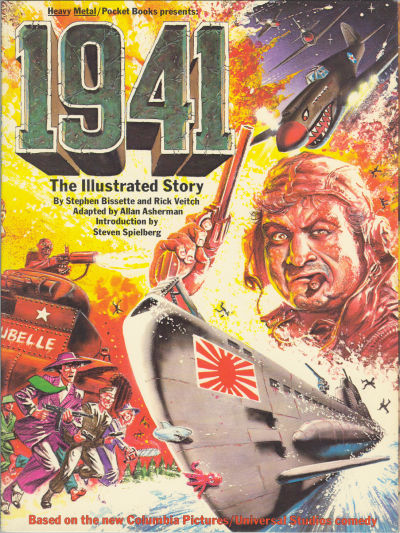
And how can any discussion of licensed books be complete without noting the greatest of all time:

Sheer madness from Steve Bissette and Rick Veitch. I love this comic. Get your hands on one if you can, because it’s pure joy.

A legion of comics.

DavidG asks what he probably thought would be an easy question for me to answer

“There’s now about eleventy million versions of the Legion. My list of them in order of appearance below, yours may vary. How would you rank them and why?

“OG
Five years later/no Superboy
Archie legion
Threeboot
Retro boot
Bendis boot”

Now I gotta be honest, it too me a second to puzzle out what eras a couple of those were referencing. For example, I’d never heard the term “Archie Legion” before…shockingly, as it turns out, when I looked it up and it seems to be in common usage in referring to this particular era. More on that when I get to it.

Anyway, I’m going to address these general eras in order, staring with the “OG,” which of course stands for “Original Garth Ranzz:”
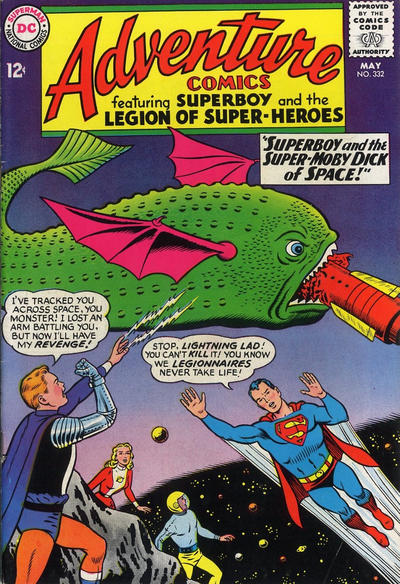

This is The Big One, the longest last incarnation of the Legion (continuing on into the next era, more on that in a moment), starting in Adventure Comics in 1958 and running straight through ’til Legion of Super-Heroes Volume…Three, I’m pretty sure, in 1989. (Again, doesn’t exactly end here, which I’ll address.)

Over this period of time we had a natural growth of the team, as members came on, dropped out, even died, with subplots and soap opera-esque elements keeping the readers involved and interested in the relationships of their favorite characters. This was a storytelling strategy that would work so well in later team books such as X-Men and New Teen Titans, and I think we can thank Teen Jim Shooter for coming aboard and showing the grown-ups how its done.

And it certainly worked on me…I really enjoyed the variety of characters and their interactions and the occasionally oddball stuff they all got up to, particularly in the Silver Age era. I’ve noted before I started reading Legion in the early ’80s, and worked my way backwards through back issue purchases and, later, the Archive editions, and still get a kick out of these comics to this day.

This was the era of the Legion that worked the best, I think, with its established history and long-standing relationships and plots and such. I wrote quite a bit about it before in response to a question from…hmmm, looks like a certain Mr. DavidG. Interesting.

Now, DavidG, you just asked me to rank these, really, and here I am just typing my little fingers off about this series and, well, probably every other Legion series on this list, too. But if I were to rank it, this Legion, the Original Stuff, is my favorite Legion.

And now here’s the “Five Years Later Legion:
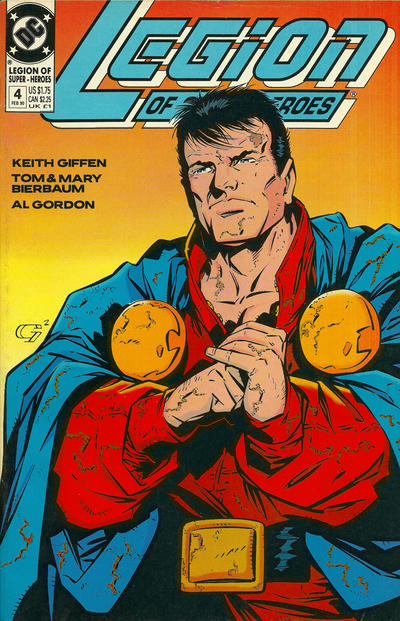

…and I wrote about this at length some time ago, as did blogging brother Andrew. As such, I won’t go overboard writing about this era, running from ’89 to ’94 (ironically, about five years), but to say this is not an entirely separate incarnation of the Legion, but rather an extension of the original material. As implied by the “Five Years Later,” Legion continuity jumps ahead five years, everything is different, things are a mess, not everything is explicitly explained to you, so this ain’t a comic you can scan through in six minutes and say you’ve read it. You gotta sit down with it and absorb that story.

The storytelling and setting eventually…normalizes, so it’s easier to follow, but things get more complicated when a younger, more innocent version of the Legion shows up. A spin-off title, Legionnaires, is added to accommodate the extra characters, but eventually it all ends up getting rebooted by DC’s Zero Hour crossover event.

As far as ranking goes…I will say that I really did find this series a fascinating read at first, reading and rereading each new issue as it came out, and being rewarded for the effort. And I was caught up in the mystery of the young Legionnaires, though I wish that had resolved differently than it did. Still, this is a solid #2 in my Legion ranking.

That Zero Hour reboot brought us to this:
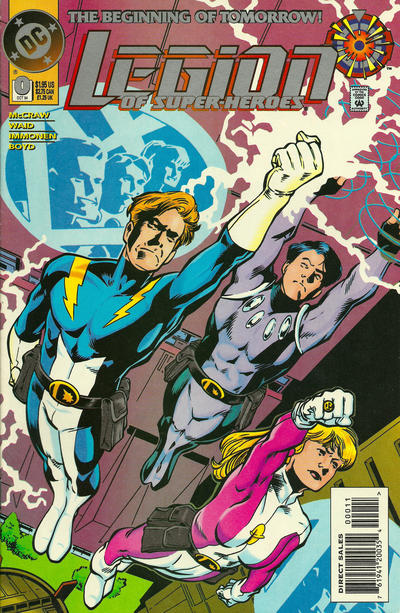

…the first actual complete fresh start for the Legion. Everything that had gone on before? Forget it, this is All New! And it was also…pretty good. This is the version of the Legion where Princess Projectra was a giant snake person, which seems to stick out in folks’ minds. Interestingly, this new reboot of the Legion did not cause the cancellation and relaunching, with new #1s, of the two ongoing Legion titles. There were #0 issues introducing the new status quo, then just jumped back into the series’ normal numbering and continued on. A rare show of restraint, I thought.

Oh, right, and this is the “Archie Legion” series, so called because the characters were so young, some of the art reminded folks of Archie character designs, and Jughead joined up as “Hamburger Lad.” One of those may not be true.

This was also the era that had the relatively dark, but effective, Legion Lost mini-series, where members of the team were trapped in unknown space dealing with new threats (and maybe a familiar one). I quite liked that series.

Okay, ranking, ranking…we’ll just call this #3 of my favorite Legion runs, but honestly the space between #2 and #3 is very, very small.

And now, the THREEBOOT:
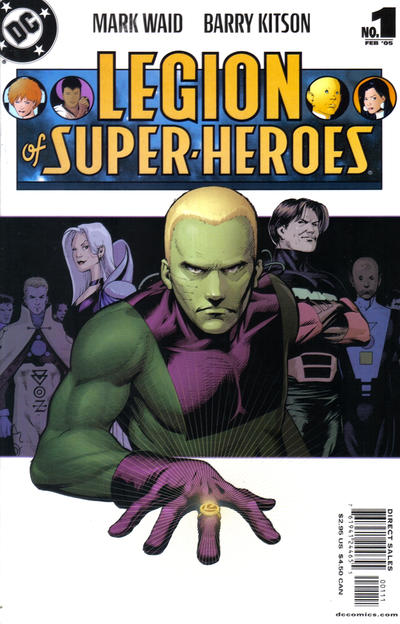

…because, you know, this is technically the third full reboot of the Legion. Started in 2004, ended in 2009. Repurposes the team as working under, and against, an oppressive society that disapproves of their shenanigans. An interesting note about the series is that it temporarily changes its name to Supergirl and the Legion of Super-Heroes when she comes to the future to join the group.

Also I should point out that Jim Shooter, writer from the original Legions, comes back to write the last dozen or so issues of this series. However, the final issue, #50, is credited to a pseudonym and I’ve never bothered to read it. I have it in a box somewhere should I ever decide to do so, but that seems increasingly unlikely.

How to rank it? It’s a brief-ish run, though not as brief as other Legion runs to come. It is good, though, and I like that it’s a shorter standalone read, even if the whole thing ends on a slightly sour note. (Or maybe it’s great…like I said, I hadn’t read that issue.) If I had to rank it, I’d put it maybe at #3.5, which is maybe cheating a little. This was a solid attempt at trying to do something a little different with the Legion while still honoring the stories that had come before. Shame it didn’t last longer.

Now, it’s about this point that I decided I was done with Legion (save for the classic reprints) for the time being. So I wasn’t reading DC’s next attempt at making the Legion work, the “retroboot:”
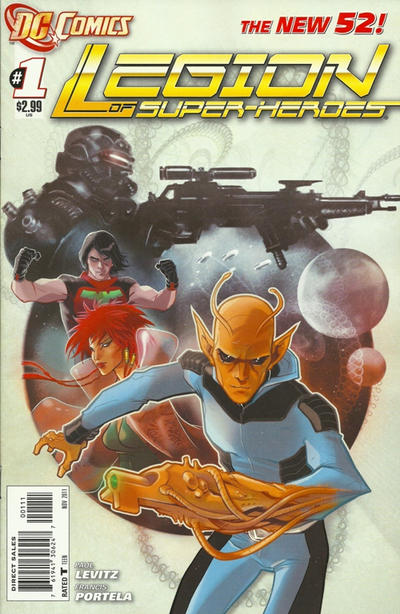

I realize that New 52 cover is jumping ahead a bit. This version of the Legion began in the “post-Infinite Crisis” era around 2007, first appearing in Justice League of America and Justice Society of America, then in other books before getting their own title. The “Retroboot” team is a return, more or less, to the pre-Crisis on Infinite Earths continuity of the Legion books from the original era. It’s not exactly 1:1, but close enough, I guess.

Somewhere in here the Final Crisis tie-in Legion of 3 Worlds shows up, teaming up all the reboots of the Legion into one big adventure, and trying to establish which Legion is the main continuity Legion now. (Spoiler: it’s this one, the post-Infinite Crisis one.)

This is the same Legion that makes it through the New 52 relaunch relatively unscathed, and even gets an additional title, Legion Lost. However, this era still comes to an end around 2015.

I can’t rank this, since I didn’t read any of these (except the Legion of 3 Worlds, and I barely remember that (outside of the George Pérez art). All I can say was that my interest in Legion had been diminished by the multiple reboots and didn’t feel like diving back into yet another attempt at this point. That’s not to say I *didn’t* like the reboots, but I certainly didn’t like getting invested in a series only to have it go away and be given yet another restart.

And then, here we are, the last on DavidG’s list, the Brian Michael Bendis scripted reboot from 2019:
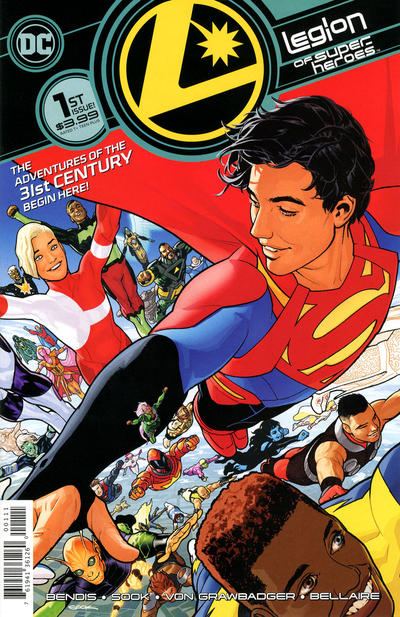

By this point I’d been out of current Legion books for about a decade, so I was willing to give this new version a try. I did like the two-issue intro mini-series (Legion of Super-Heroes: Millennium) where we follow an immortal character into the time of he Legion. But the new Legion series itself…the art by Ryan Sook was nice, but the story definitely felt like we were pushed into the deep end of the pool in regards to the setting and the number of characters. Using Superboy as the reader-viewpoint character should have been a natural “in” to everything, but in execution it all still felt cluttered and convoluted.

Most shocking was after the promotion and big build-up, this new series only got 12 issues (plus a two-issue “Future State” tie-in, among other appearances). I’d put this run at #4 on my list…I wanted to like it, I gave it a chance, but I don’t know if the sales were there or what but it felt like DC didn’t give it much of a chance. Could it have improved given more time? Sure. But what we got wasn’t enough and it wasn’t great, art aside.

I know I didn’t discuss every single appearance and iteration of the Legion here…I mean, there’s the Doomsday Clock tie-in, there’s the stuff going on right now in the Superman books, that sort of thing. Not sure what the future (cough) holds for the Legion, whether we have yet another new attempt at a series sooner rather than later. Will it be Absolute Legion of Super-Heroes? Might be one of the few ways to get it to sell for sure at this point.
Wanted: Dead or Dead.

Back to your questions:

Brian Foss gathers no moss with

“I’m a big fan of the DC comics charecter Deadman.
I first read a story of his in one of those DC Best Of The Year digests and have been fascinated ever since – cause he’s DEAD!
My question is what are your thoughts on good old Boston Brand?
And yes, I’m cheating because I wonder if in your years of funny book retailing do you run into Deadman collecting dudes at all?
Or am I just the weirdo?”

Yup, you sure are, absolutely. Welcome to the club! We’re all weirdos about something.

Now you and I, we like Deadman at face value — guy killed before his time, given the power to possess the living as he searches for his killer and/or redresses the balance of good vs. evil or whathaveyou — but he was ripe for parody, for certain. Most notably by Neal Adams, the artist most associated with DC’s Deadman, on this spoof that appeared in National Lampoon. And I briefly discussed Dave Sim’s parody of Deadman as it appeared in Cerebus way back when.

So there were folks who were all “a dead guy? As a superhero?” but I think Deadman is visually interesting enough, and a fascinating enough concept, to be taken on its own merits. I mean, it’s no sillier than the Silver Surfer, a silver guy who surfs. Through space. On a surfboard.

I am not 100% sure when I first encountered Boston “Deadman” Brand. I mean, of course, he would pop up a lot in Alan Moore’s Swamp Thing run, but I was reading stories with the character way before that. I’m pretty sure the first one I read was this issue of DC Comics Presents from 1980:


…which was later reprinted in Best of DC Digest #11, their best stories of the year special, so maybe that was the one you read, Brian! Anyway, that issue was by Len Wein and José Luis García-López, so it was, of course, a good’un.

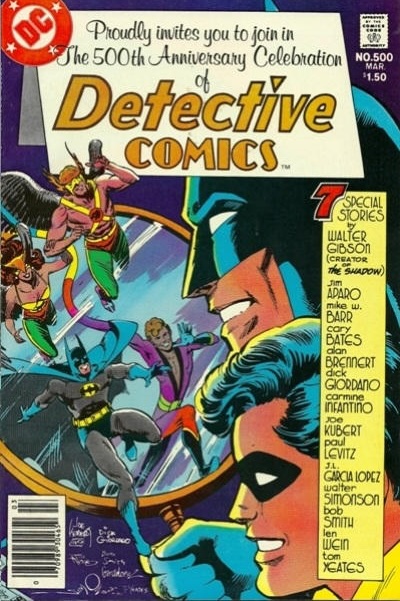
Pretty sure I next came across Deadman in Detective Comics #500 (1981), one of my favorite anniversary issues of all time:


…in a story titled “What Happens When a Batman Dies?” by Cary Bates, Carmine Infantino, and Bob Smith, and come on, how can anyone pass up a story like that? (And this was just one story in this monster-sized mag filled cover to cover with “bangers,” as the kids say.)

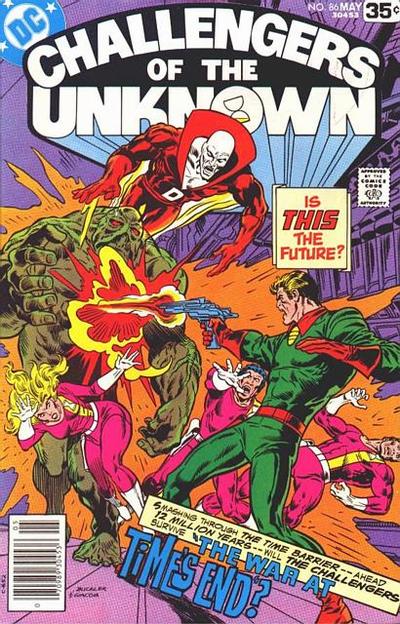
And then somewhere along the line, once I started collecting Swamp Thing appearances in earnest, and I started finding these oddball issues of Challengers of the Unknown with Swampy and Deadman.


And from then on I just kinda picked up Deadman comics and appearances as they showed up…like that seven issue run reprinting all the original stories drawn by Neal Adams (with the first appearance in Strange Adventures drawn by Infantino and written by Arnold Drake), the four issue mini drawn by García-López, the prestige format minis drawn by Kelley Jones…pretty much anything titled Deadman got a look, and usually a purchase, from me.

I remember particularly enjoying the serialized Deadman stories in Action Comics Weekly, especially the one written by Mike Baron where Deadman goes to hell and runs into D.B. Cooper. That was certainly peculiar.

I do get collectors looking for Deadman, especially his first appearance in Strange Adventures #205 and any of the Neal Adams-drawn appearances. And he still remains one of the more popular second/third stringer characters out there, though it really depends on whether or not anything new is being done with him currently. When new Deadman comics come out, folks look for for his older less-expensive appearances, but once he’s out of the public eye, demand dies down. Which, come to think of it, isn’t too much different from any character, so I’m not sure if that adds anything.

Regardless, even after all this time the character maintains some small level of mystique and appeal. So, no, Brian, you’re not really that much of a weirdo. Let your Deadman flag fly, friend!

I can still remember someone having “ALL TROLLORDS” on their pull list.

Just answerin’ a couple more of your questions here:

Mike Loughlin markets himself with

“Some comic book writers promoting themselves as brands, and having sub-lines dedicated to their work. Notably, the ads in comics by James Tynion IV, Jeff Lemiere, and Kieran Gillen are for their other work. In sales and/or buzz, how effective do you think the “writer-as-brand” strategy has been working?”

I mean, to some extent, yes, it’s been working. Probably the most successful example of this right now is Robert Kirkman, who shot to fame due to Walking Dead, and has folksinterested in his other works under the “Skybound” banner. The other writers you mention also seem to get a slight “bump” on their books. Not huge, but in this marketplace anything that can put a thumb on the scale even in the slightest is probably a net positive. It hasn’t quite made it to the point where someone will walk in and ask “where are your Tiny Onion books?” but every little bit helps, as they say.

• • •

LouReedRichards makes some unstable molecule music with

“From your experience what is the percentage of comics readers who are ‘agnostic’ about writers and or artists and just read comics to follow a character vs. those who are much more dedicated to following a creator regardless of the title.”

Slightly related to the previous question, I think! It’s difficult to pin down, aside from looking at patterns on my pull lists, where by and large those customers are more character/title-centric versus creator centric. And aside from some of the examples I pointed out above in the first question, it feels like that’s mostly guiding readership of most new titles. I have, for example, only buying certain X-Men titles because of their writers, and once they’re off the book, I imagine they’re gone, too.

In my personal reason, I tend towards following titles versus characters, with some exceptions. I’ll buy anything by the Hernandez Bros. or Sergio Aragones, for example. But largely I’ll, like, buy Hulk or Fantastic Four comics regardless of who’s doing them. And of late, I’ve been buying Daredevil since I picked up Mark Waid’s first issue, the first for me since Frank Miller was on the title, and have been reading it ever since as every following creative team I’ve enjoyed. Now, will this last when I hit a creator I’m indifferent on? Who knows? I’ve definitely hit some rough spots in my Hulk runs but kept going, but maybe that title was just grandfathered in to my ongoing collection.

Another example: I did buy the new Captain America series, a comic I don’t normally follow, because Chip Zdarsky is writing. Will I continue when he leaves the book? Seems unlikely, but who knows?

Perhaps the best metric is “what am I ordering for the shop?” I haven’t done much adjusting upward or downward on most titles, except for the occasional first issue bump…like, Matt Fraction’s Batman #1 sold great, but that may be more because it’s a Batman #1 than because of whoever’s writing it. (No shade on Mr. Fraction intended — he did a great job — but that’s just kinda how it is with Batman.) I expect numbers to settle back down to where they were in short order…still high, but not shockingly high like that new number one.

Anyway, whether that lack of order adjustment is due to people jumping off titles when the creative team changes, and about the same number jumping on for the same reason, I don’t know. Or if just stays constant because, say, Flash sells a certain number and will always sell a certain number to the same basic group of people, I also don’t know. At any rate, we’re a long time when half my pull lists for the (old) shop had “ALL ALAN MOORE” or “ALL JOHN BYRNE” notations.

Bonjour, Monsieur Swamp Thing.

Okay, let’s see if I can knock out a few more of your questions:

Dave sez

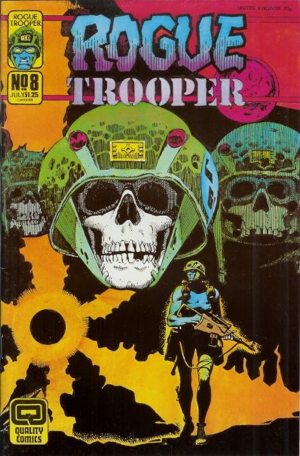
“…Do you think the new Rogue Trooper film and presumably some sort of comics push from 2000ad could see the character break into the USA?”

Well, looking what’s coming from one of my distributors, we’ll definitely have some Rogue Trooper paperbacks reprinting all the original material, due out this month.
And this year is the given release date for the film, though I can’t seem to find any information narrowing the window any farther than that. Only about four months to go, friends, better get it out there.

The movie itself is described as an “adult animated feature” which to be frank doesn’t seem to bode well for box office success. But, who knows, maybe enough people will see the trailer, think it looks cool, and give it a shot.

Regardless, I don’t think this is the breakthrough moment for Rogue Trooper in the U.S., unless someone licenses the property and puts out a monthly outgoing. Or even just reprint the originals in color comics like they did in the ’80s, only with good reproduction.

Even then, I don’t think hitting it big, if at all, in the American direct sales comics market really counts as “getting over.” I mean, if somehow we can talk Raina Telgemeier or Dav Pilkey into doing a Rogue Trooper book aimed at younger readers, you might have something.

• • •

will richards also sez

“Does your interest in collecting Swamp Thing appearances extend to overseas (reprint) editions?”

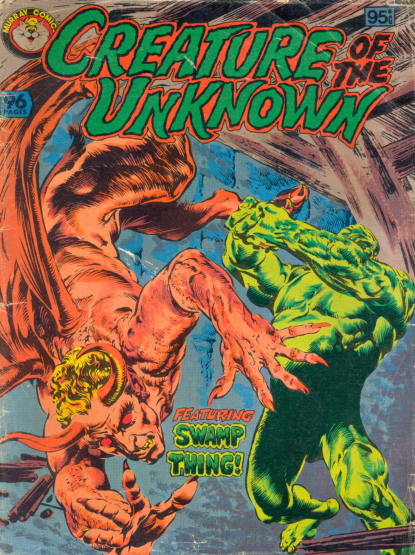
Yes, actually. I’ve posted about a few I’ve gotten my mitts on over the years, such as this one from Australia reprinting a few of the Nestor Redondo issues in black and white:


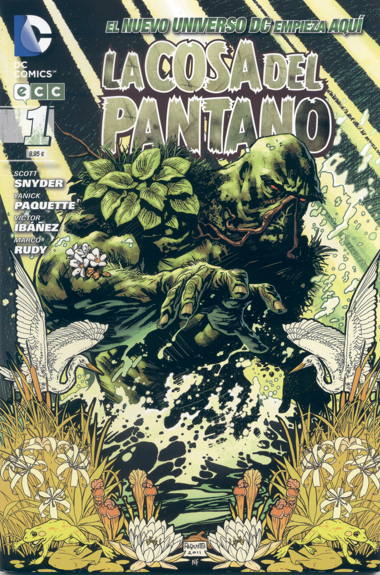
…or this Spanish edition of the New 52 first issue:


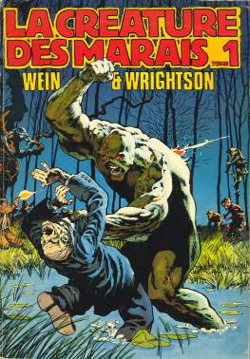
…and ah, oui oui, le Swamp Thing en français:


And there are a few others, here and there, most of which I’ve shown on this site over the past, oh, nearly 22 years, so I don’t blame you if you missed ’em. I’m always lookin’ for more, too! Like maybe getting another chance at those ’70s Swamp Things from Mexico…I had just missed an eBay auction for those some years back and it still burns my butt.

• • •

Paul Di Filippo sez as well

“What are the odds that the next SUPERMAN movie by James Gunn will feature the scenario from Superman’s Pal Jimmy Olsen #29 (June 1958), wherein Krypto becomes Jimmy Olsen’s pet?”

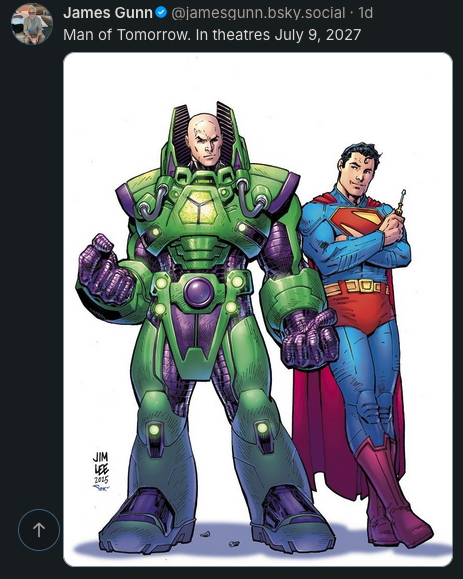
We sorta already know what the next James Gunn Superman flick is going to be about, since ol’ JG posted this Jim Lee pic online along with an announcement of the sequel’s arrival in 2027, assuming by then we’re not living in a post-apocalyptic wasteland or anything. Here’s the pic:


Two takeaways:

1) Jim Lee has a lot to answer for, in putting that high collar on Superman’s costume.

2. I guess we’re just getting full-on Luthor 1980s Battlesuit (without its Lexor origins, which I’m saying just to show off, not because I thought that was ever a possibility).

Oh, also 3) I guess that drawing is supposed to be funny, in that Superman is holding a screwdriver and Lex has a few screws loose (so to speak) beneath him. But honestly, that image just doesn’t sell it for me.

As for Jimmy getting Krypto…look, Jimmy’s too busy getting the ladies and also turning into Giant Turtle Jimmy to be taking care of a super-dog. Unless Krypto is there functioning as Jimmy’s wingman…or wingdog, helping him attract the opposite sex, and also turn into a giant turtle man.

But honestly, I am wondering what role Krypto will play in the next Superman film. Audiences now expect to see him, and though he’s presumably be in the forthcoming Supergirl movie, folks will probably want him back with the Man of Steel. You don’t want burn people out on Krypto (which hardly seems possible, but still) but now that’s he’s been introduced, he’s part of the mix. How much of a part is going to be the question Gunn and the other fella in charge of the DC stuff whose name I never remember will have to think about as, or if, the Super-movies continue.

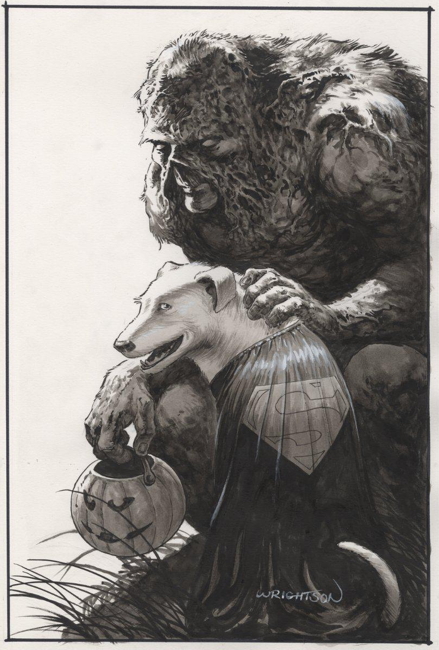
Well, that, and if Krypto will be in the promised Swamp Thing flick. I mean, look, Bernie Wrightson his own self drew a precedent!

I’m also waiting for a collection of Dan Schkade’s Flash Gordon strips.

Well, it’s time for another one of your questions, this time from Michael Grabowski, who clutches me with

“We know of your esteem for Bushmiller’sNancy as well as the current (I think, still?) Olivia Jaimes strips, and you’ve also discussed your fondness for not just Segar’s but also Sagendorf’s (and I think the much later London’s) work on Thimble Theatre/Popeye.

“What other classic newspaper (or current news’paper’) strips do you especially enjoy, and in what editions?”

Well, Olivia Jaimes still appears to be hard at work cooking up new Nancy comics, for which the world should be grateful. And yes, I love Popeye of pretty much any stripe, such as the ones you mentioned, plus the Charlton Comics run, the current Randy Milholland stuff, the works. Put that Popeye into…um, my eyes, I guess. The only Popeye I’ve actively disliked were those cartoons they tried a few years ago where none of the characters were voiced. Yuck.

As for other strips…well, there are certainly a few, and probably not any surprises. I should get Dilbert out of the way, which was a strip I really adored until it very much got to the point where you couldn’t ignore the cartoonist behind the curtain. And remember, this is a guy who read all of Cerebus saying this. I still have a shelf full of Dilbert books, complete to the point when I stopped buying them, and sadly, no plans to revisit them at any point in the future.

For the complete opposite of Dilbert, I have several collections of the Zippy the Pinhead strip by Bill Griffith. Meticulously drawn, intelligently and absurdly written, the comic never stops being a joy. There’s no uniform format for the books…several permutations of paperbacks, a hardcover (signed and numbered!) of color Sundays, and 20 issues, I think, of a Zippy mag from Fantagraphics reprinting strips. Absolutely beautiful stuff.

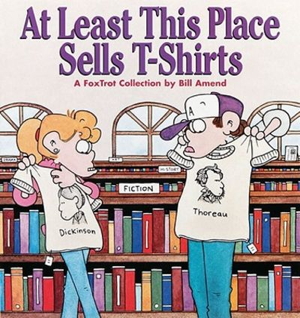
Another still active strip for which I’ve been buying the paperback collections is Foxtrot, the family strip with the clever math/science/nerd gags. Not much to say there except that the books sure have slowed down since the comic went Sundays only.
An active strip for which I no longer buy the collections is Doonesbury…I think I stopped sometime in the early ’90s, but I have a complete set of the books prior to that. I didn’t stop for any particular reason other than financial, as I still enjoy the strip when I get a chance to read it. This and MAD Magazine is how I learned all about Watergate!

For completed strips, there is of course the king of them all…Peanuts by Charles Schulz. Fantagraphics putting out this series was a much needed addition to world culture, getting all this work back into everyone’s hands. Just an absolute master class in the study of human nature.

And then there’s the body of work by Berke Breathed, of Bloom County, Outland, and Opus, and am I forgetting something else? fame. I had the (not necessarily complete) paperback releases, but the six volume hardcover set reprinting everything was a nice thing to get my hands on. Okay, technically, maybe this strip isn’t entirely over, as Breathed was doing new strips on Facebook for a while, many of those reprinted in a couple of paperbacks from IDW.

There are the Big Book Sets, the giant slipcased things that contain everything, which are great in their own way if slightly inconvenient to haul around. I have the Calvin and Hobbes one and the Far Side one. I think I actually still retain the paperbacks too, for the extra material not reprinted in the Big Books.

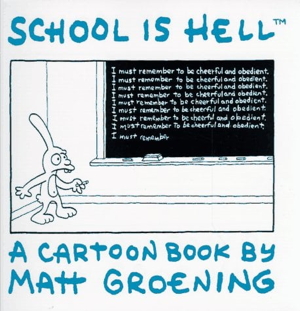
And just looking at my shelf…I also have several of Matt Groening’s Life in Hell strip collections, which I’d actually bought after seeing his strip in weekly papers an’ such…before the Simpsons, so I was into it before it was cool, maaaaan. I don’t have nearly all of them (I just looked at a list and hoo boy, there are a lot) but I loved those earlier books. I know the strip changed a bit once Groening was, y’know, running a whole-ass TV show, but I’d still be interested in picking up the rest of these at some point in what’s left of my future.

Plus I have a couple of one-offs that I’d like to find more of…I have the complete Gahan Wilson Playboy cartoons book set (not salacious by any means, just weirdo monster type stuff), and a copy of My Crowd by Charles Addams. Can always use more of their work in my life.

Archival strip books I should’a bought: Dick Tracy. Man, those are the best, but for some reason I didn’t get in on the ground floor with those and how they’re up to, like, volume 83. Ah well. I do have a couple of hardcover “best of” collections and several reprints of, shall we say, varying quality in comic book form, and that’ll just have to be good enough for me.

“Also, a related suggestion once your 90’s comics survey coverage ends: would you consider doing a similar survey for comics strips (classic, modern, free weekly, and/or web) including comments on available collections of them?”

Egads. It’s certainly an interesting idea, though I’m not as up on webcomics as I used to be. As you may have noticed, I’ve struggled a bit with descriptions of some of the entries so far in the Final ’90s Countdown, as I don’t have a lot of experience with some of these titles aside from 1) selling them when they were new, and 2) seeing them in the back issue bins. It wasn’t like the ’80s Countdown where it felt like I knew a little somethin’ about everything.

I’m afraid with comic strips I’d be more the former than that latter. Sure, I could hold my own with Hagar the Horrible or Marvin, but if you throw, like, Steve Roper, or Wash Tubbs, or, God help us, Boner’s Ark at me, I’d be flailing about like Kermit the Frog. It’s worth a thought, though, so let me get through the ’90s books first, hopefully something in the next year or three, and then I can consider my next step.

“P.S. I started consistently reading this blog at the tail end of the Sluggo Saturdays feature. I really miss that!”

Yeah, I miss it, too. When I started doing Sluggo Saturday, you weren’t getting a lot of Nancy and Sluggo content in the ol’ comicsweblogosphere. That’s changed quite a bit since then (and so has the comicsweblogosphere, for that matter), and Nancy and Sluggo awareness is at an absolute peak, for which I take sole credit.

Well, okay, not really, there were members of the Sluggo-scenti already out in full force before I ever stepped into the scene. The aforementioned Bill Griffith was an advocate (which I got him to immortalize in this original sketch I purchased from him), and dare I mention Scott McCloud’s nigh-infamous 5-Card Nancy? I do dare!

But don’t you worry…Sluggo Saturday is not dead, only resting, and will return to us in our time of greatest need. Which frankly is right now, come to think of it. I’ll see what I can do.