I’ll mention that Multiversity issue here in the subject line, since I forgot to do so in the body of the post.

ScienceGiant looms over me with

“Wow, have the Charlton heroes been ill-served by DC, or what? With the most egregious example being what’s happened with The Question.”

Oh, I don’t know. I mean, if all that was ever done with the Charlton heroes at DC was serve as inspiration for Watchmen, that would have been a worthy use of them.

Overall, though, I think DC has found some good use for the Charlton heroes over the years. I remember when DC first acquired said heroes from that publisher, this was just before Crisis on Infinite Earths, and the Blue Beetle was introduced in that series as, I guess, the representative of whatever parallel Earth he was supposed to be from. “Earth-Charlton” didn’t last very long, as the characters were folded into the DC Universe proper and we got that Blue Beetle series, Captain Atom, a Peacemaker mini, and so on. Plus, of course, we got Blue Beetle as part of the more humor-inclined 1980s Justice League series, which has pretty much defined that version of the character to this day.

In more recent comics, we have the new Jaime Reyes Blue Beetle, who’s had a couple of short run series with a new ongoing on its way, and has been prominently featured in several of DC’s animation projects.

Now, the Question…he had a sizeable and well-regarded run of a series (that even featured him “meeting” his Watchmen counterpart Rorschach), a weird but great mini by Rick Veitch and Tommy Lee Edwards, and was replaced by Renee Montoya from the Batman comics (and cartoon). A popular interpretation of the character was his portrayal as a super-conspiracy theorist in the Justice League cartoons (voiced by fellow Oxnard native Jeffrey Combs).

So overall, the Question’s done okay, though his most recent, post-New 52 interpretation as some kind of being from parts unknown, punished by cosmic powers with the removal of his face and memories and cast down to Earth, where he hung out with Pandora and the Phantom Stranger, was…perhaps a little off-model. Points for trying something different, but it just didn’t seem right. Also, the Question’s alter ego Vic Sage appeared in one of the Suicide Squad titles, but I didn’t know about that ’til I looked at the Wikipedia page. So, yeah, the Question’s use of late has seemed a little sloppy, but as we all know after reading DC Universe: Rebirth, New 52’s continuity/character issues were all caused by Dr. Manhattan, which seems kind of fitting in the Question’s case given the relation between his Charlton origins and the inspiration for Watchmen.

As a whole, the Charlton heroes have had a fair shake at DC, I think, despite some recent lack of use/misuse. I’m sure they’ll pop up again…plus, there’s Blue Beetle, who is popping up again, like I’d said.

And ScienceGiant had another question:

“Also (yeah, yeah, one per commenter. I know. But I gotta know) what was the deal with Pandora from DC’s New52? Or should I call her Poochie, based on the way she disappeared after Trinity?”

…which was sort of made moot by recent events, which ScienceGiant responded to just a few days ago. Yes, you can ask another question if you’d like!

Anyway, my initial answer was that I thought she’d have a more metatextual function, relating to whatever undoing of the New 52 continuity would eventually happen, given her introduction in Flashpoint presented her knowledge of multiple timelines/universes/etc. I guess that was sort of right, considering her ultimate fate and where/how it happened. And there was that bit of business where she had cameos in every(?) New 52 launch title, implying that she was super important, and, well. You got that one Justice League story and that one short-lived series, and I suspect whatever ultimate plan was originally plotted out for her, it never really came to fruition. I mean, I don’t know. Sometimes stuff works out, sometimes it doesn’t. What Can You Do?
Questions within questions.

In response to last week’s post, David asks

“Have you ever seen a market for ‘misprint’ comics?”

Well, in fact, I was Googling up a couple of misprinted titles that I remembered, and what appeared before my eyes was the site Recalled Comics, which appears to be a very thorough database of what it says on the tin, there. Not just recalled comics (like the infamous Elseworlds Giant and that Hooters comic) that were presumably error-free, but things like that Venom: Lethal Protector #1 where errors in the foil application resulted in some oddball variations (and enormous eBay prices).

One specific error comic that I’m still interested in obtaining is the All-Star Batman and Robin the Boy Wonder #10, in which the naughty words in the dialogue that were supposed to be “censored” by black boxes were in fact still legible due to the insufficient opacity of said boxes. It did answer the question, at least in the case of this specific release, that when comics do the redacted black-box thing, the actual words they’re blacking out are there. My memory of the event is that, when this comic first was released, the copies that made it out into the wild did end up on the eBays for a significant amount of money. Right now, just doing a quick search, you can get a copy for around $20. so there’s still some demand for this, too.

That comic was quite literally recalled at the last second, as it was on the invoice that accompanied that week’s shipment. Our copies were pulled out of the boxes prior to being shipped to us, but other stores did get their allotment, and I’m sure in some cases they “sold” “out” before word of the recall came down.

Not all errors result in demand, of course. Comics with the pages out of order and never corrected with reprinted editions (like Batman: The Cult #4) or comics reissued with corrected cover prices (like a recent issue of IDW’s Popeye, initially released with a $3.99 price, with a $4.99 replacement coming a week or so later)…nothing’s ever happened with those. And there’s that All-Star Squadron annual where everyone’s green for half the issue…it’s amusing, but it was never corrected either, so there’s no rarity to it.

So, David, my answer is “yes, sometimes, depends on the comic.” In general, if every copy of the comic has the same error, there’s probably no extra demand, but if only a few copies have the error and was re-released in corrected form, some demand may accrue. In general, I repeat myself. I’m sure there are exceptions.

And then there’s this comic, where the error can only repel due to its disgusting nature:


UUUUGH.

Anyway, so that’s my commercial for the Recalled Comics website (which I’ve been enjoying over the last few days), and was also me pushing reader David ahead in the old Question Time queue. Back with more in a day or two.

The worst use of the word “realistically” ever.

Let’s tackle a couple more of your questions, shall we?

BRR chills me with

“I’ve seen some recent distinctions between newsstand and direct market editions of some back issues in a couple online marketplaces. Do you have back issue customers seeking one or the other?”

By and large, no, not really, unless there’s something else different about the comic beyond whether it has a UPC code instead of Spider-Man’s head in the little box on the cover there. Like, for example, that one Amazing Spider-Man annual where Peter and Mary Jane were finally married, for ever and all time, never to be undone. The direct market comic shop edition had Peter ‘n’ MJ in a tux and wedding dress, respectively, whereas the newsstand edition had Peter in the red and blue longjohns. Usually there’s a preference either/or when someone’s looking for that comic. And then there’s the early Image Comics releases, like Spawn and WildC.A.T.s, that had newsstand editions with different cover stock and (in the case of WildC.A.T.s #2) a non-enhanced cover to contrast with the foil-y shiny cover that went to comic book stores. Or there were those covers DC test-marketed to newsstands (on the far right here).

I seem to recall very early on, a few decades back when I was but a young comic shop employee and not the stogie-wielding/martini lunch-having comics retail mogul I am now, that there would be some resistance from certain back issue customers against buying one version of the cover or the other, when the only difference was whether or not it had a UPC code. I tried to reassure some folks, when they questioned the difference, that there really wasn’t any, but some people just preferred one over the other for aesthetic reasons.

Now I just did a quick eBay search on the word “newsstand” in the comics section, and I see a lot of entries where people are emphasizing “NEWSSTAND VARIANT” or words to that effect on items where it probably doesn’t make any real difference (like an issue of Harley Quinn, where the only change is that the one that went to comic book stores had “DIRECT EDITION” with the UPC code on the cover). And I see one of those aforementioned Spawns that went to newsstands with an adventurous $50 price tag. But for the most part it looks like “newsstand” is being thrown around as yet another descriptor to make one’s listing stand out.

I mean, yes, for the sake of informing the customer, letting them know this was the version of the comic distributed on newsstands versus comic shops is yet another detail to more finely describe the item for sale, but I haven’t looked into it enough to know if “newsstand variant” (in which the only difference is UPC code vs. Direct Market UPC code vs. picture of Spider-Man’s head) is enough to create a significant jump in demand/pricing. Online sales, particularly eBay sales, can be a whole different animal than in-store sales, so it wouldn’t surprise me if some subset of collectors are seeking out newsstand editions only. I’ll have to look into it a little more.

• • •

The Mutt mixes up a couple of breeds with

“The Fat Fury v Swamp Thing. Who wins?”

Well, I love ’em both, as some of you readers out there already know. The personal bias is for Swamp Thing, of course, but realistically Swamp Thing would likely find himself outmaneuvered and stymied at every turn by Herbie “The Fat Fury” Popnecker’s nigh-magical influence over man, nature, basically all of creation itself.

Now, Herbie versus Tolkien’s Tom Bombadil…that’s a fight!

Boy, those are some old posts of mine that I’m linking to.

So a couple of weeks back I passed a question asked of me along to you about your favorite single issue comic book story. Frankly, I’m not sure what I was planning to do here…going through and commenting on every submitted story would try everyone’s patience (not that I’ve been shy about that in the past), and there really wasn’t enough of a consensus to declare “a winner.”

That said, a few stories did pop up more than once, like Doom Patrol #34, by Grant Morrison and Richard Case, in which the Brain and Monsieur Mallah…well, I’ll let pal Dorian explain it to you in this guest post on my site from way back in the Golden Age of Progressive Ruin.

“The Kid Who Collects Spider-Man” from Amazing Spider-Man #248 is another good’un, one I actually picked up off the stands at a time when I was only sort of sporadically reading Spider-Man comics. This Wikipedia entry tells you about it, but really, try to read it for yourself if you haven’t already, before looking at any spoilers. It’s probably one of the best short stand-alone Spidey stories, right there along with the origin from Amazing Fantasy #15. The Wikipedia entry also mentions its semi-adaptation into a 1990s Spider-Man cartoon that I swore I’d written about on this site at some point, only for how badly they botched it.

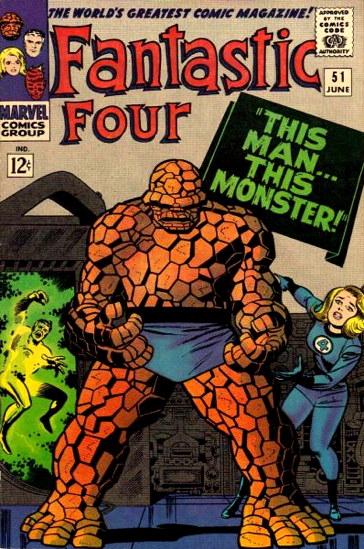
“This Man, This Monster” from Fantastic Four #51 is also brought up a couple of times, featuring one of the all-time classic covers:

ff51cvr
The story, in which a no-goodnik steals the Thing’s appearance in order to infiltrate the Four and destroy Reed Richards, but learns about nobility and sacrifice in the process, is certainly superheroic melodrama in the Mighty Marvel Manner, but it’s touching and effective nonetheless. (And yes, there are subplots ahoy for ongoing storylines here, too, but that’s just how Marvel was then, and I think we can let that slide.)

Some mention was made of Superman #400, the extra-sized anniversary issue that was basically an anthology that featuring how Superman would be perceived at increasingly distant points into Earth(-One)’s future. (An interesting note about the comic…artists were chosen for the book based on their not really having drawn or been associated with the character in the past, including a pin-up by John Byrne who would be taking over the franchise a few years later.) It’s not really a single story, as per the foggy parameters of this particular inquiry, but there is that common theme through the book, and it’s a good comic to boot, so I’d recommend seeking this one out, too. And, like was mentioned in the comments, I’m also surprised some more permanent edition hasn’t been reissued recently, given the piles of talent therein.

James wonders in the comments if anyone had read “Master Race,” a short story by Bernard Krigstein that appeared in EC Comics’ Impact #1. Oh, yes indeedy I have, and it’s definitely one of the classics…when people talk about comics being “cinematic,” this story is practically the definition of it. It’s been reprinted a number of times, such as in the Gemstone reprint line from the 1990s/early 2000s, or in 1981’s awkwardly-titled A Smithsonian Book of Comic-Book Comics, which should be easy to find in libraries or used book stores or this handy Amazon link. And just Googling up “master race ec comics” will get you plenty of discussion about it.

There were plenty of good suggestions in those comments, and I will probably go back and respond further to them. And I apologize for the nebulous constraints as to what I was and wasn’t accepting as “a single issue story.” Mostly I was trying to exclude multiple issues collected into a trade paperback as a single story. But short stories that were only part of the issue are acceptable, too, like that “Master Race” story,” or the story from Detective Comics #500 that William mentioned…I think pretty much every story in that comic qualifies!

A list of Eisner winners for Best Single Issue was copy ‘n’ pasted into my comments — Jackie never did tell me which was her favorite — and there are a few quality comics in there, to be sure. Sandman #22-#28 winning the category one year seems to be stretching the definition of “single issue” a bit. Yes, it was the “Season of Mists” storyline, but that seems to be six issues over the limit of “single issue.” NOT SAYING IT WAS BAD I put in ALL-CAPS to stave off complaints…I quite liked those issues…I was just wondering how this was rationalized at the time.

Commenter D asks if anyone has a run of The Comic Reader fanzine, where Don Rosa featured a Comic Book Hall of Fame in some of his columns. As a matter o’fact, I have a sizable run of The Comic Reader, complete from about issue 90 or so to the end of the run in the 200s, so, like I said in the comments, if I can turn up from free time, I’ll take a look for it!

Anyway, that’s a solid batch of good funnybookin’ in those comments, there…if you’re looking for some fine reading, that’s a nice place to start making your lists!

Y’all heard the man.

Just a couple more answers to questions for today:

Hulk It Up, Y’all impresses me with his user name and then asks

“Did you ever read Toyfare when it was running? If so, what was your opinion of the magazine, especially Twisted Toyfare Theater?”

I didn’t read it as a regular thing, by any means, but I would poke through the occasional issue. On the whole I liked it a bit more than its sister magazine Wizard. It’s my memory that perhaps Toyfare was a bit less…mercenary, maybe, not so concerned with the value of this and the hotness of that as the comics magazine was. It’s possible I’m not remembering that right, that I wasn’t so concerned with the collectible toy market that I kinda glossed over all that, whereas I would regularly shake my head at some of the nonsense in Wizard, a magazine about the hobby that did occupy most of my attention.

“Twisted Toyfare Theater” (a feature in Toyfare that was basically photo funnies with action figures) was usually pretty amusing…some good, solid, occasionally…well, mostly…sophomoric chuckles were to be had. The paperback collections of those sold well for quite a while. Of course the spirit of Toyfare Theater lives on in the television series Robot Chicken, which some of you may have heard of (and carried over some of the Toyfare Theater creators, which I hadn’t known ’til Googling it up).

• • •

ExistentialMan has gone too far with

“Not sure if you’ve addressed this before but how do you manage customer pull-lists? Do you use a web-based site like Comixology, Diamond software or app, paper forms, or some combination of all of the above. What is your policy/approach to clients who visit infrequently and let issues stack up for months? In general, what percent of your average weekly sales can be accounted for with pre-ordered books on pull-lists? Yeah, three questions, I know. Sorry!”

GASP! How dare you! Three questions, indeed!

Ah, well, what can you do? As to your first question, in Ye Olden Days we actually did use paper forms, featuring as many of the currently published titles as we could fit onto there, with extra space for write-ins, that customers could mark off and we’d use to pull books. Of course, that meant updating the forms on a reasonably regular basis and transferring all the customer info from old forms to new ones and sheesh that was crazy. Eventually, we dragged ourselves into the 20th century and started using computerized spreadsheets which made things a lot easier to update and print out for weekly pulls.

As far as pick-up policy, I tend to be a lot more stringent at my new shop than I was at the old, since I’m a smaller store and it’s a bit more of a ding if I get stiffed on a comic saver. Unless arrangements were made with me otherwise (or if you’re a regular of mine from the old shop and I’m familiar with your purchasing habits/timelines), I tend to give people a call after about a month if I haven’t seen ’em. I tend to wait a little longer than I should, and give people multiple calls/emails before I give up on them. Even then I might hold onto their pulls a little bit longer just in case (even if I don’t pull anything new for them) before I file everything back into the stacks.

This brings up something I had gone on about on the Twitters a while back, about how there were pull list customers who hadn’t been in for a while, and I called multiple times, and then I finally close out their boxes…and then they walk in the door, apologizing that they hadn’t been in, that they’ve been getting my calls but haven’t had time to come by. …Okay, if you’re getting my calls, it’ll take a whole, what, 30 seconds to call back and say “Hey, I’m coming in, keep pulling my stuff!” Or you can reach me on Facebook. Or by email. Or on Twitter. I’m not in the Witness Protection Program…I’m easy to reach! If I’m calling you repeatedly about your comic saver, that’s a hint that maybe you’re not going to have a comic saver for much longer unless you call back.

On the topic of “percentage of business” – without getting into specific numbers, let’s just say it’s a not insignificant chunk. It’s good to have a dependable source of income like this…I mean, more or less, discounting situations like those in the previous paragraph. (And thankfully, there haven’t been too many of those!)

We as a people don’t talk often enough about Ron Wilson’s swell comics work.

“No questions, NO QUESTIONS…well, okay, a few questions.”

ChrisD wonders

“With the Free Comic Book Day coming up, this is a chance for comic book stores to connect more with the community. But it is only once a year. How else should a comic book store connect with the community, besides as a seller of goods? Does it offer any ‘complementary services’ like a comic book meeting club?”

Er, I’m getting to this a bit late, obviously, though I suppose next year’s Free Comic Book Day is technically coming up (see y’all on Saturday, May 6th, 2017!). But in terms of connecting with the community, just in the most basic of ways, the very fact that the thought of “hey, comic shops give away free comics every May, where’s the nearest comic shop?” drives the interested parties in the local community to discover (or be reminded of) your store.

And there are other methods of outreach, too…not to give away all my secrets, but I did mention here a few days ago that I donated a bunch of leftover FCBD comics to a nearby school (and have been getting some new customers in return, specifically citing that donation!), and I regularly donate merchandise or gift certificates as prizes for contests, auction items, and so on for various organizations and causes.

An actual comic club, with meetings an’ all, sounds like fun, but maybe more viable in the pre-internet days, I think? Nowadays if you’ve got an opinion about comics, you just hop online and yell at other people thoughtfully trade ideas with your peers, but perhaps an actual physical place where folks can gather and just chat about funnybooks for an hour or two…hmmm. It’s not like I don’t have a large-ish backroom area that’s little used at the moment…this might be something to ponder.

• • •

DanielT glues me down with

“It seems because his hood was permanently attached to his head, Baron Zemo had to be fed intravenously. Why didn’t he just cut the fabric from his mouth?”

Now, my thought was that the dreaded Adhesive X, which was dumped onto Zemo’s head and bonded his hood to his skin, somehow strengthened the hood’s fabric in the process, preventing it from being cut. However, the hood still was permeable enough to allow him to breathe, so Adhesive X…I don’t know, molded so finely with the individual strands of the hood that it retained its basic physical shape (allowing air to pass through as before) but was now many, many times stronger and couldn’t be damaged? I’m sure all of this hypothesizing is fully supported by current science.

• • •

Turan, Emissary of the Fly World, mightily crusades for this question:

“Marvel and DC are determined now to let none of their trademarks lapse, and so no matter how poorly a character’s previous appearances sold, he is guaranteed to return every few years, or at least have his name attached to a new character.

“Given that, why has there been no return of the Super Boxers? Or has there been, and I have missed it?”

Ah, man, Super Boxers by Ron Wilson (script by John Byrne). That’s a comic that probably needs to be revisited and re-appreciated, since I don’t recall it going over that well at the time. At the very least, Ron Wilson is an artist that definitely was inspired by Jack Kirby, or at least working in a similar style as Kirby, but doing it in his own wonderful way. Go check out his Marvel Two-in-Ones or the 1980s Thing series for some great action-packed work.

Anyway, Super Boxers…I don’t have a copy right in front of me, but a little online research seems to indicate that Super Boxers is actually owned by Mr. Wilson, so if it’s ever to come back, he may have to do it himself. I honestly haven’t heard of any revival attempts over the decades, so…I don’t know. Marvel recently reprinted Greenberg the Vampire from their old graphic novel line, so who knows…maybe we can get Super Boxers out on our shelves again!

In which I basically don’t define any terms and just assume you know what I’m talking about.

From the Question File, DavidG doesn’t make it easy on me with

“In the long run, The Legion of Superheroes never recovered from the Post Zero Hour reboot, in which baby boomers destroyed years of continuity in a misguided, nostalgia based decision to make the Legionnaires teenagers again, even though they were more popular as adults. Discuss.”

Yeah, well, that was somethin’, wasn’t it? I think, in its defense, and in the short term, the Zero Hour reboot worked, as the twisted timelines/multiple Legions hoohar was resolved in an effective and not entirely unemotional manner during a DC Universe-wide event. And, unlike the usual shoehorning of the Legion into these events (difficult, given the Legion was set 1,000 years later than the rest of the DCU), it actually seemed to fit about as naturally as these things can.

Now, the problem here is that a lot of the appeal of the Legion is its soap opera aspect, with decades of character development and relationships mixed in with the superhero action, creating a significant fanbase in the process. The Legionnaires whose lives you were following in, say, the 1980s were essentially the same Legionnaires that started to be introduced in Adventure Comics #247 (1958) and continued to pop up for many years following. There were the occasional reboot or retcon (the whole post-Crisis Superboy thing, the “Five Years Later” timejump) but you can still draw a line from the beginning of the Legion to, well, the end as represented by the Zero Hour tie-in.

With that Zero Hour conclusion to the Legion saga as we knew it, the chain was broken. Granted, Legion fandom wasn’t what it once was by the time Zero Hour rolled around (what comic’s fandom was?), but that was the final break between What Had Come Before and What DC Was Going to Try to Attempt in the Future. Even Crisis on Infinite Earths didn’t cut off the Legion’s progression, despite throwing some serious monkey wrenches into the works (like, as previously noted, the whole Superboy thing).

For longtime Legion fans, that was a lot of investment in the characters that was seemingly just discarded by DC, but in DC’s defense, they couldn’t depend on just the longtime Legion fans to support the title. They had to pursue new readers and build the audience for this particular franchise, and usually the #1 strategy comic publishers go to when trying to bump up sales numbers is, well, new #1s. Or in this case, #0s, where as part of the Zero Hour event issue #0s were released in which the status quos of DC’s various titles were reestablished. And, in the case of the Legion titles, the adventures were rebooted…started from scratch and presenting a hopefully fresh, new jumping on point for readers previously intimidated by the decades of backstory.

It worked, for a while anyway, and as I recall it sold reasonably well at least for our shop, gathering some new readers as hoped, and old Legion fans (like me) sticking around out of curiosity and, oh, because the comics were actually pretty good. This version of the Legion went through some interesting permutations, I thought, including the dark but still enjoyable Legion Lost mini-series, which followed the end of the previous Legion comics.

There were a couple more series set in that Legion continuity, but eventually (and presumably sparked by a need to improve sales) a new Legion series was launched, rebooting from scratch again. It was a fun comic, I thought, with some new takes on old characters, but this reboot of the Legion only made it five years (versus the second reboot’s ten years), and then suddenly we were into our next rebooting of the Legion, which was actually more of a reinstalling of a back-up of the original Legion continuity into then-current DC continuity (with some minor tweaks here and there to jibe with the DCU as a whole).

Following that was a mini-series connected to the Final Crisis event, in which all three (or three and a half, depending on how you feel about that last reboot-ish thing) versions of the Legion encounter each other, and I think it was around this point that I sorta lost the Legion thread. I love the Legion, I read ’em for years, and it was even the only extended DC Archives hardcover set that I collected. But after reboot and relaunch and wait we didn’t mean to reboot it again let’s go back to how it was before…I couldn’t do it any more. Like I said, one of the appealing aspects of the Legion was getting immersed in the soap-operatic nature of the stories, but the multiple reboots just gave me the feeling of “well, if they write themselves into a corner, they’ll just reboot instead of trying to write themselves out of it” and that sort of soured me on the books.

I realize this is a complaint you can have about ANY comic that has a history of rebooting/restarting…I’m guessing DC’s New 52 relaunch hit a lot of people this way. But specifically with the Legion, with such a long history behind the title, to see what was special about it fragmented this way, was disappointing. The reboots seem to have shorter and shorter lives, with the New 52 version of the team (which I guess was still more or less the original continuity still, I guess?) lasting around a couple dozen issues. I’m hoping letting the team’s shelf presence rest a while (its first extended break that I can think of!) will help, and that whatever forthcoming relaunch may occur will be more well received.

There are ideas I hope DC would attempt at refurbishing the Legion for current audiences. Maybe they could appear as supporting characters in another title, or perhaps a new title could launch focusing on just one member of the team (like Brainiac 5) with other Legionnaires appearing as needed. Or maybe the Legion can just say out of the public eye until someone has a really good idea how to use them…but with hints at their existence in the Supergirl TV series, I suspect any possible media presence may force DC’s hand sooner rather than later.

So yes, DavidG, I think the Legion’s involvement in Zero Hour did cause the long-running franchise to stumble and never quite find its legs again. Not to say there weren’t good comics that came out of all the reboots, because there were, and that a five-year run of a series isn’t something to sneeze at. However, I’m not sure if or when the team will ever find any kind of extended traction again. Like Hawkman, the Legion was “fixed” until it was broken and…wait, that’s it!

Hawkman and the Legion of Super-Heroes! I did it! I fixed ’em both! DC, get on this right away!

EDIT: Pal Andrew has additional wise insight on the matter.


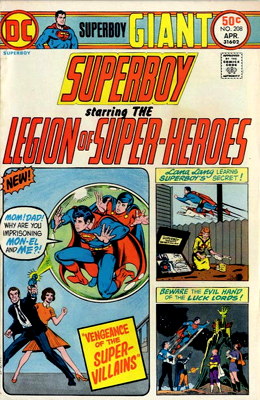
PICTURED: the first Legion of Super-Heroes comic I ever read – Superboy #208 (April 1975)

In which I ask YOU a question.

Gareth volleys the following at me:

“What’s the best comic book story that’s told completely in a single issue?”

WELL SURE THAT’S AN EASY QUESTION…uh, hoo boy, lemme think. I know my favorite superhero story is Justice League of America #200, but it’s basically a sequel to the team’s origin issue so not really “complete” as such. And it’s basically a framework to get heroes to fight and show off the work of several talented artists, so…yeah, I don’t think this counts. And then there’s Spider-Man’s origin in Amazing Fantasy #15, which I think is still the Most Perfect Superhero Origin Story of All Time, but…I don’t know, that’s setting up a follow-up series, but even if that were the only Spider-Man story ever published, I think it would still stand up as a classic example of the genre.

But I think I’m going to go with “Only A Poor Old Man” by Carl Barks, from Four Color Comics #386 (1952), in which we learn that Uncle Scrooge’s attachment to his fortune isn’t greed, but rather the memories each coin brings him. Also it’s the example of Scrooge fighting the Beagle Boys, and the whole thing is just perfect. It’s been reprinted many, many times, most recently by Fantagraphics, and there was a Free Comic Book Day version of the story released in 2005, if you can track that down.

• • •

Okay, the next question in the list is going to take a bit of effort to answer, but in the meantime, I’m kind of curious what your answer to Gareth’s question might be. So, let me know in the commentswhat do you think is the best comic story told completely in a single issue? Yes, that’s right, I’m soliciting responses to a question while I’m still answering other questions. HEY, I CAN MANAGE IT. But please, let me know…I’m curious as to how you’d answer this tough question.

Yes, I know those characters over at War Rocket Ajax are doing their “Every Story Ever” list, but the entries there run the gamut from single issues to full series to even sequences in comic strips. But here, let’s keep it to single issues of comic books…no graphic novels, or trade paperback collections of minis, or what have you. Just one story, in one comic book, with a beginning, middle, and end. Even if that ending is “…THE BEGINNING” in which case you have your work cut out for you explaining why this is so great.

So again, drop that suggestion in my comments, with a few words of explanation if you’d like, but you don’t have to. In a while, I’ll tally up results or at least comment on your responses in my usual overly-verbose fashion.

The last ever “Al Gore Invented the Internet” joke.

Don’t worry, I haven’t forgotten your questions!

Hooper Triplett has me jumping through the following:

“What do you do with a creator like Paul Grist? Love his work, want to support it, but how can I not knowing if/when it will ever come out?”

Why, you hug him and you pet him and you sq…er, (cough) that is…. Yeah, What Do You Do? Well, I don’t know what Mr. Grist’s particular situation is, but in general, if you have a creator that you like and it seems as if that person’s output is not on a predictable schedule, I’d suggest looking for that person’s online presence, or for an official site, or a regularly updated fan site where someone else has done the work for you. In Grist’s case, he has a Twitter account, and there is what seems to be a thoroughly-done fan page. That’s the sort of thing that should keep you updated on your favorite comic person’s goings-on.

If the person doesn’t have an online presence, or at least not a reliable one, you can try asking your local comics emporium to use Diamond’s retailer site’s search function to see if any new material is pending. I should note that using the new search function just implemented there, where you can supposedly search on creators’ names, I found only one entry for Paul Grist in the entire past, present and future items database, and I know that’s not the case. But if you know specific titles, that should be easily hunted down there.

• • •

jason has the cure for what ails me with

“Do you ever feel like the internet…for lack of a better word…’fetishizes’ key books? Does all the slabbing/ unboxing videos/ haul videos create an insatiable appetite for them?

“More succinctly, does social media drive people to hunt key issues?

“Do you get more knowledgeable fans looking for keys, or more everyday people with limited knowledge? Follow up question, would you ever pit one against the other in combat?”

To be fair, this was a thing even before The World’s Greatest Porn Delivery Service™ was invented by Al Gore, thanks to price guides and fanzines and the like. I know even in the early days of my retail experience, prior to the influence of online hoohar, I’d get people who’d walk into the shop and just ask “what Key Issues do you have?” and I’d be sorely tempted to pull out comics with this guy in them. Certainly social media, and eBay, helps, by even more quickly creating awareness of hot items and short supplies, but it’s just the latest tool with which collectors hunt down their specific treasures. I remember word getting around quickly enough in Ye Olden Times about how Thor #337 was a Hot Item, even without your Compuserves and your eWorlds.

As to knowledgeable fans vs. general folks looking for keys…I think it’s still a pretty even mix. I’ll get a different walk-in every couple of days who rattles off a list of the same books everyone’s looking for…Amazing Spider-Man #300, New Mutants #98, etc. Some even look a little surprised that I don’t have a huge stack of each book just sitting behind the counter waiting specifically for them to walk in. And there are the people looking for Iron Man #55, the first appearance of Thanos, who are shocked that anyone other than them are looking for it, much less that it’s been an in-demand book since the last time Thanos was hot back in the early ’90s.

I think if I could nail down a difference, it’s that the more investment-inclined collectors are looking for specific key issues, while the more general interest collectors just ask “let’s see your box of old Spider-Man” (or “let’s see your box of Silver Age”). As for making them fight, well, I won’t admit to making anyone carve their own chromium-cover shiv….

Mike’s secret origin contained herein.

More answers to your questions:

William opens the gate on

“What were your opinions on the Official Handbook to the Marvel Universe/Who’s Who series?”

I loved ’em. I liked the comic book versions more than the looseleaf/three-ring-binder versions, though the latter made more sense, being more forward-thinking in ease of updating by just swapping out old pages for new. Maybe I just liked the comics better because I didn’t have to sort out the pages and put them into binders in the proper order.

But yes, I enjoyed them quite a bit, particularly when I was younger and not as knowledgeable about all the characters from throughout the respective histories of the two publishers. I even appreciated the different approaches each company took, with Marvel’s encyclopedic entries being far more detailed, even down to exactly how many tons each character with super-strength could lift, whereas DC’s tended to be a little more loose with nailing down character stats and histories.

DC moved away from their “Who’s Who” series, sort of morphing them into the Secret Files special issues that focused on one franchise/character at a time, and I think some annuals had Who’s Who pages included, maybe? Marvel goes back to their “Marvel Universe” format once in a while, though the most recent-ish ones have been character/theme-focused one-shots. One even just came out about a month ago, focusing on Marvel’s post-Secret Wars status.

Nowadays, with reboots and rebirths and restarts and reruns, trying to do the same kind of encyclopedic maxi-series overview of all your characters is a chump’s game, with likely two or three line-wide relaunches occurring during the course of that run. I know that DC has had some mass-market hardcovers in recent years, with big pictures and light, mostly continuity-free descriptions of their characters, and Marvel has a series of volumes going into a little more detail with their own line of heroes and villains.

The best solution to keeping any kind of listing like this current would be putting it online, which Marvel and DC already kind of do, and of course Wikipedia does do. That would certainly allow the space necessary to explain, say, the differences with post-Flashpoint, New 52 versions of characters that you’d need to do in 6-point type on a printed page to get everything squeezed in there.

But it just wouldn’t be the same as getting your copy of The Official Handbook of the Marvel Universe and spending forever plowing through the walls of text inside. You certainly got your money’s worth. Plus, there were those great diagrams of vehicles and weaponry by Eliot R. Brown, which were fascinating to look at and almost made you believe, for just a moment, “well, yeah, that’s exactly how Doctor Octopus’s arms would work.”

By the way, in 1982/early ’83 I was trying to track down one of the early issues of Marvel Universe that might have still been on newsstand racks in the area, when I ran into a schoolmate of mine. After learning what I was up to, he said “hey, why not try Ralph’s Comic Corner up in Ventura, they probably have it.” I’d not known about the shop ’til that moment, and in a way that little encounter with a school buddy may have put me on course to being where I am now…trying to figure out how many copies of Aquaman: Rebirth #1 to order for my shop.