A little fancier filler copy than a Cerebus Biweekly.

Well, I sorta started what I threatened to do here, picking up pre-#26 issues of Dave Sim’s Cerebus for cheap off the eBays. Now, most of them are reasonably priced, at least for my purposes, but the lower numbers, your 1 through 3s or so, are still commanding higher prices. I figured maybe someday those issues would come through the shop and I could buy them then, but otherwise, unless some amazing bargain breaks out, I’ll have to do without.

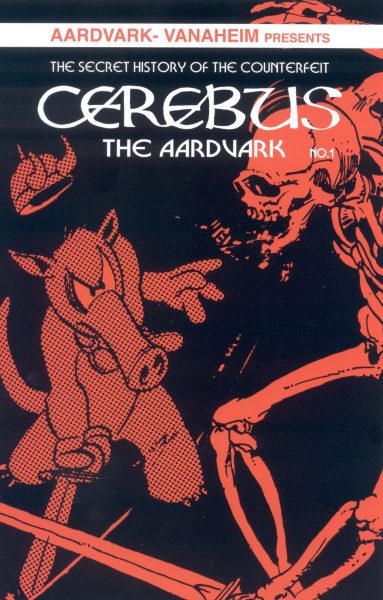
Well, enter Kickstarter and a new reprint of #1. I figure I’d live if my hopefully someday-complete run of the Cerebus comic books had this version of the first issue. Which isn’t to say I still wouldn’t be willing to get my mitts on one of the original #1s (and not one of the bootlegs…more on that in a moment).

“So what all did you get in said Kickstarter?” you’re probably not asking, but don’t worry, I’m going to show you anyway.

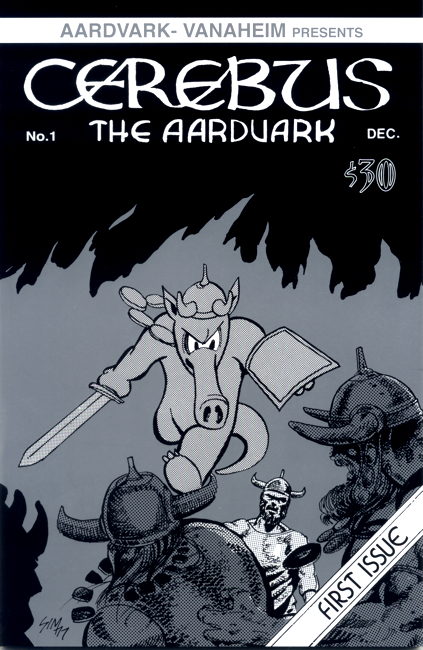
First off is ye olde comic book itself:


with a platinum-colored metallic ink on the cover, instead of red. It contains all the material from the original, but plenty of extras aside, such as promotional art, sketches, period ads for the book, etc. Of note is two pages of storytelling from the original comic redrawn in his modern style by Sim…or as modern as it was in 2010 when those pages were drawn.

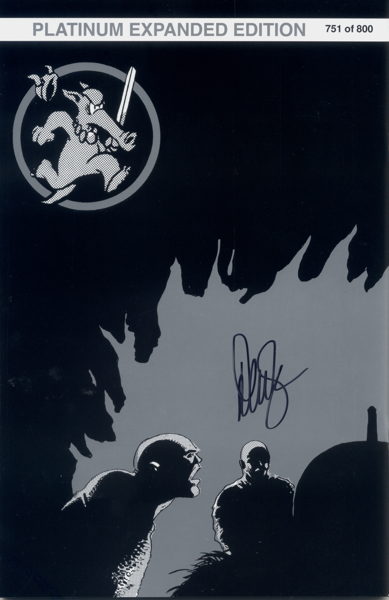
On the back cover is where Dave handsigned each copy:


…and that this is #751 of an 800-copy run.

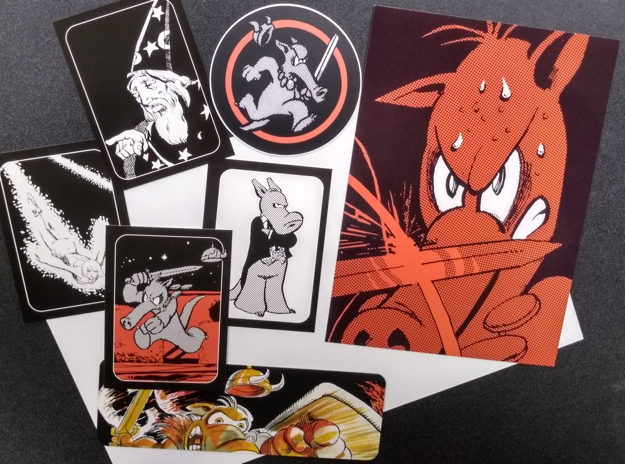
Along with the comic were a small pile of extras, including trading cards, a pretty swell-looking postcard, a sticker, and a bookmark:

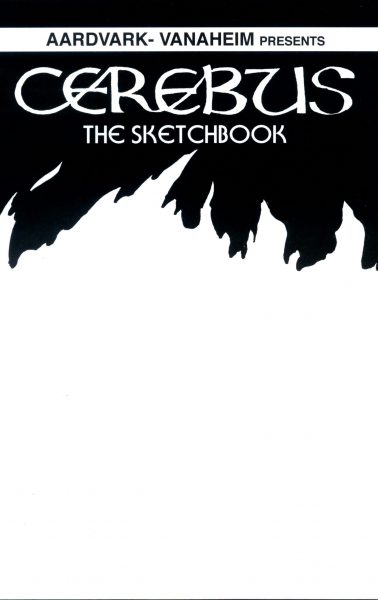
I also received Cerebus The Sketchbook, which is, yes, entirely blank:


…with a request from Dave on the inside front cover to send copies of any drawings one might get in this booklet of other cartoonists’s rendition of Cerebus. I don’t have any plans of attending conventions anytime soon…well, yeah, okay, nobody with any sense of self-preservation does, but you know what I mean. So I guess I’ll have to use this to draw my own Cerebus comic. “The Adventures of Cerebus and His Best Pal Spike Merling,” I’ll call it.

Now this next item is pretty cool:


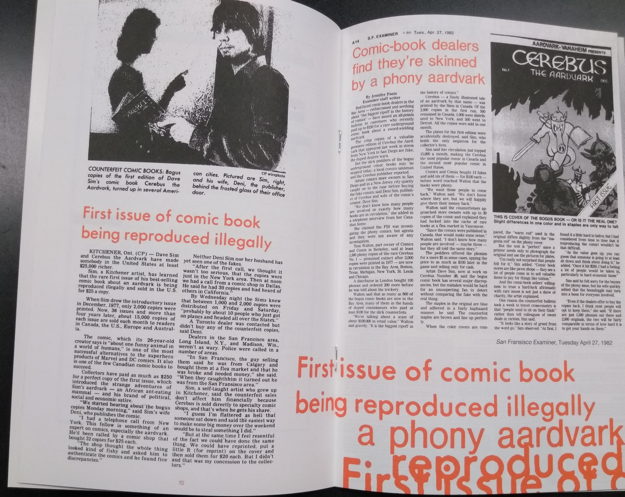
It’s a collection of newspaper and ‘zine articles, and in-house memos/notes, and, as promised in its title, a straight-up history of the counterfeit Cerebus #1s that got dumped on the market a few years after the original’s release in 1977.

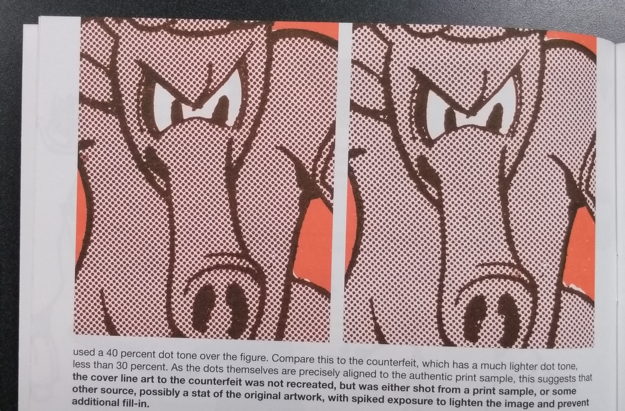
Much appreciated is the detail that’s gone into in regards to determining whether that Cerebus #1 you’re looking at is the original or one of the copies:


…which is something I was never quite sure about, to be honest. Once, at the previous place of employment, we actually had an original and a counterfeit #1 in the store at the same time, and I’m pretty sure then I was able to look at them both and see the differences. But if I were, like, handed just one or the other and had to determine which version it was, I might have been stuck. BUT NO LONGER thanks to this handy guide.

I forgot to note that the print quality of all these items is excellent…the new edition of #1 is a thick comic, solidly built and with the crisp newly-scanned artwork they’ve been using in the remastered “phone book” trade paperbacks. I’ve been in the process of slowly converting large chunks of my collection into sellable stock for the store, but some things I’m not letting go. My run of Cerebus is one of them, and I’m pleased to have these as part of it.

Now hopefully #2 and #3 will get the same treatment so I can stop hunting eBay for copies that aren’t hundreds of dollars.

Retroactive Low Content Mode!

Sorry, pals, I’m trying to write a new post for Friday and I’m literally falling asleep at the keyboard. I have a post partially done but it’ll have to wait for Monday.

Ugh. Didn’t have time for a post for Wednesday, and now this. Again, sorry about that, but I’m definitely coming back Monday with new material.

Anyway…um, how’re you doing?

Oh, and I quit working at the library because working at the comic shop was a pay raise.

Twitter pal Tim Byrne (who has kicked off many a previous ProgRuin post) asks:

“I know you weren’t (yet) in retail at the time, but can you do a post about how the comics world felt in 1986-88 in the midst of Maus / Dark Knight Returns / Watchmen etc?”

I started my path to comics retail fortune and glory in September of 1988, working afternoons at the comic shop after college classes were done for the day, and before my evening shifts at the library. This was after working during the summer at a medical parts factory (tubes and machinery and stuff, not, like, limbs and organs), somehow being put in charge of the stockroom after the regular stock guy quit and I, the temp guy who was just there to do an inventory count for a couple of days, was given the keys to the wire-cage castle.

Well, that job sucked and when summer was over, I was glad to have the excuse of resuming classes to bail myself out…but still had need to maintain income to pay for that ol’ college thing. As it turned out, the comic shop I frequented was losing one of its regular employees, and I half-facetiously suggested “hey, how ’bout hiring me?” and thus here I am, 32 years later, trying to puzzle out how many copies of all these Marvel variant covers I need to order for my own shop.

Okay, Tim, you didn’t ask for that, but you did ask me to talk about me and I’m my favorite subject, as anyone who reads this blog, or my Twitter, or ever mistakenly engages me in conversation, quickly discovers to their despair. But that does give you a little bit of context of where I was in that period…’86-’87 I was a senior in high school, and in the autumn of ’87 I started college, so those were the things occupying most of my headspace.

I mean, don’t get me wrong, I was definitely reading comics, and buying the Amazing Heroes and The Comics Journals, so I was trying to keep up with stuff at the time, but after all these years I feel like my specific memories of that period are an amalgam of what I’ve actually experienced mixed with what I’ve learned elsewhere. I do have a vague memory of seeing a two-page advertisement for Dark Knight Returns in the Rolling Stone-esque SPIN…you know, that sort of thing.

Other than that, I don’t really recall witnessing the specific cultural impact of Dark Knight, Watchmen and/or Maus around me at the time. I knew they were special…I mean, Dark Knight had better be special, that comic was $2.95 a throw, for Pete’s sake. But I knew they were special because 1) the fan press was all abuzz about them, 2) just plain reading them told me “hey, this is a sea change of some sort, isn’t it,” and 3) they…well, mostly Dark Knight, were getting parodied up the wazoo by other comics. They were A Thing just within the comics world itself, and that’s what I primarily saw from my not-yet-in-comics-retail perspective.

The biggest industry impact, I think, was the idea that “at last, comics will be taken seriously as an art form,” a thing perhaps we can mildly suggest was jumping the gun a little. But they were making inroads in trade editions into bookstores, which didn’t know what to do with them so Maus was racked with Garfield.

And there was real world media coverage, primarily variations of “POW! BAM! Comics aren’t for kids anymore!” with lurid descriptions of whatever violent activity they could pull out of context. And that of course brought folks to worrying about a new Frederic Wertham and a comics witch-hunt, as Dark Knight and Watchmen paved the way for a “mainstreaming” of more mature (or “mature”) comics material.

It wasn’t all negative…I think there was a real excitement within the comics realm for new, interesting material that pushed the boundaries and shook things up. There was some bemoaning of publishers taking the wrong lessons from Dark Knight and Watchmen in the “dark and gritty” trend in superhero books, but looking back I don’t think things were necessarily as bad as people were saying. Well, I mean, sure, there was that Green Arrow: The Longbow Hunters, trying to catch that Dark Knight-lightning by using the same format and upping the violence.

But “excitement” I think is the right world for that 1986-8 period. A lot of good, interesting, and just plain weird stuff was coming out, and lots of material outside the usual Marvel and DC pipelines were getting attention and sales. Not that Marvel and DC were slouches…Marvel’s Epic line was still going strong, DC had Swamp Thing (its vanguard for more adult storytelling), and Crisis on Infinite Earths, which inspired revampings/retoolings of much of its line and grabbed a lot of attention from fans.

Look, I know I’m leaving a lot of specific stuff out. But the general sense I have of this period, admittedly possibly clouded by some nostalgia, is that this was a fun if strange time for comics. Real world media coverage, already trickling in, was about to storm the gates as the 1989 Batman film approached, it seemed like readers were a little more willing to experiment with what they were picking up at the shops, and a wide variety of material, traditional and offbeat, was being produced. And the coverage of the industry and reviews of the product, as in the aforementioned Amazing Heroes and The Comics Journal, was informative and occasionally a bit snarky, back before we were all sick of snark.

I’m sure there’s space for a more granular examination of what was happening during this specific period, but this is how I remember it. Hope that answers your question, Tim!

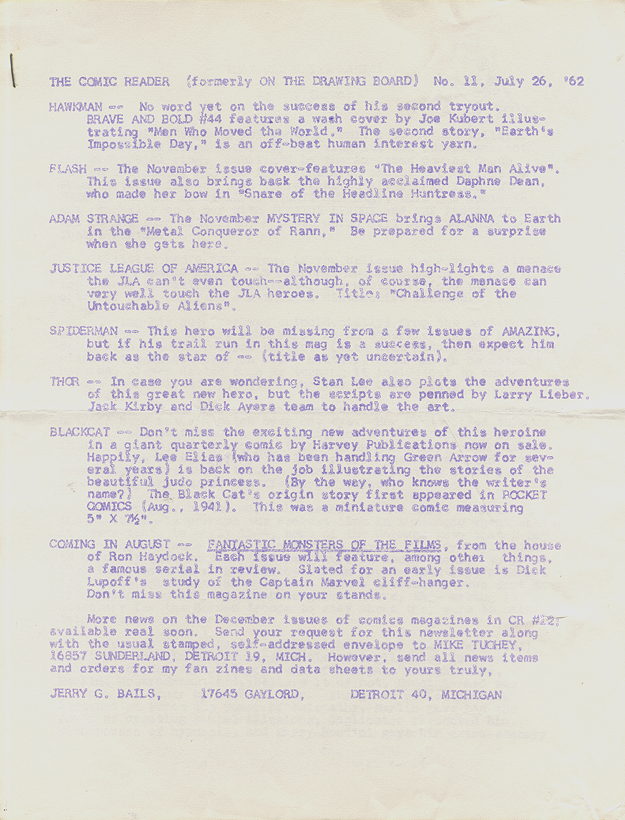
The Comic Reader #11 (July 26th, 1962).

This is the earliest example of The Comic Reader fanzine that I own, three mimeographed pages stapled together, two of them printed both sides. Included is an extended review by Roy Thomas of ACG’s Magic Agent.

The front page is made up of current news items, most notably the following:

“SPIDERMAN [sic] — This hero will be missing from a few issues of AMAZING, but if this trail [sic] run in this mag is a success, then expect him back as the star of — (title as yet uncertain).”

Initially it took me a second to parse out that “AMAZING” as Amazing Fantasy…according to the Grand Comics Database, #15 came out in early June, which means this ‘zine was released as Spider-Man’s debut appearance was only about two monthss old. This news about a test run in Amazing Fantasy didn’t pan out, as that was the last issue of the series (and if I remember my Origins of Marvel Comics correctly, Stan Lee said, for what it’s worth, Spider-Man only made it into the comic because it was the last issue. “Ah, throw that weird character into the book, not like it’s gonna hurt sales.”

Regardless of whatever mess I’m making with my recollection of comics publishing history, it’s still pretty neat to be holding this artifact talking about Spider-Man when the character was literally brand new.

I picked this ‘zine up from eBay about a couple of decades back. paying $30 for the item. “$10 a page!” I’d say when I would discuss this with folks who pretended to be interested. Of note: at the time I had a mutual acquaintance with the sadly now-deceased Jerry Bails, the very man who had assembled and distributed this very ‘zine back in ’62. Said acquaintance informed Mr. Bails of my purchase of this copy of The Comic Reader #11, and the price I paid for it. It was reported back to me that Mr. Bails was, quote, “bemused.” …That’s probably the correct response.

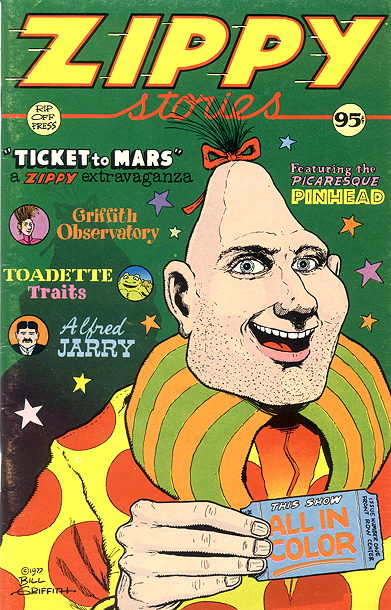
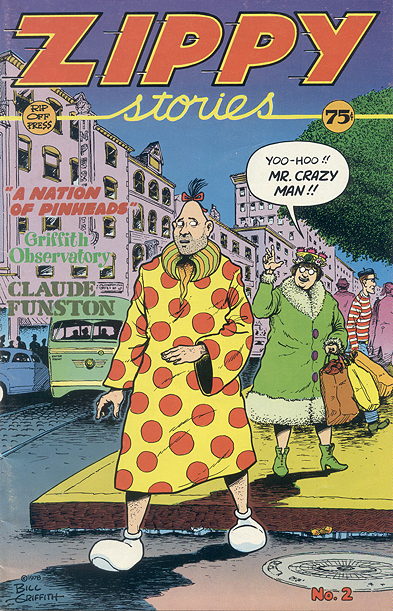
Zippy Stories #1 (1977) and #2 (1978).

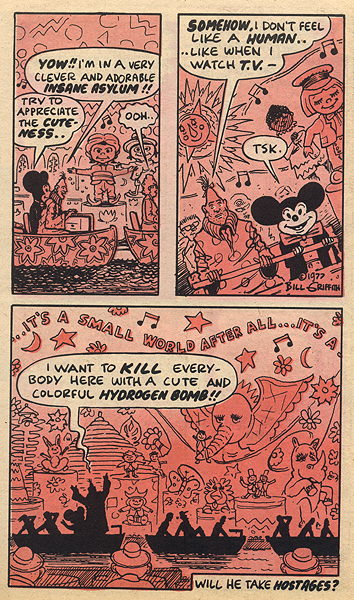
Not entirely sure where I obtained these…could have been from my previous place of employment, or (I’ve had these long enough) from the days when I’d frequent comic book conventions. But they’re pretty neat, little digest-sized comics. This first issue is a first printing, with black, white and red interiors (later printings were black and white only):

Here’s a sample page to show you how the red was used:

And #2 is all black and white:

In 1982, these were reprinted in the Zippy 2-in-1 Special magazine, which I don’t own, but maybe will get my mitts on someday out of Zippy-completeness.

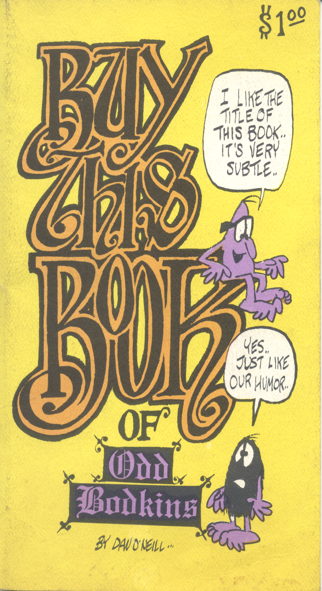
Buy This Book of Odd Bodkins (1965) and Dan O’Neill’s Comics and Stories Vol. 2 #2 (1975).

For this week I’m just going to show off some oddball things from my collection that 1) I haven’t shown on the site before, and 2) didn’t give up to the store for sale. Today’s goodies are a couple of underground comix from Dan O’Neill, which are related to a couple of books I have featured here in the past.

First item is Buy This Book by Odd Bodkins, an oddly-sized 1965 collection of Odd Bodkins strips, measuring about 5 1/2 by 10 inches:


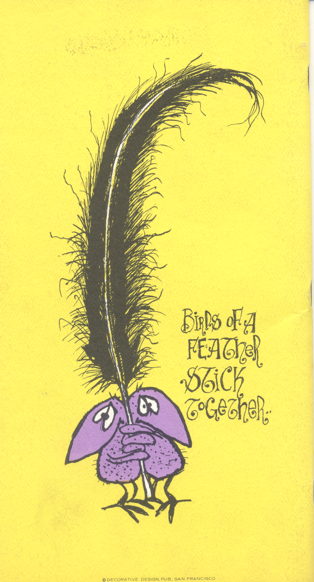
And here’s the back cover:


It’s about as tall as a regular comic, but may 2/3rds as wide, with a thicker-than-normal textured paper cover that’s blank on the inside. I’ve had this for years, but honestly I don’t think I realized it was as old as it was until I was looking up for information about it. Always pegged it as a 1970s thing, but shows you what I know.

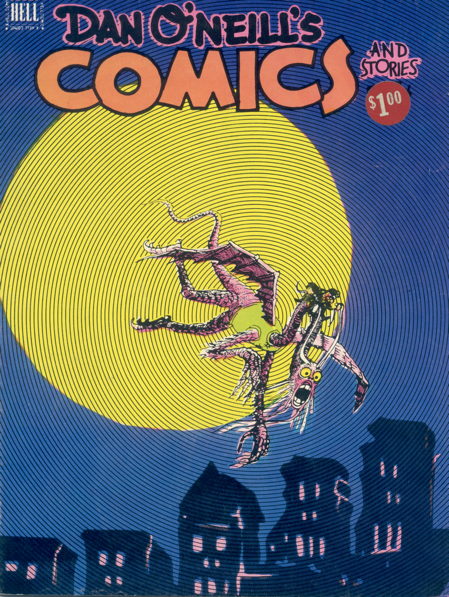
Another O’Neill item in my collection is this, issue #2 of the second series of Dan O’Neill’s Comics and Stories from 1975:


Magazine-sized, black and white, features a little Odd Bodkins material but it’s mostly examples of his comics work. At some point a $1.00 sticker was placed on the cover over the original 75¢ price, a common practice at the time for undergrounds. The title is over course a play on Walt Disney’s Comics and Stories, the long-running anthology comic once published by Dell Comics (hence the “Hell” logo in the corner). Just goes to show you that the whole Air Pirates thing didn’t stop Mr. O’Neill from thumbing his nose at The Mouse.

There were five of these Dan O’Neill’s Comics and Stories altogether…the one I have is the last of the second series from 1975, and the first series ran 3 issues in 1971. I know my former boss Ralph had more than this one issue in stock at the time I bought this one (for a whole $1.50, according to the price tag still on the bag), but I didn’t pick up any more than the one. Ah, well.

Progressive Ruin presents…the End of Civilization.

All rise…this month’s End of Civilization is now in session! The honorable Spike Merling is presiding. …Do you solemnly swear on this copy of Hero Illustrated #2 from 1993 and its attendant Aliens Vs. Predator ashcan included in the sealed polybag to read along in your copy of the September 2020 Diamond Previews and DC Current #4?

Well, too bad, because you’re getting this End of Civilization anyway:

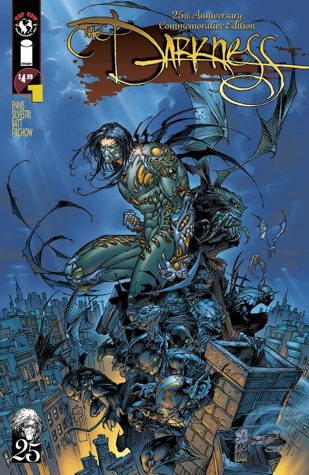
p. 38 – Darkness 25th Anniversary Commemorative Edition:


Celebrating 25 years of people bringing their copies back to the shop and asking “is it worth anything yet?”
 
 
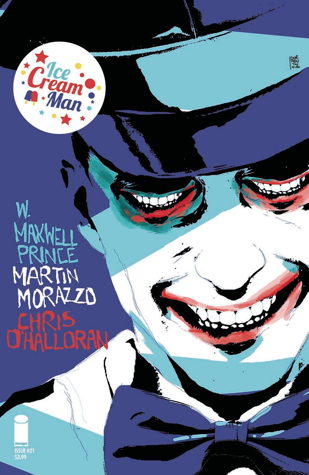
p. 59 – Ice Cream Man #21:


Wait, hold on, how do they expect to sell piles of copies to speculators without a Dr. Seuss parody cover? C’MON, MARKETING
 
 
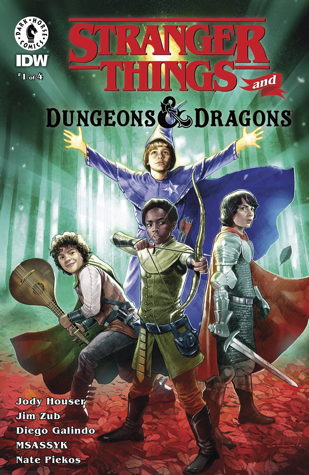
p. 72 – Stranger Things Dungeons & Dragons Crossover #1:


Oh yeah, sure, if you want to do the obvious thing. I think we all know the Stranger Things crossover we’re really waiting for.
 
 
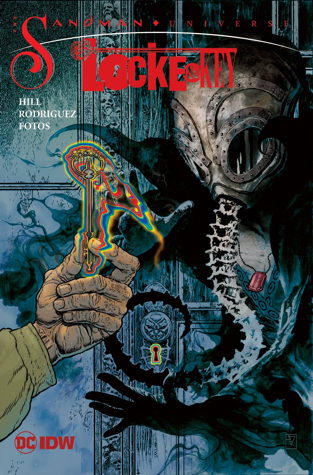
p. 103 – Locke & Key Sandman Hell & Gone #1:


Finally, the dark, gritty horror version of Flint Marko we’ve been waiting for.
 
 
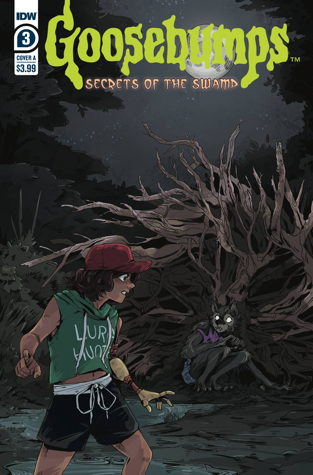
p. 123 – Goosebumps Secrets of the Swamp #3:


Is there some kind of…thing…in there? Is that the secret, that this is a surreptitious DC/IDW crossover to go along with that Locke & Key/Sandman one? HAVE I CRACKED THE CODE
 
 
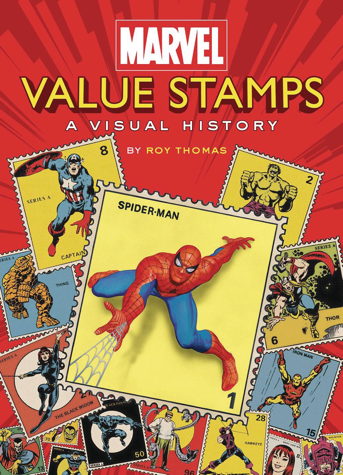
p. 202 – Marvel Value Stamps A Visual History HC:


I just know these are going to show up in collections a decade or two down the line with some of the stamps clipped out.

[NOTE: yes, this solicitation was apparently cancelled, almost certainly due to time-traveling demand from an alternate future version of myself dealing with the very problem I just described]
 
 
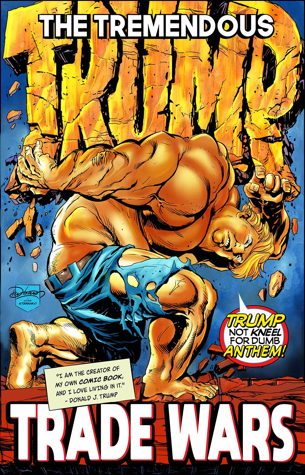
p. 230 – Tremendous Trump Trade War TPB:


Collects together all those prevoius Trump parody comics so you can remember those things we were making fun of before they got repeatedly supplanted by new things Trump did.

Kudos on the great name for the book, however.
 
 
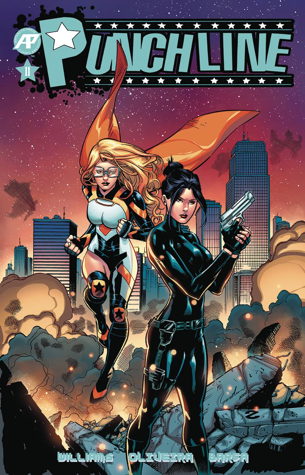
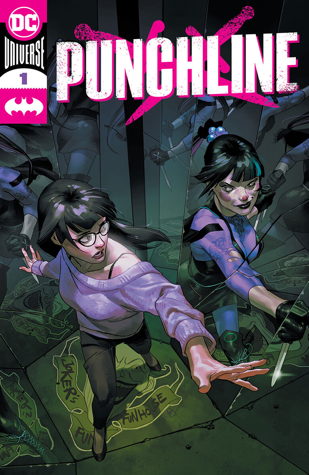
p. 231 – Punchline #11:


How pissed do you think these guys are at DC right now?
 
 
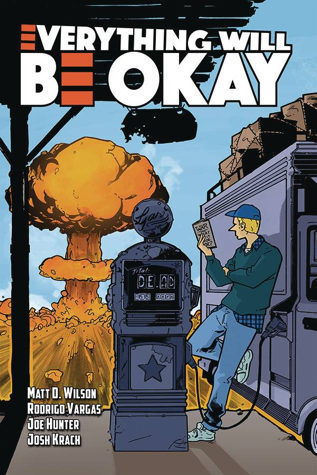
p. 248 – Everything Will Be Okay TP:


The new graphic novel from Matt Wilson! I bet his coloring will be great!
 
 
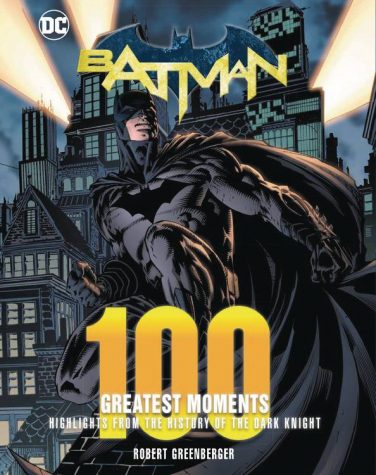
p. 250 – Batman 100 Greatest Moments HC:

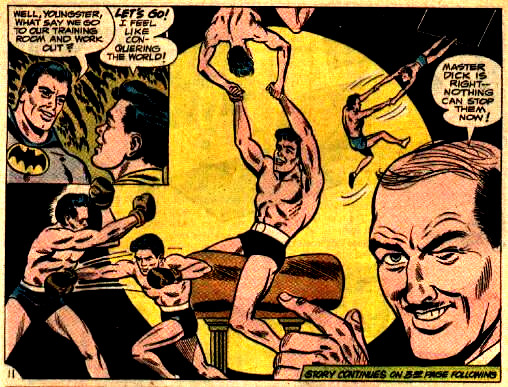
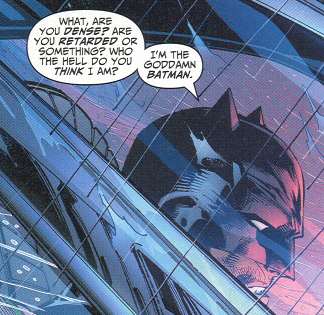
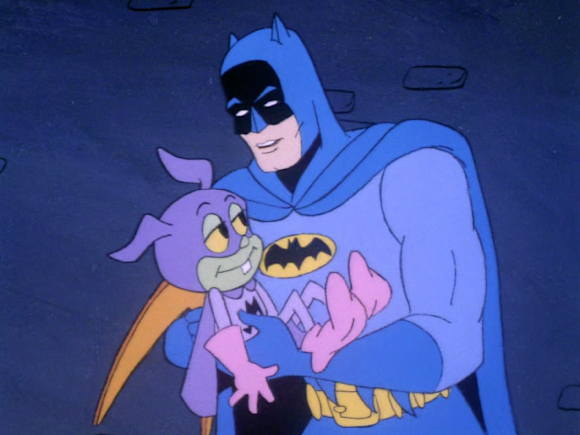
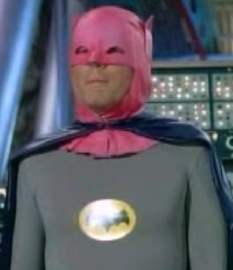
Ooh, it better include this:

Or this classic scene:

Or this groundbreaking team-up:

Or this defining moment:

Or even this scene from Batman: Damned:


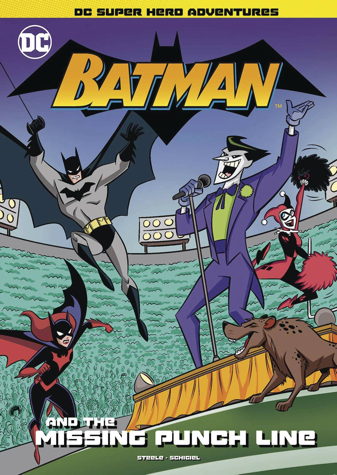
p. 309 – Batman and the Missing Punch Line Young Adult SC:

“Missing?” You can’t swing a dead Catwoman in this month’s orders without hitting a Punchline. You’re not even trying, Batman.
 
 
p. 310 – Little Big Book of Pussy HC:


Hey, great, I love cats!
 
 
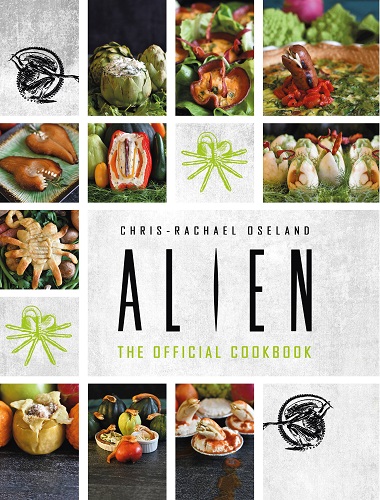
p. 320 – Alien Official Cookbook HC:


Finally, an excuse to dust off and put out the ol’ John Hurt Lazy Susan.
 
 
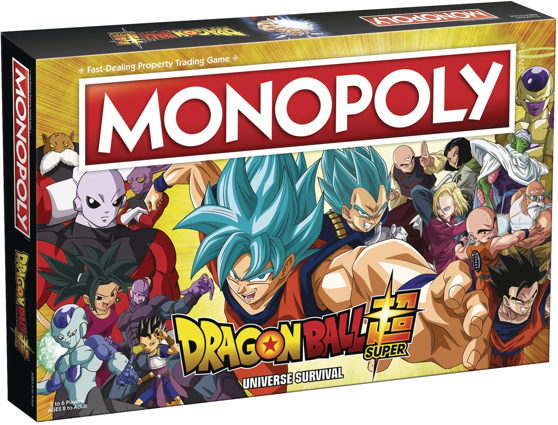
p. M98 – Dragon Ball Super Monopoly:


Do not pass GO, do not go OVER 9000

Is that how that works? I have no idea. All I know is that this Dragon Ball Monopoly is nowhere near as strong as Superman Monopoly.
 
 
DC Connect p. 7 – Punchline #1:


How pissed do you think these guys are at Antarctic right now?
 
 
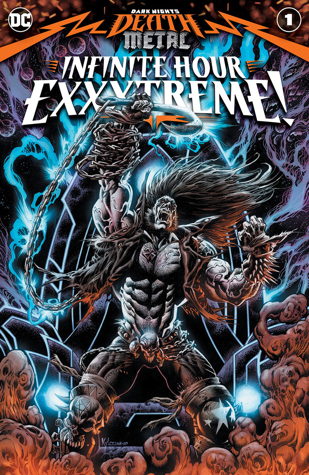
DC Connect p. 18 – Dark Night Death Metal Infinite Hour Exxxtreme! #1:


Look, there are people who find this title to be absolultely delightful, and there are people who are wrong. Sorry, I don’t make the rules.
 
 
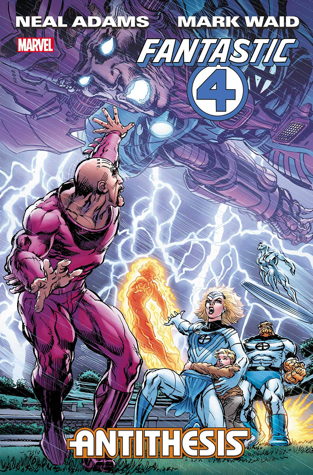
Marvel Previews p. 68 – Fantastic Four Antithesis #4:


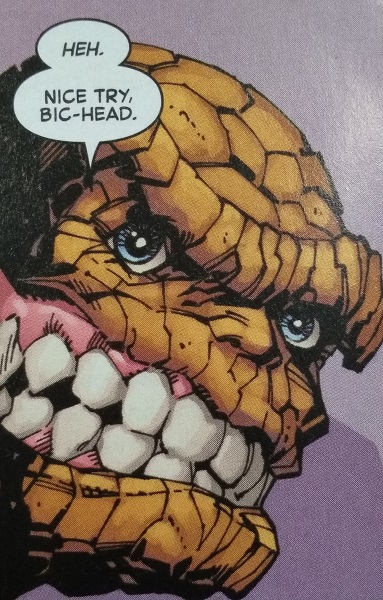
Boy, after reading that first issue, it’s more like “Anti-TEETH-is, amirite?

Yeah yeah, “but wouldn’t that mean he wouldn’t have teeth?” Shut up, it’s still funny.

Post-poned.

Sorry pals…was going to have an End of Civilization post ready for today, but I had a small eyeball issue and decided the less time in front of the computer monitor, the better. Hopefully I’ll have it up later in the week. Thanks for understanding.

In the meantime, I hope you join me in mourning the passing of Chadwick Boseman. My condolences to his family, friends, and fans.

Yes, that one paragraph is a single sentence, I apologize.

Roel asks

“Hi Mike! If I wanted to understand current DC continuity, what is my best resource? Is there a website that would help clarify where things stand, and maybe point out key issues that can get me up to speed? Thanks for any suggestions!”

Hi Roel! Boy, that’s a doozy of a question, particularly when it comes to DC Comics and its shared superhero universe. Ever since Crisis on Infinite Earths, DC continuity has been a patchwork mélange of refits, restarts and reboots, a constant schizophrenic scramble forwards yet backwards trying to put everything back in the original packaging while also simultaneously declaring their product “new!” and “improved!”

But even that continuity eventually felt generally smoothed out and consistent compared to the kicking-over-of-the-table “New 52” initiative, a publishing strategy that to all appearances was a last-second decision, so deleterious to DC’s universe that if it had been much planned ahead of release, one could be forgiven for thinking they were deliberately trying to reinvent and outdo the confusion that followed Crisis on Infinite Earths.

In fact, it was such a mess that DC was compelled to follow up with the linewide “Rebirth,” with more restarts and…maybe not so much “reboots,” but rejiggerings of characters and concepts across the board. Compared to the New 52, Rebirth felt like a little more thought was put into it, a little more care was taken to keep the things that worked, and to try to fix the things that didn’t work. Most notable, perhaps, was getting rid of the mostly* objectionable New 52 version of Superman and replacing him with the preferred post-Crisis/pre-New 52 one (to no small measure of irony to those of us who remember the negative reaction to that Superman’s introduction in the ’80s).

The ultimate overarching statement of “Rebirth” was “oh yeah, the New 52? That was actually Watchmen‘s fault” as explained in Doomsday Clock. When you write off a publishing initiative in-universe as the result of an attack by a “bad guy,” that certainly sends a message.

Now, my friend Roel, I know none of this really answers your question. All I’m trying to do is explain why your question is hard to answer. The best response I think to getting a handle on the current version of the DC Universe is maybe getting your hands on a copy of DC Universe Rebirth, the 80-page one-shot that kicked off what’s going on now. DC’s usually pretty good about publishing occasional one-shots that give you an idea where everyone’s at just prior to whatever event is about to happen (Countdown to Infinite Crisis was another). Now these one-shots are set-ups, of course, establishing mysteries and situations to be dealt with over the next year or four of DC Comics, but they do provide an overview of its universe as it stands At That Moment.

In DC Universe Rebirth‘s case, its eventual resolution in Doomsday Clock ended up not really resulting in anything of any impact on the mainline universe. The ballyhooed “return of the Legion of Super-Heroes” it was supposed to bring about already happened before the series concluded, for example. So, basically, you could read just this and not miss a whole lot.

If you wanted to jump into the DCU as it stands now, however, just jump in with whatever character you like, and eventually you’ll get an idea of whatever the prevailing continuity is, particularly in relation to whatever title you’re reading. Now, Justice League could be the most wide-ranging of the titles, as it should give you whatever the current accepted DC Universe versions of the primary superhero characters. You may or may not get specifics of each character from their own titles…like, maybe they’ll mention that Superman’s identity is now public, for example.

I mean, aside from that…perhaps your best bet is to not worry about continuity, and just enjoy the books you enjoy. Let continuity sort itself out. And chances are, with DC’s recent cuts and reorganizations, we could very well be heading to another “fixing” of DC’s publishing line. Maybe not an explicit reboot, but I’ve put my dime down on a reworking everything into a shape that’s a little more media-adaptation friendly, more accessible and less tied to the minutia of a shared universe.

Okay, you’d asked for websites that could set you straight. Well, frankly, I’d advise you to avoid all comic book content online as that way lies madness…surely reading my site has taught you that! But you can probably find some pretty good resources just by Googling “dc comics reading order” and you’ll get some folks who’ve already done the hard work of figuring out what to read and where.

And naturally there’s always Wikipedia. Not always perfect, but given the obsessive nature of the sort of comic fans who’d spend time editing Wikipedia articles, chances are they’d do a reasonable job explaining whatever recent histories of characters you’d need. FULL DISCLOSURE: this is coming from the fella who once edited the “Abby Arcane” Wiki page to correct the first appearance notation.

There are also specialized Wikis for purt’near everything. This DC Fandom Wiki would likely come in useful.

I’m sure there are more, and that friendly readers of this site will drop their suggestions in the comments. I hope this helps, Roel!


* Yes, the character did have some good moments, but never felt like he quite “gelled,” never really felt like Superman.

“Three things cannot long be hidden: the Joker, the Joker, and the Joker.”

[SPOILERS for Batman: Three Jokers ahead]
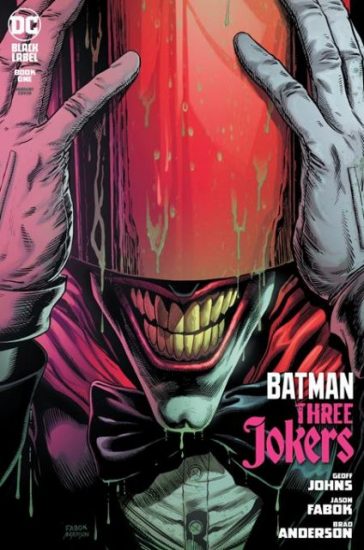

So Monday afternoon, I did something I almost never do at the shop…I read a comic book.

I’ve heard plenty of times over the years “wow, it must be great to work in a comic book store and just read comics all day,” and I think in the 32-years-next-month I’ve been doing this, I’ve maybe read…a half-dozen comics while on the clock? I mean, my lunch breaks don’t count, I would assume, but even then I wasn’t reading comics…I’d maybe poke through Wizard or screw around on the internet.

But this time, after I’d broken down the DC Comics shipment, and did all the comic saver pulls, instead of doing anything useful like pricing that stack of Deadpools I obtained from that defunct store stock, I decided to just straight up read that Batman: Three Jokers comic that’s all the rage at the moment.

And you know…I thought it was fine. Geoff Johns in his particular wheelhouse here, just doing a plain ol’ Batman story despite the weight it’s carrying from the hype and the marketing. Like a good percentage of Johns’s work, it is directly building on a foundation laid by Alan Moore decades prior. However, unlike Doomsday Clock, where the reach for Watchmen exceeded the grasp, here he’s fiddling around with The Killing Joke, a comic that critical history, and Moore himself, have decided is one of the writer’s lesser works. As such Johns here feels a little less out of his depth, addressing not only the consequences of The Killing Joke but the decidedly dumb-but-impactful “Death in the Family.”

In fact, I think that’s one of the clever bits of Three Jokers, in how it entwines both of these events together, and forces the two characters directly affected by these events (Batgirl and the second Robin Jason Todd, now “The Red Hood”) to confront their respective histories with the title character(s) of this story. In fact, Johns somehow managed to make Todd’s past experience even more excruciating and terrifying…and I should clarify, I mean this as a compliment, as I found this probably the most effective scene in the issue.

As to the overall plot…I won’t delve too deeply into spoilers, if at all, but I’m glad this seems to be more of a Batman-milieu rather than a “DC Multiverse” thing. Given the origins of this whole “three Jokers” business to begin with, involving the Justice League and the New Gods and Batman using Metron’s Mobius Chair to find out “wait, how many Jokers?” — well, in the, what, four years since that info dropped I’d been expecting some kind of parallel universe explanation. But that doesn’t seem to be the case here. I mean, who knows, there are two more issues to go, maybe Pariah will show up.

Well, one thing about the conceit of Three Jokers is that it provides an alternate explanation for the many versions of Joker we’ve seen over the years to the one Grant Morrison has been trying to sell us since his Arkham Asylum graphic novel in 1989 (as occasional partner-in-crime Ken Lowery reminded me). The specific example I’d mentioned was the more recent Batman #663 from 2007. In essence, the Joker reinvents himself, undergoes a shift in personality, which is something we witness directly in that Batman comic. It seemed like a perfectly good way to explain the multitudes of Joker’s personalities we’ve had over the decades, and fit very well with the character.

Johns’s premise is not so elegant, presenting instead the idea that there are literally three people running around as the Joker, each with their own style and tone. As I saw someone point out on the Twitters, you’d think this would make Batman look bad, being unable to tell that was what was going on. I don’t want to use the term “idiot plot,” but maybe we can just suppose that Batman had some kind of brainfart and overlooked the fact that the Joker maybe had a slightly different jawline than he remembered, or that his eyes were spaced differently. Or maybe Batman attributed the differences to the affects had by the beatings he’d give him. Who knows.

I should note that the art is great…Jason Fabok really puts in a good show here, especially with the various portraits of the Joker he’s prepared for the many variant covers (as well as a few of the Batfamily). Given the content of the story, the deliberate biting of the panel layouts of The Killing Joke is actually quite fitting. If a Killing Joke sequel has to be made (SPOILER: it probably doesnt) then you can do worse than tying the new work to it visually. Anyway, it’s definitely a gorgeous looking package.

A couple of continuity points, or lack thereof as the case may be:

A line of dialogue notes the Joker’s first appearance “decades ago,” which means at minimum two, if we’re being literal. I presume this is Johns’s way of saying that the five-year-timeline of the New 52 is good ‘n’ gone after the events of Doomsday Clock.

However, when I mentioned that on the Twitters, it was pointed out to me that Three Jokers isn’t mainline DC continuity, so maybe that “decades” comment doesn’t apply to any other DC Universe title outside the series. Given that nobody really has any clue what constitutes continuity or not at DC anymore, I don’t suppose it matters that much. If I recall correctly, even The Killing Joke wasn’t necessarily intended to be in the regular DC continuity…which of course changed once Batgirl debuted as the wheelchair-wielding Oracle in Suicide Squad.

It does seem weird, though, that a mystery set up in that most in-continuity of DC Comics, Justice League, would get answered in an out-of-continuity series. Would that mean the mystery remains unsolved in-universe? Well, I think DC’s “Rebirth” was since then, anyway, so maybe they made that event Never Not Was. Or we could just not worry about continuity and enjoy the story as is…like some kind of crazy person.

Oh, and is there a Swamp Thing connection? Your bet your tubers there is! Say so long and farewell to the late Dr. Roger Huntoon, who first appeared during Rick Veitch’s Swamp Thing run, killed off panel in Three Jokers #1. Here he is in Swamp Thing #79 (1988), bothering Lois Lane:
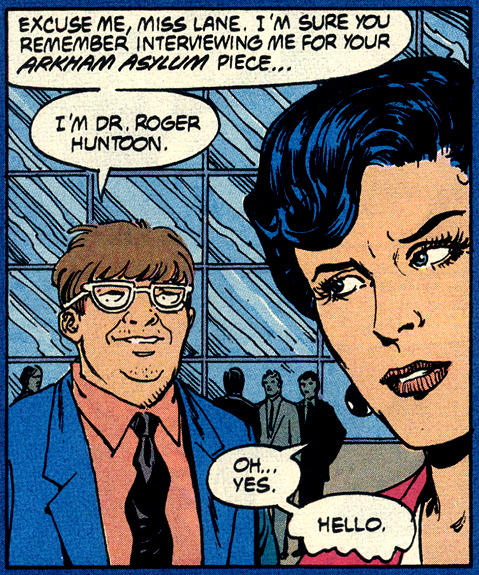

Alas, we hardly knew ye, Dr. Huntoon. We’ll see you again, in the next reboot.

Ultimately, will anything going on in this series stick to the character? Joker seems awfully resistant to any long-term alterations to him or his premise. I think the whole “Red Hood” thing that was retroactively added to his history back in the ’40s, and the shooting of Barbara Gordon and the crowbarring of Jason Todd have both stuck (hence this series). Everything else just seems to slough off…any attempts at giving him a Real Name don’t last (“Jack Napier” seems to have lasted the longest, having returned after a long hiatus in the out-of-continuity “White Knight” series). Three Jokers seems to be foreshadowing a revelation regarding the Joker’s name, but I’m sure that’ll eventually go the same way. (Maybe some Jokers will be named, and others won’t…we’ve got plenty of them to work with here.)
To wrap up this already overly-long post, I think Batman: Three Jokers is fine. Beautiful art, a serviceable script, and a weird game-changing premise that may or may not survive the end of the series. But boy, those covers are nice.