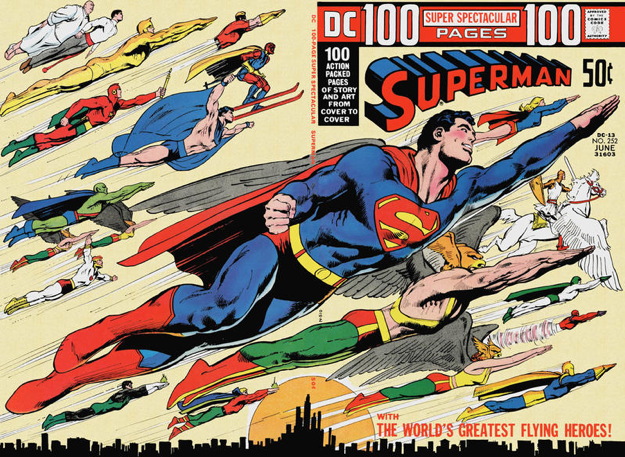
George Pérez (1954-2022).


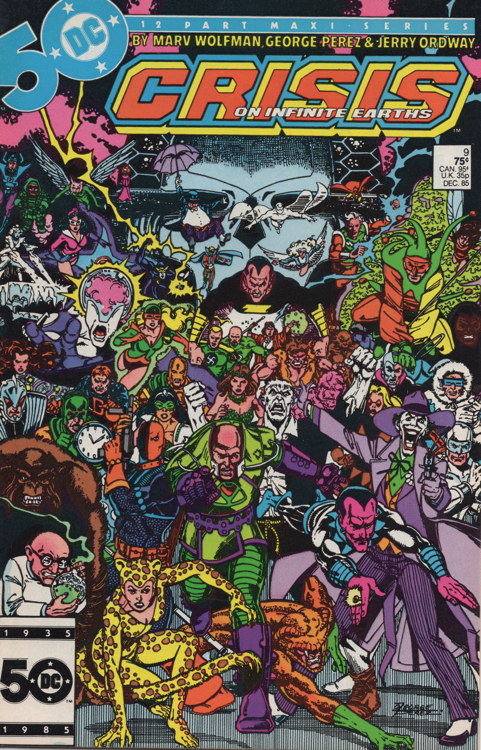
This may be my favorite George Pérez cover, with all these villains just crammed together, all lovingly rendered, all exuding personality and menace, and not feeling crowded or cluttered at all. The coloring job by Anthony Tollin certainly helped, of course, but George’s layout made this cover fun when others might have ended up with an eyesore.

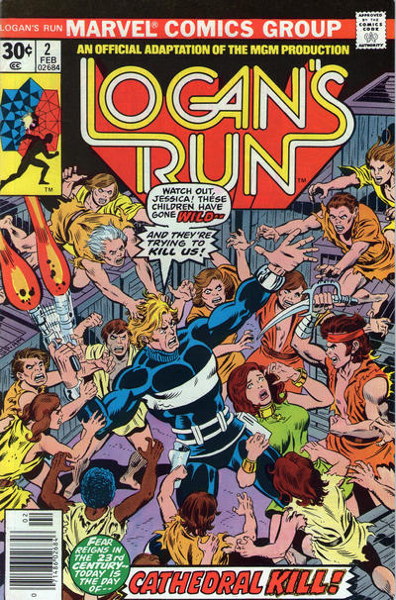
The first Pérez cover I ever saw, far as I can recall, was this issue of Logan’s Run:


I picked it up off the stands when it was new and I was about 7 years old. I hadn’t seen the movie yet…it opened in the summer of ’76 and I won’t see it ’til it hits whatever our pre-HBO pay cable station we had in Port Hueneme a few years later (Cinema 6, I believe it was called). But I’m sure I’d heard of the movie, at least, knowing it was science fiction-y, and that cover intrigued me enough to pester a parent to purchase it for me.


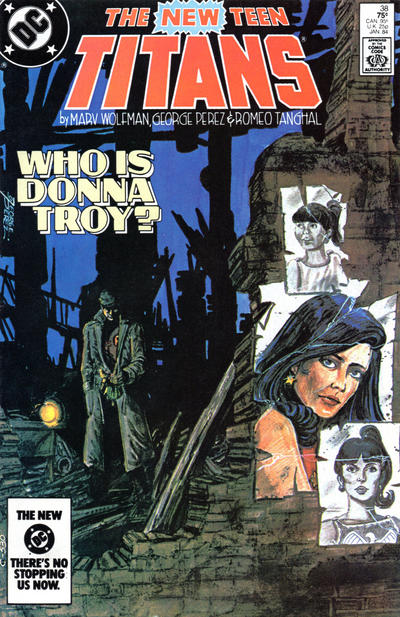
Just the other day I was processing some back issues, and came across the “Who Is Donna Troy?” issue of New Teen Titans. And I did something I never do at the shop: I stopped what I was doing and reread this issue for the first time in many years. No superhero fights, just Dick Grayson doing detective work trying to discover the hidden past of his friend Donna. Coplotted by George and the regular writer, Marv Wolfman, the story still holds up, still hits as hard as it did back when it was released in 1984. Marv’s dialogue still rides high on the melodrama, but that’s a feature, not a bug, and this beautifully-drawn issue hasn’t aged a day. I mean, we’d seen it in the series before, but George really hammers home that he can deliver emotional punches on the page just as well as the “knocking down buidings/in bad guys’ faces” kind.

I posted a bit about Pérez’s work late last year, wanting to get that out there while the man was still with us, much like how they wanted that JLA/Avengers reprint out sooner rather than later. And this doesn’t even scratch the surface of the work he’s done, the influence he’s had. I didn’t even mention his long run on Wonder Woman, revitalizing the character after DC’s Crisis on Infinite Earths event. Or his eminently entertaining run on Avengers with Kurt Busiek. Or Sachs and Violens with Peter David. Or the “Beatles Life Story” issue of Marvel Super Special he drew. No, really. (Okay, he didn’t do the cover, but still.)

He was an immensely talented, extremely influential, and by all accounts very big-hearted man. He will be missed. So long, George.

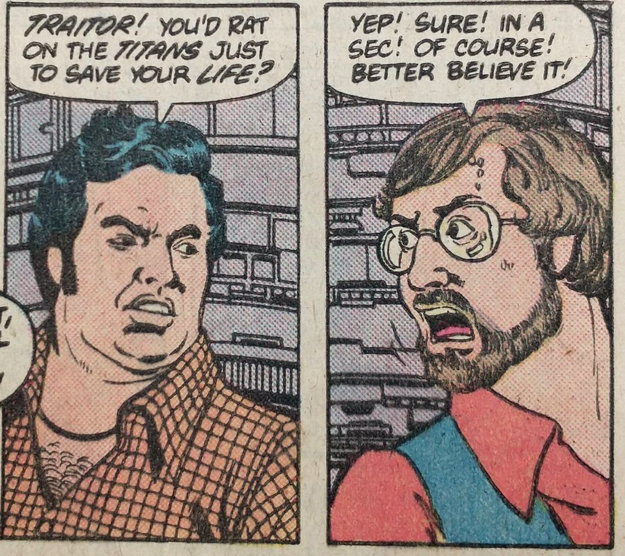
from New Teen Titans #20 (June 1982)

FREE COMICS ARE IMMINENT.


Just a reminder that this Saturday, Free Comic Book Day is happening at a participating comic shop near you…and no shop is nearer than my own Sterling Silver Comics, located at the heart of the civilized world in sunny Camarillo, CA! C’mon by and say hello, if you can reach me through the excited crowds getting their freebies!

I’ve written a whole lot on FCBD in the past, given that I’ve been involved in it every year since it started, so click this link to see what words of wisdom I’ve imparted on you in the past. Unless some of the words were dumb, ignore those.

Also, my apologies for the sparseness of updates this week…another early morning doctor’s appointment, combined with a not-great reaction to one of the vaccines I received, have conspired to keep me away from proper blogging. But hopefully I’ll be back to full comic retailing strength by Saturday for the free comic shenanigans. With any luck, I’ll have a good report on the event for Monday! Thanks for reading, pals, and we’ll talk again soon.

Neal and Ivy.

As I’m sure you heard, legendary comics creator Neal Adams has passed away at the age of 80, which is pretty shocking to those of us who thought that he was just so embedded in the DNA of comics that it was impossible for him to, you know, suddenly not be around anymore.

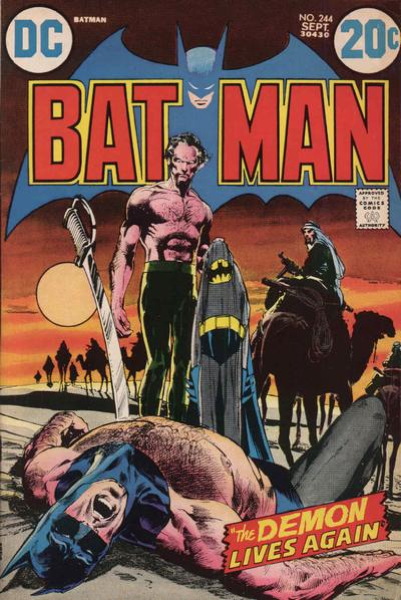
And of course, he is still around, in that his best work continues to be reprinted again and again, particularly on Batman and Deadman. His dynamic style showing up in Marvel and DC comics at the tail end of the 1960s almost seemed to spark the feeling in other budding comic artists “wait…we can do comics like that?” Since then, his artistic influence has spread to even today, casting a shadow nearly as long as Jack Kirby’s.

I know some hay has been made about his…odd “scientific” “theories” — I’ve toted a couple of those bales myself — and let’s just kinda let those remain one of those eccentricities creative types occasionally have.

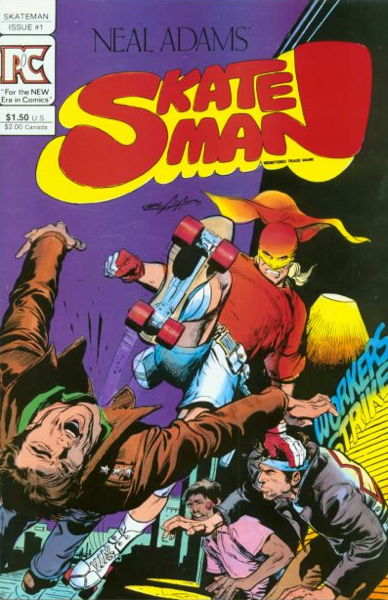
And sure, maybe some of his work wasn’t on the “redefining Batman for all time” scale:

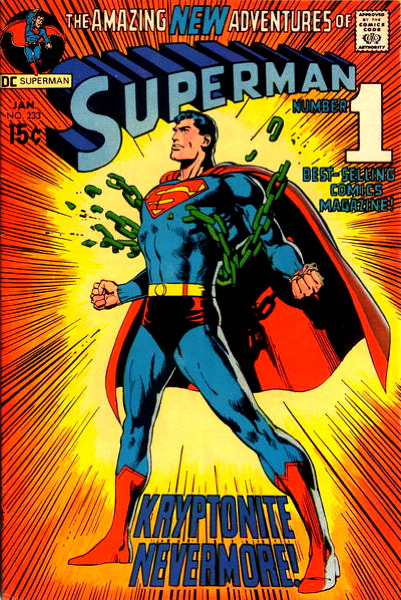
…but that’s okay! The man did what he wanted to do, on his own terms, trying out his ideas and still keeping active even up ’til the end of his life. Most importantly, he was an avid defender of creator rights in the industry. You can thank Neal for helping DC, um, “remember” Jerry Siegel and Joe Shuster created Superman and that they should put their credit on every comic, movie and TV show.

Thanks for everything Neal, even all the weird stuff. Especially all the weird stuff. You were an inspiration to generations of artists and will almost certainly continue to be. So long, Neal.

• • •

We also lost this weekend Ivy Ratafia McLeod, the partner of cartoonist/comics scholar Scott McCloud. Unlike Neal, whom I only knew through his work and interviews and such, I had actually met Ivy many times over the years. She and Scott didn’t live too far away from either my old job or my current store, and they would pop in from time to time to say hello. She was always a very charming and delightful person, and it was my great pleasure to have spent any time with her. My deepest condolences to Scott and their family on this untimely loss.

And his chair…is it a recliner?

So here’s a thing that bugs me way out of proportion to its importance (I know, I know, “welcome to comics fandom”): the whole “Is Metron a New God or not?” thing.

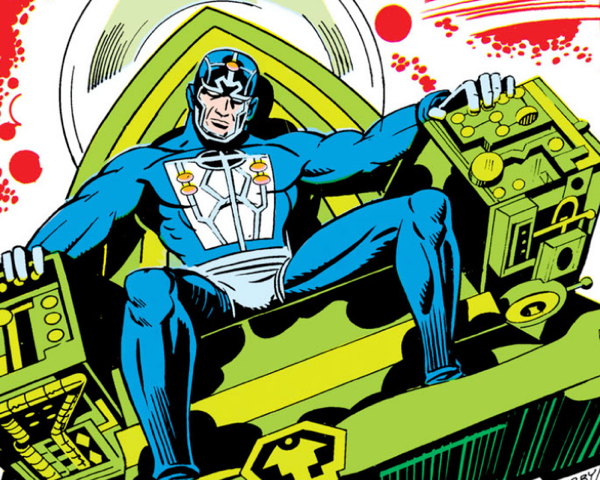
Here’s a pic of Metron, in case you need reminding:


For those unfamiliar, Metron is a character in Jack Kirby’s “Fourth World” line of books for DC Comics, comprised of several titles and headed by the series New Gods. It tells the tale of the denizens of the peaceful world New Genesis, their conflicts with the endlessly aggressive world of Apokolips, and how Earth, wouldn’t you know it, is stuck in the middle.

More or less, the “good guys” are on New Genesis, the “bad guys” control Apokolips, and yes, there’s a bit of business where the leaders of the two worlds, Highfather and Darkseid, trade their sons (Mister Miracle and Orion, respectively) to each other as part of a peace pact.

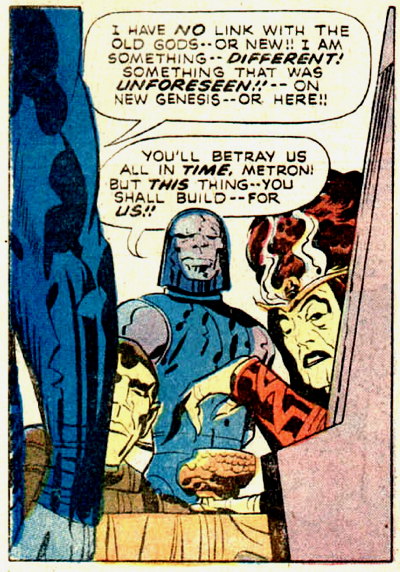
Aaaand that’s all well and good, but then here’s Metron, a dude with a flying chair who travels the universe seeking knowledge, occasionally siding with either New Genesis or Apokolips as it suits his purpose. And his creator, Jack Kirby, went out of way to establish that Metron is his own guy, with no specific affiliation to either side:

So it does sometimes bother me a bit when he’s just casually referred to as “one of the New Gods.” Because, he, as written by Kirby, has specifically said he’s not.

When I semi-facetiously griped about this on Twitter the other day, I got several responses which you can see there (though a couple have since gone AWOL, or at least I can’t find them now). Mostly they were from folks trying to explain why this isn’t The World’s Worst Disaster as I’ve been trying to make it out to be.

One response I liked, and I feel makes the most “in-story” sense, was that Metron is totally part of the New Gods, but likes to talk himself up like he’s, you know, “better” than that. I realize a comic where the leader of the good guys is named “Highfather,” and the chief bad guy is “Darkseid,” doesn’t sound like one overrun with subtlety, but there are subtleties to the actions and personalities present in the series, beneath all the POW! panels. It wouldn’t be a surprise to discover that Metron was “putting on airs,” trying to place himself above the petty squabbles during his pursuit of knowledge.

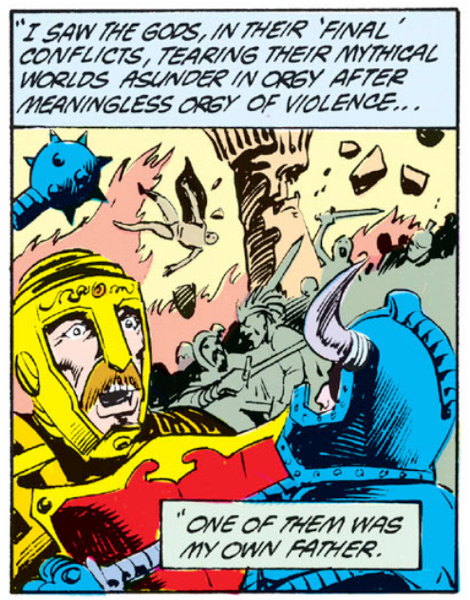
Especially given, as was pointed out to me, in Swamp Thing #62 Metron relates a vision of the final battle of the Old Gods, which includes his father:


…and as the person on Twitter put it, he was at least “of the same stock” as the rest of the New Gods if this were the case. This story, however, was by Rick Veitch, not by Metron’s creator Kirby, so its canonicity re: Kirby’s intentions are not established.

And as others have said, lumping in Metron with the rest of the New Gods could very well be just convenient, and certainly easier than having to explain “well, here are the New Gods, here’s all of Darkseid’s crew, and then here’s this dude who just kinda hangs around” every time. Which is also fine, but other writers having Metron refer to himself as a New God feels a little suspect to me. But perhaps that can also be explained away by Metron telling bit of a fib to get something he wants, which probably isn’t beneath him.

If you go to issue #15 of Who’s Who: The Definitive Directory of the DC Universe (from which that image at the top of this post came), the entry describes Metron as

“…The leading scientist, explorer, and inventor among the New Gods of New Genesis.”

…and also notes his group affiliation as being with “The New Gods” so that’s pretty much that, I guess.

So…is he or isn’t he? I still think the answer is that yeah, he’s a New God, but acts like he’s better than that. And while he’s had his share of dealing with Darkseid, by and large he’s sided with the New Gods. It does still seem weird to have the character outright say “I’m a New God,” when Kirby established early on that he probably wouldn’t say that, however.

Anyway, speaking of Kirby, did we ever nail down whether Klarion’s familiar Teekl is a girl cat or a boy cat? I feel like that’s still up in the air. But at least we know s/he isn’t a New God.


Special thanks to Bully the Little Stuffed God and his Moobius Chair for production assistance

There are no biopsies of jokes, only autopsies.

So for whatever reason I was chatting with pal Matt at the shop about John Byrne, wondering what his last published job in comics was (it was Matt who noted those weird Star Trek fumetti books may have been it). Anyway, this necessitated bringing up the ol’ Wikipedia entry on Byrne (which he would have wholeheartedly disapproved of me doing) which included the following tidbit:

“Byrne also facilitated the 1986 relaunch of DC Comics’ Superman franchise, the first issue of which featured comics’ first variant cover.”

Well well well, the eleven people out there who still read this site, and especially are reading the variant cover-age posts, know this isn’t necessarily the case. And I’m not even talking about the whole Whitman thing, or the Lone Ranger recoloring which may or may not exist. Or any of the other minor differences that were more publishing/distribution things than deliberate marketing gimmicks (like changing cover prices, or distributor marks, across print runs).

I’m talking about straight-up simultaneously publishing different covers on the same comic book to either 1) make the consumer choose which cover s/he wanted, or 2) tempt the consumer into buy each version. Byrne’s Man of Steel #1 (discussed here) is certainly the comic that introduced the idea to comic publishers “hold on, we can do that?” But I still contend MAD Magazine #123 from 1968 (with its four different covers) is the first “variant cover” comic book in the sense we mean it today: a single issue specifically published and marketed with alternate covers.

I did argue in that post that the publisher likely didn’t expect anyone to really buy multiple copies, though almost certainly somebody did. The express purpose of the varying serial numbers was to get a laugh from anyone perusing copies on the stands, before even (hopefully) buying the mag. Or from friends comparing copies, maybe. But still, those are variant covers, and a cover blurb does command you to “COLLECT THEM ALL” (technically a joke based on the idea of buying millions of these), so, you know, close enough for horseshoes.

The out, I suppose, is whether or not you consider MAD Magazine a “comic book.” And there are plenty of other workarounds/explanations/excuses, I’m sure…”oh it doesn’t count because that was just a joke, and Man of Steel is SERIOUS BIZ-NESS,” like that. But I guess calling Man of Steel #1 “the first standard-sized comic book to be purposefully published and marketed with more than one cover in order to get you rubes to buy multiple copies” is bit of a mouthful, despite being more accurate a description.

Man, I haven’t yet even touched on some of those Dell Comics from the 1950s/60s that had variant back covers on some of their releases. Again, more to do with distribution/other vagaries of publishing than anything else, but still, them’s is variants!

Okay, I know this post is mostly rehashing older posts in the variant cover-age series. Sorry about that. New content in this line of postings will happen again shortly. Thanks for reading, pals, and I’ll see you Wednesday.

Yes, I promise I know it’s spelled “Serji-X Arrogantus.”

Just noticed I typoed the last name of Sergio Aragonés in Monday’s post, and didn’t notice it ’til now. I assure you, as a fan of the man’s work for, what, over 45 years, and having interacted with him in person many times starting over 30 years ago, I know how to spell his name! All I can say is that I must have been pretty tired Sunday night when I was writing that entry.

EDIT: And I typoed his FIRST name this time. “Spelling Sergio Aragonés correctly” is the second thing to go, apparently. Fixed now, hopefully.

And I’m not much less sleepy now, but the blog must go on! Let’s continue addressing some of your comments from the last few days:

Joseph P Gualtieri notes

“Questioning whether or not Turok #1 was a sales success is a good reminder that sales charts for comics only show how many copies retailers order, not how many copies fans actually bought. A success in one doesn’t mean success in the other. See also, dead or discounted stock ordered to get variant covers.”

The “ordering to get the variant” really came to a head with the recent autographed Spawn comics, where the publisher shouted from the rooftops their inflated order numbers. As I talked about relatively recently, a customer wanted that autographed King Spawn, and paid enough for it that I was able to sell the regular covers for about a buck a pop as a special promotion. I’m juuuuuust about out of ’em now, but I’d probably still be sitting on boxes of the things if I had them priced at full cover.

And Marvel’s no stranger to this, if I may quote the above linked post:

“…Marvel trumpeted their X-Men #1 orders, and their X-Force #1 orders, without mentioning how many ended up being warehoused, buried in storage lockers and occasionally being dragged out into daylight and into shops like mine to unload.”

I think, nowadays, this sort of order-padding to grab benefits like “more variants” is not as common as it used to be. Shaving orders a little closer to the bone feels like the preferred strategy, especially in this market (which alas encourages speculation on a randomly-picked “rare” comic each week — uh, buddy, they’re all rare). But there are always exceptions, and once in a while even I’m like “well, I’ll just order a couple more to get that ratio variant.” It’s going to happen, but I don’t chase the variants with my order numbers like I used to, unless I’m darned certain it’s going to be worth the money I’m spending.

• • •

Chris G wants to know

“Let’s say I have a lot of comics stacked in boxes at my parents’ house and they’re starting to talk about downsizing. And given that the books in question have been sitting there largely unread for 20 years, it seems the best thing to do would be to sell them. I don’t care about making a ton of money, and few are bagged and some are very well read. But I also don’t want to get nothing for them. So I guess my question is: What are the two or three least effortful things I can do to goose any offer I might get from a shop near my parents by a couple bucks?”

Some minor things that might help:

Make sure they’re clean…boxes not covered with dust and cat pee and just general crap.

Have the books in relatively decent order…not like everything has to alphabetical or anything, just have all copies of the same title together. And all facing the same direction in the box..don’t make me constantly flip things over.

Make sure they’re accessible…don’t bunch together a dozen or so comics into a magazine bag before sealing it up. And if they’re in crummy plastic bags sealed with tape that’s going gooey with age, and you have to literally peel comics apart to look at them — man, I’m dealing with a collection like that right now and it sucks. I have to cut comics out of their bags, it’s terrible.

Basically, make it easier on the person looking at your collection to actually look at your collection. It may not bump up the moolah you receive for your books by much, but it surely won’t hurt. And the other suggestions from your fellow commenters in the thread are pretty good, too.

• • •

Chris Gumprich enters the following inquiry

“How is it that your store (started in 2014) has such an amazing stash of promos from the 1980s and 1990s? I know I personally have bought a number of promo posters from you — including such 80s classics as normalman, Thriller, and Mr.X — and yet every time I look at your ebay listings you have more up.

“Did you find a lost cache of promos from a store that went out of business in 1987 and has laid undisturbed ever since?”

Oh, huh, I thought everyone know, but maybe it’s been a while since I’ve said and some of us, Chris, may not have committed my entire website to memory like everyone should have from now.

My former place of employment was a comic shop that had been active since 1980. After the complicated semi-change in ownership of the shop (detailed here), my old boss still had all the old promotional material he’d accumulated over the decades. When I opened up my shop, he sent over all the promotional material and had me sell it for him on his behalf. That’s kind of it, really. I’ve got boxes of this stuff, and I go through it when I can.

Interestingly, I also “inherited” a few boxes of old comic distributor invoices and order forms, going back to very nearly the beginnings of the old shop. I keep meaning to do a little data-mining on those, but I’ll occasionally look at one, think “we used to order that many of The Flash, and then just be depressed. Ah well.

It’s not a standee, it’s Armageddon.

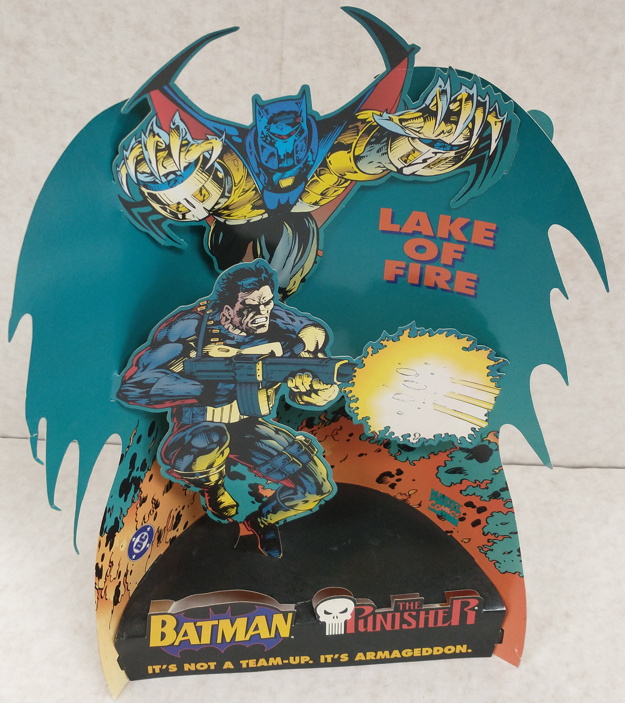
Straight out of 1994, it’s another rescue from the old shop! A promo item for the Marvel/DC intercompany crossover for Batman and Punisher:


It’s the first of the Bat/Pun crossovers, featuring the version of Batman from the period where Bruce Wayne was out of commission, this dude Azrael took over, and, well, it was a whole thing. It was followed a few months later by a second pairing, this time with Original Flavor Batman. Now it’s been a while since I’ve read either of these, but I was never quite a fan of the Azrael stuff, and I do like how John Romita Jr. draws these characters, so the latter probably gets the nod from me.

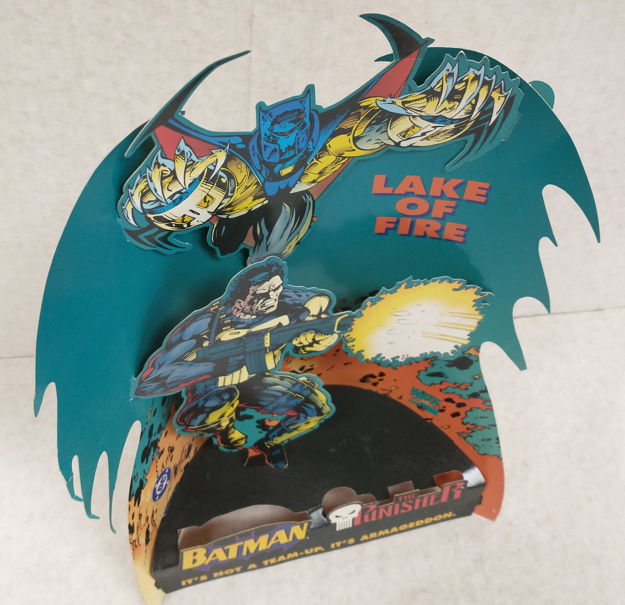
I forgot to measure the standee before I packed it up for shipping (yes, I sold it, I’ve got mouths to feed) but it’s about a foot tall, and maybe two or three inches deep. Here’s another shot showing a bit of the depth of the item:


It’s a tiny bit worn, with some tanning on the back, but frankly I’m surprised it’s survived intact over the past thirty years of kickin’ around comic shops. To be fair, I’m surprised I’m still intact after thirty years of kickin’ around comic shops. I think this Batman/Punisher standee handled the passage of time better.

Taxing your patience with more comment responses.

Yes indeedy, you folks keep bringing up topics in the comments that I want to answer here. And also yes, someday, I will get back to variant cover-age — I’m not done yet! — but I want to get to these responses out while we’re all still young and hearty.

First off, from not too terribly long ago, the King of the Moon crowned me with

“I used to pop in on my LCS during weekday times I knew would be slow because it was the best time to get good conversation and recommendations from the person behind the counter who was also a ;’well known comics blogger'”

Aaiieee, keep your fingers away from that blogger’s gnashing teeth, they’re all pretty much like Gollum.

Anyway, I literally have no idea if that was a veiled reference to me personally (I mean, a guy working in a comic shop who has a blog? How many of those can there be). But yes, a vital part of working in a comic shop is chatting with the customers, helping them find books to read, that sort of thing. There is a balance to strike, though, in between being “Helpful Dude at he Shop” and “Oh God He’s Coming to Talk to Us About Swamp Thing Again.” I may have told the story about going into a watch store at a mall (remember malls?) and trying to find a gift, but the employees there would not stop trying to chat with me and I couldn’t focus on shopping. I ended up bailing on that store and buying a watch elsewhere.

That’s really what I’m trying to avoid. I mean, that’s different from a customer coming up and talking to me and asking me stuff and engaging in conversation willingly, which is more what you’re talking about.

I think those of you who read my bloggering here on the site and then meet me in person are a tiny bit surprised at how relatively taciturn I am compared to the endless typing I make you all endure. Not that I don’t say anything, just I’m not quite as…verbose, or even semi-eloquent In Real Life as I am online. Over the years I believe I have become a little better at yakking it up with the folks in the shop, if only because I’m the captain and sole crewmate of the good ship Sterling Silver Comics and if not me talking, then who?

However, I believe it was our pal Tegan O’Neil who once said I write like I speak. I’m pretty sure that was meant as a compliment, but perhaps that also means my perception of myself as a tongue-tied funnybook purveyor is a bit off.

• • •

JohnJ does declare

“Your mention of Swamp Thing makes me ask if you’re aware of Rifftrax and the Kickstarter for this August’s Rifftrax Live! showing of Return of Swamp Thing. They’ve got a cool t-shirt designed for fans with art of Swampy carrying Heather Locklear. You don’t mention that movie nearly as often as you plug The Spirit (Frank Miller’s unauthorized Daredevil movie, I’ve always thought) so I just thought I would mention it.”

Yeah, I do lean kinda heavily on the Frank Miller’s The Spirit thingie, only because that’s funnier. I mean, it’s funnier to me, which is the only valid metric by which such things are judged.

But yes, I am absolutely a proud Kickstarter backer of the Return of Swamp Thing Rifftrax edition:
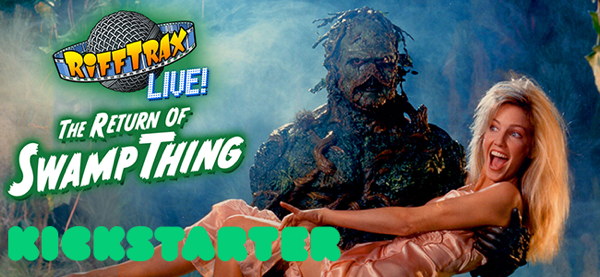

I am a long time fan of Mystery Science Theater 3000, from which Rifftrax was born, and I have enjoyed plenty of Rifftrax’s offerings as well. For those unfamiliar, Rifftrax offers downloadable “commentary tracks” of movie-mocking jokes you can listen to while watching the mocked movie in question…or you can get the movies with the humorous tracks already embedded in the soundtrack. Return of Swamp Thing will be one of the latter.

In fact, like it says in the pic there, it’ll be a live show, recorded from a theatrical performance where they “riff” the movie in front of an audience. I found during MST3K creator Joel Hodgson’s simliar project “Cinematic Titanic,” I enjoyed the live performances quite a bit more over the studio ones. I liked the studio ones fine, but I enjoyed hearing the audience laughter, the occasional flubbed line from one of the performers, etc. Same with the Rifftrax output…the live stuff just feels more organic. Yes, I know it’s all equally scripted, but I like hearing the audience laugh, what can I tell you.

I didn’t support the Swamp Thing Rifftrax at a level that would have put my name in the DVD/Blu-Ray’s credits, but I will be getting the t-shirt (don’t wear t-shirts much any more, but I’ll still love to have it!) and the enamel pin, and the Blu-Ray, plus all sorts of digital downloads and extra material (including other riffed shorts, and I think an audio riff track for Cats). Anyway, they really piled on the extras, so I’m looking forward to all this nonsense.

• • •

Daniel wonders

“If you hadn’t gone into comics retail as a career, do you think you’d still be a comics fan/reader today?”

I’m pretty sure I still would be. I’m interested enough, invested enough, in certain creators and comics that I would keep following them, even if maybe the books would be harder for me to track down. I’m always going to want to see what Sergio Aragonés and the Hernandez Brothers are up to, for example. And I’ll always follow Swamp Thing comics, and Hulk stuff, Green Lantern, and the Superman books (though to be honest the whole Warworld story in Action, now entering its 34th year, is beginning to wear a little).

I don’t know that I’d read as many comics as I…try to do, anyway. I’m going through bit of a thing lately where I still have a large backlog of books stemming from that period where my eye problems were keeping me from reading anything. While I’ve had good luck of late in preventing any rebleeds in my eyes from happening and obscuring my vision again, my vision is impacted enough to where I can’t read nearly as quickly as I used to.

Combined with the fact that I don’t even have as much time to read them anymore, that backlog isn’t getting any smaller. I try to read all the new comics I pick up now, but even as few as they may be, that doesn’t leave much time for digging back into the older pile. I may be just cutting my losses and returning stuff to the shop. I’ve no idea.

That’s getting a little off topic from your question, Daniel, but it’s just stuff I’ve been thinking about lately. I like reading comics, but one of the ironies of owning a comic shop is having less time to read comics, even if you don’t have eyes that explode on you on occasion.

But yes, I’d still read comics if I didn’t work in a shop. Would I still be a comics blogger? All my early online stuff, on local BBSes and early AOL message boards, stemmed from my working in a comic book store, so I feel like my comic book internetting is heavily tied to that. Maybe I’d been involved in the online comics community in some respect, but as just a mere commoner, not the high falutin’ comics retailer whose majestic presence is before you now.

• • •

Roel thus spake

“What are the logistics for transferring a pull list? Is there a payment for each customer name?”

Roel is referring to my previous place of employment sending its pull list customers to another shop near its location, due to shutting down. I’m not privy to the details, so I don’t know if there was a specific price attributed to the customer base for the pull lists, or if it was just kinda lumped in with everything else. To be honest, I’m not sure how I would price that out if I were selling my business to another company. There is a value, but what is it? Do you charge $(X) for this one customer, but $(5X) for that customer who gets a lot more set aside for him? Or just make a rough estimate based on the pulls in total.

When I opened up my own shop, a number of the pull lists there came with me. Mostly mail order pulls, plus a handful of pulls from customers who lived closer to my shop than the old one. They were basically just handed over to me out of good will. Maybe that happened in this newer case, just handing the info over and making sure the customers had a smooth transition, figuring it’s just part of the lump cost of the business’s sale. Again, I haven’t the foggiest.

Okay, that’s enough typing for now. Thanks for reading, pals.

I’m making a lot of assumptions, I realize.

So way back when on that post I made about Turok: Dinosaur Hunter #1’s solicitation, Chris V flew in with

“I never realized that Turok was considered a sales failure. I was always under the impression that it sold really well.”

To be fair, I did state that first issue experienced “relative sales failure (relative to its massively excessive orders, I mean).” I’m sure it did sell an enormous number of copies. There had been a lot of anticipation for it at the time, after all. But as I said, compared to the huge numbers retailers actually ordered and still had stuck in their backrooms (until they were dumped in the shredder, natch)…well, it didn’t sell up to preorder expectations.

It was technically a success for Valiant, as they still got paid for all the copies they shipped. (Though it was perhaps the beginning of the beginning of the beginning of the end for that iteration of the company.) But it was a marketplace failure, in that many copies were left unsold, and it was a retailer failure, most of them ordering way too many to begin with.

The comic because one of the symbols of the excesses of 1990s comics retailing, maybe not directly causing that decade’s market crash but it certainly didn’t prevent it. As such, despite actually being a not half-bad comic, it gets lumped in with Deathmate and other ill-received books from the time, symptoms of a sick marketplace that needed to get worse before it got (slightly) better.

More of your questions/comments responded to next week! Stay tuned!

“His shadow — advantageous!”

Going to jump around a bit addressing some of your recent questions left in my comments sections, starting with this one that Thom H. though nobody would notice. I SEE ALL, THOMATHAN:

“Not sure if anyone will actually see this, but I just realized my copy of Miracleman #23 has a printing error. Some of the art is cut off at the top and some is cut off at the bottom, depending on the page. Does that make it worth a lot more money now?”

I took a look at my own copy of this comic, and it doesn’t appear to have any printing issues like that, and I don’t recall hearing about any widespread printing problems with this issue, so it could be you have a relatively unique item. The big question, though, is “does anybody care?” when it comes to additional collectibility.

The answer is usually “who the hell can tell” particularly in today’s market, where just about anything and everything can become a reason to inflate a price.

I would say one of the most famous of the printing-error books is Venom: Lethal Protector #1, where mistakes make in the application (or lack thereof) of the foil enhancements resulted in the “black” variant and at least one white variant (which I hadn’t heard of ’til looking up this link for the post you’re reading now).

In this Venom comic’s case, those variants do admittedly look very striking, and one can see how they would attract extra demand. As per the links a couple of paragraphs above, a small miscolored patch on an Amazing Spider-Man cover is…a tad more inexplicable as to why anyone would give a poop, but a miscolored Galactus in only part of the print-run is more understandable.

But a trimming error in the interior pages? The wide net cast by collectors trawling for any reason to create an investable item has yet to dredge that up, far as I can tell. Though things change fast, and for all I know “OCCUPY AVENGERS #4, CENTER PAGES MISCUT IN HALF, RARE H@T” will turn up on eBay at any moment.

• • •

Roel Torres asked in response to my Solson post earlier in the week (see, told you I’d be jumping around):

“Mike, are Quadro Gang and Shadow of the Groundhog the worst comics you’ve ever encountered?”

Okay. I try to be as charitable as I can be when it comes to comics. “It’s not for me” is, I think, a fair response to any book that I don’t happen to care for. Admittedly, I’ve come down hard on comics that are very not for me, but it’s been more of a sarcastic or silly disdain than any real hatred (I’ve used Purgatori as a punchline once or twice, for example).

In the case of Quadro Gang (which gets a full evisceration here — thanks to MisterJayEm for the link), I would say in its defense that it at least seems sincere. The cartoonist had characters she created, and stories she wanted to tell, and by golly that’s what she did. She printed up comics, and they were distributed to stores.

I realize that intention doesn’t make a comic good, and this comic was…not your typical professionally polished comic book. But there is at least an attempt at making content, at telling stories, and for that alone I would put Quadro Gang above something like Shadow of the Groundhog.

It’s been a very long time since I’ve looked in a copy of Shadow of the Groundhog, so it’s very possible a fresh reread would alter my opinion. But until then, my opinion is that it was a cynical attempt at riding the Teenage Mutant Ninja Turtles coattails, getting stores to put their money into another new small-press black and white comic in case that Turtle lightning would strike twice. And that the artwork and writing inside only existed because shipping a collectible item only intended for investment and not for reading with blank pages was, as yet, a bridge too far.

Again, just my opinion. Maybe this was just as apparently-sincere an attempt at comic book making as Quadro Gang. The black and white boom inspired a lot of people to get into the business of making comic books, for different reasons — being able to tell the stories they wanted to tell, or making a quick buck from a volatile marketplace. I happen to think Groundhog was more the latter than the former, but I’m willing to be told I”m wrong.

These were both obviously amateurly-produced comics, and, despite whatever motivation brought about their existence, I think it’s safe to say on an objective level, they’re not very good. But when you get right down to it, are they The Worst?

In the early 1990s, Kitchen Sink put out a two-part series called the World’s Worst Comics Awards, which went through a bunch of professionally-published comics from Major Comic Book Publishing Companies and dunked on how dumb some of them were. Basically this comic was the forefather of comics blogs, which I think my blogging brother Andrew once pointed out. And frankly, I think buying a comic from what is supposedly a Real Publisher that knows what it’s doing and ending up with a real stinker is worse than some vanity-press book by amateurs.

And by “stinker,” I don’t mean “oh, that story wasn’t very good.” I mean, “this shouldn’t have made it past an editor” kind of stuff. Specifically, I’m thinking of an issue of Avengers that looked like it was drawn by a child. Or many comics in the ’90s that only seemed to be released because pages needed to be filled and they just ran what they got. And even Charlton Comics should have been better than this.

So I don’t know if that entirely answers your question, Roel. Small press books by amateurs are one thing, but outright junk from companies that supposedly apply some quality control is another.