You are currently browsing the collecting category
EVERYONE, HOLD EVERYTHING: I’ll get back to movie comics next time, but first I must address this inquiry from Matthew Murray:
“…Ignoring condition, what is the ‘least valuable’ comic? Or, since that question is more or less unanswerable, what would the criteria be that you could use to narrow down this search?”
It’s very hard to point to a specific comic as being “least valuable,” because as Thom H. says further down in the comments
“…Someone somewhere will pay money for any first issue.”
And if I may amend that, someone out there could pay money for any comic so long as there’s someone out there filling holes in a want list. Even Thom’s example of Brigade #9, just some random issue in a middle of a run…even that might be picked up by a fan who needs it. You never know. Granted, probably not very often, maybe one time a year a fella going through a back issue bin might pull a bagged and boarded copy out and declare “dear God in Heaven, at last, it’s Brigade #9! My collection is complete…COMPLEEEEETE!”
Basically, you have the (forgive me for using this term) “key” comics, the ones with current collectors’ value, sought after by fans and speculators, the often command premium prices. They regularly sell and trade in the marketplace. Things like first appearances, (some) first issues, Big Event issues…you know what “key” means, you don’t need me to explain.
Then you have the stuff that isn’t necessarily “key” but will regularly attract sales. Like pretty much any issue of Batman or Detective or Amazing Spider-Man or Sgt. Rock, or appearances of certain villains, or stuff with cool covers, or produced by certain creators, or sometimes just first issues in general. I mean, whatever reason that would attract a reader to pick up a comic outside of pure “hotness” of the issue. Not necessarily expensive…could be pricey, might not be, but are in higher demand than your average comic. Speaking of which…
…there are the “box-fillers,” just issues not in any particular demand, just there to fill out runs and be there just in case someone pops in looking for Sun Devils #2 and lo and behold, here you have it! Not comics that have any sort of immediate turnover, maybe you’ll only ever sell the one in your lifetime, but they’re there in case anyone needs ’em. A lot of recent comics come to mind, especially on series that ended quickly and were replaced right away by a relaunched version of the same title. Sometimes not much separates these from…
…the bargain bin comics, stuff which you’ll be happy to get anything for, and enough people want cheap comics that they’ll likely sell more quickly there than they ever will in the regular back issue stock. Frankly, I should probably put that Sun Devils #2 in there. Anyway, they’re usually cheap, and possibly cheaper if you buy in bulk. My boxes start at $1 each, or 15 for $10, and so on, all the way to $50 for 100. This is kind of the “last stop” for comics in the shop, and I try to put things in there that are overstock, or maybe damaged but readable, or things that were dumped on me in collections.
This isn’t necessarily as cut and dried as all that. Comics can shift between these categories all the time. I remember after the 1989 Batman movie came out, we started fishing around in the cheap boxes at my previous place of employment, looking for all the copies of the once-moribund-now (then)-hot Joker #1 (1975). Or once hot comics getting relegated to the bargain bins (sorry, Pitt).
And then there are the comics that price out at even cheaper-than-bargain-bin prices, stuff that maybe grade as a, I don’t know, Good Plus and costs $0.65, but it’s a Name Book That’s In Demand (like say a What If) and will sell much faster in the regular bins than mixed in with the chaff.
I’m sure this quick list doesn’t cover every nuance and possibility, but it should get across the idea that nearly every comic (assuming sellable condition) has some value, at least to someone. Even vastly overprinted comics like Valiant’s Turok Dinosaur Hunter #1 has some demand now. Black and white boom comics that were cranked out by the truckload, mostly moldering in backrooms or in forgotten bins, now see some demand from folks interested in that particular period of the industry.
The trick is learning when a comic moves from one “level” to another. Usually that’s decided when it’s time to throw stuff in the dollar box, and sometimes it’s keeping tabs on the market when a forgotten $3 book in the bins suddenly shoots up to $35 because it features the elbow of a background character who might appear in a forthcoming movie.
I believe someone mentioned Woody Woodpecker comics. Well, believe it or not, I had a couple of different people regularly buying those from me a while back. The Warner Brothers comics, like Bugs Bunny and Porky Pig, are traditionally very slow sellers, but I have a recurring customer who pops in every few months to grab one or two. Back at the old job, I had a customer in Japan who’d regularly mail order stacks of Tom and Jerry from us. So you never really know.
Chick Tracts were also mentioned, and I’m not going to link them here because more often than not the supposed “loving” “religious” messages are reprehensible, but you can read them in full on the official site. And everything else aside, a handful of those actually have some excellent cartooning, a detailed grotesqueness that wouldn’t be out of place in MAD or any other EC Comic, for that matter. And while this is a very close candidate for “least valuable” comic, given they are often found “distributed” in public areas for potential converts to pick up for free. They are printed in large numbers, easily thrown out without much thought, and mostly quickly forgotten. That said, there are a number of collectors who acquire these out of ironic interest.
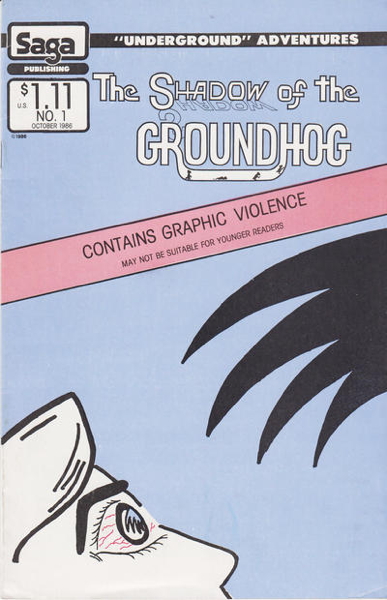
The comic I want to say is the least valuable, mostly due to personal experience I had at a convention decades ago, involves the comic pictured at the top of this site. Shadow of the Groundhog, released in 1986 during the Black and White Book, was one of those titles cranked out to get a little love following the success of Teenage Mutant Ninja Turtles. There was a lot of “investing” and “speculating” and other…shenanigans going on in the industry at the time, and long story short, I saw some poor bastard at a comic con with a full long box of them. I should’ve picked one up, because now I do want one in my collection, an example of what some dubbed “the worst comic book ever.”
But I look online now? $5, $10, a copy? That’s…well, $5 isn’t too much, but I didn’t check the shipping cost which is probably stupidly high. So there’s either demand, or some retailers think there is demand, driving those prices. Which means this person with the long bx full of ’em is rich, rich beyond the dreams of avarice. Anyhow, I’ll get one someday.
So, I’m sorry, I wish I had an ultimate answer to this question of “which comic is least valuable,” just so I could say, “it’s this one, Purgatori: Goddess Rising #2:
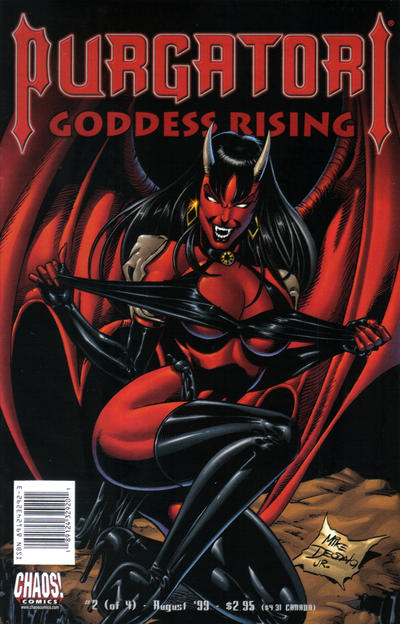
…but it seems there’s even some measure of demand, even for this.
So I was processing some back issues at the shop, and flipping through the pages of Fantastic Four #274 (January 1985):
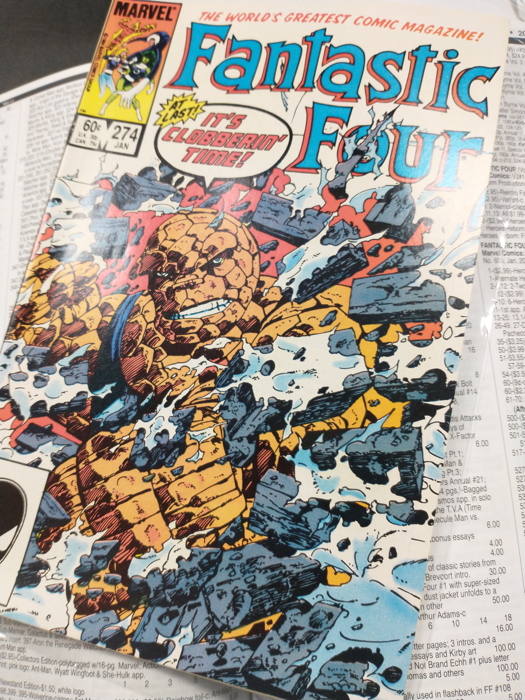
…and I was reminded of this sequence from the end of the book:
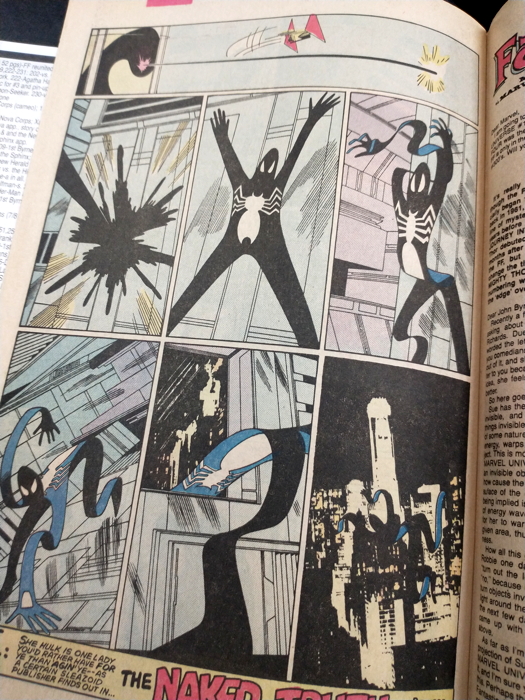
…in which Spider-Man’s sentient and shape-changing black costume escapes from Reed Richards’ lab, which is where it had been kept since being forcibly removed from Peter Parker’s body in Amazing Spider-Man #258 (November 1984). And then eventually the costume, AKA “the symbiote” bonds with Eddie Brock, pushes Peter Parker onto a train track in Web of Spider-Man #18 (September 1986), then makes its on-panel debut as Venom in Amazing Spider-Man #300 (May 1988).
And, I don’t know, maybe I’m leaving some post-Peter Parker pre-Venom appearances of that pesky extraterrestrial outfit out of my little overview there, but I’m not really hear to give you an Amazing Heroes-style Hero History of the Alien Symbiote. Mostly the question that came up for me, while I was pricing up a stack of back issues for sale (as you can see what with the price guide visible in the photos above), is why isn’t this comic pricier than it is?
Look, I’m not trying to be the “hot” “key” “investor” guy here, but it struck me as odd that this weirdo appearance of the suit prior to its becoming Venom hasn’t been glommed onto by The Usual Suspects. Even the Hot Comics App just has it at three bucks and doesn’t even mention the symbiote’s appearance in the issue. On eBay I see a couple of folks getting a little more adventurous with their pricing (outside the always-overpriced “slabbed” copies), but by and large most of ’em are pretty cheap. Even when they note this particular cameo, that doesn’t seem to guarantee a sale or even a bid. It just seems like a big, fat “nobody cares.”
It wasn’t that long ago, during that mid-pandemic investment panic when collectors were looking for any reason to make any comic A Hot Commodity, that a comic like this would have been bought by the armful if they could. I mean, speaking of the pandemic, there was a Spider-Man comic that became a sought-after item because it introduced a villain named Corona. Did a feel a burning shame for our industry as a whole as I was typing that? I won’t say “no.”
I also won’t say this behavior has gone away completely, since I still see people with their apps out tracking down that secretly hot comic that’s had a sudden burst in demand that isn’t reflected by the price I put on the book, say, three years ago. But it’s not nearly as prevalent, especially as the prime mover of this form of collecting, the Marvel movies, are currently approaching the nadir of their cultural relevance, making comics with related character appearances to those in the films not quite as attractive.
Anyway, just an interesting trend I’ve noticed in the marketplace lately, at least locally. Your Market May Vary.
I miss being able to flip open a comics ‘zine and seeing a pure and simple news blurb like this:
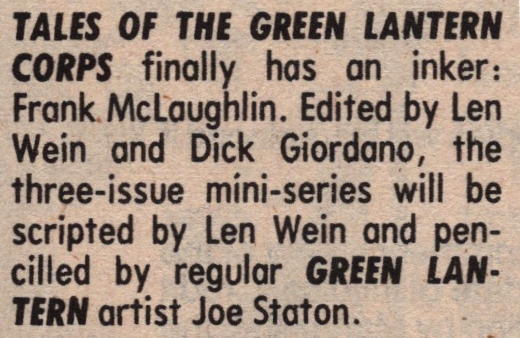
I mean, don’t get me wrong, I like reading about scandals and shenanigans in the comics industry as much as the next guy, but it’s…just nice where the item is entirely “this dude got a job on this comic.”
And whatta comic it was:
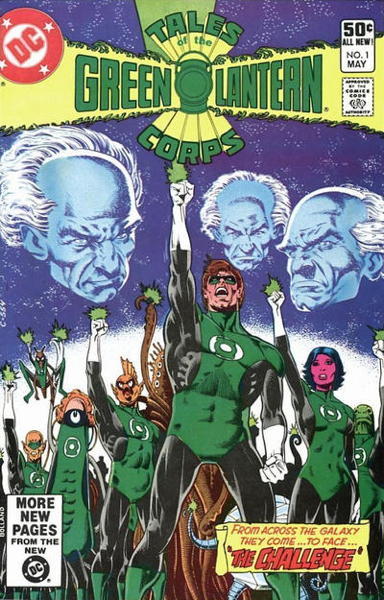
I bought this new off the rack in 1981, where 12-year-old me was still learning about the back continuity of DC’s heroes. And Tales of the Green Lantern Corps went deep into the history of that particular franchise. Between this, reprints of older stories in DC’s digests, and seeing that Golden Age/Silver Age GL team up against Krona on the early Nickelodeon show Video Comics, I knew pretty much everything I needed to know about Green Lantern.
I really ate up that stuff as a young Mikester, trying to find out about the histories of all these characters. It’s probably why I really appreciated Roy Thomas’ work on DC’s Golden Age characters at the time, as that fan feared no footnotes, exposited every exposition. I loved it all. Now, going back as Old Mikester, approaching it as storytelling versus an educational textbook, that early ’80s Golden Age material doesn’t go down quite as smoothly, but I’ll always appreciate the lessons of Roy ‘n’ pals.
Those aforementioned digests helped a lot too, reprinting from DC’s vast back catalog in themed releases…”here’s the Justice League one, here’s one with a bunch of secret origins, here’s one with Batman villains.” I grabbed those whenever I could. Even if they weren’t necessarily “educational” in the sense of explaining pertinent details of the past, it was still fun to see these tales of yesteryear, and even so E. Nelson Bridwell (or someone) usually had a small text piece providing historical context for the contents.
 Sometimes the digests were like mini-graphic novels, like this one which included this whole “Batman – Murderer!” storyline. Or this whole “Warlord versus his arch-nemesis Deimos” one.
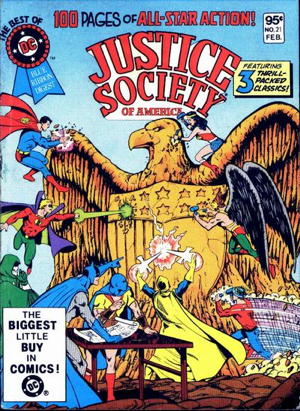
And then, going back to supplying some background to their currents series, there’s that one pictured to the right…a digest focused on the Justice Society, released shortly after the debut of of Roy Thomas’s Golden Age-centric All-Star Squadron, It not only featured an origin of the Justice Society, but also included the first Per Degaton story, a character that would again rise to some prominence during the ’80s.
Look, I wasn’t sure where I was going to end up when I started writing this post…it’s just that seeing that ancient news blurb made me nostalgic for a simpler time as a comic collector. One where I actually did wonder who was going to write/draw what title, and one where I still eagerly awaited any glimpses into the past either via reprints or flashbacks.
news blurb from Comics Feature #9 (1981)
So I’m not good at “end-of-year” lists where I run down the best comics, simply because 1) I haven’t read everything, so I’ll feel like a dummy for leaving some stuff out, and 2) I haven’t even read everything from the past year that I’ve taken home to read. As I’ve noted time and again, I have stuff from four years ago, about the time I started having my eyeball shenanigans, that I haven’t read yet. I still have that big ol’ collection of pre-Popeye Thimble Theatre to read, for example.
Thus the plan was to at least point out a handful of oversized collections I picked up this year, as I obviously did’t have enough already to read. I had my reasons for acquiring each, which I can detail (though in at least one case you can probably guess).
But here’s the thing…one of these I’ve already discussed, another I need to take some decent pictures of for use here since I can’t find any decent ones at distributors or on eBay that I can steal borrow, and the third is still at the shop stilling on a shelf behind my counter.
The first one, the one I already talked about, is the Absolute Edition of Doomsday Clock. Yes, it’s garbage, but it’s well-presented garbage, with beautiful artwork reproduced at good size, and plenty of behind-the-scenes material to be had. There’s also that extra thingie in the back of the book that literally shocked me. It remains a “was this trip really necessary” kind of thing, with its ultimate purpose (attempting to once again give in-universe explanations for DC’s rejiggering/rebooting of its fictional milieu) already pretty much ignored or supplanted or piled-upon by other DC event books, as everyone assumed would happen.
But, as a collector of weird Watchmen-related ephemera, this felt like an interesting item to have. Plus, it matches up nicely with my Absolute Watchmen slipcased edition, a thought that probably is giving someone somewhere a bit of a twinge right behind their eyes.
The second oversized collection I’ll talk about later in the week, once I get some pictures taken.
The third collection, still sitting shrinkwrapped at the store, is the Thing Omnibus:
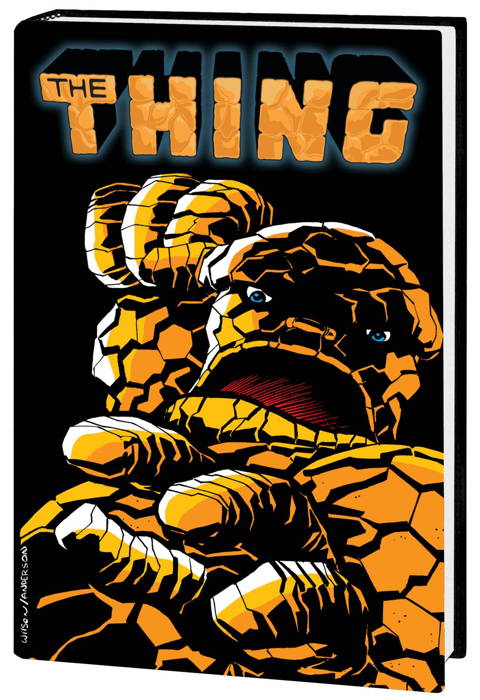
This collects the 36 issues of the Thing series from the 1980s, along with a couple of issues of Fantastic Four that tie into storylines in that book. There are also other miscellaneous Thing stories from the period mixed in (like the Barry Windsor-Smith story from Marvel Fanfare, a Marvel Tales back-up, and that Jim Starlin/Bernie Wrightson Thing/Hulk graphic novel). Issue #3 of the computer-game tie-in Questprobe is even included. I kinda wish they’d made room for the Hulk/Thing team-up in Marvel Fanfare #20 and #21, also by Starlin, which has never been reprinted in the U.S. as far as I know. Ah, well, there’s always the next omnibus.
Now why did I need this volume? Well…I didn’t, really. I own nearly all of its contents still…that Thing series, the graphic novel, the FFs, the BWS story. But it is nice to have it all in once place, and that cover…! There were two covers for this book, because of course there were. One cover, by John Byrne (who wrote the early part of the series), was taken from this issue, and it’s…fine, though not a patch on the Ron Wilson cover they did use. That’s one of the great and iconic images of Aunt Petunia’s favorite nephew.
Ron Wilson drew a whole lotta this book, and he is one of the unsung heroes of superhero funnybooks…clearly inspired by Jack Kirby, but not, like, outright copying the guy. One of the surprises this omnibus has for me is its inclusion of a story from the 1990s version of Marvel Super-Heroes which I hadn’t read, featuring 22 new-to-me pages of Wilson art. Can’t wait to see that.
One thing (heh) I am curious about is that in this issue there was a scripting/editing error which resulted in two conflicting names for the same character. It would be nice if that was straightened out. Also, the “How to Draw The Thing” page from this ish better be in there. I need nice, quality printing of the Thing telling me to not give him no lips. (Which of course literally works out to “give him lips,” but I’m not gonna tell ol’ Benji that.) Also, stop giving the Thing a neck, you guys, so long as we’re on the topic.
I know that’s Too Many Words for a book I haven’t even cracked the covers on yet, but it’s an exciting book to have. That Thing series was quite good, with some nice emotional/background work on the character, particuarly in the early issues. And the whole post-Secret Wars “Rocky Grimm, Space Ranger” was a weird ride, with Ben Grimm, adventuring on an alien world, finally with the ability to switch back and forth between human and Thing forms. All fun, all well-drawn, and all solid support for why the Thing is one of the greatest Marvel characters ever created. If not in fact the greatest. Yeah, that’s right, I said it. He’s even better than Hellcow, don’t make me fight you.
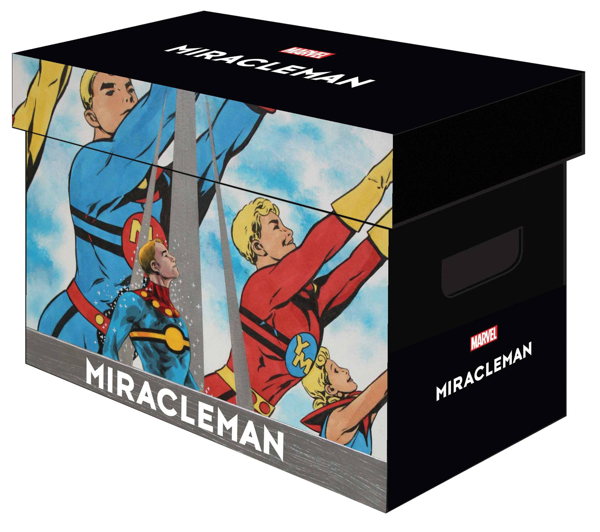
So I don’t have very many of those illustrated comic boxes for my personal use. I mean, I sell plenty of them at the shop (where I dubbed them “Fancy Boxes” on my signage for them, and the name seems to have stuck with my customers), but I haven’t much felt the need to grab too many for myself. I did make an exception for the Hellboy boxes, of which I bought three and immediately filled two, thinking the third would last me a whle. But, the joke’s on me as Dark Horse seems to have accelerated its Hellboy and Hellboy-adjacent funnybook output over the last year or three and now I’m wishing I’d picked up two or three more of those boxes.
Anyway, another design has come out that tempted me into owning, and as you may have guessed by the image leading this post, it’s that darn ol’ Miracleman what done the deed. It’s a nice pic they used, though I would have liked it they’d wrapped illos around the entire box and not just the two sides. Ah well. Despite that, I now have a fancy box of my own in which to stow my Miracleman goodies.
I haven’t yet gathered all my MM stuff together, as I’m currently in the midst of reorganizing my collection at home (“wait, didn’t I give up most of my stuff to the shop, how do I still have this much left”) and everything is still in the “total and utter disarray” part of the process. But I know I have the original 24 issues of the Eclipse run, plus the Apocrypha mini, the Miracleman Family mini and the 3-D special, plus all of the Marvel reprintings of same from a few years back. Not to mention that one-shot Marvel put out giving a history of the character, and all those black and white reprint comics (I passed on the hardcover archives).
And there’s the tangentially-related stuff, like the Total Eclipse mini. Plus, we’ve got new MM stuff on the way, starting with the refurbished Silver Age #1, leading into newly published Gaiman/Buckingham stories in a month or three. If that’s not all, there’s whatever Marvel is planning to do with the character (I predict the “Marvelman” version, versus the “Miracleman” version tied to that specific story) in the Marvel Universe itself, as hinted at by this one-shot from a few months back. Oh, and there’s the two new pages in, I think, Marvel #1000, right?
With new stuff on the way, I’m not sure how much more box space I’m going to need. Without having all the MM comics I own in front of me, I can only estimate that they would take up about…half a box, maybe? I don’t know how much more of the “Miracleman” story Gaiman and Buckingham have left to tell, and once Marvel starts doing separate Marvelman stories…who knows, maybe I’ll be wishing then I’d picked up more of the fancy boxes. God forbid I just put these in plain white boxes, what would the neighbors think?
Oh, you know, I forgot the oversized stuff I have, like that original UK Marvelman Special and Warrior #4 with the formerly-unreprinted MM story. And, ooh, wait, there’s the forthcoming Miracleman Omnibus, I’ll need room for that, too!
Almost forgot the Warpsmiths stories that popped up here and there, like in the A1 anthology! I’M GONNA NEED MORE BOXES
…
As a wise man once said, “it’s sort of an illness.”
So a new post in the ongoing multiverse talk series just wasn’t coming together, and as such today I’ll instead post this Popeye comic I just acquired for the personal funnybook collection:
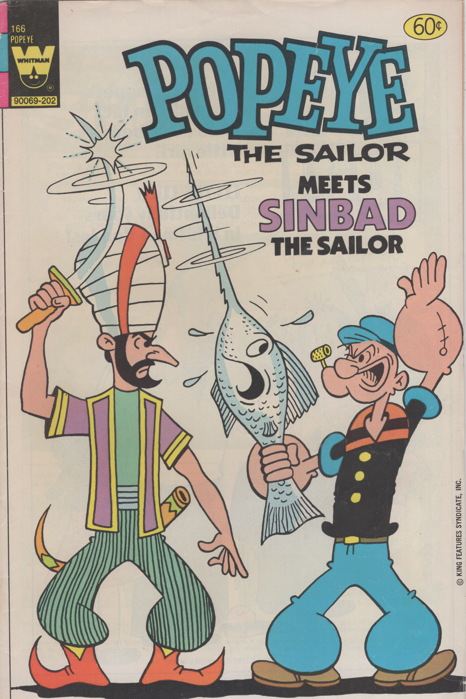
This is issue #166 from 1982, pretty late in its run (which would end in 1984). And since I’ve already been asked, no, it has nothing to do with the 1936 cartoon Popeye the Sailor Meets Sindbad the Sailor, in that the the Sindbad in the animated feature is spelled with two Ds.
My eventual goal is to get my ungainly mitts on every issue of this publisher-spanning Popeye run, though I think I’ll be satisfied with having all the early Dell numbers in their IDW reprints.
Also of note is that there is no #93, lost in the transition between Gold Key/Whitman/Western/whatever and Charlton in the late 1960s. Plus, ssues #160 and #161 were not published during the later Western run at the title. And just to make things difficult, two issues (158 and 159) were only sold in those 3-packs, so I’m probably looking at paying more of a premium for those (but not as much as what I’d be paying for the similarly-distributed Uncle $crooge #179 — sheesh).
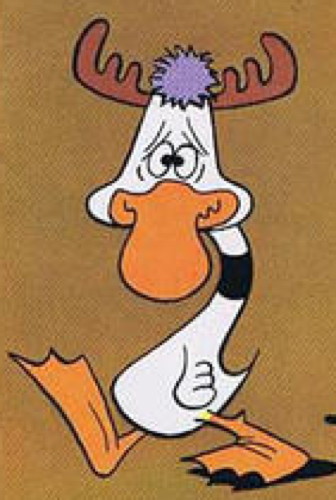
You see what I’m up against. Ah well, I hope at least I can find that #158…I need to learn more about THE MOODUC:
So I was looking at one of those “here are the hot comics!” apps that some collectors are using in place of t heir own want lists, because I’m trying to keep on top of when some comic is dubbed by the investment gods as The New Thing and I can gird myself for the onslaught of phone calls and emails from folks all asking for the same item.
At any rate, on a whim, I looked at the various Swamp Thing entries, as I seemed to recall some discrepancy or ‘nother the last time I looked. And yup, here it is, in the listing for Saga of the Swamp Thing #21 (1984):
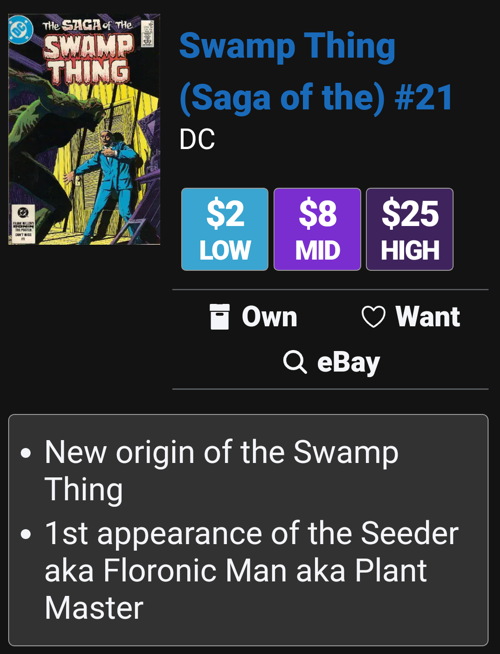
The “new origin” bit is correct, but the first appearance notation is way off. (And gotta be honest, totally forgot about the New 52 “Seeder” incarnation of the character, which is fine because I bet he won’t be called that the next we see him, if ever.)
Anyhoo, Jason Woodrue, the Plant Master, first popped up as an Atom villain in the first issue of the diminutive hero’s own series in 1962. There he is on the cover in the selfsame hot comics app that listed Saga of the Swamp Thing #21 as his debut:
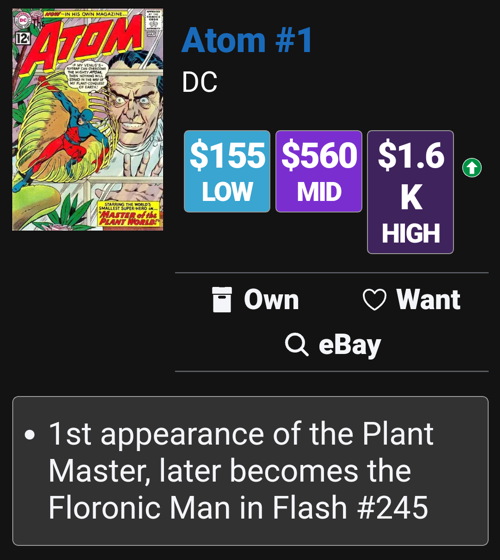
And then I thought “oh, well, maybe they mean the first time he was referred to as the Floronic Man, or the first time he looked all planty.” And nope, I knew neither of those were the case. I mean, it says right there in the Atom #1 listing…he transformed from the normal human appearance into his plant form in Flash #245 (1976). Here’s the app’s entry for that comic:
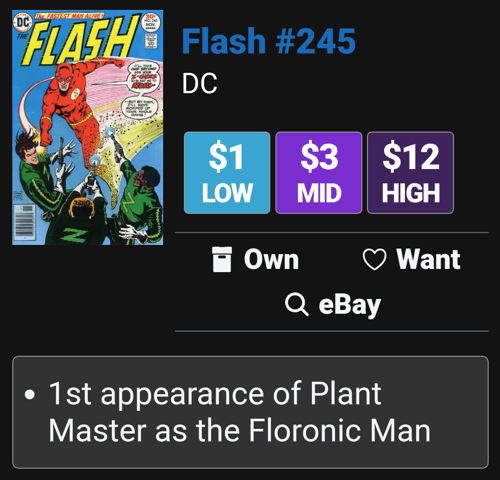
…which is the form in which I first encountered the character, in Justice League of America #195 (1981):
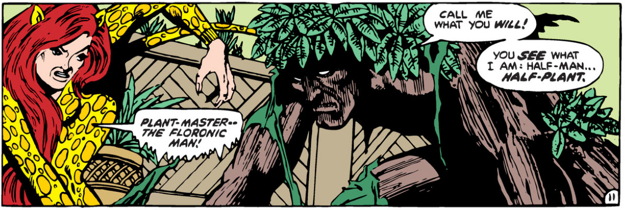
And then there was the Steve Bissette/John Totleben redesign of the character, first appearing in that Saga of the Swamp Thing #21, and as pictured here from #24:
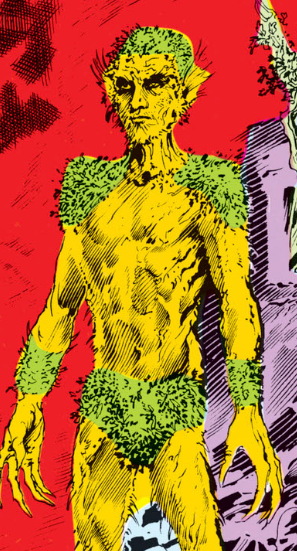
Unless that’s what they meant by “first appearance,” the first time this particular design of the character appeared, I’m gonna say that app’s entry for Saga of That There Swamp Thang #21 is “human error” and needs to be corrected. Though I wonder if someone out there heavily dependent on the app has their copy of #21 marked with a big “FIRST APPEARANCE OF THE FLORONIC MAN!” tag.
Actually, don’t need to wonder…hello “Top Rated Plus” eBay seller with this listing:

The desperate quest to establish “first appearances” for maximum collectability can be a weird and wild one, leading to contradictory and erroneous information getting out there. Thus, the moral of the story is…TRUST NO ONE. Except me, your pal Mike.
Oh, and I saw this, too, in the entry for Saga of the Swamp Thing #25:
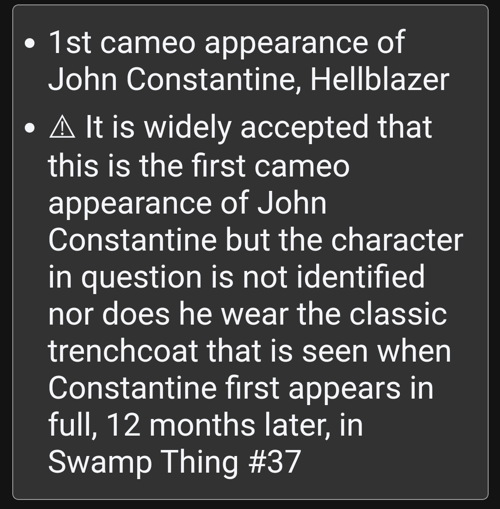
Augh, don’t get me started (because I already did start back in 2004 in this link-rotted post). And even the app in the entry for #37 says

Hoo boy.
Okay pals, I know plenty of you reading this have been itchin’ to start a comic book collection of your very own. Well, everyone give a big thanks to the 1990s because they’ve got you covered with these two exciting packages!
First up is the Comic Book Starter Kit, original retail price, as it says right there, a mere three dollars and ninety-nine cents:
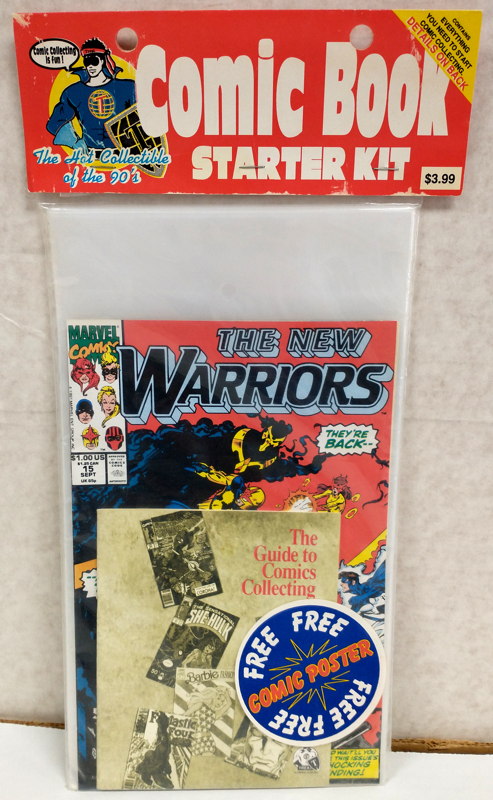
Does this kit have everything I ever needed to start collecting?
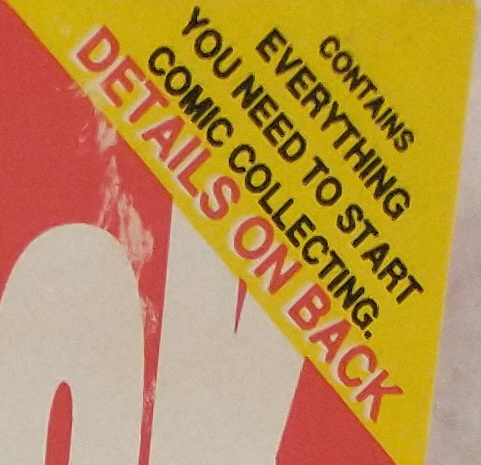
OH THANK GOD. Let’s flip this sucker over and take a peek.
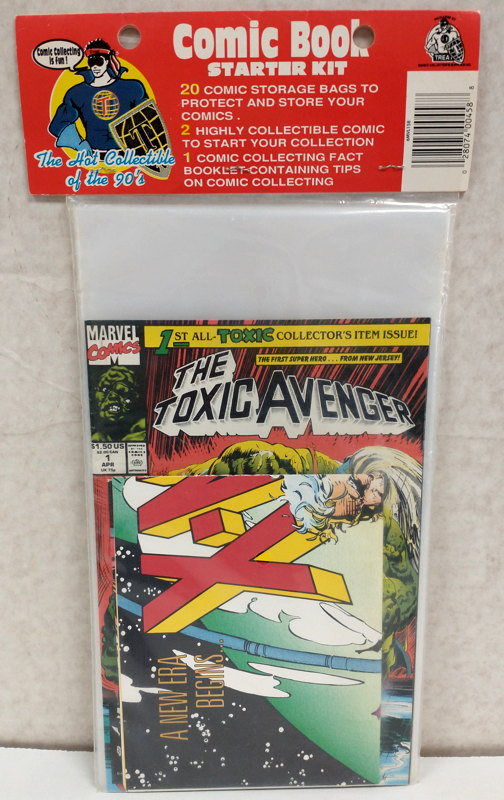
Whoa nelly, it’s pretty wild they went with Toxic Avenger #1 to entice folks into entering the hobby. But then again, maybe it grabbed a few fans of Troma Films, so who am I to judge. Anyway, more on that comic in a second.
Here’s a closer look at the content list:
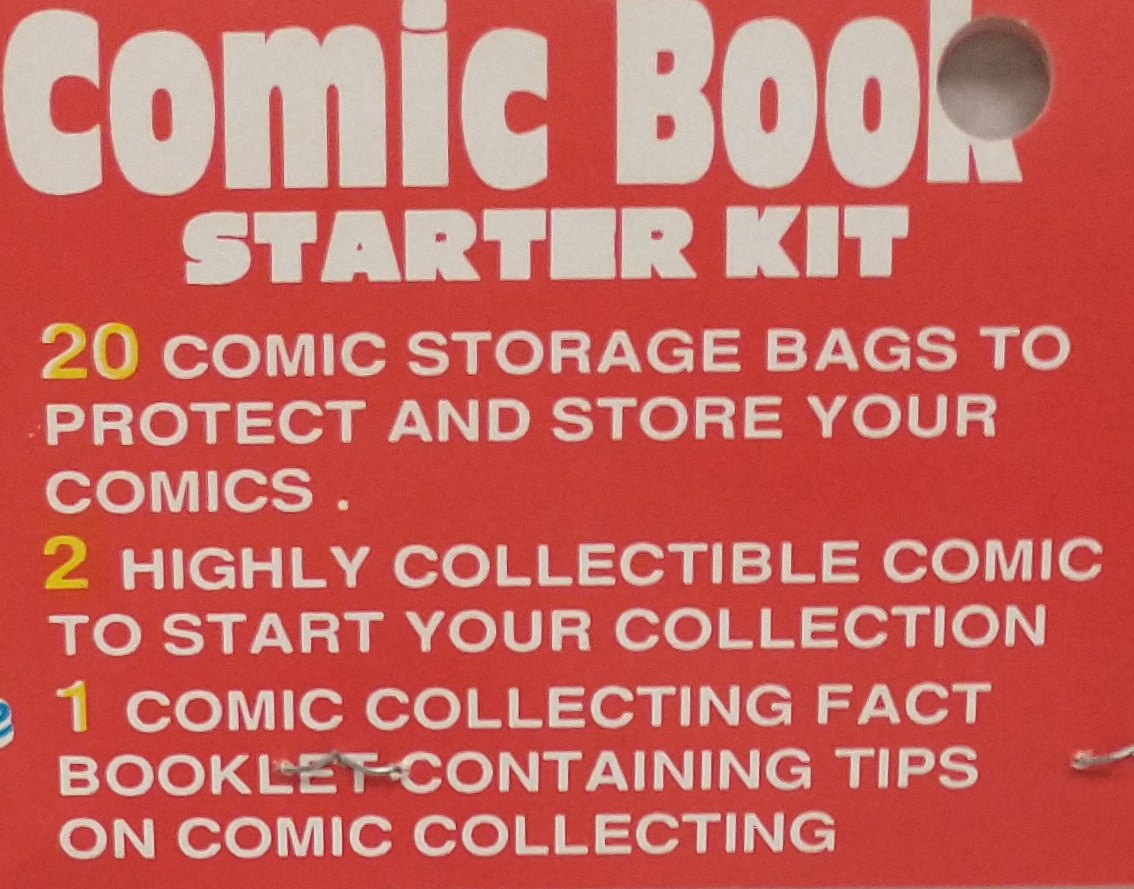
Okay, so let’s see. The New Warriors cover price was a buck, the Toxie book is $1.50, the 20 almost certainly polyethylene bags let’s say retail at about a nickel each for a total of a buck…we’re at $3.50 so far. With the Jim Lee cover-of-X-Men-#2 poster and that swank comic collecting guide…well, depending on how you feel about those I guess that can make up the $0.50 balance. A pretty good deal overall.
I have to admit I am this close to busting open the package so I can read what this guide has to say (though it’s probably just this):
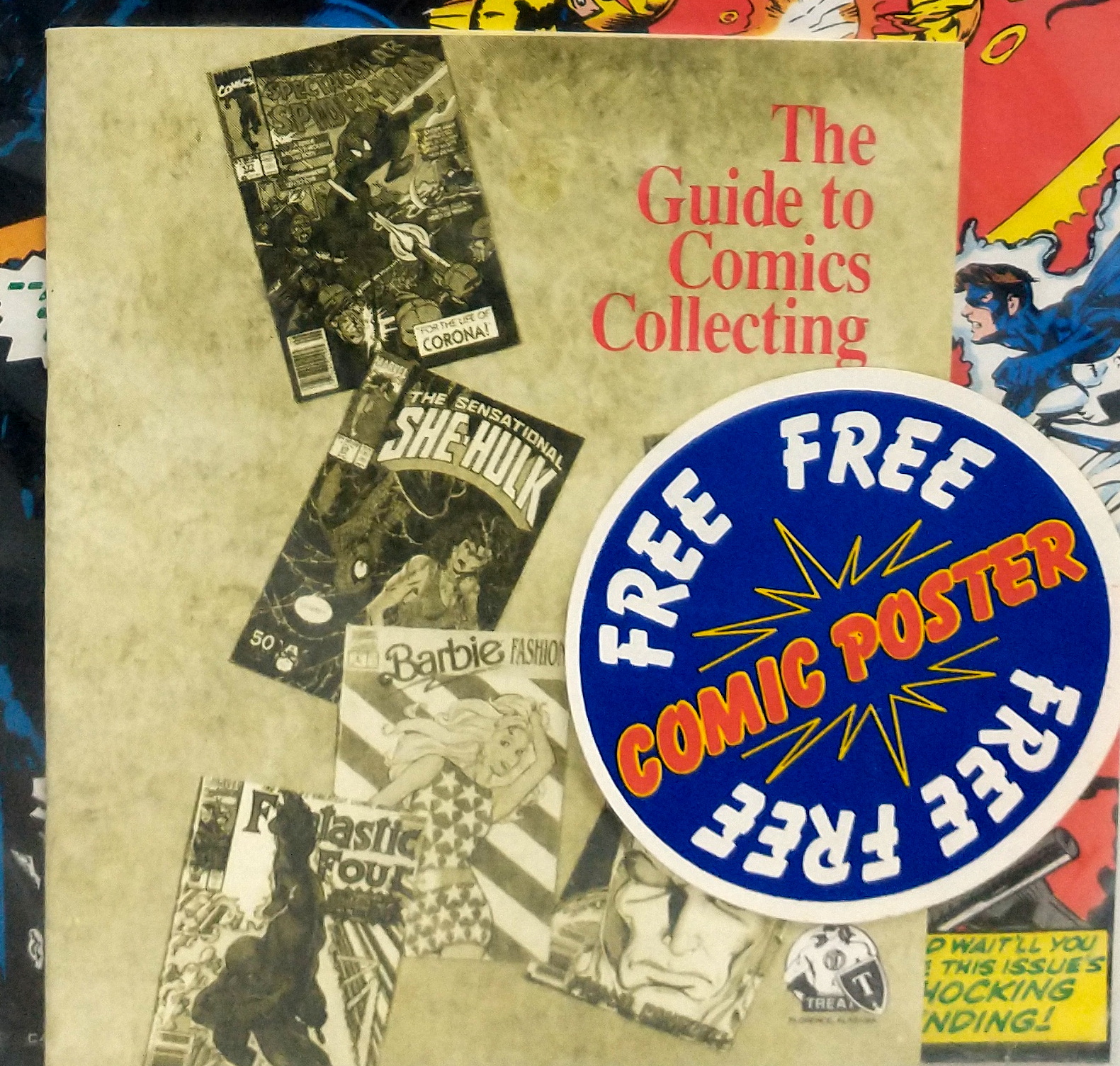
…but I think it’s more of an interesting novelty item leaving it intact. Oh, and by the way, while I wanted to snicker at the “2 highly collectible comic [sic]” fact of the matter is that Toxic Avenger #1 does sell for a little bit of a premium. One of those speculator apps has it at $35, which ain’t nothin’ to sneeze at. Only took 30 years to septuple your money, you clever investor you. I didn’t bother to look up the New Warriors issue…if it’s an $1800 book or something let me know. Before you buy it.
Anyway, the other collector’s pack I took in was this ’90s all-over bundle:
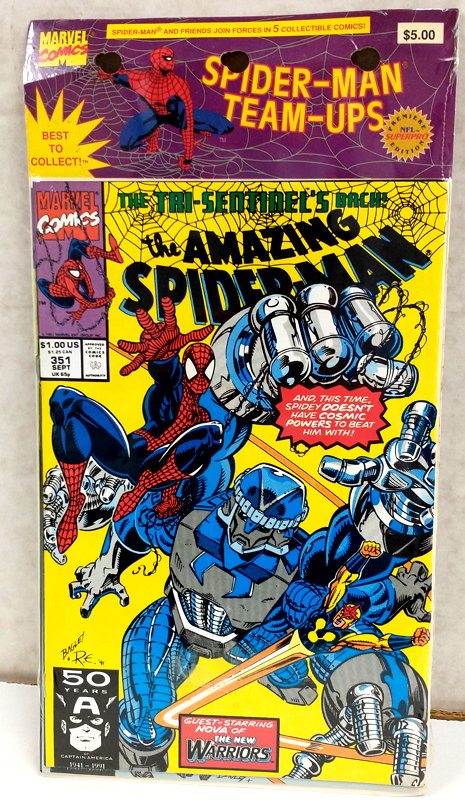
A mere fin for five…well, dollar comics, I guess it’s a push ’90s retail-wise. But for your convenience you have a couple two part stories gathered together here, so you don’t have to hunt them down. And you know these are good comics to have because it says right on the package:
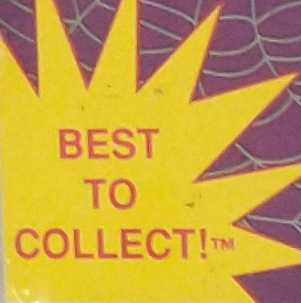
It has a ™ on it so it has to be true.
And what’s this?
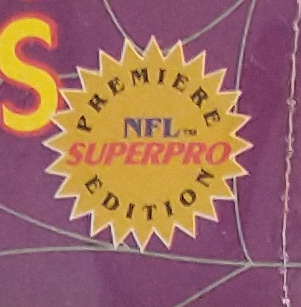
Don’t you threaten me.
Flipping it over they make good on said threat, with a copy from what must have been a vastly overprinted run:
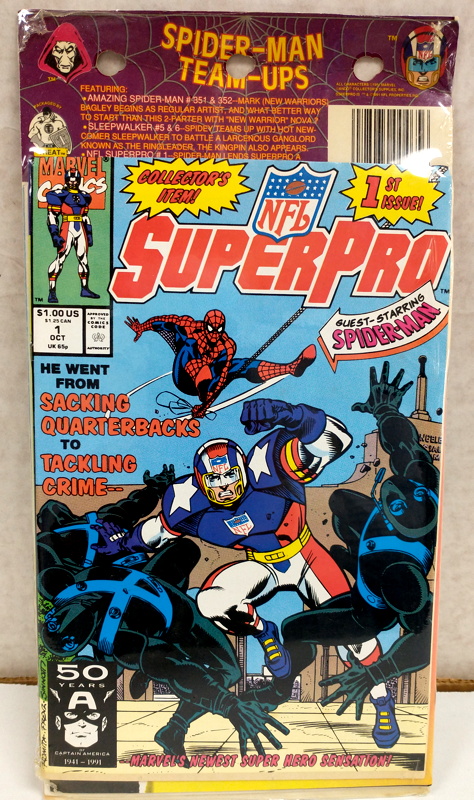
Here’s a guide to what’s inside, and, y’know, for five bucks I guess this is okay:
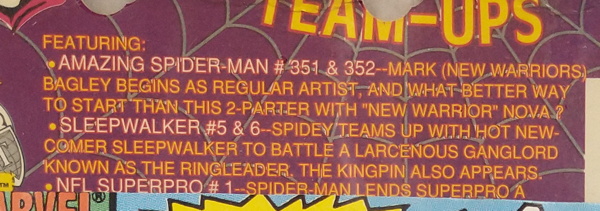
The way this is packaged, the last line of the contents is cut off, so we may never know what Spider-Man lends to NFL™ Superpro. It probably says “hand,” but it could be “ten bucks.”
In terms of today’s value, I don’t believe any of these became huge collectibles. I mean, maybe the Spider-Man issues have a little premium attached to them, though they’re hardly the most in-demand parts of the run. There was some brief demand for Sleepwalker of late, but sorry, no demand for NFL Superpro. Maybe if it was NFT Superpro…nope, wait, just checked, too late for those, too.
Like I mentioned, I’m probably selling these intact as the novelties they are, so whoever buys them can bust ’em open or leave them as is. Whatever they want to do, because as this headbanded hero “Treat” ( think) says:
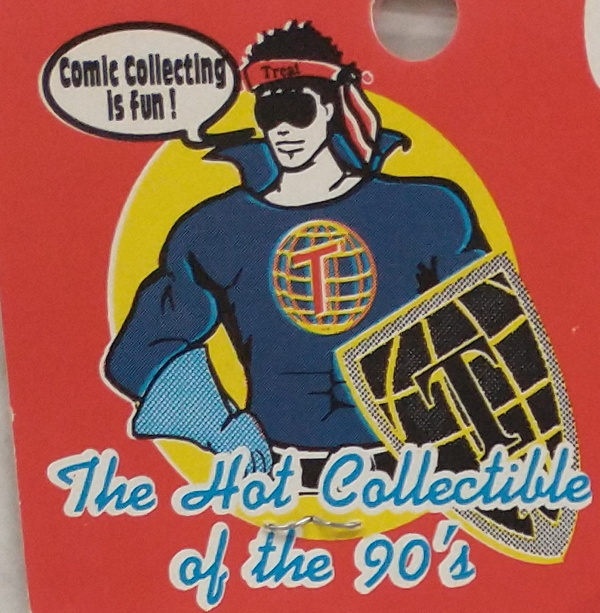
WELL SAID.
So the other day, customer Ryan asked me if I’d heard about a particular error (or dare we say, variant?) cover that’s been making the rounds lately. “I have not,” sez I, and he goes on to inform me about this issue of Amazing Spider-Man, #194 from 1979:
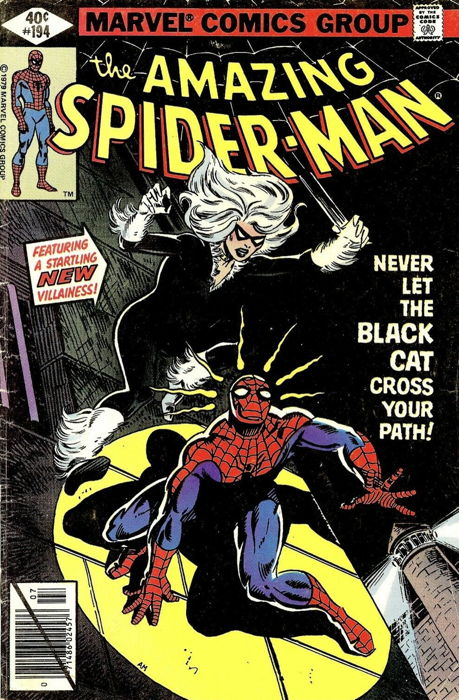
Well, okay, not this version specifically (which is a direct-sales edition, as noted by the slash through the UPC code, as opposed to a newsstand edition), but rather this one:
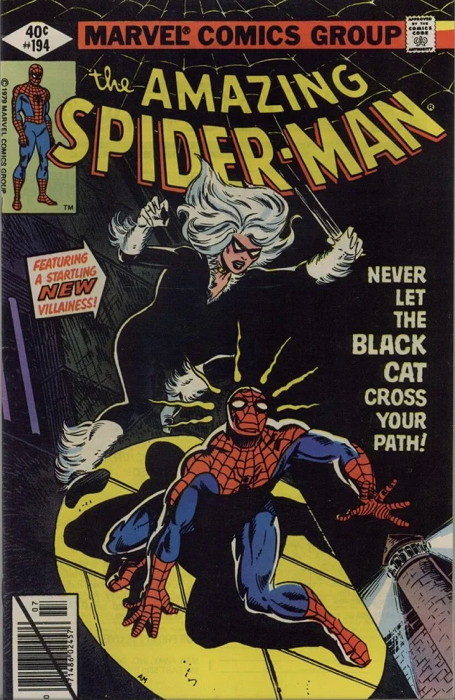
See the difference? Take a closer look:
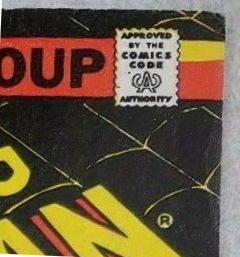
Apparently there was a problem in the printing process somewhere along the line leaving that miscolored strip on the Marvel Comics banner. At some point early in the process the problem was noticed and fixed (reminding me a little of this), making the majority of the books printed with the solid red bar, but the handful with the error were kept and passed along into distribution, since, you know, it’s such a minor thing. Doesn’t affect the readability of the book at all, who’s gonna care?
Well, cut to the 2020s, where there is a whole new market out there of folks looking for just about any reason to make any comic into a desired collectible. Given the huge emphasis of late on speculation in regards to first appearances of characters (whether or not that character has any real impact, (cough Gold Lantern cough*), one would think it’s enough that this specific issue is the first appearance of longtime Spider-Man frenemy the Black Cat, already skyrocketing in price as-is with eBay auctions titles including things like “Marvel comic KEY” and “Black Cat MCU Sony.”
However, this “error” variant is demanding a little extra chunk of change on the secondary market (“RARE YELLOW ERROR PRINT! MCU SOON!”)…to the tune of about a couple of hundred extra bucks at the high end, if the Hot Comic App is to be believed.
I can’t say if I’d ever come across one of those over the decades. It’s possible I haven’t, if the item is as rare as being ballyhooed. But even if I had, I doubt any of us at the shop would have paid it any mind…or possibly, in those early days of youthful optimism and/or ignorance, even marked the price down in the hopes of countering any initial buyer reluctance toward buying a book with such a sorely-visible misprint. Well, time and the current marketplace has surely corrected that oversight.
Anyway, thought this was an interestingly extreme example of the lengths the back issue market has gone through to make a fancier silk purse out of a plain ol’ silk purse. Mark my words, when the Ka-Zar movie happens, all those copies of Ka-Zar comic with the missing panel I’ve been stockpiling will make me rich, rich I tell you.
* Yes, I know he’s involved in that JLA/Legion of Super-Heroes thing.
So I recently found out that the Roku Channel, which is a free streaming service available on, of all things, the Roku streaming device, features a series called Slugfest. It’s a number of short episodes devoted to the back-and-forth between DC and Marvel Comics over the last eight decades or so. (Yes, I know it wasn’t technically “Marvel Comics” early on, nor was DC technically “DC,” but you know what I mean.) Each episode is only a few minutes long, with a mix of vintage video/images and actor reenactments. (Most interesting is Brandon Routh playing a young Jack Kirby…I mean, he’s got the eyebrows, but he’s gotta be at least a foot taller than Kirby ever was; and Ray Wise as older Jack Kirby is about as perfect a casting as you can imagine.)
I bring it up because Episode 8 of the series, “World Without a Superman,” brings us back to our old friend, Superman #75:
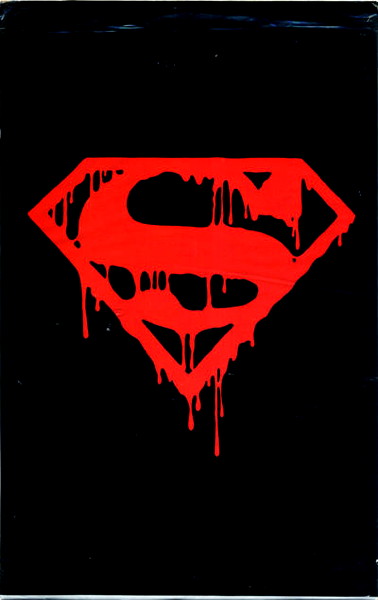
Yes, longtime readers of this site have heard me go on and on about this particular event, from my experiencing the madness from behind the counter at the comic shop I worked at back then, to the aftermarket life the book enjoyed (for varying values of “enjoyed”) in the decades since. Well, if you’re new around here, this here link will catch you up on all those ramblings.
And of course I have touched upon the Death of Superman madness in this very series of Variant Cover-age posts, mostly just talking about the “platinum editions.” But it occurs to me, I haven’t really talked much about the more common black-bagged version in this context. Not that I haven’t spoken about it at length in the past, but I feel like it should at least be brought up, especially in reference to that Slugfest episode.
To give you a little context, the Superman family of books (Action, Superman, Adventures of Superman, and Superman: The Man of Steel) were selling relatively well, at least for us, at the time. They effectively functioned as a weekly Superman comic, with each issue of each series coming out on separate weeks, storylines and subplots flowing from one to the other. It was very effective serialized storytelling. Also, keep in mind we were still riding the wave of the comics book of the late 1980s/early 1990s, so lots of comics were selling very well.
When it came time to order Superman #75, the actual Death of Superman issue, we ordered high. We’d already bumped up numbers on the preceding issues featuring the story leading up to the Big One, but on #75 itself, we ordered something like ten times what we’d normally order on the Superman comic. We were, we thought, taking something of a chance on this event book. It would do well, surely, but well enough to sell us out of 10x normal Superman orders? We’ll see.
Oh, and by the way, when I’m saying “we ordered” and “we thought,” I mean “Ralph ordered,” as my former boss was placing all the numbers, and I was but a lowly employee.
Anyway, as you all know, it came out, lines around the block, stores could’ve sold lots more than they ordered, et cetera et cetera so on and so forth. And the variant sealed in the black bag with all the goodies, the one we ordered the heaviest numbers, was the one in primary demand. Not to say the “standard” edition:
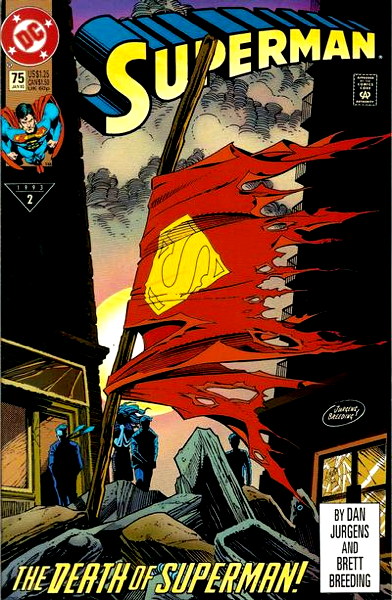
…didn’t also sell, because it sure did. And when the reprints hit, we sold lots of those, too. Needless to say, there were tons of copies of this sold. About 3 million copies altogether, according to the Slugfest episode.
And yes, here we come to the reason for this post. There’s a scene, a reenactment with actors portraying Superman writer Louise Simonson and a friend of hers, just hanging out at home. It had been noted that the Superman creative team were under a Non-Disclosure Agreement regarding the eventual resolution of the Death of Superman storyline (spoiler: he comes back). The scene, going entirely from my memory, was something like this:
FRIEND: “My son is buying lots of copies of this comic. When he gets more money, he’s going to buy more. These are going to put him through college someday.”
LOUISE SIMONSON: [coughs]
And the narrator (Kevin Smith, naturally) makes sure to tell us “the comic only goes for about five bucks now.”
Mmmmm…I beg to differ.
A while back I wrote about the fact that most people who bought the Death of Superman books were not comic collectors, were mostly folks from outside the hobby who picked up an issue out of curiosity or “investment,” who had literally no idea how to properly store or care for a comic book. The vast majority of comic collections I see from around this period, even from folks who bought the bags and boards and Mylar™ and such, are not in Near Mint, or even Fine or better, condition.
In the nearly 30 years since Superman #75 came out, I’d imagine most copies held by non-collectors were not stored well, or even just straight-up discarded once their passing interest in the comic faded. Plus, I suspect attempts to sell the book later to recoup on their investment resulted in some disappointing offers. “Wait, it’s not worth thousands?” It’s probably even worse for the folks who bought copies from opportunistic scalpers, selling them for a hundred dollars a pop the weekend after release (as I heard about locally, and probably wasn’t uncommon elsewhere).
End result: probably not as many minty-mint copies of any version of Superman #75 out there as you may think. It’s not uncommon, but it’s less likely now that you’ll walk into a store with a ready stack of them for sale.
I only ever see one or two at a time of the black-bagged version, and almost never see copies of the standard #75, or even its many reprints. And while I’ll buy the mint copies (or at least cleanly-opened copies with the extras perserved) from collections, I have seen plenty of copies that are just trashed and that I’ve passed on purchasing. As such, it is my belief that a nice copy can still fetch a premium price…and actually does, as I’ve sold more than a few in my shop. And by “premium” I definitely mean more than five bucks.
A quick look at the eBays shows copies of the black-bagged edition selling for, on average, between $10 and $30. Yes, to be fair, I did see a sealed copy sell for $5, but that seemed like an outlier. A couple of the standard editions did sell for about $6 to $8, so that’s a little closer to the show’s assertion. A check of currently-offered copies at Hipcomic don’t show much variation, though they do seem to have a lot more of the reprints than eBay did. (I’m not bringing up “professionally graded” sales, as that’s its own super-distorted marketplace.)
I also did a quick search of a couple of the larger online stores and didn’t even spot any (except for one store that had it for over $150, which is probably why they still have it). Hardly a scientifically thorough search, and for all I know they just had it and sold it before I looked.
The end result is…no, Superman #75, in either its black-bagged or standard edition, isn’t going to pay for anyone’s college. Even the platinum edition might only net you enough to pay for a couple of textbooks. But, I think the “five bucks” descriptor was bit of an underestimation. There’s still a market for these, just that the market value has normalized to meet actual demand, long after that initial rush and immediate scarcity drove some panic buying.
Now that white covered Adventures of Superman #500…if I got five bucks a pop on those, I’d be ecstatic.
Let me know if you’d seen any of those Superman #75s out for sale in your area. Are they going for premium pricing? Are stores stuck with a bunch and trying to unload them? (I’d rather you didn’t mention store names, in case they take offense to being held up as an example of “charging too much” or something.) I’d be interested to hear what’s going on with these across the marketplace now.
« Older Entries