Just movin’ right along with the next one-vote receiver in the Final ’90s Countdown:
Sailor Moon (Tokyopop, 1998-2001)
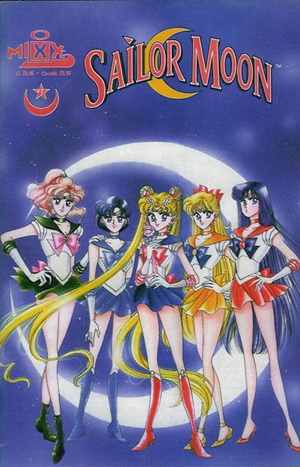 Now the heading here, indicating Sailor Moon‘s Tokyopop run starting in 1998, may be a tiny bit misleading. This series is, I believe, the first ongoing U.S. series featuring the property, but the series, created by Naoko Takeuchi, was originally serialized in the Japanese magazine Nakayoshi starting in 1991.
Sailor Moon was an immense hit, appearing in many publications around the world, not to mention multiple animated adaptations. Sailor Moon was a real kick in the pants to the “magical girl” genre, which had preexisted the series by decades, and inspired many other creative works that followed.
The premise of the series is fairly straightforward, in that a young student discovers she is, in fact, the reincarnation of the magically-powered Sailor Moon, and is soon joined by other similarly powered beings (Sailor Mars, Sailor Jupiter…well, you get the idea). All these Sailors then spend their time protecting their fellow man, saving the world, all that jazz.
I remember the initial Sailor Moon comics doing quite well for us at the shop at the time, and subsequent releases of various Sailor Moon books and other products found a ready audience as well.
I’m not going to try to listen every single permutation of Sailor Moon books here, but I can note that there was a ten volume series of Sailor Moon Eternal Edition which appears to reprint the entire original serialized story. Those are still available for order.
Keep in mind here, I’m no expert on Sailor Moon or manga in general. I had to look up a lot of what I wrote up there. But I do know that Sailor Moon is a perennial favorite and a popular seller, and is one of those classics that should always be in print and available.
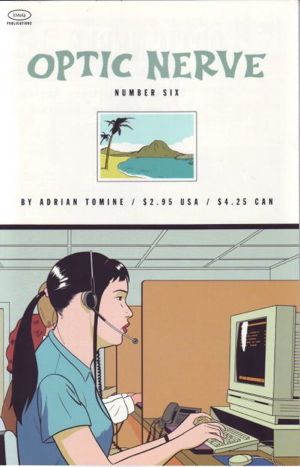 Now here’s a comic where I read every gosh-darn issue, unlike some of thge other entries in this particular series of posts. Adrian Tomine’s Optic Nerve had its origins in a series of self-published mini-comics in the first half of the 1990s. …Which, okay, I lied, I hadn’t read the mini-comics, but can easily at any time, which I’ll get into in a sec.
 Here’s another title that I shockingly didn’t not read, coming out as it did when the comics market was in serious flux and so was my disposable income. Now, the person who voted for this title actually voted for Nocturnals: Black Planet, which was the 1998 trade paperback edition published by Oni Press and was kinda its own thing which I’ll discuss in a moment.
  The greatest indie comic that may or may not have been named after a George Carlin gag (“could be meat…could be cake…meat cake!”) was created by the inventive and creative Dame Darcy.
  Well, here’s one where I kinda goofed up. I’d forgotten that this version of The Mask actually had its start as a feature in the Mayhem series in 1989, those stories later being reprinted in an issue #0 as part of thge first Mask mini-series from 1991. Which means this character began prior to 1990 and should have been disqualified.
  This ten-issue series was the one of Chester Brown’s earliest post-Yummy Fur longform projects, preceded by aborted Underwater in the mid/late-ish 1990s. (Surprisingly, Underwater lasted 11 issues, but its central conceit of babies gradually learning to understand the language spoken around them, resulting in most of the text being gibberish, was I think more than the readership was willing to do along with.)
 Here’s yet another comic from this period that’s on this ongoing list of books that I didn’t read, despite remembering its existence quite well. Hilly Rose by B.C. Boyer published a scant nine issues over a three year period, with a series of very nice sci-fi pulpy covers.
  Okay, this is stretching the boundaries of what I’m doing with this little survey here. While my intention was to cover only actual comic book series, I guess there was nothing in the rules that says a
  Now I remember Finder as being a popular book with the indie comics cognoscenti (comicsnocenti?). It had relatively strong sales for us at the previous place of employment, and its many wonderful and strange covers always caught my eye and stood out on the rack.