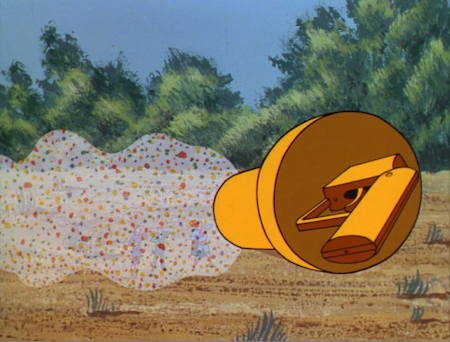
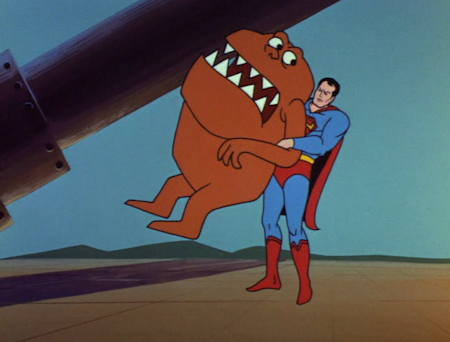
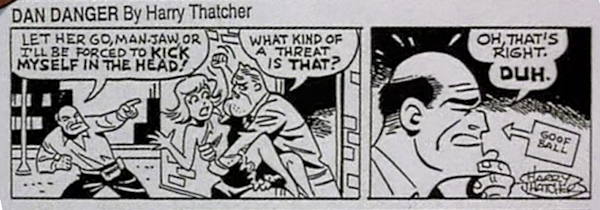
“Let her go, Man-Jaw, or I’ll be forced to kick myself in the head!”

So I was watching the episode “Mxyzpixilated” from season 2 of Superman: The Animated Series, featuring, as you might guess, Mr. Mxyzptlk. At one point during the story, Clark Kent is scanning the Daily Planet funny pages, into which Mxyzptlk has inserted himself as one of the strips:
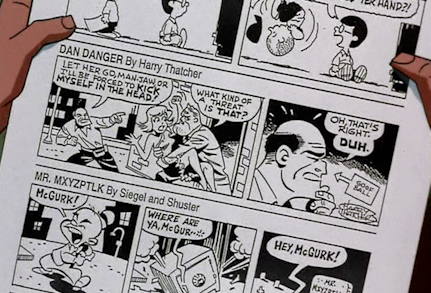

Thanks to the miracle of DVD technology, and my obsessive need to repeatedly pause and look at details of cartoons that otherwise would just flash by onscreen, only barely noticed by the viewer, I was able to get a better look at the other strips on the page. According to the episode’s commentary track, the other strips are in-jokes and references to members of the production team, in addition to being parodies of popular comics.

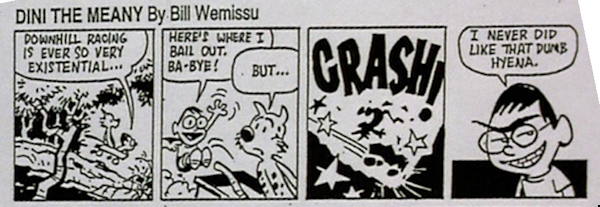
Of the production team members referenced, the most recognizable is, of course, Paul Dini, one of the prime movers behind DC’s animation initiative. Here he is in a parody of Calvin & Hobbes:

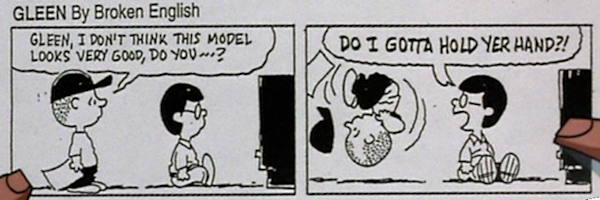
The next strip is, of course, a parody of Peanuts, where the “punchline” is (again, according the commentary) a direct quote from the person being caricatured:

The next parodies Dick Tracy, and I’d almost rather read this than what’s going on in the real Dick Tracy strip right now:

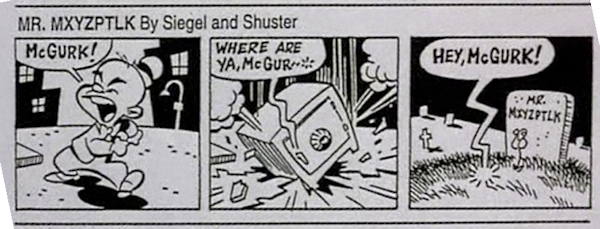
And here’s the Mxyzptlk strip, credited to Superman’s (and Mxy’s!) creators Jerry Siegel and Joe Shuster:

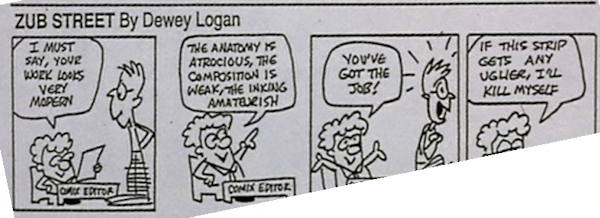
And the last looks like a parody of, if not the strip Momma, then at least of cartoonist Mell Lazarus’s style, with a pretty brutal last panel (what you can see of it) which they probably only got away with due to it only appearing onscreen for a split second:

Whenever brief gags like this flash by, I wonder if there were kids watching this as it originally aired, or during reruns, who were tantalized by the quick glimpse they were able to grab, who knew there was more there than what they saw, but missed their chance to see what was there. Even if they recorded it on their VCR, getting consistently clean stills when pausing the tape was never a sure thing. And beyond even that, I wonder if the people behind the cartoons ever thought there’d come a time when in-jokes like these would ever become easily accessible to anyone outside of the team that actually produced these shows.

Well, okay, they probably did, fans being obsessive about this sort of thing and all (like, oh, say, screen-capturing the frames in question and straightening them out). But I certainly wanted to show my appreciation for the extra level of detail and humor added into what is already an excellent cartoon.

EDIT: I’m being told in the comments section here that the Modern Masters Volume 3: Bruce Timmbook includes the above artwork in full, and is much more clear than in my screenshots. So check that out if you get a chance!

And that’s how Mike found out from Green Arrow fans just how many villains the character really has.

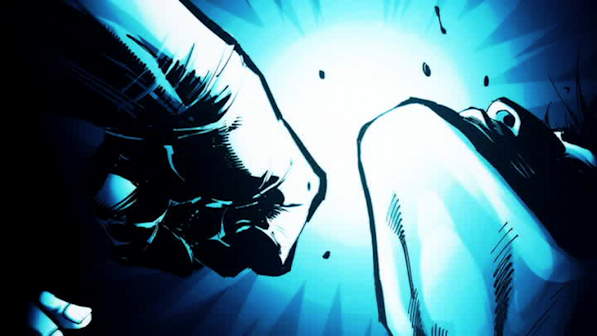
So in the animated DC Comics logo attached to their films, you see…

A close-up of a woman’s eye:


A grimacing face:


And someone totally getting clocked:


Comics!


The animated logo attached to Superman Returns is slightly different, and it seems to me that the flashing images changed according to the movie the logo is attached to, but the few DC DVDs I have either use the first logo above, don’t have any flashing images, or (like in the Watchmen film) display the logo in a fashion more fitting to the film’s design. If there are other variations on the images used, feel free to let me know.

Anyway, this just came to mind as I was watching the Superman/Shazam! – The Return of Captain Marvel DVD (or Blu-ray), which wasn’t too bad considering the main feature was mostly just flying dudes punching each other, but it was flying dudes punching each other and presented reasonably well, and sometimes that’s all you’re in the mood for. It is a shame that the only animated versions of Captain Marvel we’ll likely ever see in the future will be “like Superman, only with the brain of a kid,” and very little of the whimsy and humor of the original C.C. Beck stories. I did appreciate the emphasis on Billy Batson’s own unwavering good spirits in the face of continuing adversity…and the reveal of one of Captain Marvel’s most beloved supporting characters near the end of the story.
The other short DC Showcase features from previous DC animated releases are included on the disc, which allowed me to finally see that Green Arrow short that wasn’t included on the Netflix version of Superman/Batman: Apocalypse. That was a fun little adventure, too, though it reminds you that Green Arrow has two whole arch-nemeses, and they’re both here. Also, at one point Green Arrow introduces himself as “Green Arrow, Justice League of America,” which amused me for some reason (but fitting, considering the political situation he finds himself in).

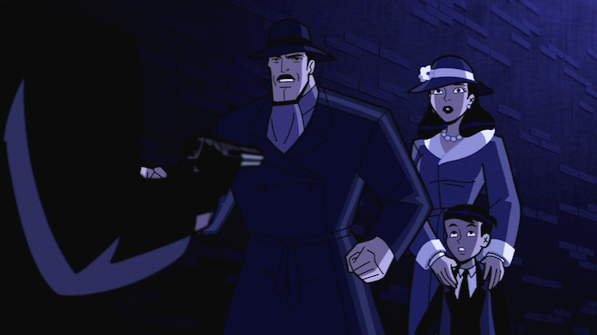
Special features are episodes from DC’s various TV series, focusing on characters from the other straight-to-DVD shorts on the disc (like the Captain Marvel episode of Justice League Unlimited). Of particular note is the Batman: The Brave and the Bold episode “Chill of the Night,” which should totally put lie to the criticisms that this version of Batman is “just for kiddies.” It’s a damned brutal episode, focusing on Batman’s origin which, there’s no getting around it, involves the shooting murder of Bruce Wayne’s parents:


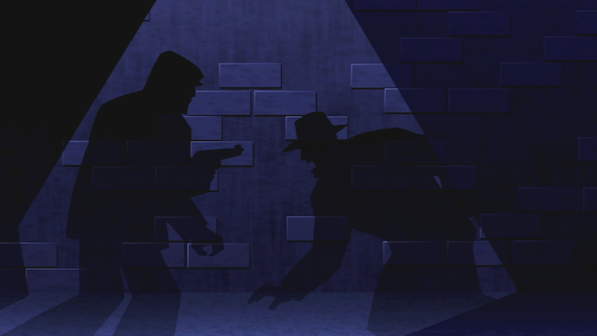
You see the gun fire, twice, and you see Thomas Wayne collapse, in silhouette:


I don’t think the ’90s Batman: The Animated Series was even this explicit…if I recall correctly, the most you got there was a distant aerial view of the alley and the flash of gunshots. (And then there was also a dream sequence image of the alley rising up and turning into a giant gun, with a river of blood pouring out of the barrel, which was…something else, admittedly. Might have been the same episode, come to think of it. …You know where to correct me.)

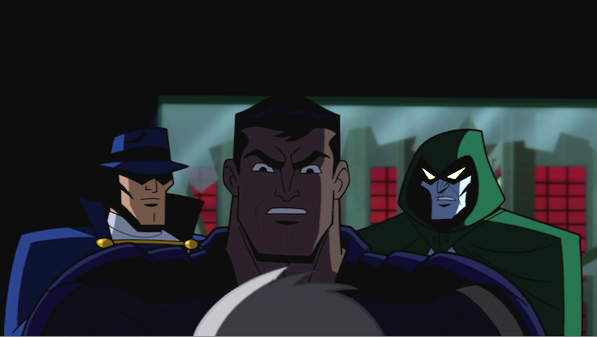
Anyway, the Brave and the Bold episode involves the Phantom Stranger and the Spectre:


…and their respective beliefs that Batman is either going to seek justice or vengeance in his quest to uncover the killer of his parents. And even though you know how it’s going to turn out, the journey Batman undergoes through the episode is a fairly intense one.

Nice touches: Adam “Batman” West and Julie “Catwoman” Newmar doing voice work as Bruce Wayne’s parents. And this genuinely touching and fantastic sequence of a mystically time-transported Batman fighting crime side-by-side with his dad:


How awesome is that? “Very” is the correct answer.

Also, a quick Googling shows that this is old news, but I didn’t notice this in the DC Showcase intro sequence until this particular viewing:


Hello there, Bruce Timm, DC animation producer/writer/animator/etc.!

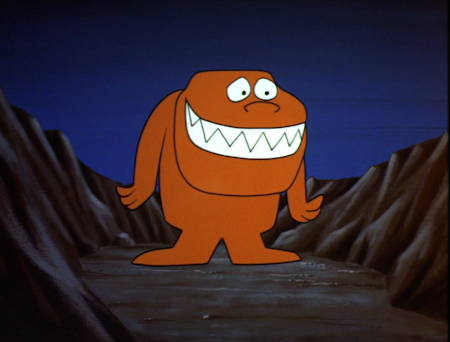
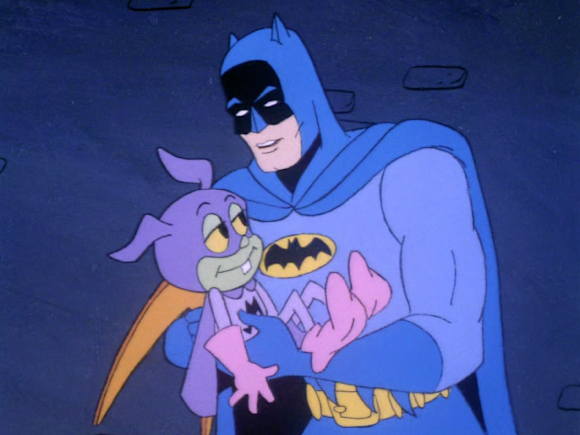
The Iron Eater looks like he escaped from a Rankin/Bass holiday special.

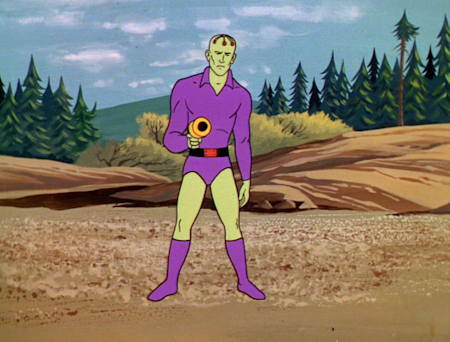
From the New Adventures of Superman DVD, featuring those cartoons from the mid-1960s, here is the first animated appearance of Brainiac:


On one hand, he’s kinda mopey looking, and doesn’t appear to be much of a threat at all. On the other…he doesn’t say a single word throughout the entire episode, which is…kinda creepy, actually. And at one point he turns himself invisible, and he just kinda winks out with no sound effects whatsoever, which is 1) pretty unusual for a cartoon of this period to show such restraint, and 2) is even more creepy.

Another thing about the cartoon is that we get a backstory for Brainiac that has nothing to do with the Brainiac backstory established at that point in the comics (a trend continued with the Krypton-based Brainiac origin from the ’90s Superman: The Animated Series show, and in Smallville). Explained in this episode, The Return of Brainiac (more on that in a second), Brainiac is a robot built by Dr. Hekla from the planet Mega. And when Brainiac is eventually destroyed (and again, more on that in a moment) it is commented that Dr. Hekla will just build another one and send it back to Earth.

Now the episode is called “The Return of Brainiac,” even though this is the first appearance of Brainiac on this DVD…can’t say for sure if this is the proper chronological order of episodes on the disc, but I was a bit amused to have my first encounter with the animated version of this character be in a show titled “The Return of….” And the backstory thrown out in dialogue appears to refer to a previous appearance, so if there is another Brainiac episode in this set (and I haven’t yet watched the second disc), the episodes were either put on these discs out of order, or the episodes were originally produced and aired out of order. Or the producers just assumed viewers already knew the character from the comics, and never bothered with an “introduction,” as such. Or they just plain threw him out there. It doesn’t matter, really…the writing on these were very much at the “well, this’ll do” quality, so explicit episode-to-episode continuity was certainly not a priority (nor should it really have been, of course).

EDIT: Sure enough, I checked the Wikipedia article and episode #33 is called “Superman Meets Brainiac.” The episode list there seems to match the episode order on the DVD, at least for the first disc, so the Brainiac intro episode is way after the “Return of” one. Still no idea if these are in the original broadcast order on the discs.

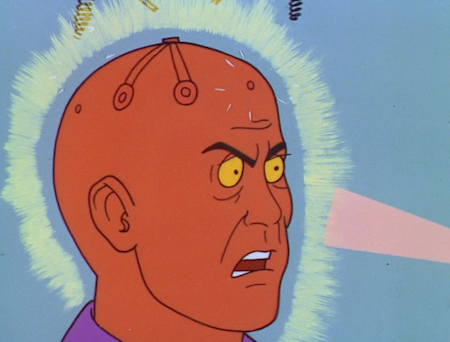
Anyway, given the very inhuman portrayal of Brainiac in the cartoon, and the continuing emphasis on his…robot-ness, I guess, this frees up Superman to just full on shoot Brainiac in the face with heat vision beams:


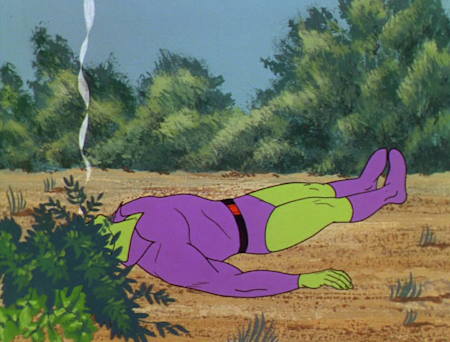
Oh, just let Brainiac’s smoking robot corpse sit there for a while…it’ll be fine:


One more about this cartoon…this was the first one on the disc that actually triggered a memory of my watching this show as a child. And it wasn’t Brainiac, but rather, his shrinking gun:


The gun rang a bell, as did that sparkly energy-cloud thingie. Strange things to remember, but those images stuck with me all this time.

A later episode on the disc also sparked an old childhood memory of watching the cartoon…specifically, “The Iron Eater,” featuring a critter that looked a little something…like this:


I’m not kidding. Superman totally fought this dude:


Man, how could anyone forget a mug like that?

This cartoon had some swingin’ music.

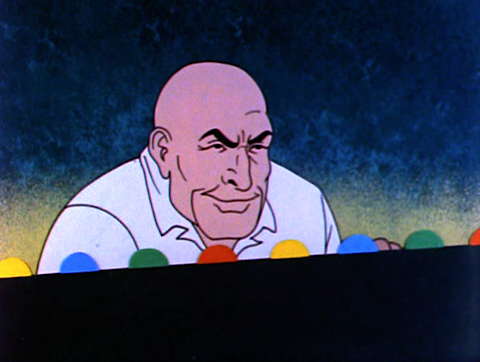
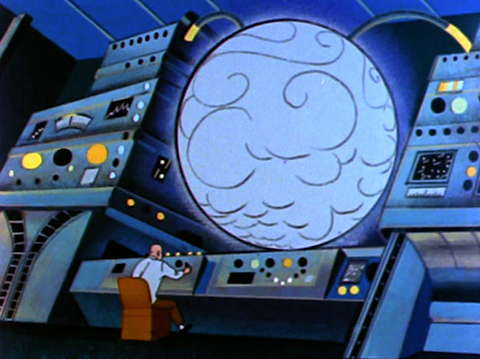
So, from 1966’s The New Adventures of Superman cartoon, here is the episode that introduces the first (I believe) animated version of Lex Luthor. Here he is sitting at his console of evil Christmas lights:


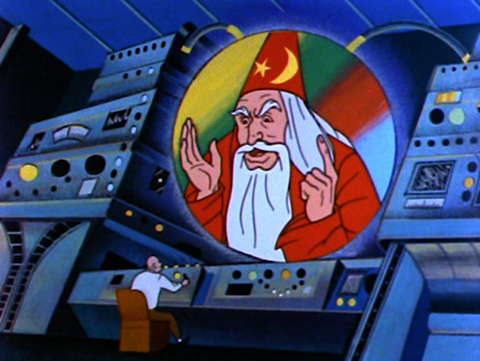
He’s using his console to make contact with someone who might give him some new ideas on defeating Superman, which, okay, sure, even supervillains need to outsource once in a while:


…And today’s supervillainy consultant is — drumroll please — Merlin, the famed wizard of Arthurian legend!


Well, sure, why not. Anyway, Merlin’s big idea is for Lex to cook up some of Merlin’s Magic Marbles which will turn him into a child, thus evading Superman’s attempts at finding and catching him.

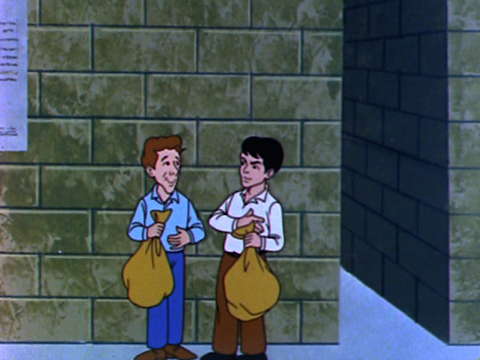
I was just going to leave it at that, with a “’60s cartoons so crazy” conclusion, but you people want to see Young Lex Luthor:


On the right, with the head full of black hair. Yeah, yeah, I know, it’s supposed to be red. Or reddish brown. Or brown. The dude on the left is one of his henchman, also reduced in age, though frankly he doesn’t look much different from his adult self.

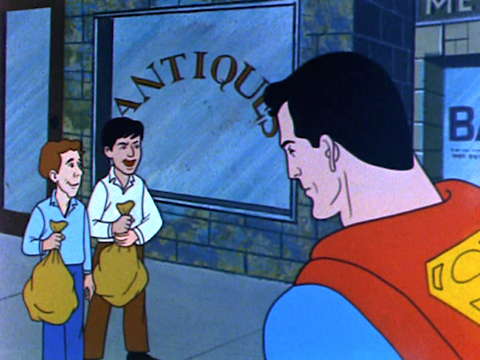
And here they are, with Lex just openly mocking Superman (who doesn’t recognize him) by asking for an autograph:


Oh, no, let’s just stand here with our bags of loot in front of the guy with x-ray vision.

Anyway, I haven’t seen this cartoon since watching in in reruns (repackaged with some Aquaman cartoons, I believe) sometime in the 1970s. So far, going through this DVD, I haven’t spotted any particular episodes I remember, but boy, the theme song and the music sure bring me back:

Space Butt.

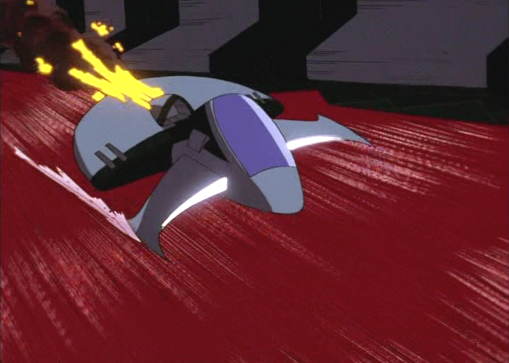
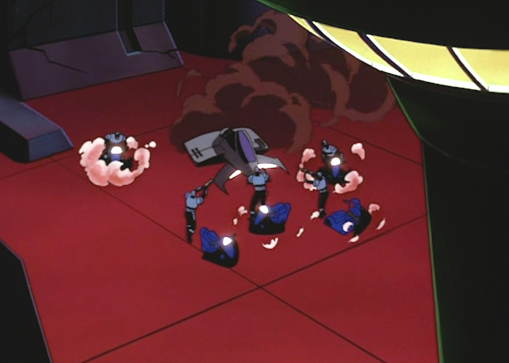
From the Superman The Animated Series episode “The Last Son of Krypton – Part 1,” in which Sul-Van flies and crashes a small aircraft in an attempt to distract Krypton’s police force:


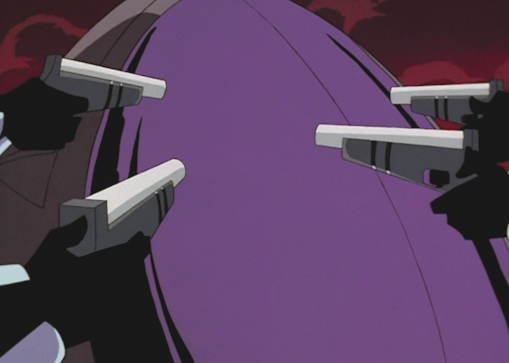
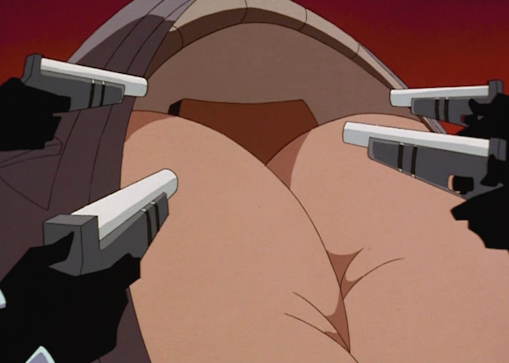
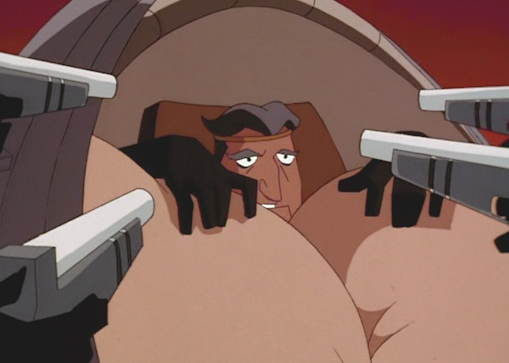
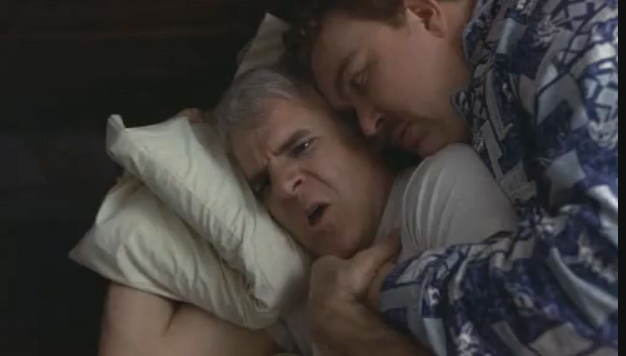
“Those…aren’t…PILLOWS!”

This scene struck me as a bit odd upon my first viewing of the DVD (and the first time I’ve seen this episode since it originally aired in 1996). And, upon listening to its commentary track, I’m glad to know I’m not the only one, as most of the commentators burst into an extended fit of giggles when Sul-Van’s “crash pillows” made their appearance. Of course, they never explain why they’re laughing, this commentary being on a DVD intended for children an’ all.

This could all have been avoided if only they’d applied some other color to those crash pillows. Did that long-ago issue of Amazing Heroes teach us nothing?

(Here’s the link to the full “those aren’t pillows” clip from Planes, Trains & Automobiles, in the off-chance you require some context.)

Really, that Ghost Rider appearance was totally out of left field.

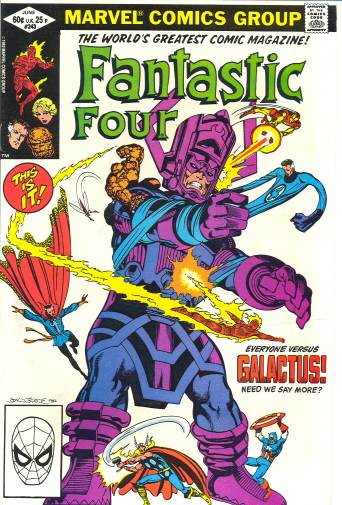
So, the other day I was watching an episode of the mid-1990s Fantastic Four cartoon, which adapted the 1982 Terrax/Galactus storyline from FF #s 242 through 244. Here’s the cover of the middle installment, just so this post isn’t all boring text:


Anyway, the episode takes this three-issue storyline, including the introduction of Frankie Raye and the “she’s got powers like the Human Torch” storyline from the previous year’s continuity, and manages to squeeze it all into a 20-something minute episode.

Most of the storyline’s plot points from the original comics make it into the show, with some adjustments here and there. The most noticeable change is that, instead of the guest-starring-superhero free-for-all like you see on that cover up there, the only guy that shows up in the cartoon is Thor. And taking the place of Dr. Strange is Ghost Rider, who in the cartoon puts the mystical showing-Galactus-the-souls-of-his-victims whammy on the big G that Strange did in the comic. Apparently this was Ghost Rider’s first appearance in the cartoons, judging by the reaction of the other characters. He just pops up, says “hello,” gives Galactus the ol’ magical hairy eyeball…er, eyesocket, and takes off, confusing children watching at home everywhere.

But the story plays out more or less the same in the cartoon as in the comic…Galactus’ reserves are depleted and he’s on the verge of dying, Reed Richards decides to save his life, Frankie volunteers to become the new Herald of Galactus and lead him to a new world to consume, and Galactus takes off, vowing to never trouble Earth again and notes that this is the one world where he may have friends. The end.

There’s another change I should note, concerning Frankie’s characterization. In the comic, she had a habit of using excessive force on the bad guys, giving as her reasoning, “well, they’re bad guys, right? So what?” When she decides to sacrifice herself to become a Herald, it’s pointed out that she’d likely have to lead Galactus to inhabited worlds for him to consume. Her response:

“So? A few bug-eyed monsters? What’s that compared to my being able to go…out there?”

An amoral stance for a superhero-type, to be sure, and it’s not surprising that it didn’t make it into the cartoon. In its place we get some very broad hinting that Frankie may be, if not outright falling in love with Galactus (a plot development that turns up in later FF issues), at least completely admiringly awestruck by him.

Not quite sure why I’m so fascinated by these comic-to-cartoon translations of specific storylines I enjoyed as a younger Mikester. Particularly since the end result, after having watched this episode, is the realization that as profound and significant it all seemed on the printed page, seeing essentially the same story in animated form made it all feel a bit…silly, I guess. Perhaps it’s just the nature of the bare-bones condensing of the original tale, or perhaps it’s just the recontextualizing of the story from the familiar printed format to an animated one, forcing us to reconsider the storytelling tropes freed of nostalgic memories (see also: the ’60s Batman TV show, discussed previously).

Or perhaps I’m just overthinking a cartoon whose primary purpose was to sell toys to children.

But, honestly, that Terrax/Galactus story from Fantastic Four #s 242 through 244 is really good. And maybe a little silly, but there’s nothing wrong with that.

File under "What Did I Expect?"

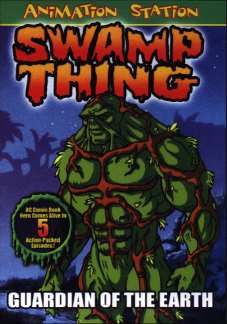
I finally got it in my hot little hands, and believe you me, it’s only because I’m The World’s Biggest Swamp Thing Fan™ that I ordered this DVD in the first place. The cartoon is not good by any measure…well, it’s colorfu…no, no, there’s nothing good about it. And God help you if you hear the theme song, done to the tune of “Wild Thing.” (“Swamp Thing / You are amazing” is the opening, and it doesn’t get any better than that.)

The video quality is about as good as you can stand, given that the preferred alternative would be no picture at all. The color does seem to be a little washed out, but I don’t think that’s a problem with the transfer…I think that’s how the cartoon originally looked. The cartoons themselves were created solely to sell toys, so the characters tool around in vehicles with grasping claws, and Swamp Thing regularly performs actions that could be duplicated in the various Swampy figures from the toy line, and so on…they might as well have shown giant animated kids’ arms moving the vehicles and characters around.

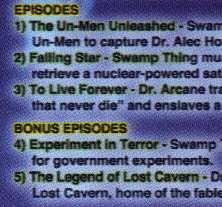
Another thing with this DVD is how they padded out the description of what you get on the disc. Okay, there were only five episodes of this cartoon produced. And yet, this is how they indicated the DVD’s contents on the back of the package:

Three regular episodes, and two bonus episodes? In what way are they “bonus?” I’m pretty sure all the episodes actually aired, so it’s not like these are previously unseen shows (well, aside from no one watching them when they aired in the first place). Besides, it’s not as if they were originally planning on holding back those extra two episodes for a second DVD of this turkey, then decided, as a special gift to all of us loyal Swamp Thing fans, to somehow find the space to squeeze on these “bonuses” at no extra cost to us.

And here’s something else that’s always bothered me about DVD feature listings:

“Interactive menus?” If you couldn’t interact with the menu, what good is it? Okay, I’m sure what they mean is that the DVD actually has a menu, as opposed to some older DVDs that don’t (like my Aeon Flux DVD, where you have to manually skip ahead to any episode you’d like to watch, or some of those no-frills Universal DVDs that only had a scene-select function, like the 1980 Flash Gordon or Mystery Science Theatre 3000: The Movie).

And I don’t know what they mean by “BONUS EPISODE,” unless they mean “BONUS EPISODES,” which I’ve already discussed above. Unless there’s some kind of Easter egg on here, and a sixth episode is hidden somewhere on the disc. Oh, the humanity.

There are also previews for other cartoon DVDs, totalling about 13 minutes, and none of these cartoons are any good either, except maybe the ones on the Tex Avery disc.

I really have no idea why this disc was produced…there can’t possibly be anyone else out there who wanted this…er, aside from me, that is.


(post updated 7/2016)